Valencia – a soft beginning
A gentle day and a half in Valencia – café bombón, the green ribbon of the Turia Gardens, an old town strung with festive lights – the soft start of a two-week Andalusian rail journey.
(1.5 days, 18th – 20th Dec)
Quick links to main sights
If you’d like to jump ahead to planning your own visit, check out the practical notes section for train bookings. Plus, here are quick external links to the main sights:
Turia Gardens | Plaza del Carmen | Centro del Carmen (modern art gallery) | Torres del Serranos | Valencia Cathedral | Sistine Chapel of Valencia | Lonja de la Seda | Natural History Museum | Outdoor Center for Arts and Science (modern glass architecture) | Central Market | Valencia Beaches
Impressions
Valencia, though not part of Moorish Andalusia, was a convenient stop to fly to and start our Spanish Andalusia adventure by train. Our one and a half days here were a nice combination of relaxed plazas and strolls through the Turia gardens, as well as tourist sights.
The very first thing I did on landing was buy a city travel card for the public transport. I normally do that in every city we visit, choosing them judiciously and using them wherever I can. B indulged the ritual with amusement, teasing me as a hoarder of transit cards – even though, as often as not, the patchy connections in Andalusia still left us walking. But that comes later.
Plaza del Carmen
18th Dec 2025
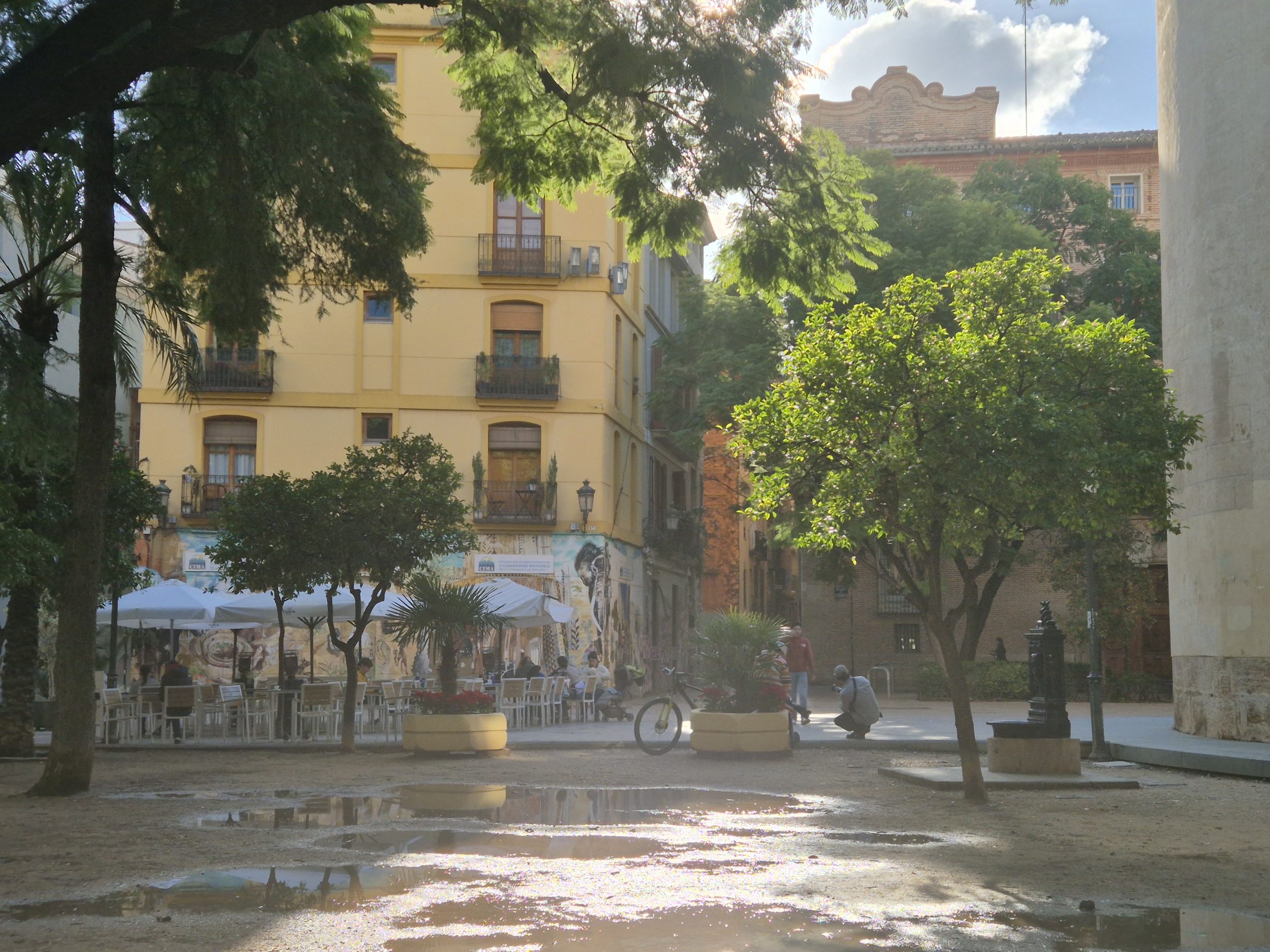
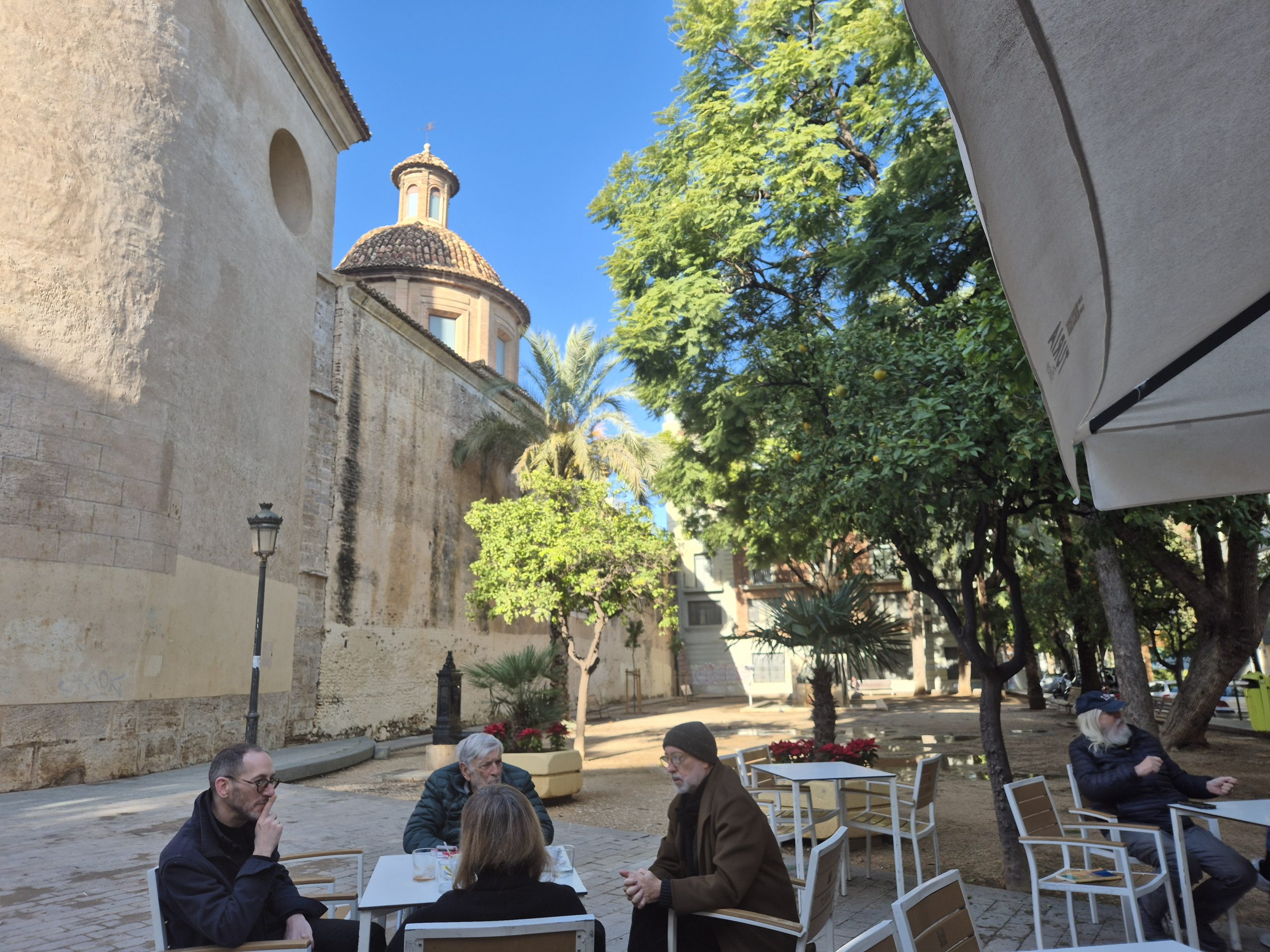
We dropped our bags at the Hotel Turia – our room on the ninth floor, with a view over one green stretch of the Turia gardens and the city beyond – and headed straight out. The first outing was a stroll to the charming Plaza del Carmen: an old-world square where we settled at a café terrace over lunch and watched the world go by, people and pigeons and sparrows. This was where I first encountered café bombón – espresso layered with sweet condensed milk – and became mildly obsessed. Lunch itself was an easy first taste of the local table – berenjenas fritas con miel (batter-fried eggplant under a drizzle of honey), garlic bread, a burger for B. The café overlooked a sun-dappled square surrounded by trees. It gave me a precious, rare moment of “this is where I am meant to be right now” feeling of contentment.
Dragging ourselves away from this idyllic setting, we strolled over to the nearby Centre del Carme, a contemporary art space. Entering the building you find yourself in a big open courtyard full of trees and plants, and a central well, surrounded by the building on all sides. A veranda ran the perimeter of the courtyard. On the walls was a temporary exhibition designed for schoolchildren, featuring large murals of common regional birds under the title No two birds are the same – a gentle, accessible way of speaking about diversity and coexistence. Upstairs, the tone shifted. An exhibition addressing racial discrimination was more confronting and stayed with me long after, while other contemporary works, though competently presented, faded more quickly from memory. (The subtitles were all in Spanish, so a fair amount was lost on us.)
Valencia, I noticed, is steeped in street art. European cities keep their formal art in museums and cathedrals, but the informal kind – graffiti, murals – shapes how a city feels just as much, and the lanes around Plaza del Carmen offered some striking examples – including a giant painted pair of angel wings, painted just for you to stand between them pretend they’re your own.
Jardín del Turia
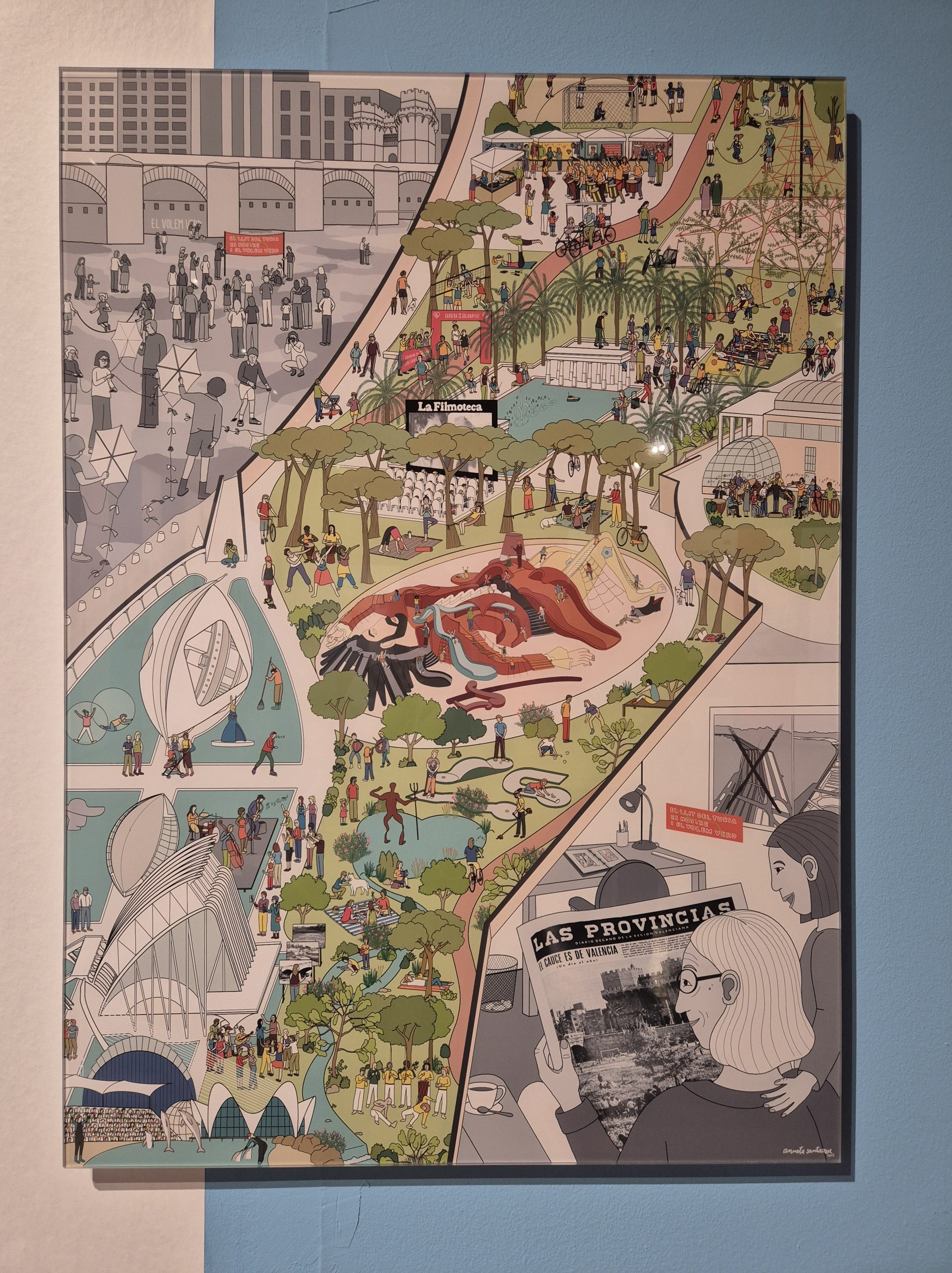
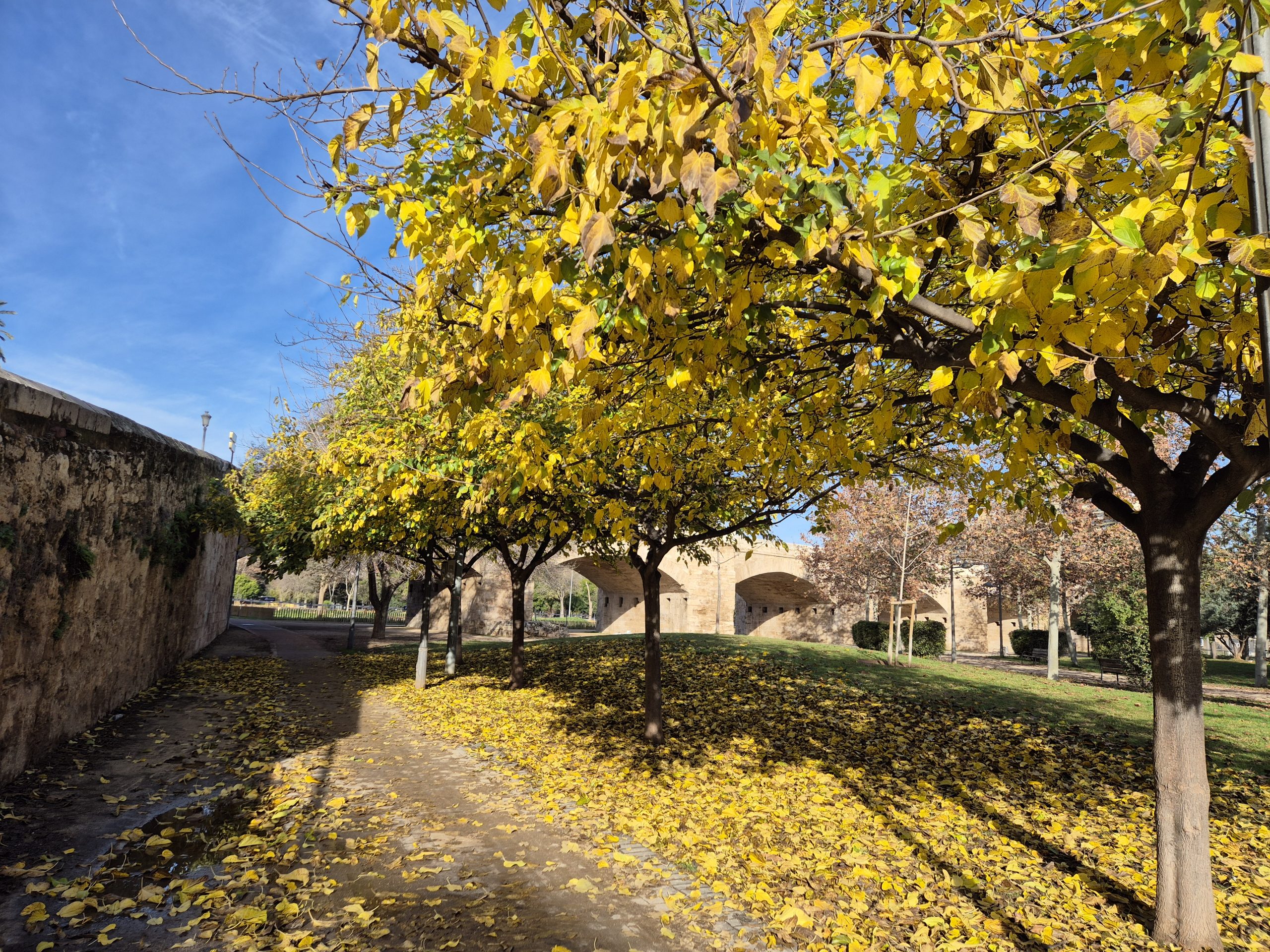
Much of the city’s rhythm unfolds along the Jardín del Turia, a long green spine created from the old riverbed after devastating floods in the 1950s. Walking through it, it’s hard to imagine that the Turia was once a destructive river – the transformation feels quietly radical. Along the garden’s paths, pools of water had formed; in some, small groups of pigeons were bathing. Overhead, a dramatic sky – mostly bright blue, edged with dark clouds – lent the scene a moody, shifting atmosphere.
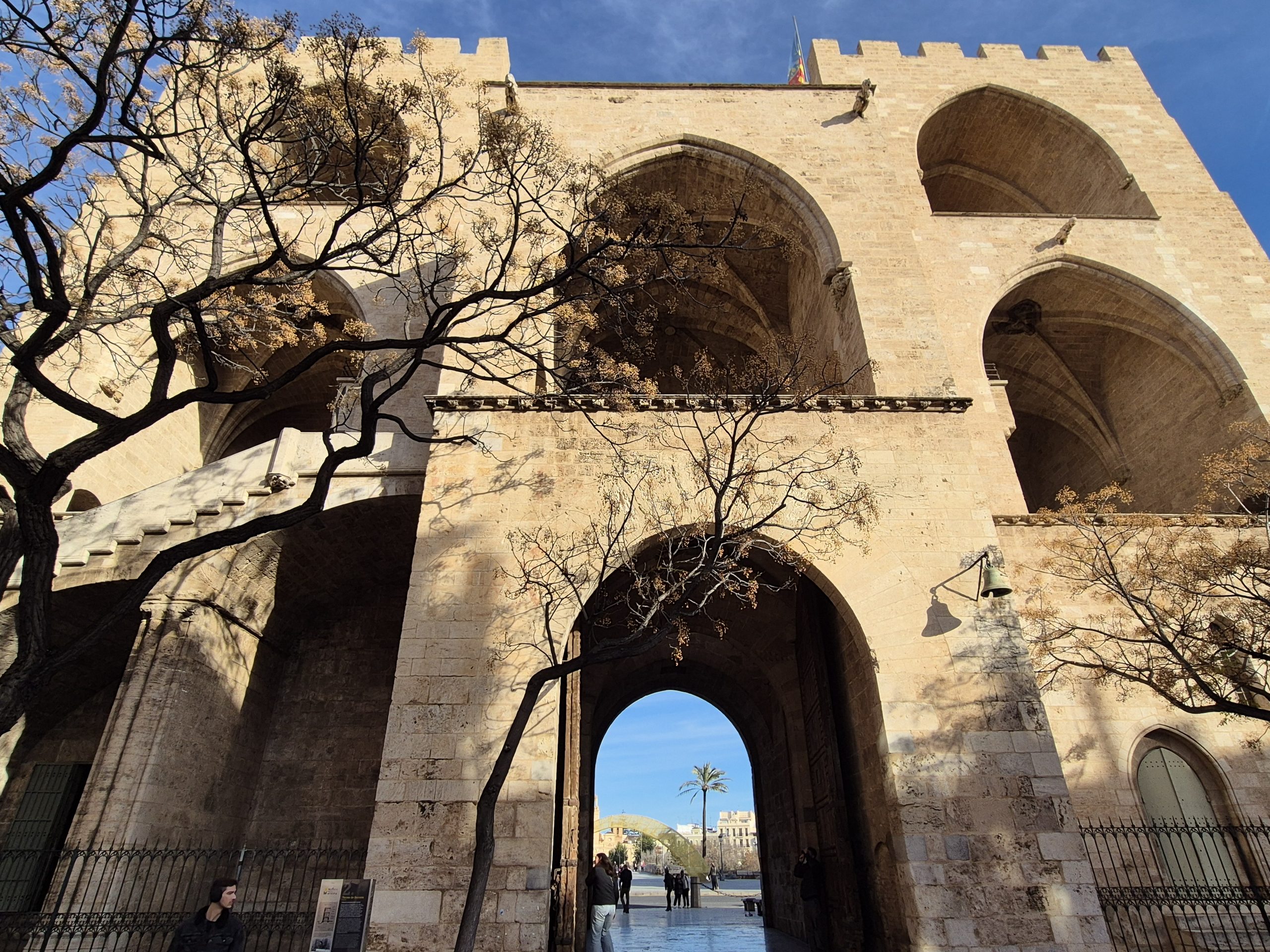
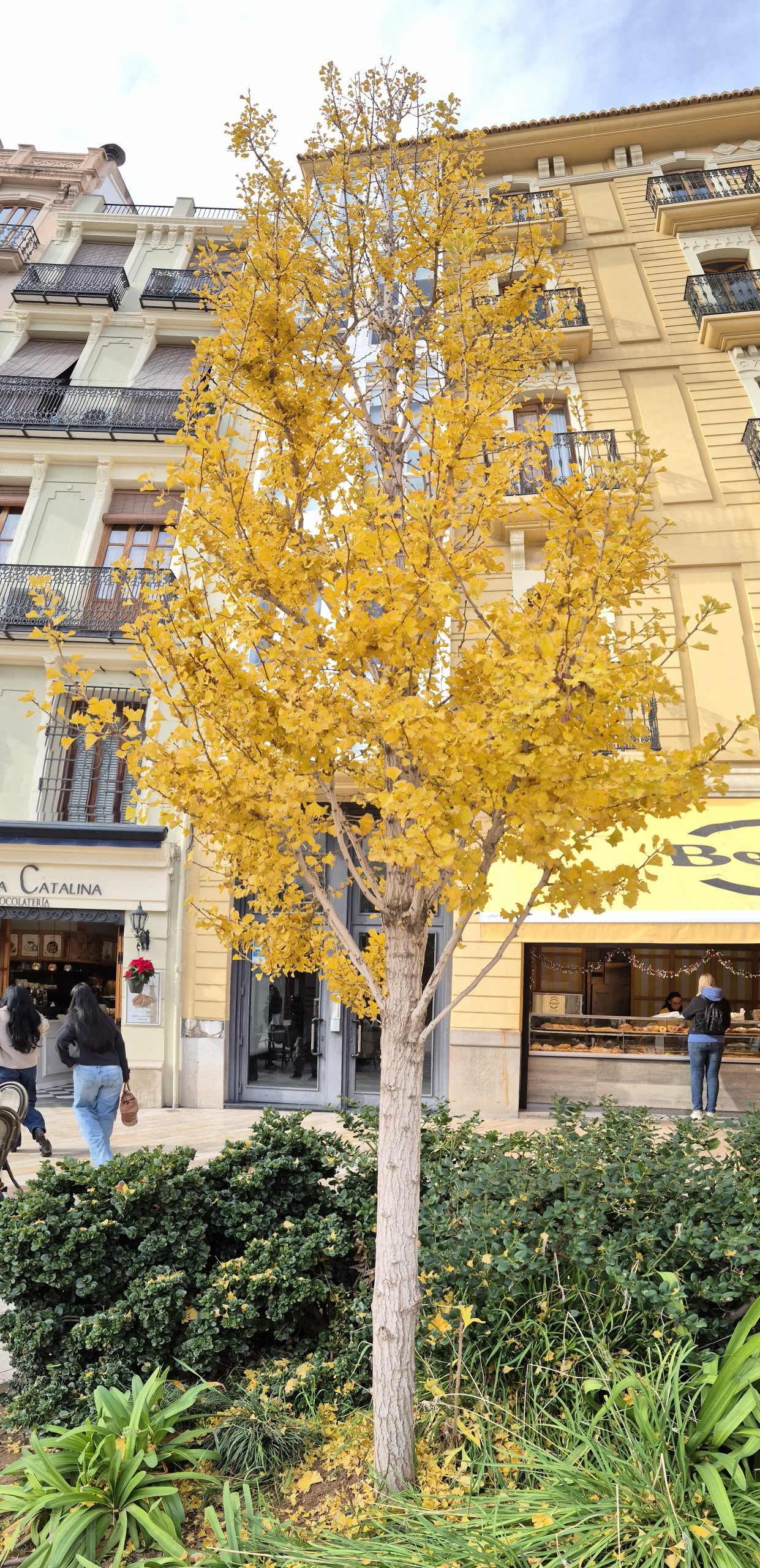
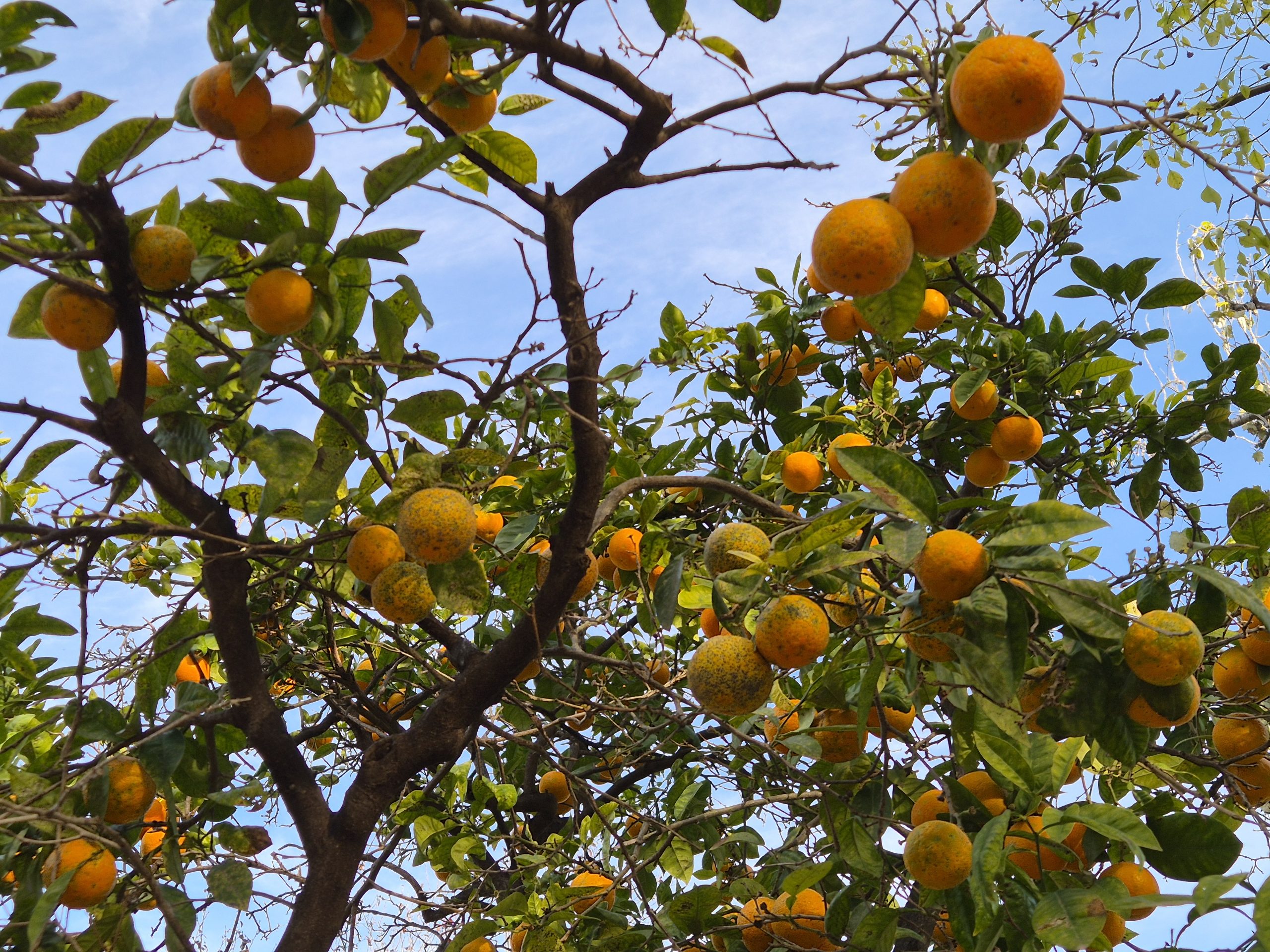
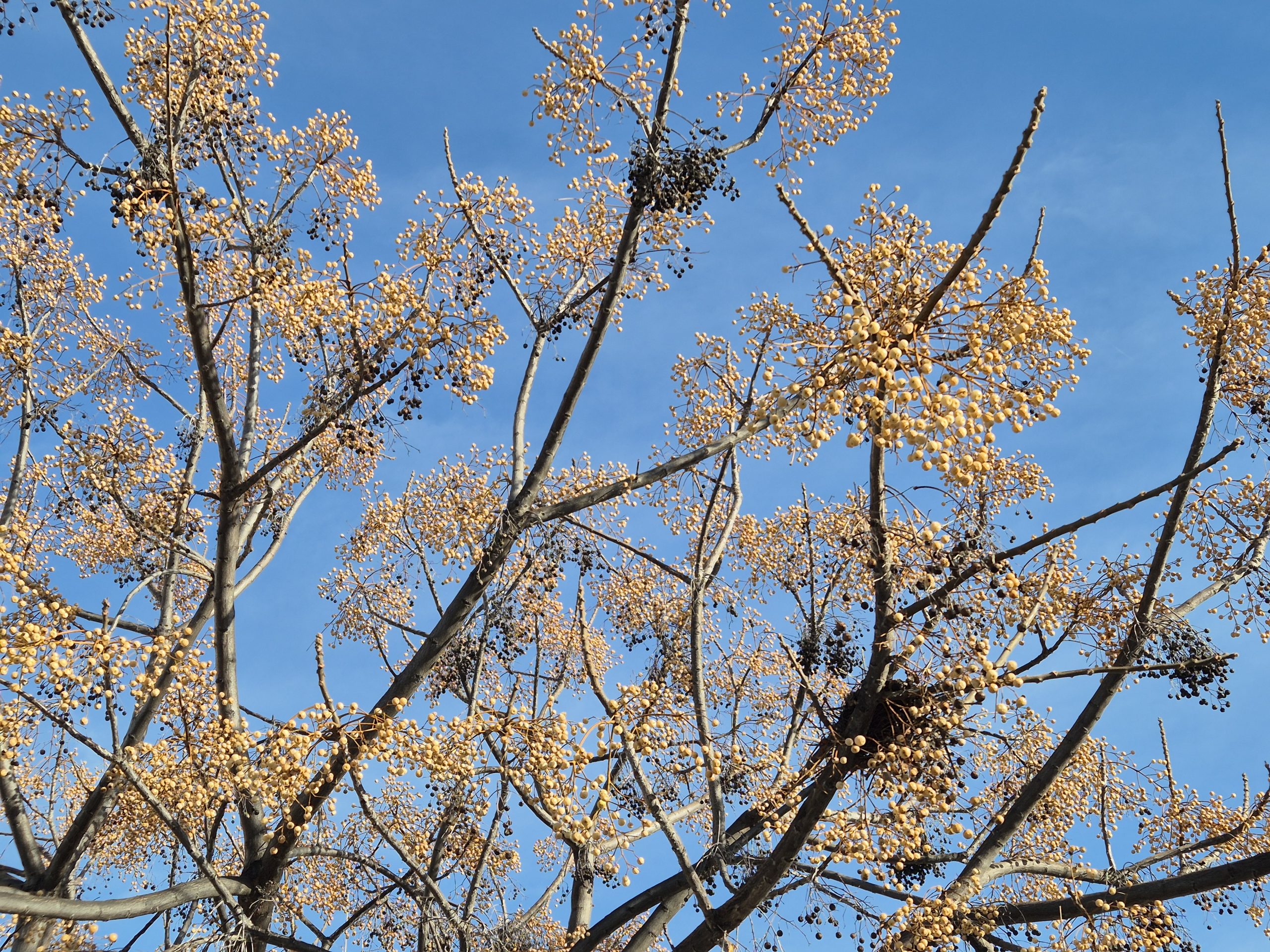
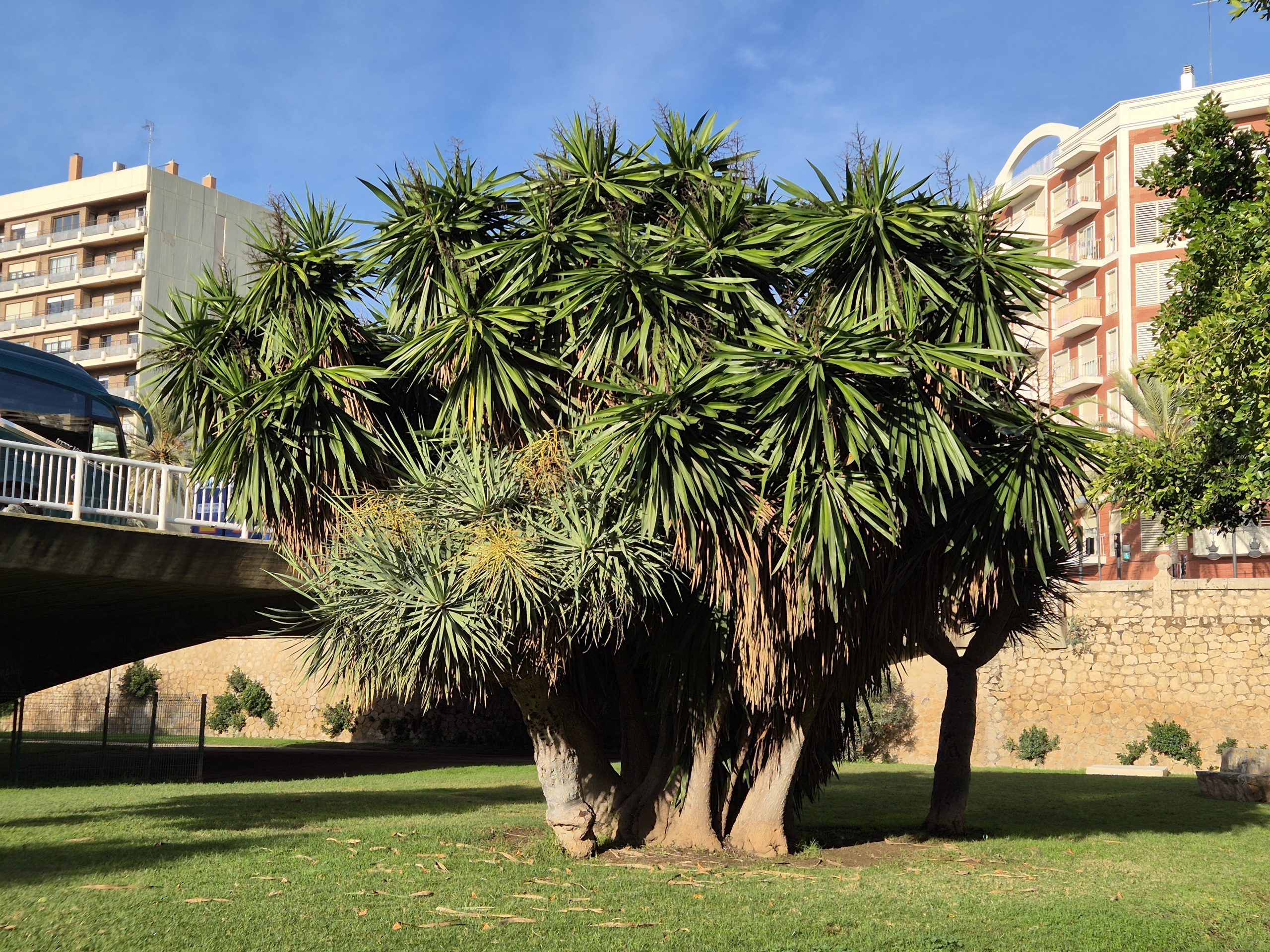
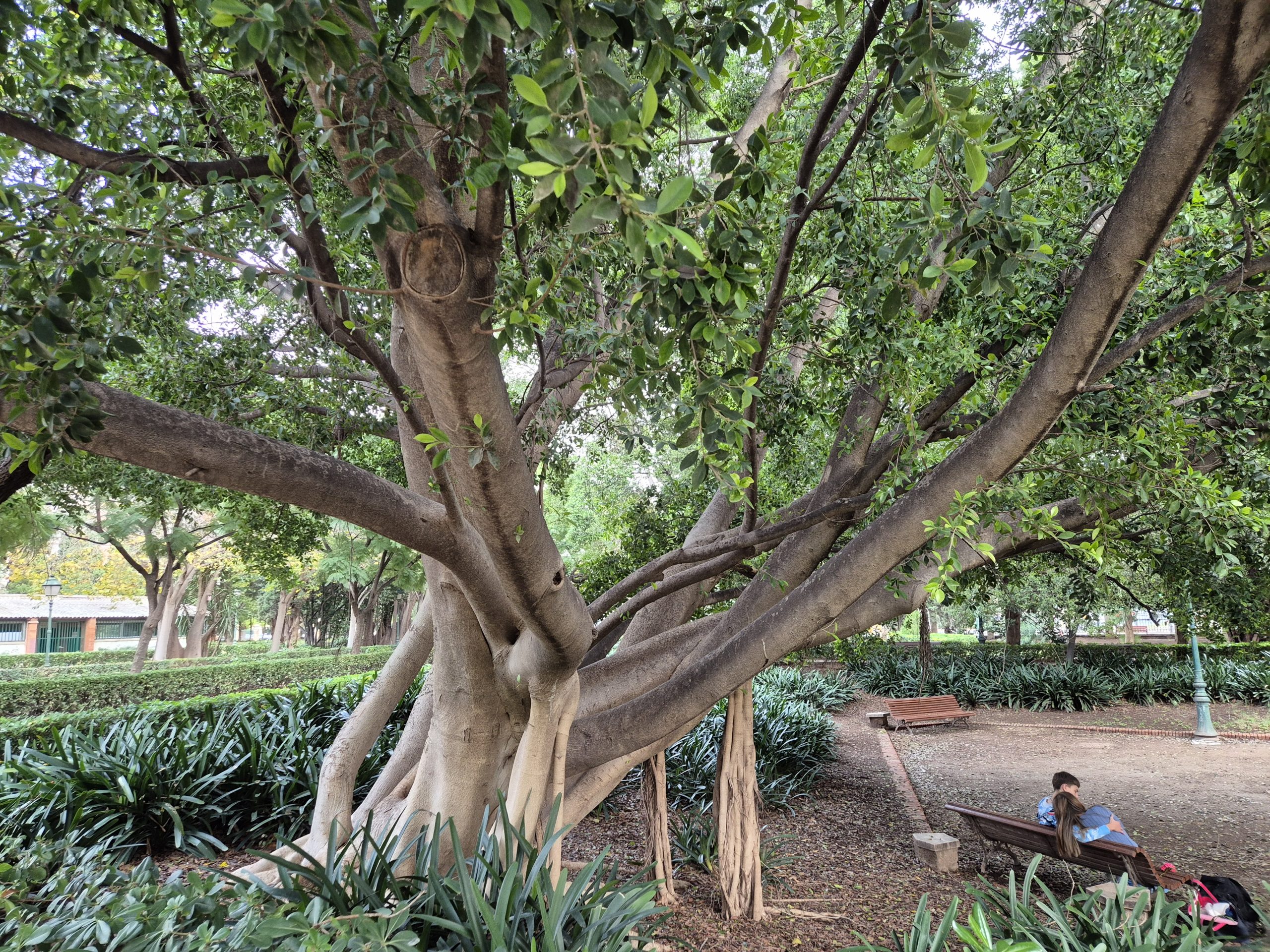
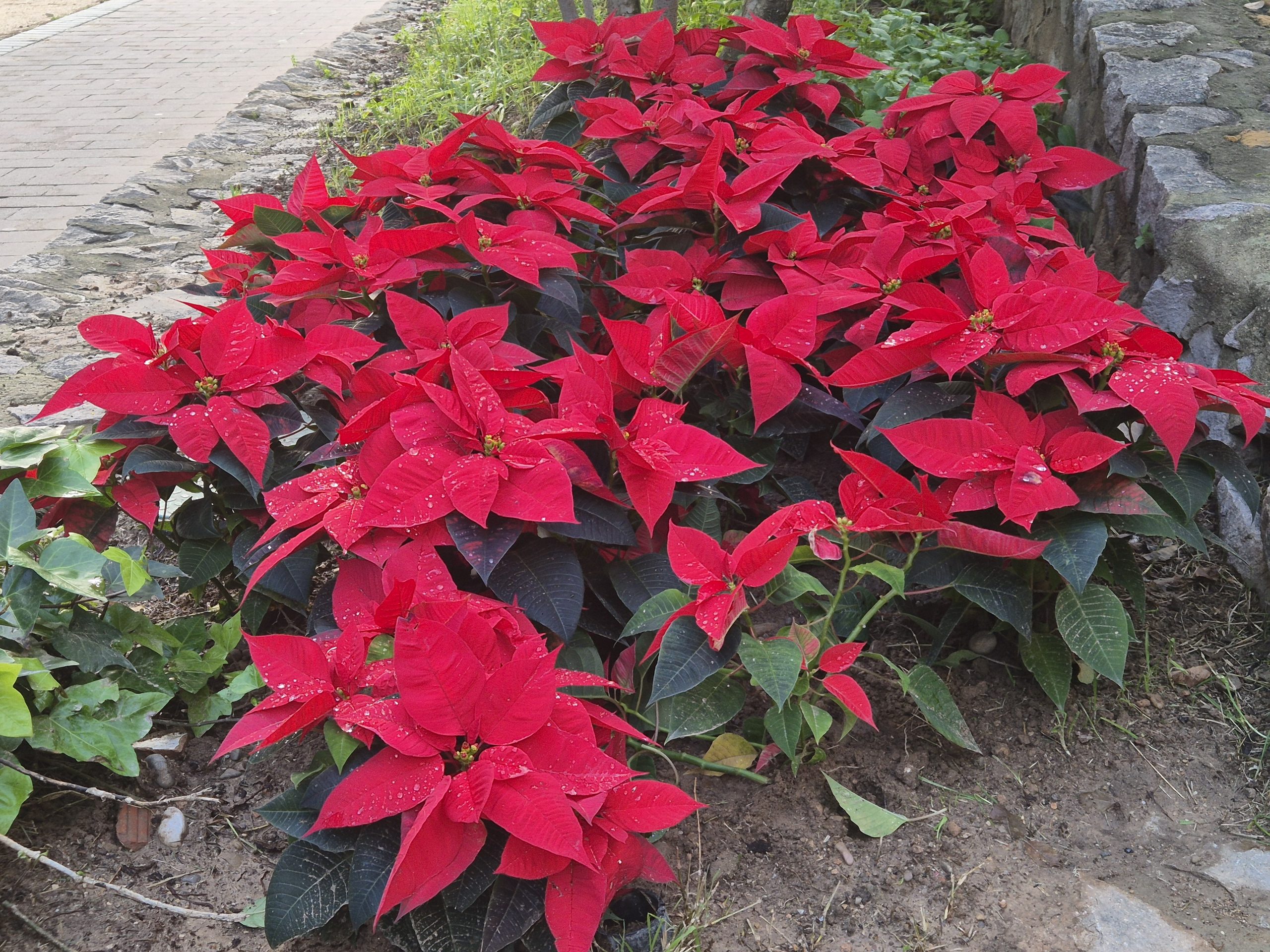
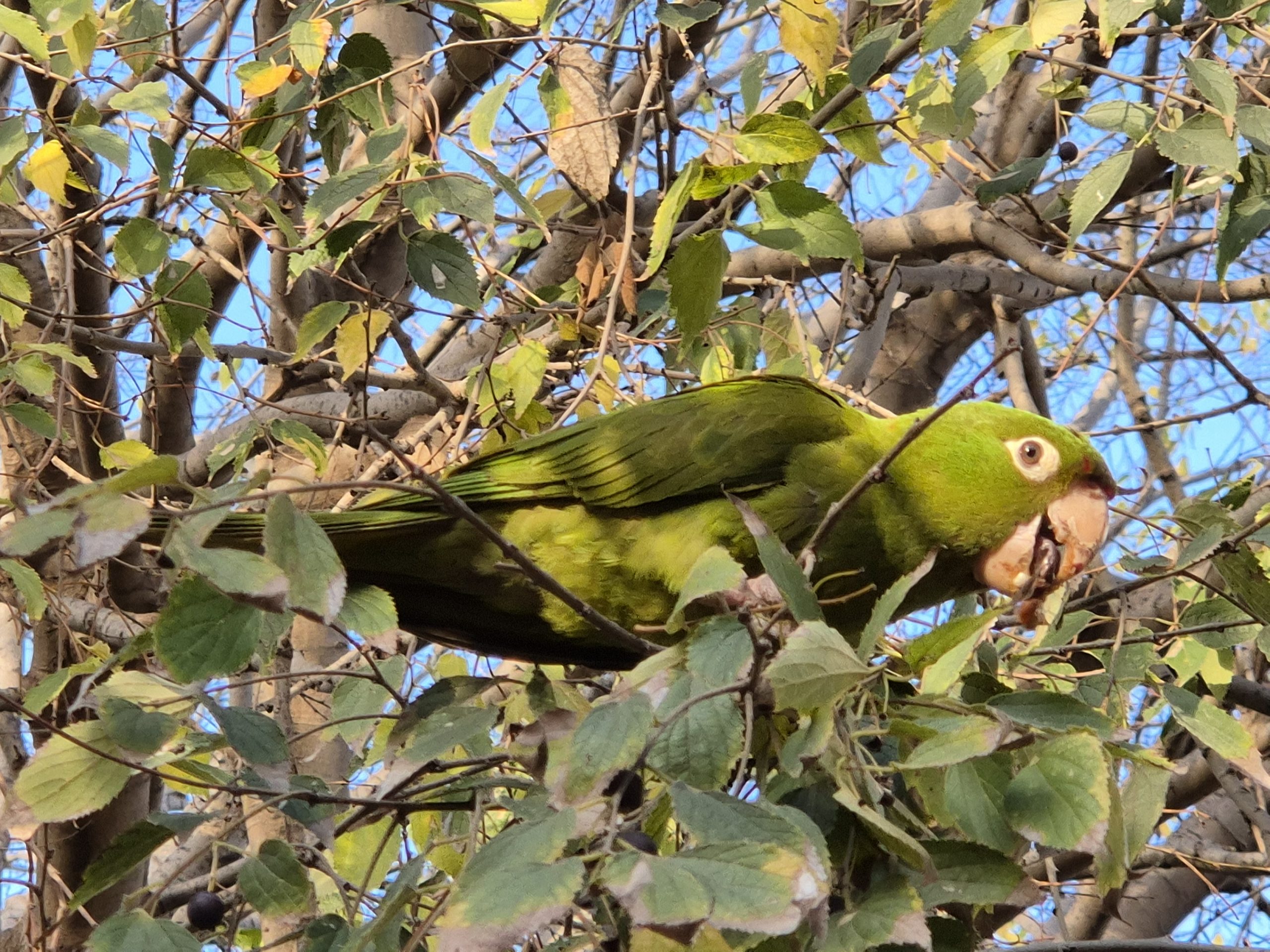
The gardens were full of life. Flocks of red-masked parakeets lived boisterously in the trees; orange trees hung heavy with fruit, and palms of every kind stood about. Pale, cream-colored berries weighed down trees all over the city – chinaberry (Melia azedarach), which I’d first come across, also in winter, in Dubrovnik some years ago; the most dramatic ones clustered around the Torres de Serranos. And though it was December, the trees were ablaze with autumn color. The ginkgo in particular stopped me: a living fossil virtually unchanged for some 200 million years, its fan-shaped leaves turning the most unapologetic yellow. One tree I had to look up turned out to be a vast Moreton Bay fig – an Australian banyan whose buttressed trunk and aerial roots tugged at memories of home. Another, with a fat bottle-trunk studded with thorns and large lily-like pink-and-yellow flowers high in its foliage, was the silk floss tree. And, fittingly for the season, poinsettias grew here not as potted Christmas gifts but as full shrubs.
A first dinner, and the Torres by night
We found a little restaurant in the Old Town for dinner and began, as we meant to go on, by tasting the local specialties – paella, a vodka-and-orange fizzy long drink, and cheesecake to finish. (Food would become an unexpected trial later in the trip; here, I was full of hope and paella – a story for another piece.)
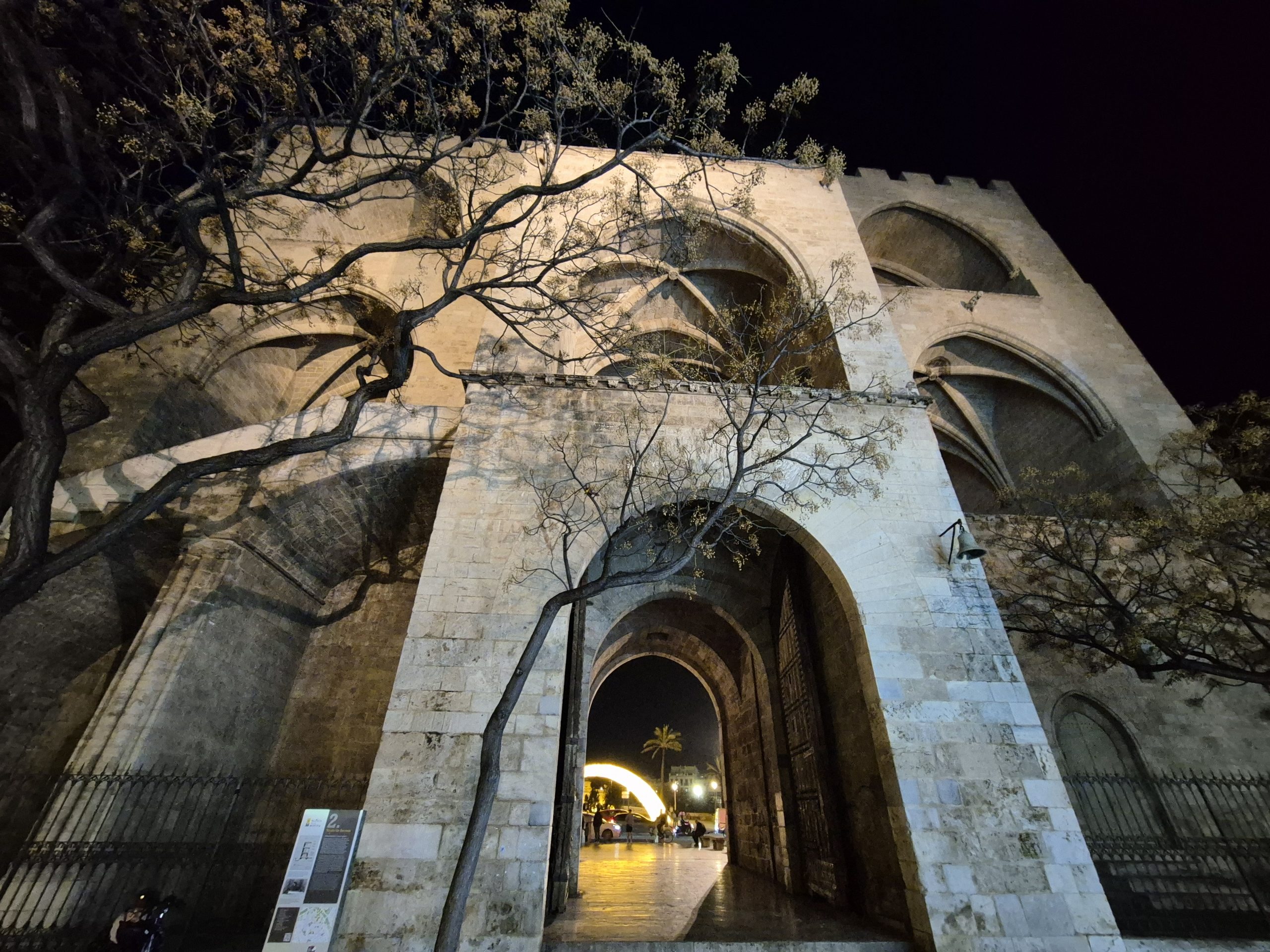
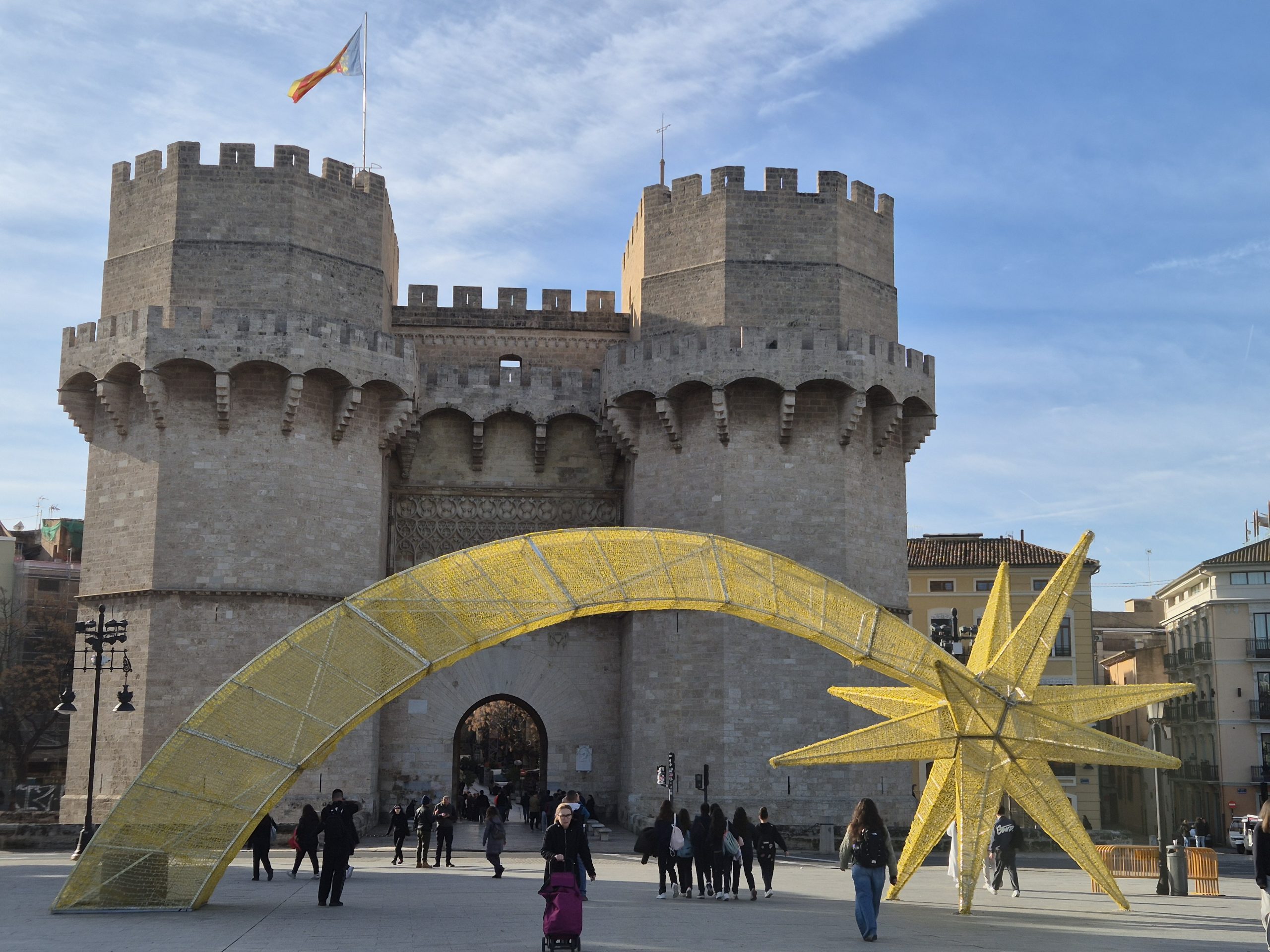
Afterwards we came upon the Torres de Serranos lit up at night, with cheerful Christmas decorations nearby – a tree, and a shooting star. It was only when the very same shooting-star motif reappeared in the next city that I realized its Catholic significance – a detail that had initially escaped me.
Torres de Serranos
19th Dec 2025
Day two was a packed one, taking in the main sights. We started back at the Torres de Serranos, now by daylight: an iconic tower built at the end of the 14th century to defend the city, and later used to safeguard artworks evacuated from Madrid during the Spanish Civil War. The fact itself was striking; the structure is monumental, but also open on its sides, more gateway than fortress. Standing there, it was hard not to wonder how much protection it could realistically have offered fragile paintings in such turbulent times. It was likely the best refuge available at a moment when time mattered more than architectural perfection.
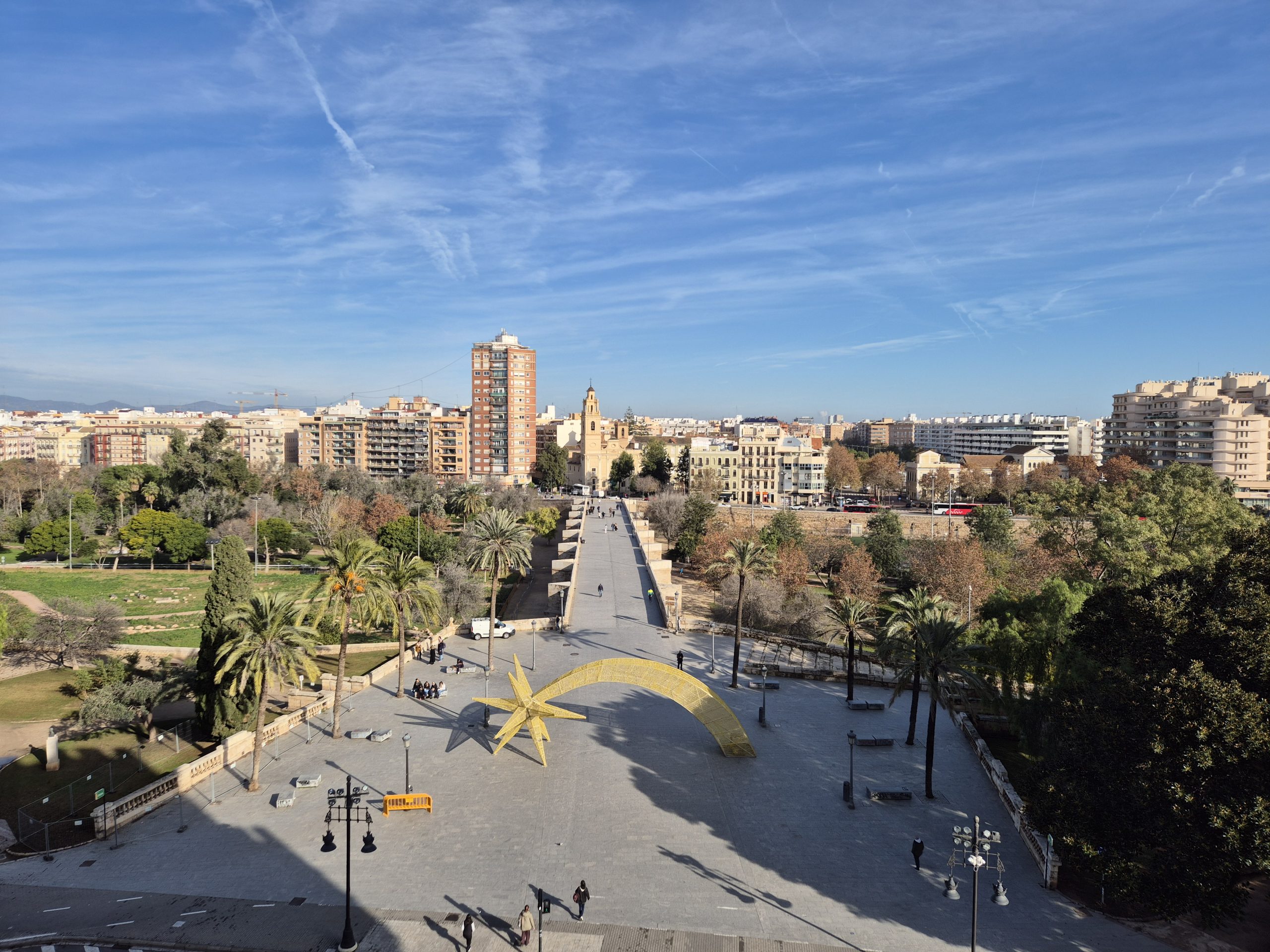
A big group had just come down as we went up. Good timing, it was not very crowded during our visit, on a bright sunny day. We wandered up to the highest accessible level of the tower, and took in the views all around: on one side, the city rooftops, and skyline punctuated with church spires. On the other side, the square directly below with its falling star centerpiece, connecting to the Pont de Sant Josep over the Turia garden – yes, they’ve left all the bridges over it, just as if it was still the river. Makes for a unique landscape, this river of green.
Valencia Cathedral
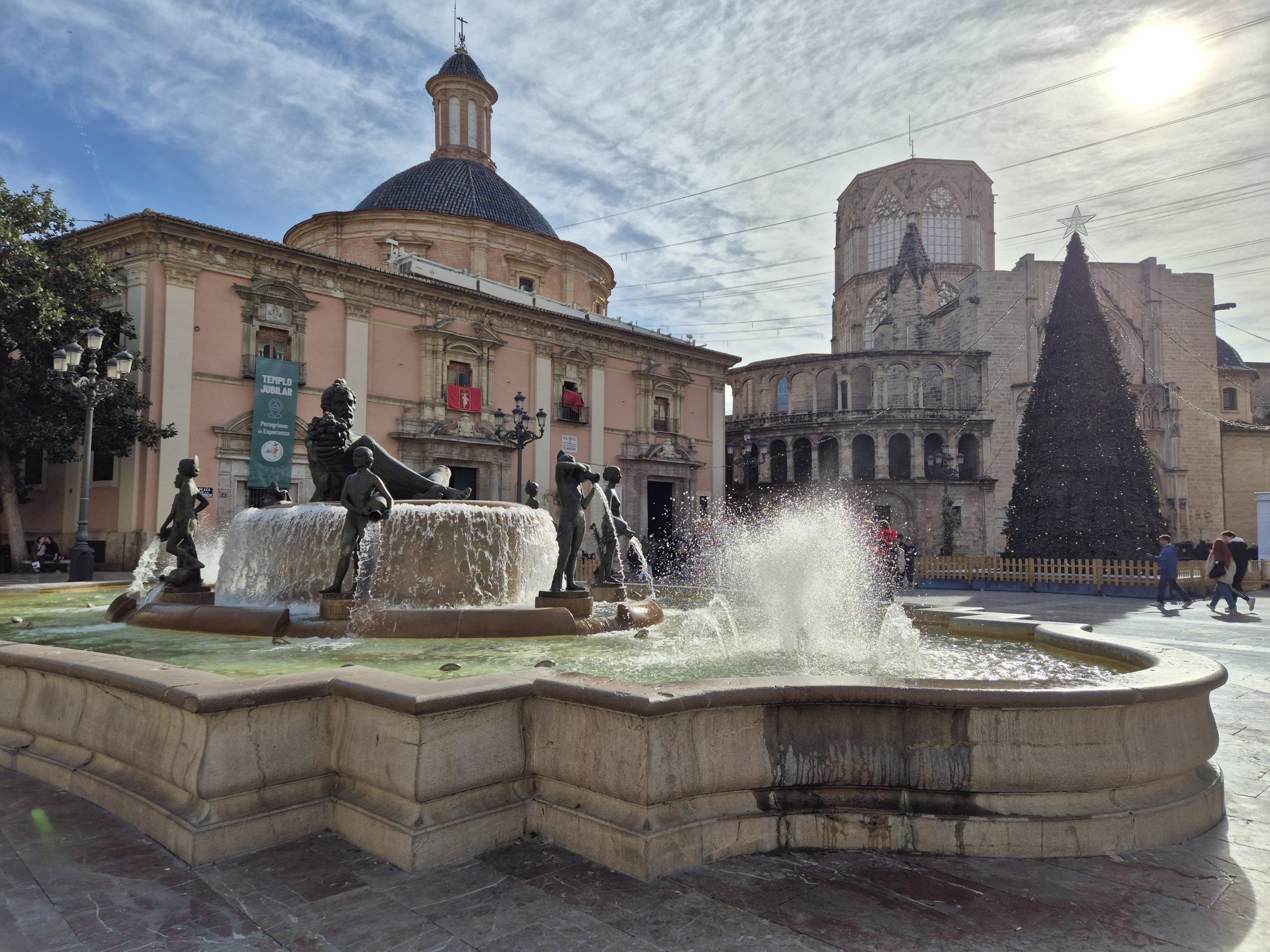
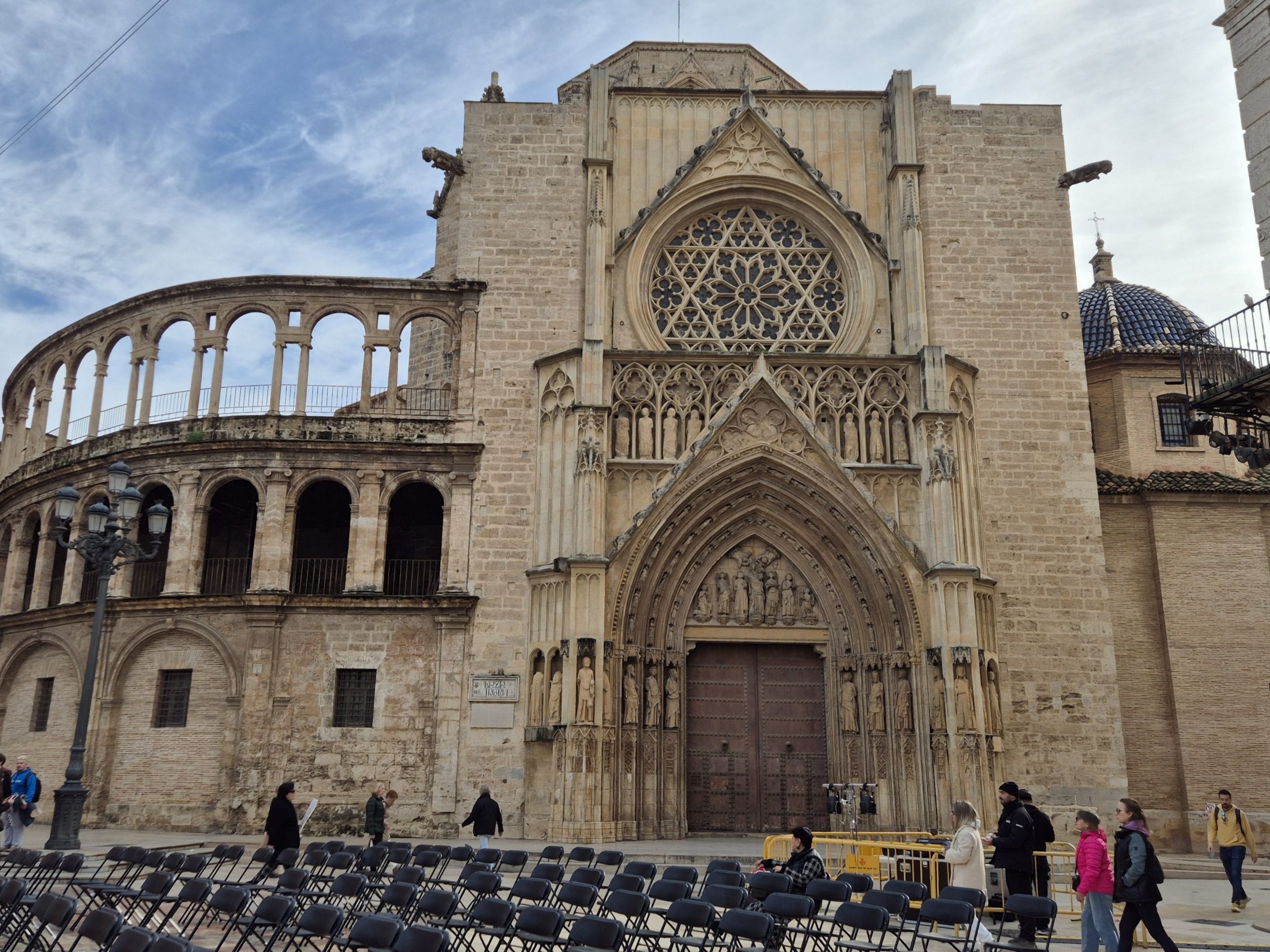
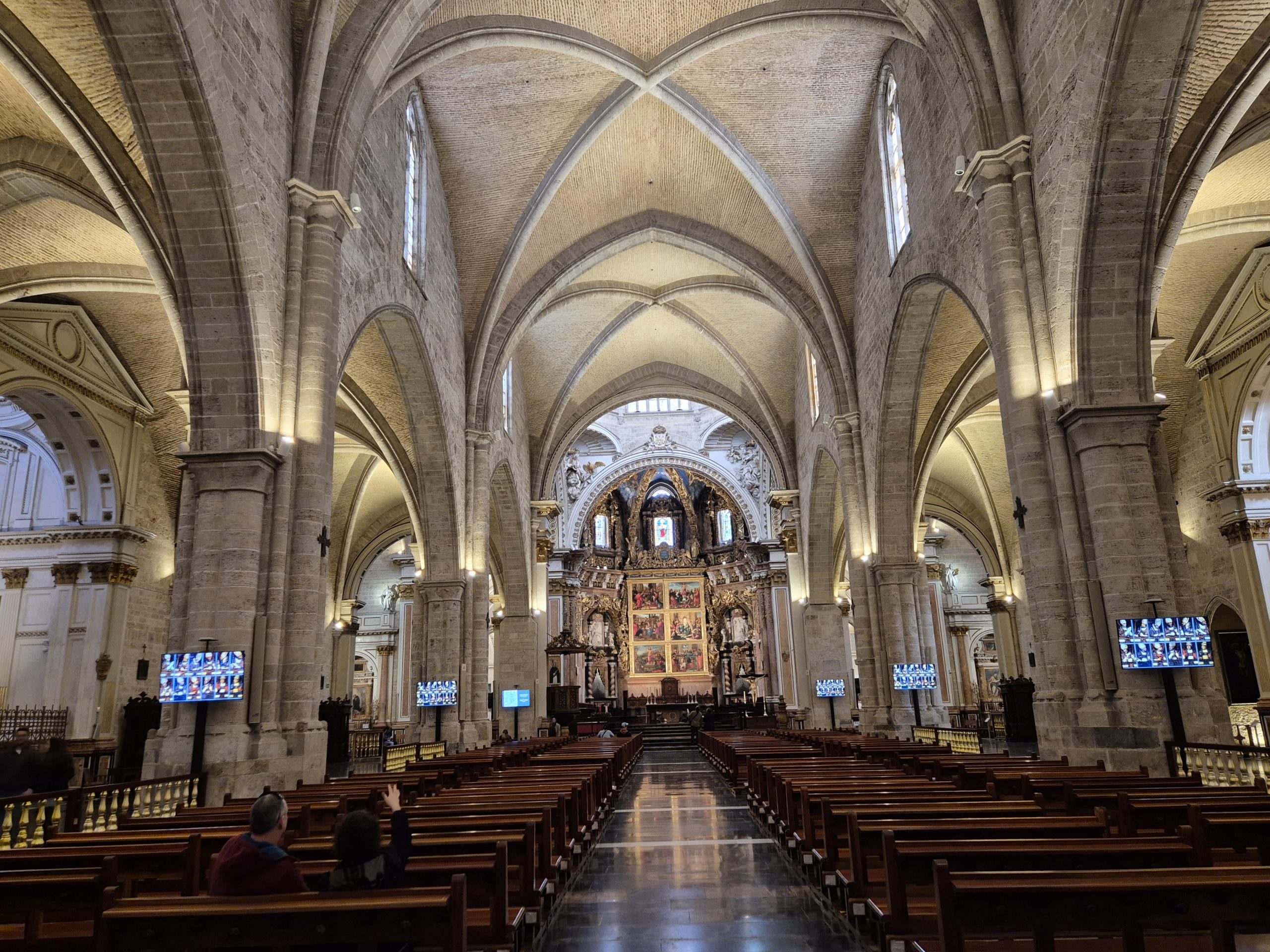
At the Cathedral we spent a leisurely couple of hours with an audio guide. It stands on the remains of a Roman temple that later became the mosque of Arab Balansiya – our first encounter with the region’s characteristic layering of Roman, Moorish, and Catholic histories. Funny how like children fighting for the same toy, religions competed for the exact same spot to build their places of worship. Apparently gods of all faiths unanimously agreed that there was something significantly holy about a particular spot.
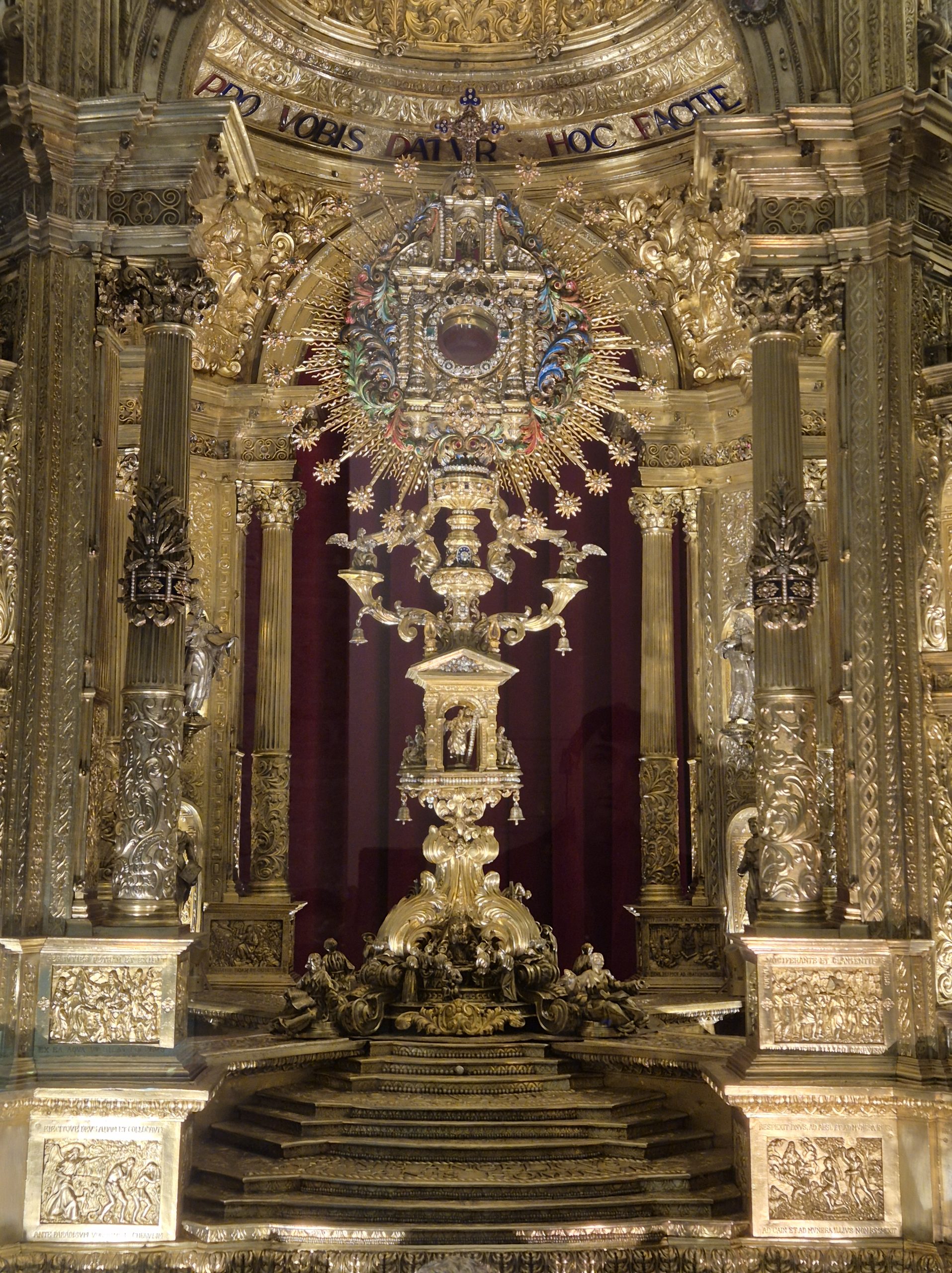
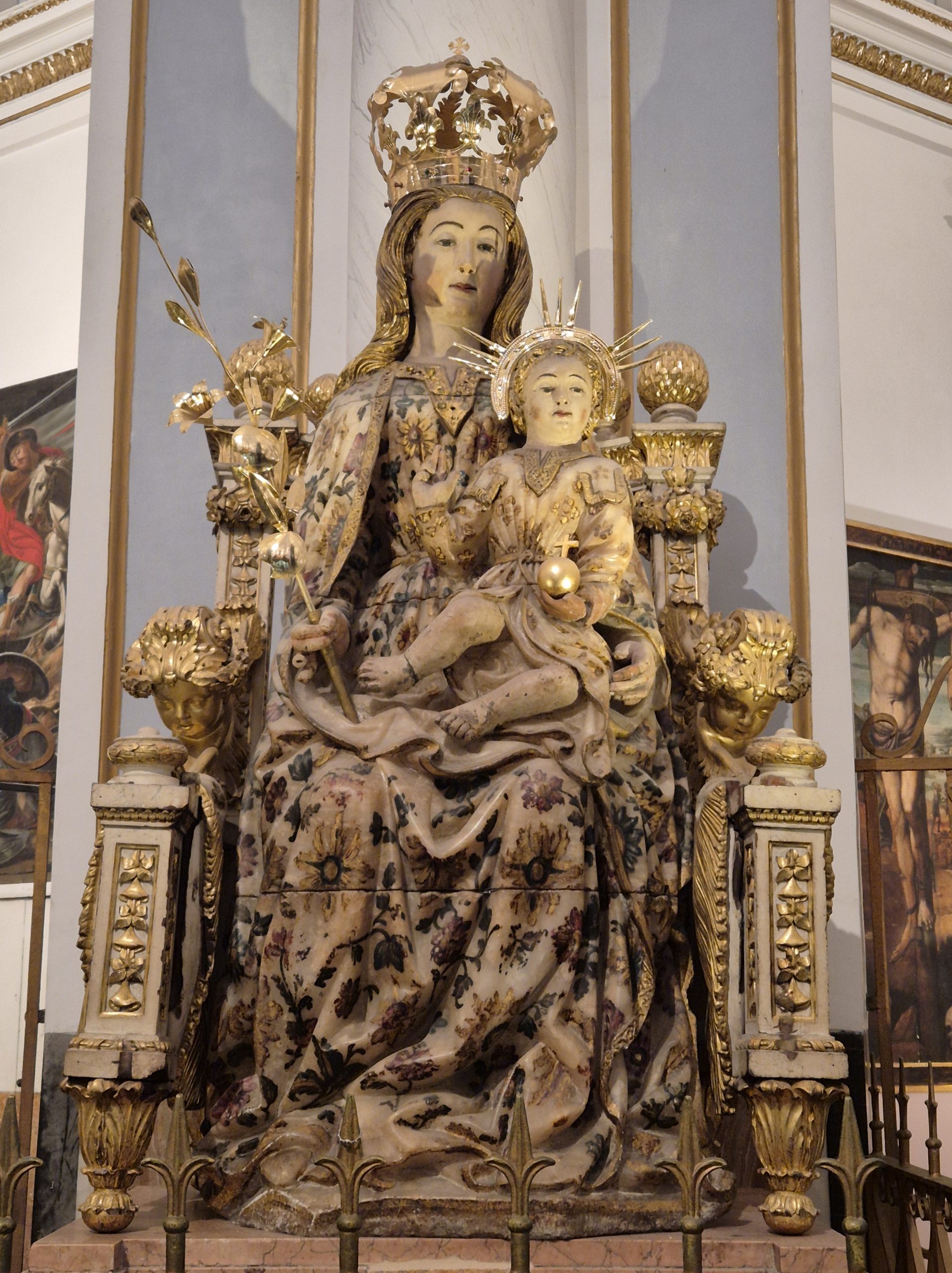
Inside, the museum houses valuable paintings and a chalice believed by some to be the one used by Jesus at the Last Supper – claims that add another layer of narrative to an already crowded past. Two smaller things stayed with me: an oblique window glazed not with glass but with thin panes of alabaster, the daylight coming through the color of weak honey; and the chapel of Our Lady of the Chair, where – a sign explained – pregnant women pray for a safe birth by circling the cathedral’s interior nine times, once for each month they carry.
La Lonja de la Seda
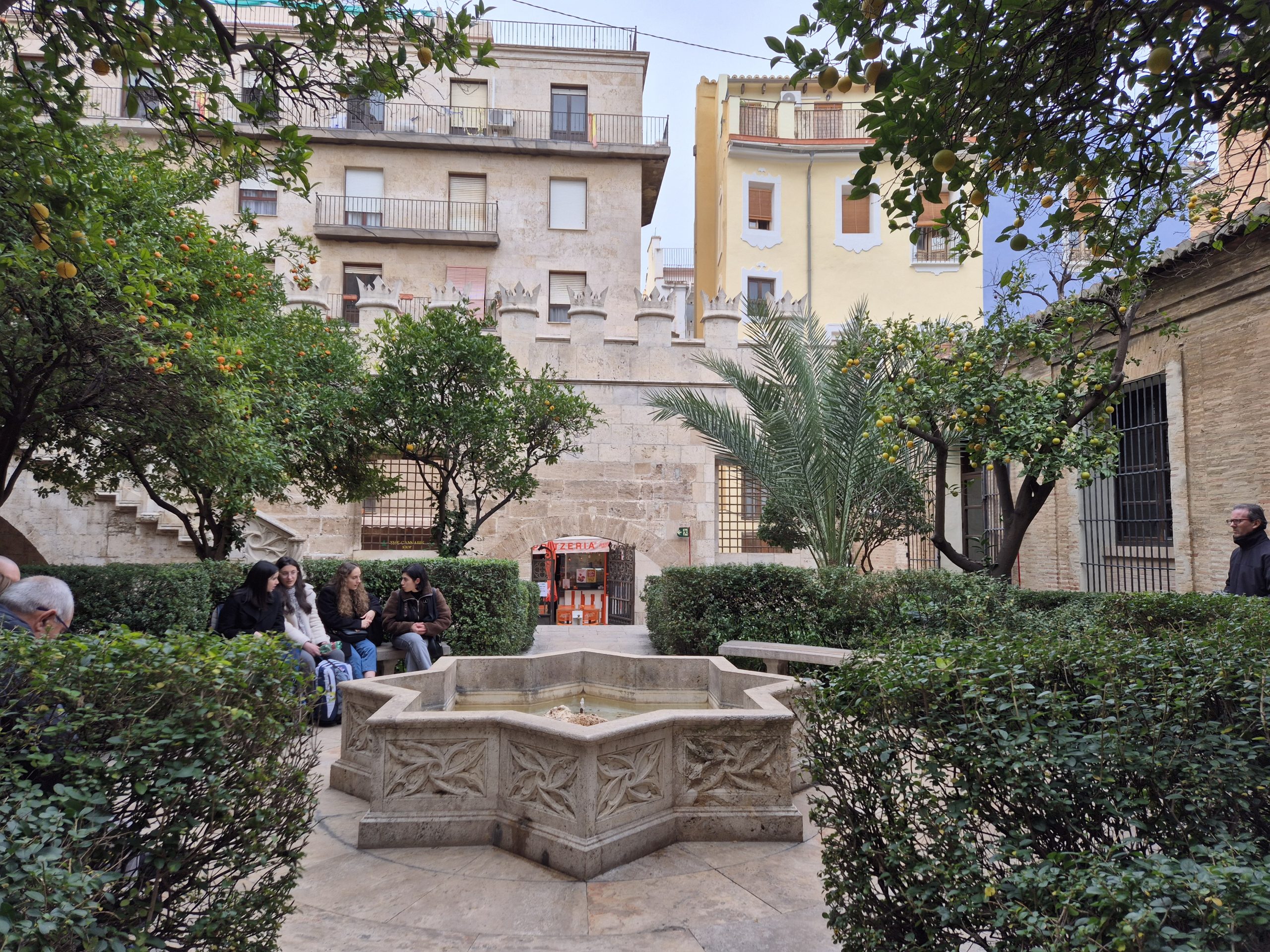
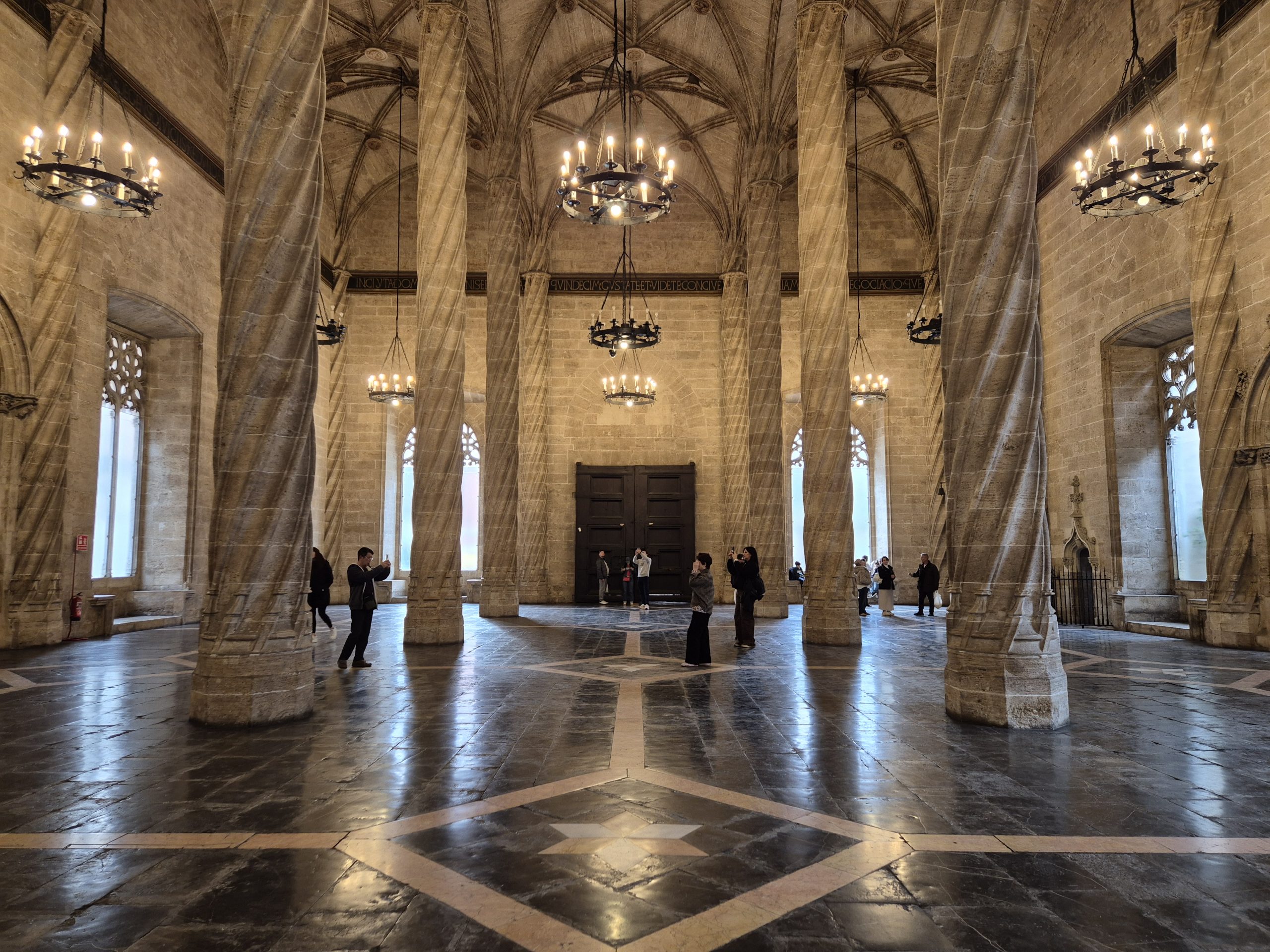
At La Lonja de la Seda, the former Silk Exchange, the Columned Hall felt cool with its filtered natural light beneath its high ceiling, the helical pillars drawing the eye upward. The sunny Orange Tree Courtyard, by contrast, reminded me why I’m drawn to homes and spaces organized around an inner courtyard – secret and sheltered, yet open to the sky. This was a building conceived for secular, commercial life rather than religion, a notable example of what is known as European civil Gothic architecture.
Natural History Museum
From there we hopped on a bus to the Natural History Museum – first time exercising the public transport pass. It was not huge and not particularly a tourist attraction, but somehow had captured B’s attention on the list of things to see. We walked around the reconstructed dinosaur skeletons, me posing as a tiny ferocious t-rex in front of one. I floated around the rest: the paleolithic, monolithic(?) and other -lithic eras, not absorbing much scientifically, but the dioramas of dinosaurs really felt like a window into that ancient world. Nearby, a narwhal tusk was displayed as “the sea unicorn,” beside an old Carta Marina – a sea chart crawling with monsters. These glimpses into other worlds always capture my imagination.
City of Arts and Science
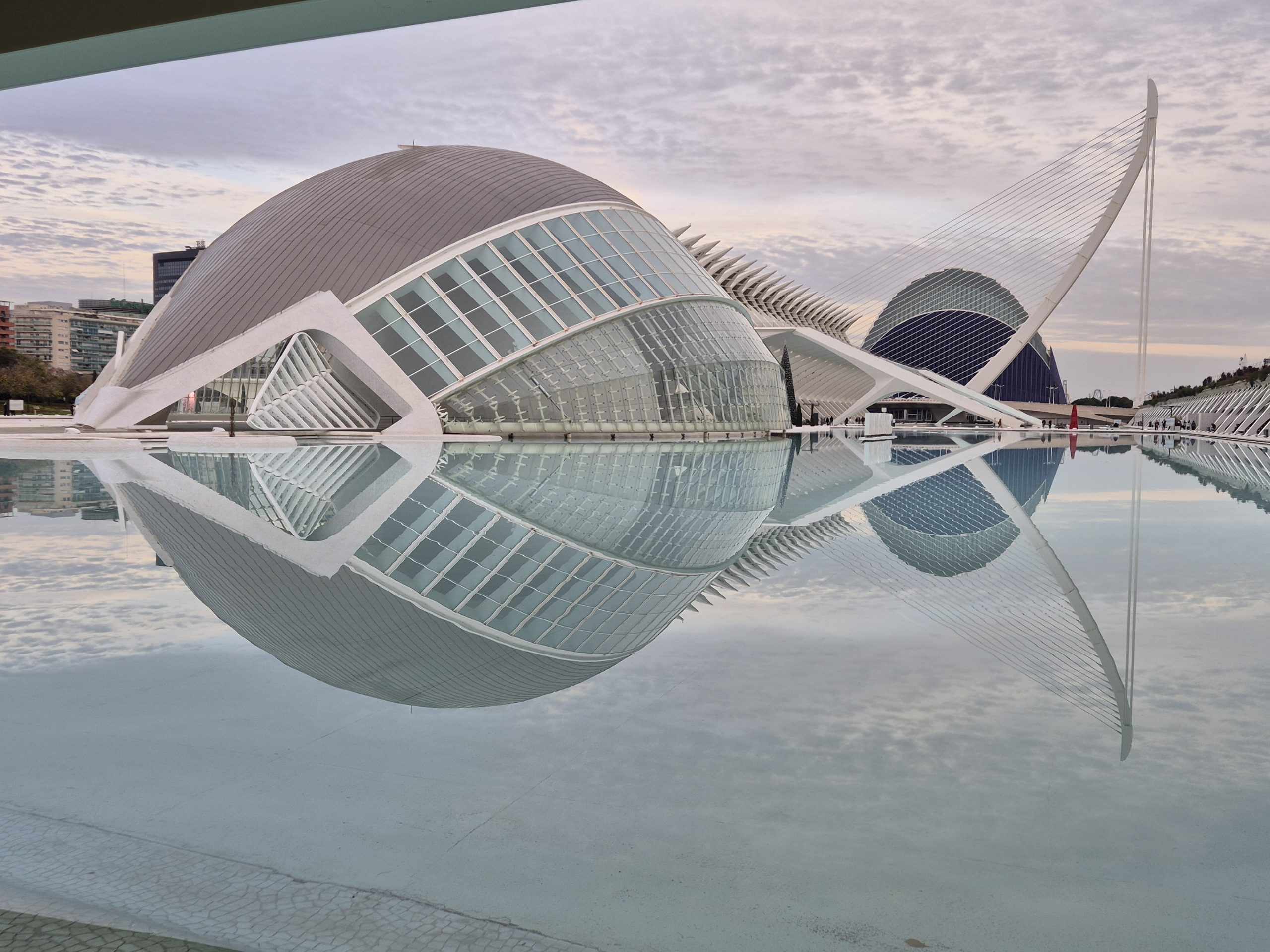
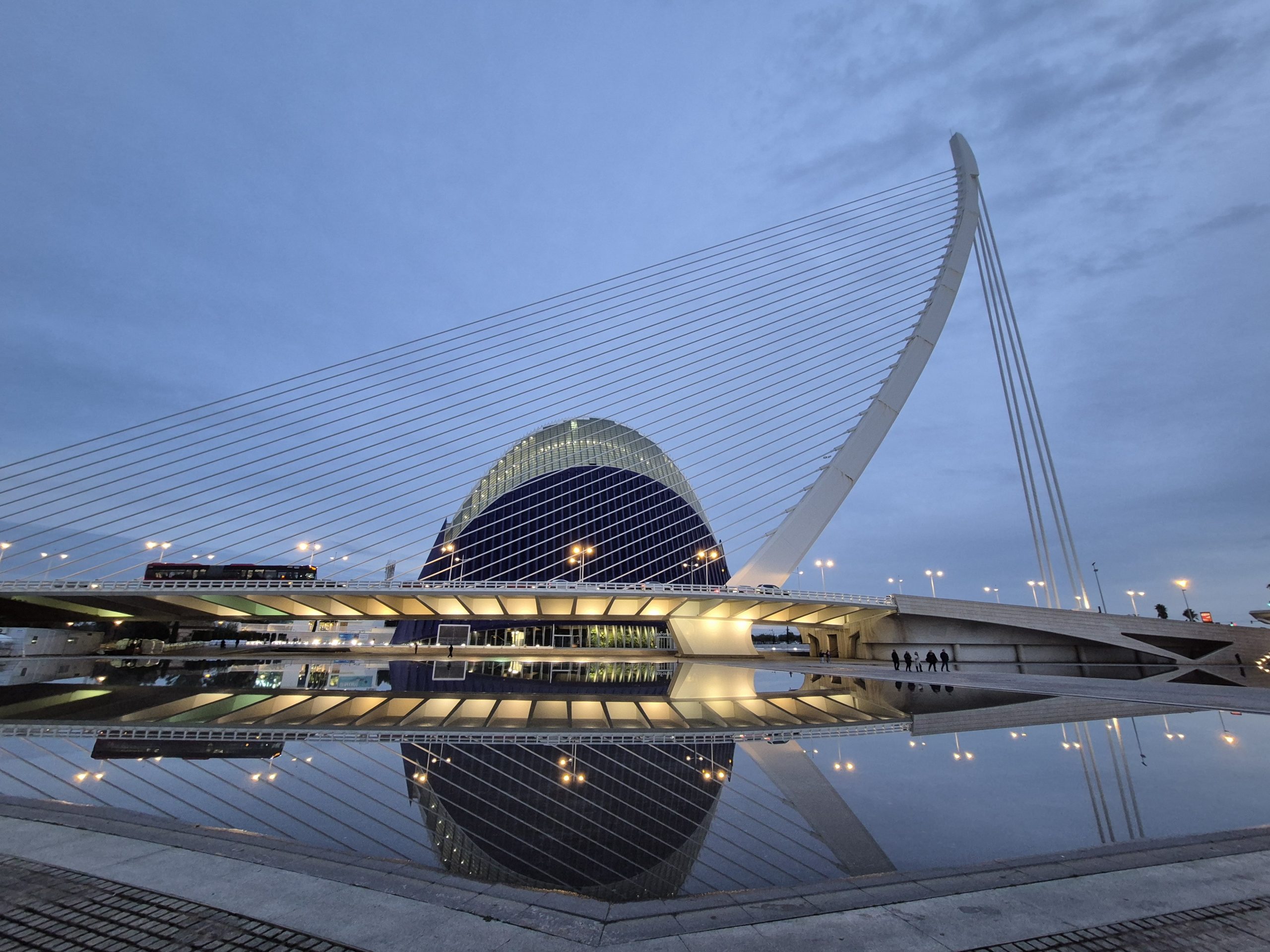
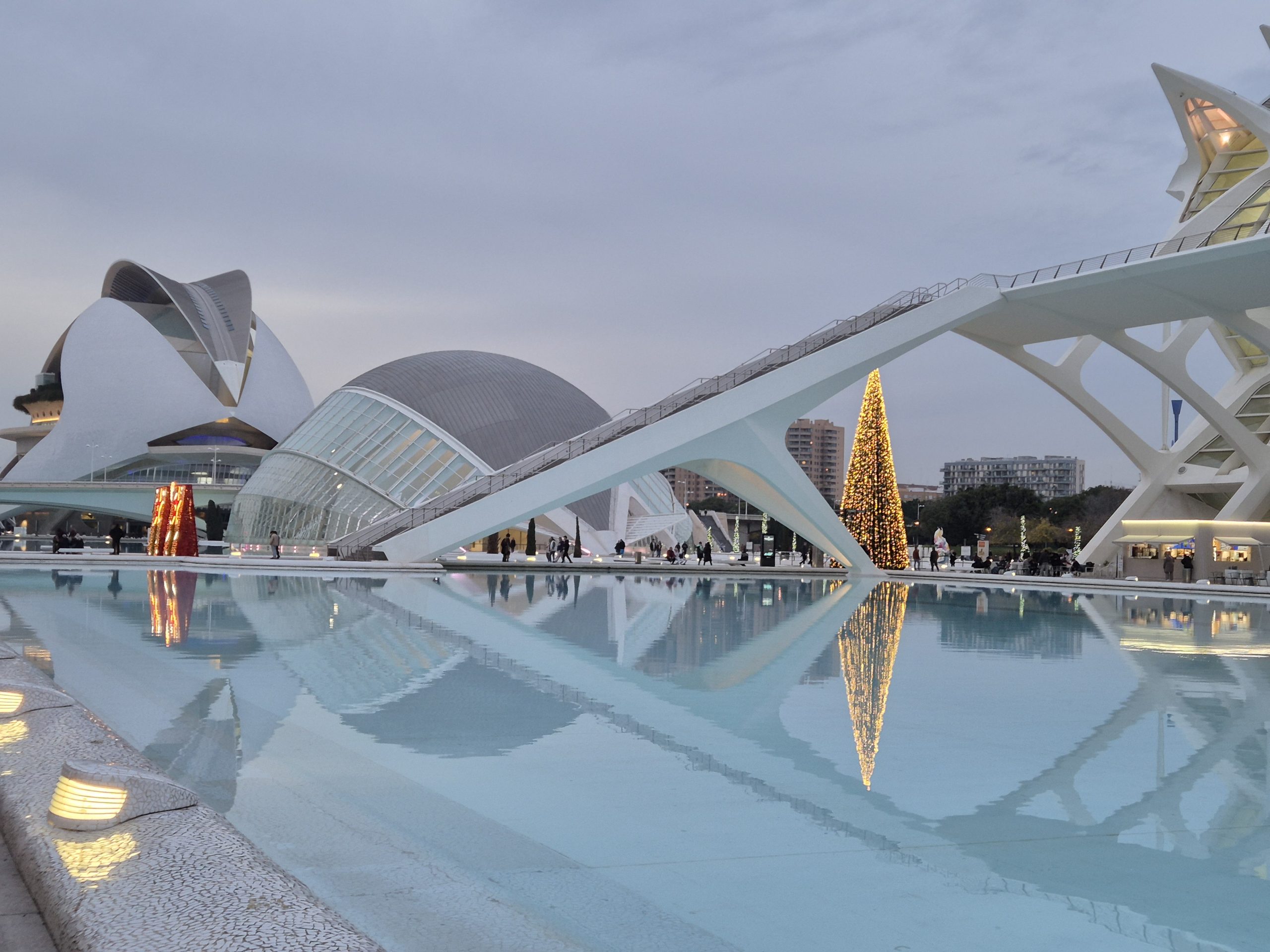
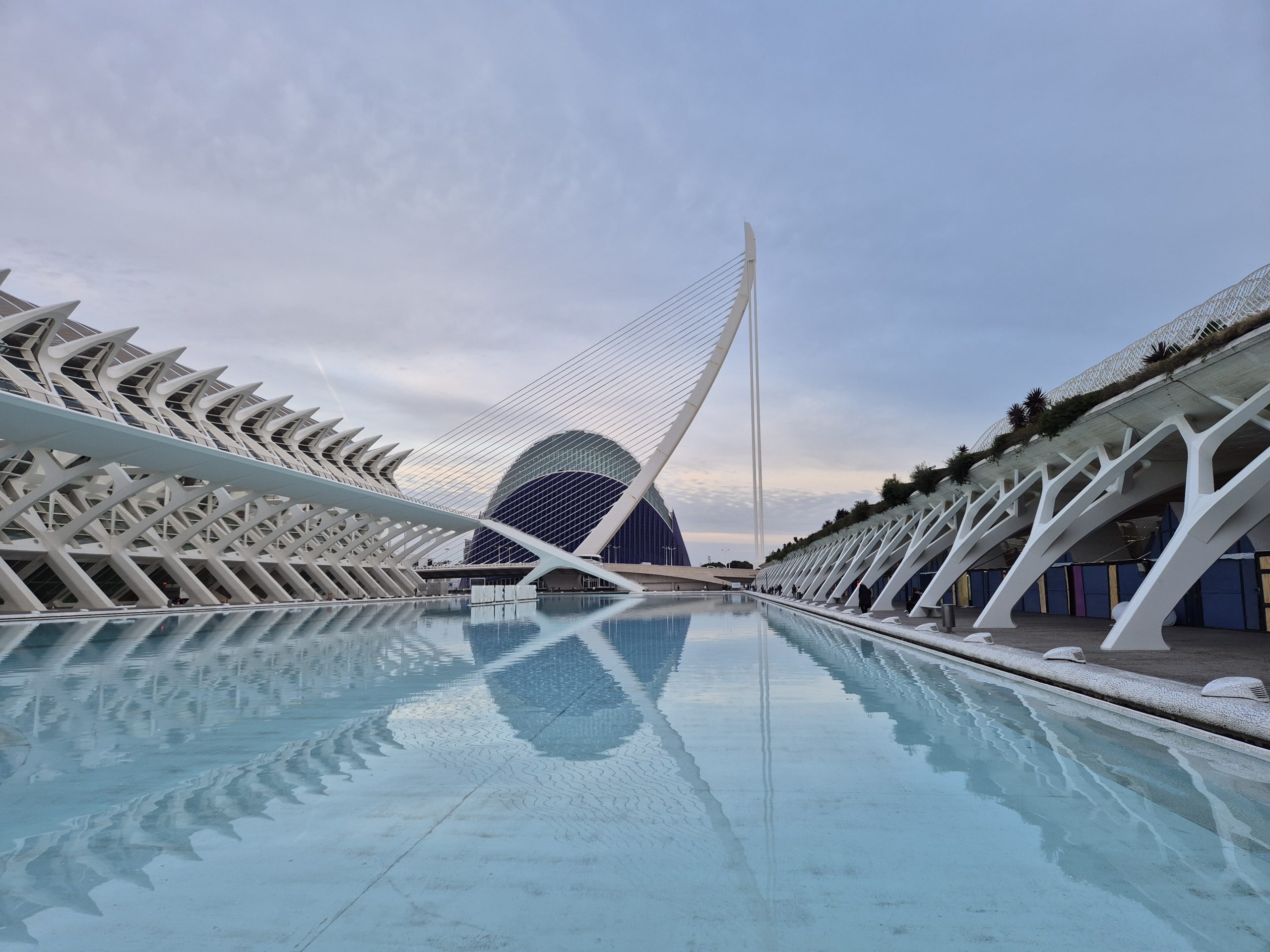
Another bus carried us on to the City of Arts and Science – the stretch of the day when my transit card finally earned its keep. This is Valencia’s answer to Sydney’s Opera House: a modern complex of glass and steel set in low pools of water, all the more striking after a morning of historic stone. The buildings are cleverly surrounded by shallow, ceramic-tiled basins of clear blue water; seen from either end, they give the impression of outsized marine forms – a fish at one end, a blue whale at the other – emerging from the surface. There was a Christmas market here too, where we ate a chimney cake – a sweet roll of dough baked over coals on a turning skewer. I bought a few heart-shaped pendants of different stones.
Malvarrosa Beach
We had left Malvarrosa Beach for the end of the day, and it turned out to be a quiet anticlimax: in December there was simply nothing to see, the long stretch of sand empty and grey in the fading winter light. A summer version of this, I’m sure, would be another thing entirely. We did get a 30 min bus ride each way, so there was that. As anticlimaxes go, it was at least a peaceful one – a soft full stop on a soft beginning.
The Horchata checkbox
After the beach outing, back to the city center, I went hunting for Horchata, a nutty sweet drink, praised by one blogger. Nice but nothing to obsess over. Made from tiger nuts, it tasted unexpectedly familiar, reminding me of neera, a palm nectar from western India. Dinner, less poetically, was pizza.
Rail adventure, here we come!
20th Dec, 2025
Our grand rail adventure started the day we left Valencia for Córdoba. I was excited as a small child to go by train. Trains are not only nostalgia for me, but also constant building of new railway memories, for future nostalgia! I remember train journeys in all countries where I’ve lived: India – childhood Madras locals, the 36 hr train travels between Madras and Delhi during my BITS Pilani years, then countless train journeys during my time in the UK, a 10 day backpacking by rail through Italy in 1997, and one or two train journeys in the US – the country that’s least train-friendly.
And now new memories to add to the list – unique Spanish station ceremonies: queues of locals and tourists waiting to show tickets and have baggage x-rayed, and be allowed onto the platforms where snub nosed regional trains as well as sleek long distance Renfe trains were waiting to take us places.