

Impressions of Moorish Andalusia
An unhurried rail journey through layers of history
18th – 31st Dec, 2025
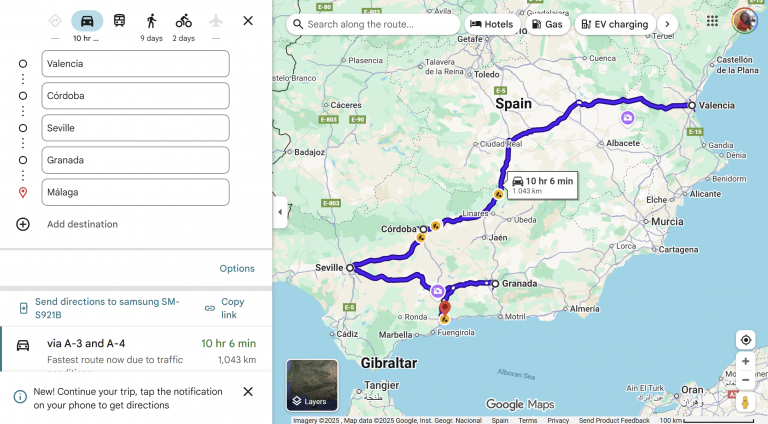
Moorish Andalusia had long been on my wish list, ever since I came across an itinerary in an adventure travel company’s brochure. I found the name so evocative that, for that reason alone, I wanted to go. Once there, the region’s distinctive and wide appeal became clear: the way layers of history coexist here – Roman, Muslim, Catholic – sometimes in harmony, sometimes in tension, often with one quite literally built on top of another. We travelled through southern Spain in December, moving mostly by train – Valencia, Córdoba, Seville, Granada, and finally Málaga. Winter had its own quiet charm – calmer cities and festive lights. Added to that was the luxury of slowing down – taking two unhurried weeks allowed the region’s layers to reveal themselves gradually.
Cities along the way
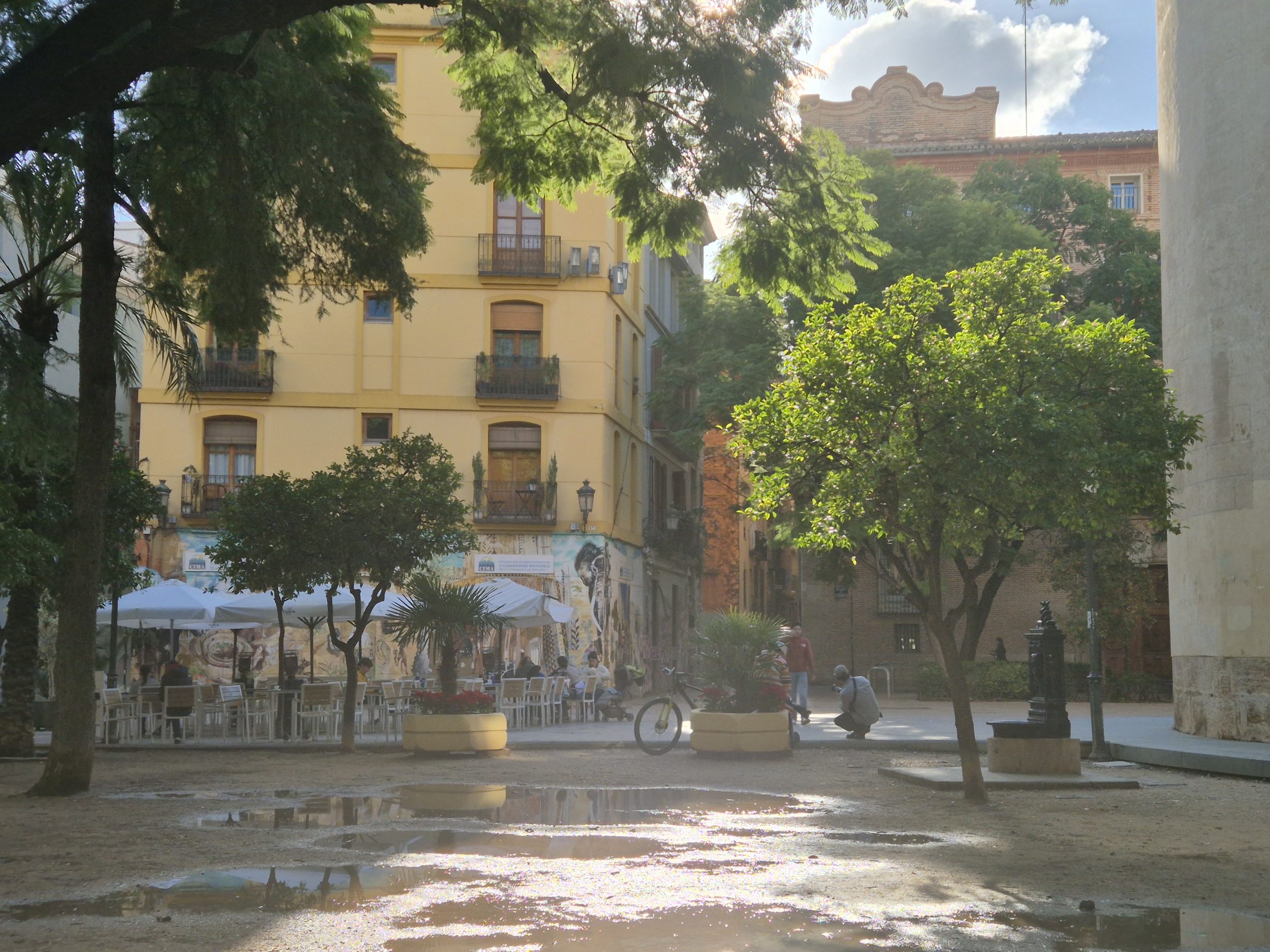
Leaving Andalusia
Travelling through Andalusia this way – slowly, in winter, with time for both cathedrals and cafés, gave enough time for reflecting on the complex layers of its history, and a quiet satisfaction of a long time personal wish fulfilled. And has sown the seed for a return visit, to walk some trails in the Sierra Nevada.
Practical notes & references
Trains
We started planning the trip some 4 months in advance, and discovered that on the online train booking sites, tickets can only be bought 2 months in advance. Here are some links to the online booking sites:
Official Renfe Site: https://www.renfe.com/es/en – a bit clunky but works, and has no hidden extra fees.
3rd party Trainline: https://www.thetrainline.com/ – has additional booking fees and a strange mechanism of “book within 30 mins to save on fees” – we did not use this service in the end.
Public transport
Intercity train travel worked well throughout the journey, but within cities I often found myself forcing a public-transport habit that didn’t quite fit. In many cases, walking turned out to be just as fast as buses or trams – sometimes faster – once waiting times, transfers, and stop locations were factored in.
One recurring surprise was how poorly local public transport connected to major railway stations. Unlike what we’re used to in the Netherlands, there were often no obvious bus or tram stops immediately outside stations. Reaching one could mean a fifteen-minute walk, followed by another wait – at which point the hotel, perhaps thirty-five minutes away on foot, no longer felt so far. More than once, we ended up dragging our suitcases through the city rather than navigating an indirect transit route.
It remains a mild mystery why city transport networks here don’t prioritise seamless station connections, especially in places so well served by long-distance trains.
Postscript
Writing about our easy, scenic train journeys now carries a sobering undertone. Learning about what happened later sent a shiver through me: just weeks after we passed through Andalusia, in Jan 2026 a deadly rail collision near Córdoba and another derailment near Barcelona claimed lives and injured many – events that led to nationwide discussion about rail safety and calls from unions for systemic improvements.
Soon after, in Feb 2026, severe storms and floods swept parts of the region – including the River Guadalquivir, whose serene presence we had enjoyed in city after city, now swollen and destructive.
Those events now sit inseparably alongside our own memories, and we are quietly grateful for the ordinary luck of having travelled safely – a reminder that all travel depends on complex, invisible systems that we usually take for granted.
