Window into early nineteenth century England
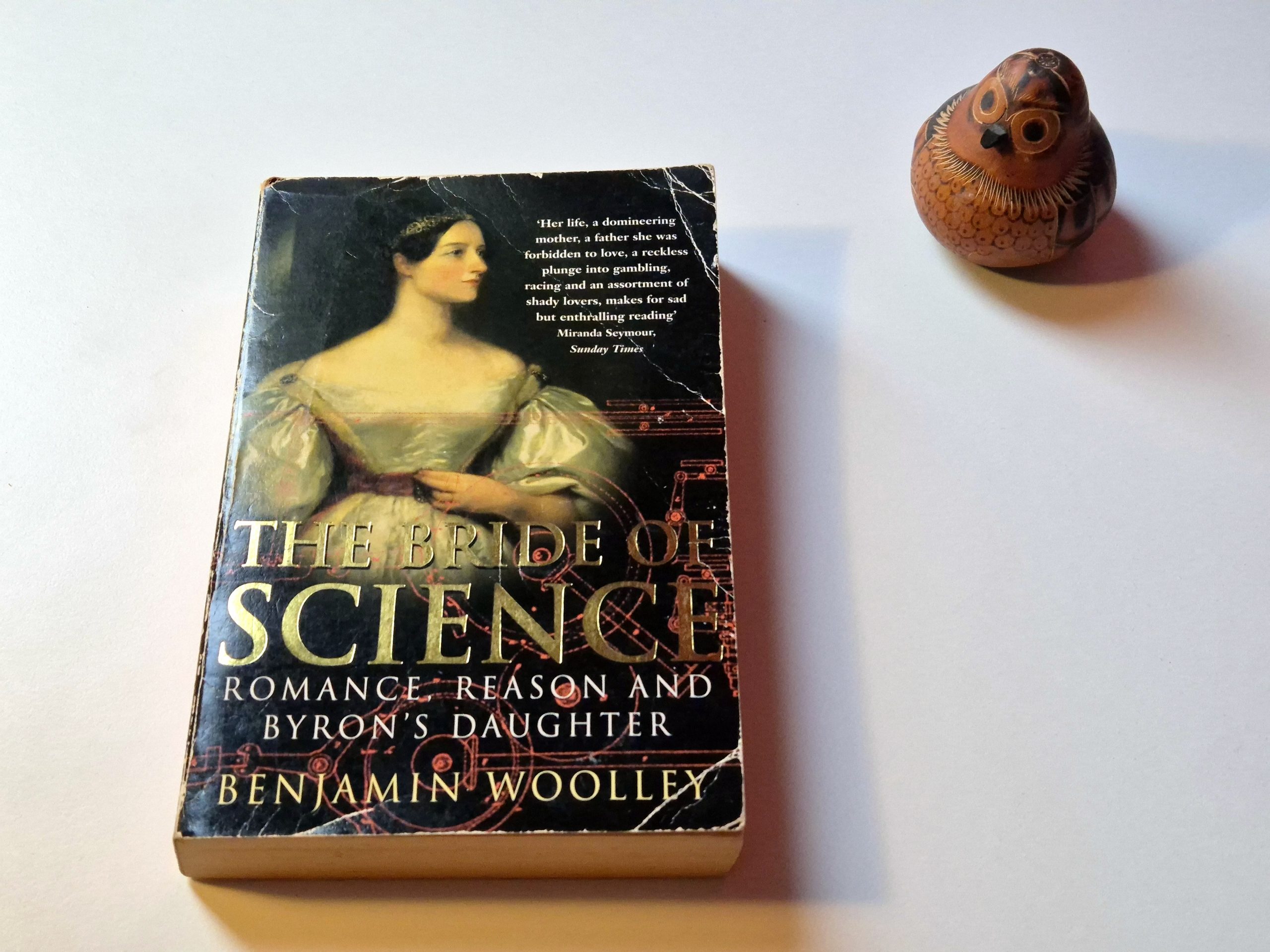
Bride of Science: Romance, Reason, and Byron’s Daughter by Benjamin Woolley
Book on Amazon | My review on Amazon
4 out of 5 stars
Reviewed November 17, 2009
More than just a biography of Ada Lovelace Byron, this is a narrative of the social setting of early 19th century England. In the span of under 4 decades of Ada’s life, Charles Babbage had demonstrated his Difference Engine with a working model, created the design for his Analytical Engine, many scientists were performing experiments related to electricity and magnetism, and some were dabbling in their relationship to the human mind, the great railway system emerged with the steam powered engine making distances shorter and travel less of a hardship. The debates surrounding progress of science versus keeping the tranquility of nature undisturbed are well represented in this narrative.
The story covers a lot of the scandals of incest associated with Byron and his separation from his wife – this separation dominated Ada’s life and had far-reaching effects on her children as well. Ada’s mother Annabella – Lady Byron comes across as a domineering, influential, cruel and manipulative woman.
Speculation, reconstruction, historical evidence all play their parts in this most fascinating story of the “Enchantress of Numbers” as Ada came to be known. This well written biography talks about Ada’s early interest in flying and other “impossible” projects, absorption with mesmerism, phrenology, and above all, her quest for tying the cold mathematical world (of her mother) to the hot, passionate, poetic world of her father. Due to the unique legacy of her parents, Ada sees her purpose in life as one of somehow reconciling the two disparate worlds.
Despite her mother’s best efforts to keep Byronic passions out of Ada’s personality, those are what Ada naturally leans towards, as is evident from her failed elopement in her teens, then several “episodes” with men at various points in her life, and her obsession with gambling, her (medically prescribed) consumption of laudanum / opium, and subsequent addiction. Her professional relationship with several imminent scientists including Charles Babbage, her writing of “notes” on scientific subjects, study of mathematics in her adulthood, her desperation to immerse herself in science in order to avoid her father’s legacy – in spite of all her efforts Ada proves to be a Byron more than a Milbanke (her mother’s maiden name).
The human story is more in evidence than the story of a scientific or mathematical mind. So if you are looking for just facts and details related to Ada as a scientist or “first computer programmer” this book will not be enough.