Granada – a city I’d already visited in my head
Four festive-season days in Granada – the Alhambra at last, the cave quarter of Sacromonte, the Sierra Nevada under snow, and a much-anticipated flamenco show in one of its spiritual homes.
(4 days, 26th – 29th Dec)
Of all the cities on this trip, Granada was the one I arrived at already half-knowing – or thinking I did. Moorish Andalusia had been on my wish list for years, but in the months before we left, Granada in particular had taken on an outsized place in my imagination. I’d been listening to the audiobook of The Moon Sister – the fifth of Lucinda Riley’s Seven Sisters novels, Tiggy’s story – which winds through the caves of Sacromonte and the long afterlife of Moorish Spain. Tiggy’s grandmother in the book is La Candela, a famous (and entirely fictional) flamenco dancer of the gitano clans, born in a Sacromonte cave in 1912, who looked out from it and dreamed of fame.
So I came to Granada wondering how today’s city would measure up to the century-old one the novel had conjured so vividly. Part of the pleasure of the four days was soaking in the real city, as I recalled the fictional story woven around it. I also wondered if there was still the great gitano payo divide today as there was a century ago. Or was that more subdued in modern times, like the caste system in the metropolitan cities of India is? Or completely gone, and only preserved in history?
Quick links to main sights
Alhambra & Generalife | Albaicín & Sacromonte | Granada Cathedral | Sierra Nevada | Sacromonte Caves Museum
Arrival, and the hill at sunset
26th Dec 2025
We walked to Seville’s station and took an afternoon train, and somewhere along the way there appeared snow-capped mountains rising on the horizon. The Sierra Nevada range. For the next four days that white range would be the backdrop to almost everything – framed at the end of streets, hanging over rooftops, a constant in the corner of the eye.
I bought a Granada transit card more or less on arrival – of course I did – and B teased me about it with fondness, since by now the pattern was set: I would buy the card, use it where the patchy connections allowed, and we would still end up walking most places anyway. Granada, hilly and tangled, made sure of the walking.
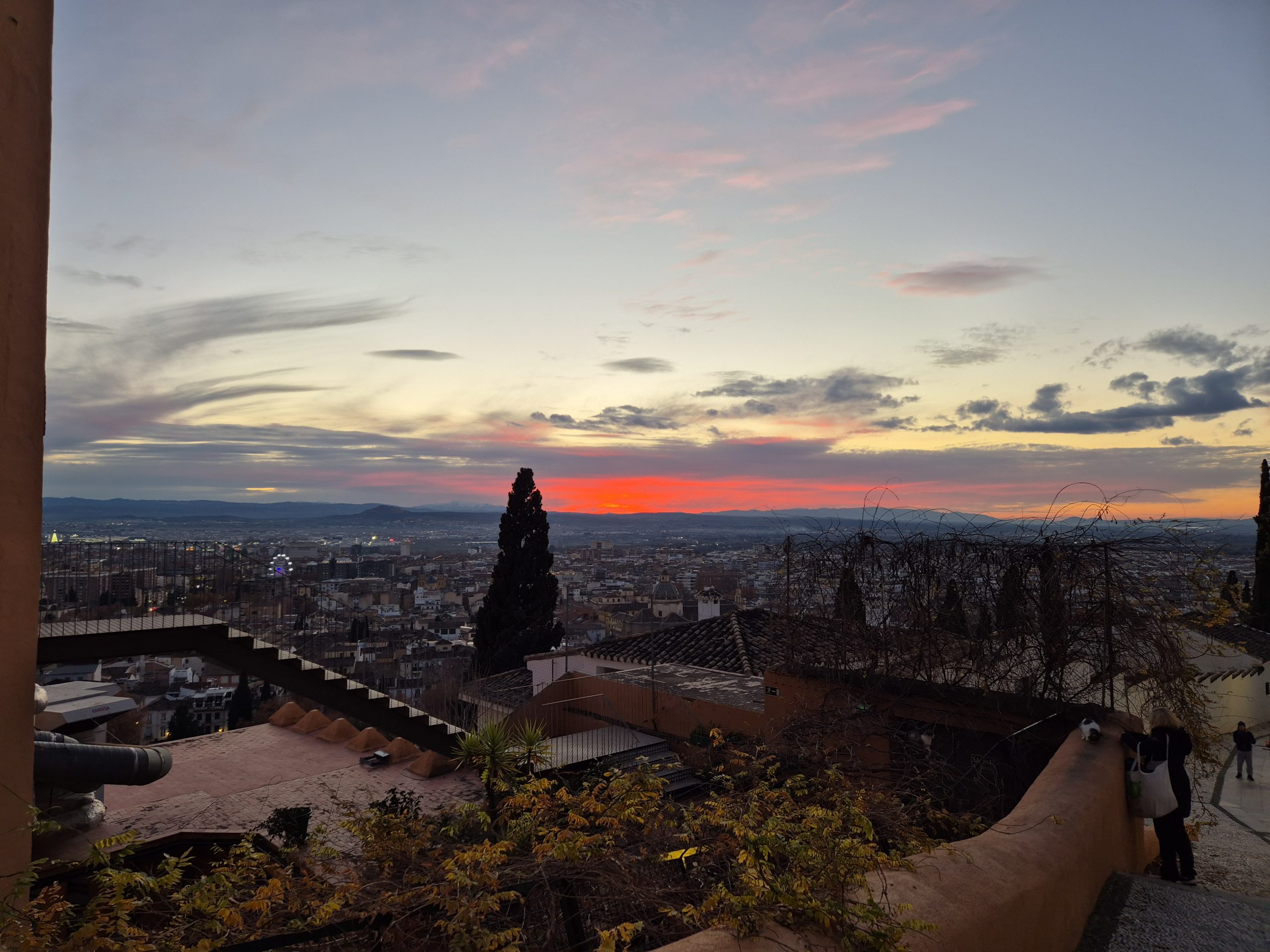
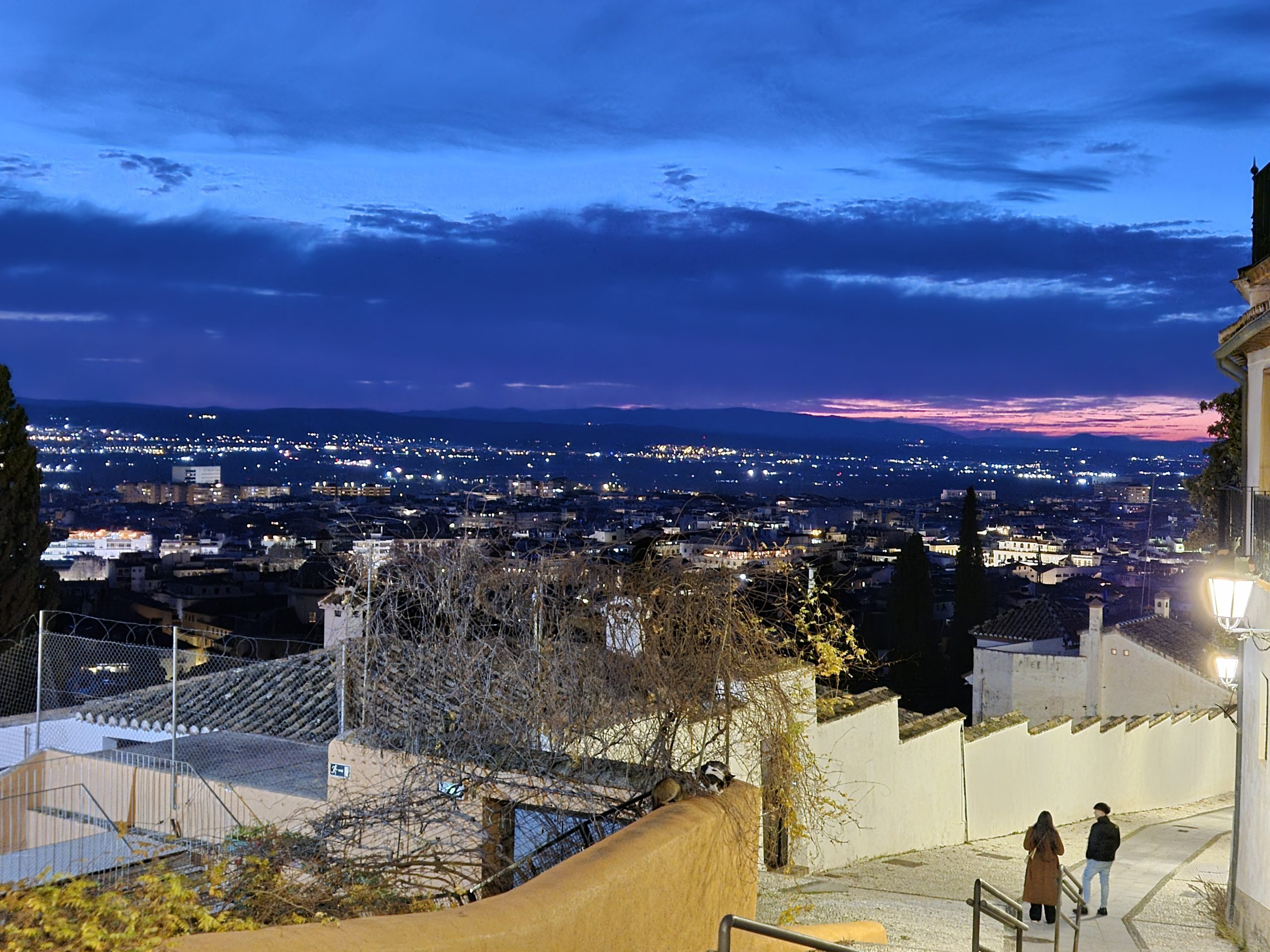
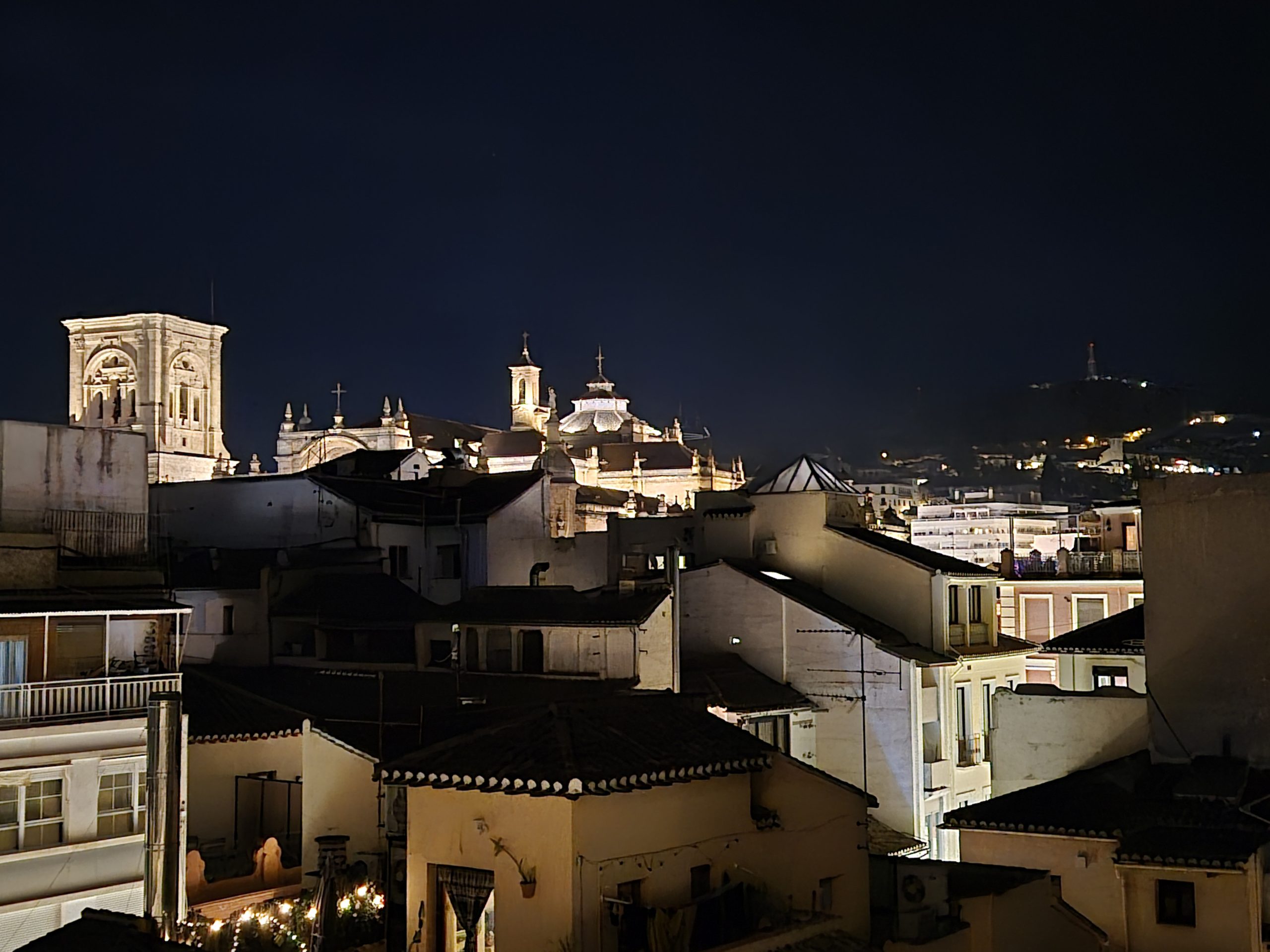
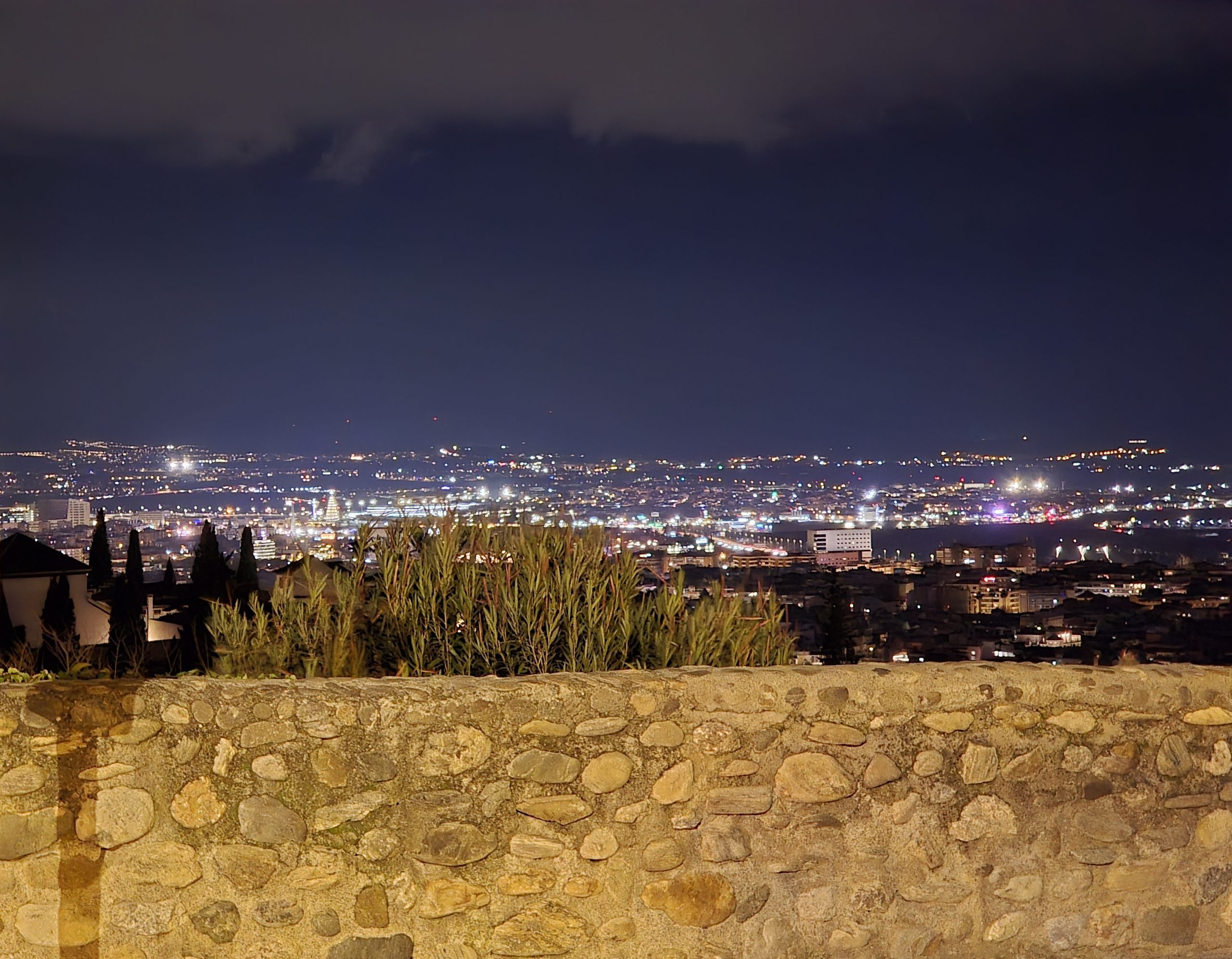
We checked into the Hotel Room Mate Leo and, with the light already going, walked up the hill towards the Alhambra – not to go in, just to find a viewpoint and watch the city turn gold and then orange at sunset. It felt like the right way to begin: the great fortress-palace above us, closed for the day, the city laid out below, and the next morning’s visit waiting like a held breath.
That night we ate at a cheerfully hippie vegan place – and after a week of scrounging vegetarian scraps across Andalusia, I thought here was a whole menu that I could eat top to bottom. Alas, like all such woke places flaunting vegan/vegetarian for moral reasons, the food itself was too much fusion and too little taste for my liking. A small, absurd joy at finding the place, and a small, absurd letdown with the taste. (A Moroccan-Indian spot the next evening promised and under-delivered too. More on that in the separate writeup about vegetarian food in Andalusia.)
The Alhambra
27th Dec 2025
The big day. We gave the whole of it to the Alhambra, to see everything and soak in its atmosphere.
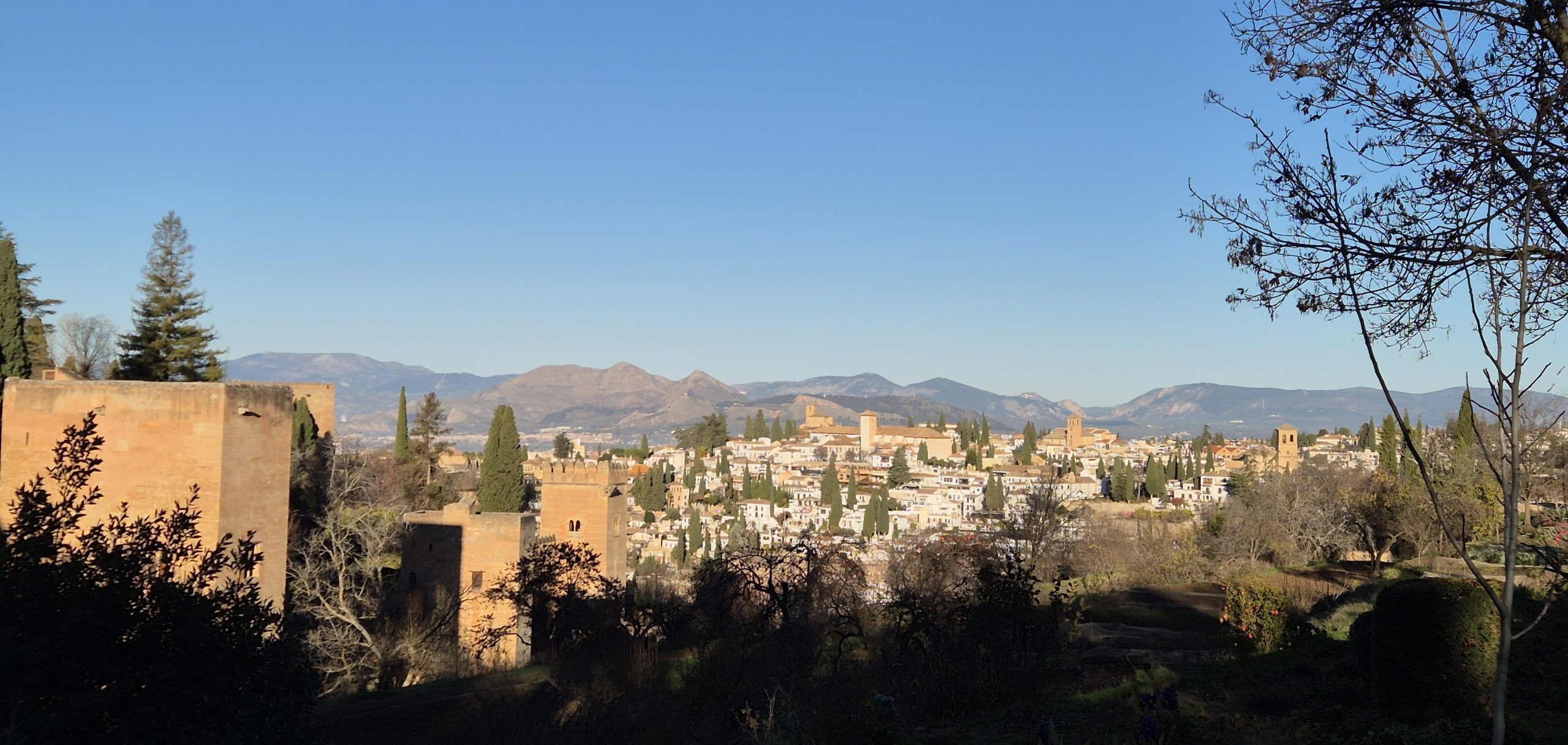
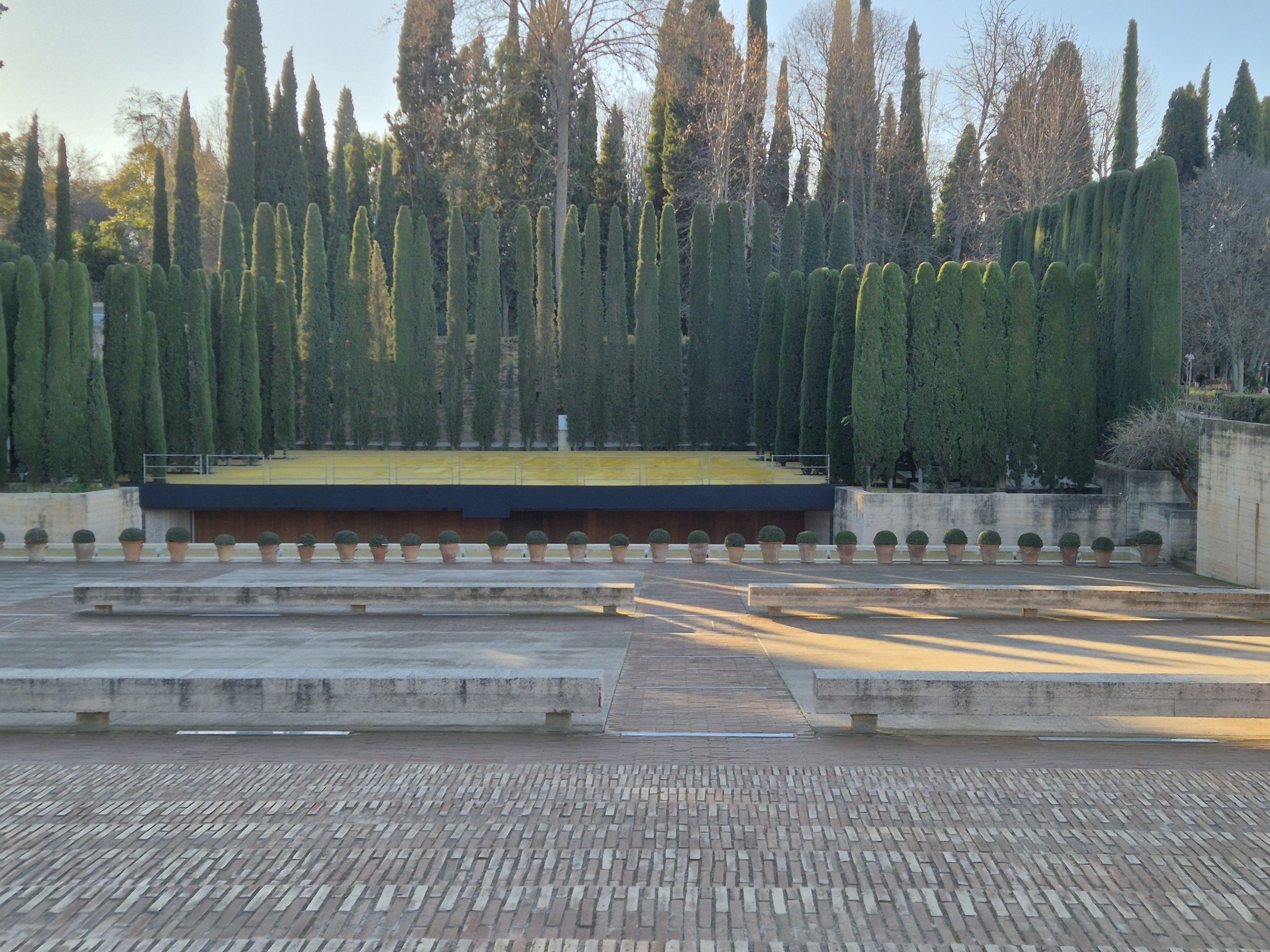
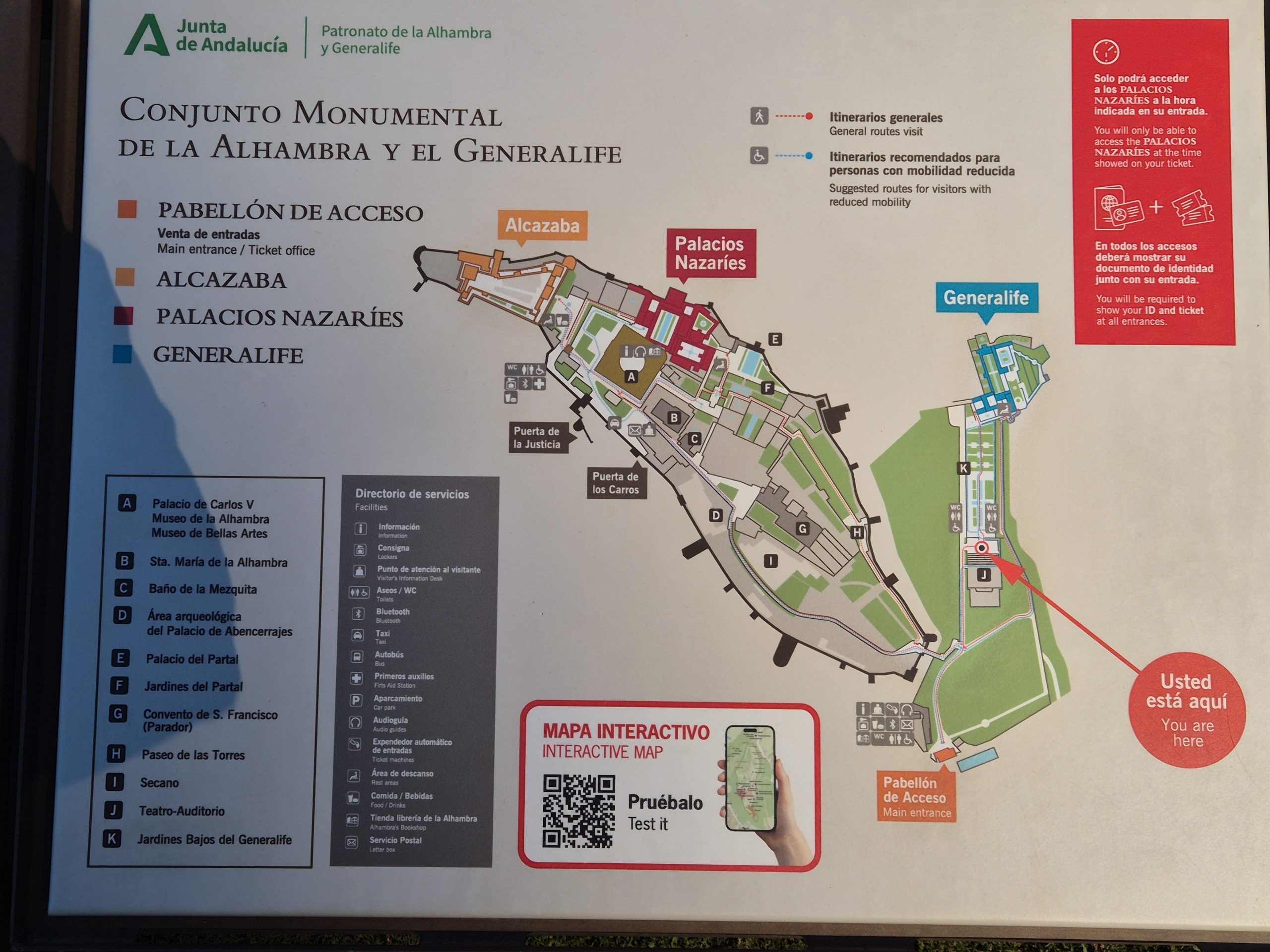
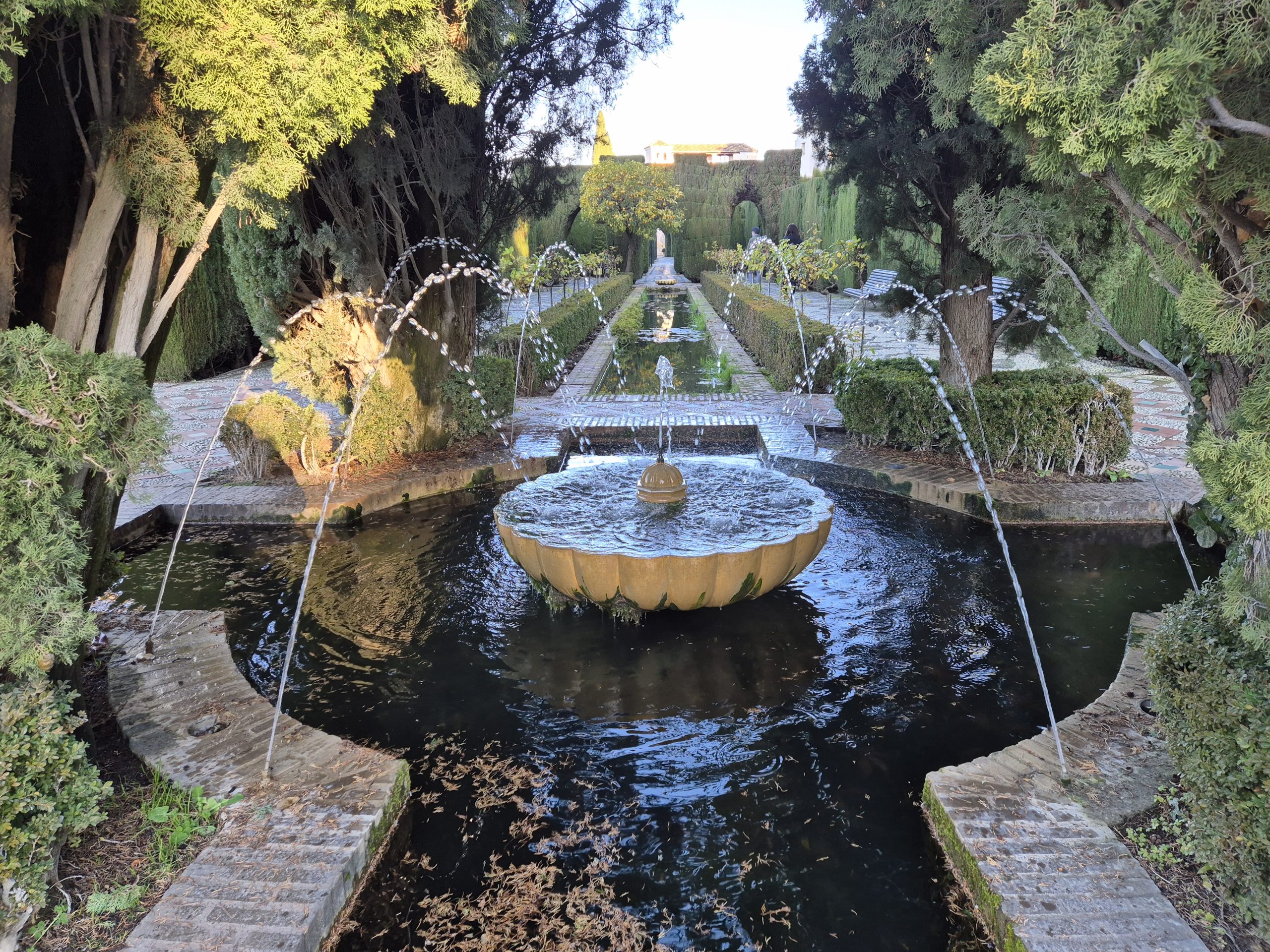
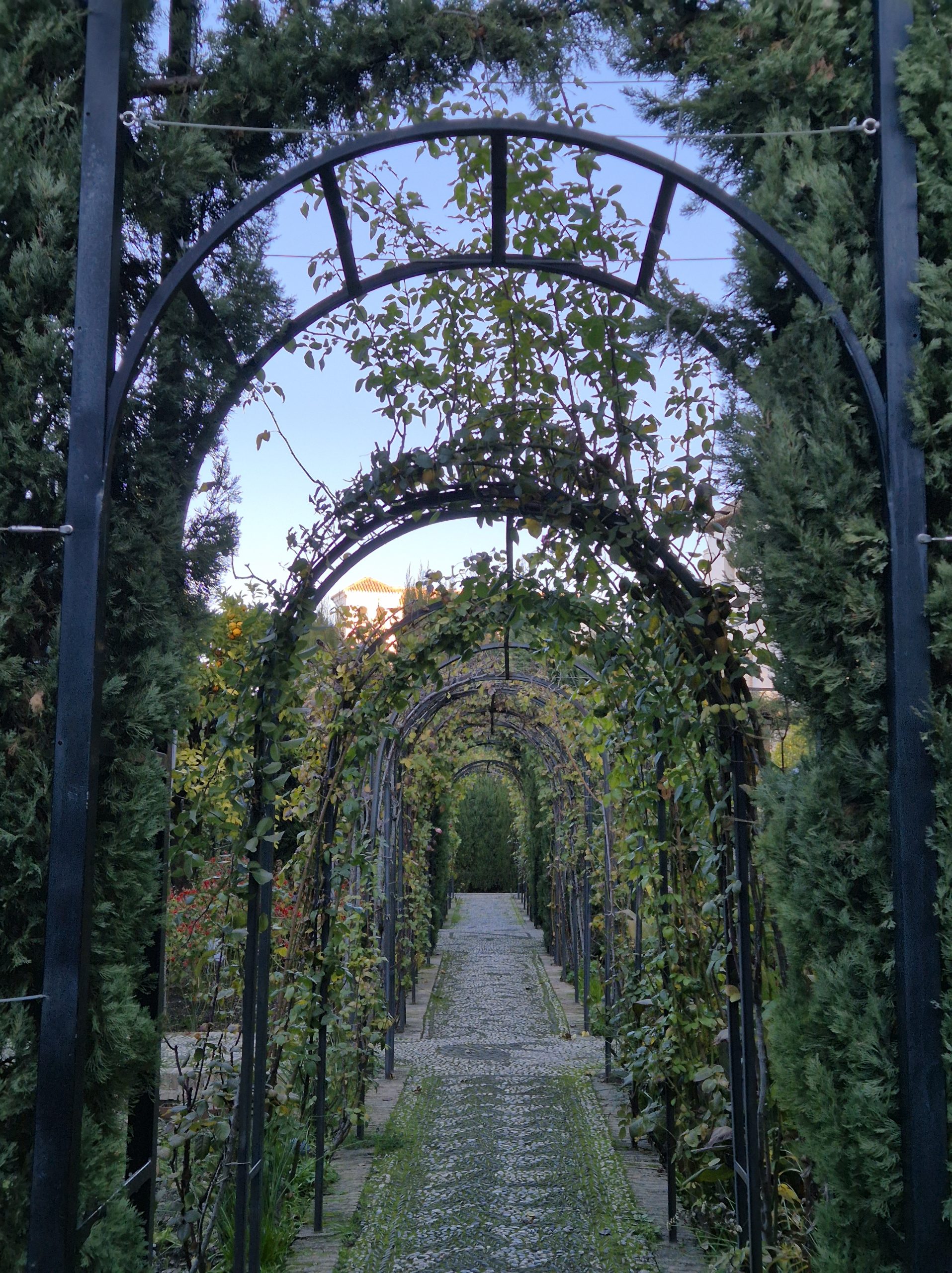
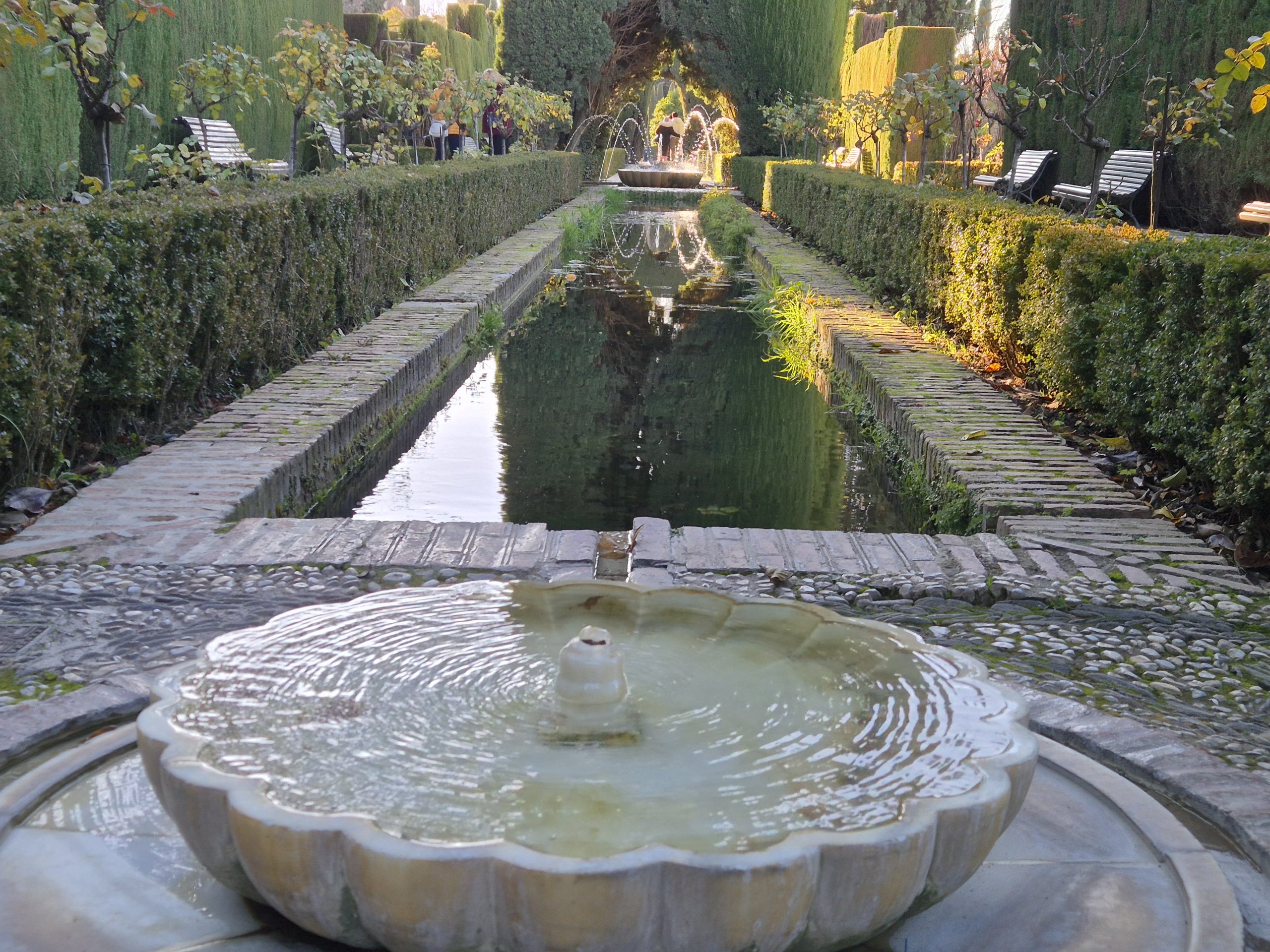
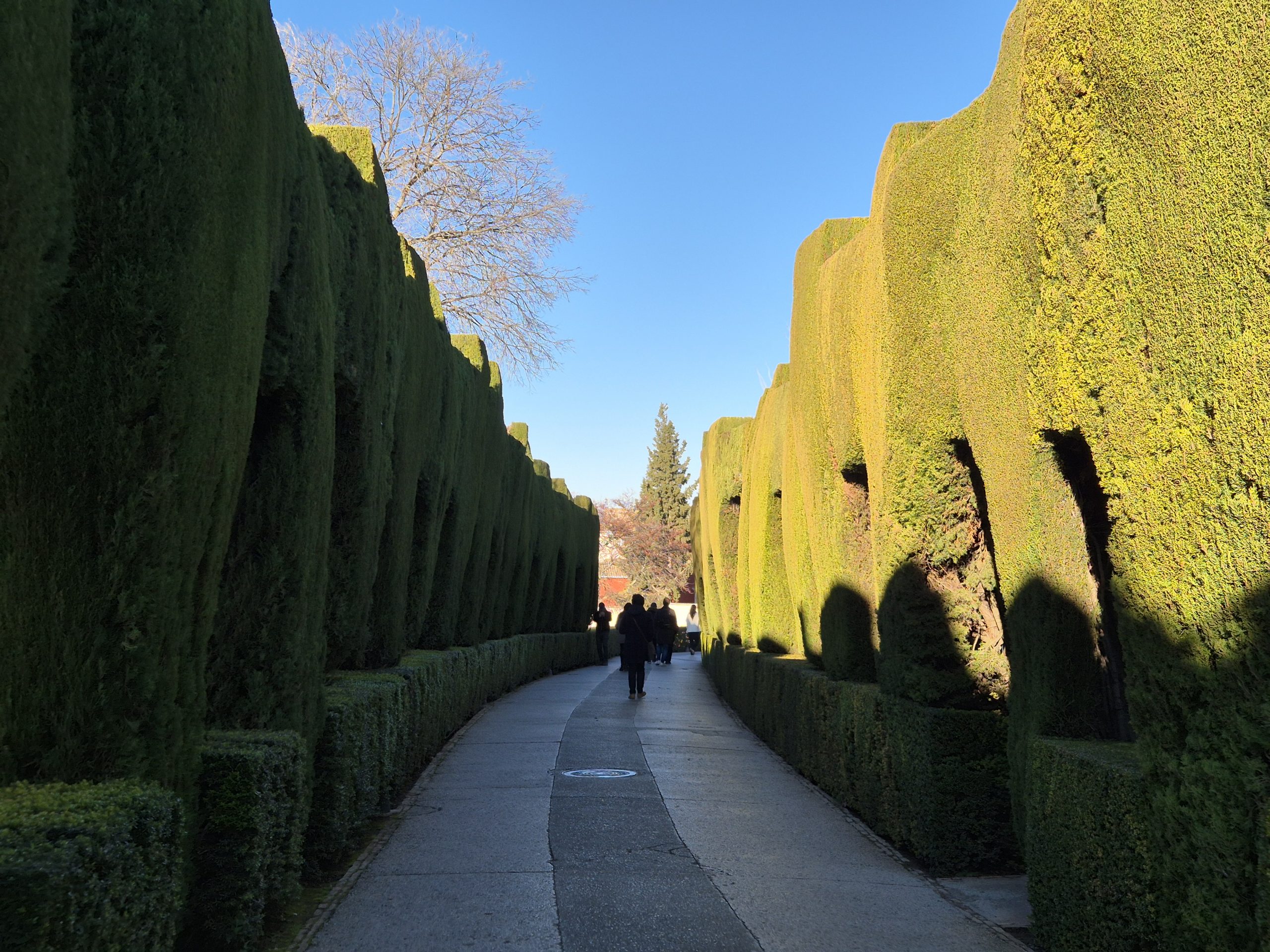
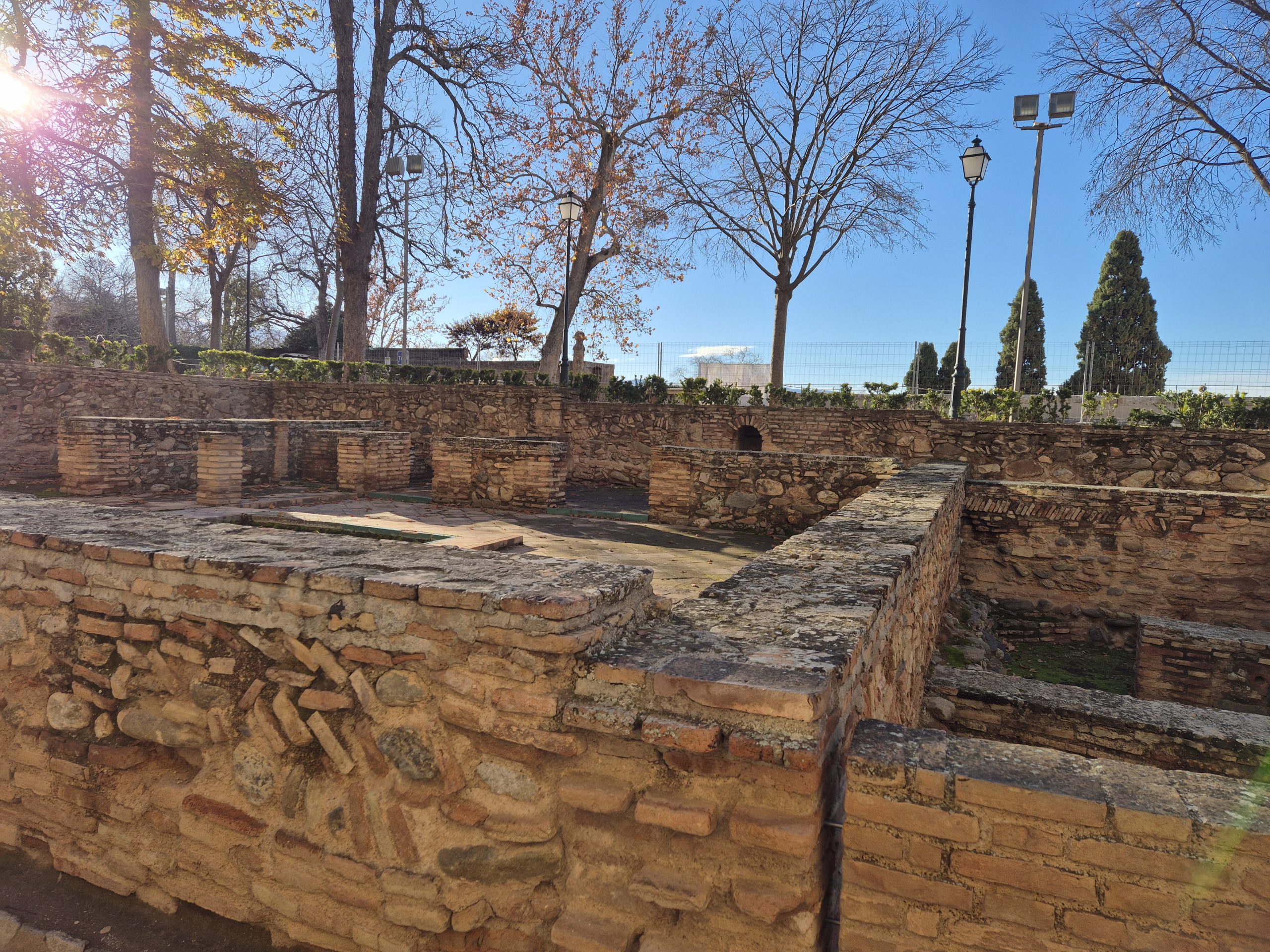
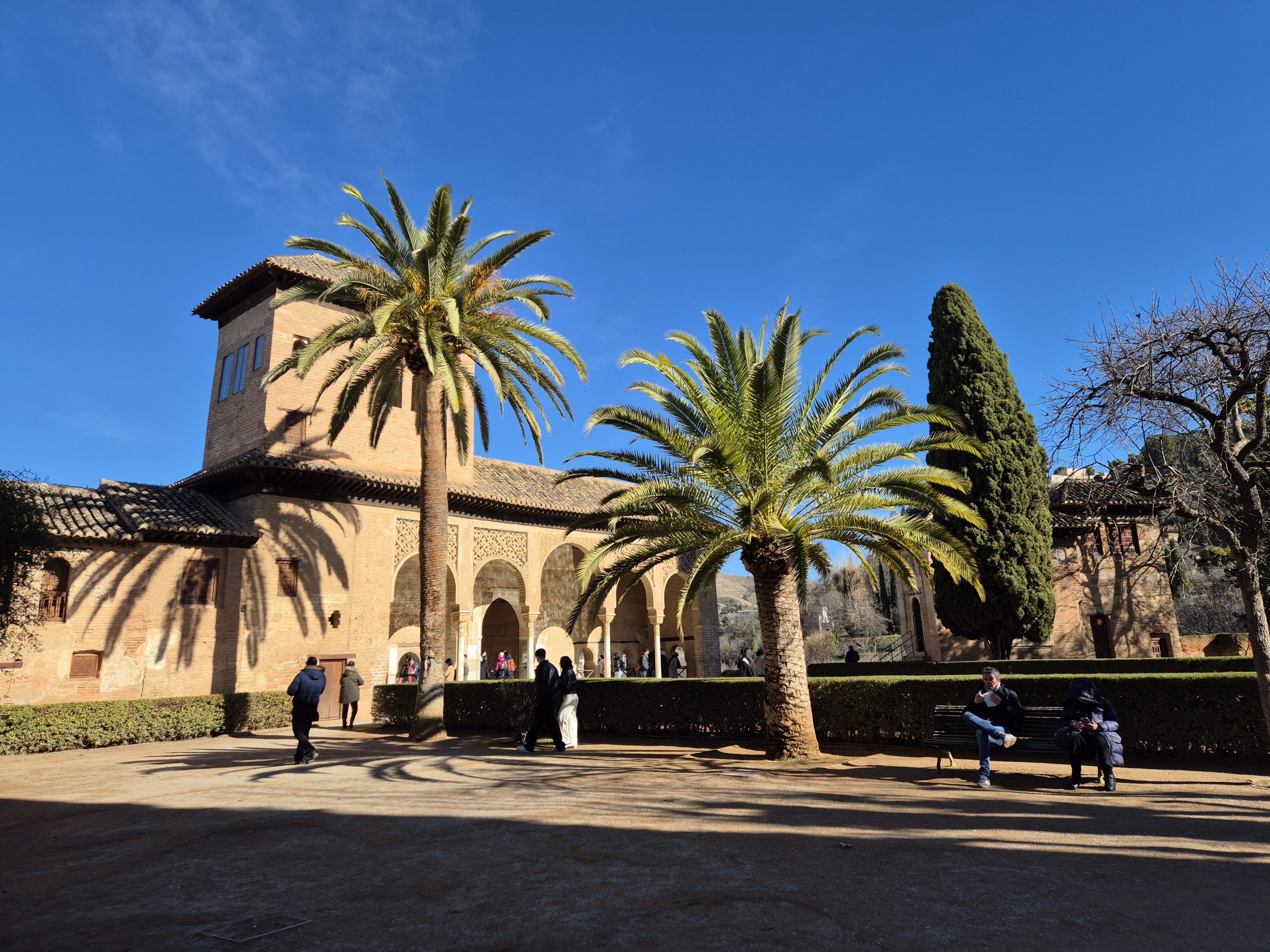
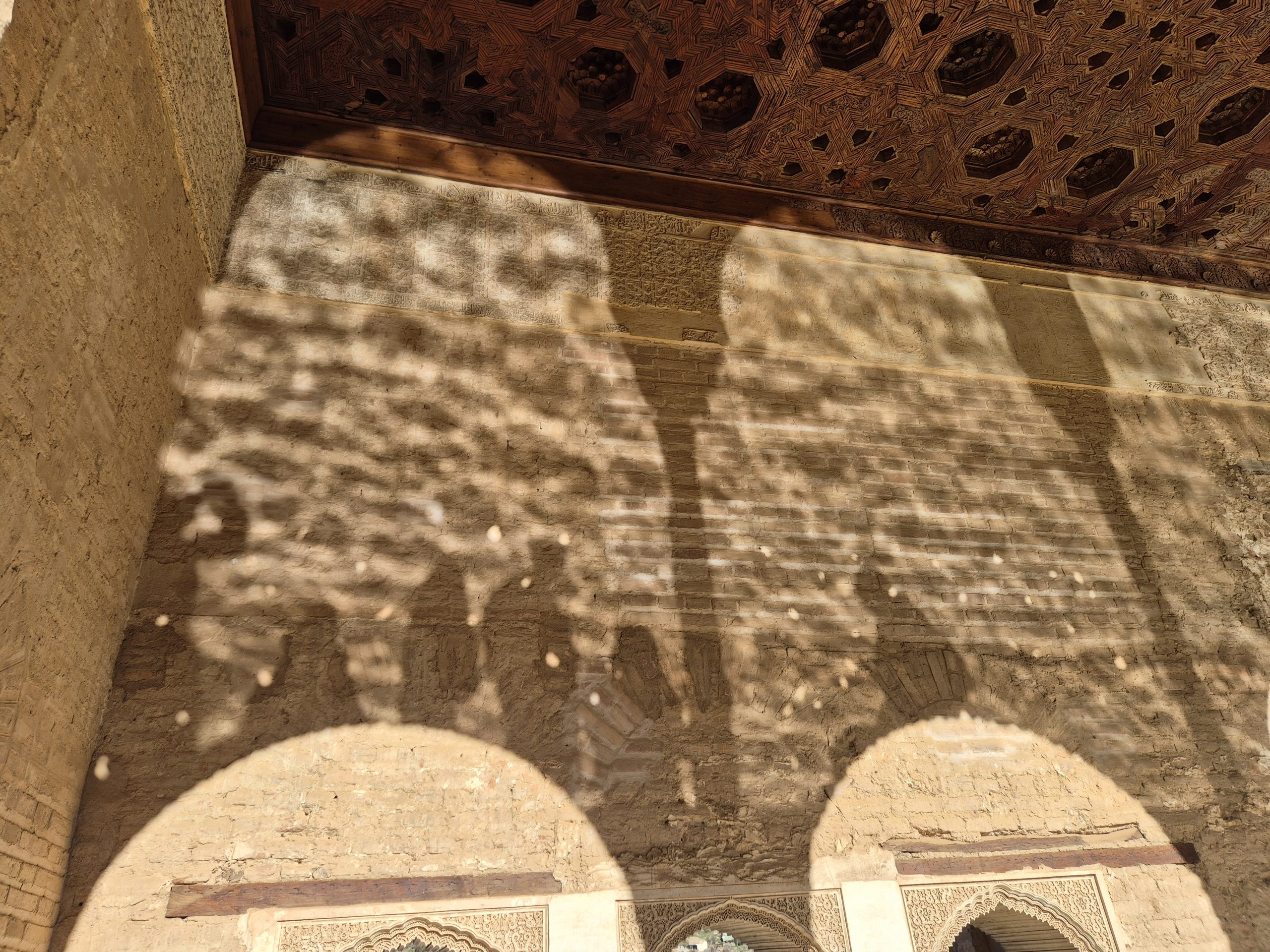
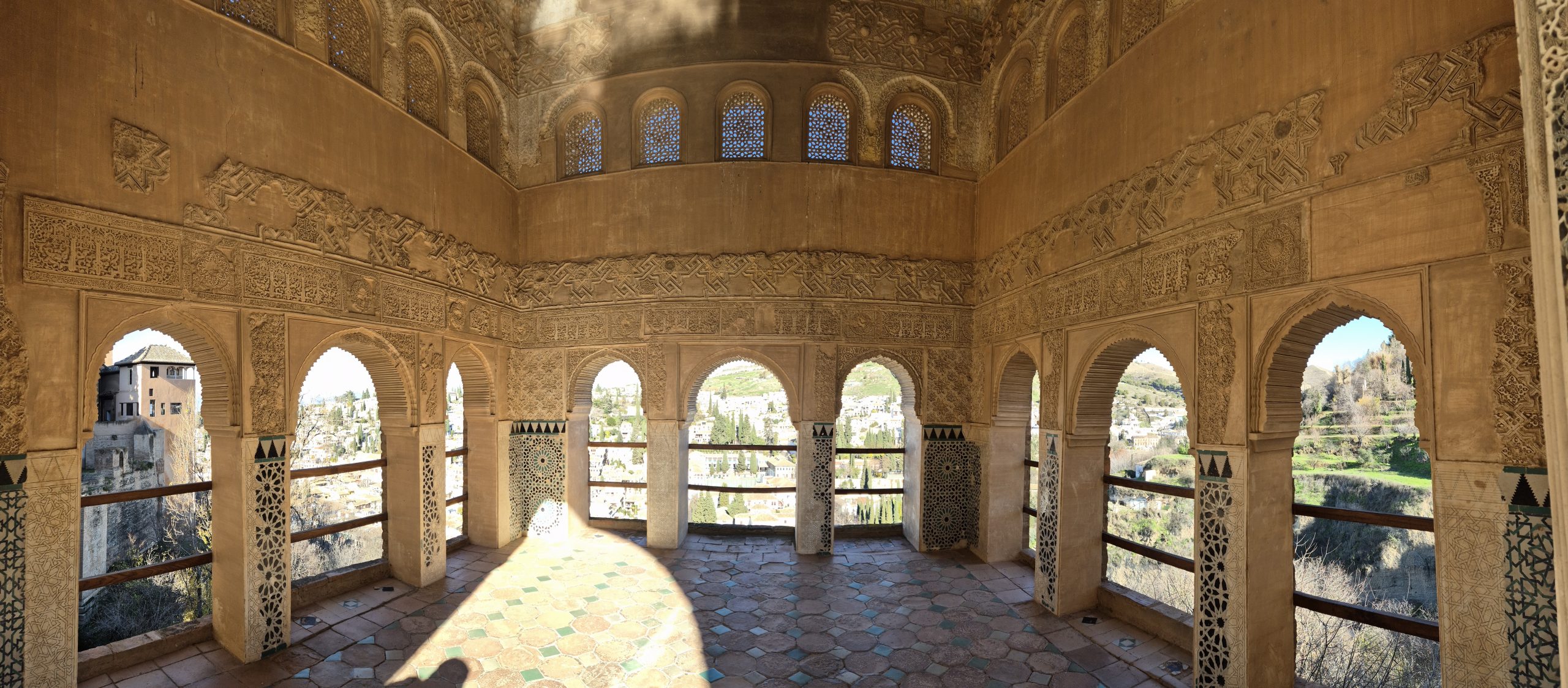
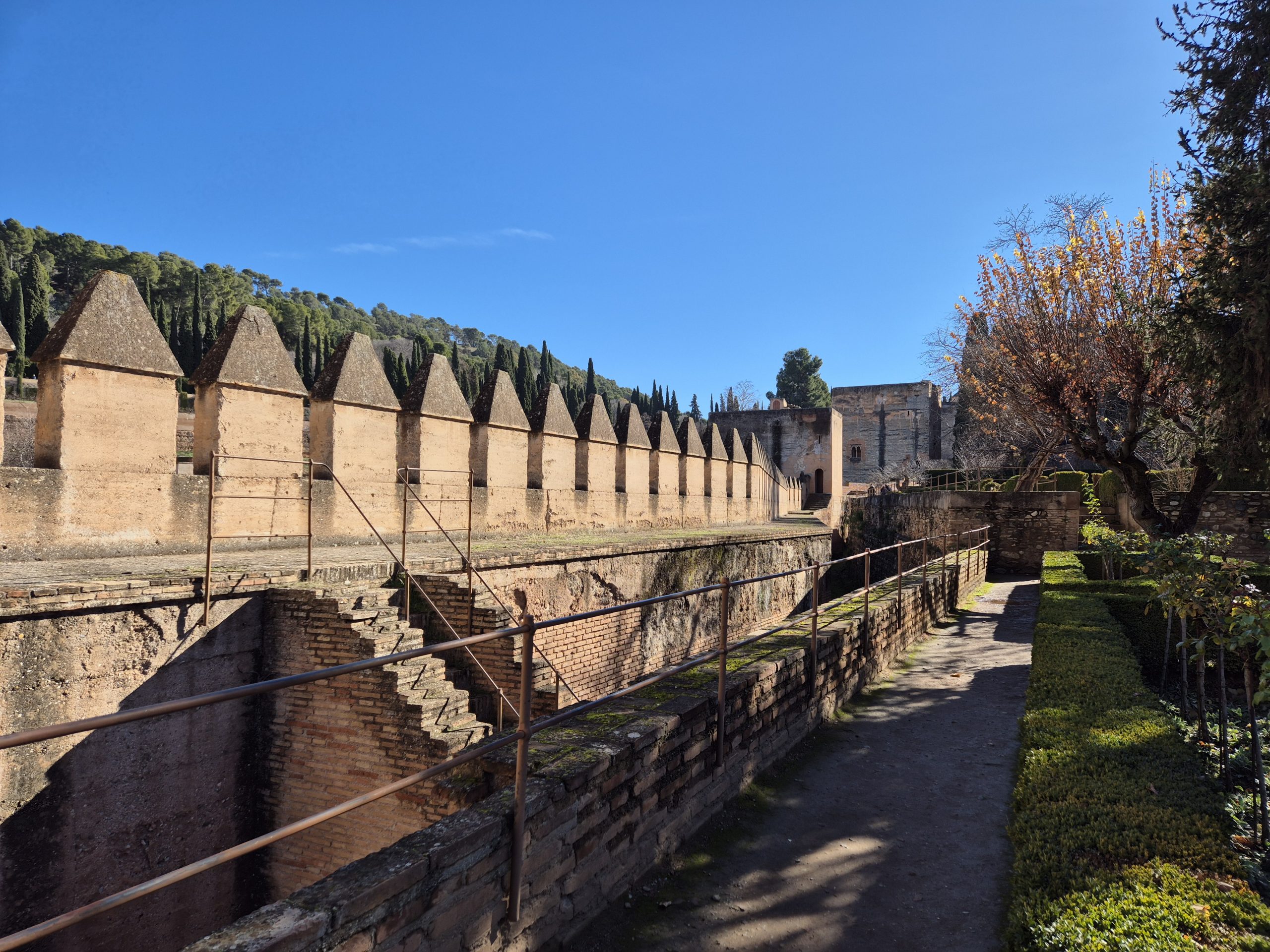
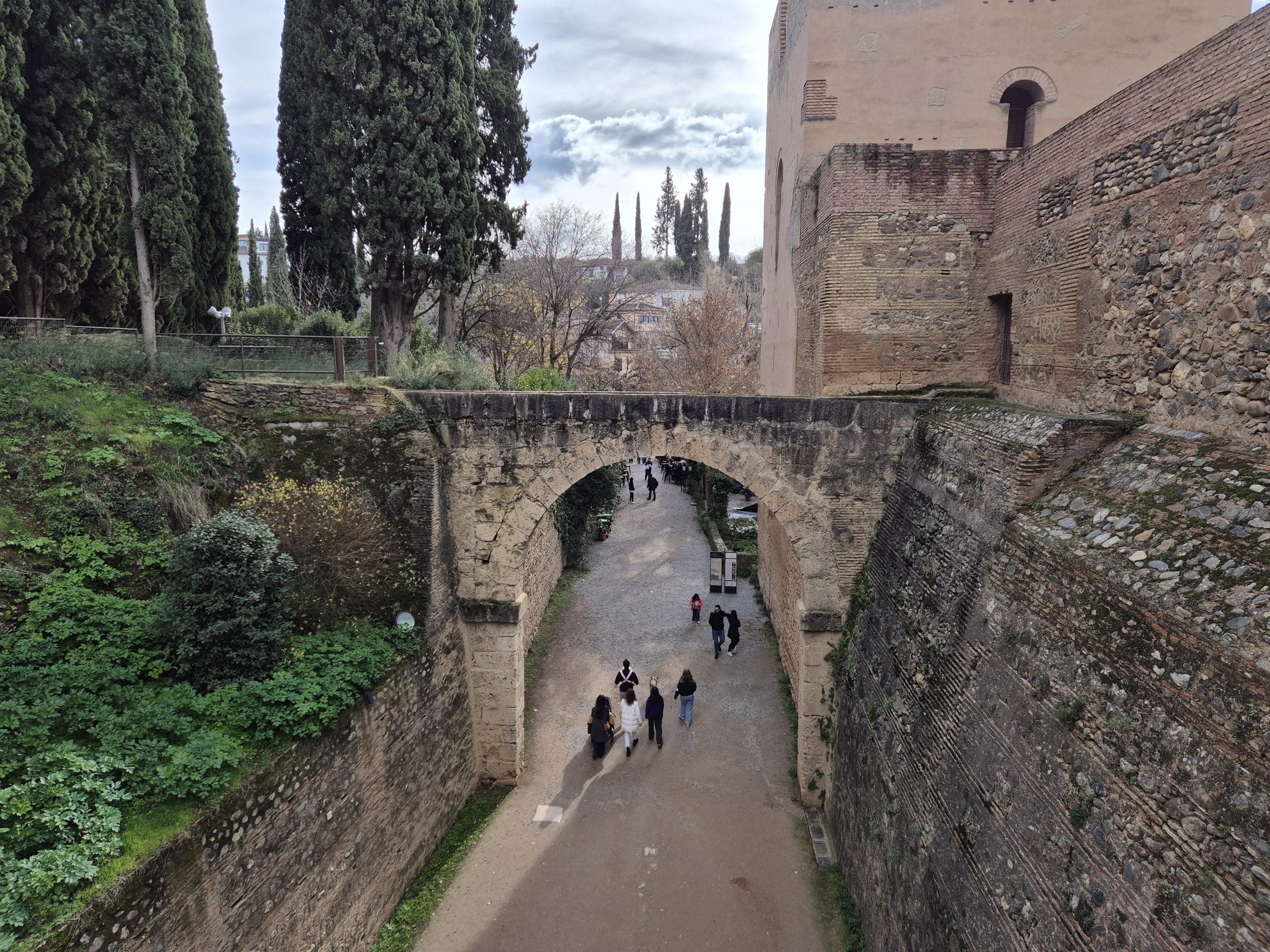
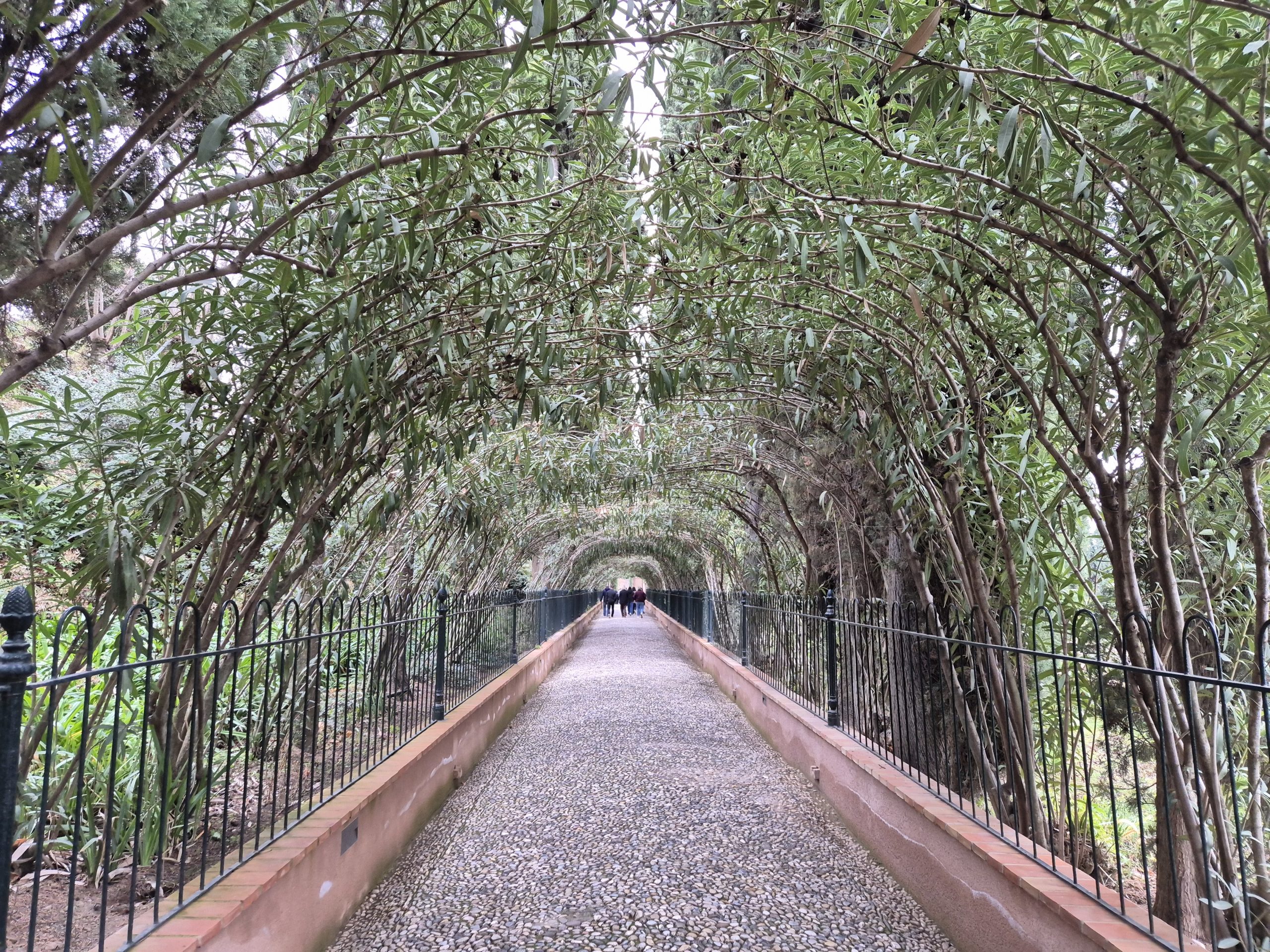
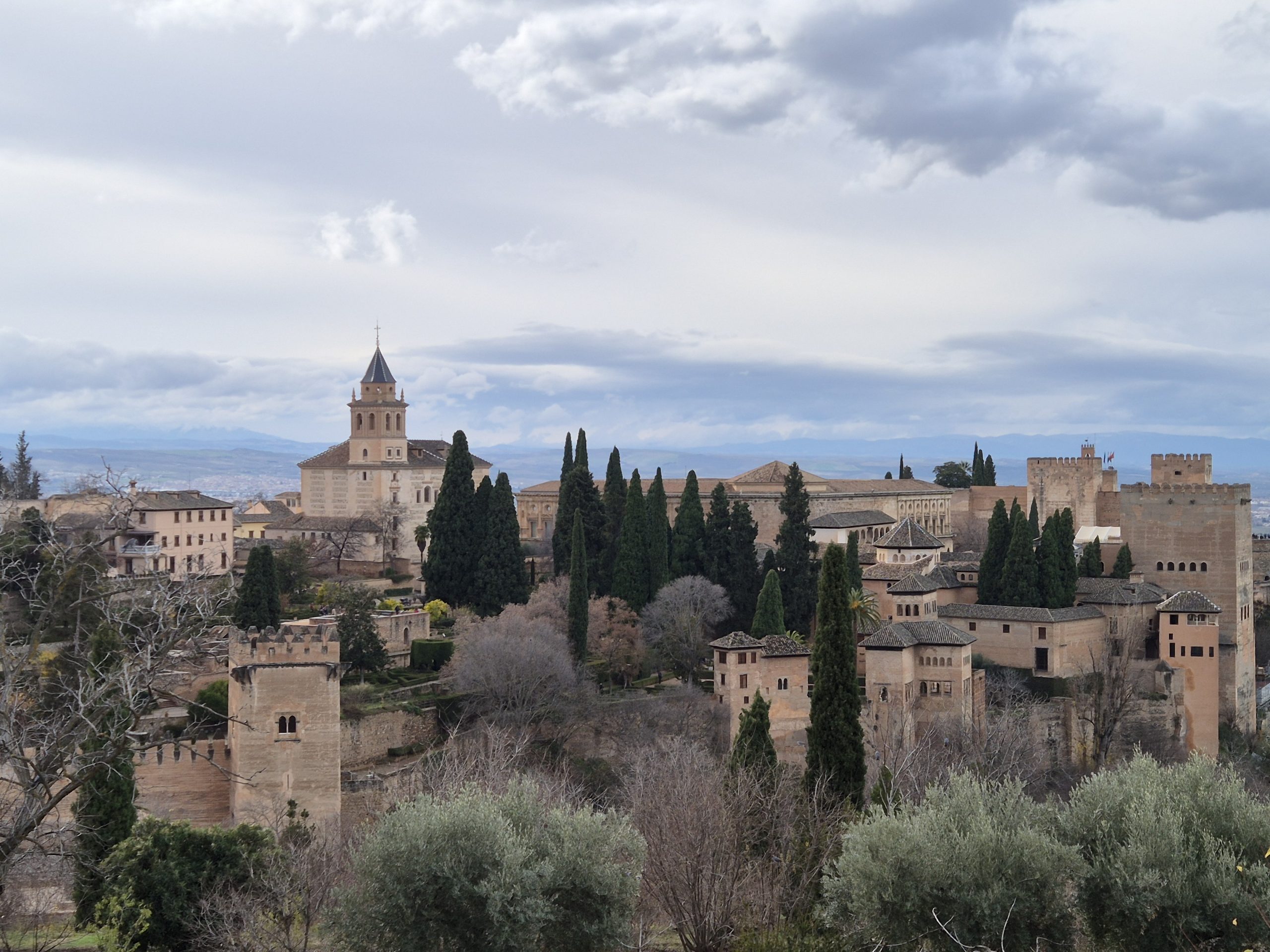
The complex is really five things in one: the Alcazaba, the original fort; the Nasrid Palaces, the main event; the Generalife, the summer palace and its gardens (the English rendering sounds prosaic and is slightly garbled; the original Arabic, Jannat al-‘Arif, “Garden of the Architect”, is far more romantic); the later Palace of Charles V, dropped into the middle like an architectural interruption; and the vast spectacular grounds that hold them all together.
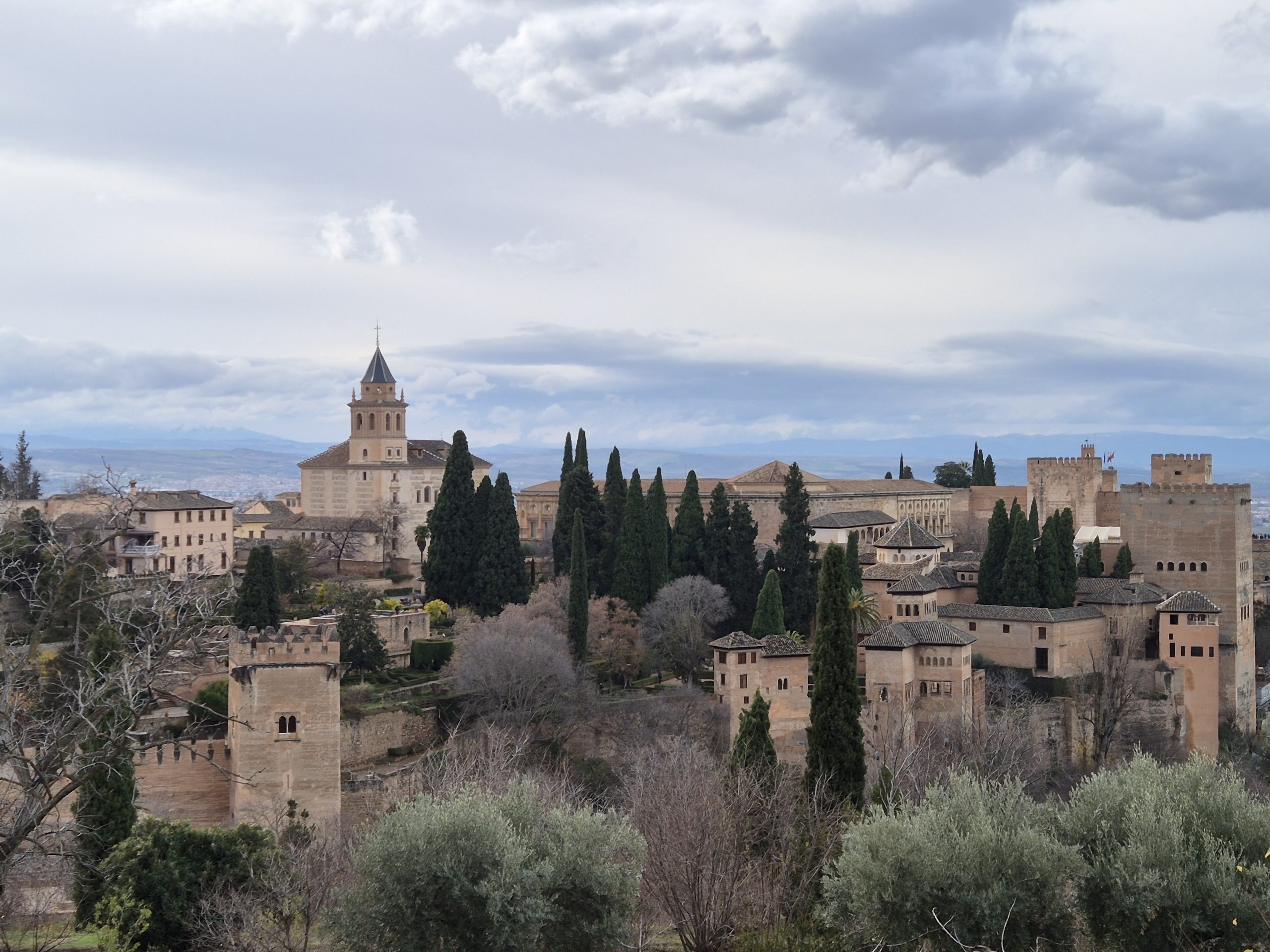
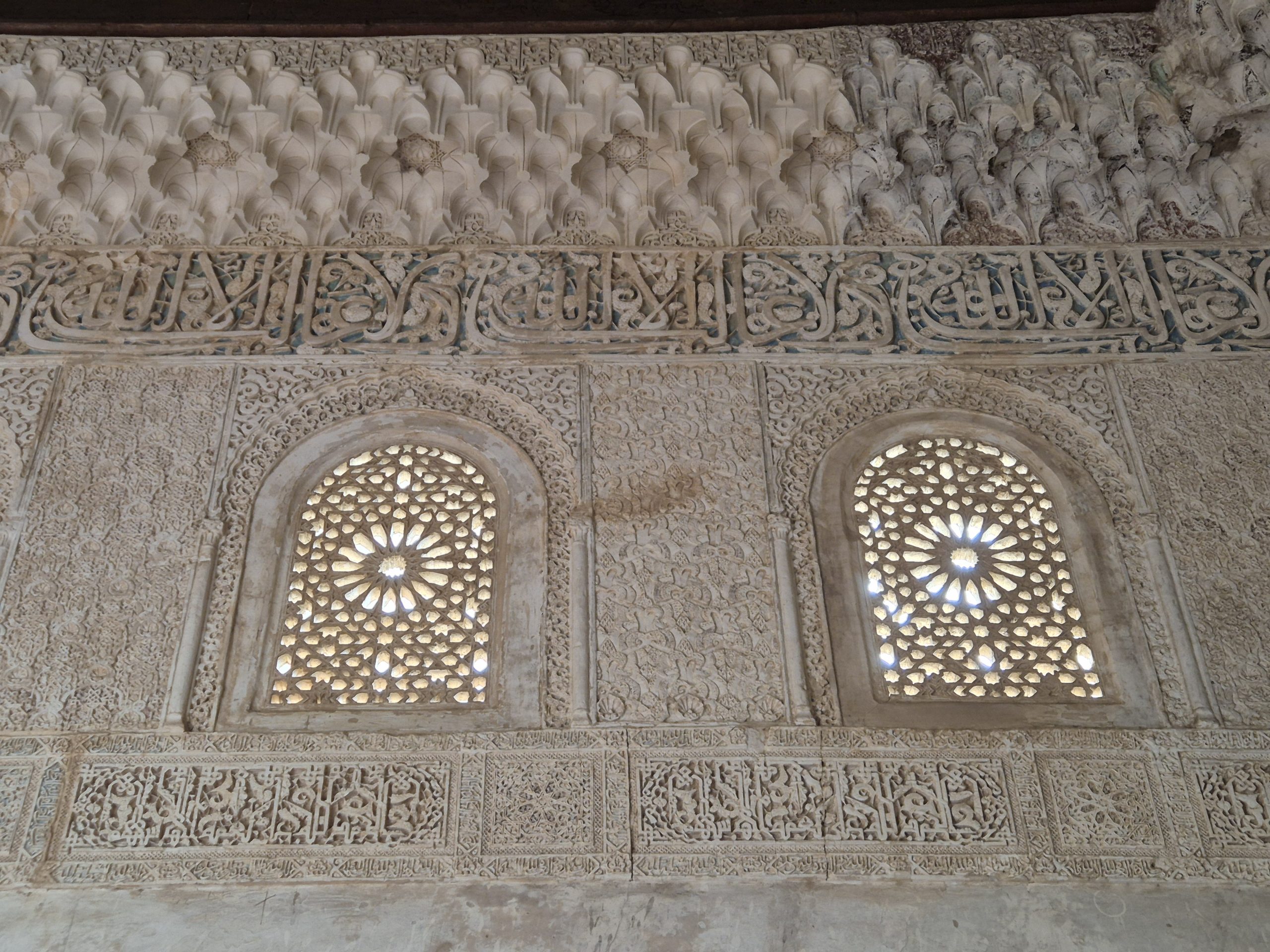
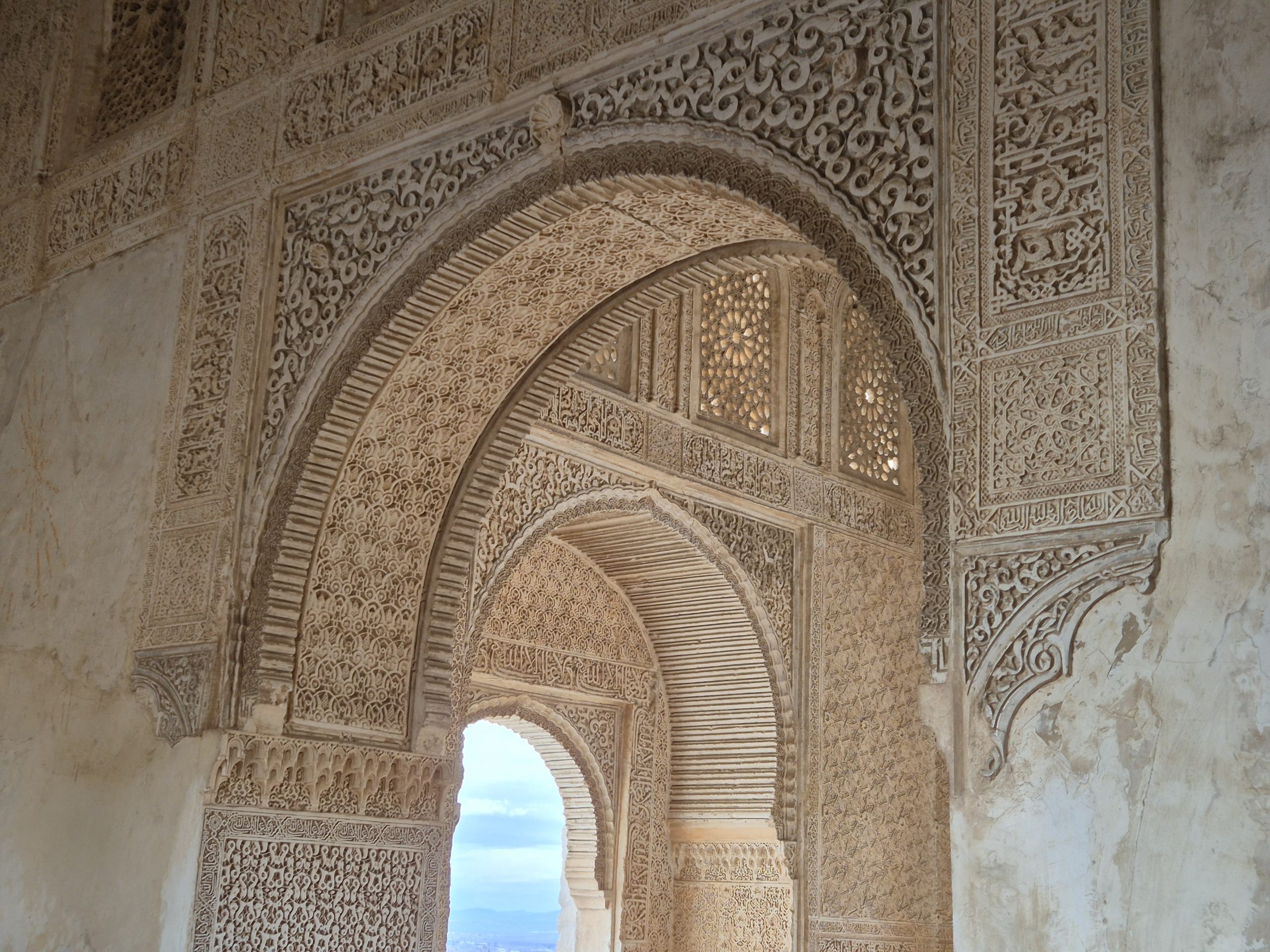
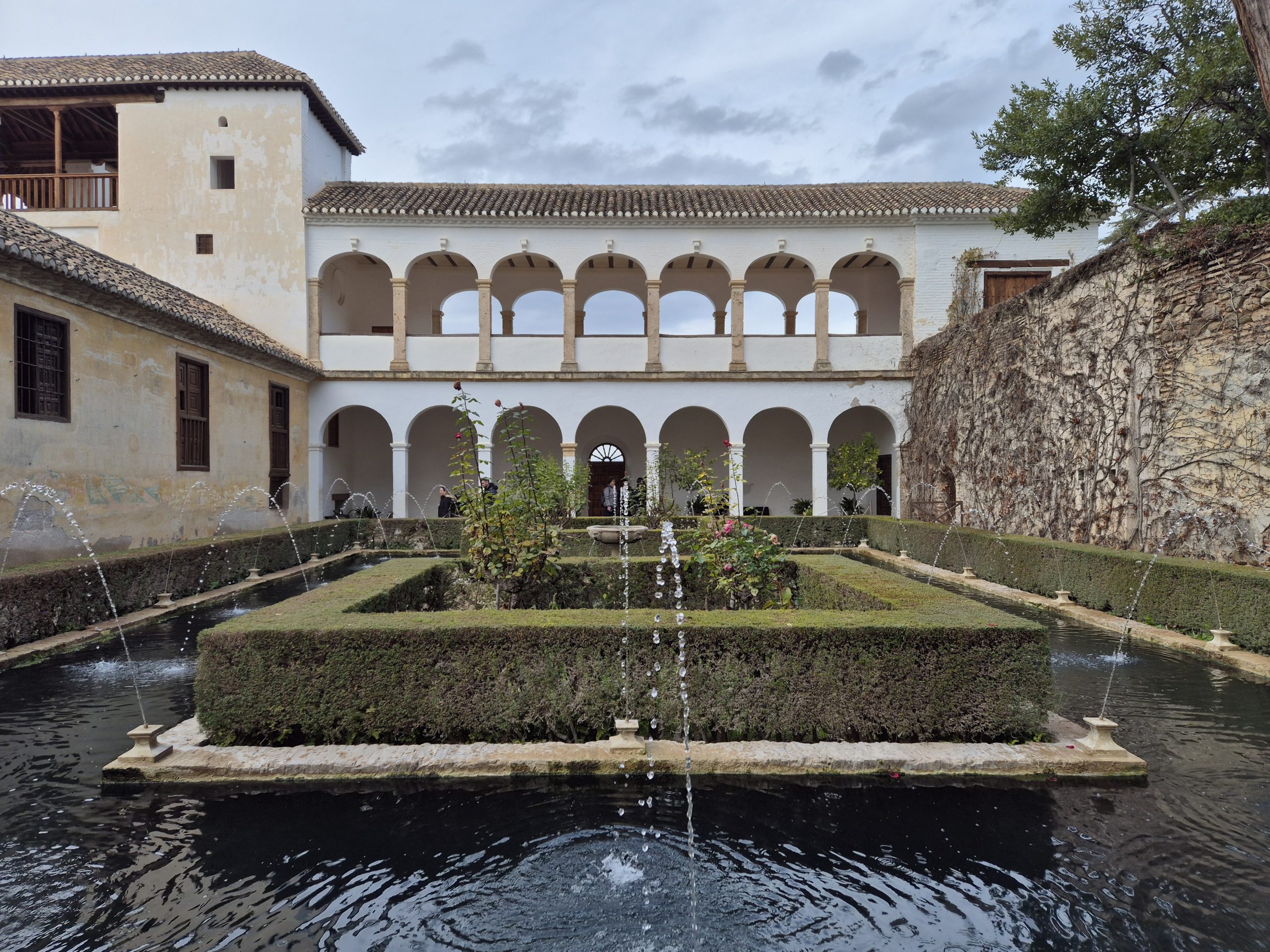
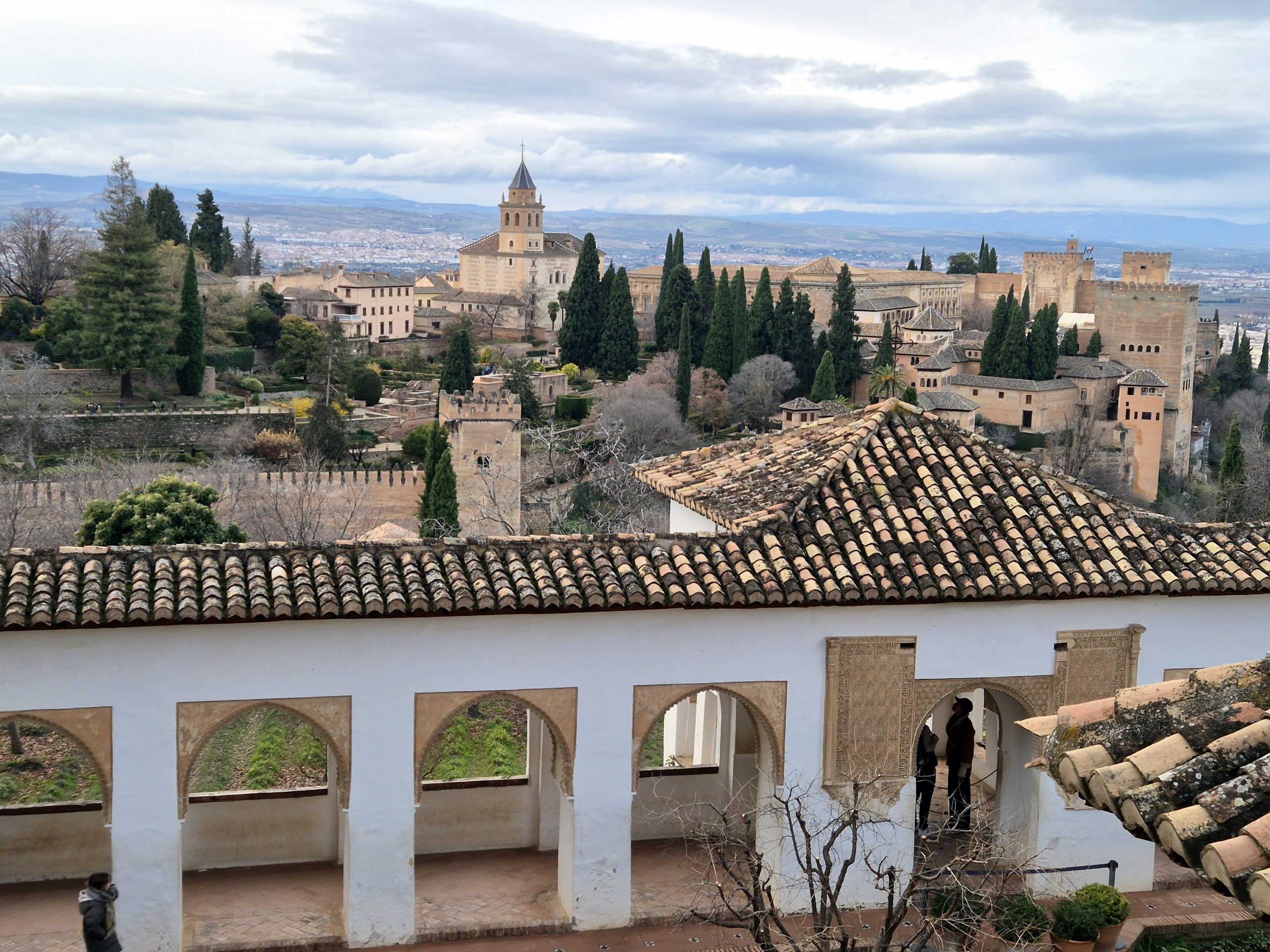
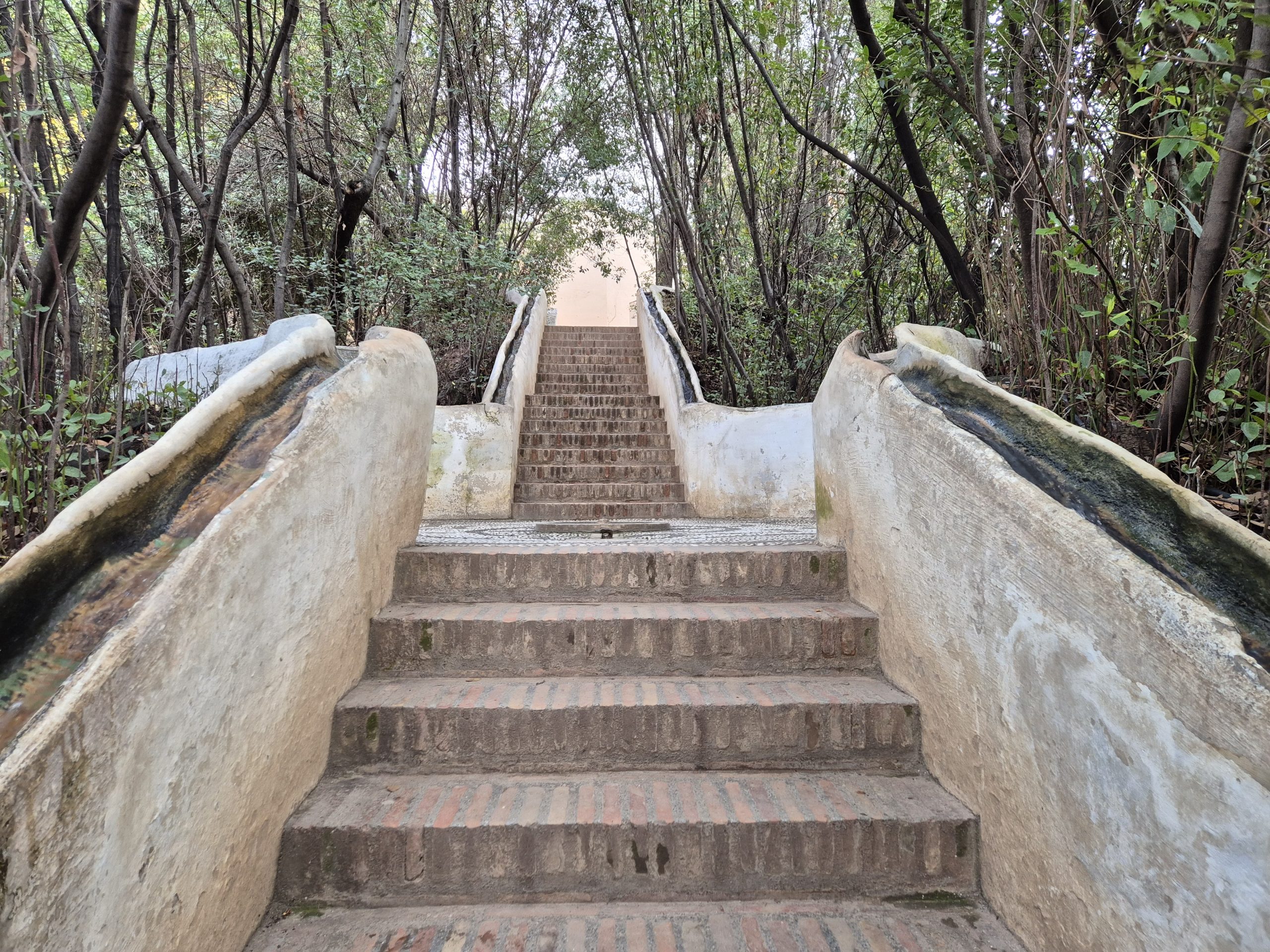
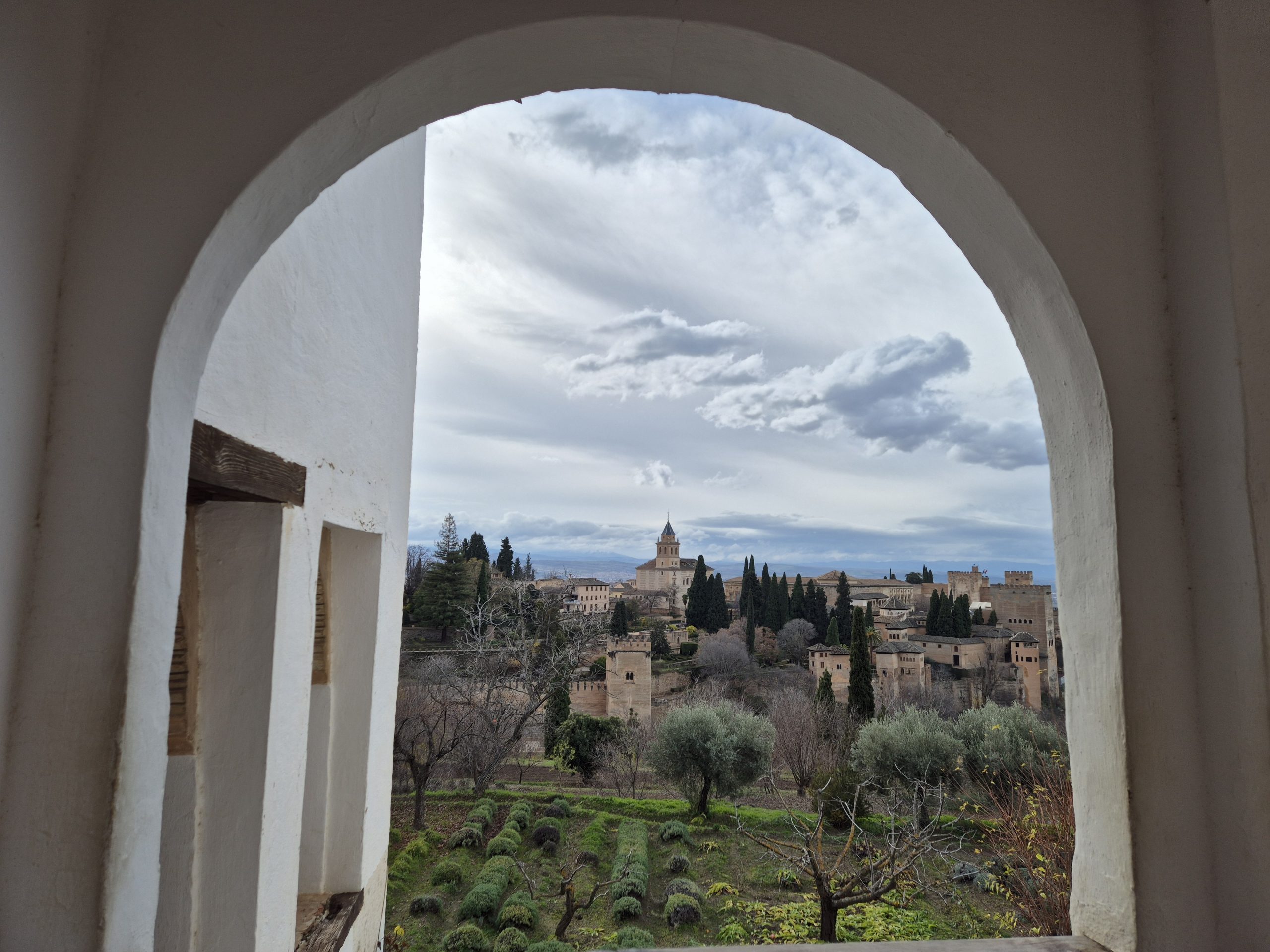
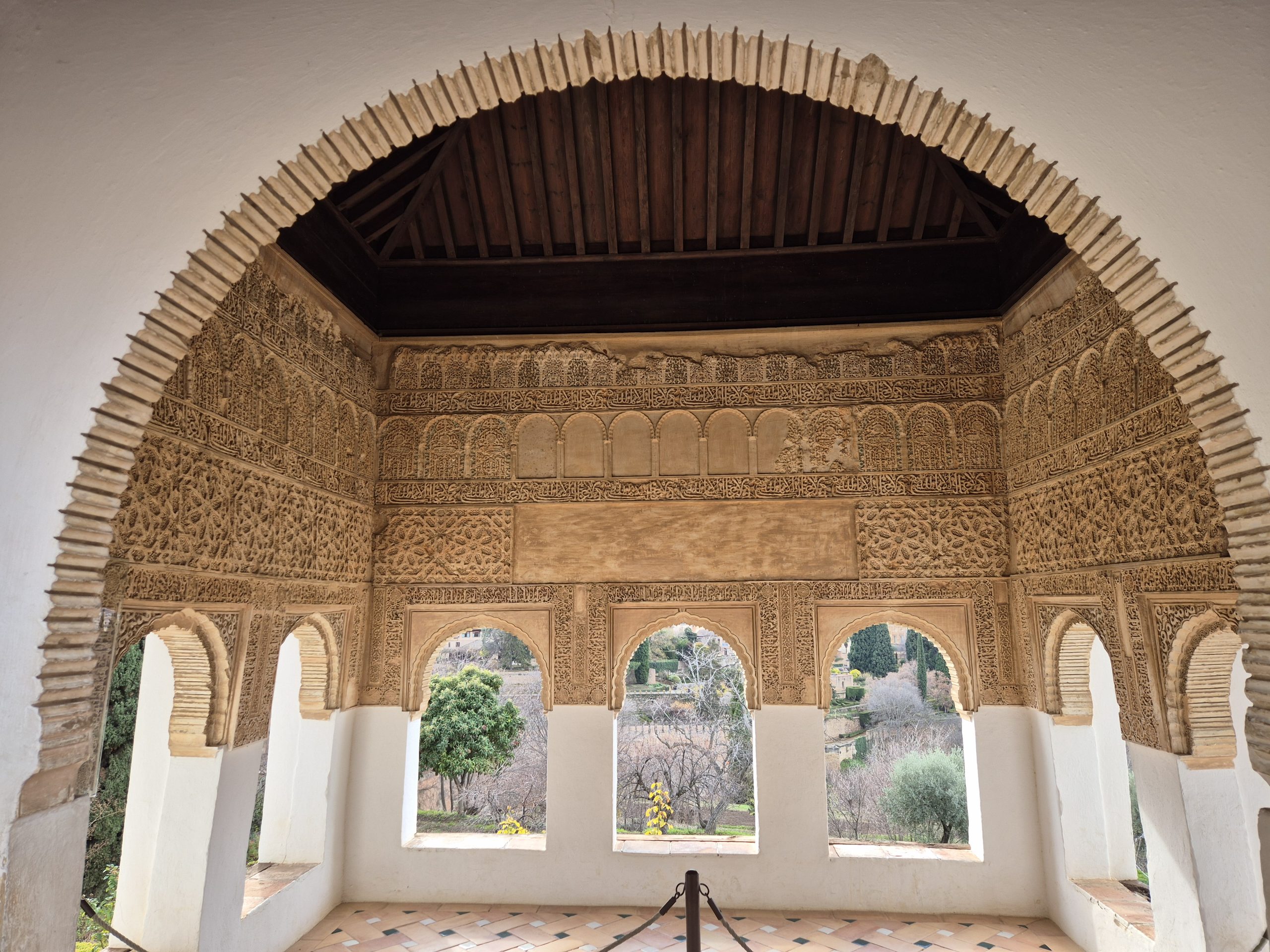
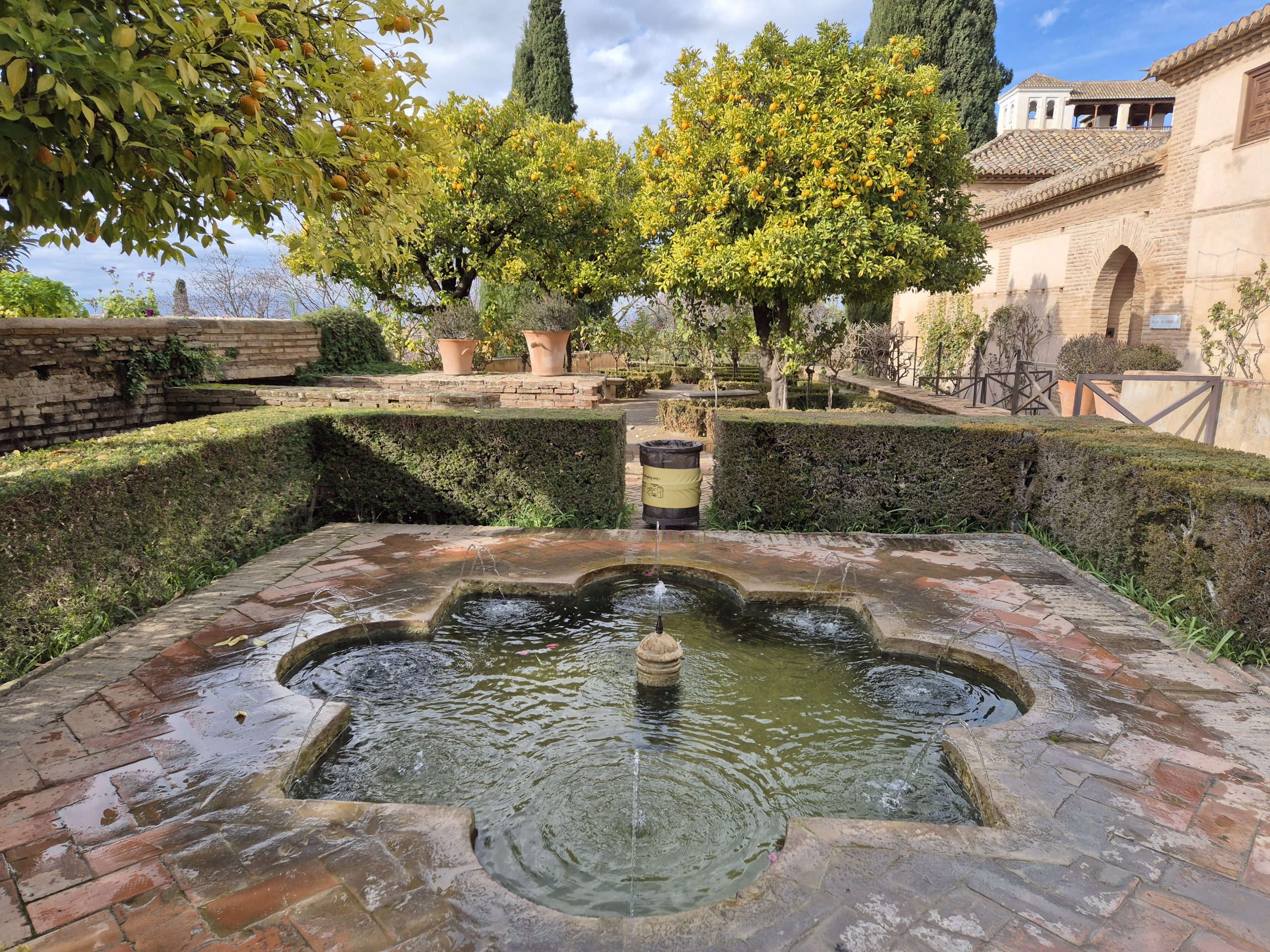
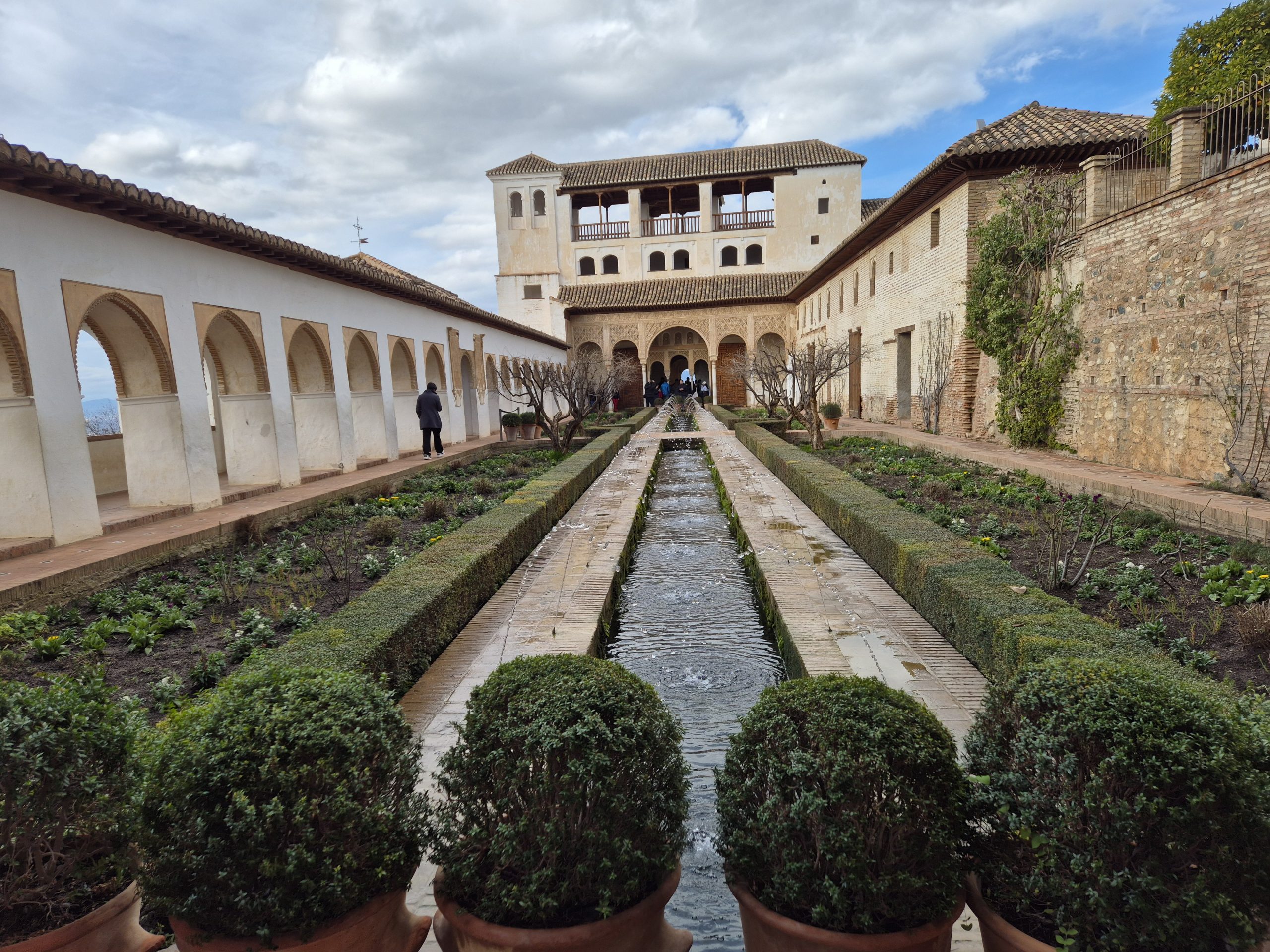
Getting in had been its own saga. Direct tickets were sold out four months ahead – four months – so we’d ended up with a third-party seller who handed us off to a fourth-party app for an audio guide, mediocre in the way these chains of intermediaries always are. I wonder if all the visitors coming to such popular “sights” truly care about the place and its history. Does it evoke the romance of the past in millions? Or only in a handful of diehard romantics or history buffs? Inclined to think that social media has made travel popular in an unhealthy way, and once people travel, they need to have things to visit and take photos and brag about. The age of sheep travel.
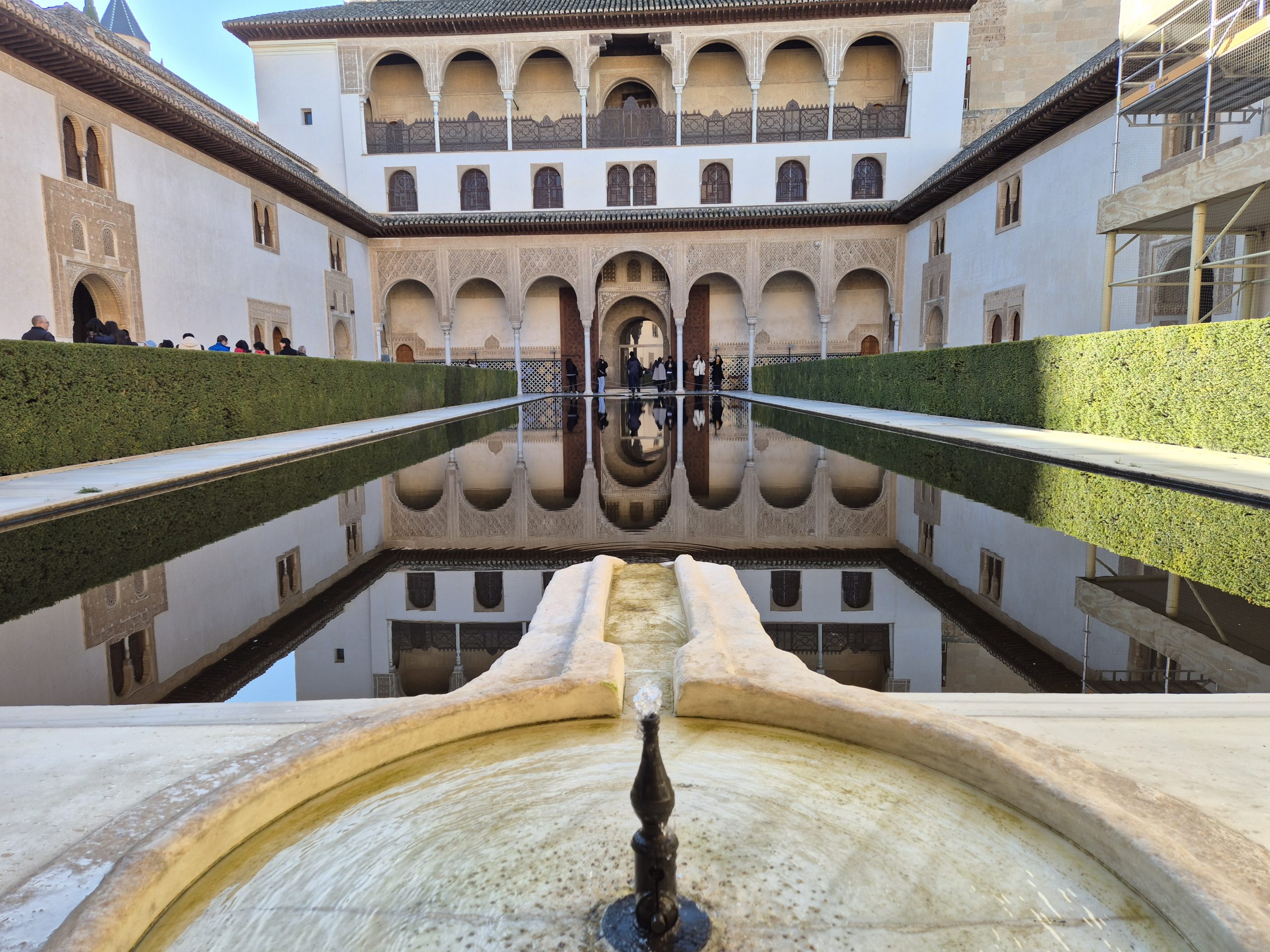
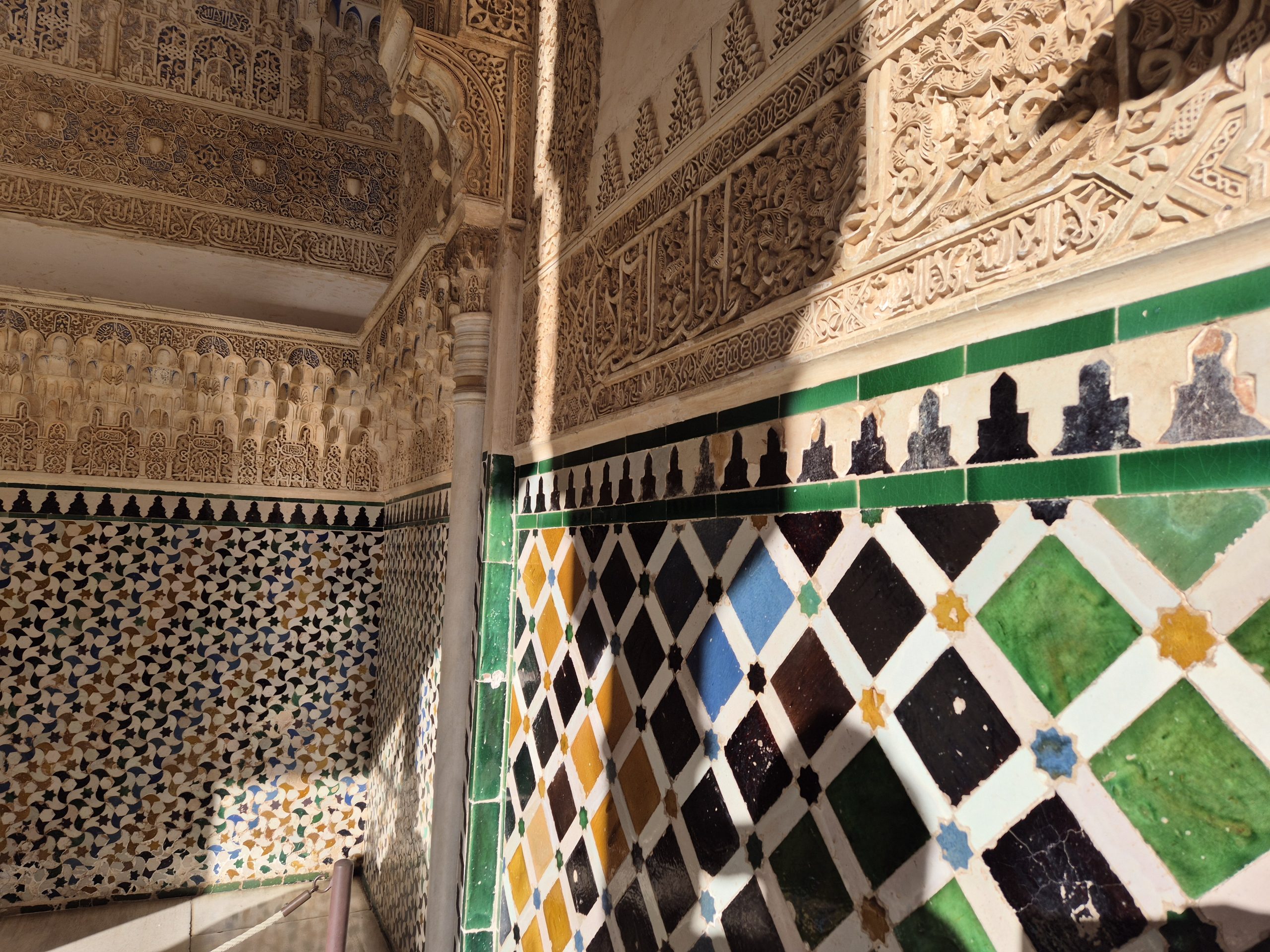
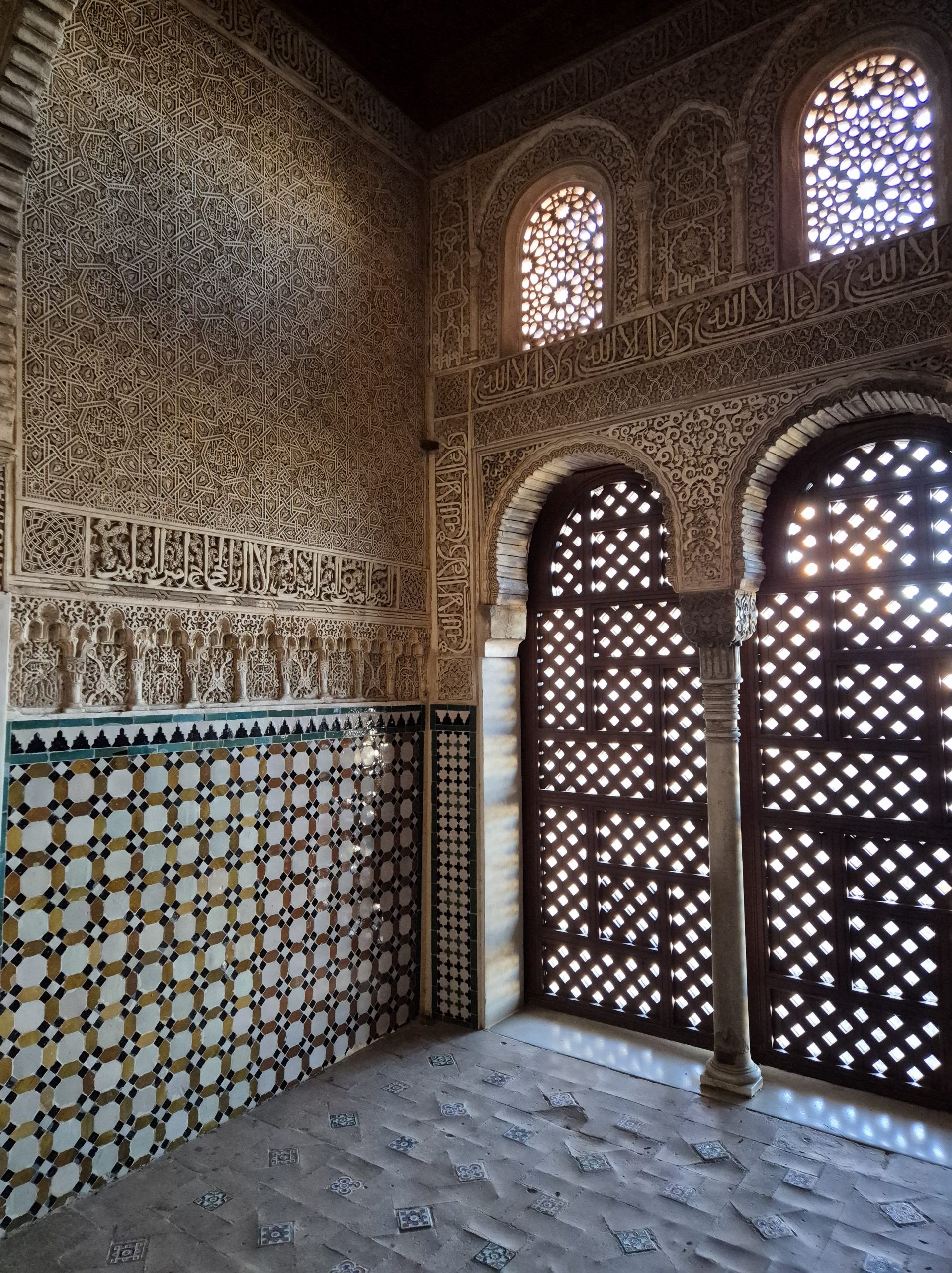
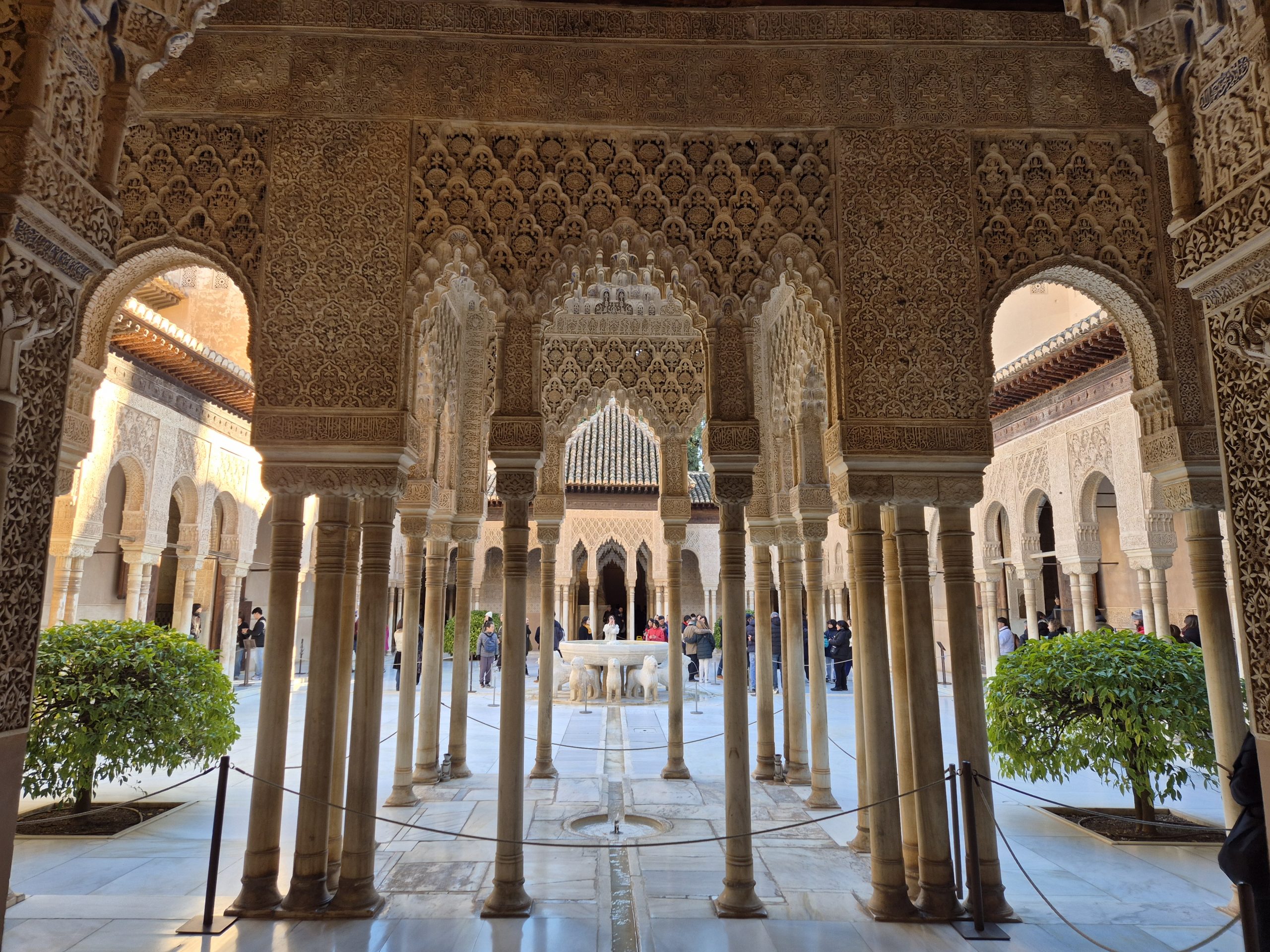
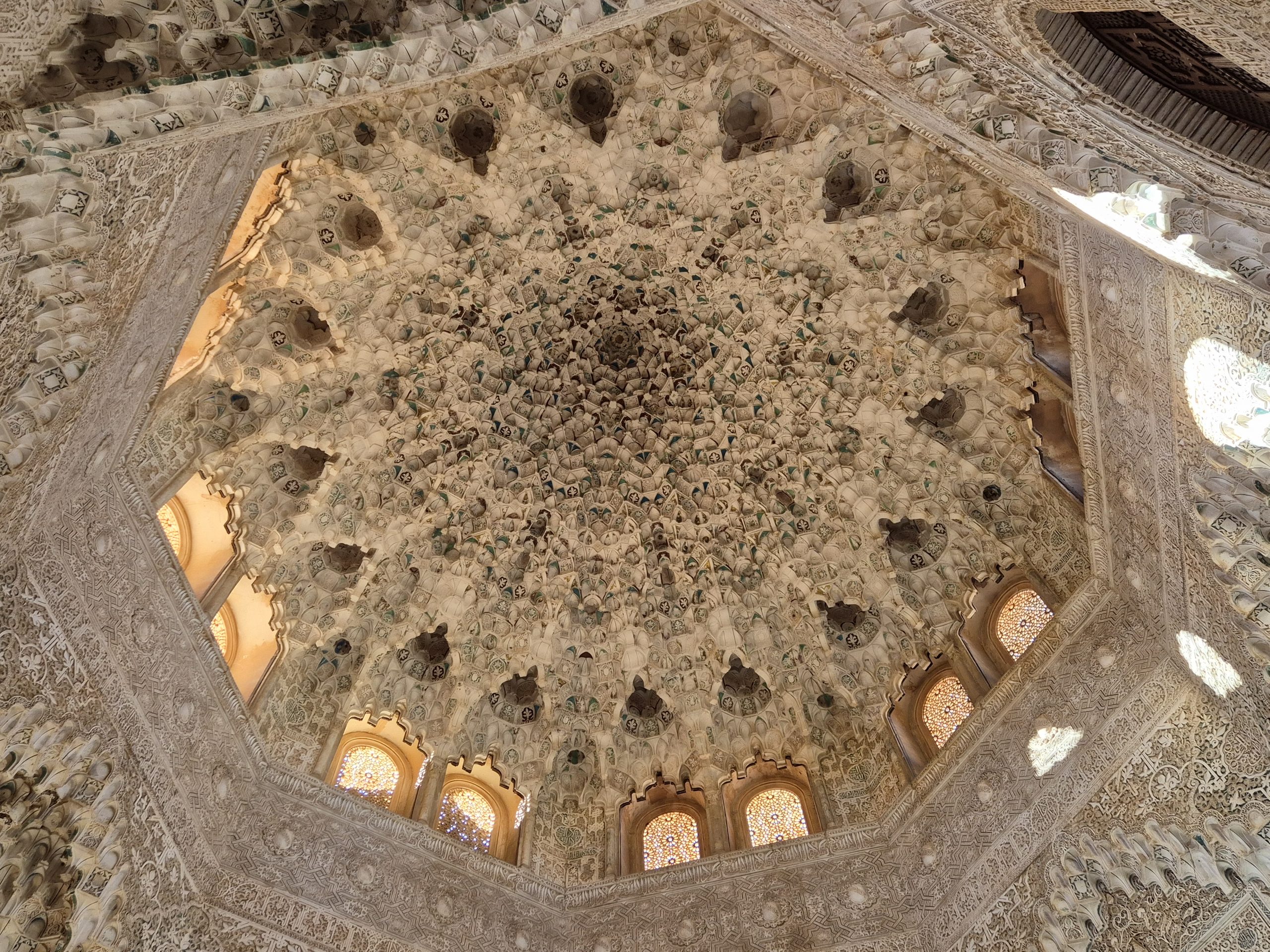
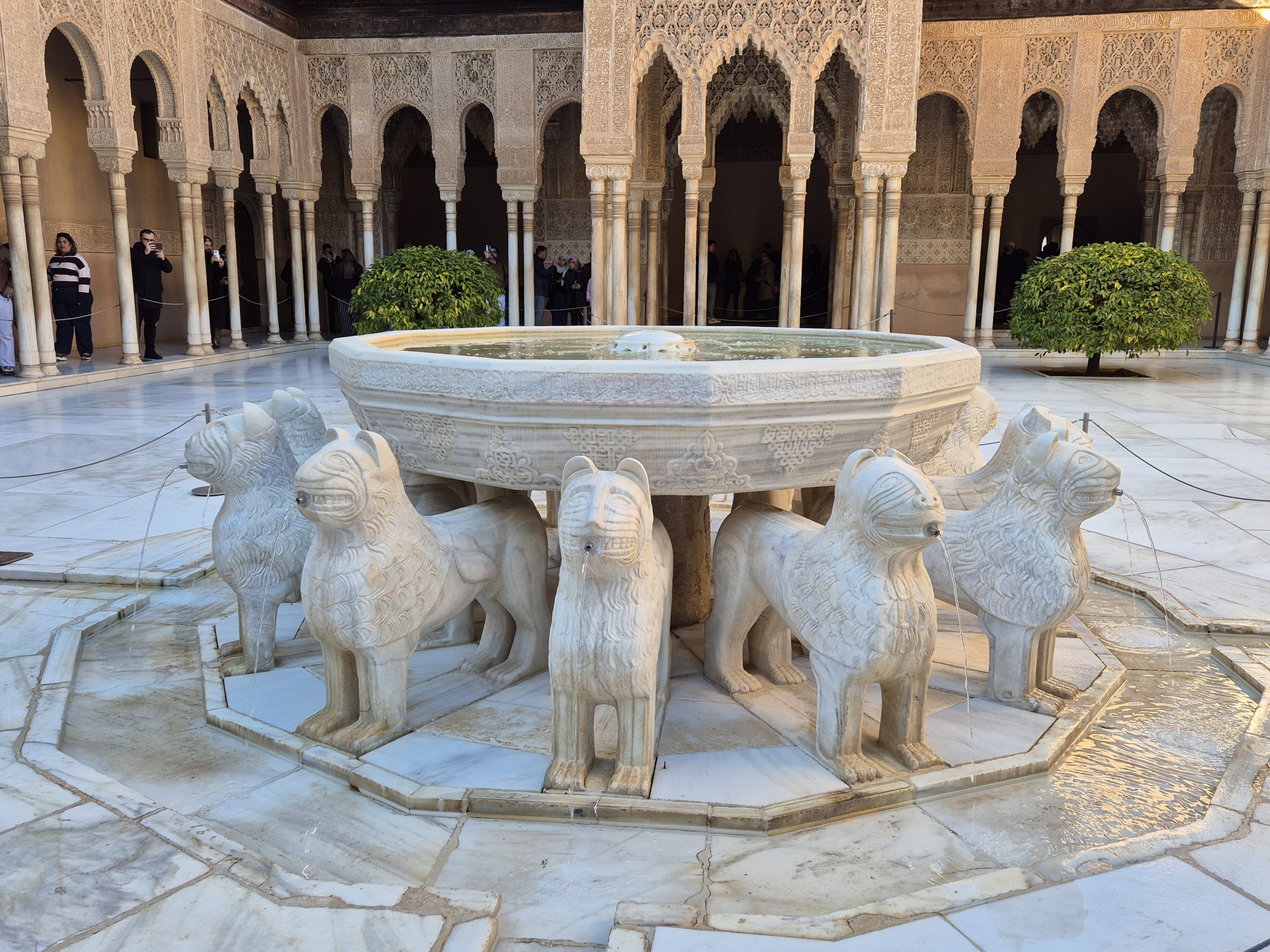
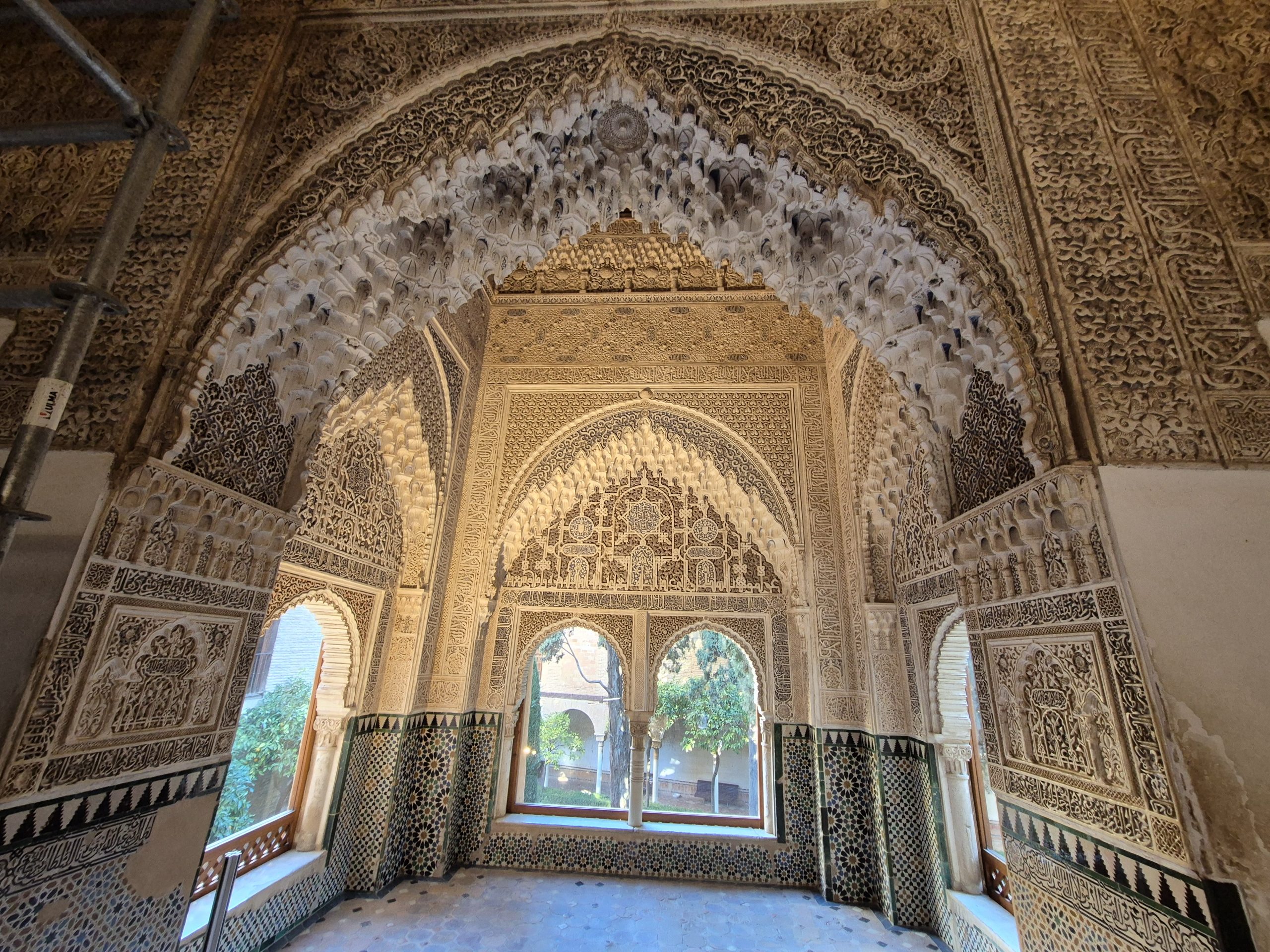
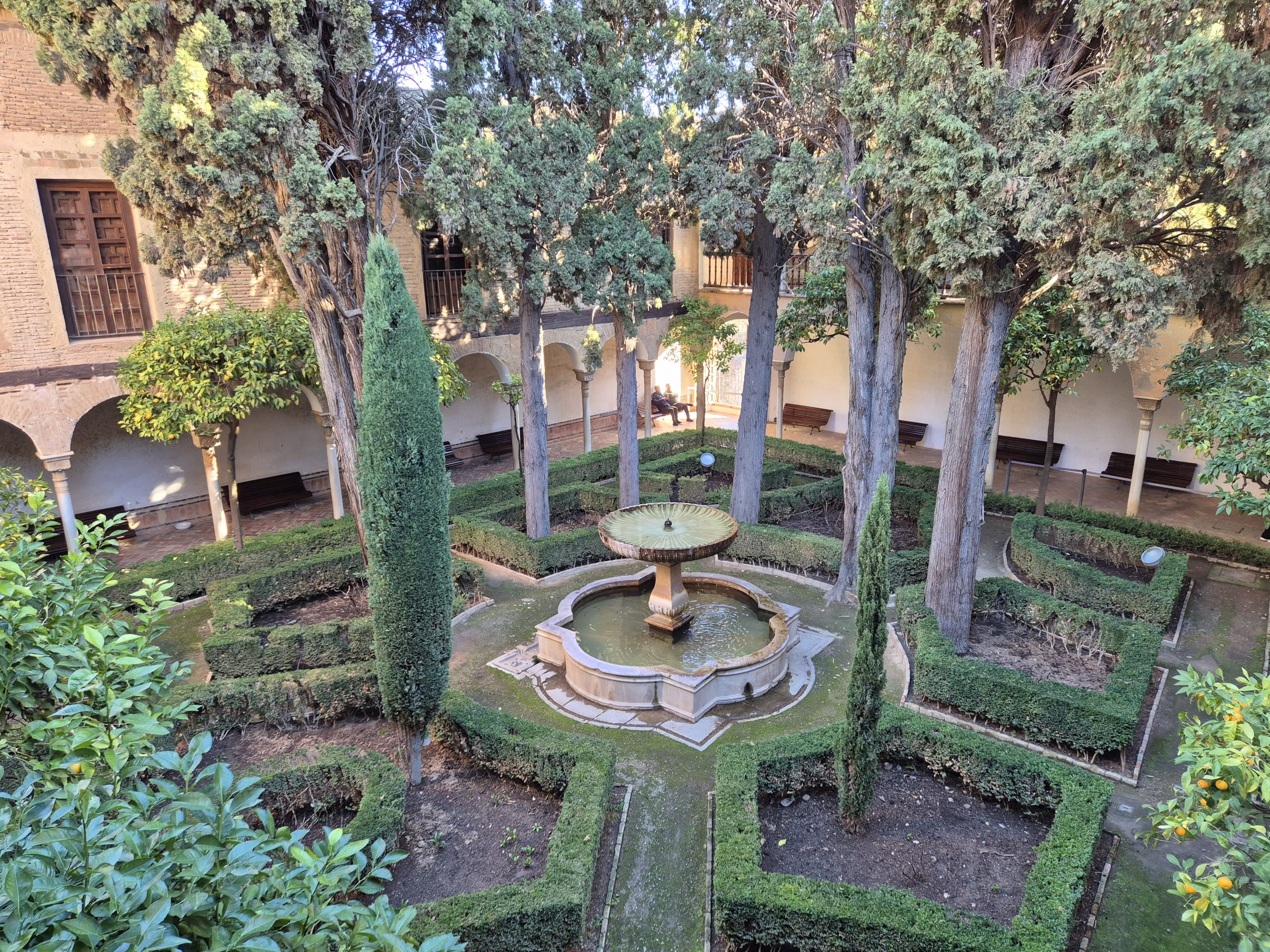
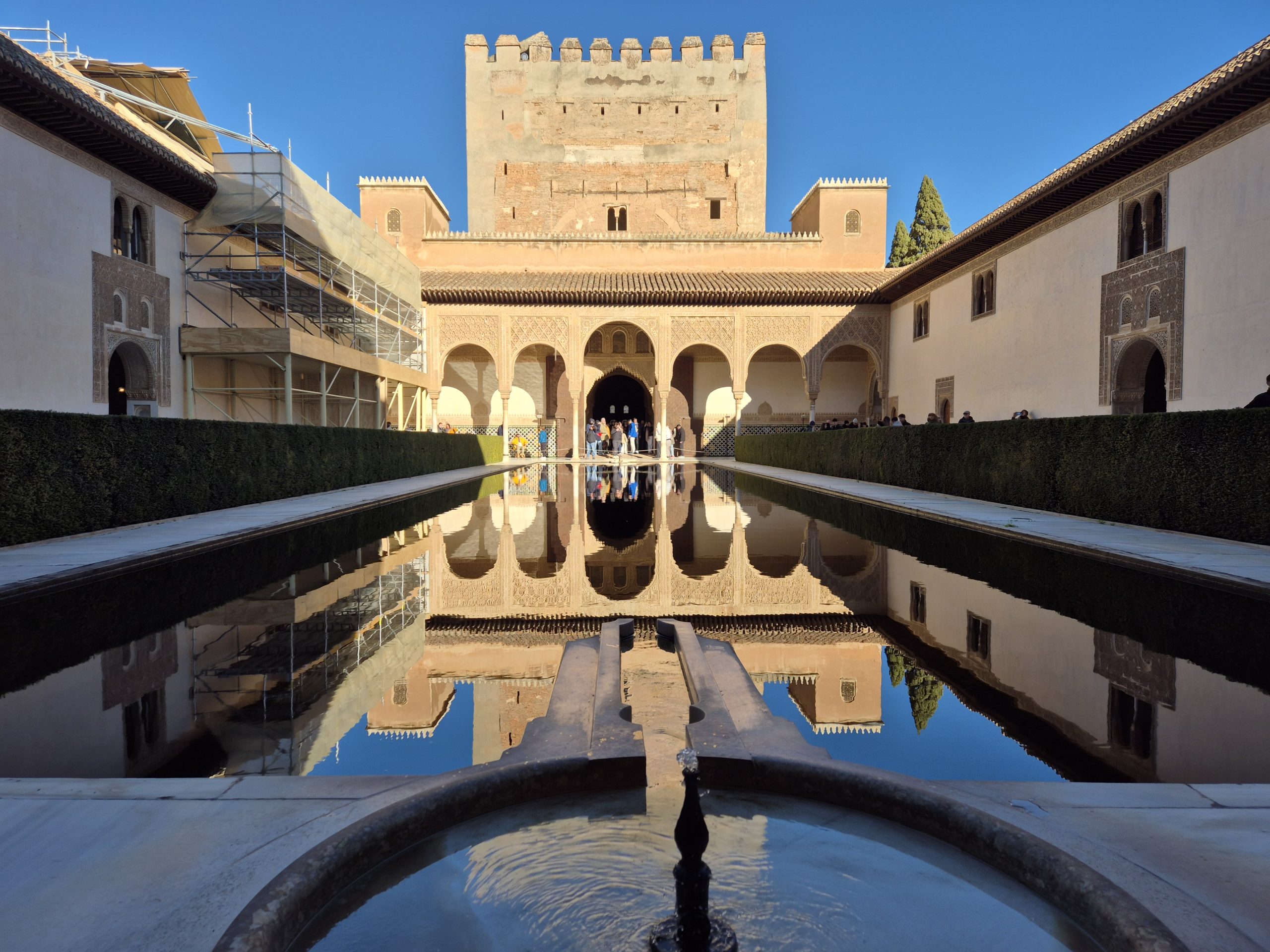
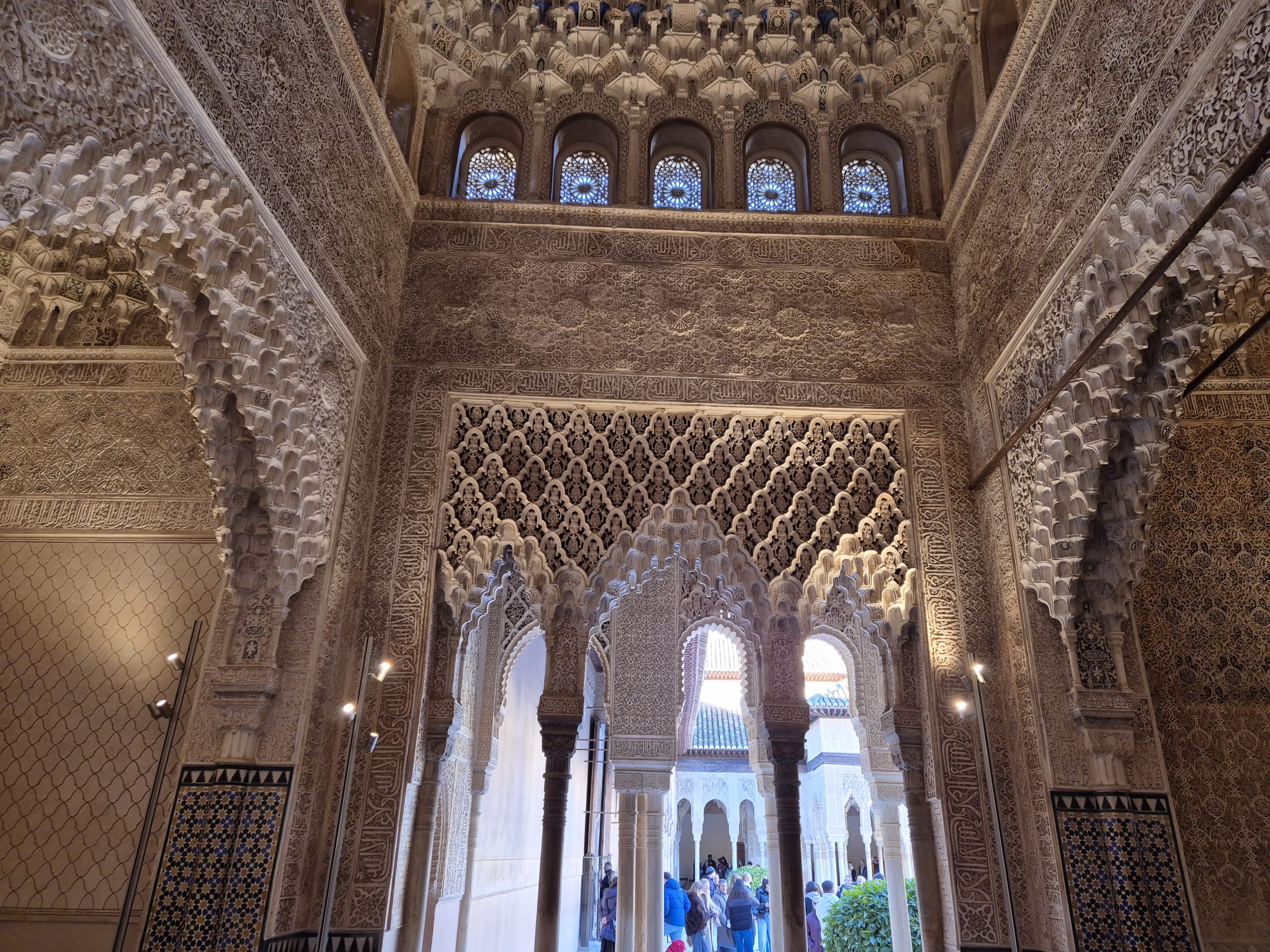
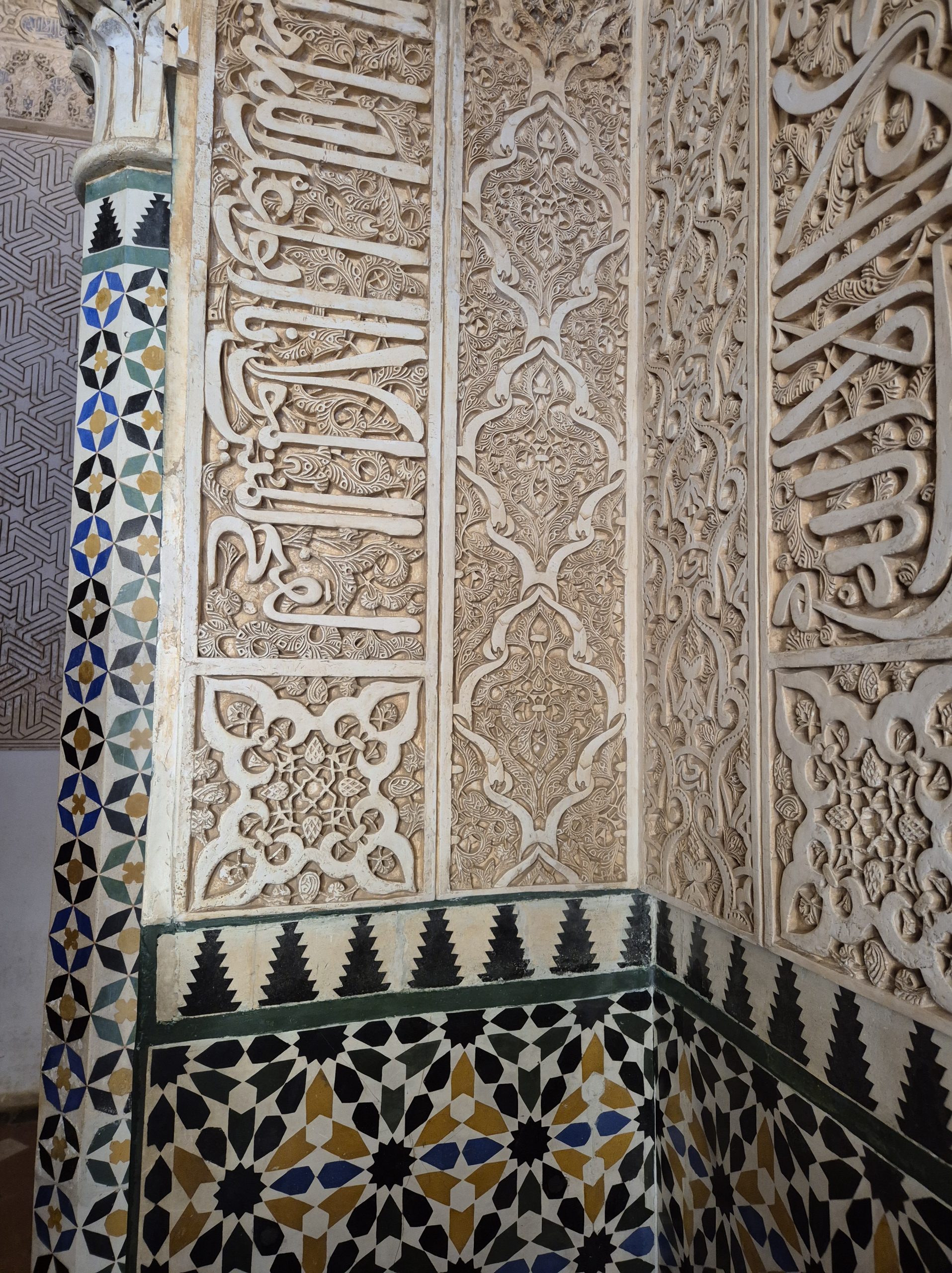
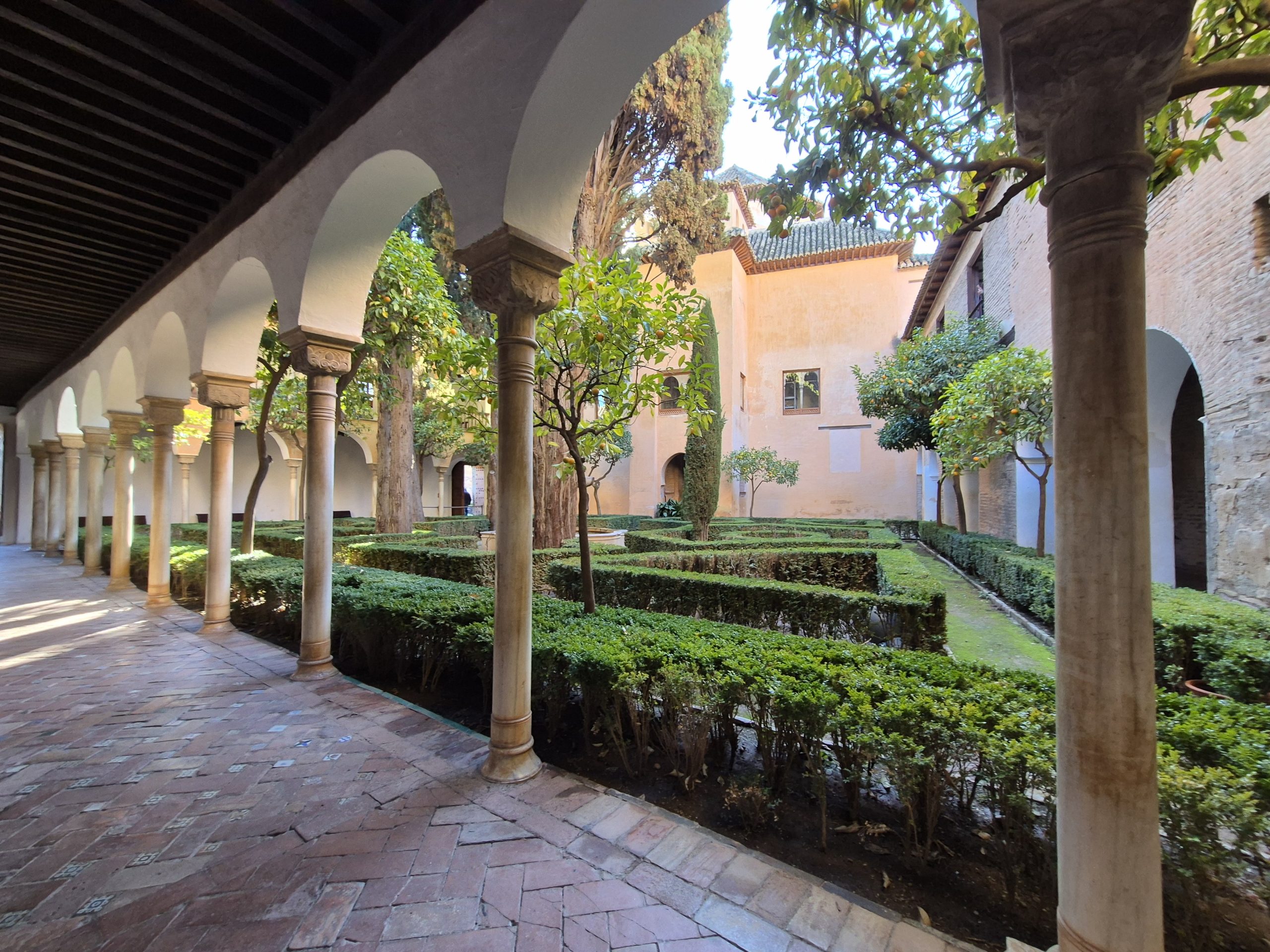
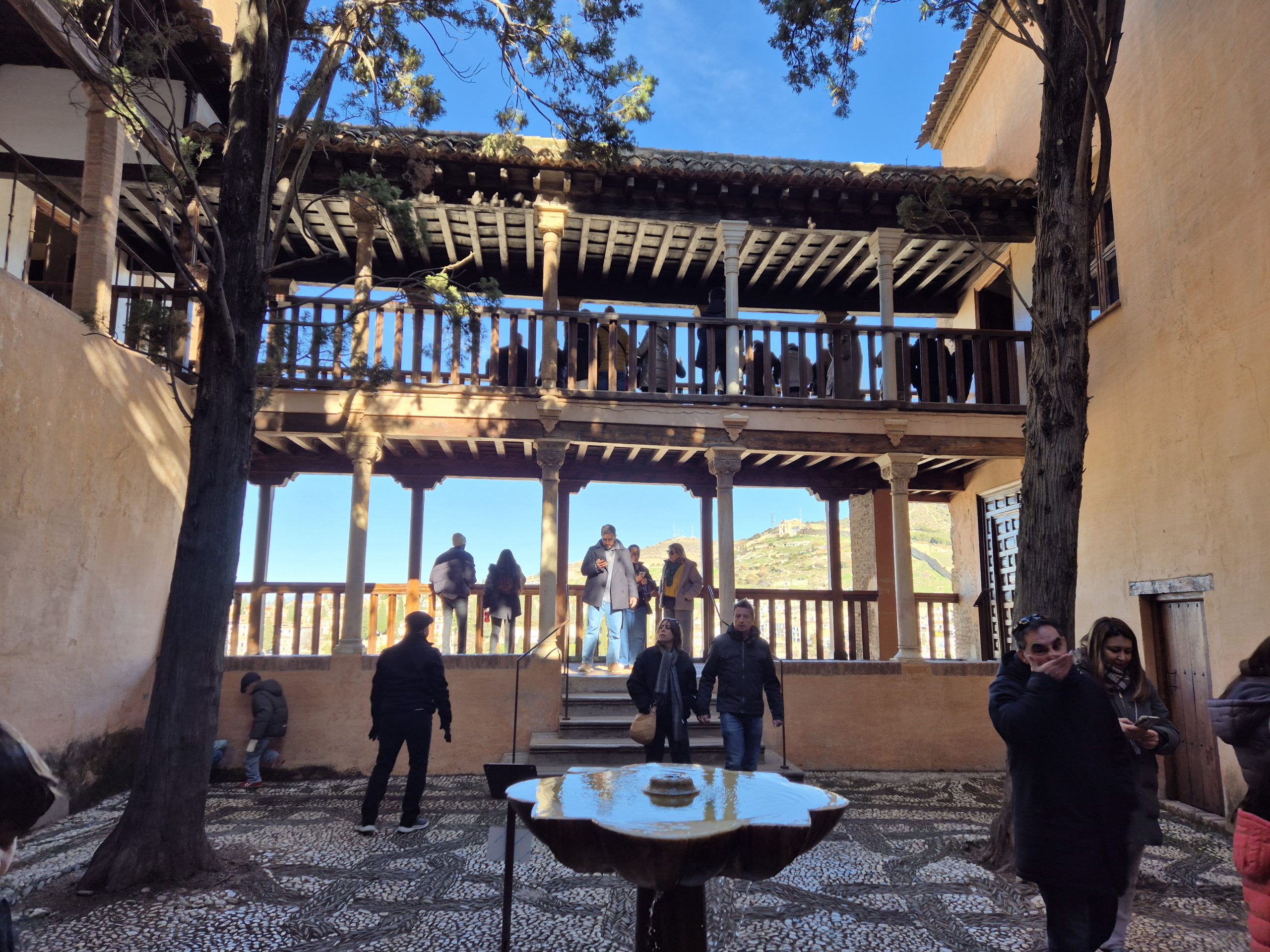
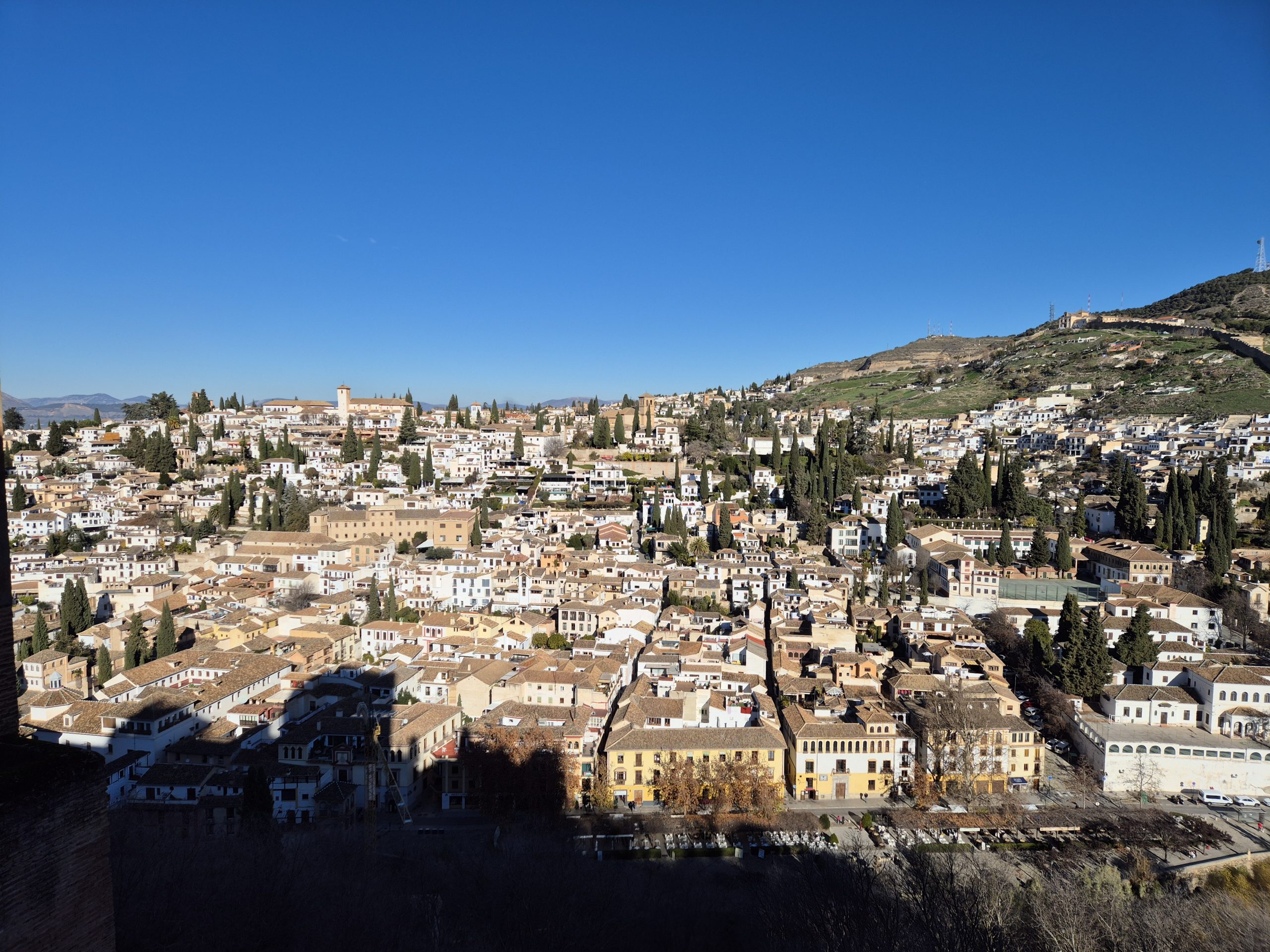
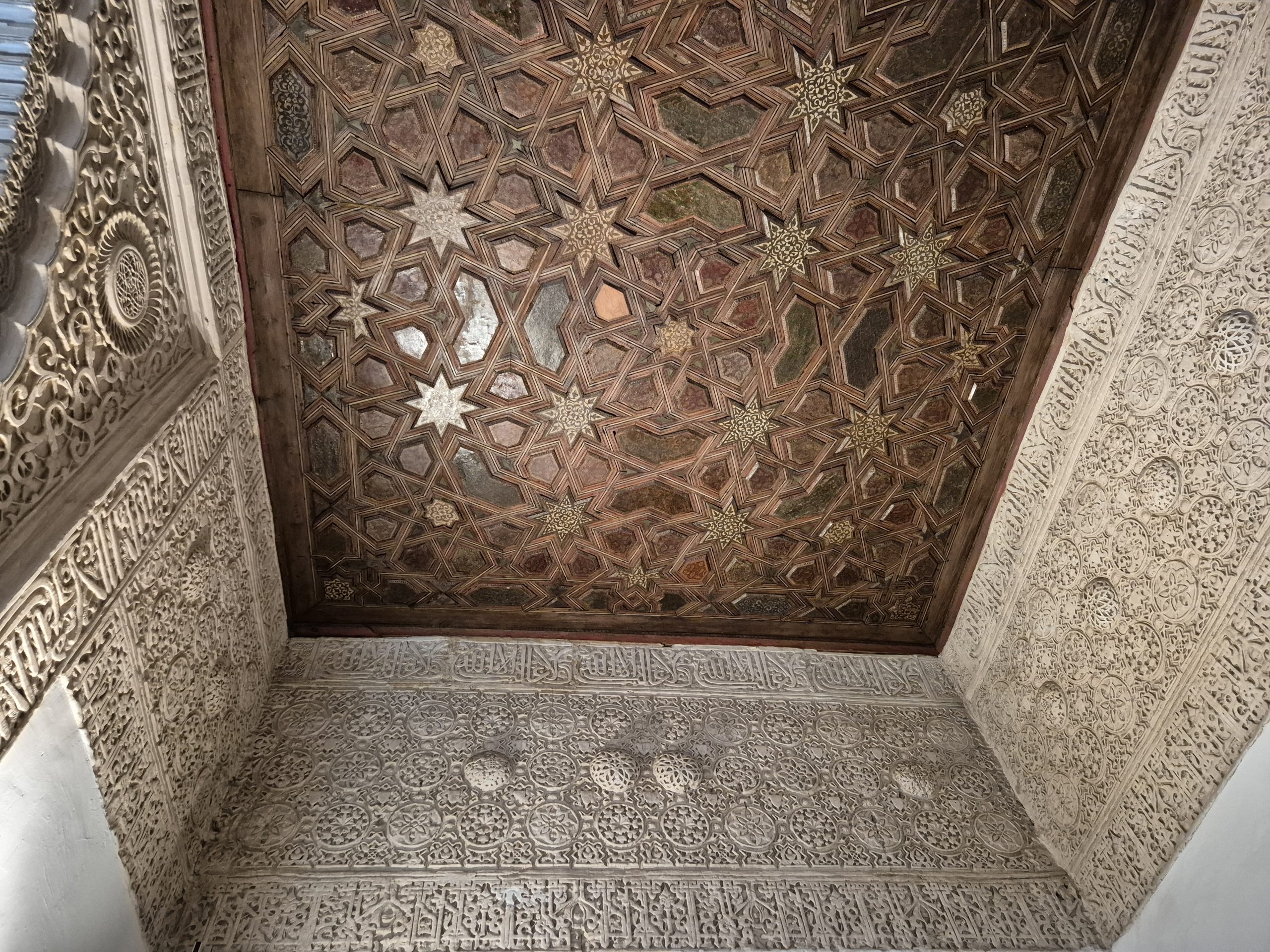
The Nasrid Palaces are the reason the rest exists. I’d expected to be impressed; I hadn’t quite expected the control of it – the way water, geometry, and light are not decoration but the whole architectural basis. Courtyard opening onto courtyard, fountains set so the sound carries, carved walls and marble pillars evocative of Mughal India – the Taj and its mosques, Fatehpur Sikri. The famous Courtyard of the Lions deserves its fame. Mid morning sun streaming in, making the white marble of the whole square shine. The floor and the centerpiece were all made of white marble. The central motif of a large octagonal basin with a fountain in its center, supported by eight lions facing outward, gives this courtyard its name. I spent time jostling the crowds to capture this lovely space in photos: trying to find angles to minimize the humans and maximize the marble in my frames.
The route for visitors is arranged as a strict cordoned-off path through the place, with guards everywhere. No wandering around the palace at will. We were partly carried along with the crowds, and partly resisted and hung back in places. We weren’t sure we’d seen everything, so at one point we doubled back, walking against the flow – which earned me a suspicious security lady who wanted to see our tickets again, apparently convinced we’d materialized inside without paying. (How, exactly, one sneaks into the Alhambra, she did not explain.)
We came to some cool, dark rooms on the first floor, all with exhibits of some kings and brave deeds – or something. I was just floating, absorbing the feel of the place. From those rooms leading out was a corridor with views of the white roofs of the Albaicín on our left, and on our right, another courtyard, this one shaded with tall trees and quieter. Stairs led down from there into the courtyard. We went down to it. This was another of my favorites within the palace. The corridor on the first floor seen from below, was also striking, with its dark wooden pillars, geometric balustrade, and the bright afternoon light visible on the other side, but severely filtered before it reaches the courtyard.
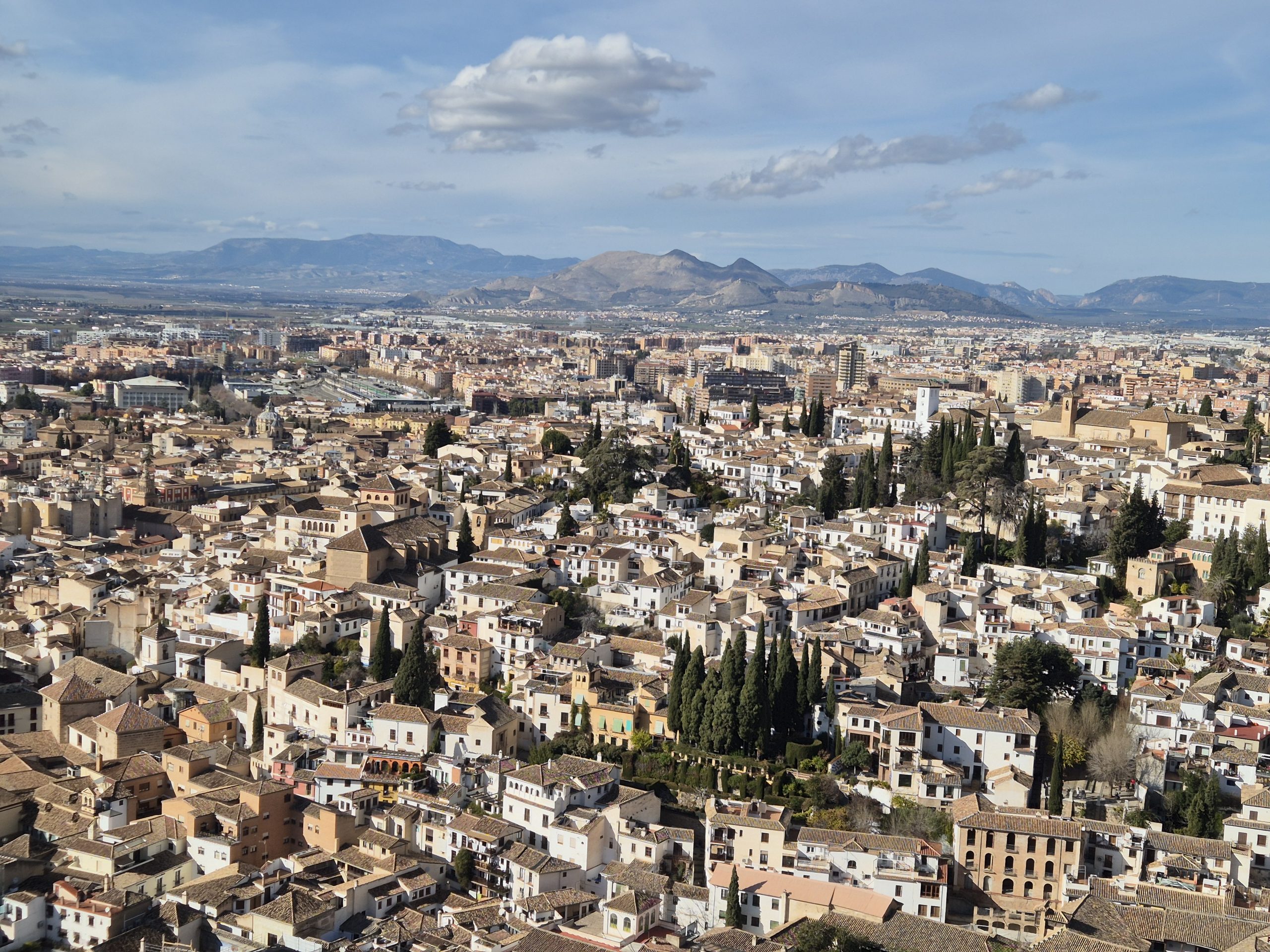
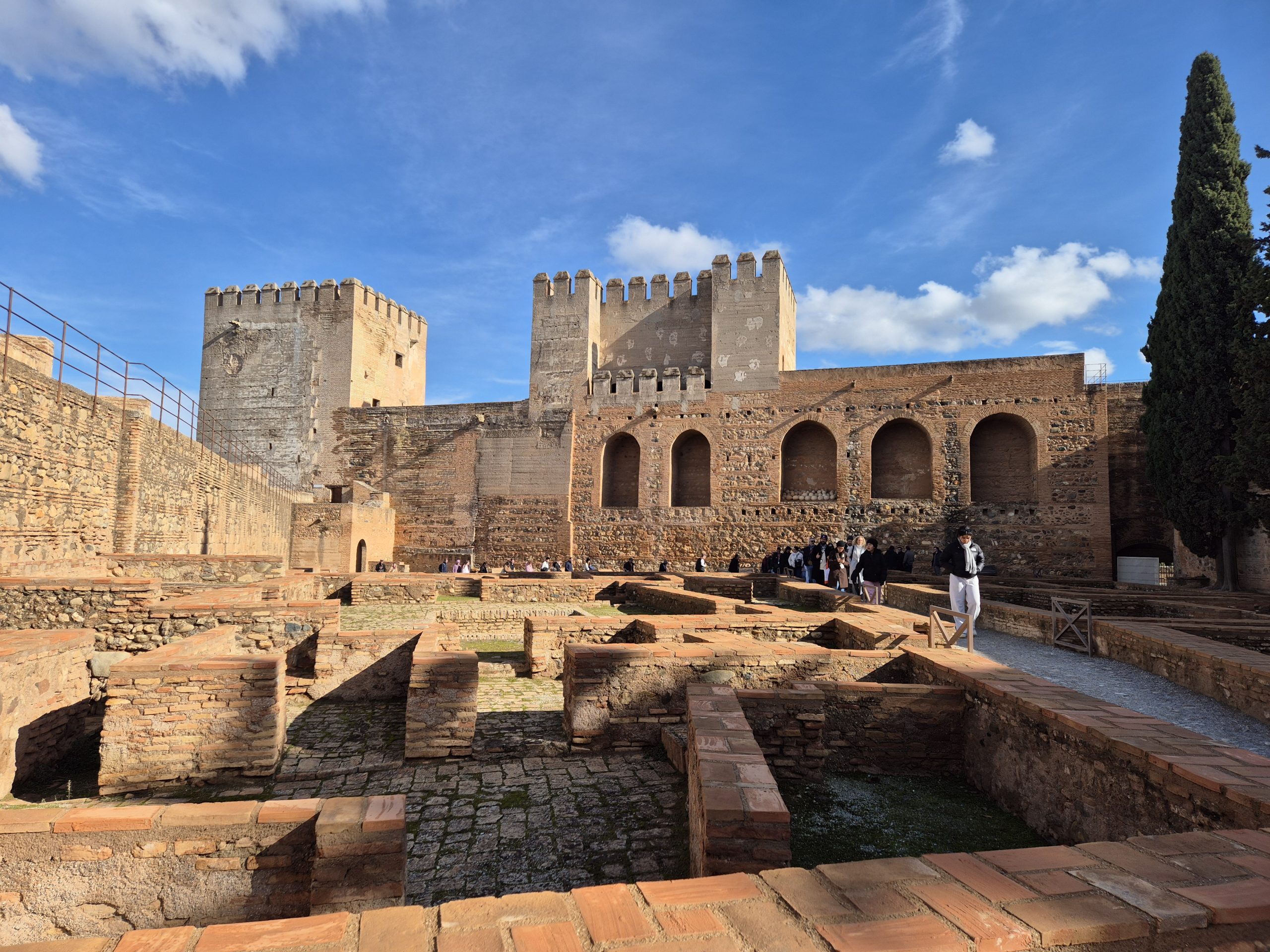
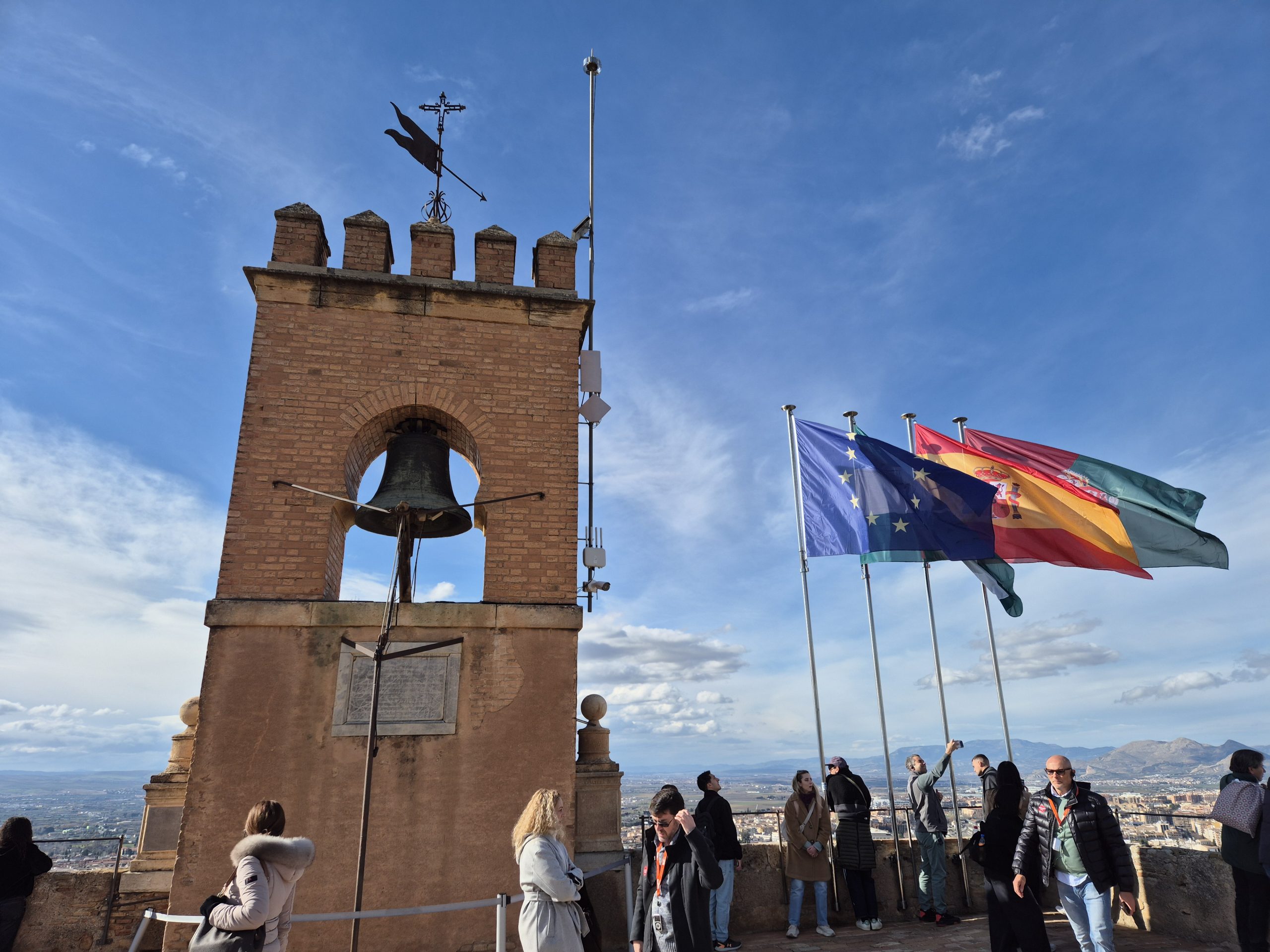
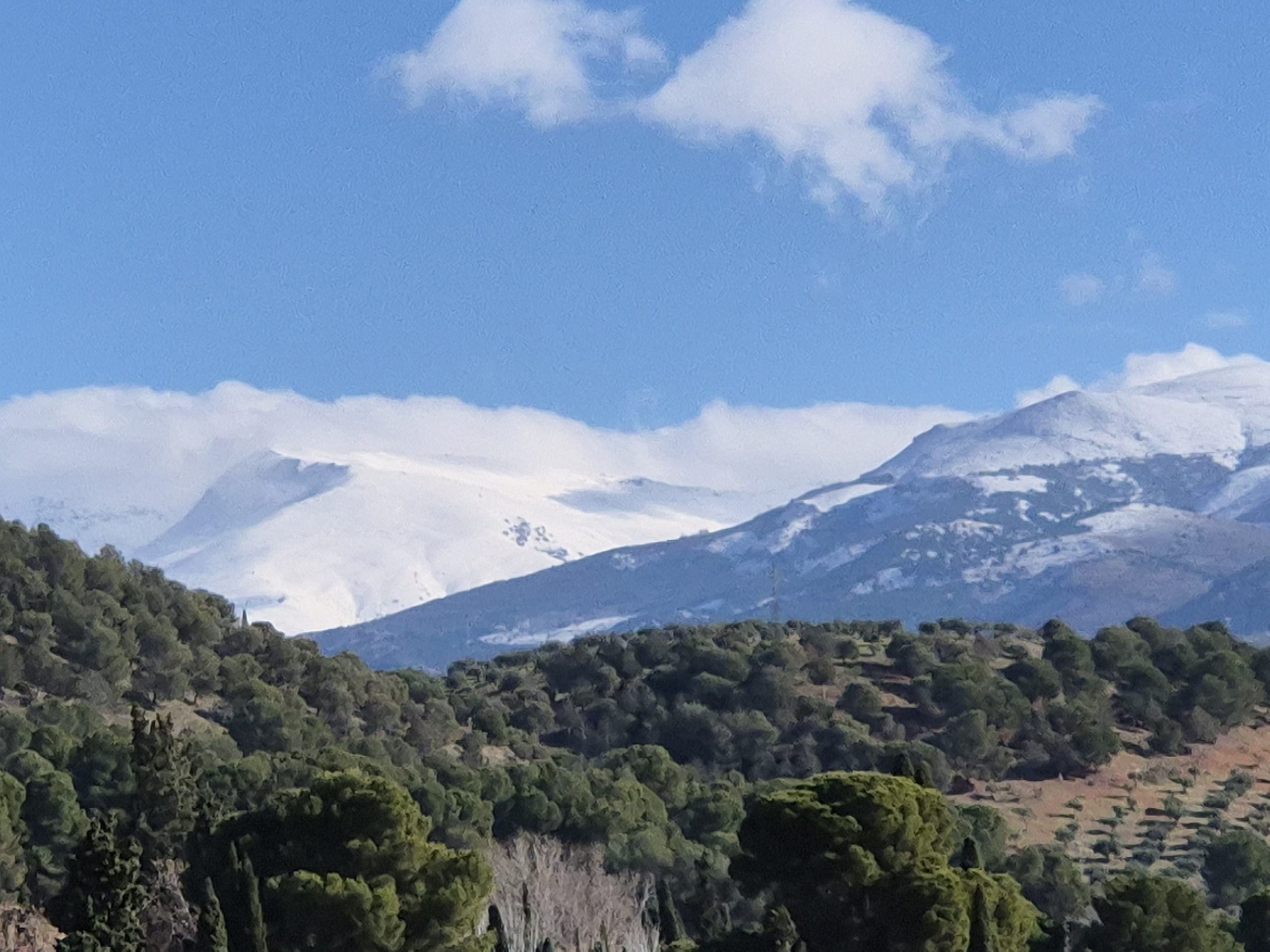
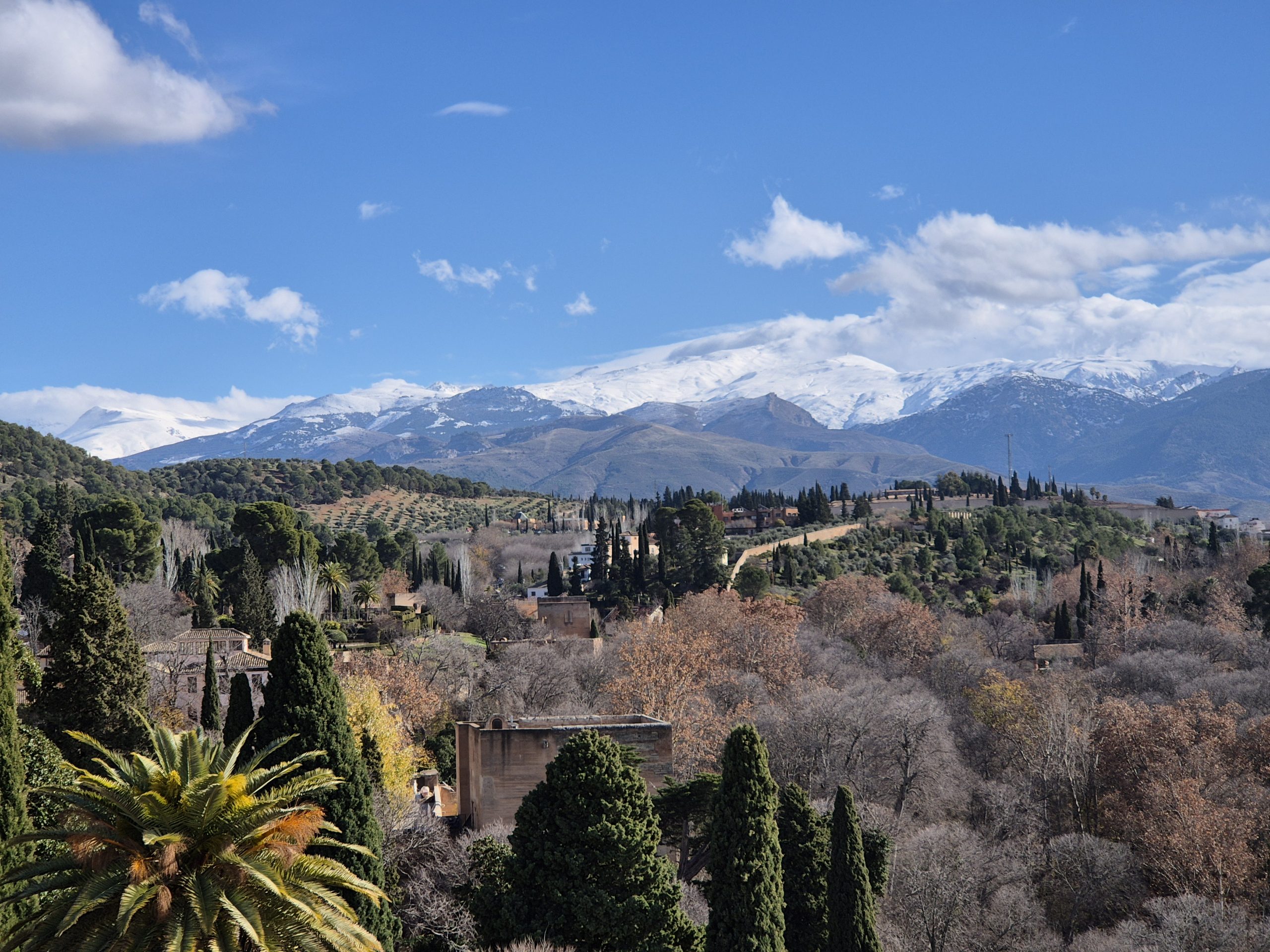
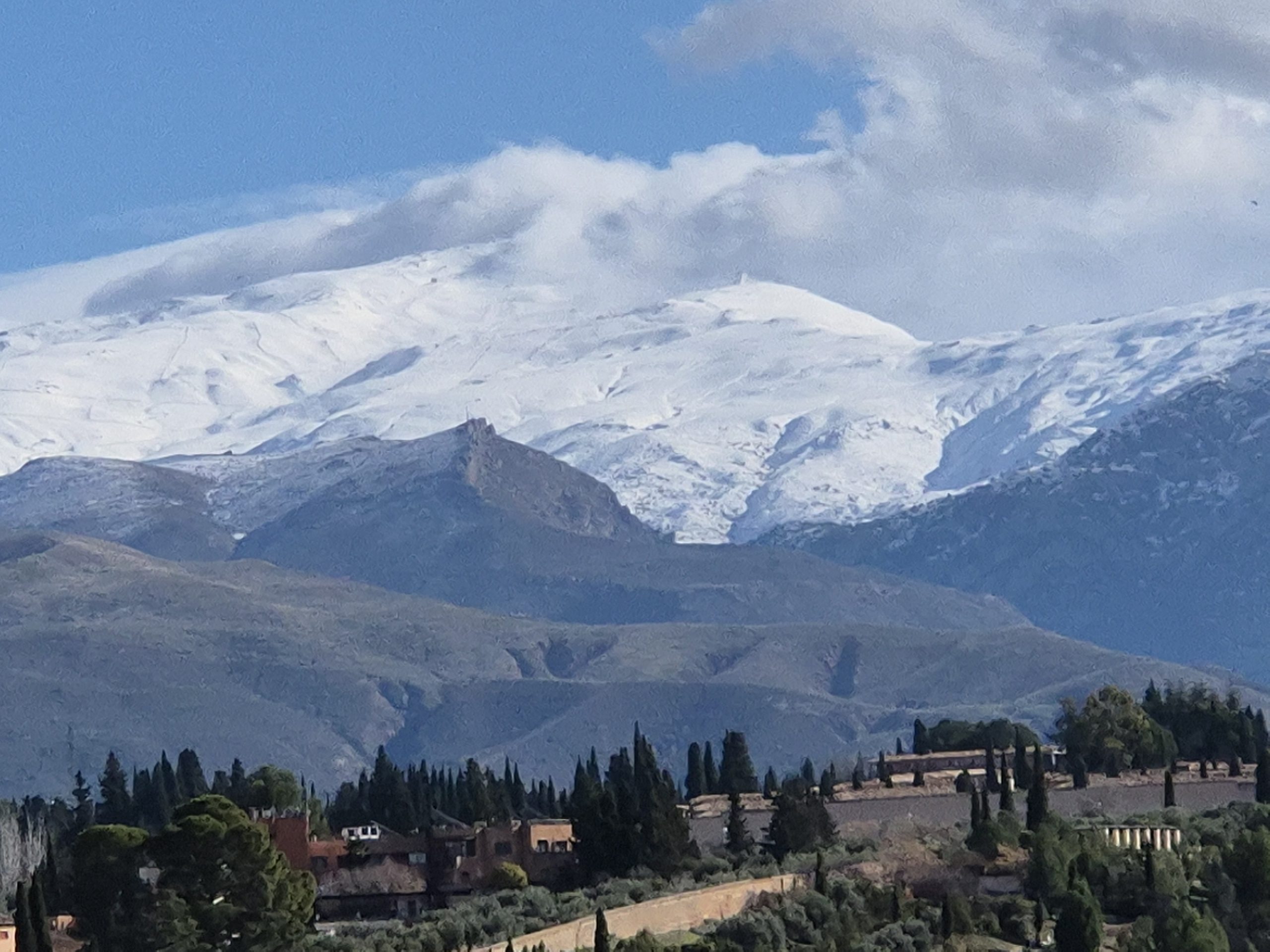
From the Alcazaba the view is as promised by guidebooks: the white roofs of the Albaicín spilling down the opposite hill, and beyond them the snow-covered Sierra Nevada. In that blazing afternoon sun, it all looked blindingly white.
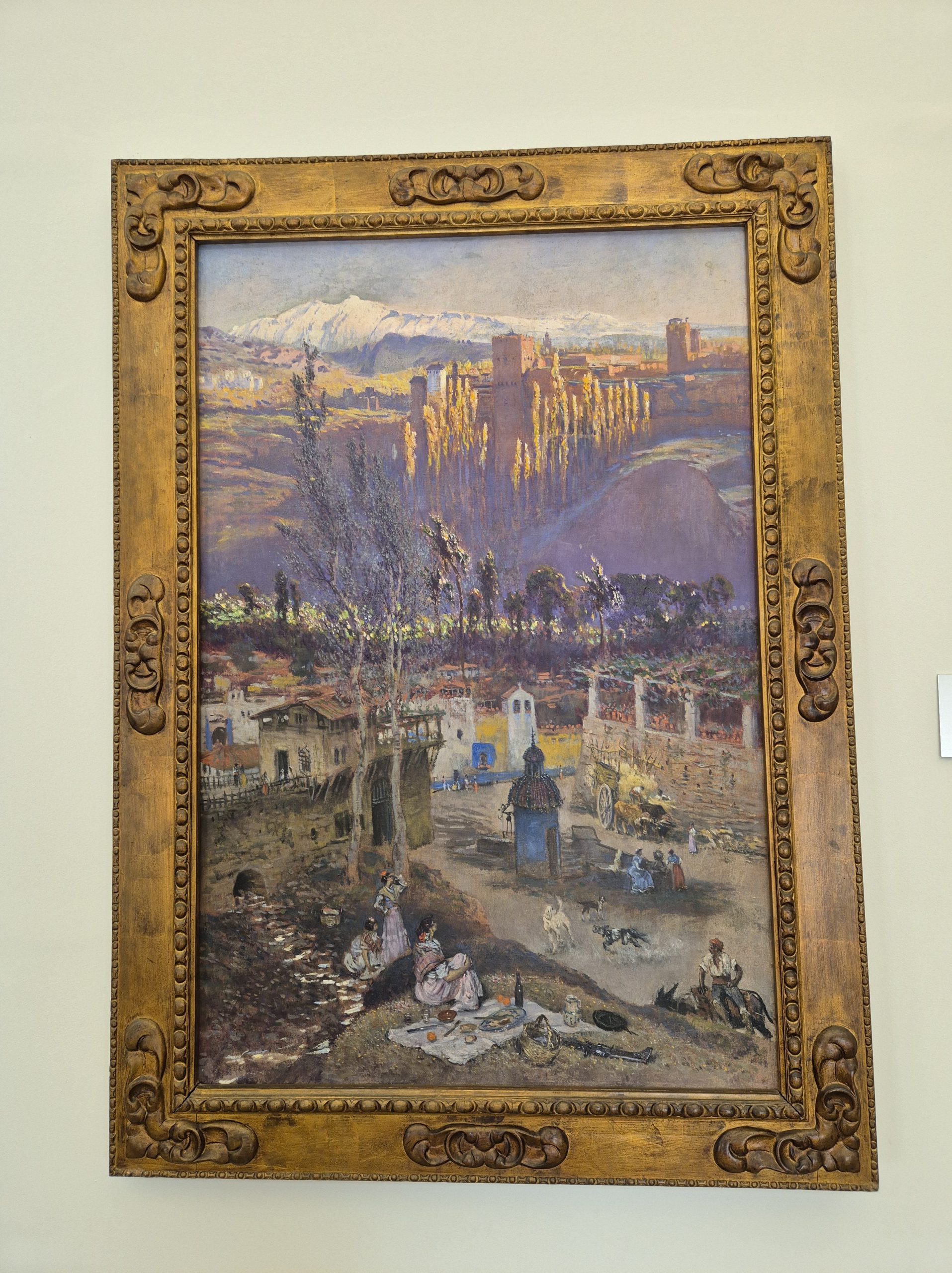
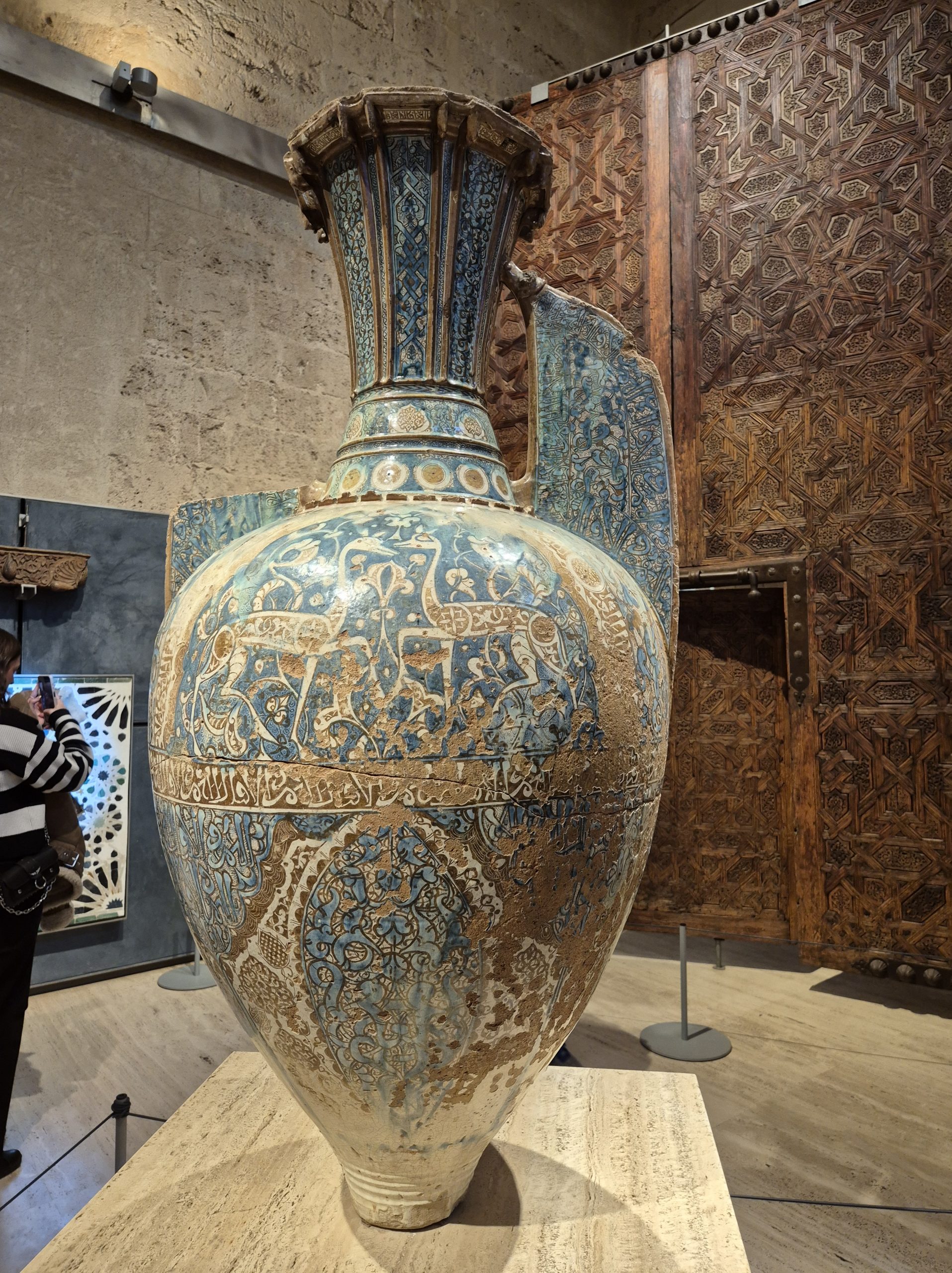
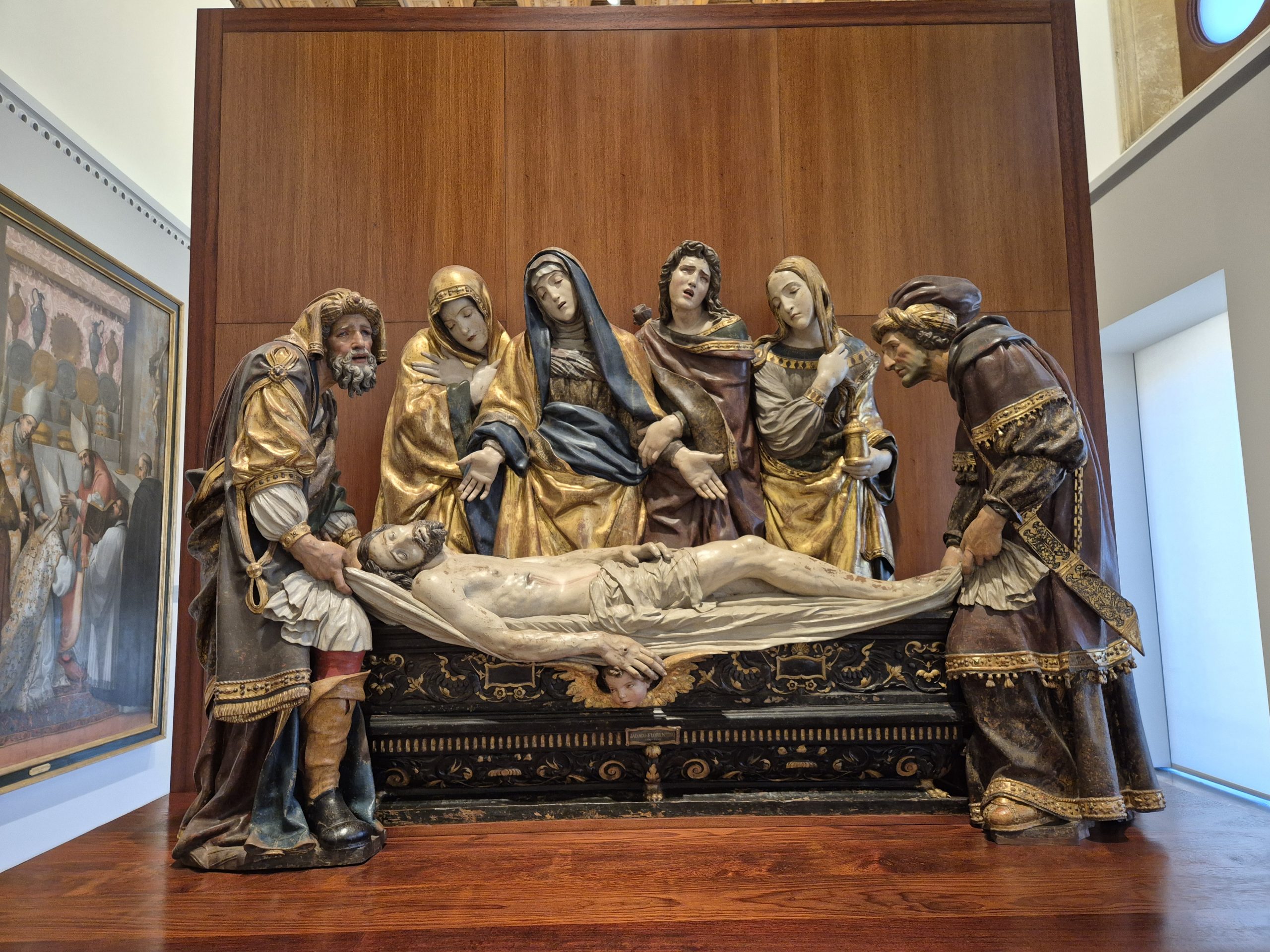
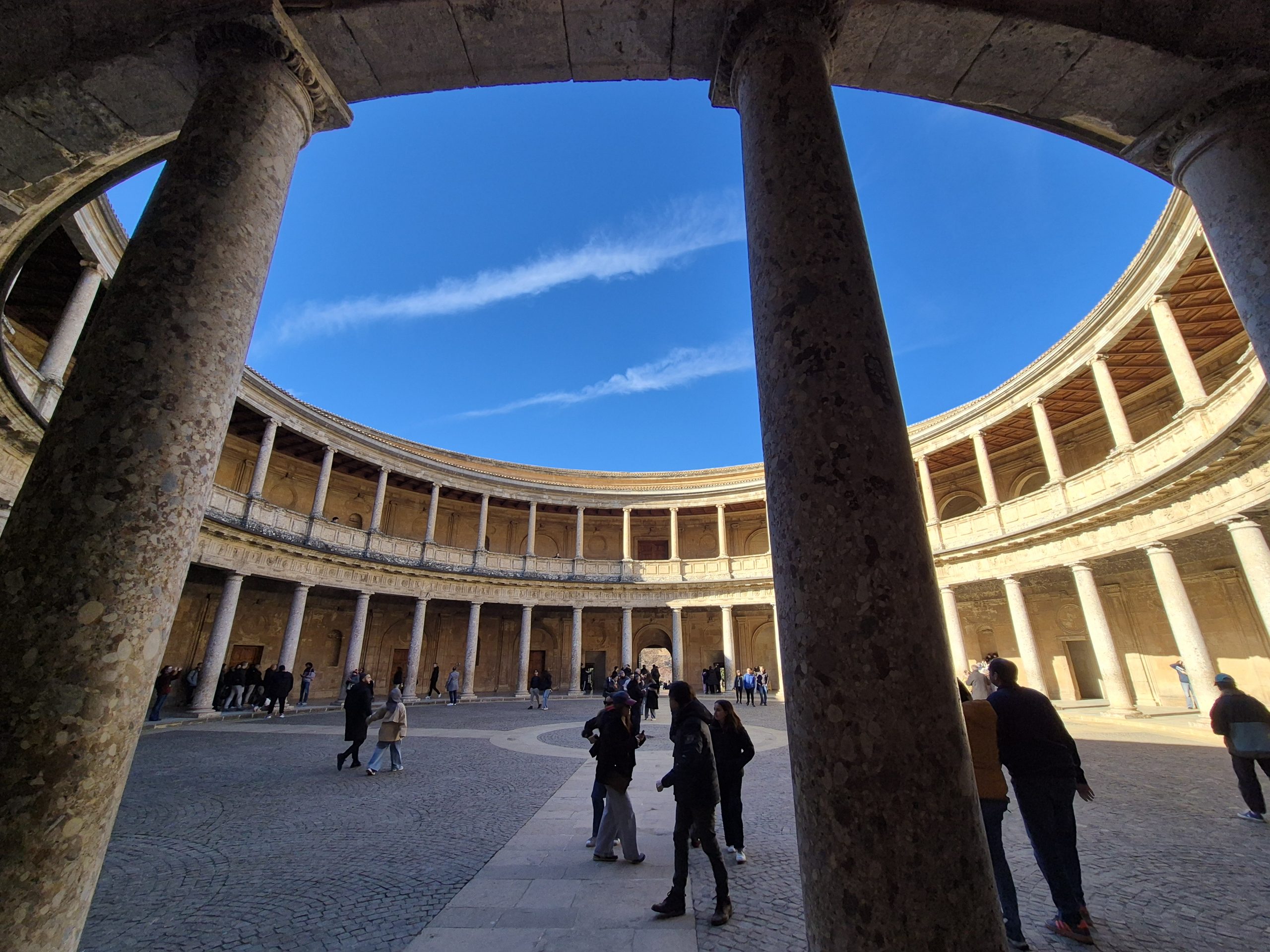
In the fine-arts museum inside the Palace of Charles V, I came upon that same view already hung on a wall: Visita de la Alhambra, painted by Antonio Muñoz Degráin in 1914 – the fortress on its hill, the snow-topped Sierra Nevada behind, and in the foreground a scatter of visitors come to look. A hundred-odd years ago someone had stood roughly where I’d just stood and done exactly what I was doing. And 1914 is, near enough, the year La Candela was a small girl somewhere in these hills.
Sacromonte and the Albaicín
Sacromonte was, for me, the emotional center of Granada, entirely because of the book (The Moon Sister).
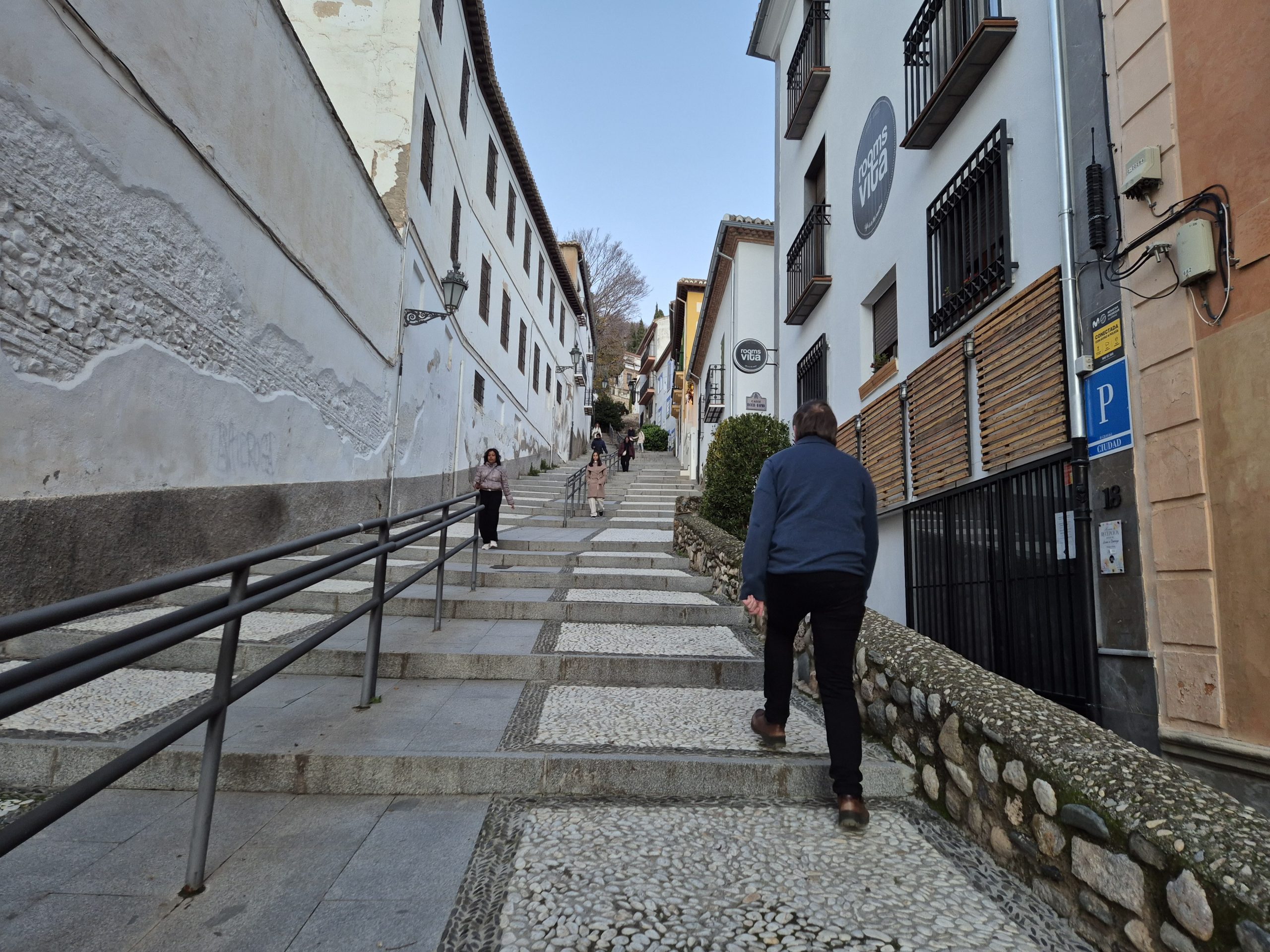
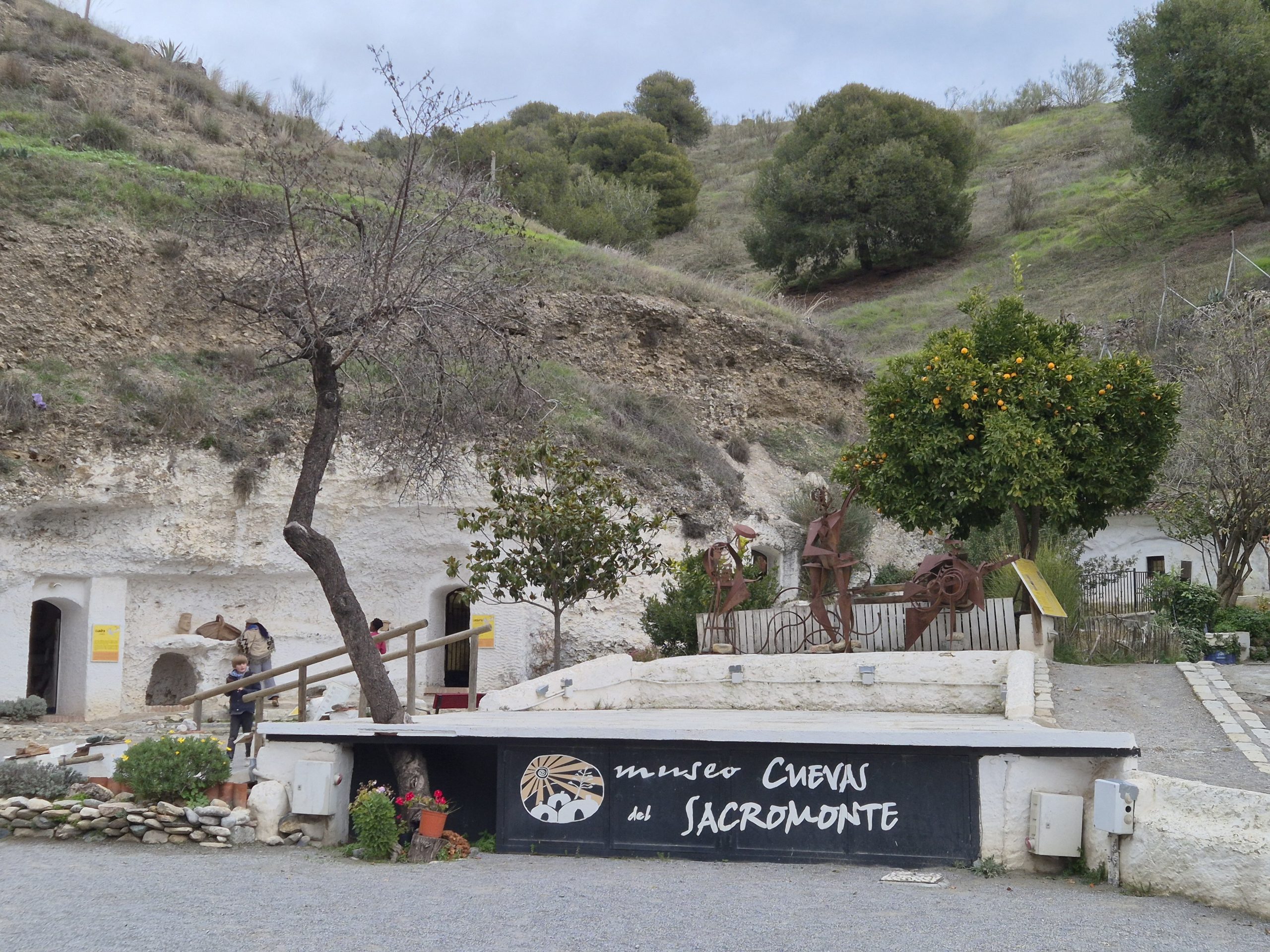
We took a bus to this side of the city. The bus dropped us off at a view point which was still some 30 mins walk from Sacromonte’s famous cave dwellings. It was late afternoon already. We walked along steep narrow alleys, sometimes opening onto little squares with a pub. Most of the alleys were decorated like Calleja de las Flores: whitewashed walls, with blue trimmed flower pots attached at various heights, full of bright colored flowers. Our destination was the Sacromonte Caves Museum, where I hoped to see some of the history which so captured my imagination from the fiction novel.
After walking what felt like many ups and downs, we came to a part I recognized from the book: a stretch of road zigzagging lazily along the edge of the hill, whitewashed walls on the cliff side, the cave homes set into the hillside. This is the old cave quarter, where gitano families lived in homes dug into the rock. The cave homes are at all levels of the hillside, and a hundred years ago, according to the book, here was a caste system of its own: the richer gitanos lived lower down the hill and poorer gitanos higher up. I presume it was due to level of difficulty in acquiring water and other essentials, that this was so.
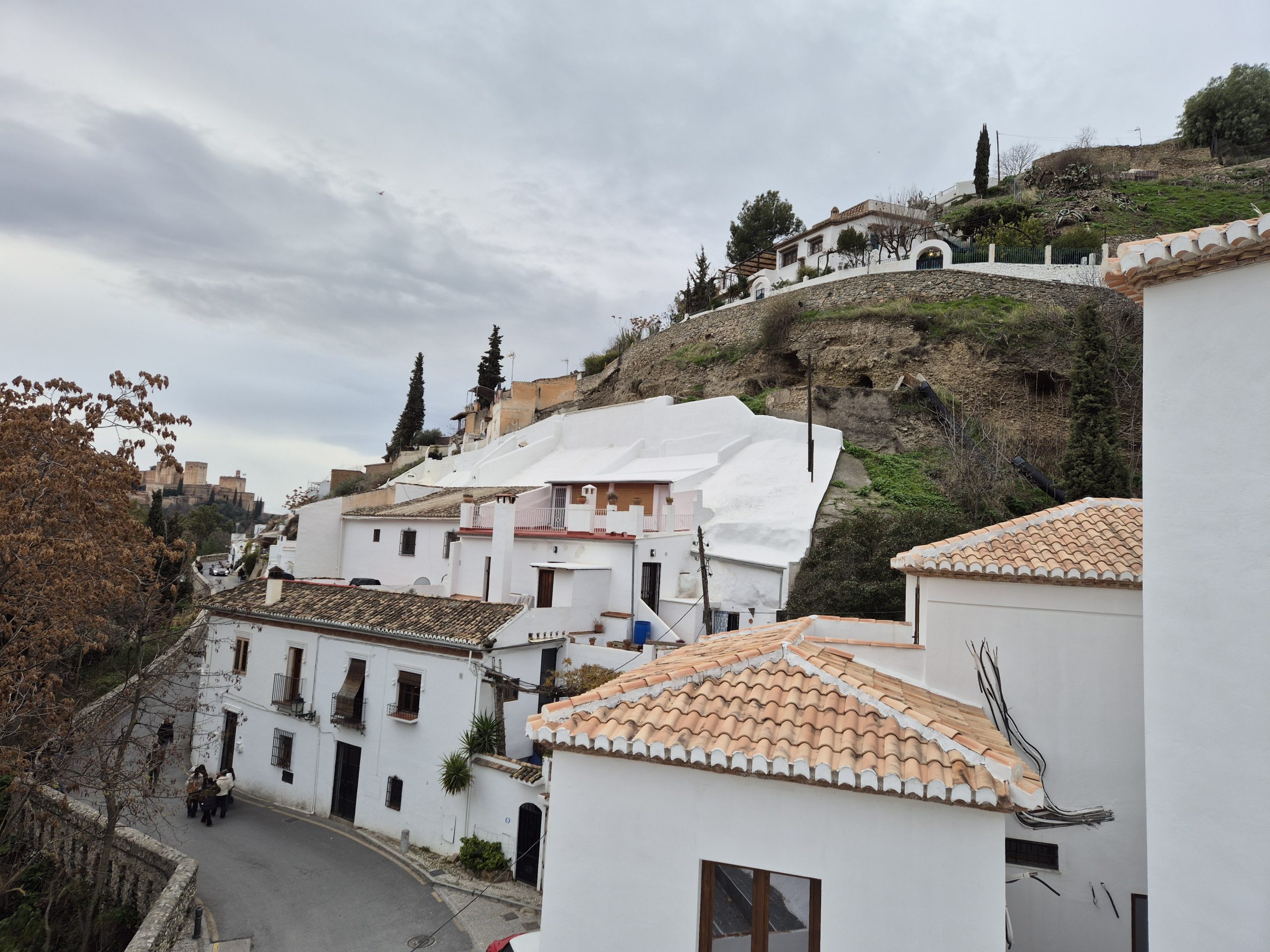
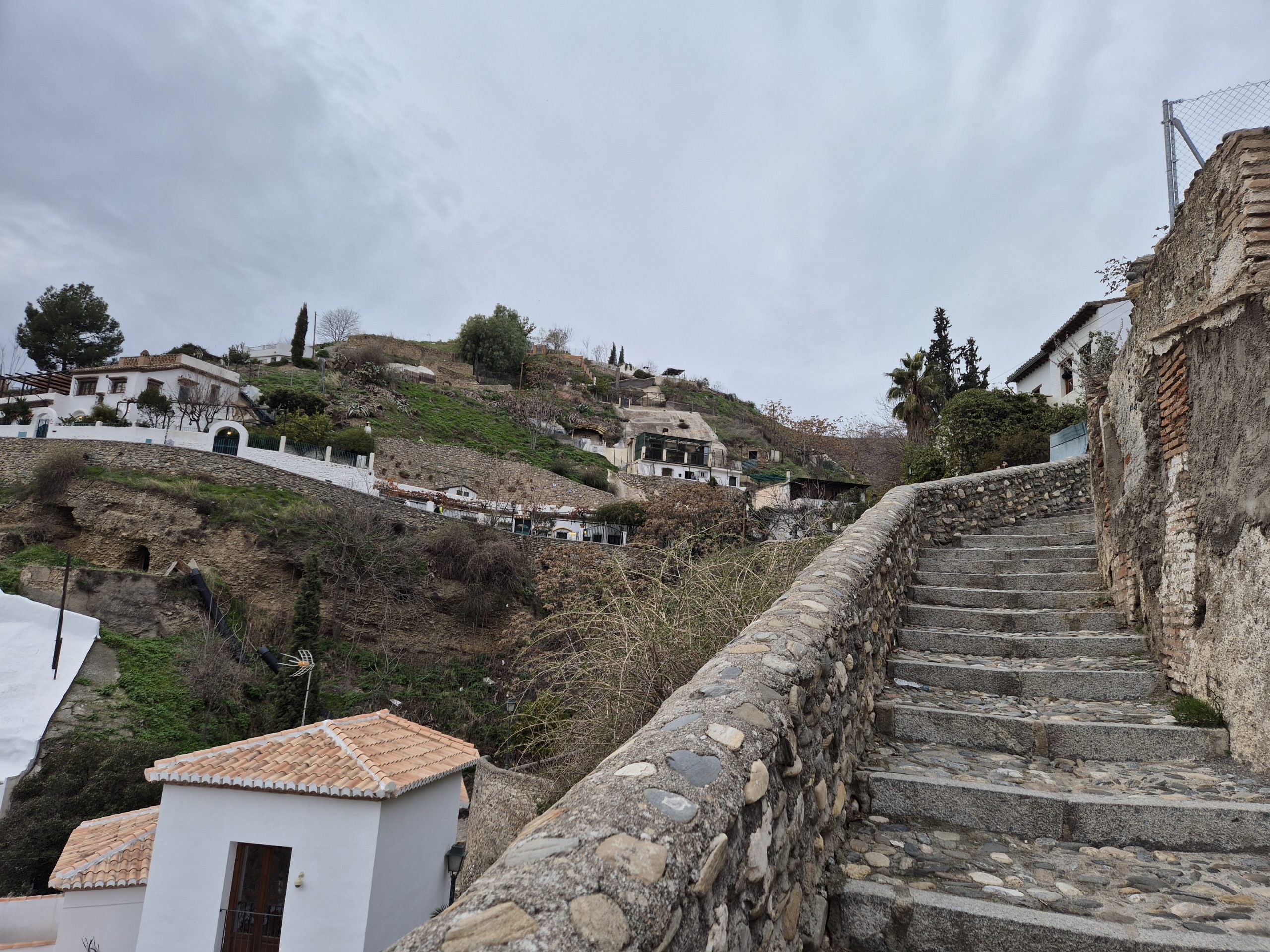
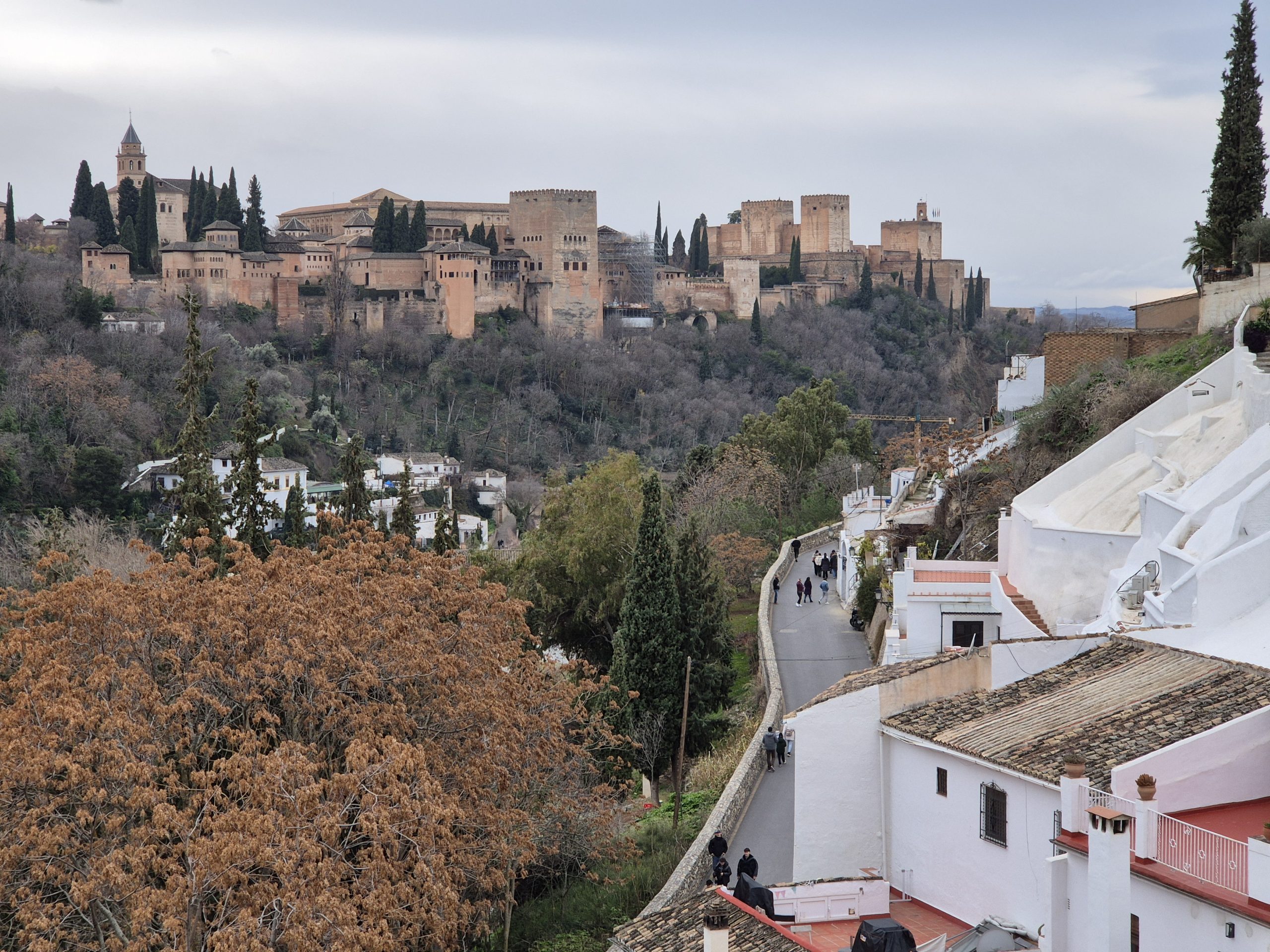
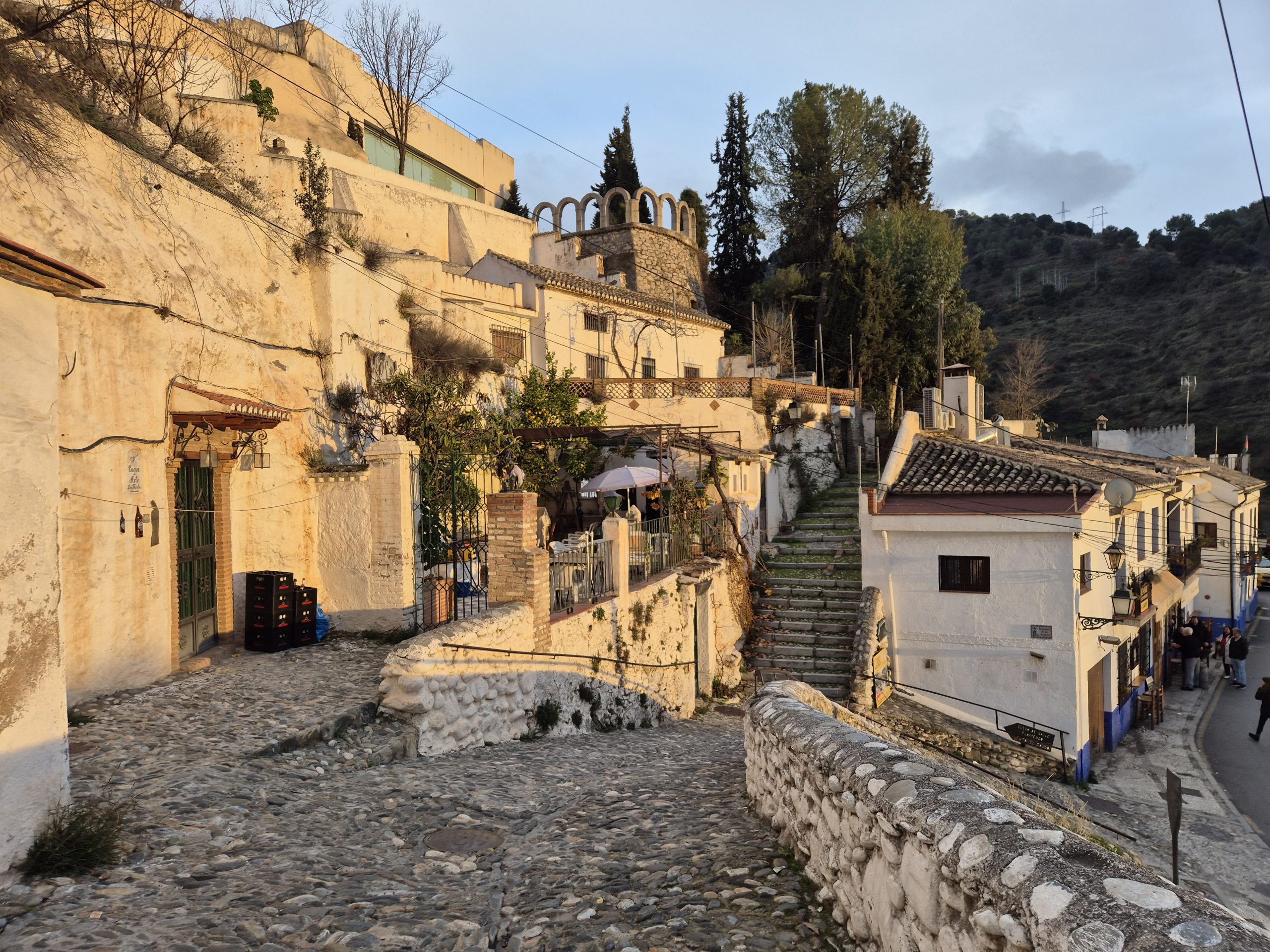
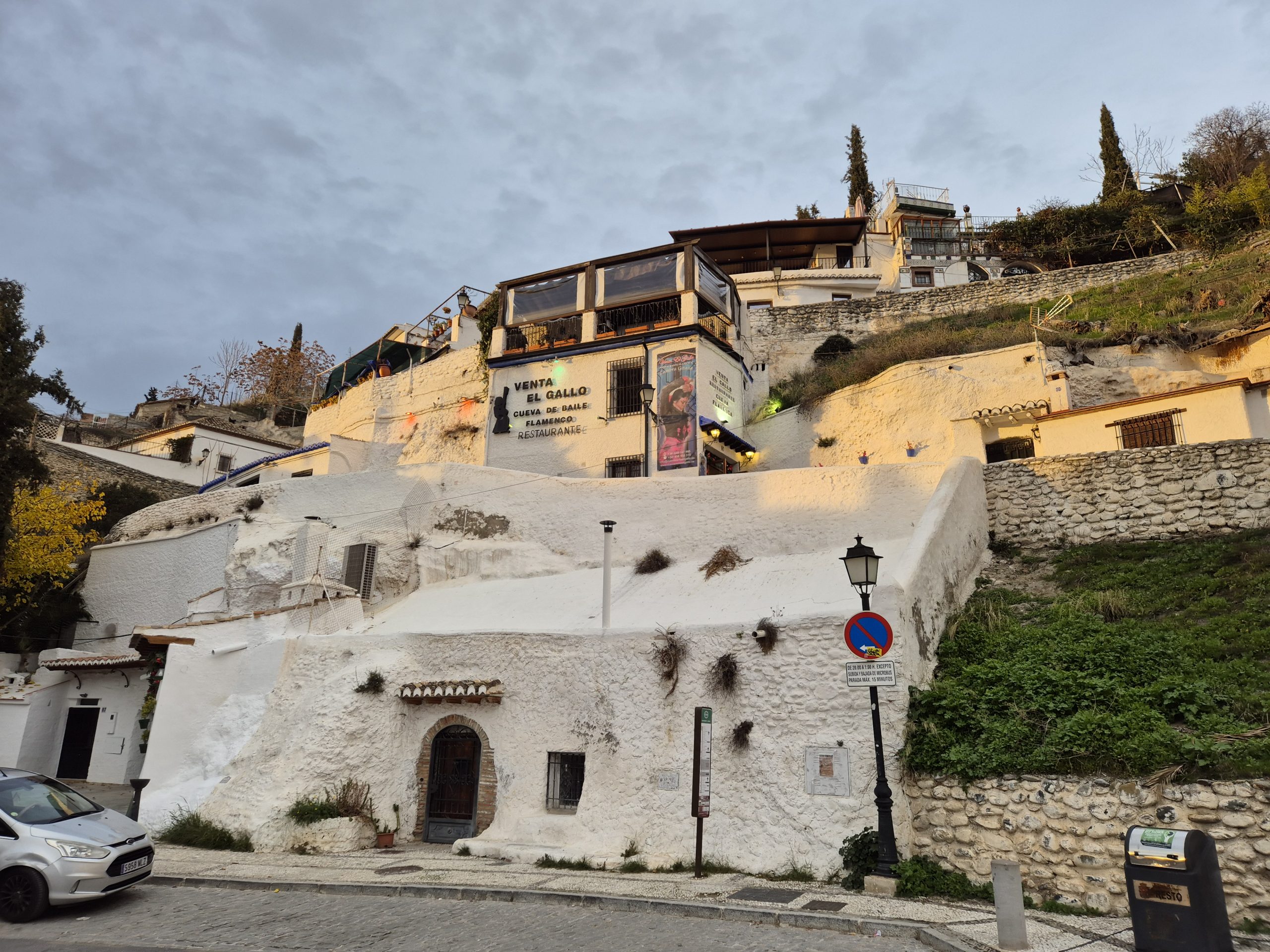
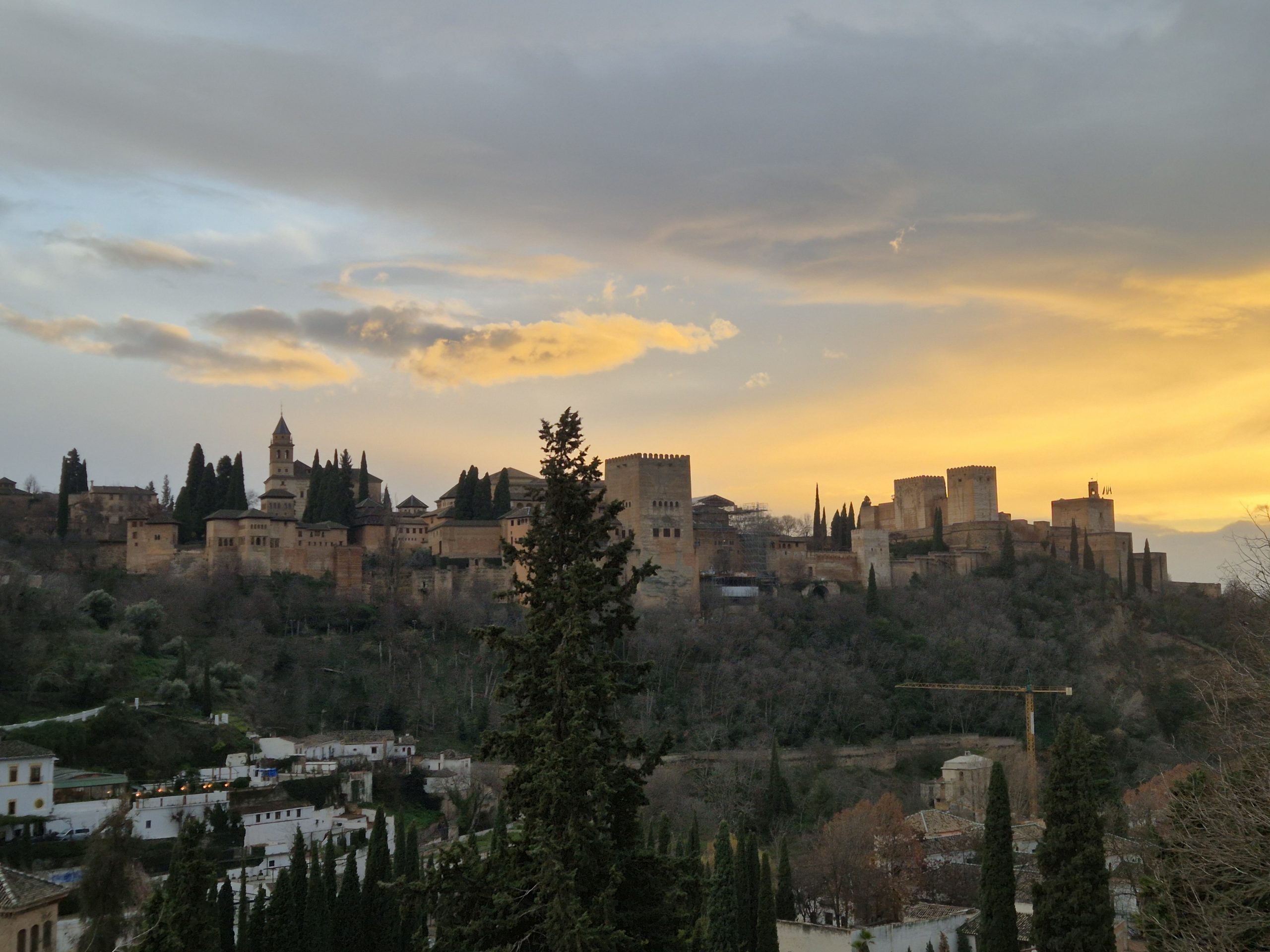
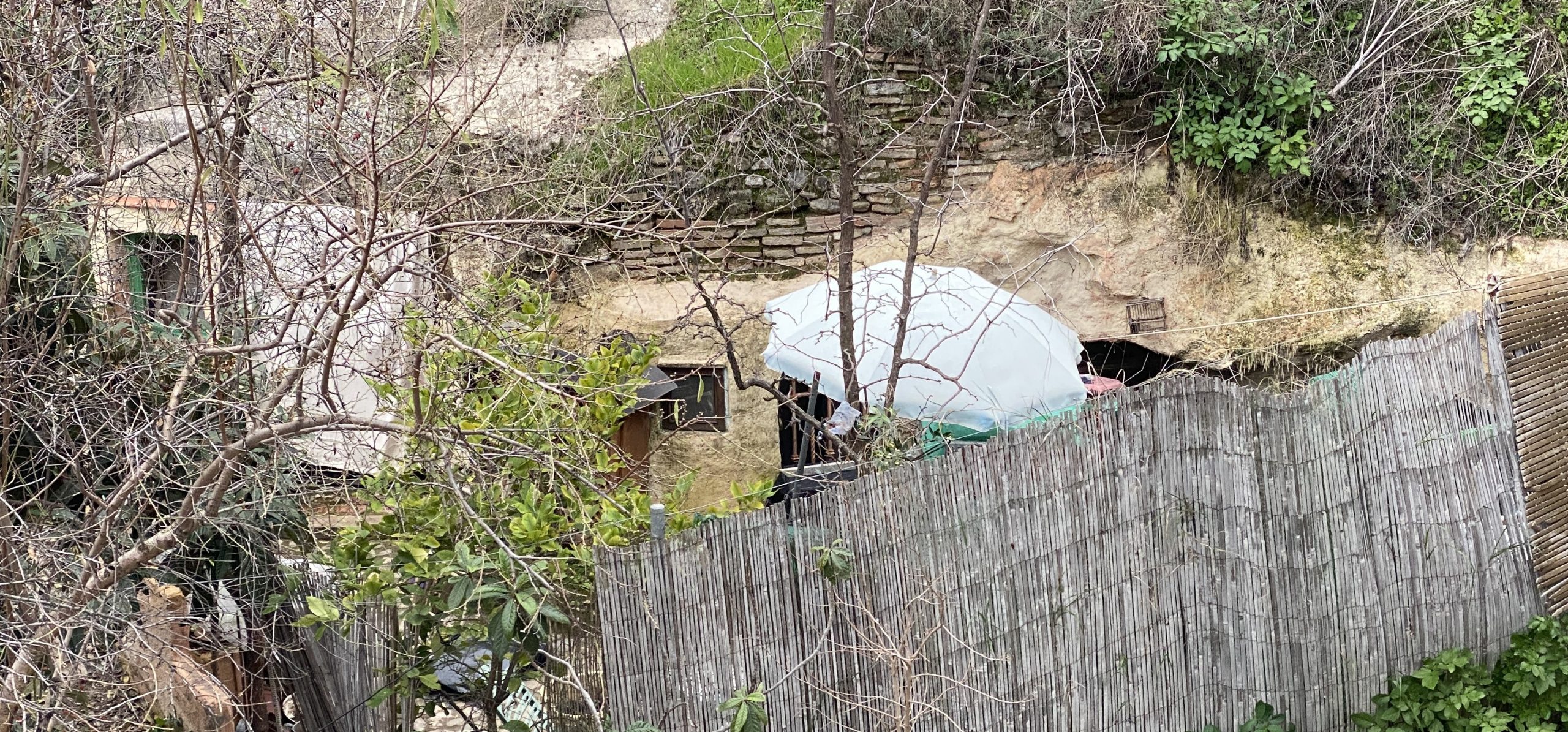
We were quite high up, so level with the poor family homes. This was the view 10 year old La Candela would have had, more or less: the grand Alhambra across the gorge, literally and figuratively unattainable for her. In the story, she goes on to dance at the Alhambra to a frenzied crowd of thousands – her dream stage, in her dream palace. The layering of it – the historical fort, the gitano people’s history, the fictional dancer – was exactly the doubled feeling I’d come for.
I read later that the word gitano comes from egiptano – “Egyptian” – a medieval European misunderstanding of where the Roma had come from, a mistake the Roma themselves sometimes encouraged because it bought them better treatment. In Granada, and Sacromonte especially, people wear the name proudly now, a marker of deep Spanish-Roma identity rather than the old slur.
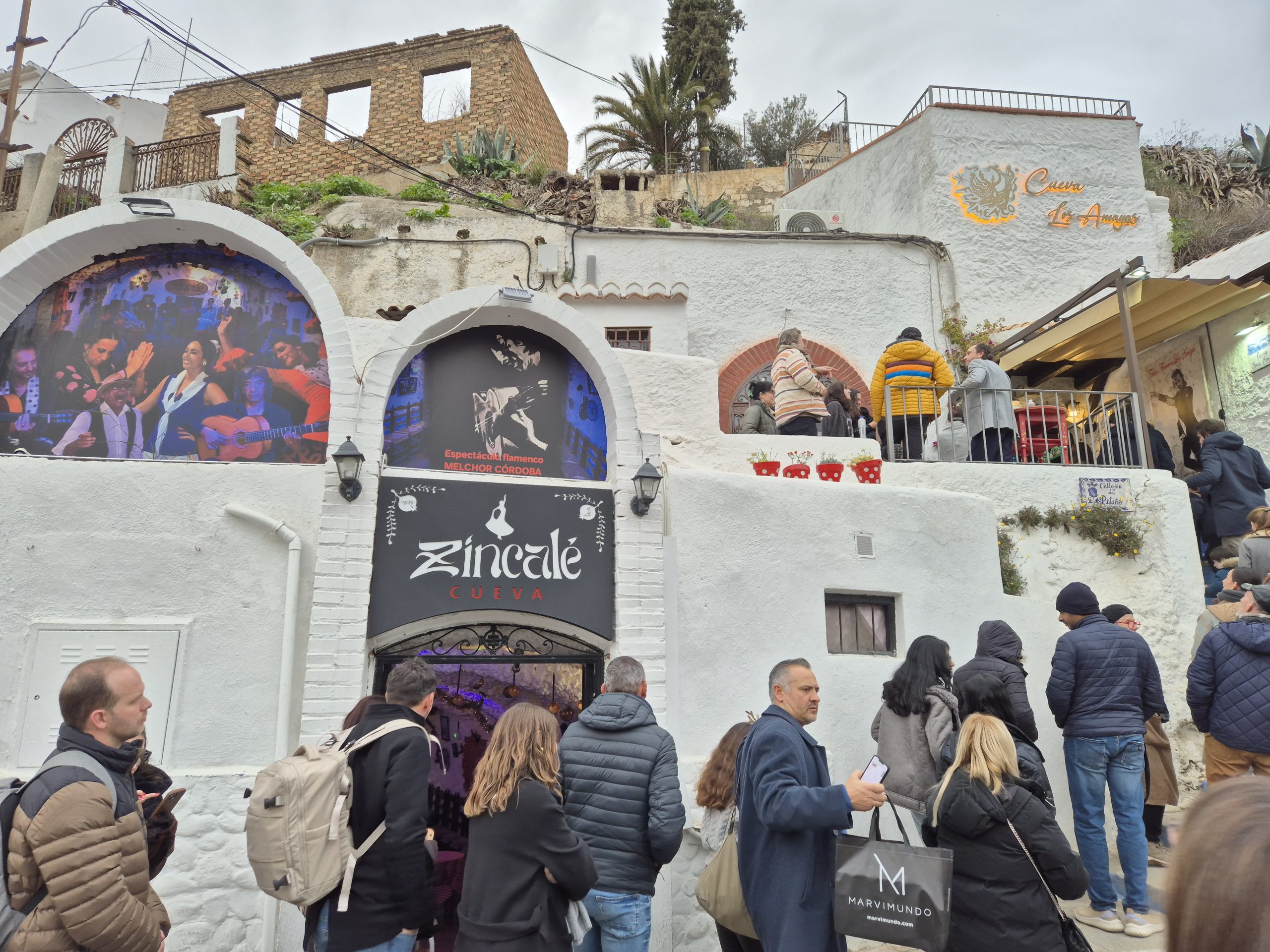
Many of the caves that once housed families have become fashionable little bars and tablaos, putting on flamenco for tourists each evening. There’s an irony there I couldn’t quite ignore – the edge-of-society art of a marginalized people, now the headline attraction – though I’ll admit I was as drawn to it as anyone.
We meant to visit the caves museum, which was at the top of the hill we were climbing. The nice thing in my view was that this was not a much touted tourist attraction. Trudged all the way up, only to arrive ten minutes before closing. We never saw the inside, but the kind man at the counter let me take a few photos on the outside.
A sick day, and a flamenco night
28th Dec 2025
B woke up with a flu bug he’d picked up somewhere along the way. We’d already seen the major sights, so I spent part of the day wandering the city center on foot, aimless and content, while he rested.
That evening we went to a pre-booked live flamenco show – him rallying for it – at one of the tablaos. And here the imagined Granada and the real one came apart a little. Flamenco was not quite what I’d built up in my head. I can’t honestly say I loved the music or the singing, that raw cante that everyone reveres; competent as it all clearly was, it didn’t move me the way I’d assumed it would. The dancing, by a young brother-and-sister pair, seemed technically competent (though I’m not the best judge of such things), but I felt none of the passion and romance the form is meant to carry. That killed the spirit of it for me a bit.
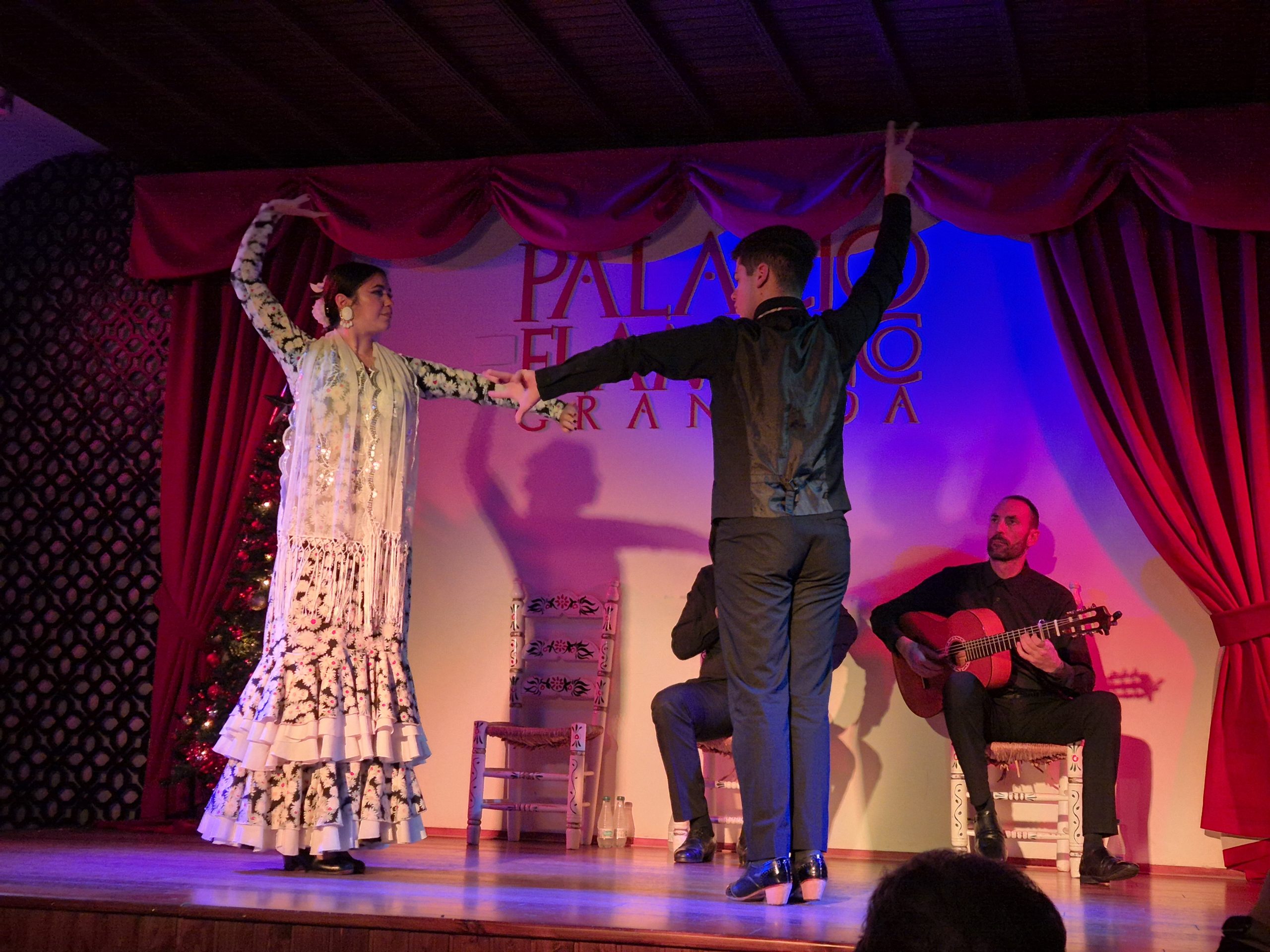
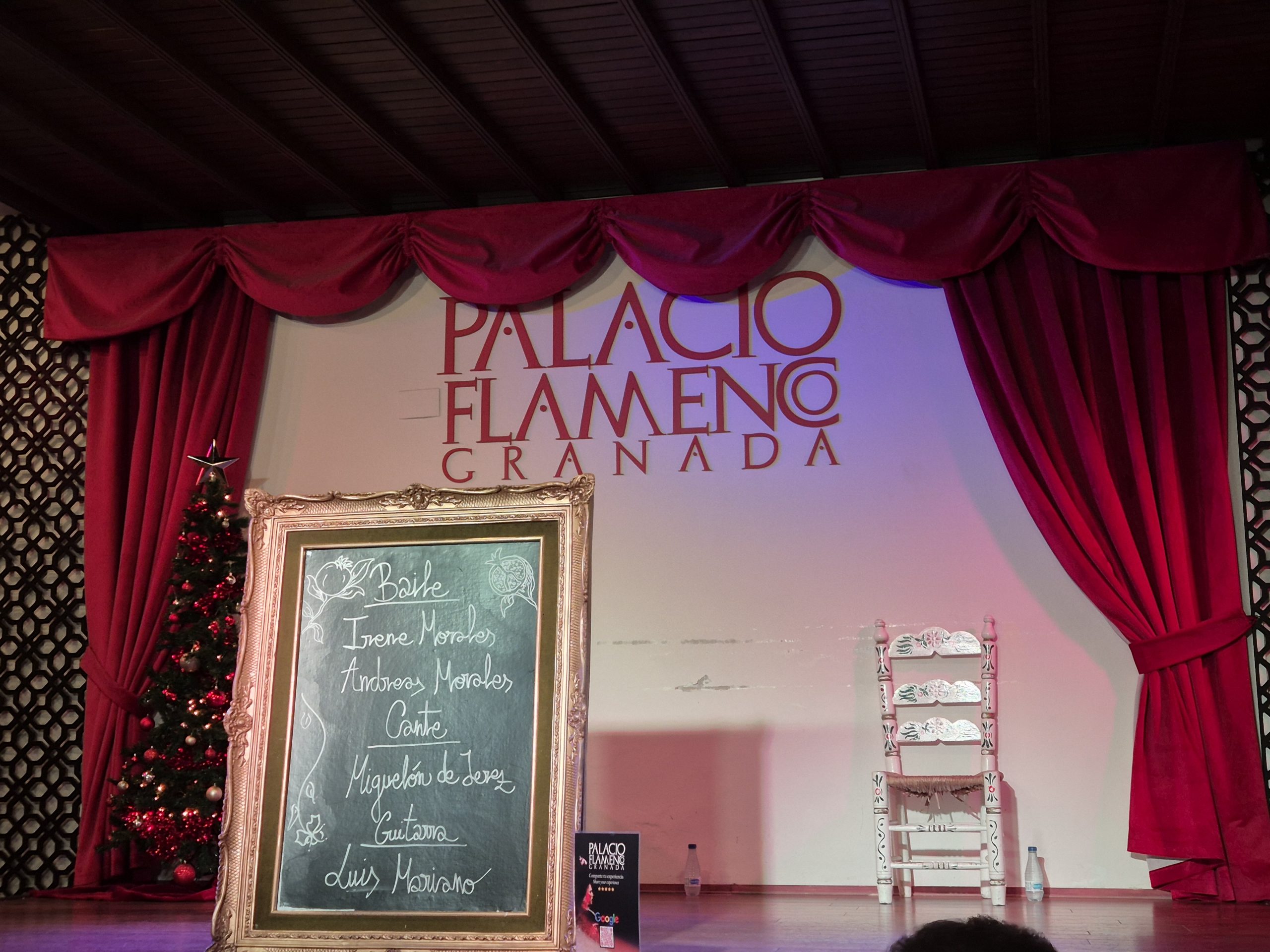
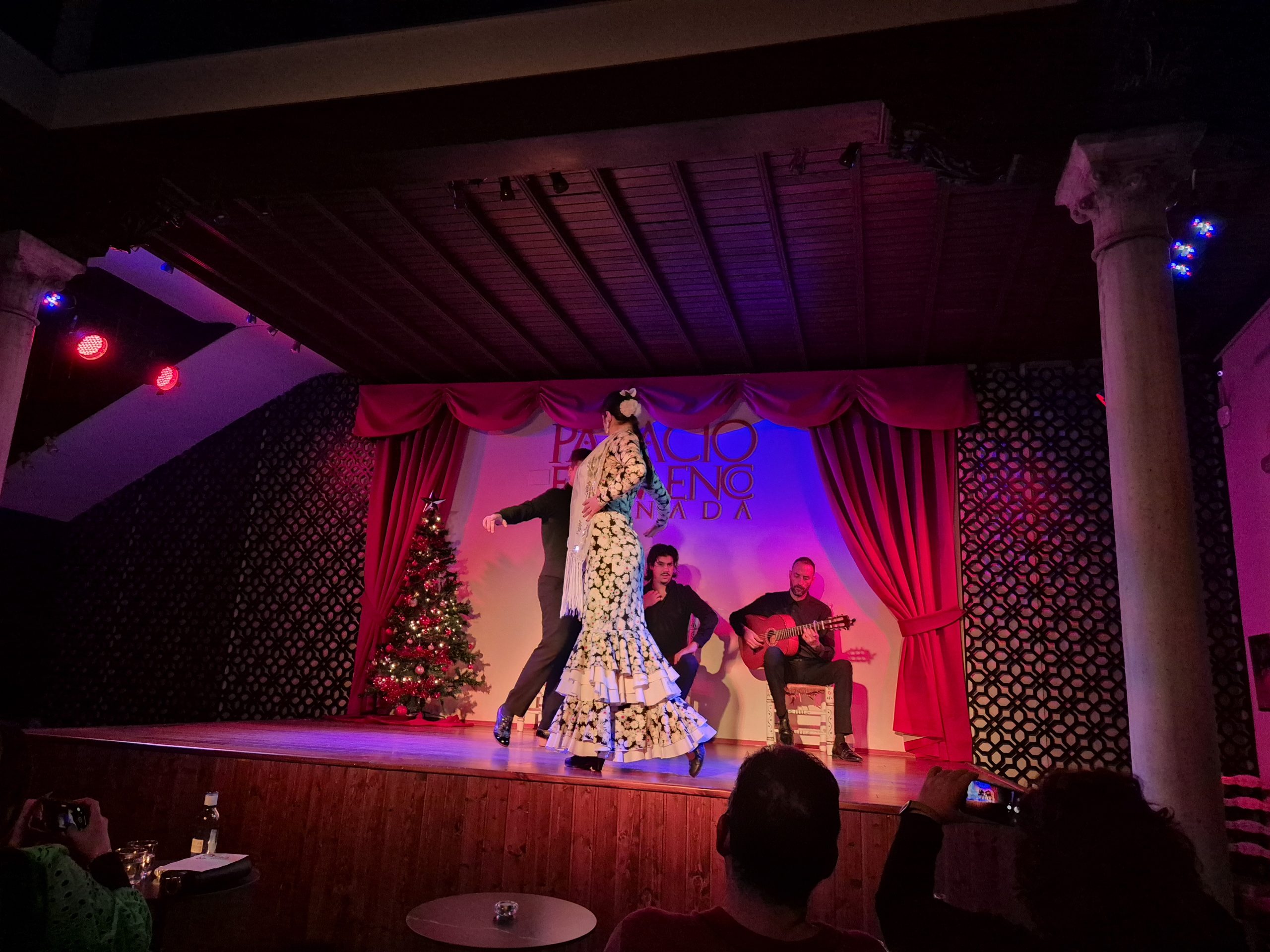
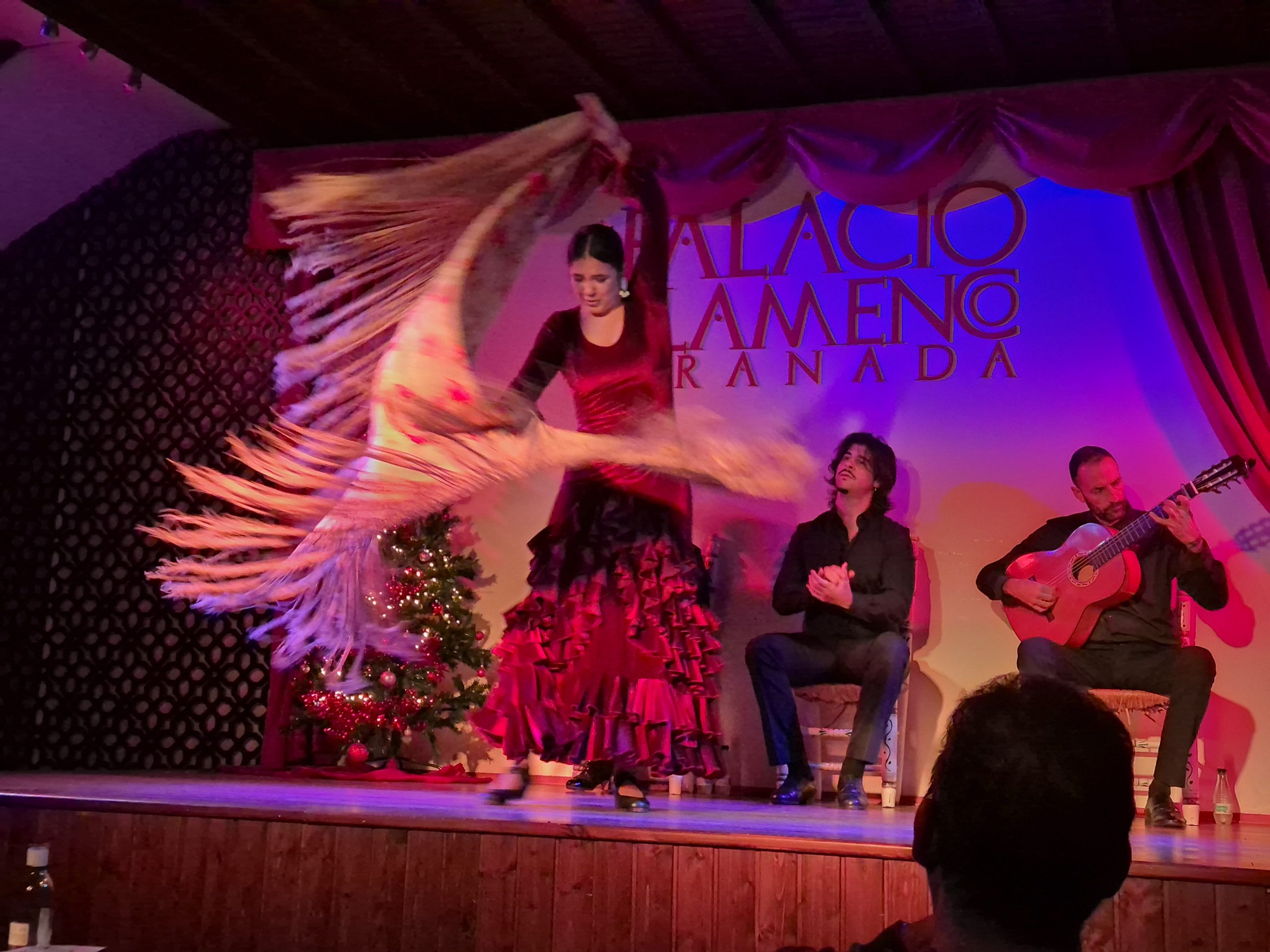
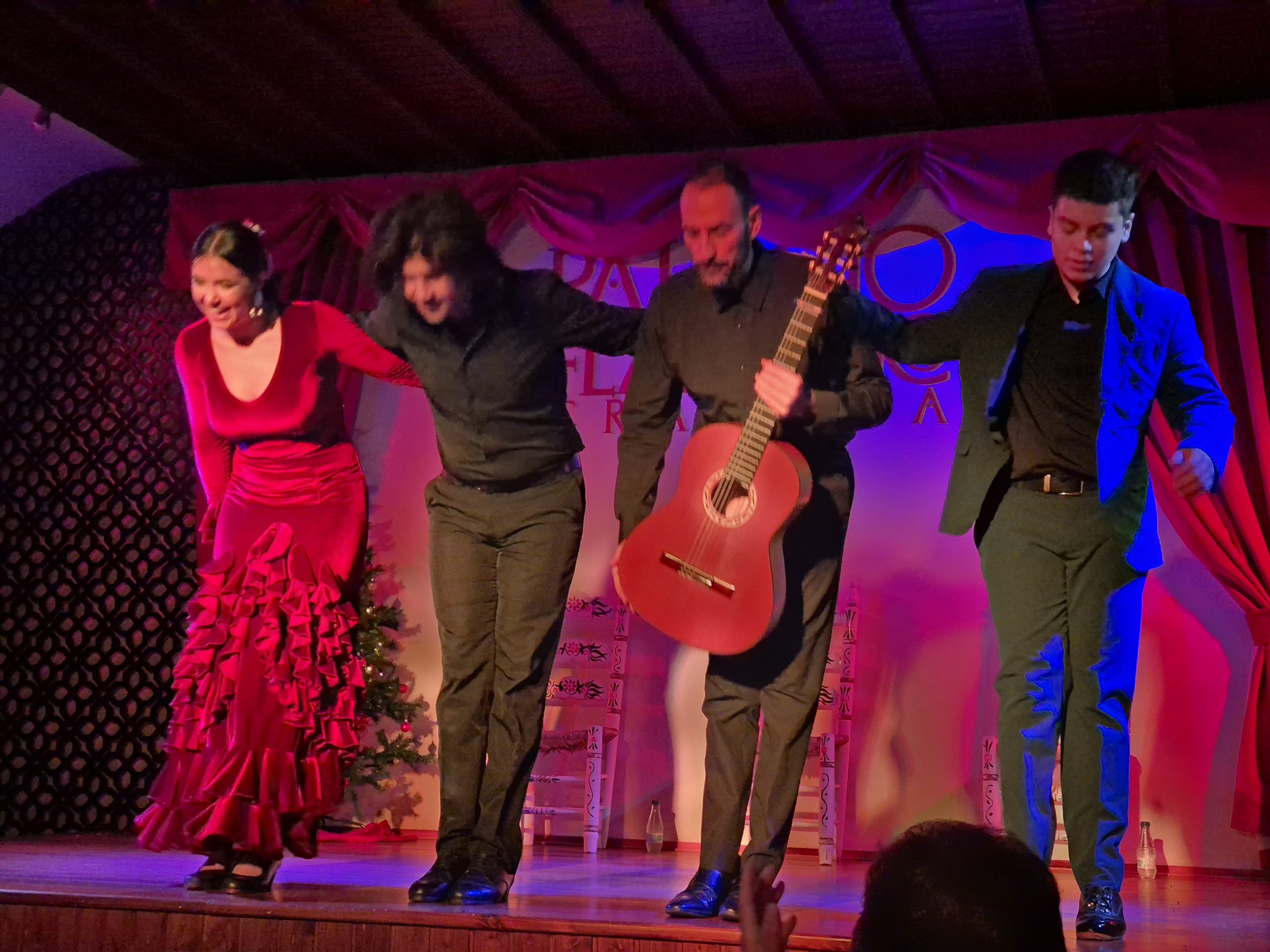
What I kept reaching for, watching it, was Kathak, the North Indian classical dance. The kinship is unmistakable: the percussive, stamped footwork; the dialog between dancer and musicians, where the feet answer the drum; the way both forms can turn rhythm itself into the drama. But where Kathak’s footwork rides the tabla and the spinning chakkars resolve a phrase, flamenco’s intensity is wound tighter, more staccato, more wrung-out. I admired it without quite falling for it. And yet I was glad, genuinely glad, to have watched flamenco here, in Granada – in La Candela’s home town, even if she only ever lived in a novel.
The cathedral, and a lucky train
29th Dec 2025
Our last morning in Granada. Yesterday and today, I had brought breakfast to the room for B. He was looking and feeling like hell. I asked our hotel for late checkout options, even for an extra fee, but they had none.
We debated where we could go after checking out – we had till evening for our train to Malaga. In the end we settled on visiting the Granada Cathedral, as it was a short walk from our hotel.
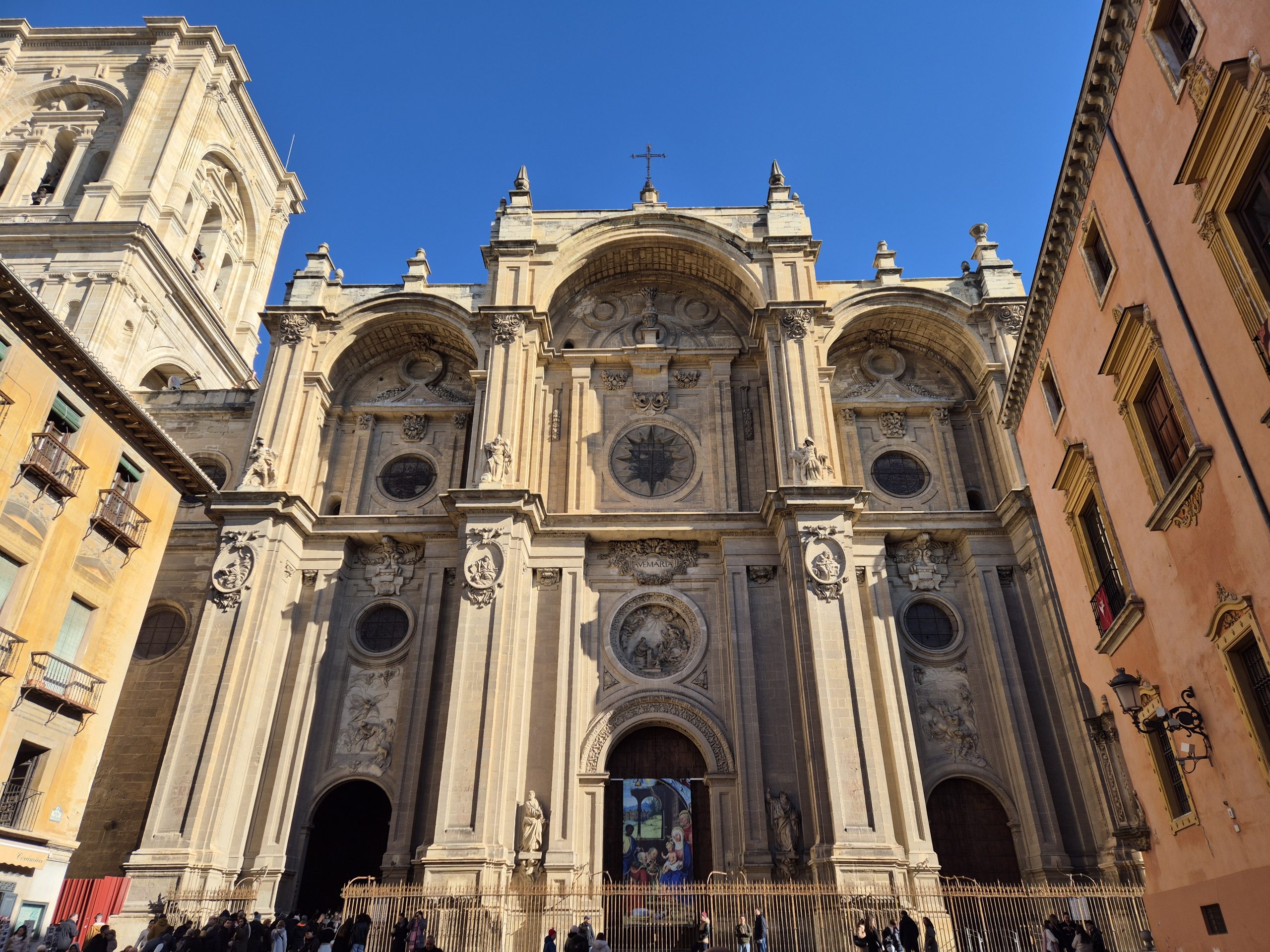
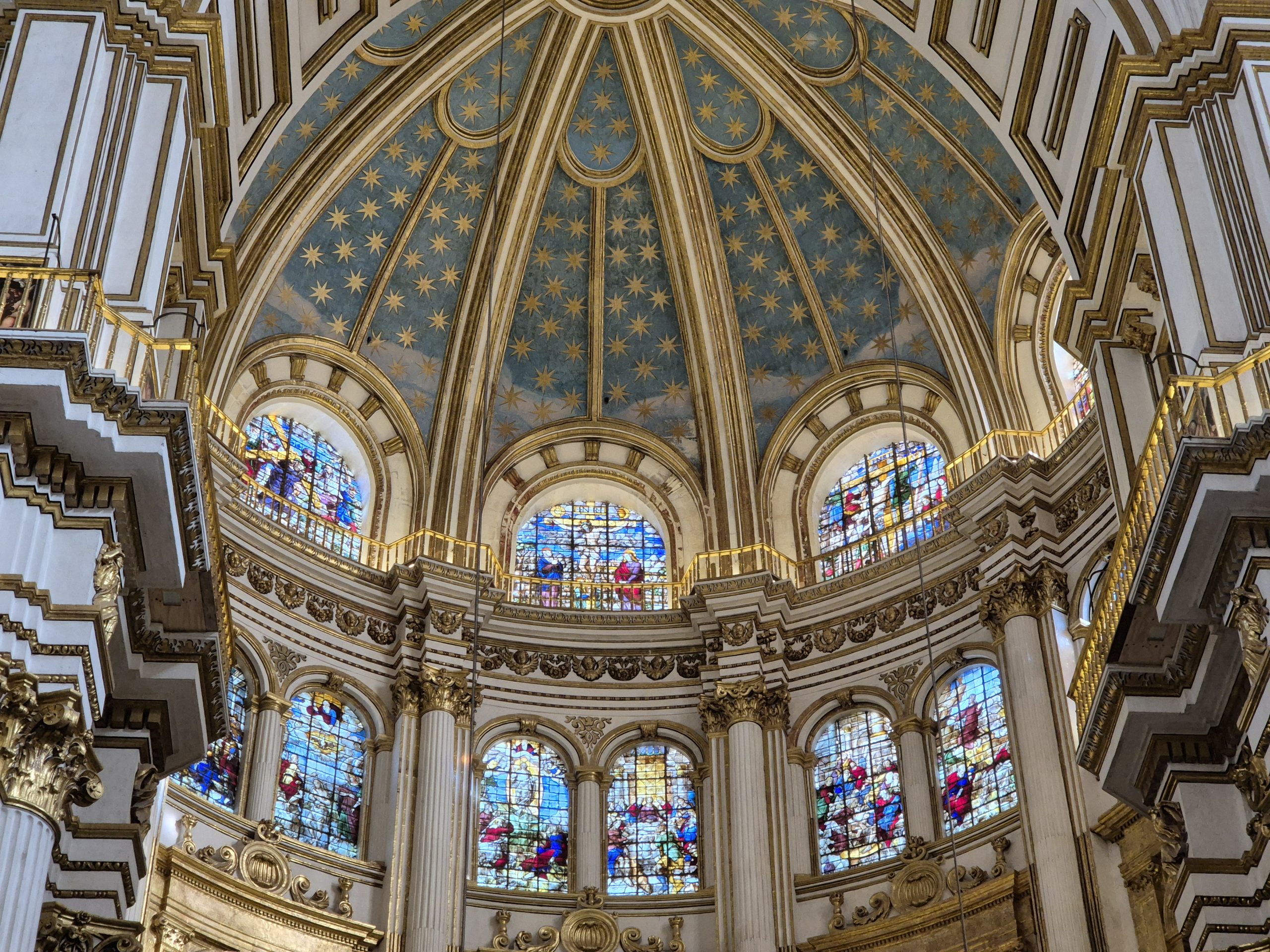
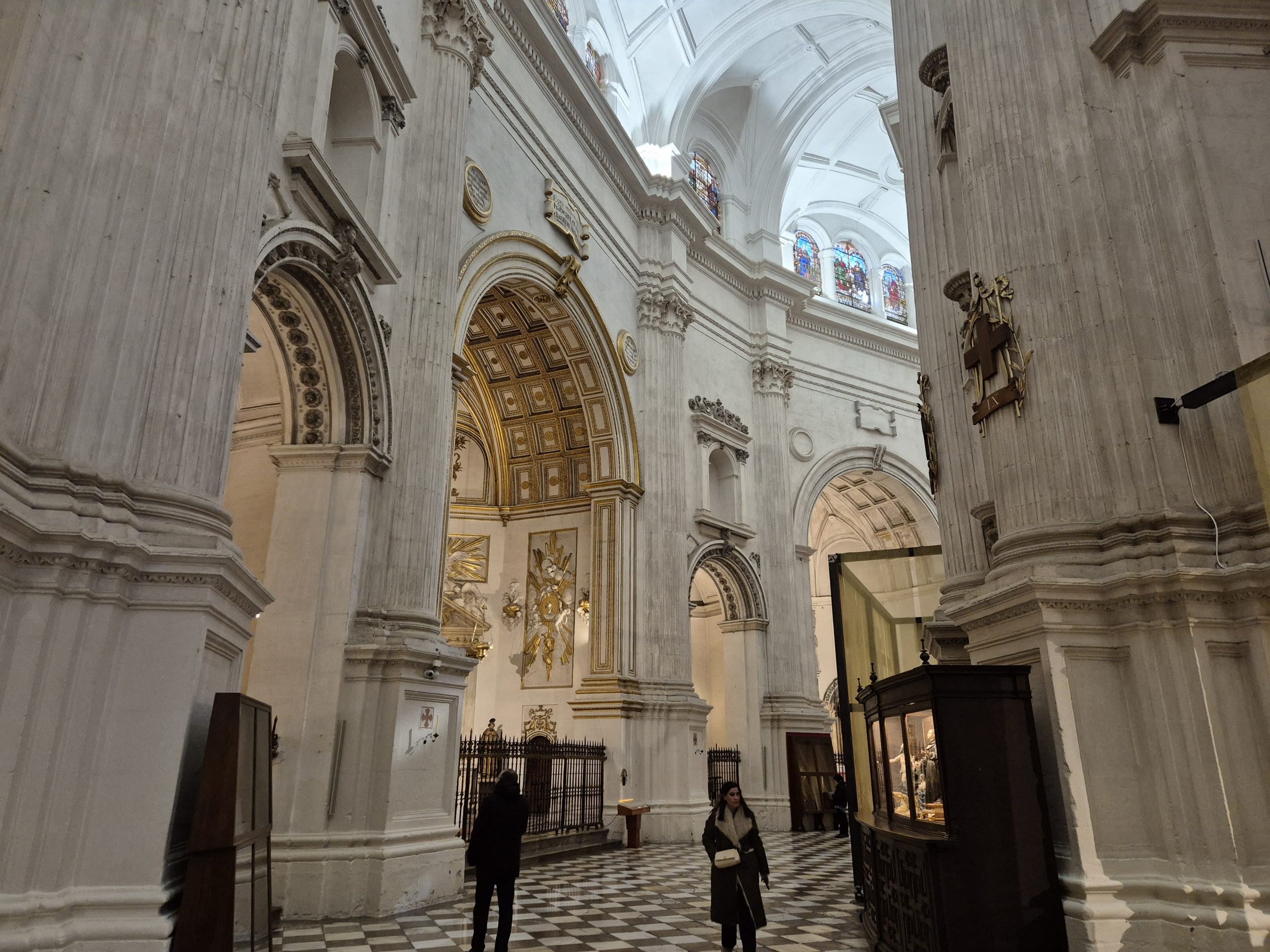
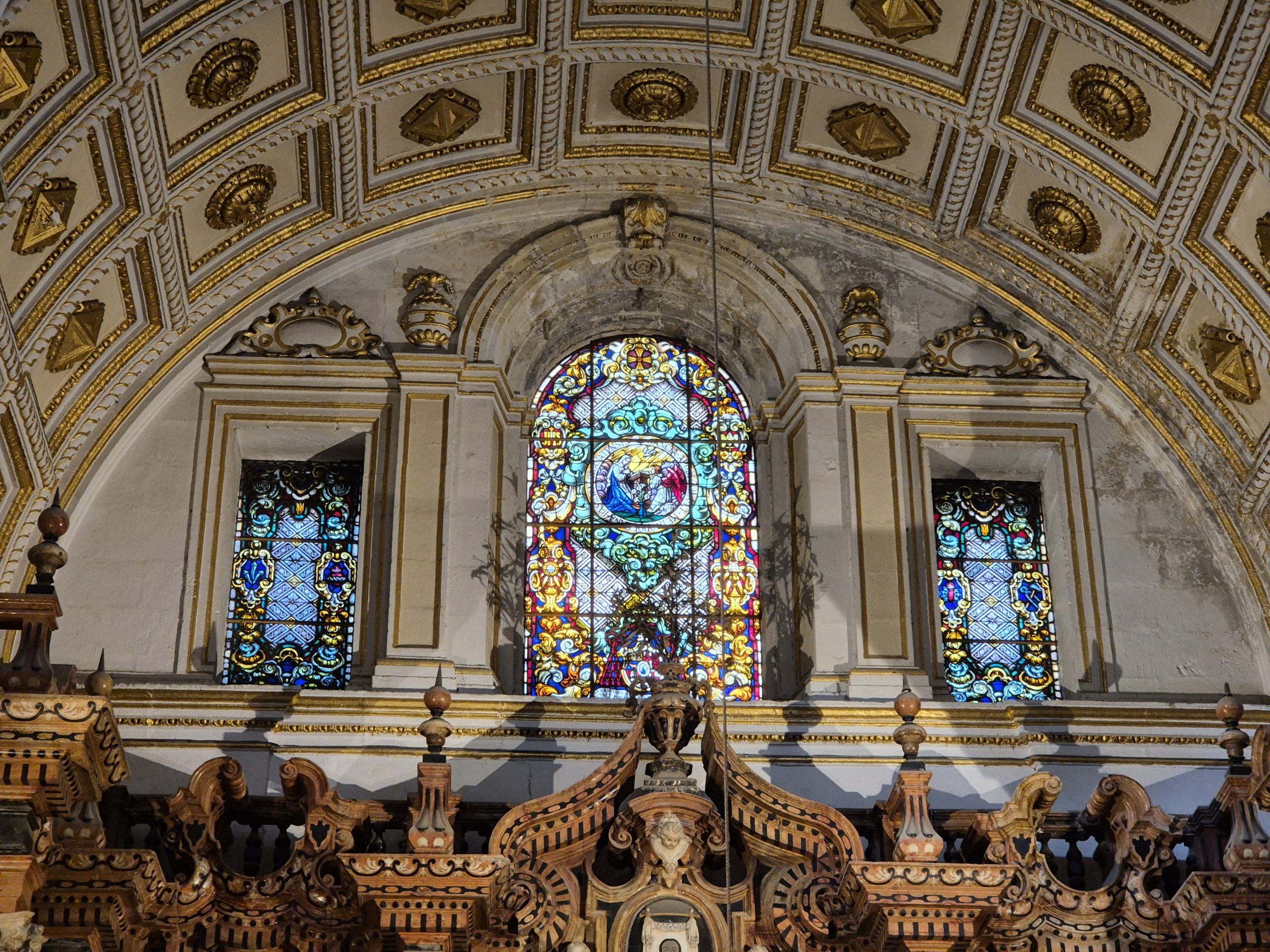
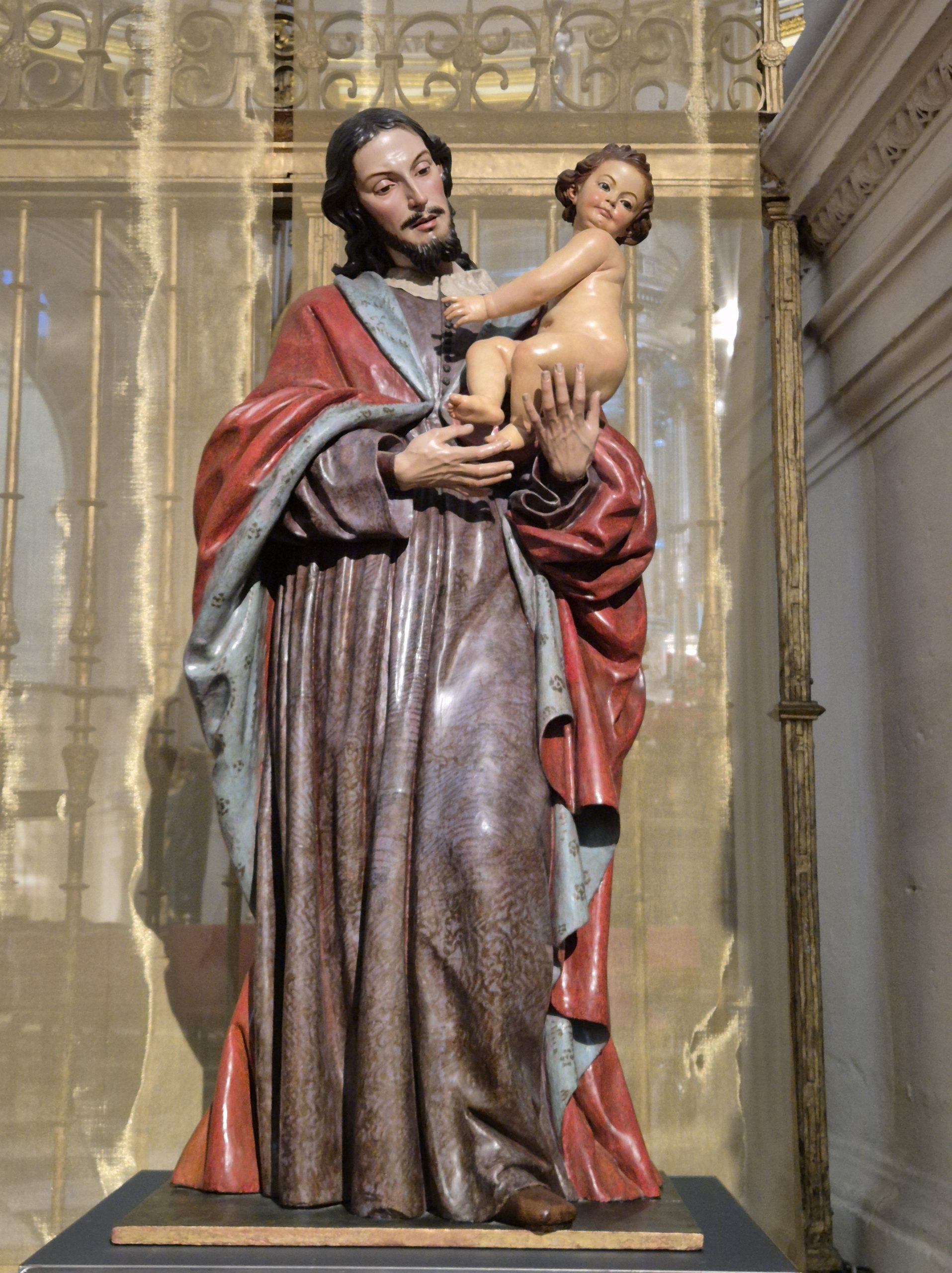
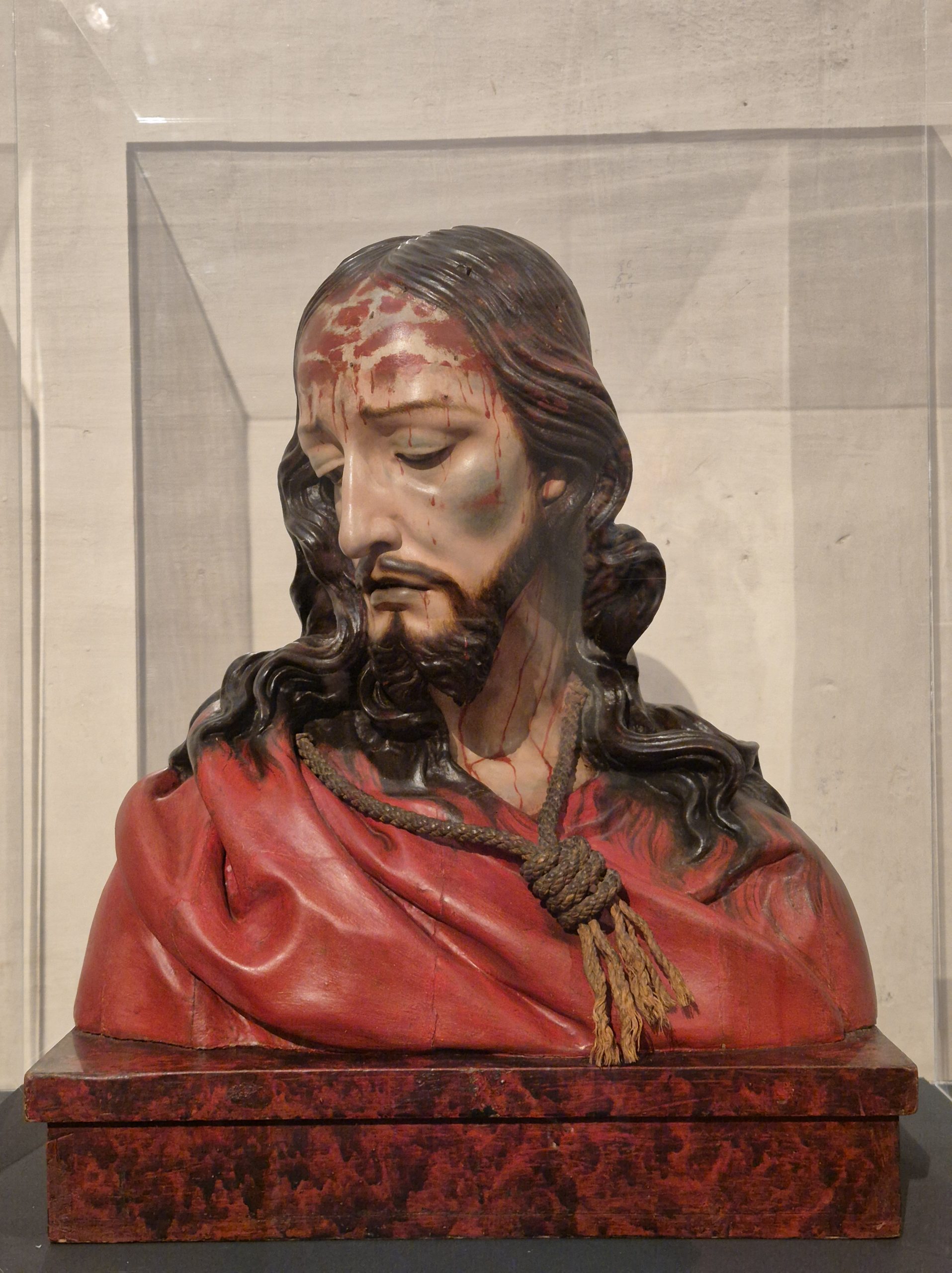
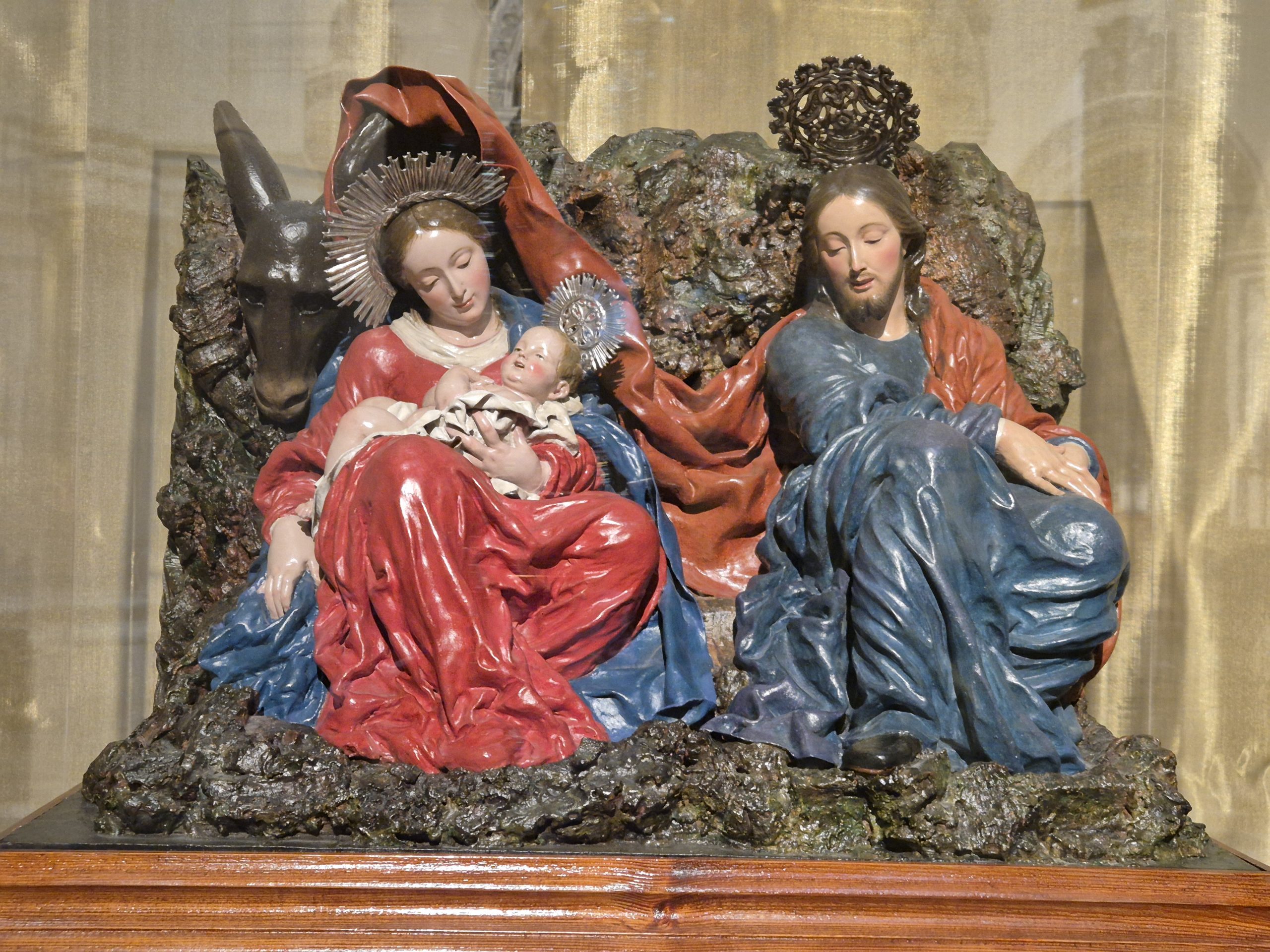
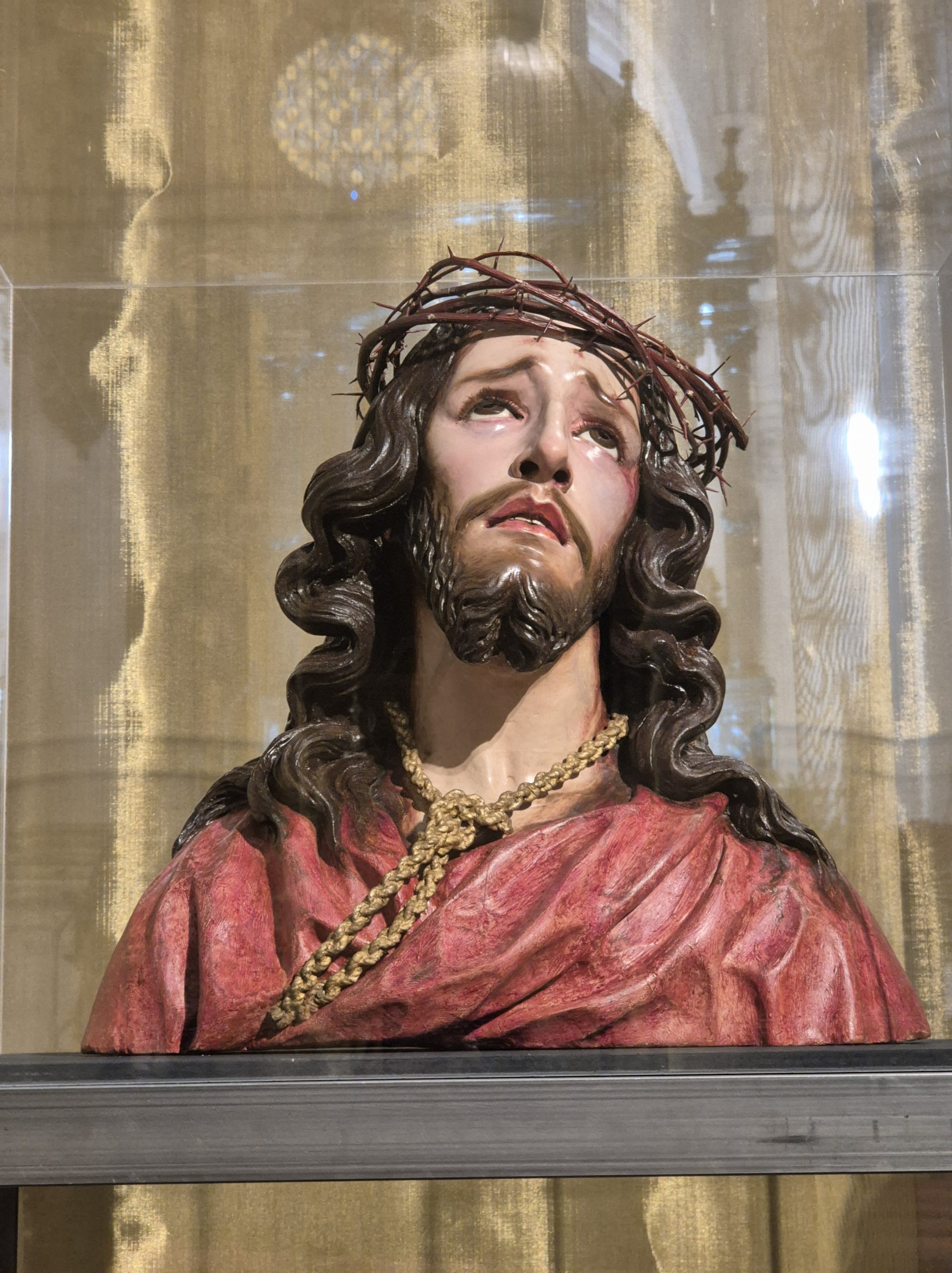
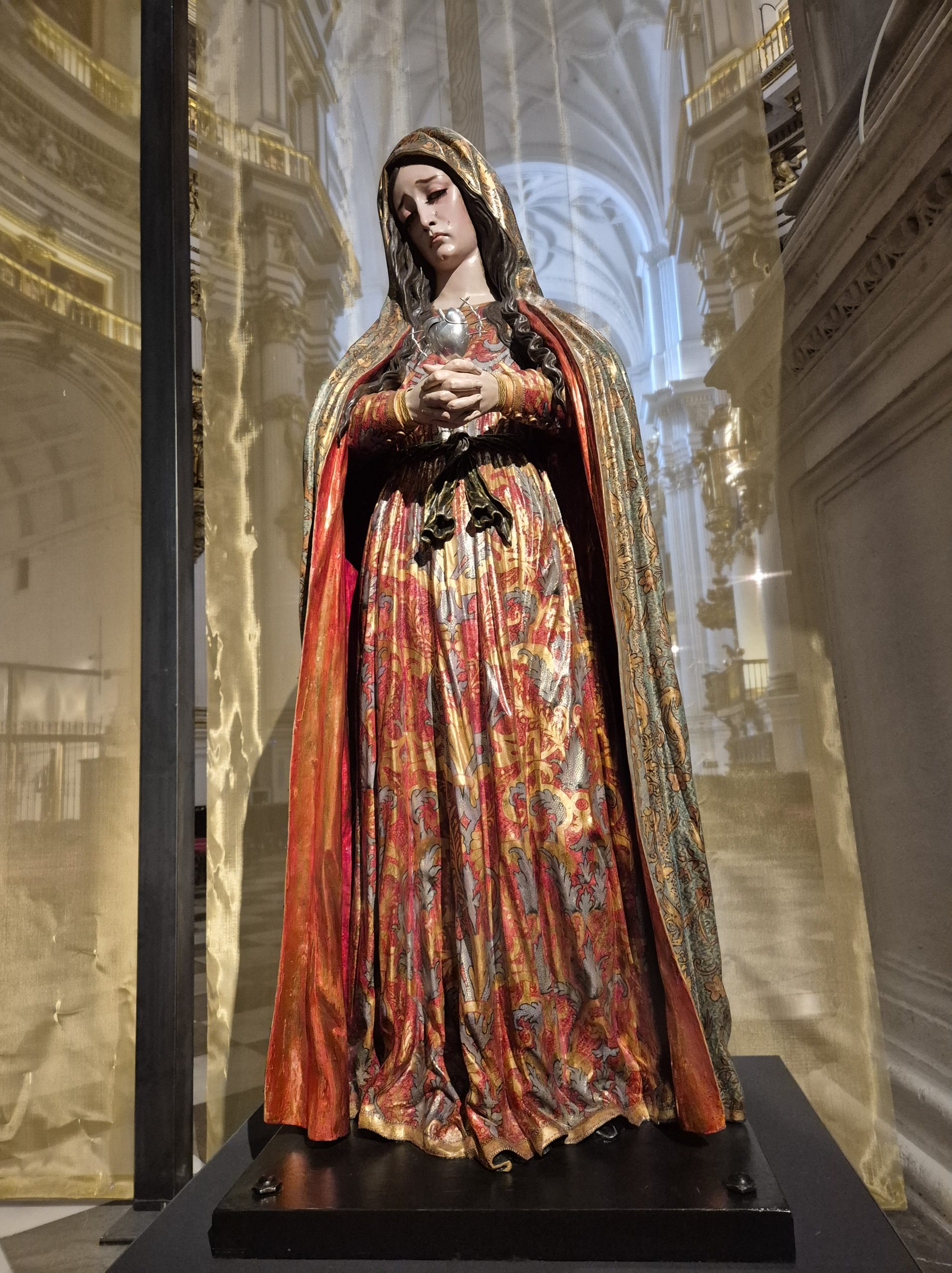
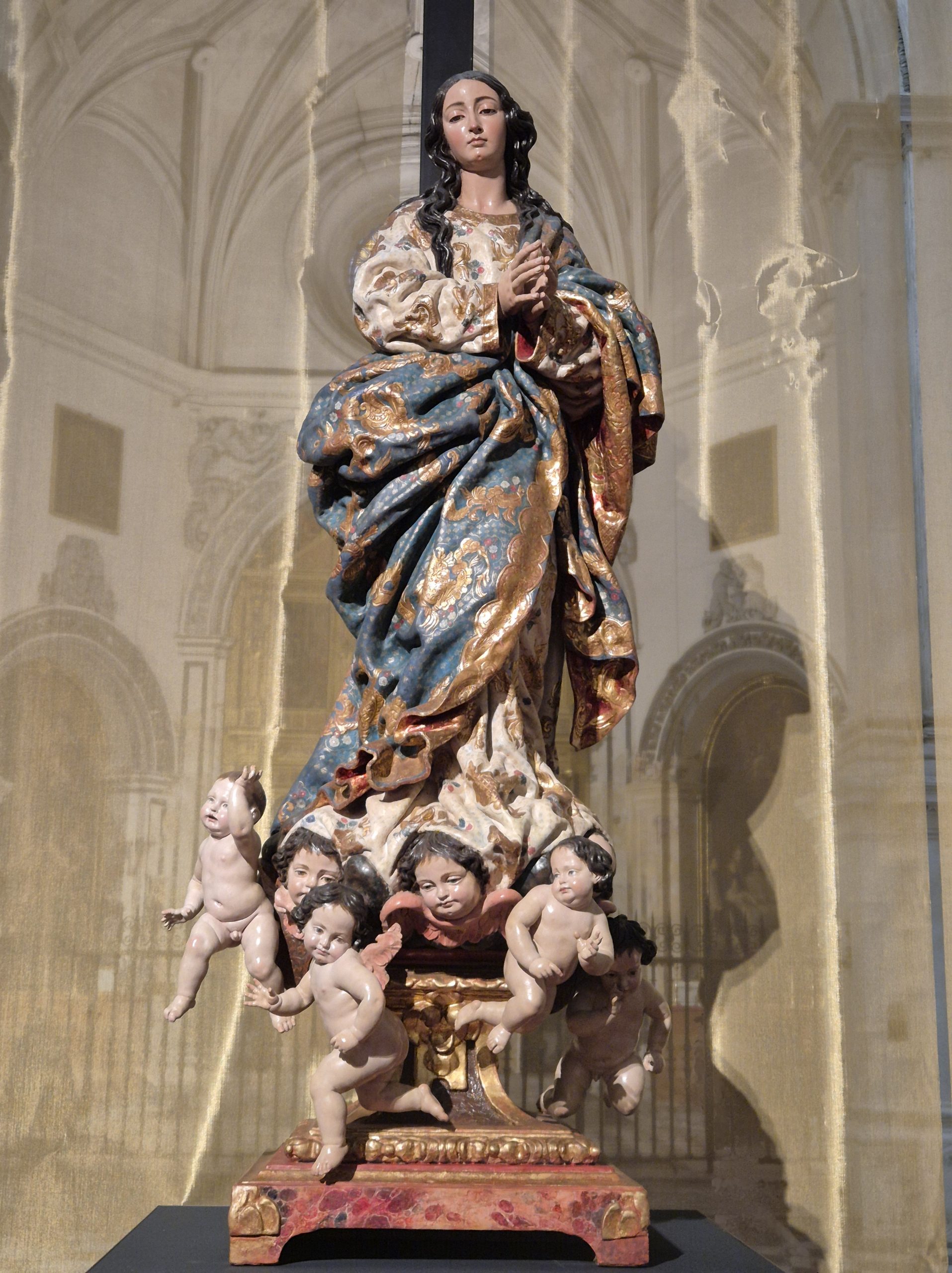
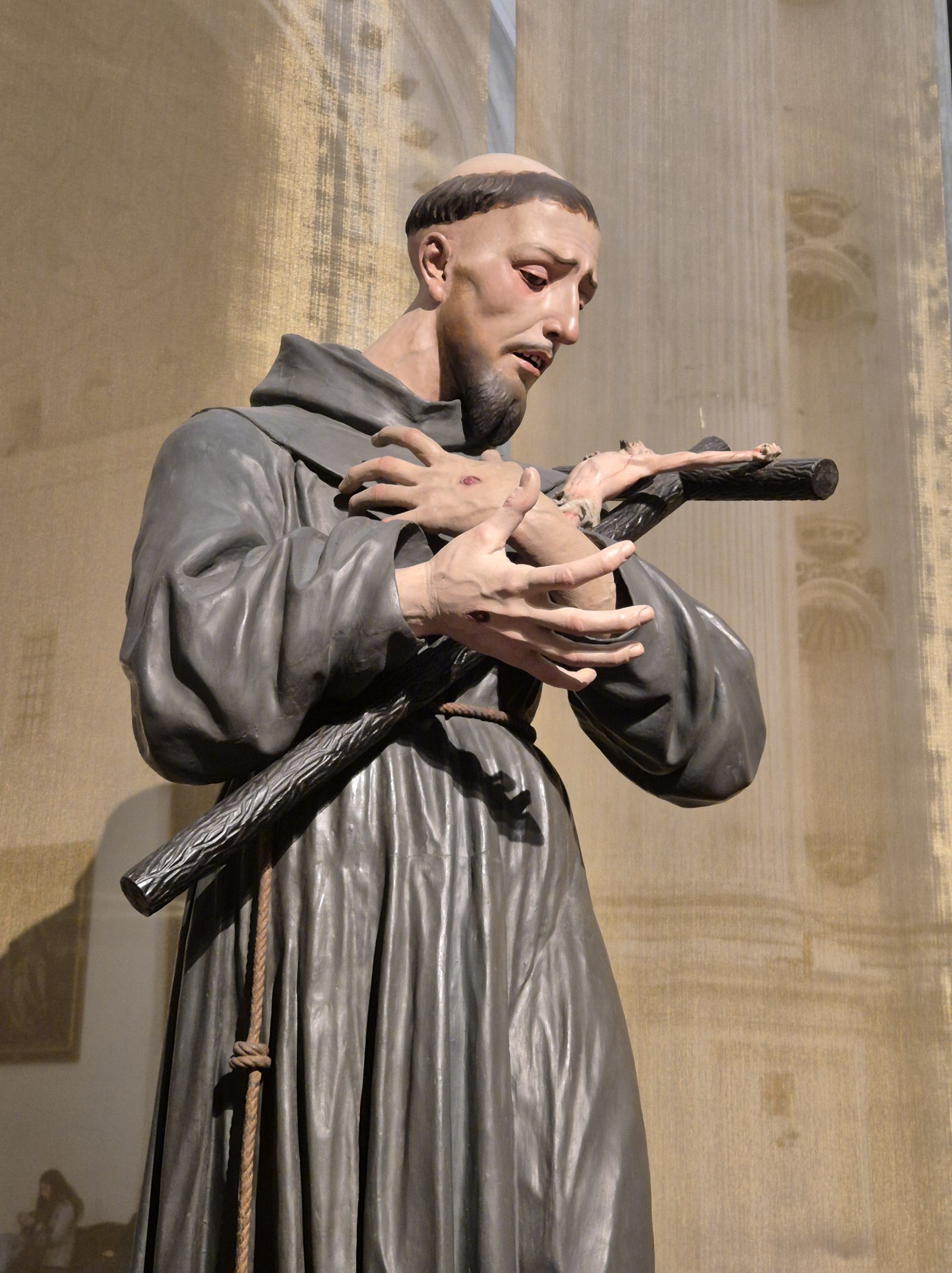
B was feverish, yet valiantly came along to the Cathedral, saying it had a lot of sitting place. To get to the sitting places, however, he had to endure standing in some queues. He was wilting and I was concerned. But he managed to hold up – this Cathedral felt truly like sanctuary for B, in spite of our godless atheistic souls.
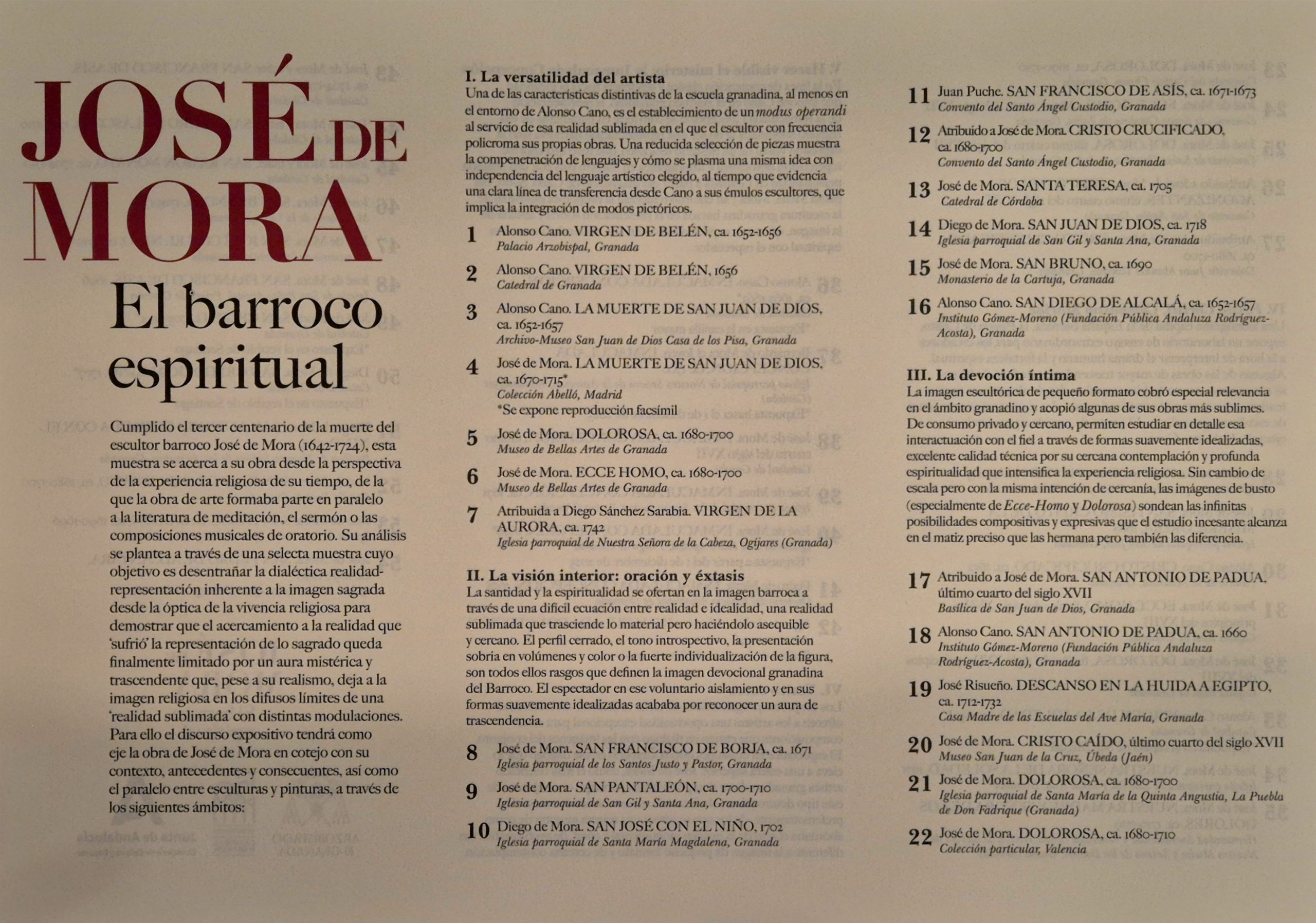
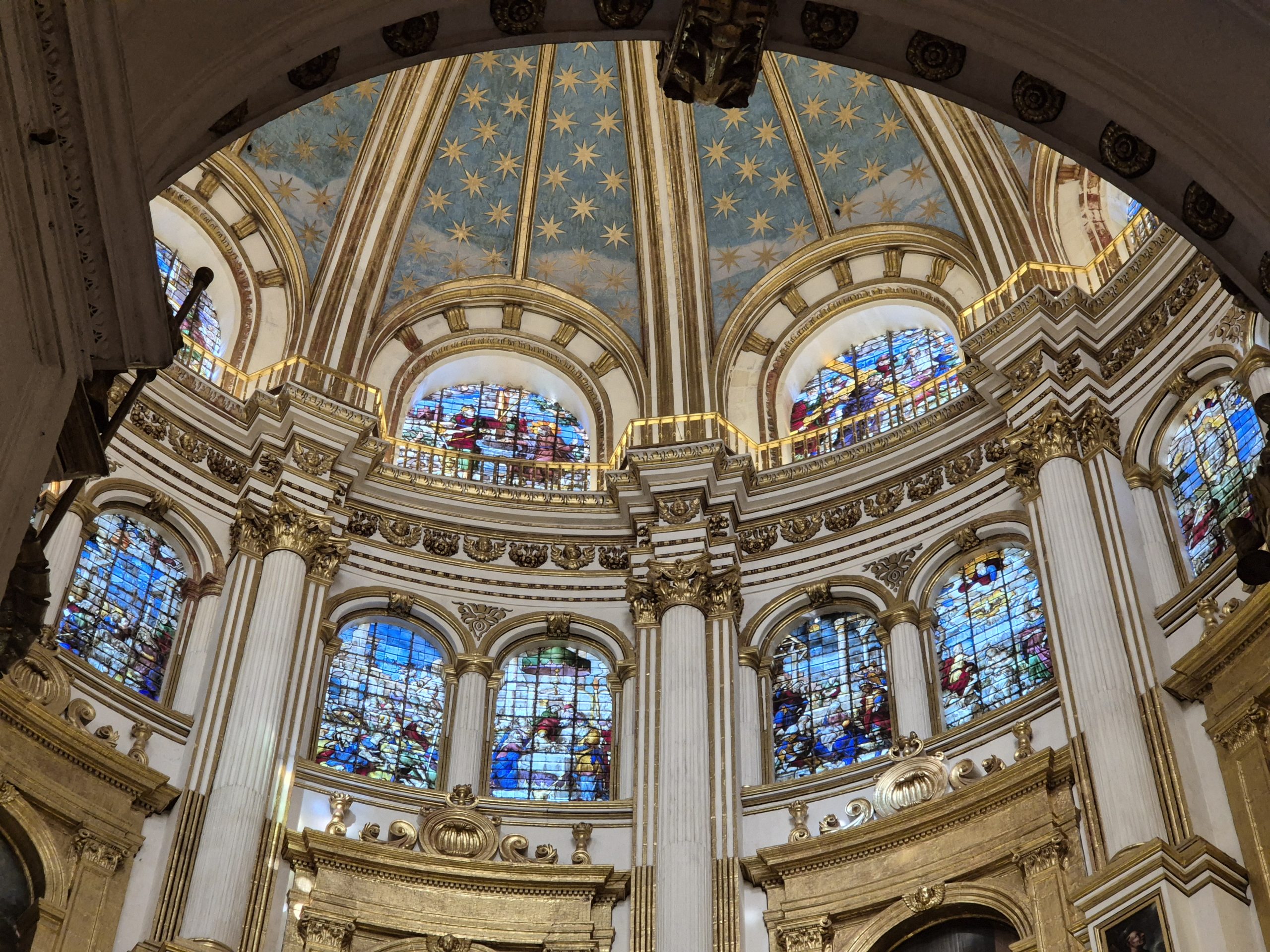
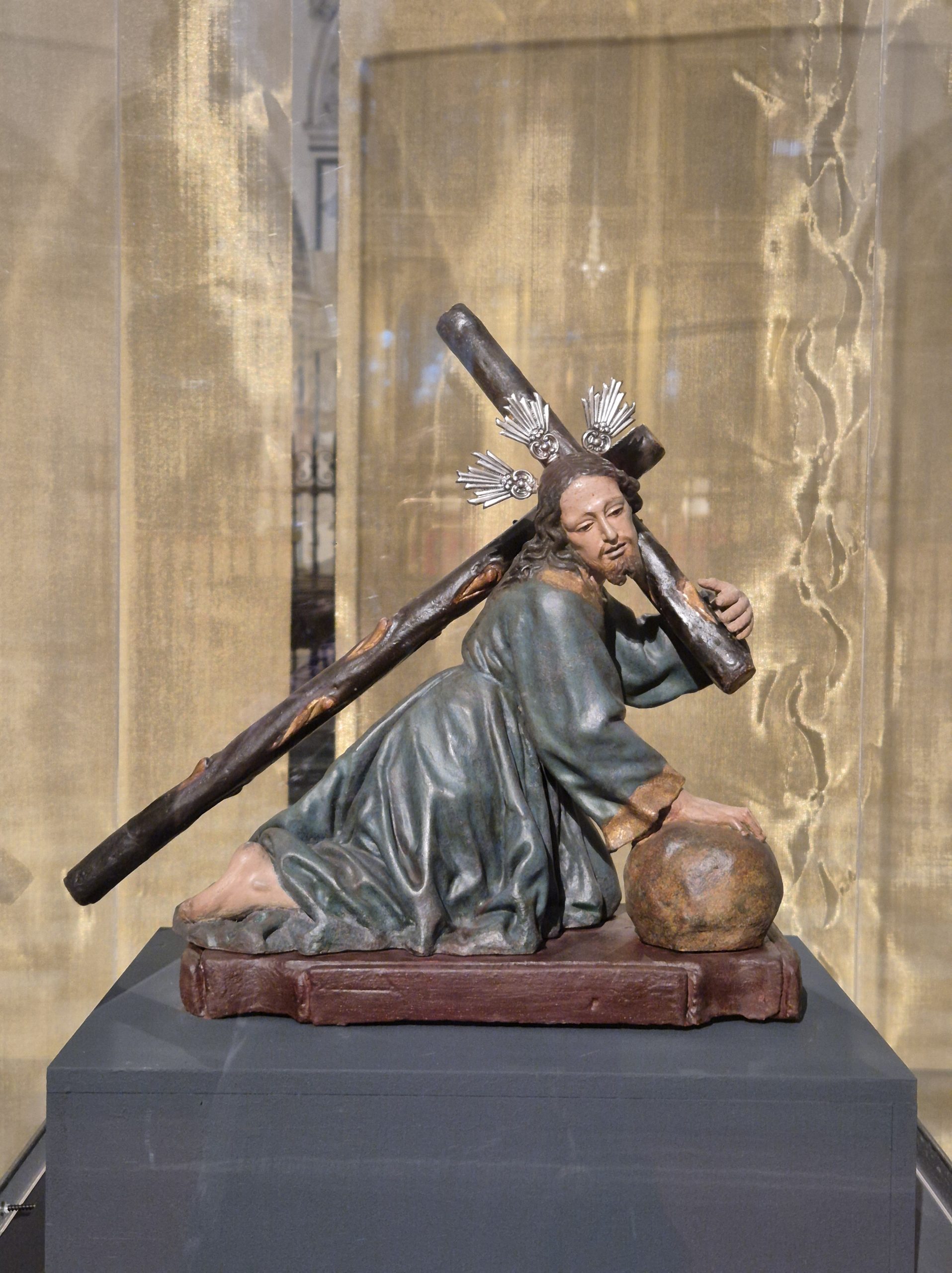
By this point in the trip we’d seen five or six grand churches, and a cathedral has to work harder to surprise me. This one had a gift waiting: a temporary exhibition of sculptures by José de Mora, the Granada baroque master. Parking B at a pew, I walked around doing my usual photo business. Each piece was beautifully made – a pleasure to stand in front of, even when the themes ran predictably biblical: Jesus, Mary, and the saints. Overhead, the apse climbed into a ring of stained-glass windows, glowing in the winter light – one more entry in the stained-glass tally I’d been racking up, city to city.
We went back to the hotel, where graciously they allowed us to lounge in the top floor, which in summer would operate as a rooftop restaurant, but was empty now in December. We sprawled on some sofas, me pottering on my laptop, and B shivering and dozing uncomfortably. Though I routinely carry some meds for quick aid, many paracetamols were used on this trip. I ducked out for a short spell to buy some last minute souvenirs, and some Spanish paracetamol to add to my collection of Indian and Dutch strips.
We decided to leave early for the station, some 2 hours before our 18:30 train. Then a small travel grace: our booked Granada–Málaga train had a tedious change built into it, but at the station we found a direct service leaving at about the same time, bought tickets on the spot, and saved ourselves a couple of hours. A good note to leave on.
Granada wrap-up
Granada was the city that had captured my imagination most in print: a wish carried for years, a novel layered over the streets, a fictional child dancing her way to super-stardom in her time. It was a regular tourist visit, and also an emotional inner trip to live through the novel, which was continuously in my head. The Alhambra lived up to everything I’d pictured. The flamenco fell short of it. Sacromonte mattered because of the fiction. The caves museum, a small piece of unfinished business. And the Sierra Nevada, which I’d barely thought about beforehand, is the image I carried away – snow on the horizon of a Moorish city – and the reason I already want to come back, next time to walk its trails.