Córdoba – where the idea becomes a building
A day and a half in Córdoba, where the Mezquita-Cathedral – a cathedral raised inside a mosque – turns the region’s stacked Roman, Moorish and Christian history into something you can stand inside.
(1.5 days, 20th – 21st Dec)
Valencia had been a soft beginning – a place to land, drink café bombón, and ease into the rhythm of the trip. Córdoba was where “Moorish Andalusia” stopped being an evocative phrase on a brochure and became my experience.
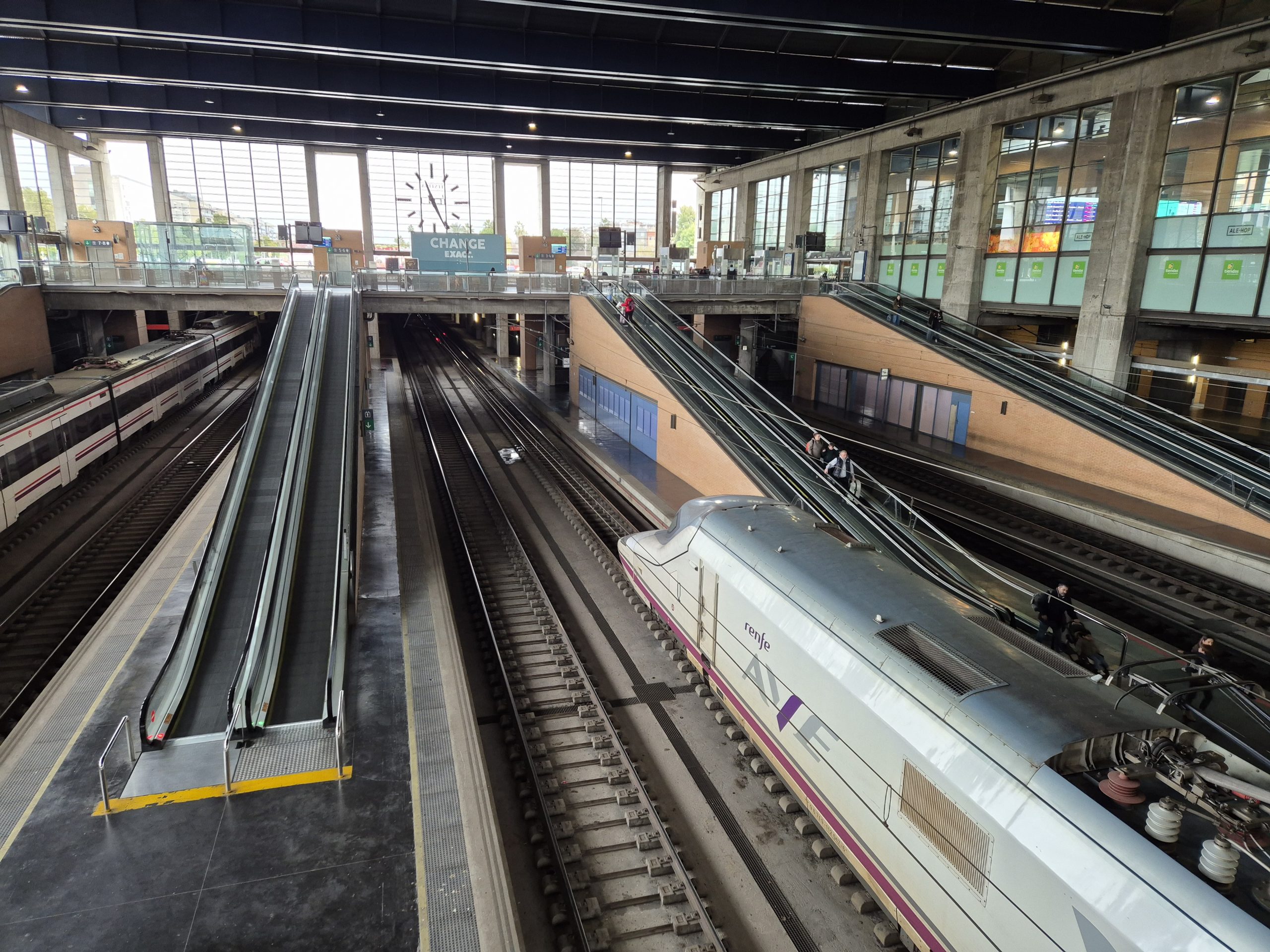
We arrived by a high-speed Renfe train from Valencia – three hours at something close to 300 kmph, the kind of journey that makes the distance feel like a rumor. Our hotel, the Eurostars Conquistador, turned out to be the best of the whole trip: it sat on the touristy street right beside the Mezquita, which meant the city’s single most important building was just across the street.
Quick links to main sights
Mezquita–Cathedral of Córdoba | Roman Bridge of Córdoba | Calahorra Tower | Calleja de las Flores | Alcázar de los Reyes Cristianos (and gardens) | Museo de Bellas Artes de Córdoba | Roman Temple | Roman Mausoleums
Impressions
Córdoba is compact, walkable, and dense with meaning. You can cross the old town in the time it takes to finish a coffee, and yet almost every lane seems to be standing on top of some older version of itself.
First wander
20th Dec 2025
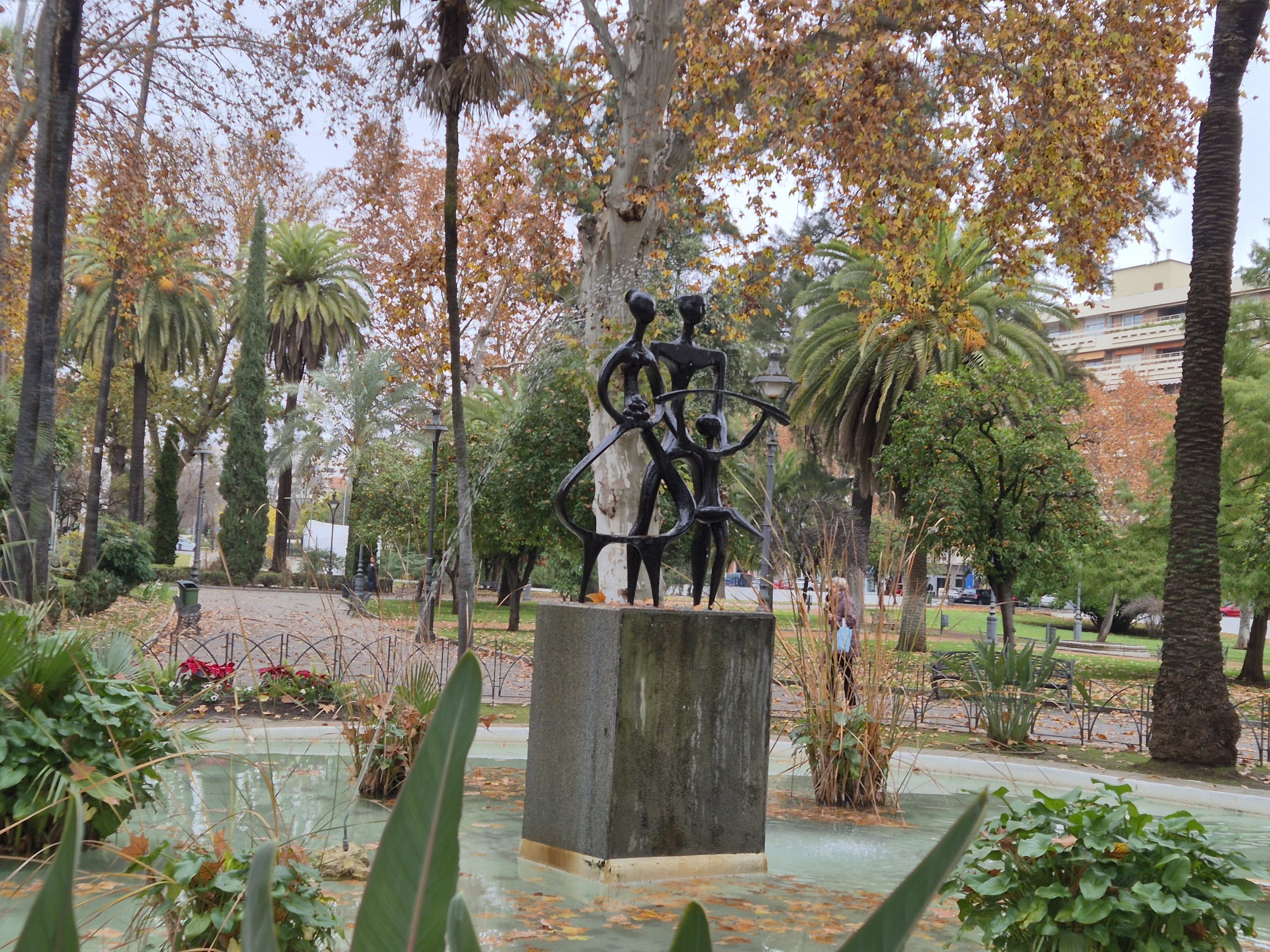
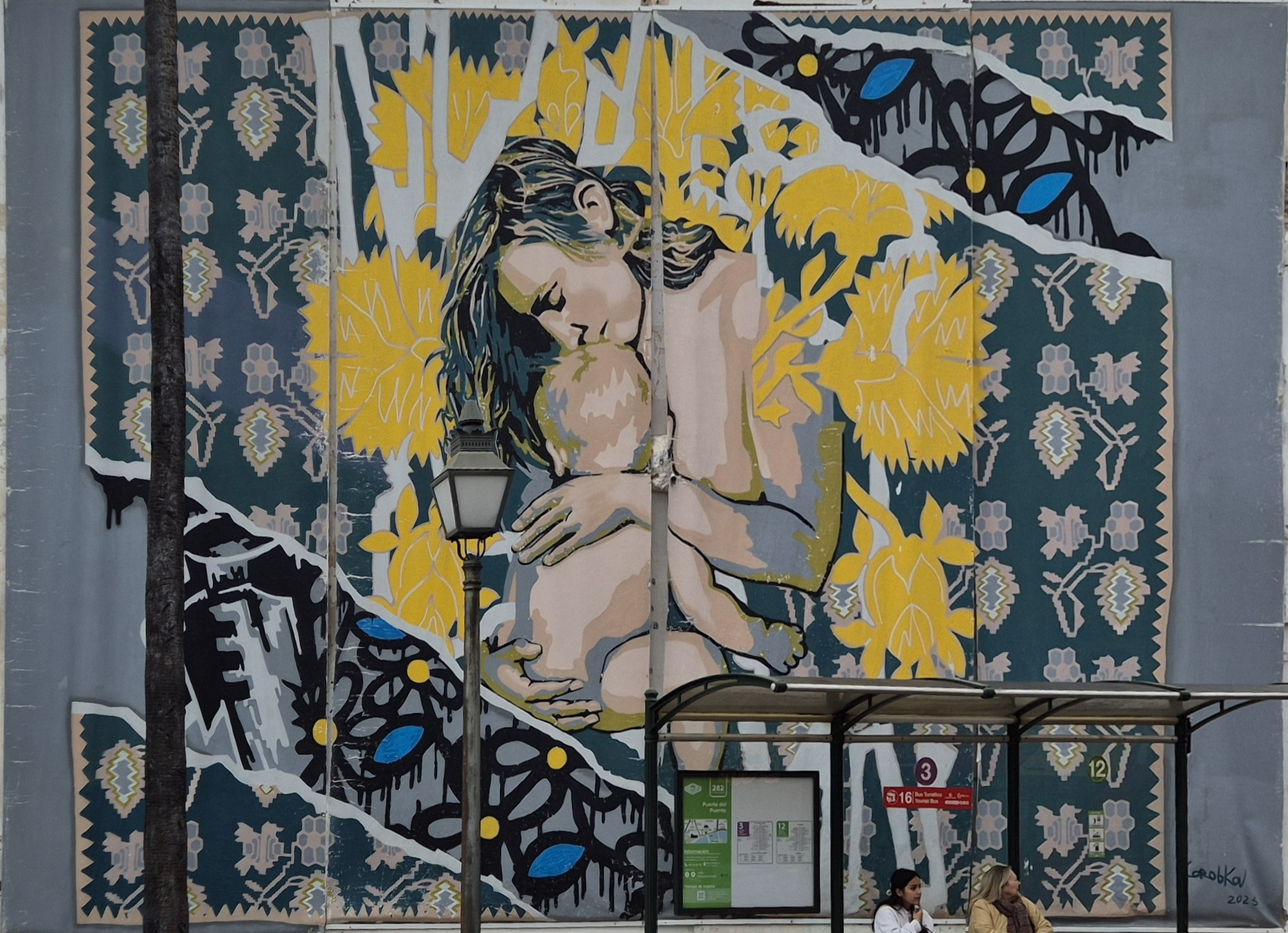
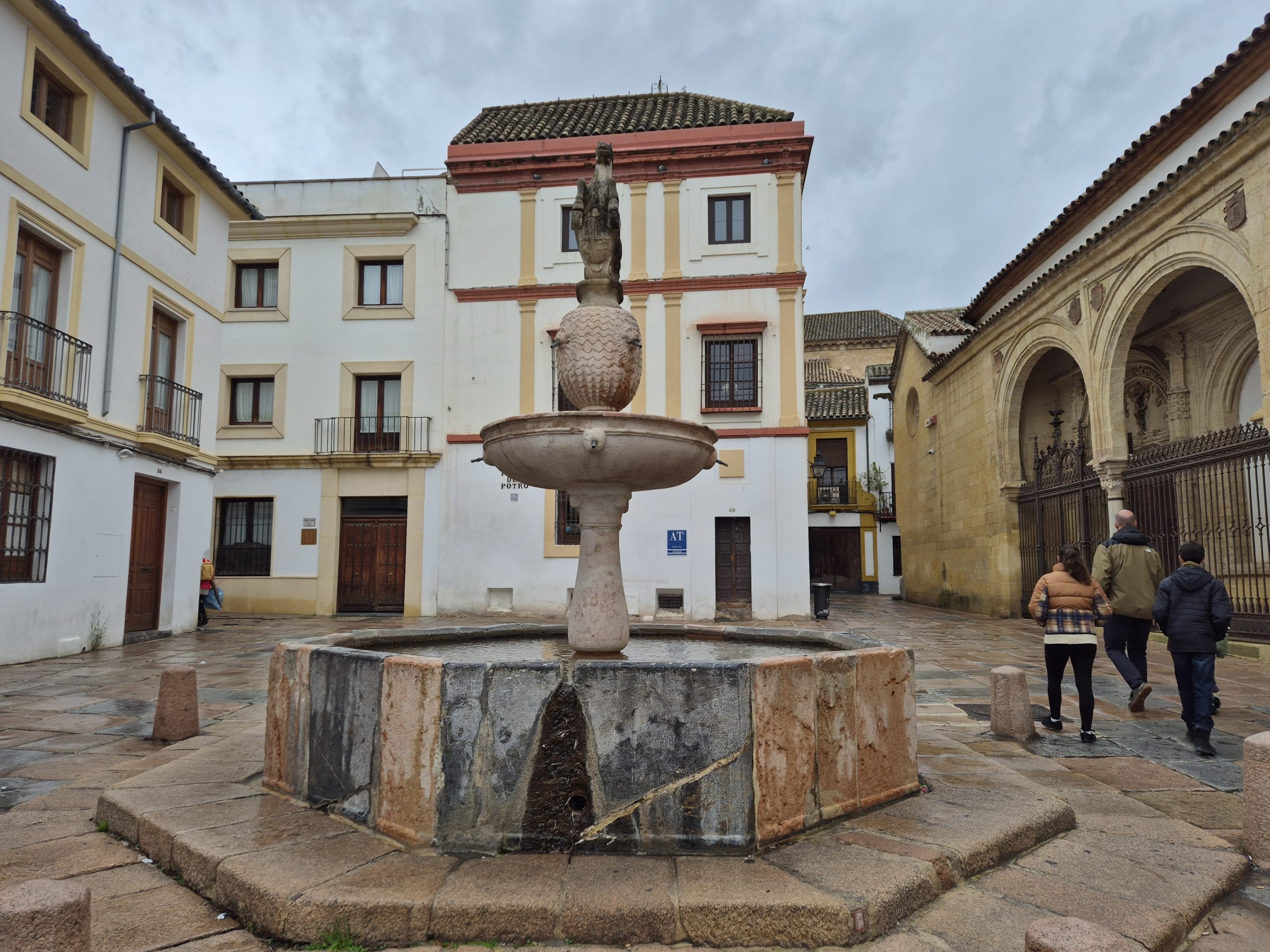
Our first walk took us through small plazas and gardens already turning – December, and the plane trees were still holding their autumn colors, while orange trees and palms stood around them refusing to acknowledge the season. In one little garden, a bronze sculpture of a family group rose out of a shallow fountain pool, the kind of unshowy public art that a city scatters around without ceremony. Elsewhere, more contemporary statements: street art and graffiti on the old walls.
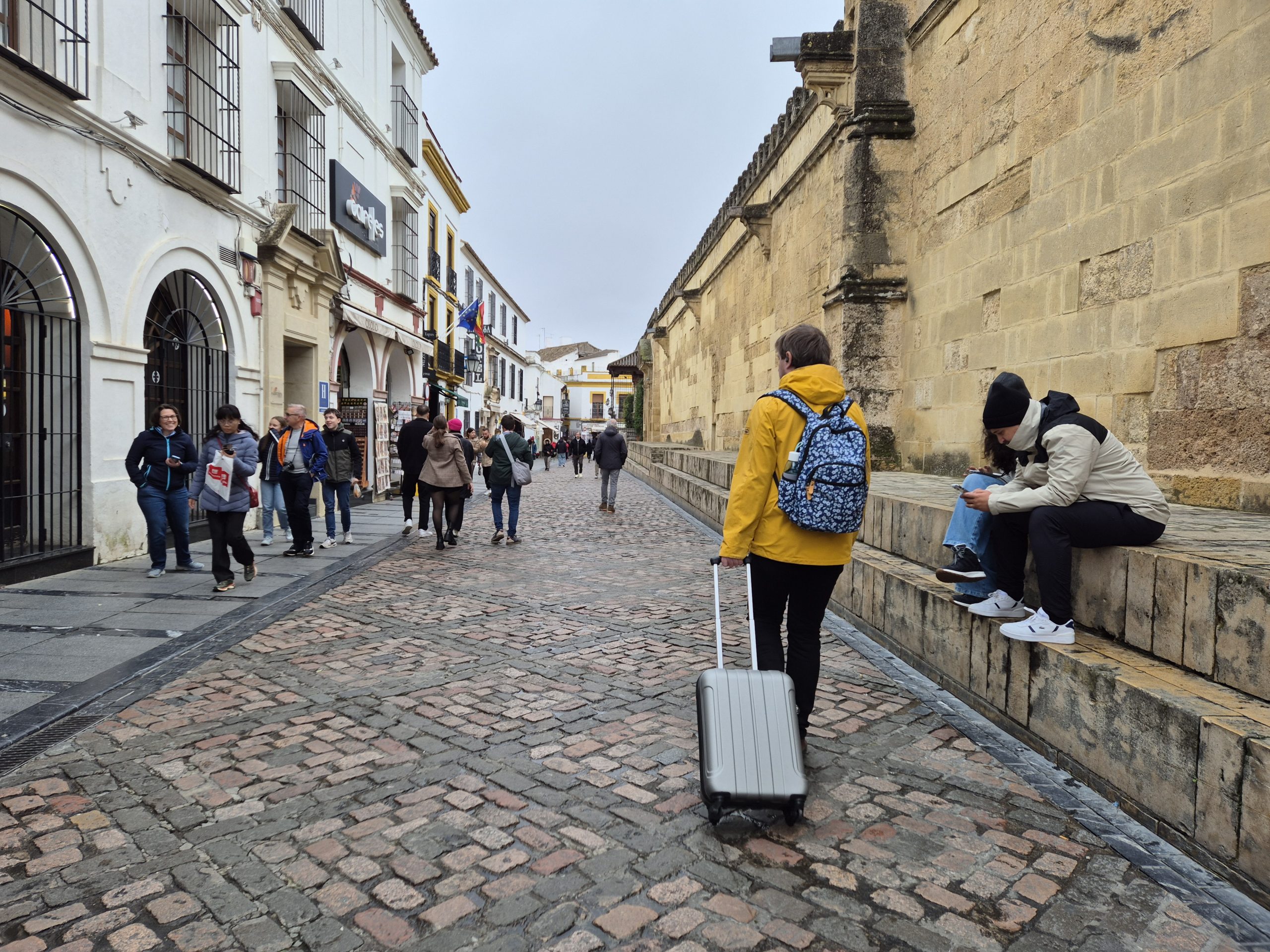
I like to travel with a backpack, but B prefers a suitcase. Throughout this trip, using public transport to get from station to hotel was more or less the same as walking, so we walked mostly. Over cobbled streets – B teasing me, fondly as ever, about my undimmed faith in a fresh transit card for every city. Which meant that B’s wheeled suitcase followed us trundling loudly over the cobbles – a riff on Mary had a little lamb, captioned in my head as …and everywhere that Mary went.
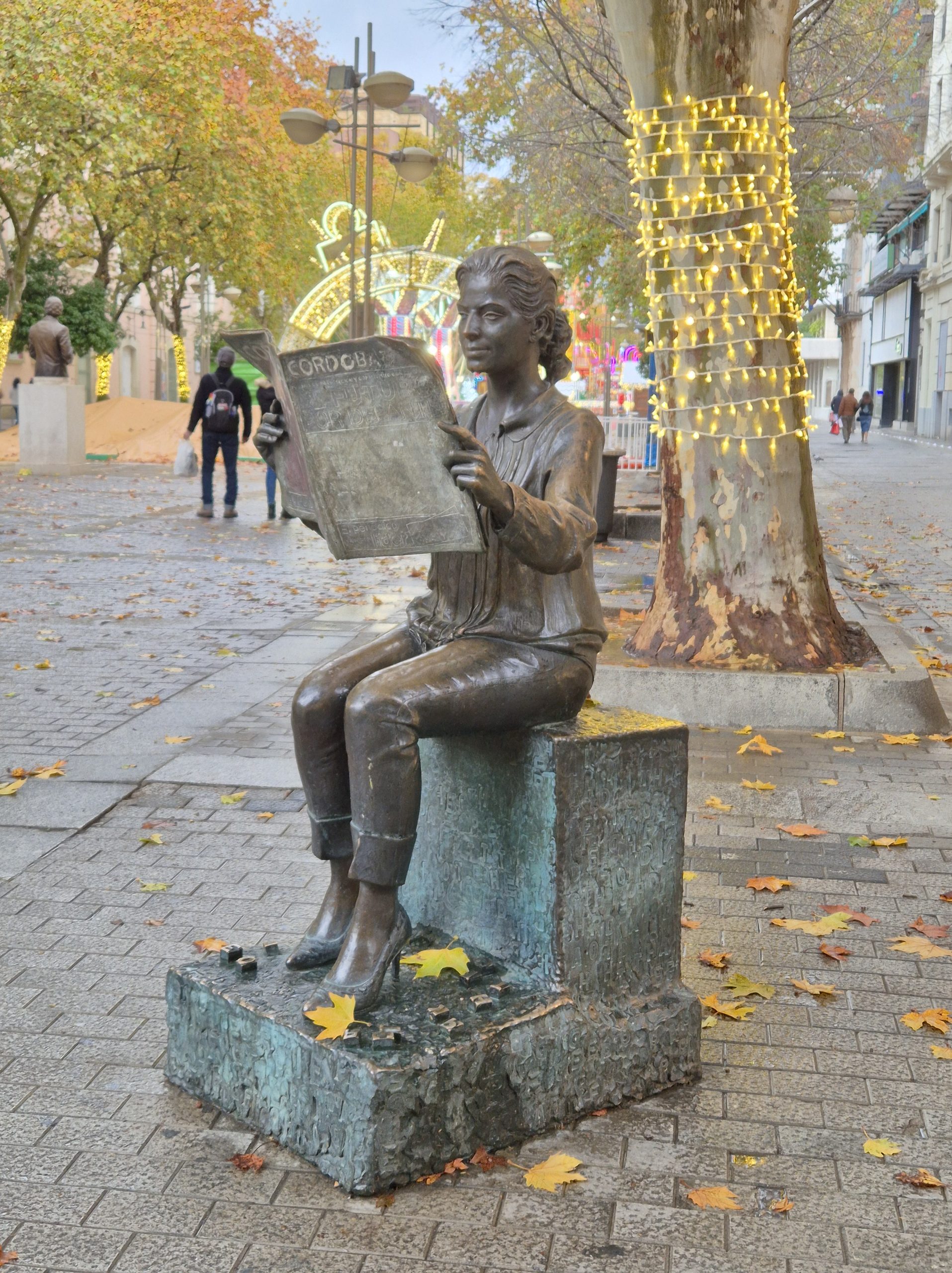
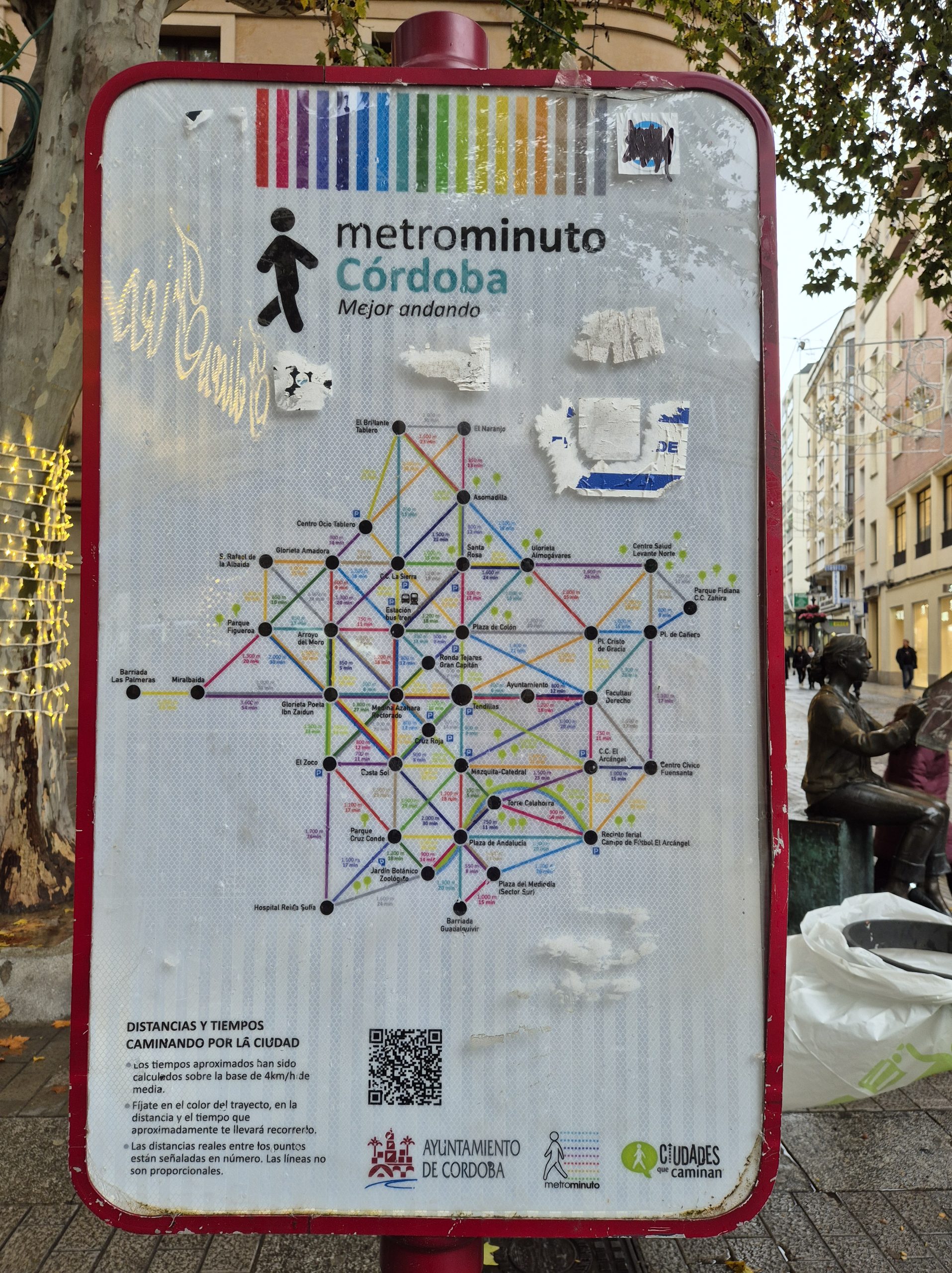
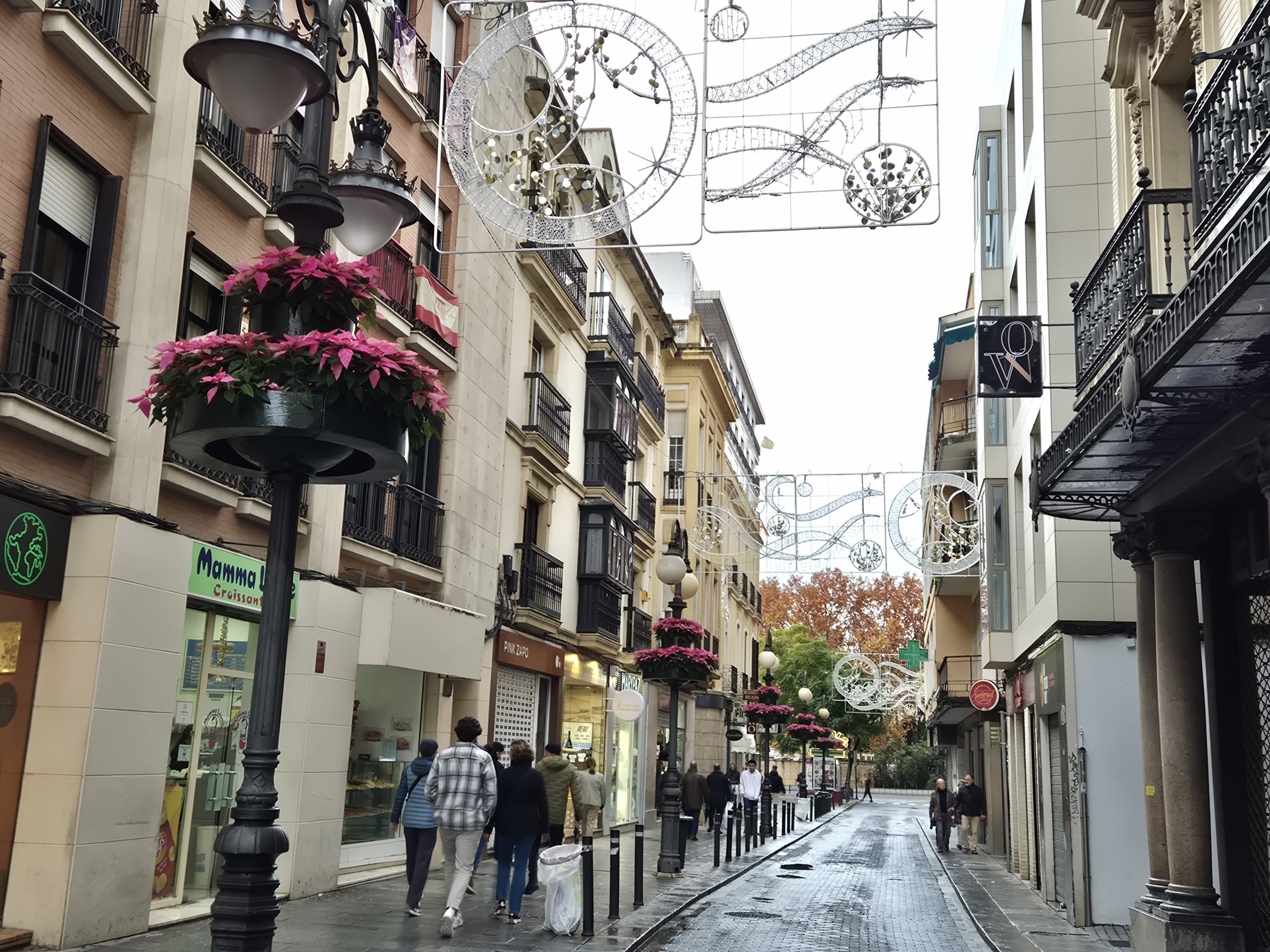
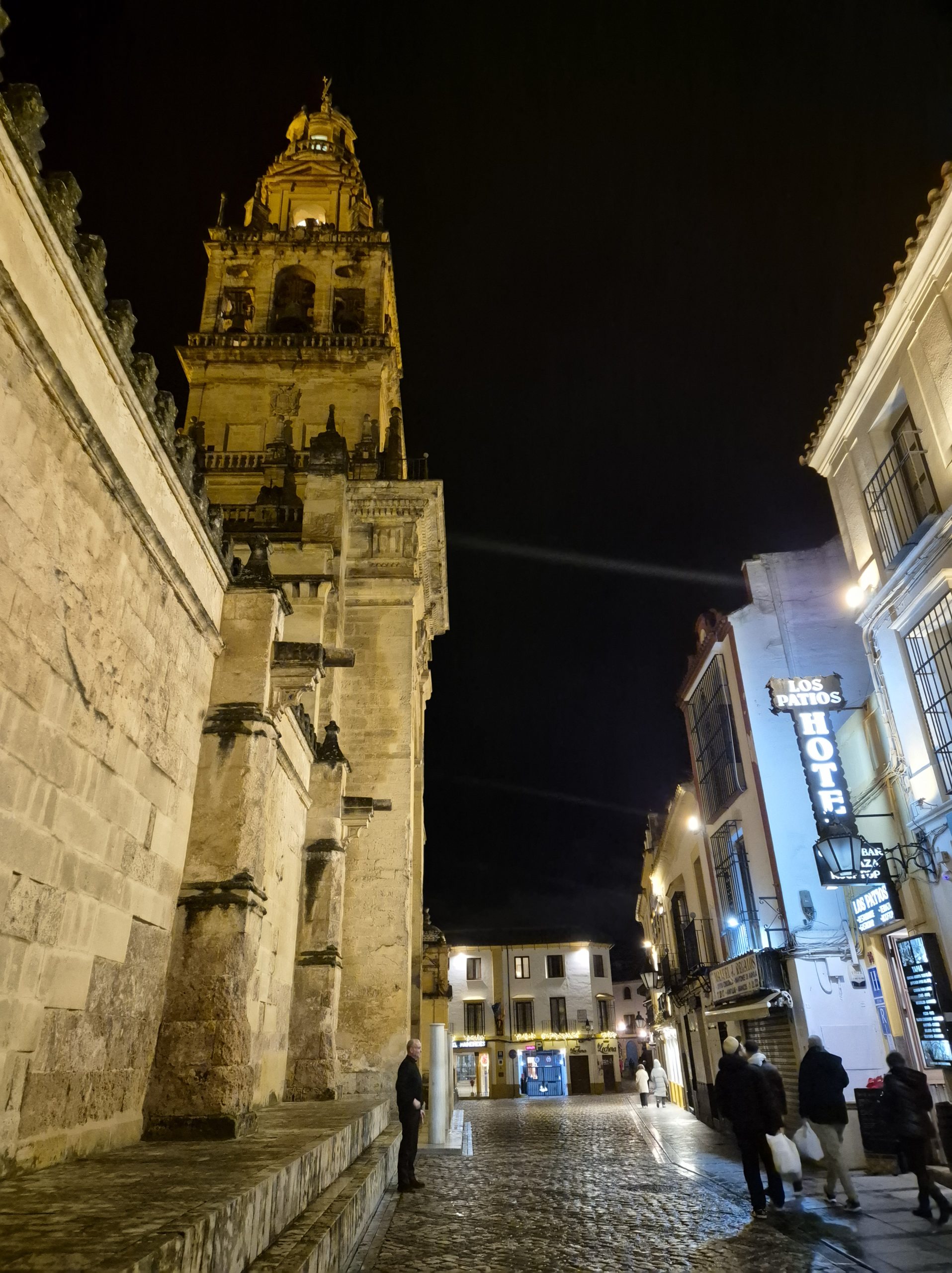
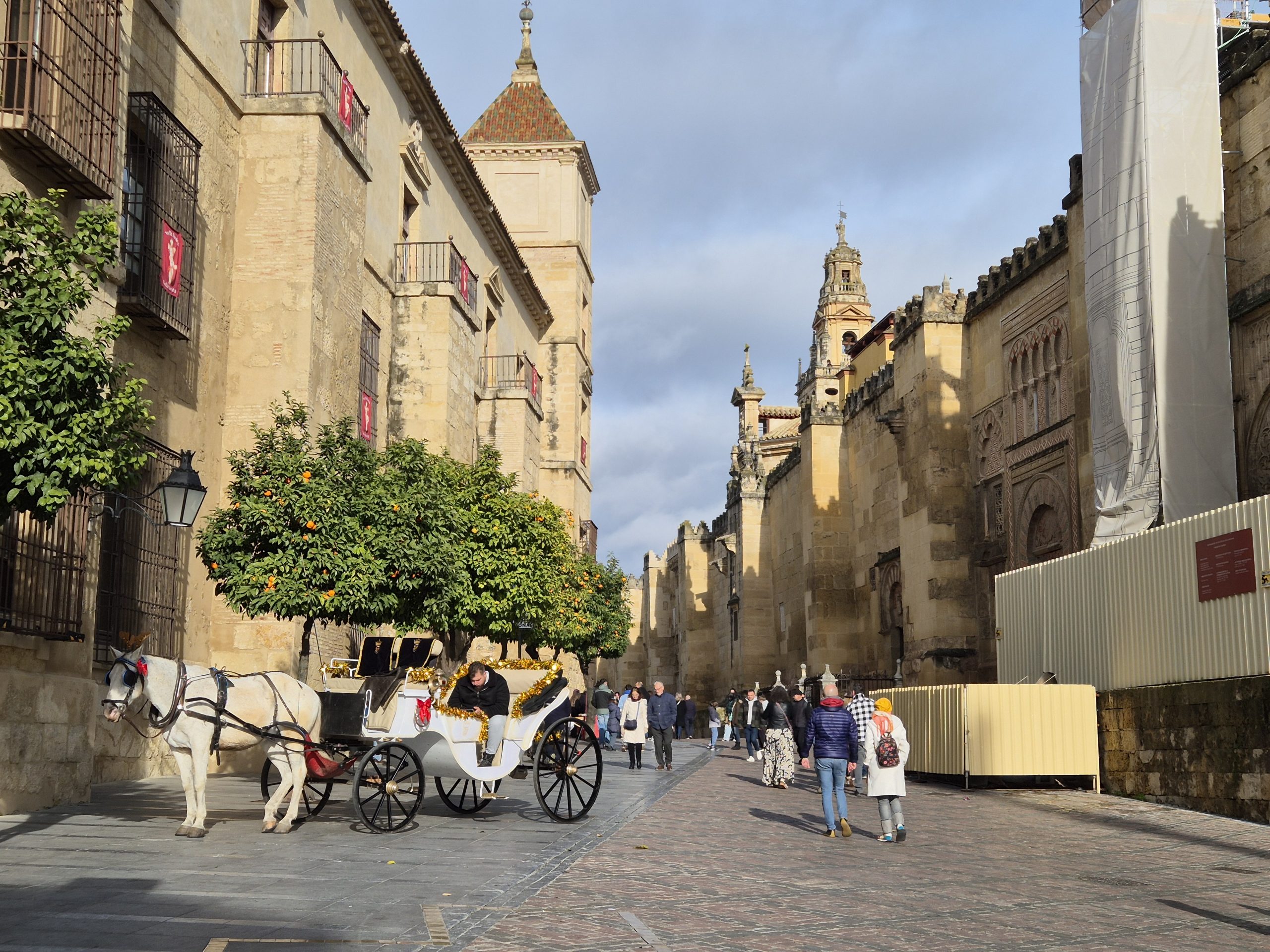
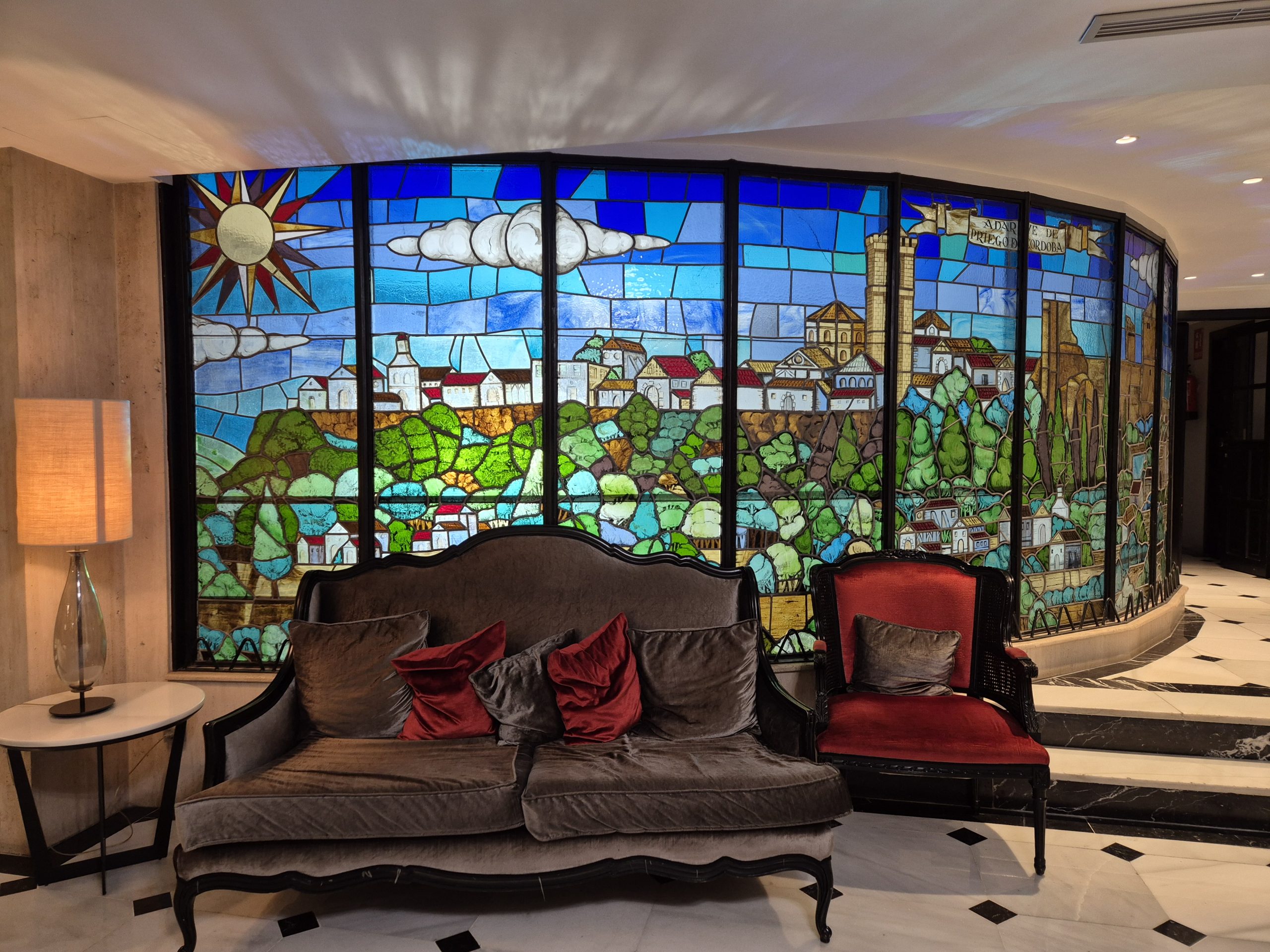
Hotel Eurostars Conquistador
A word about the hotel, because it earned it: of everywhere we stayed, the Conquistador was the best. The room was generous and quietly luxurious, with a decorative headboard shaped like a Moorish arch – a nod, perhaps deliberate, to the building it faced across the street. Its real luxury, though, was location: step out of the door and the Mezquita’s outer wall was right there, which made it easy to wander in and out of the old town at odd hours.
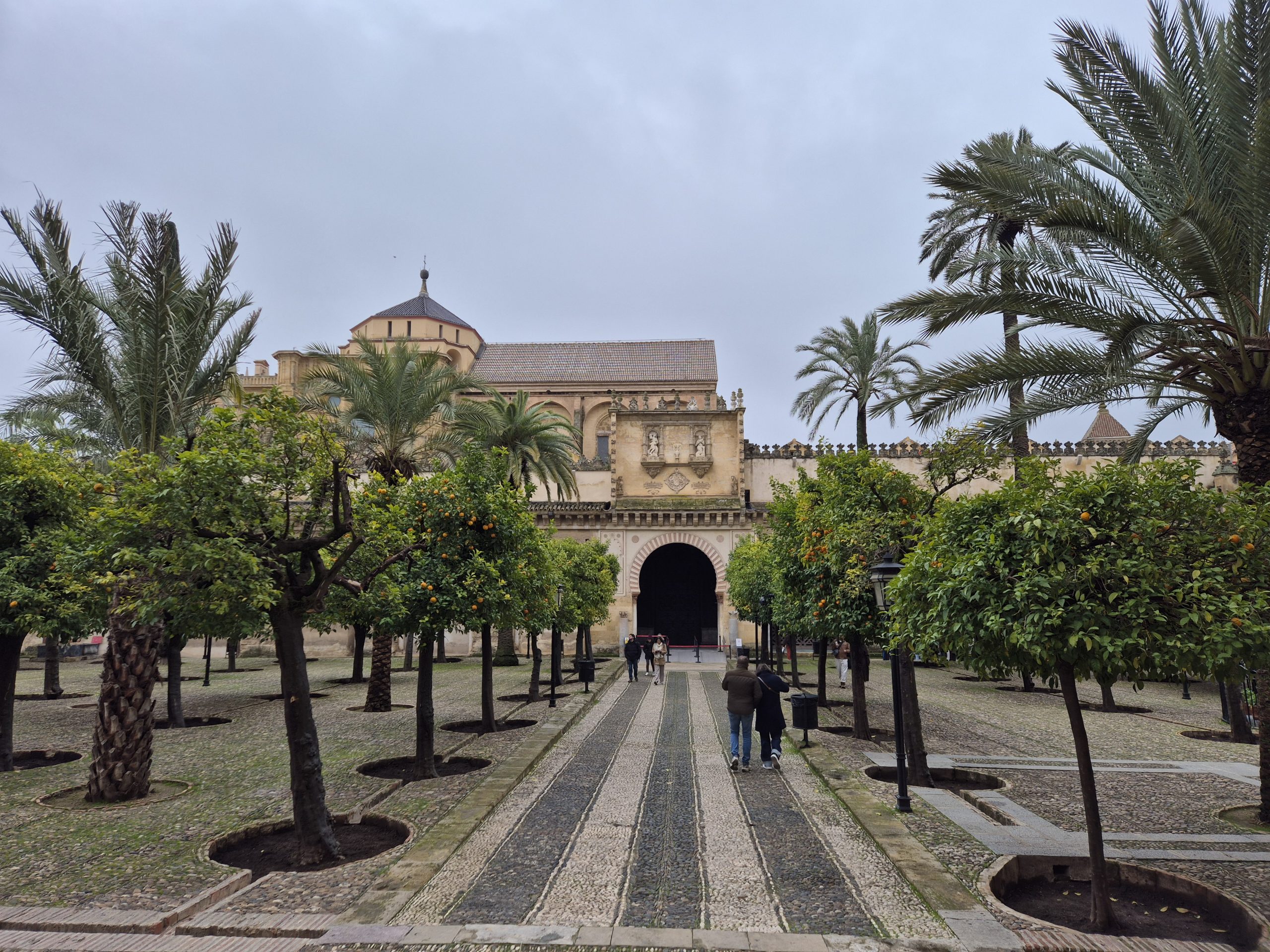
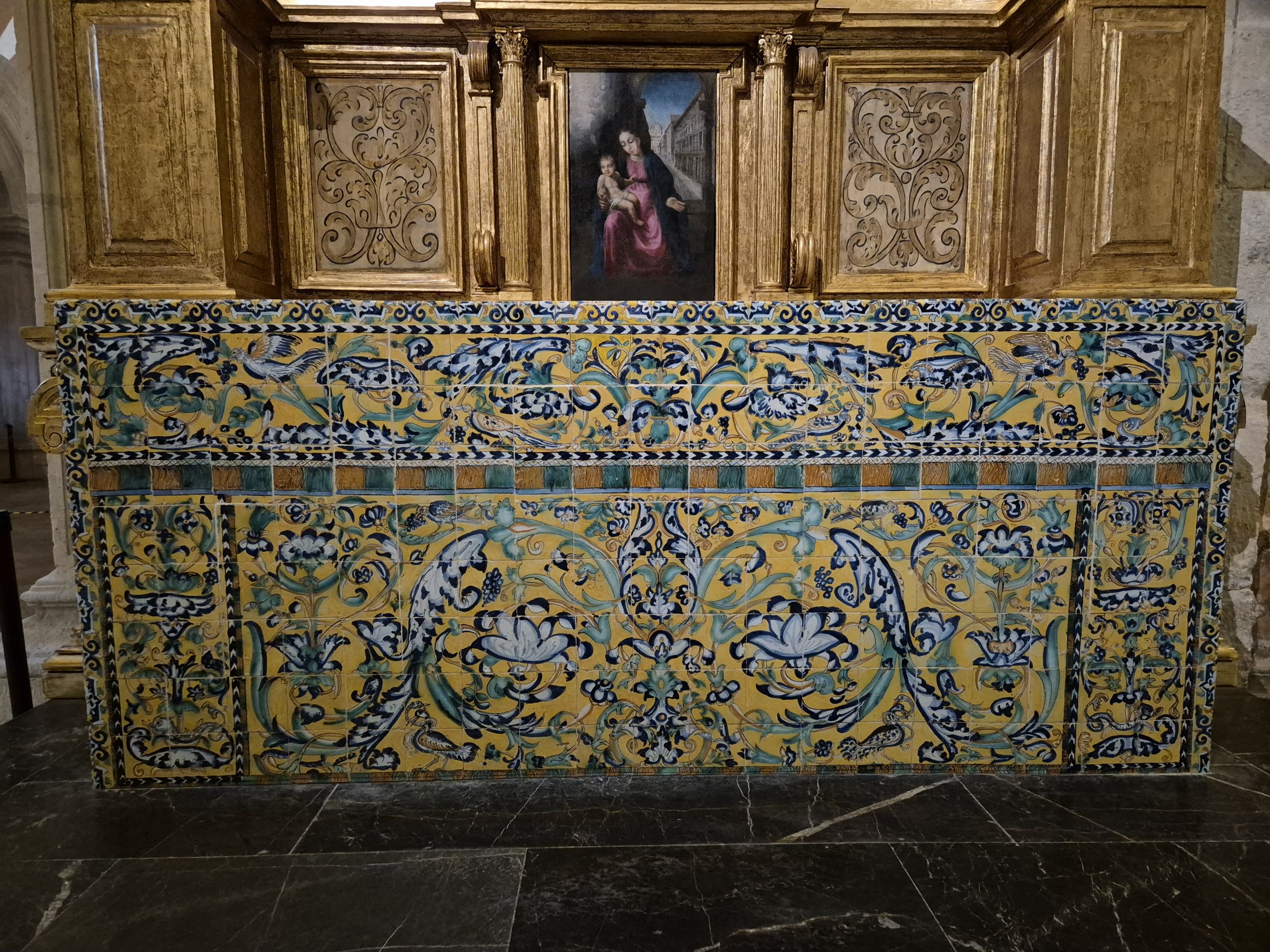
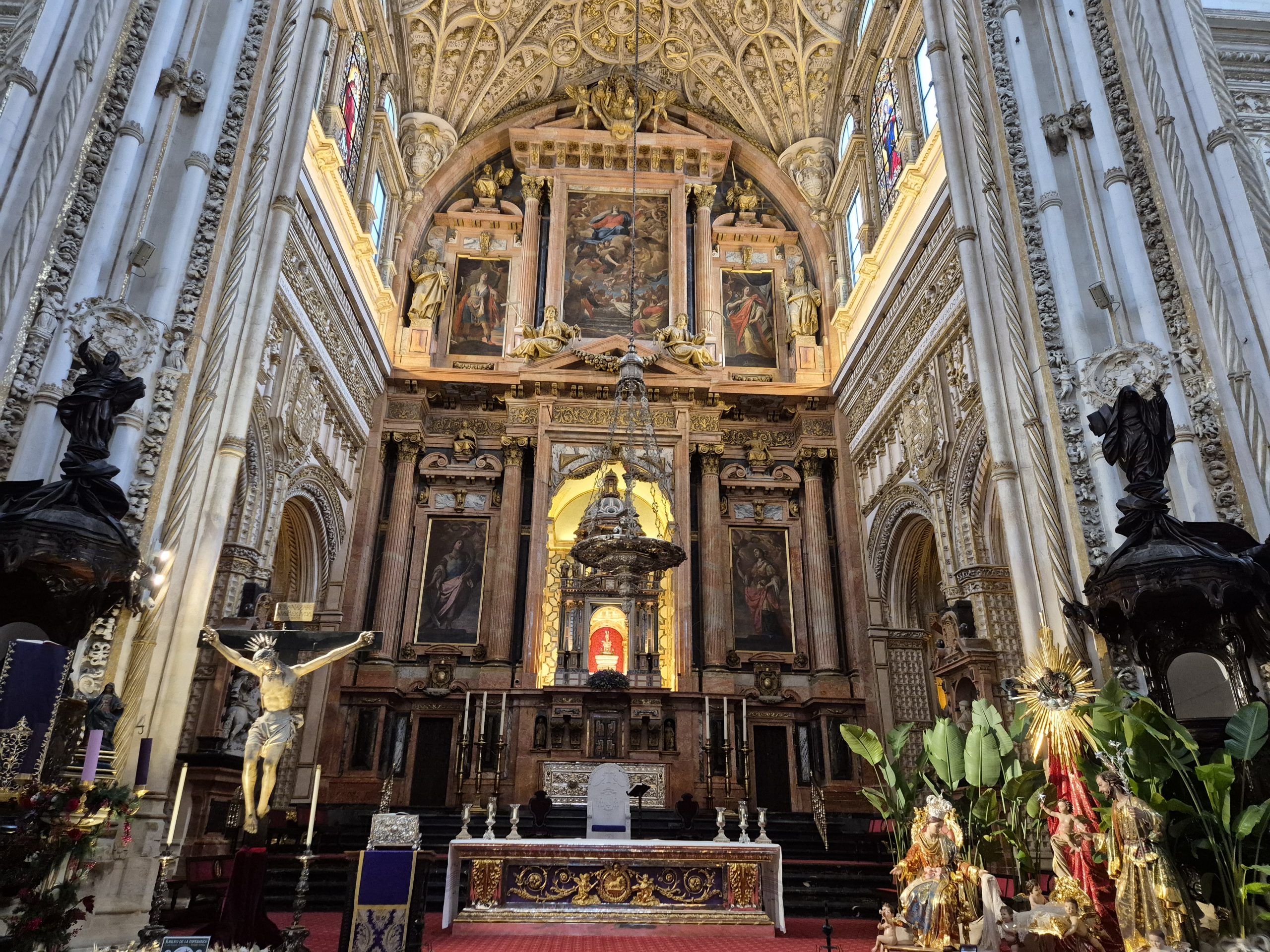
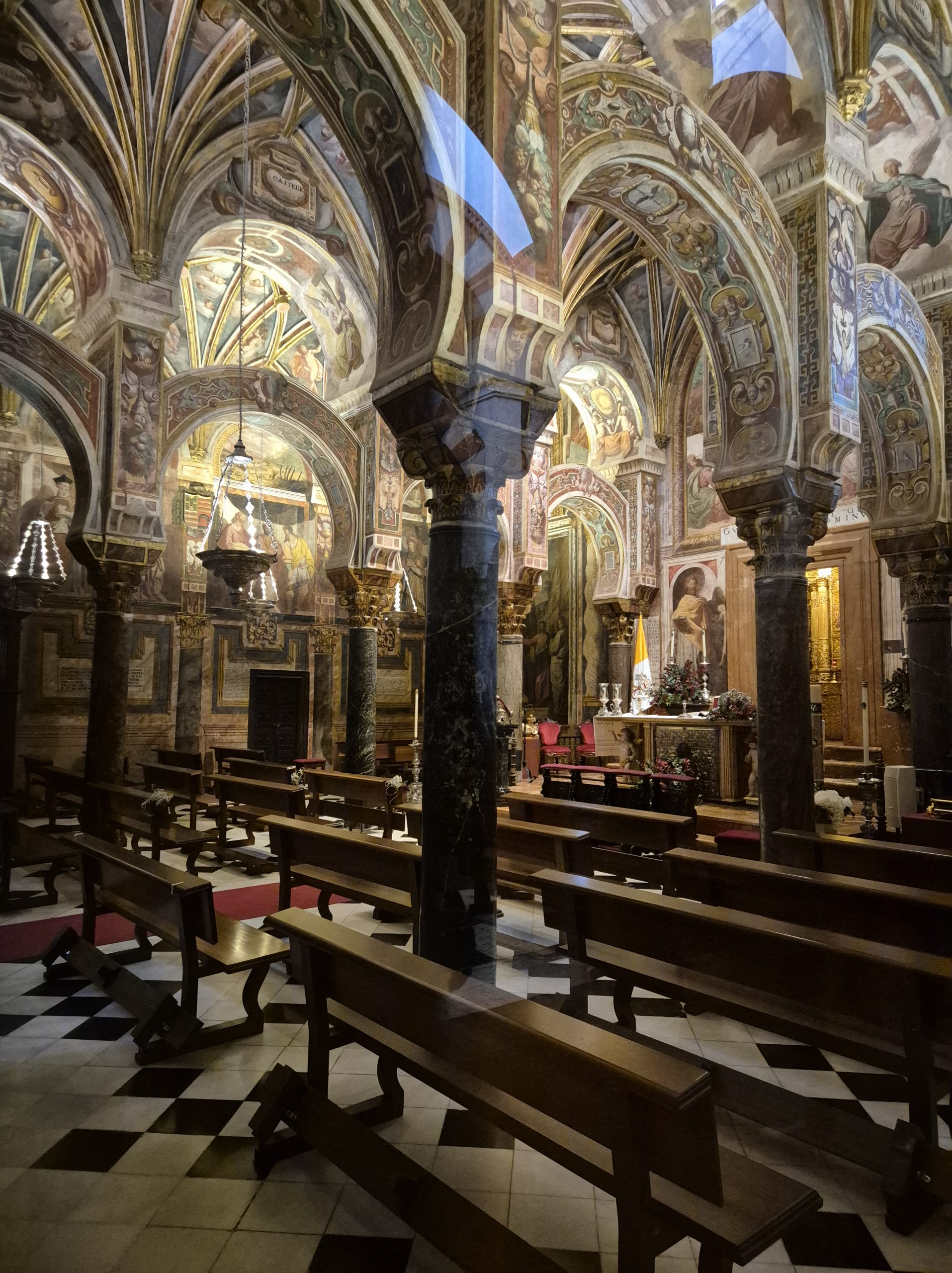
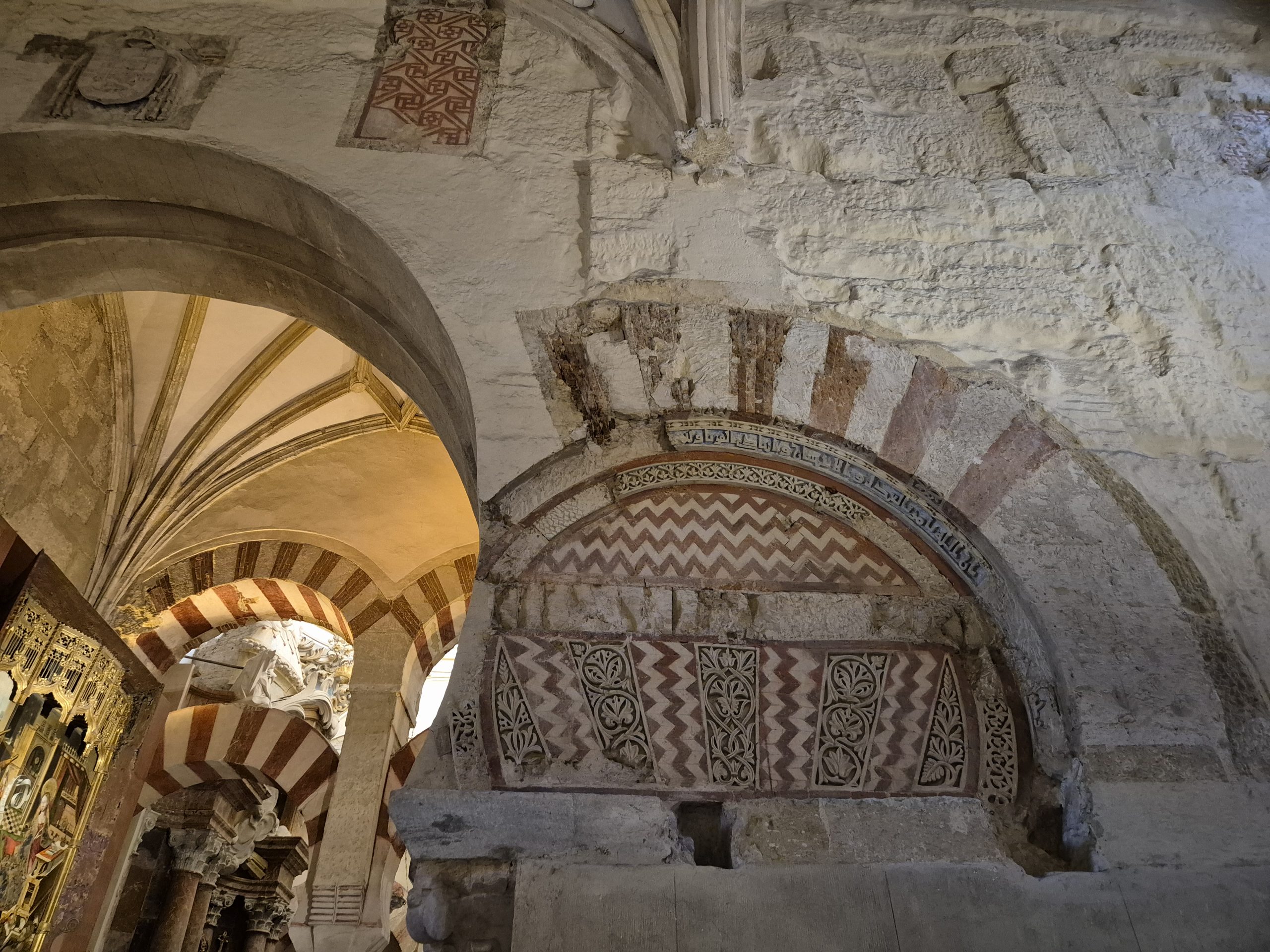
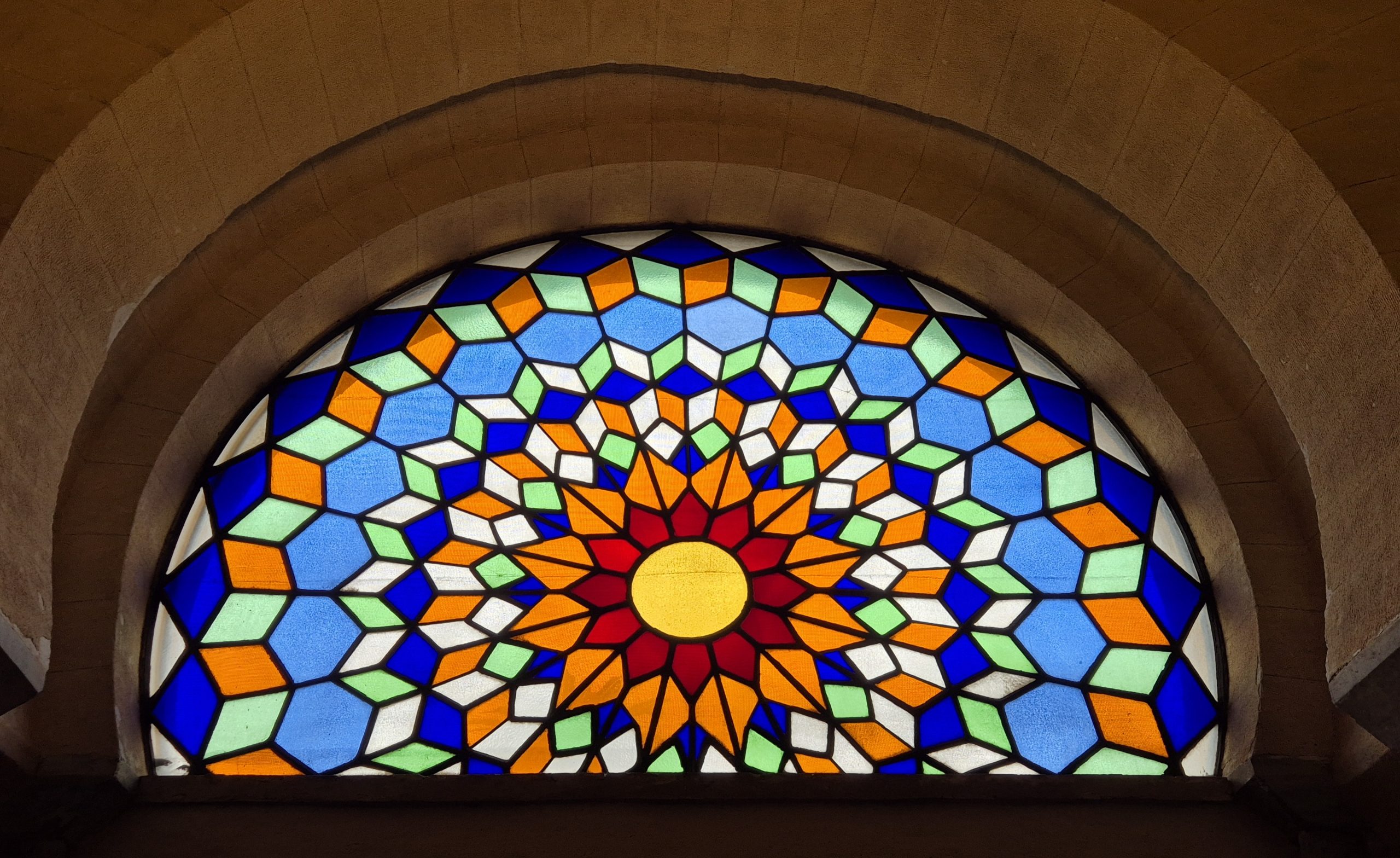
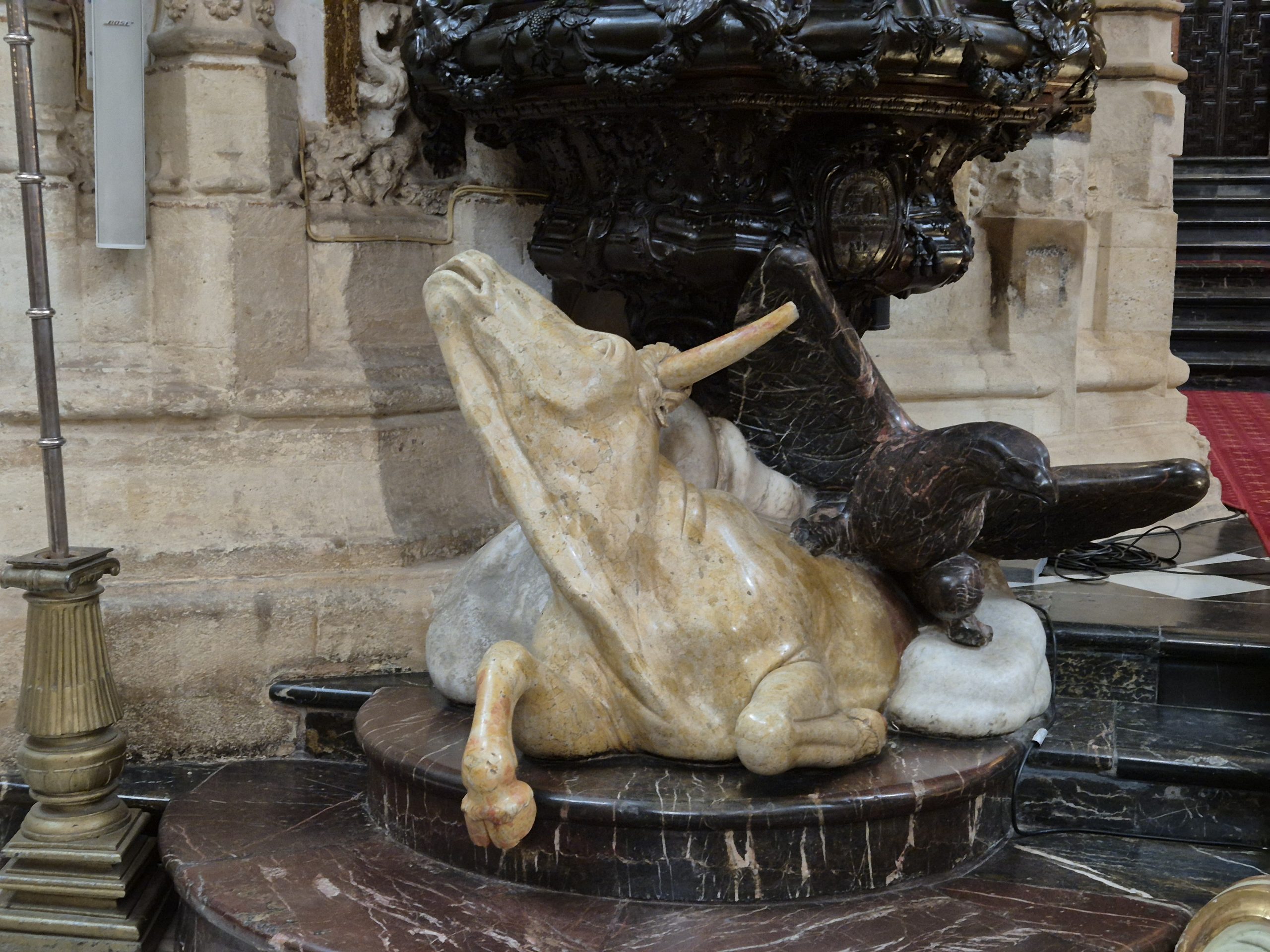
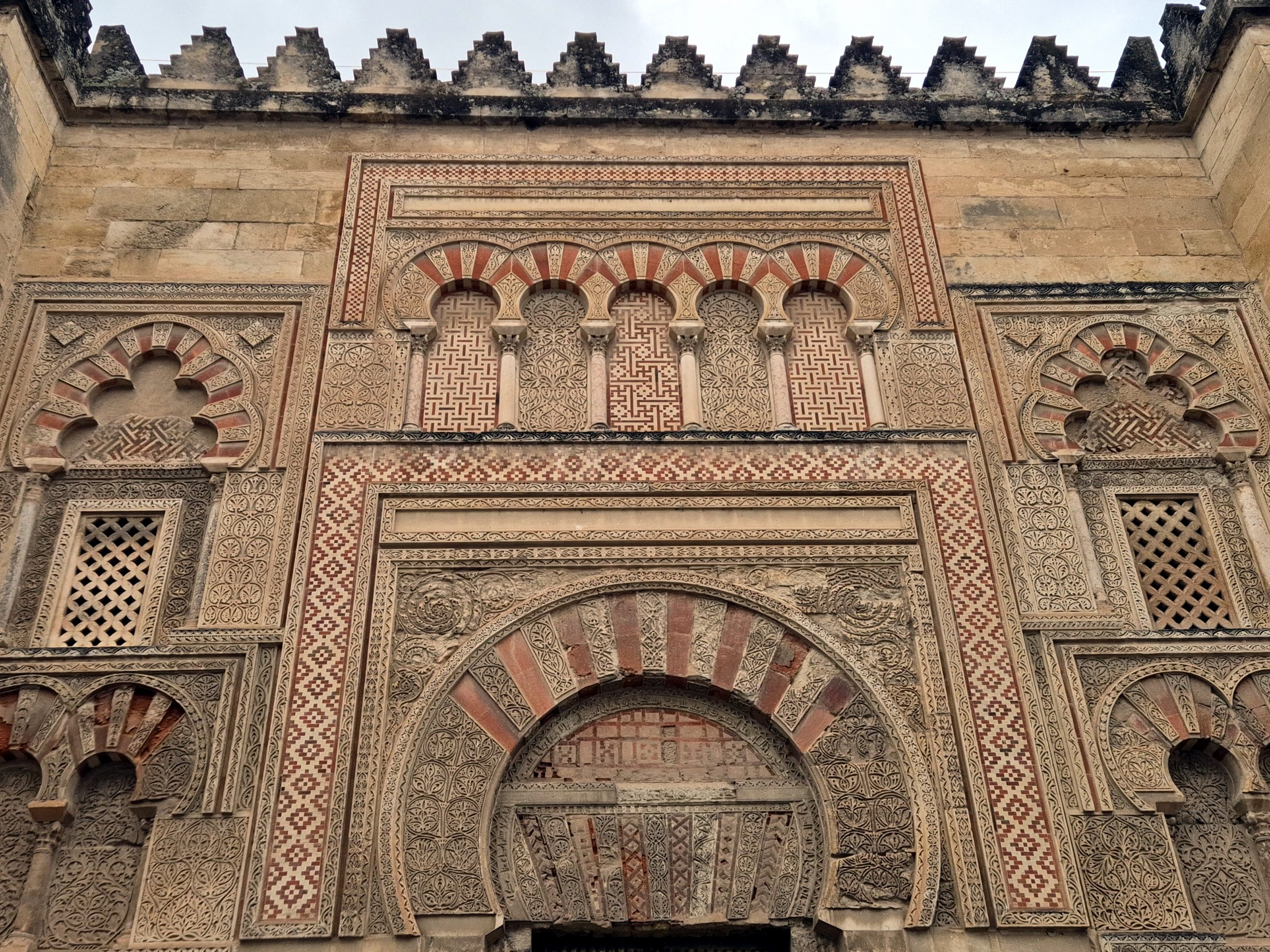
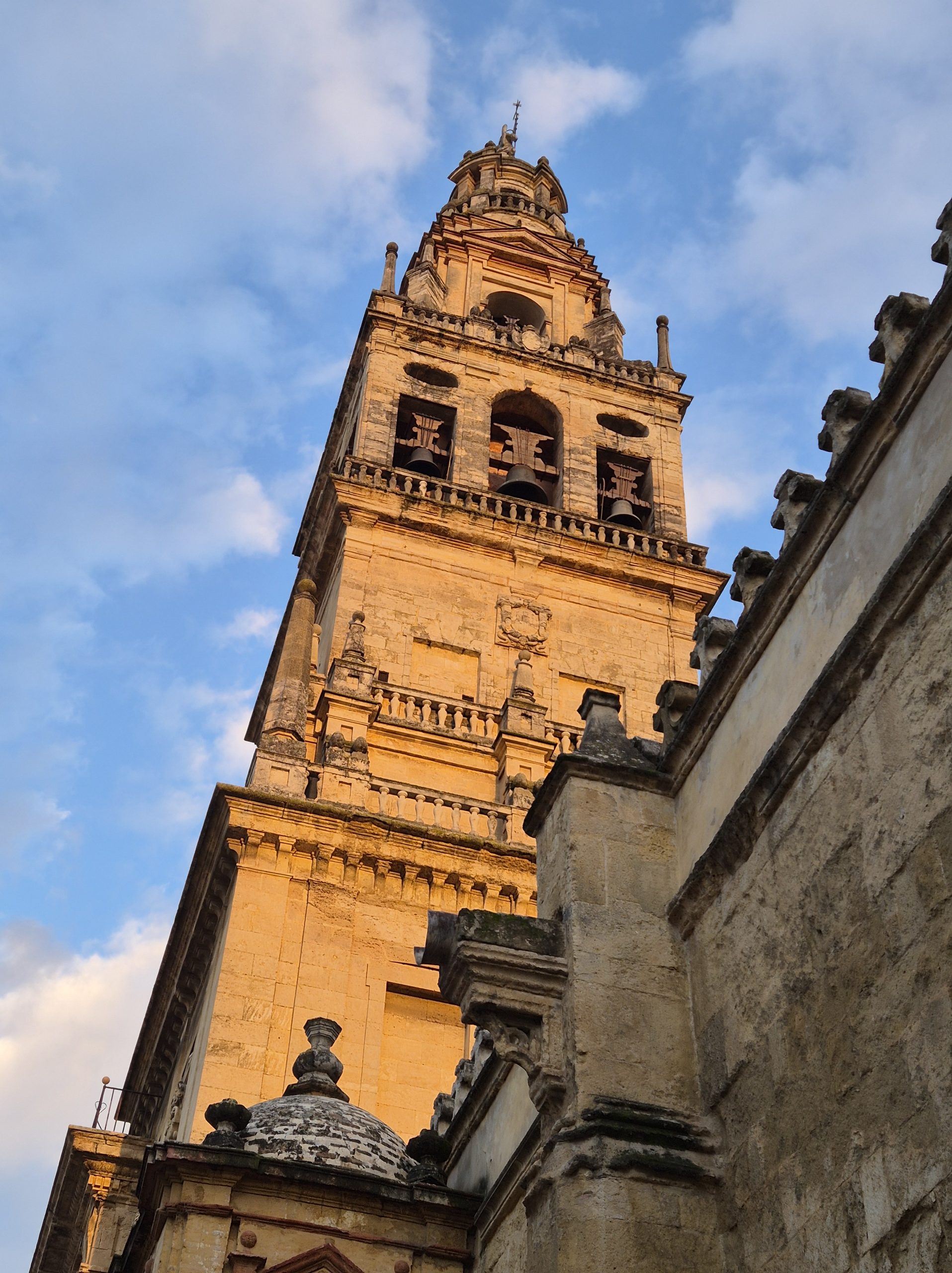
The Mezquita–Cathedral
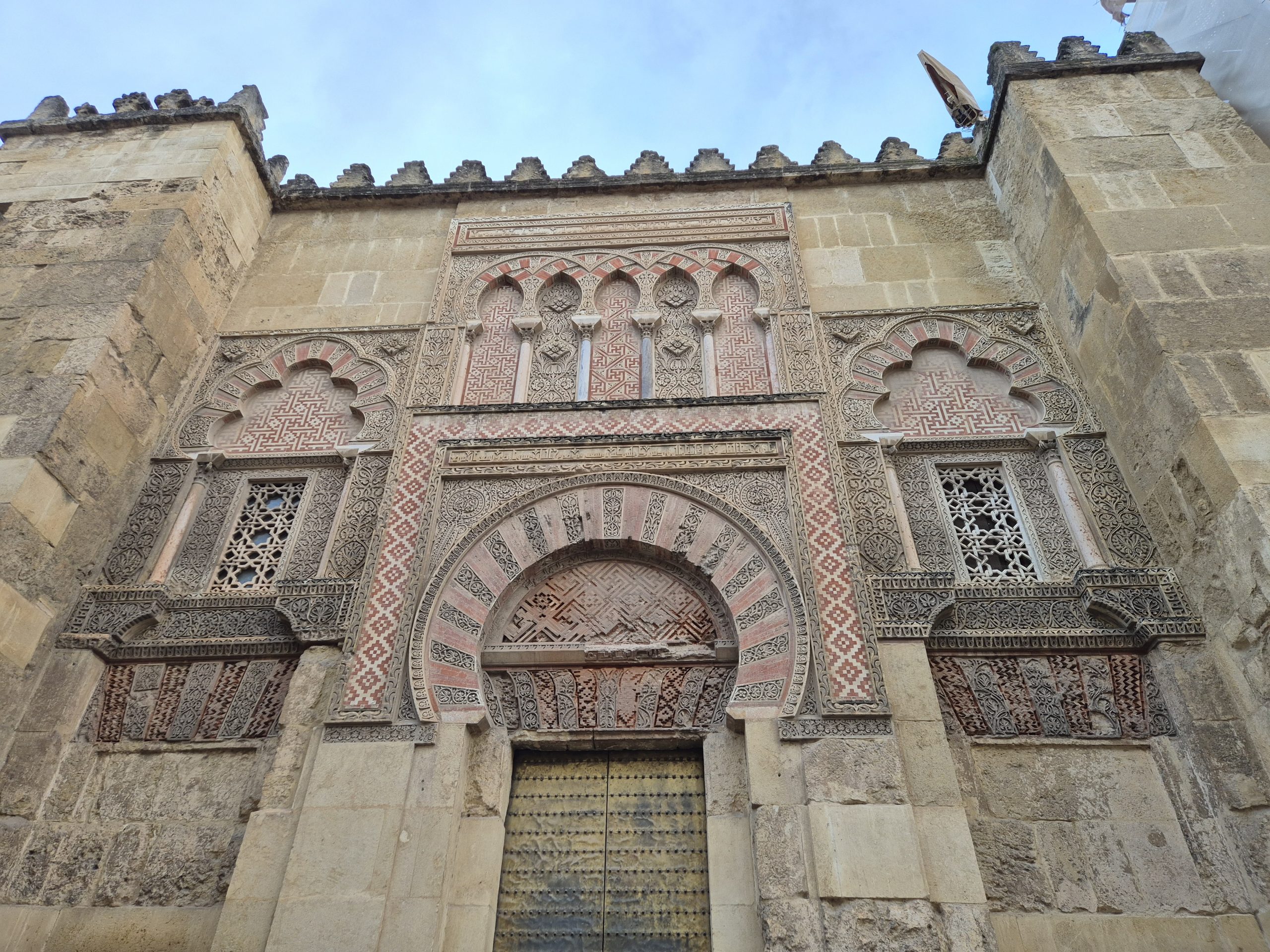
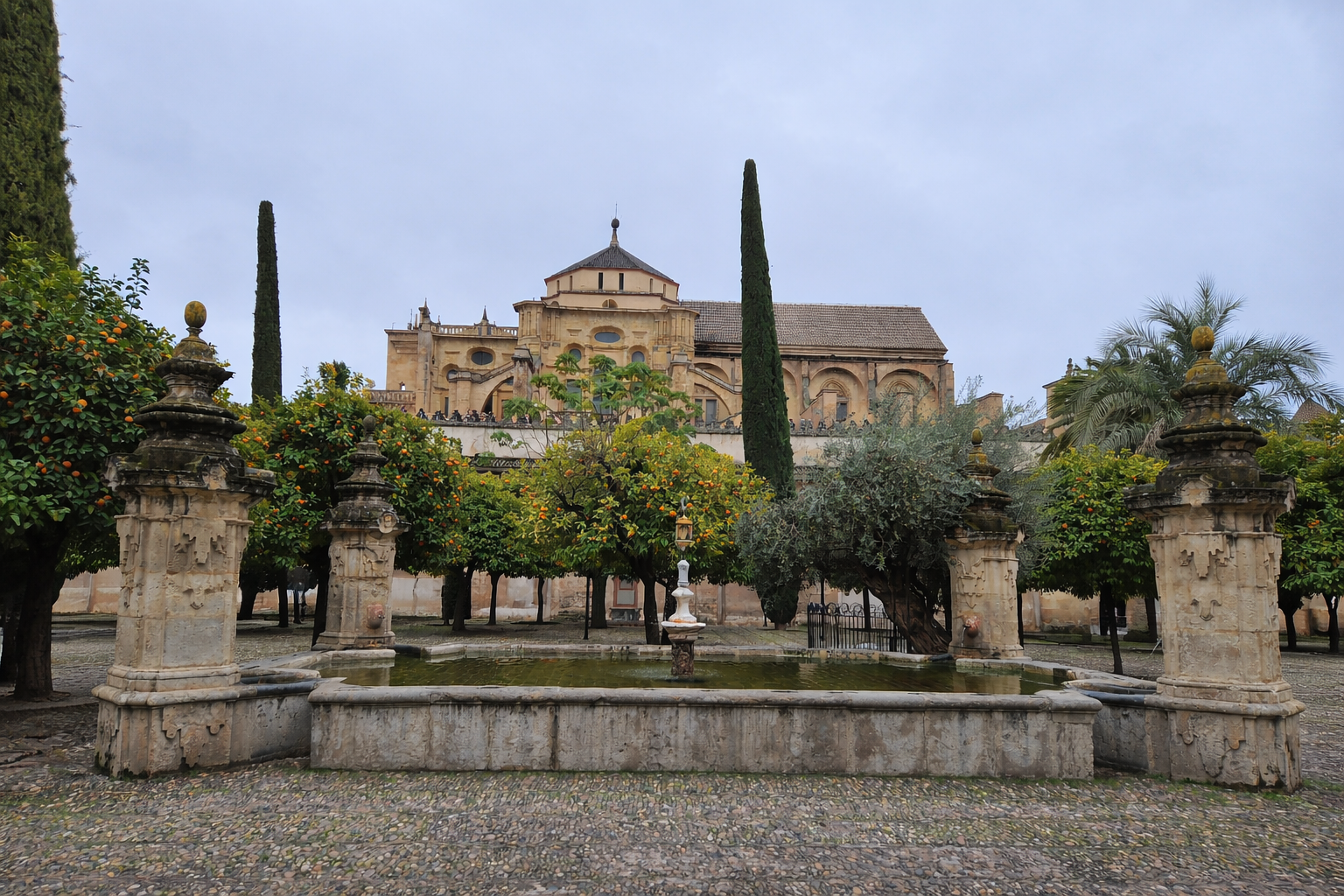
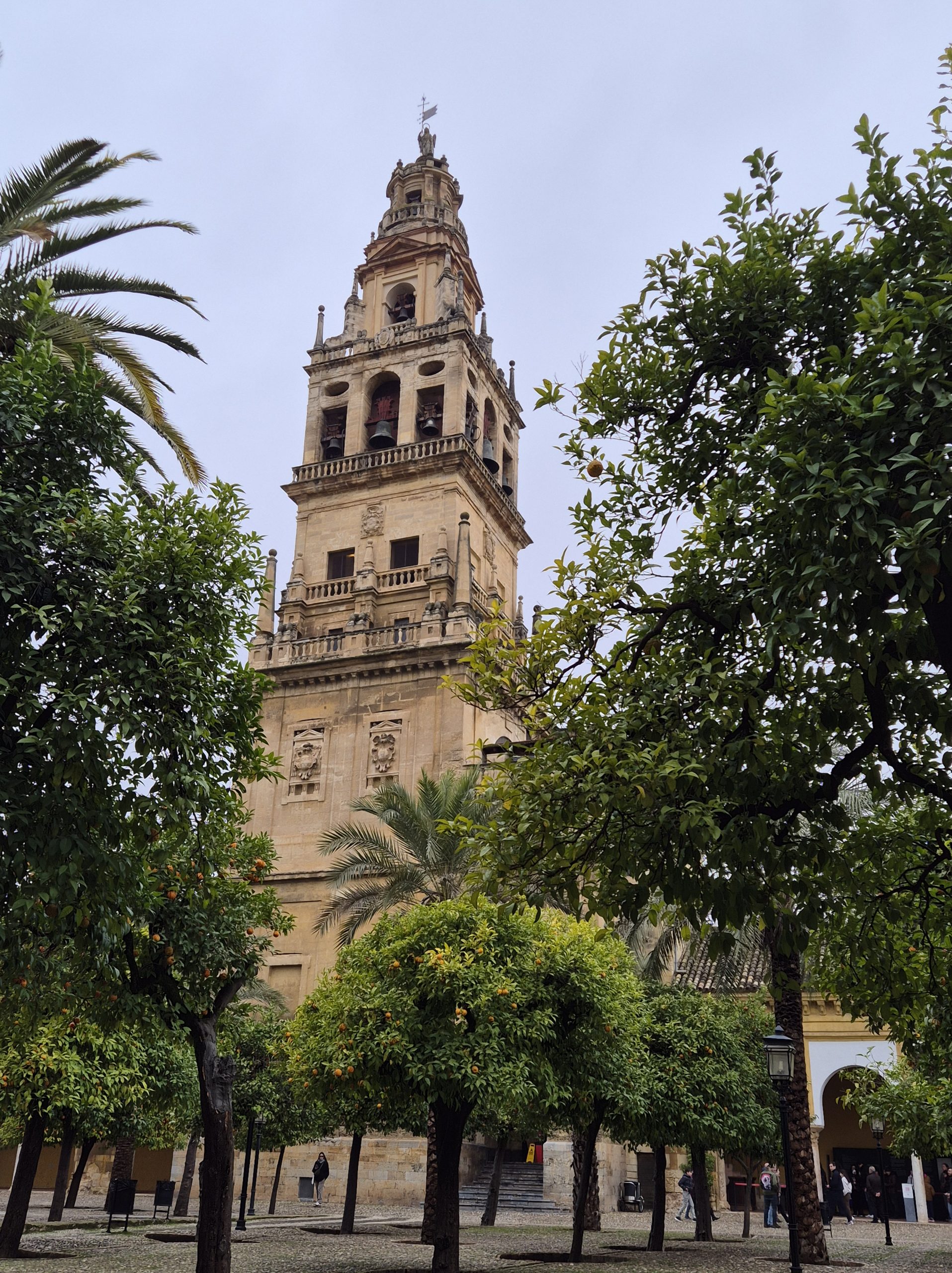
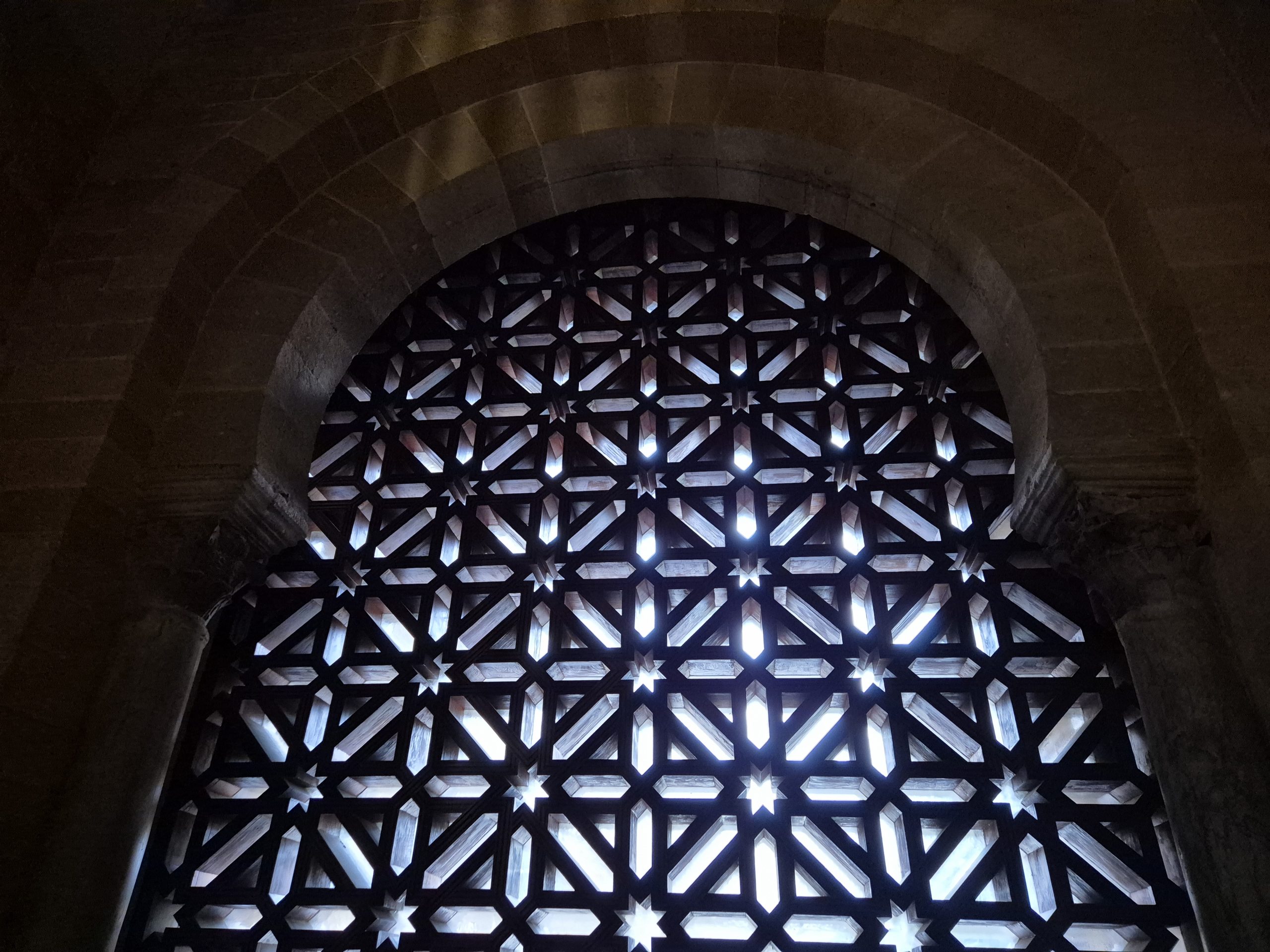
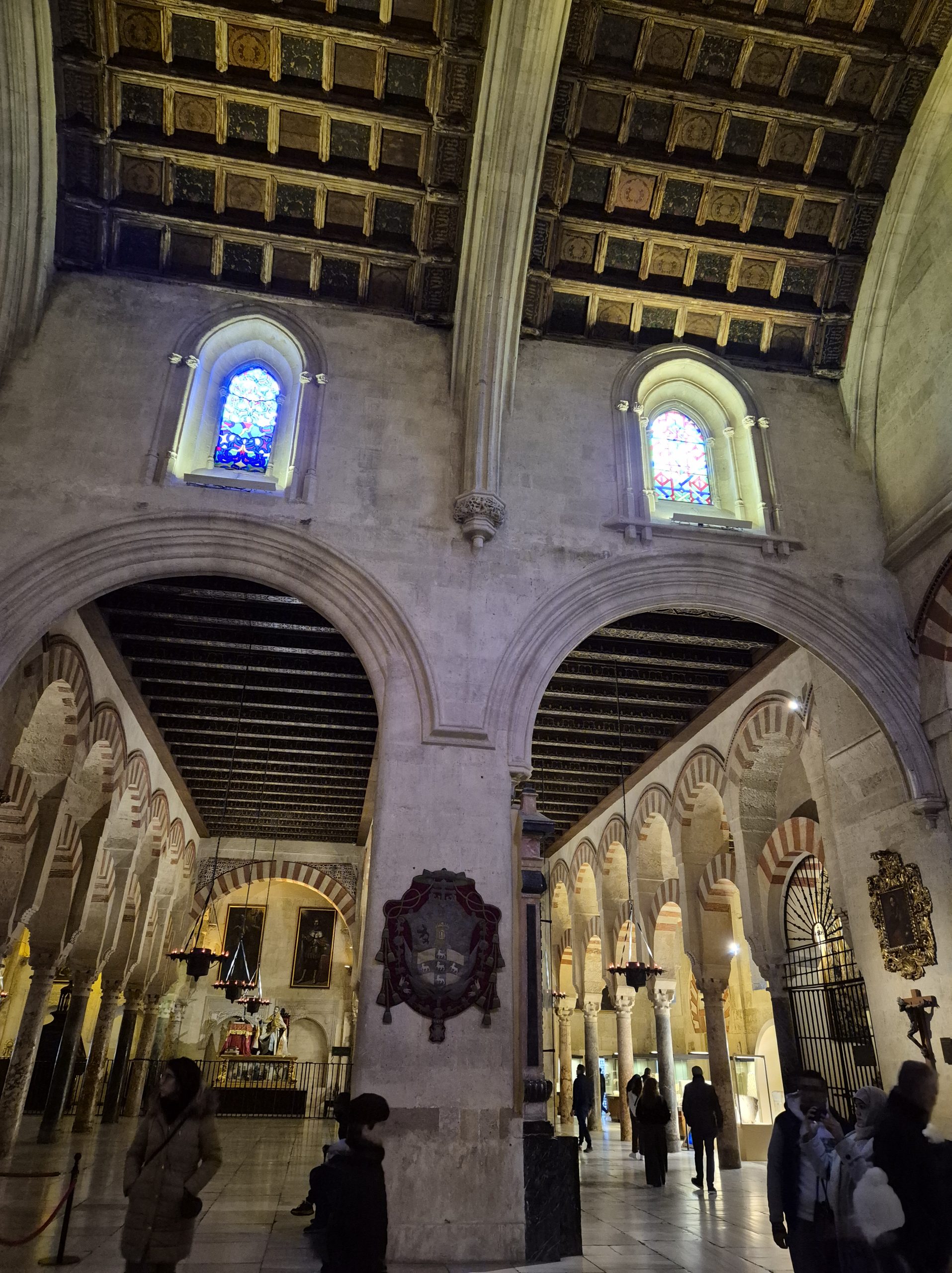
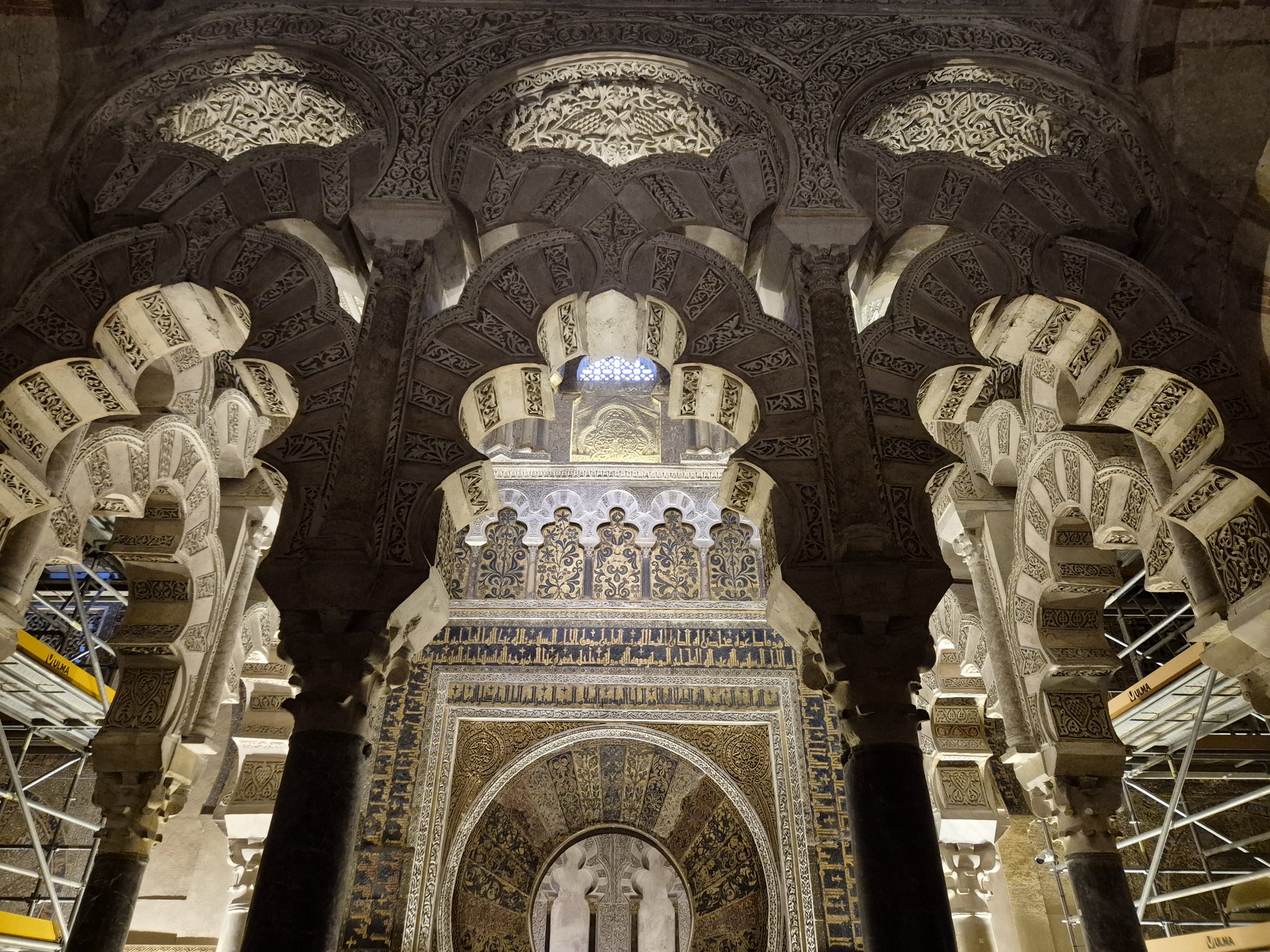
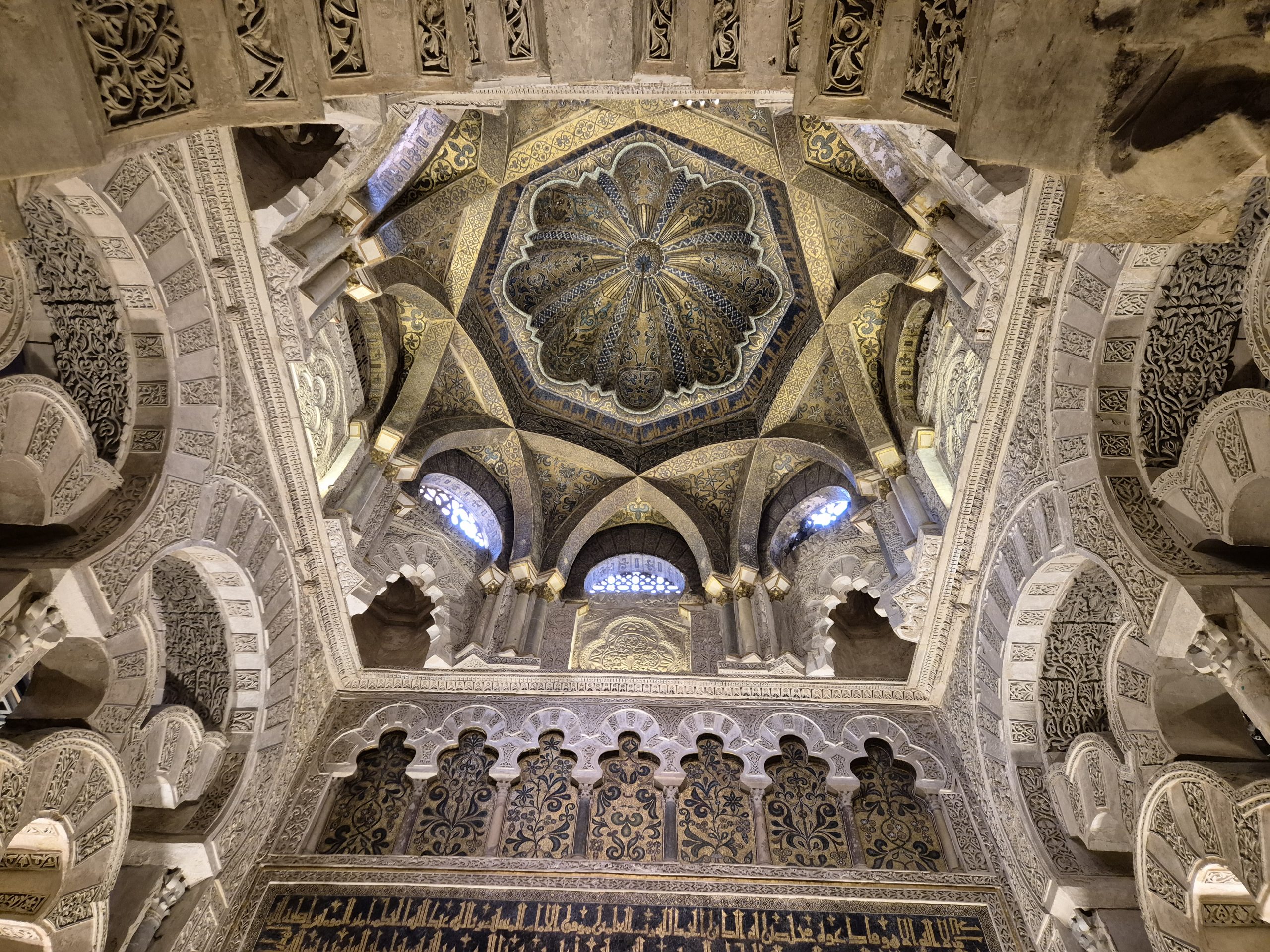
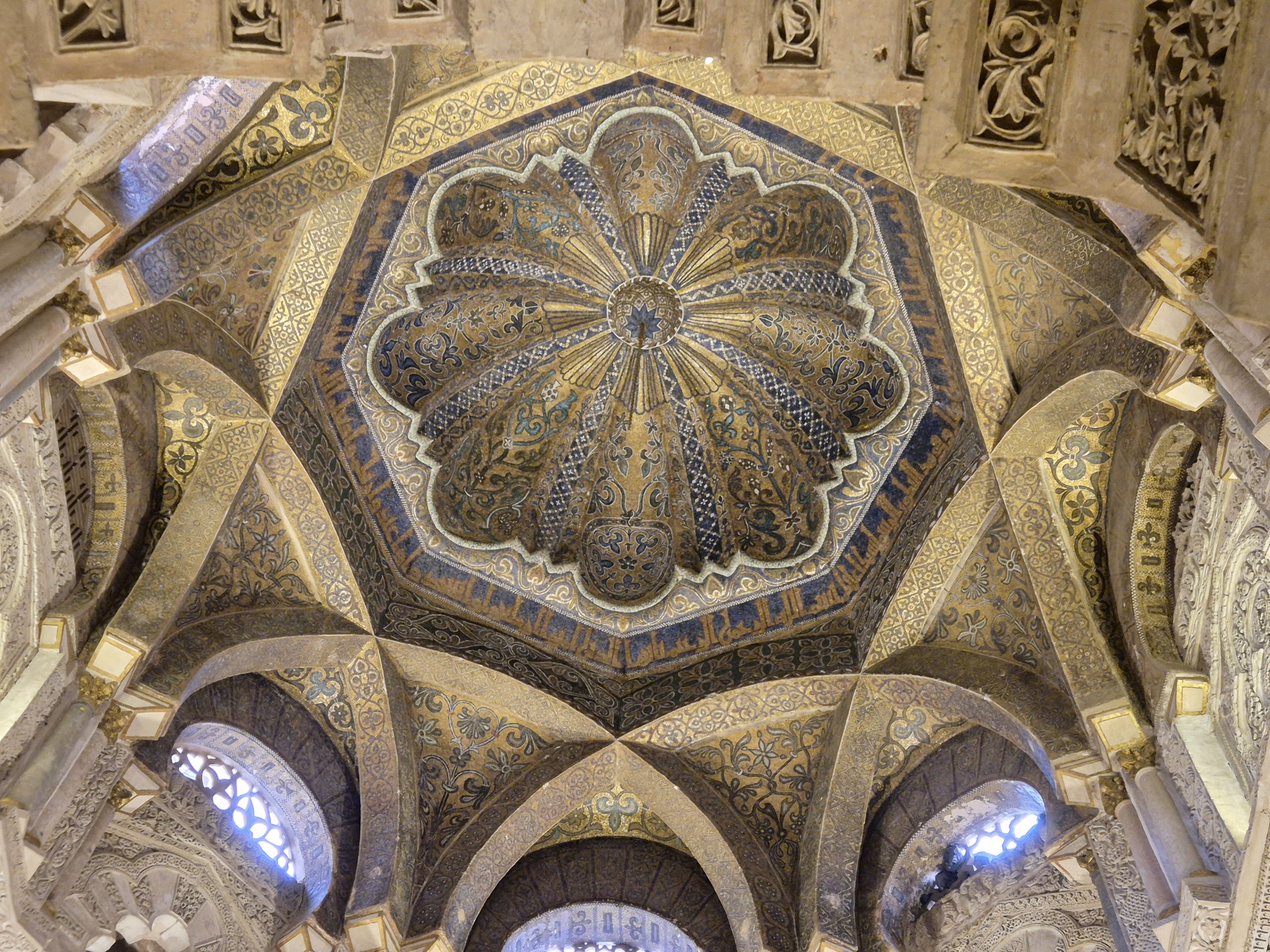
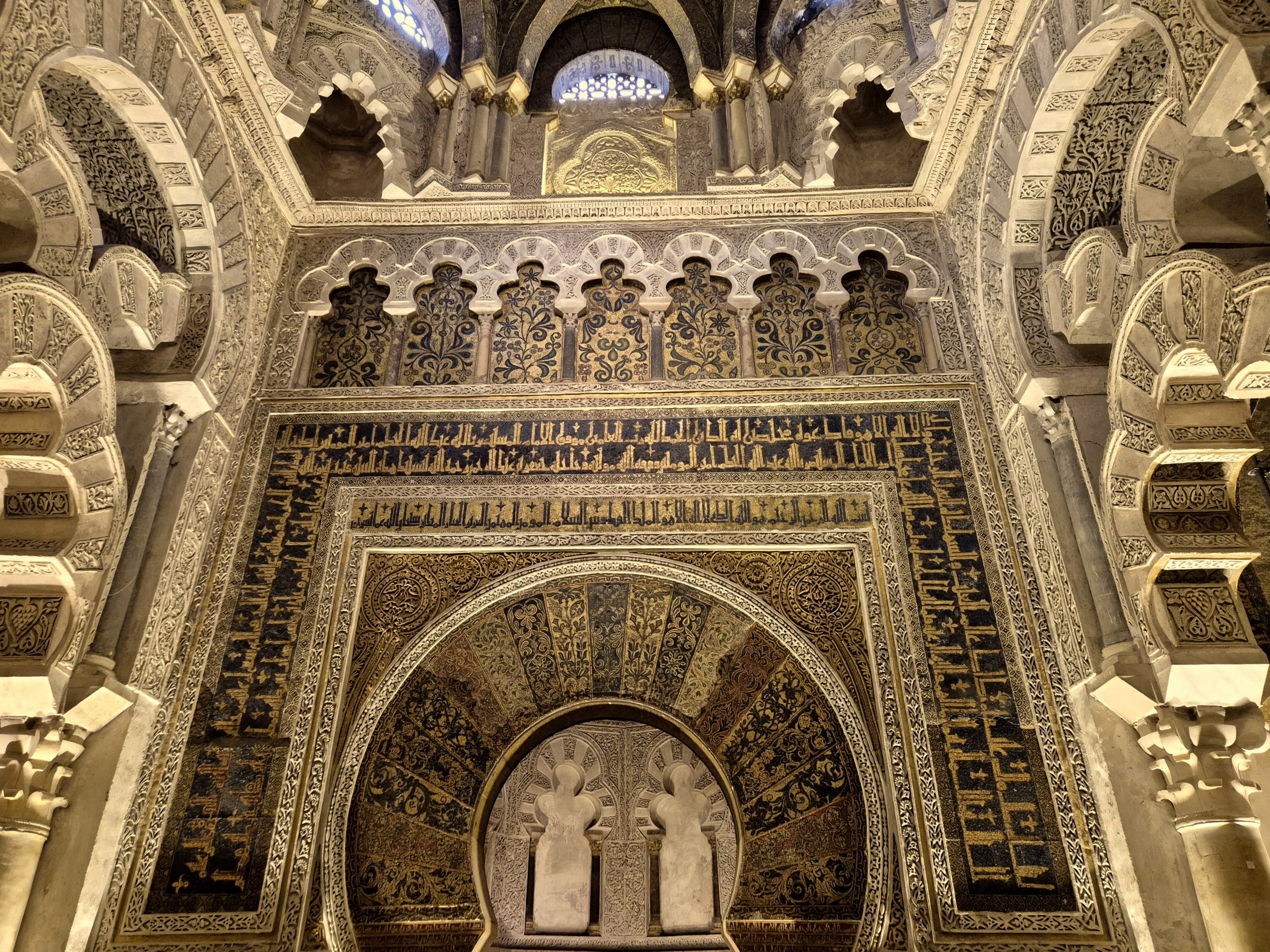
The Mezquita–Cathedral is the reason Córdoba exists on most itineraries, and it is the clearest possible statement of what this whole region is about. You enter through the Patio de los Naranjos, a courtyard planted in formal rows of orange trees, with the bell tower rising at one corner – a tower that grew, over the centuries, around and over the old minaret, the way so much here is built over rather than swept away.
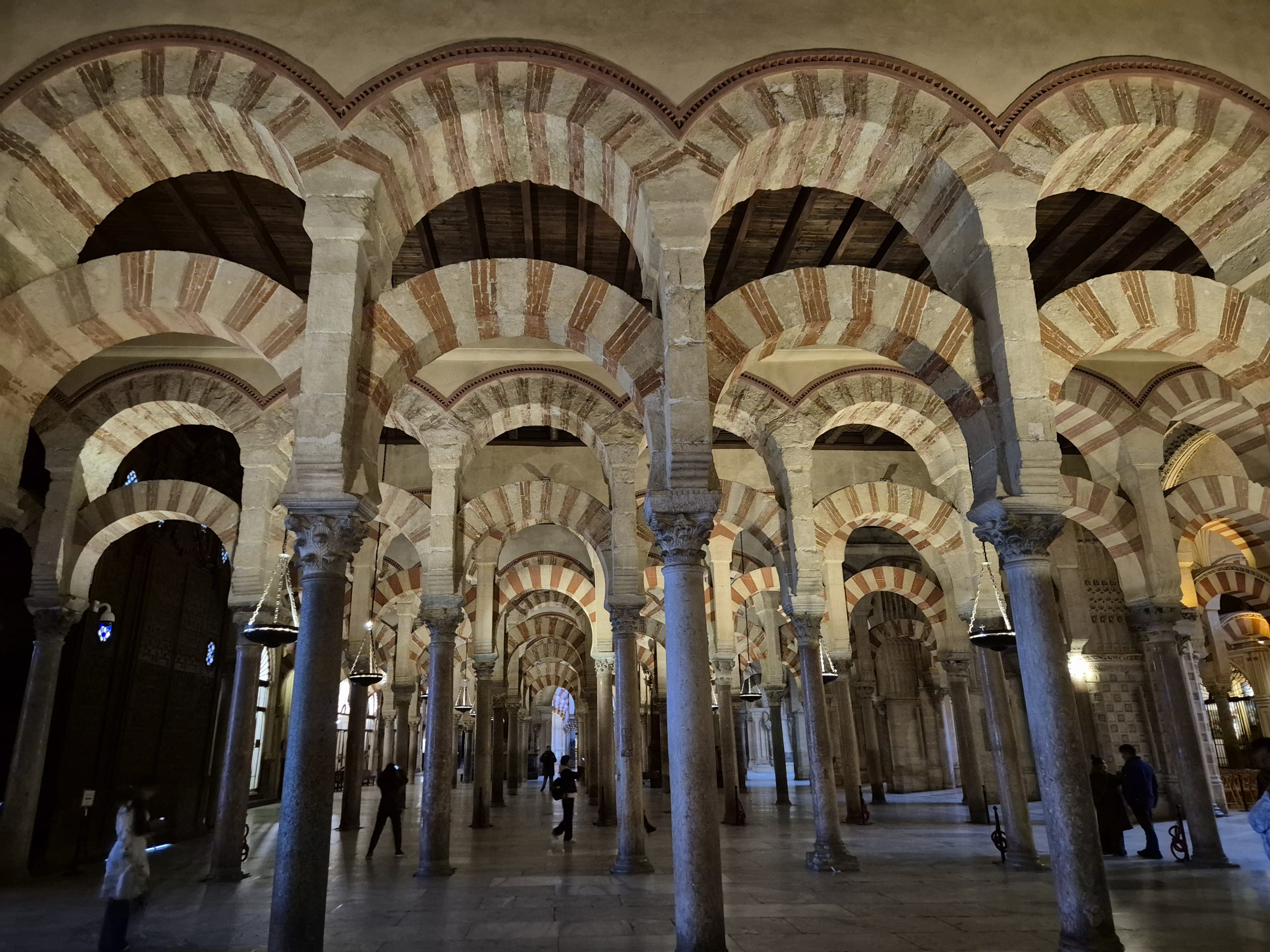
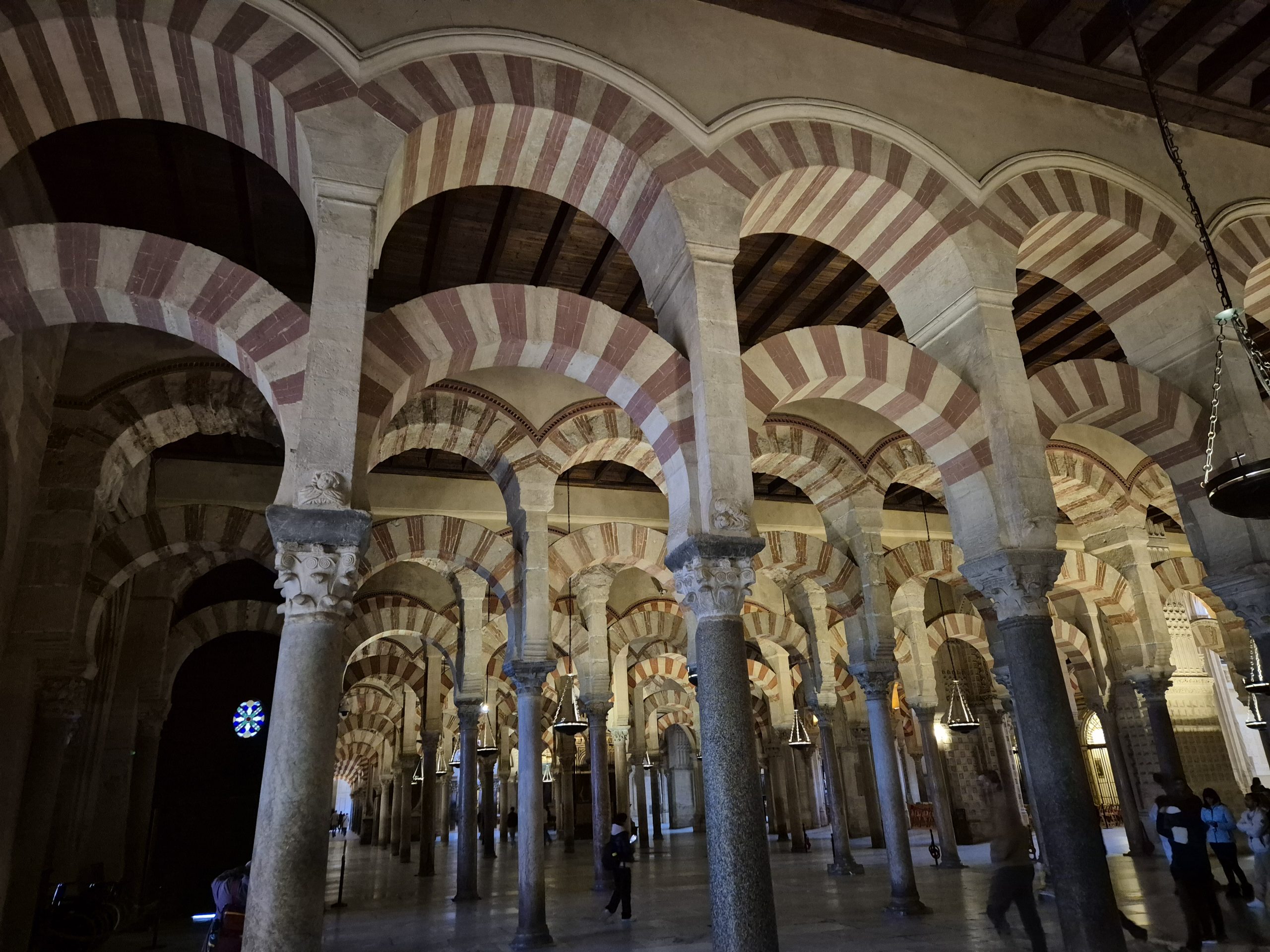
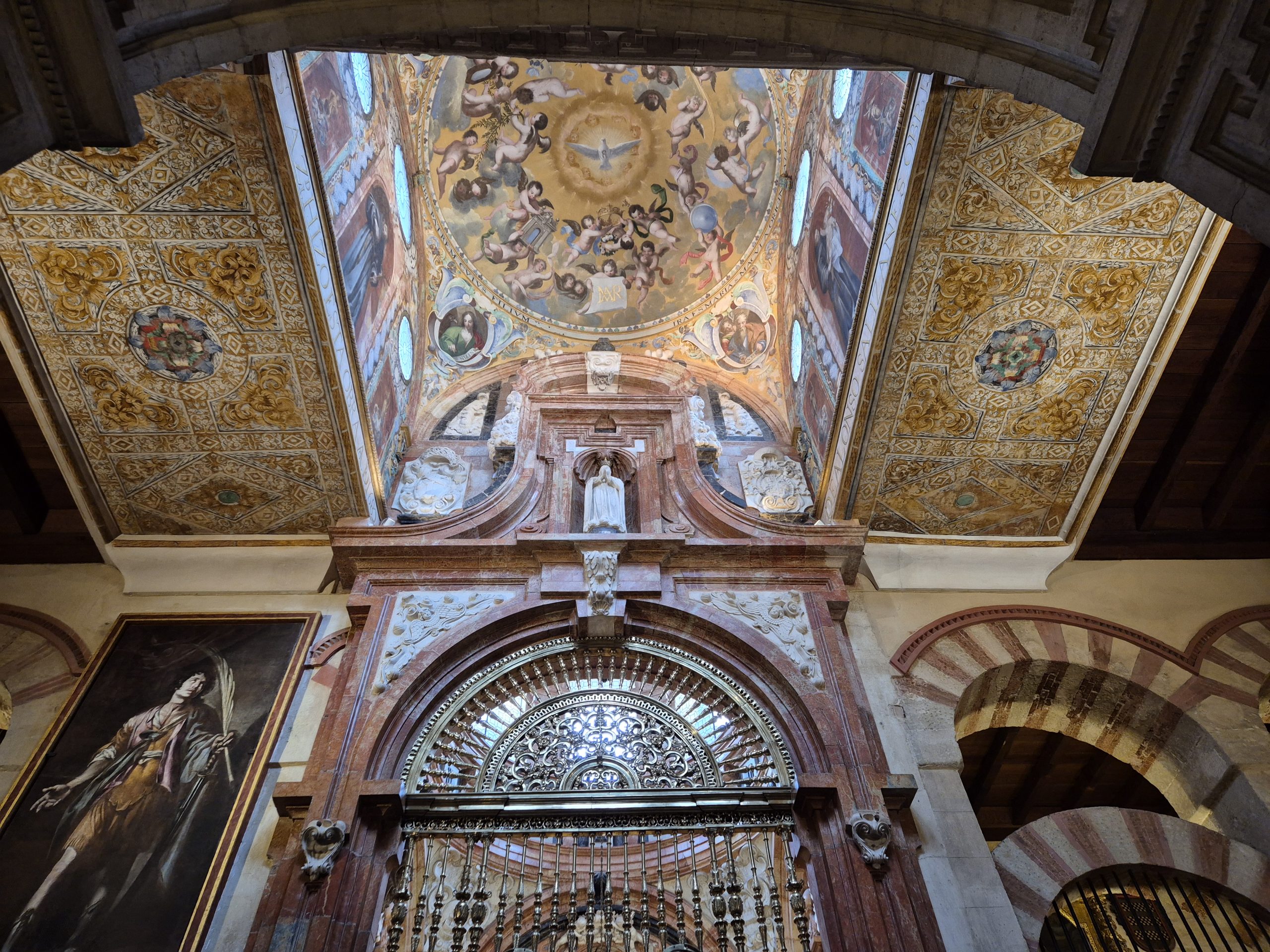
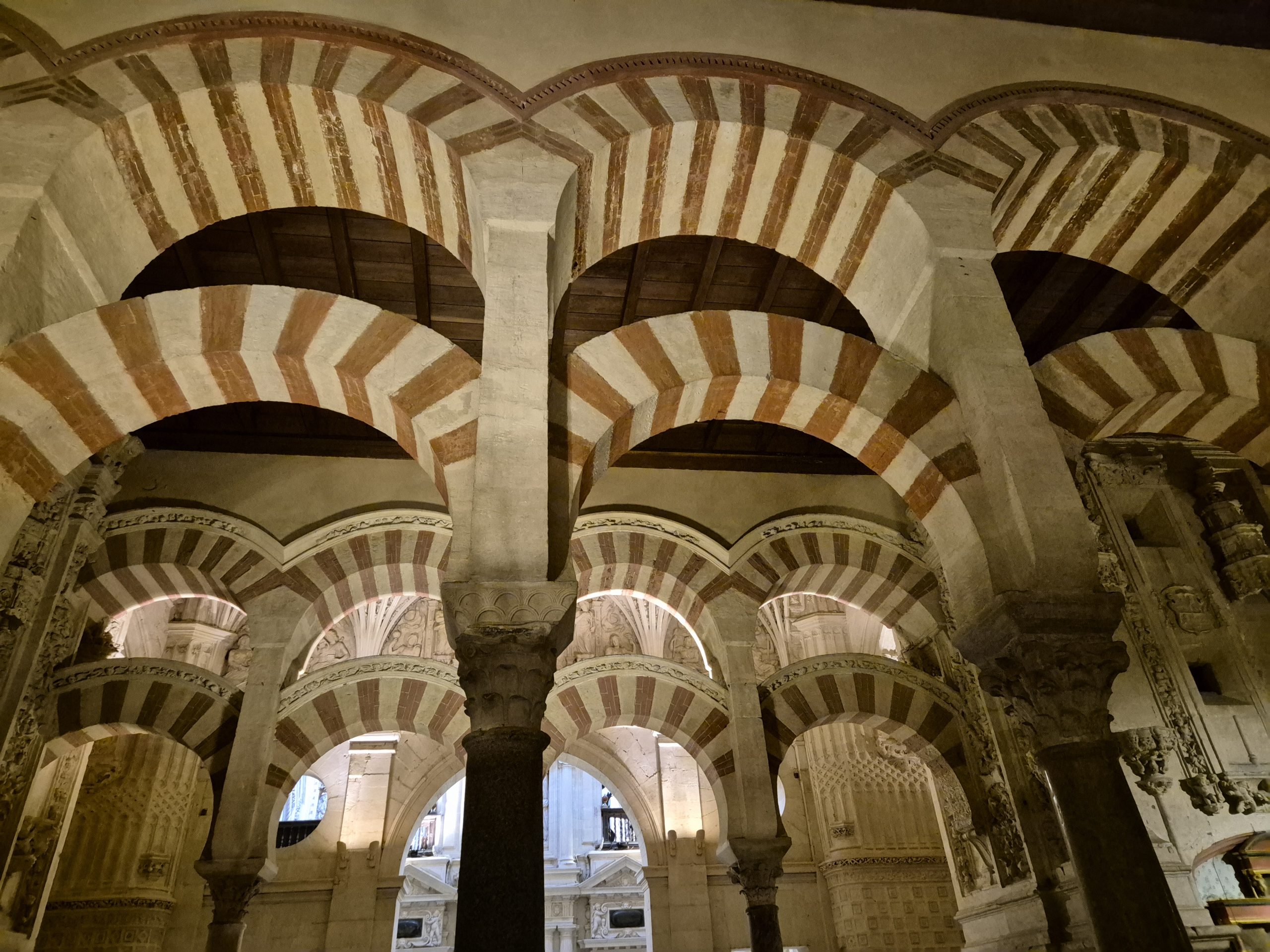
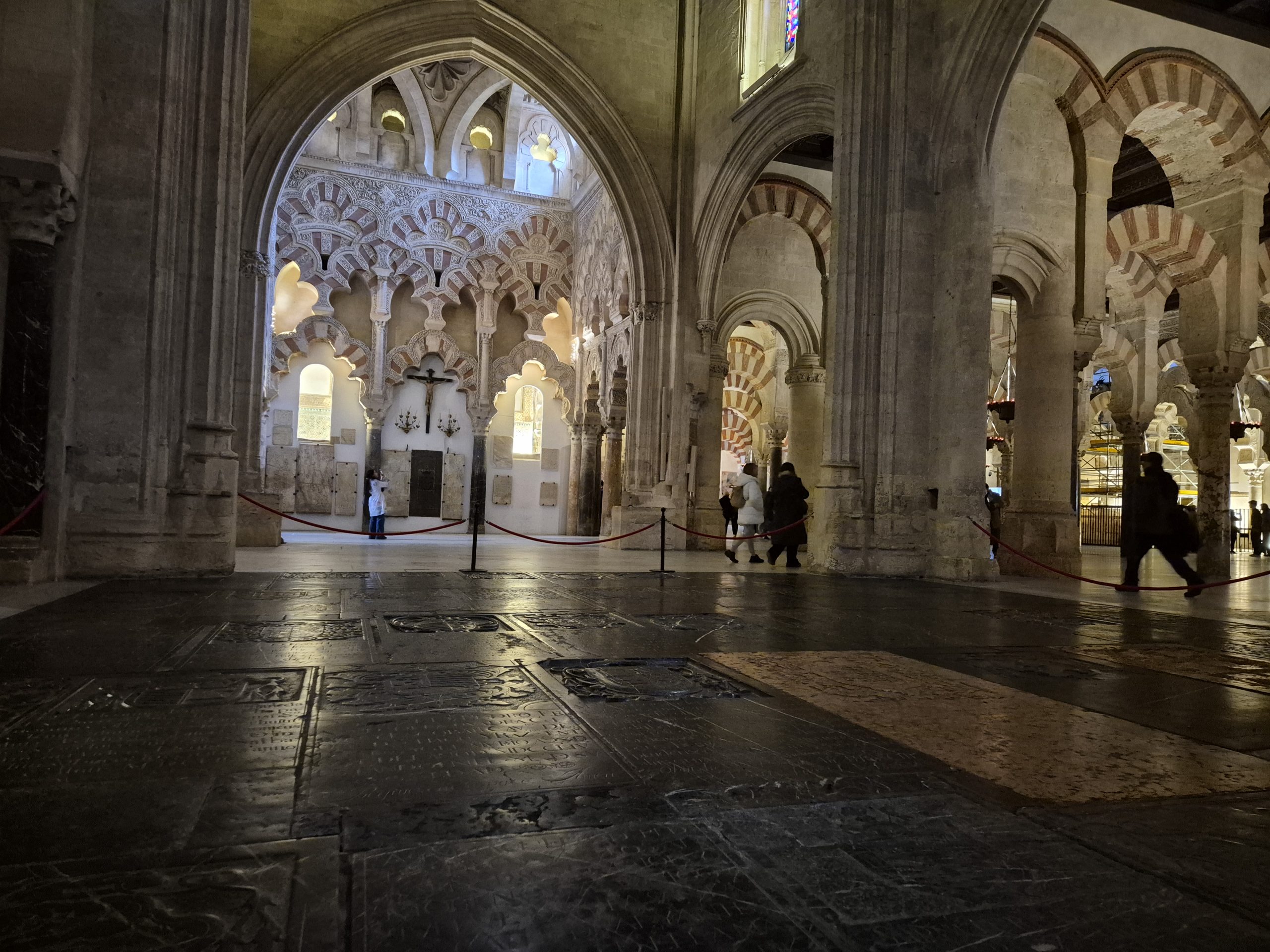
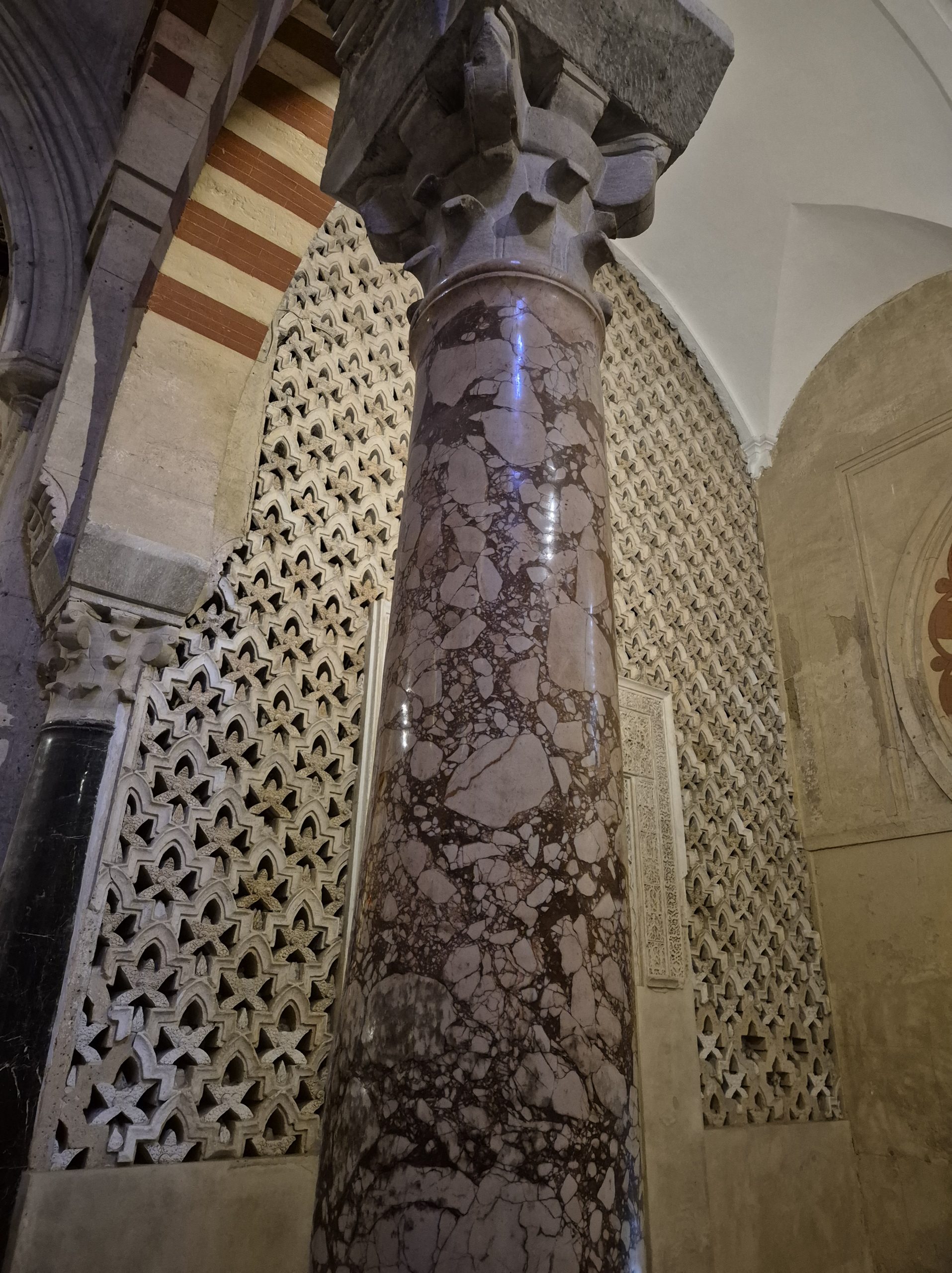
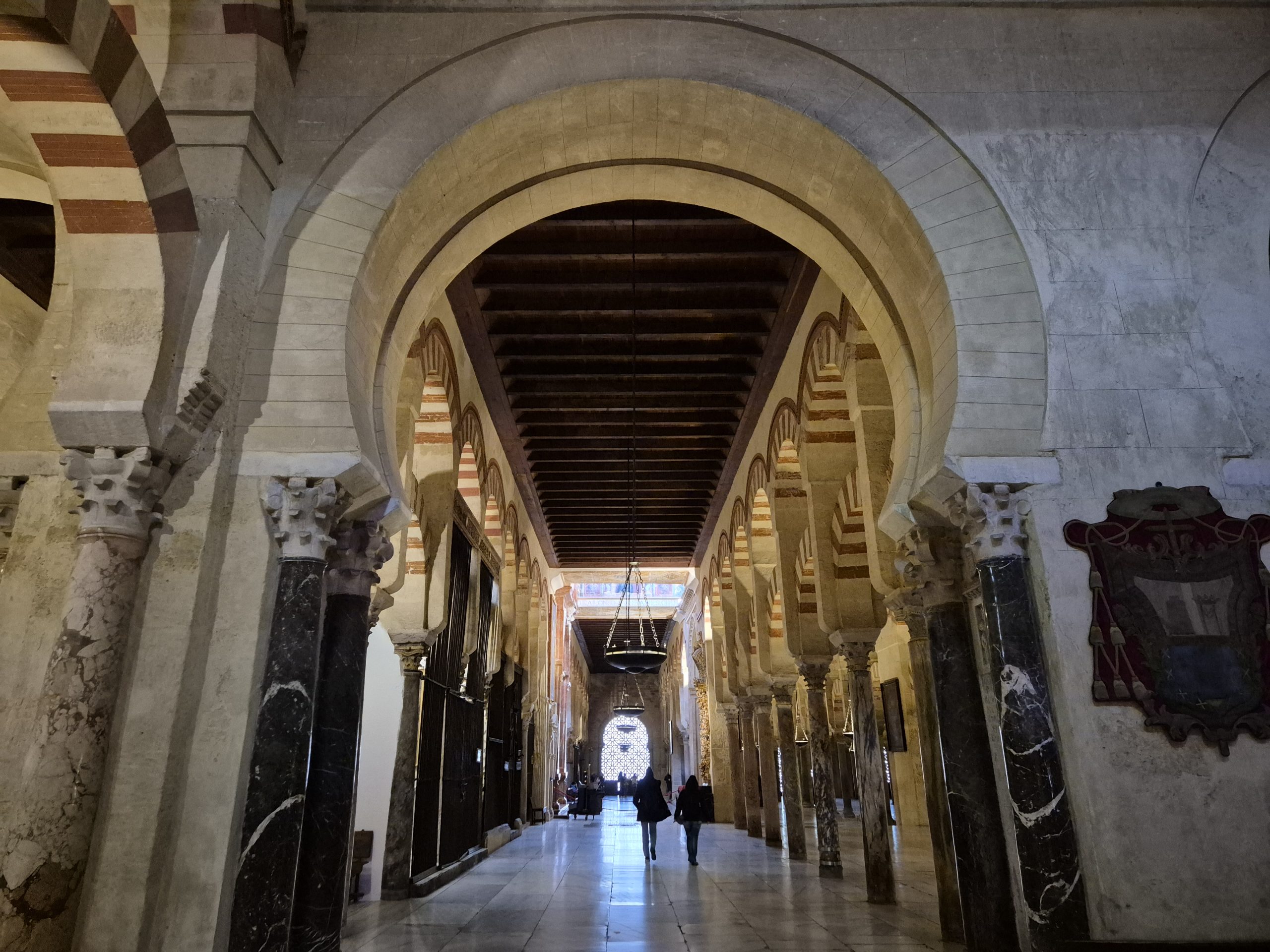
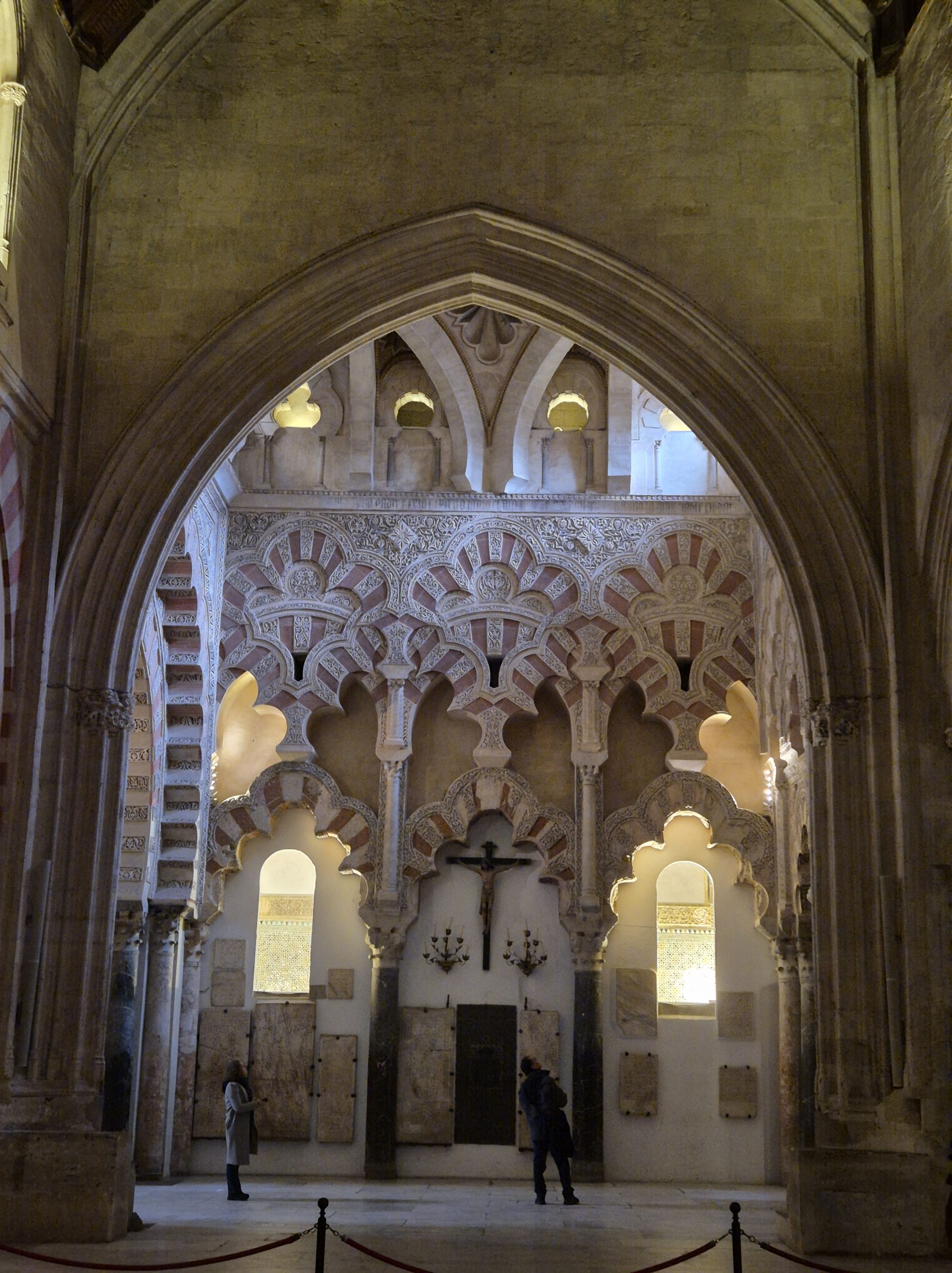
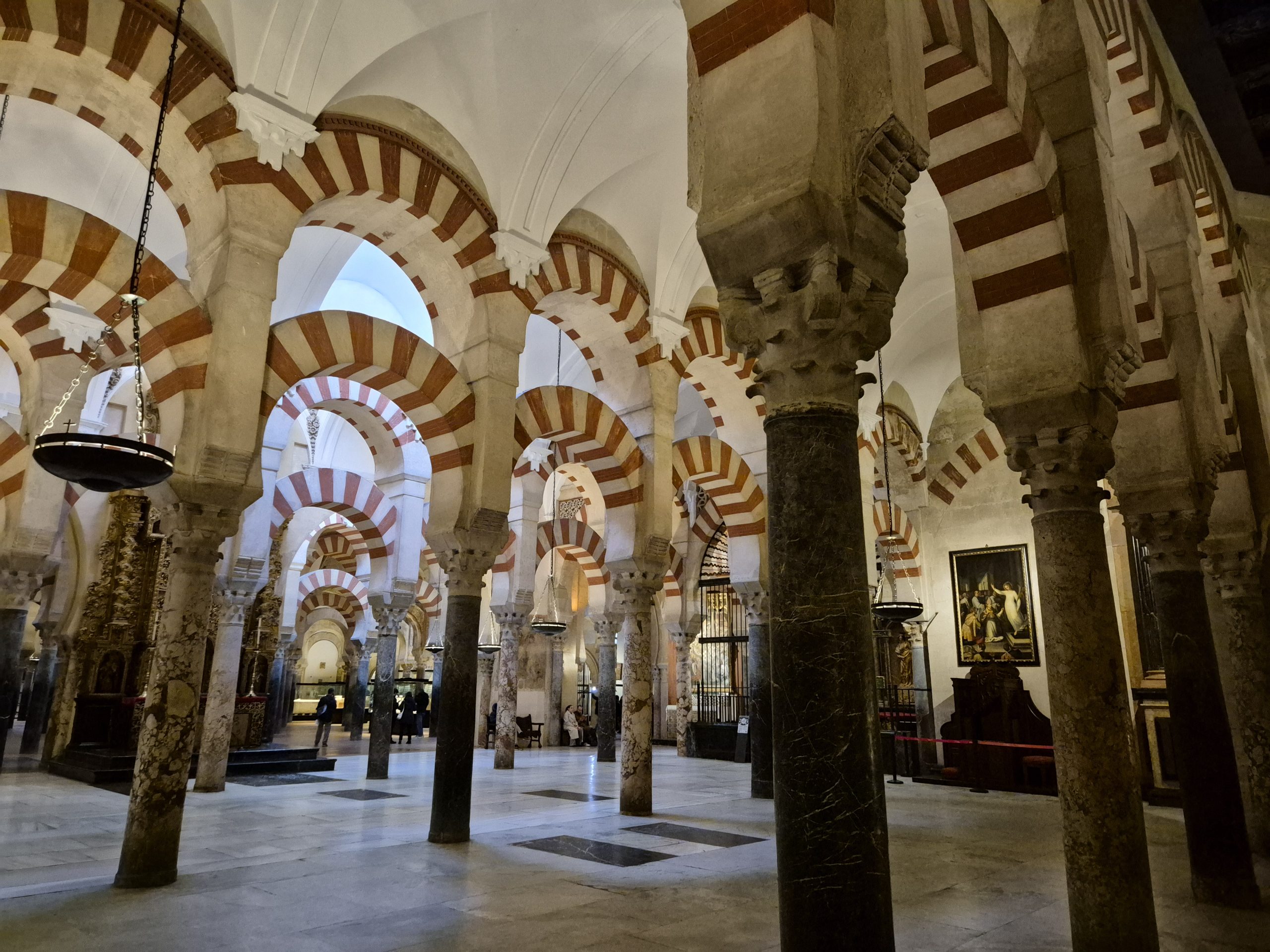
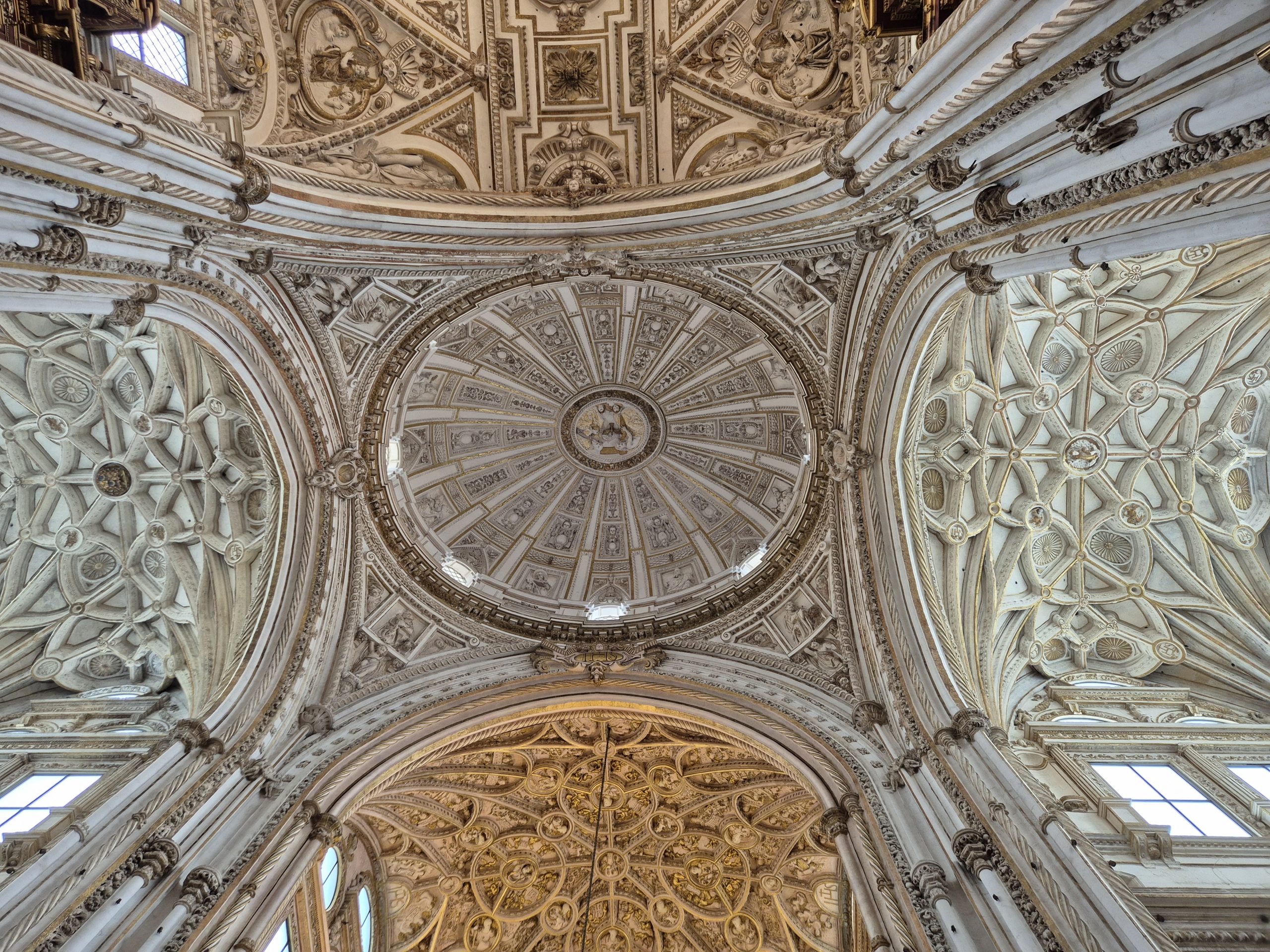
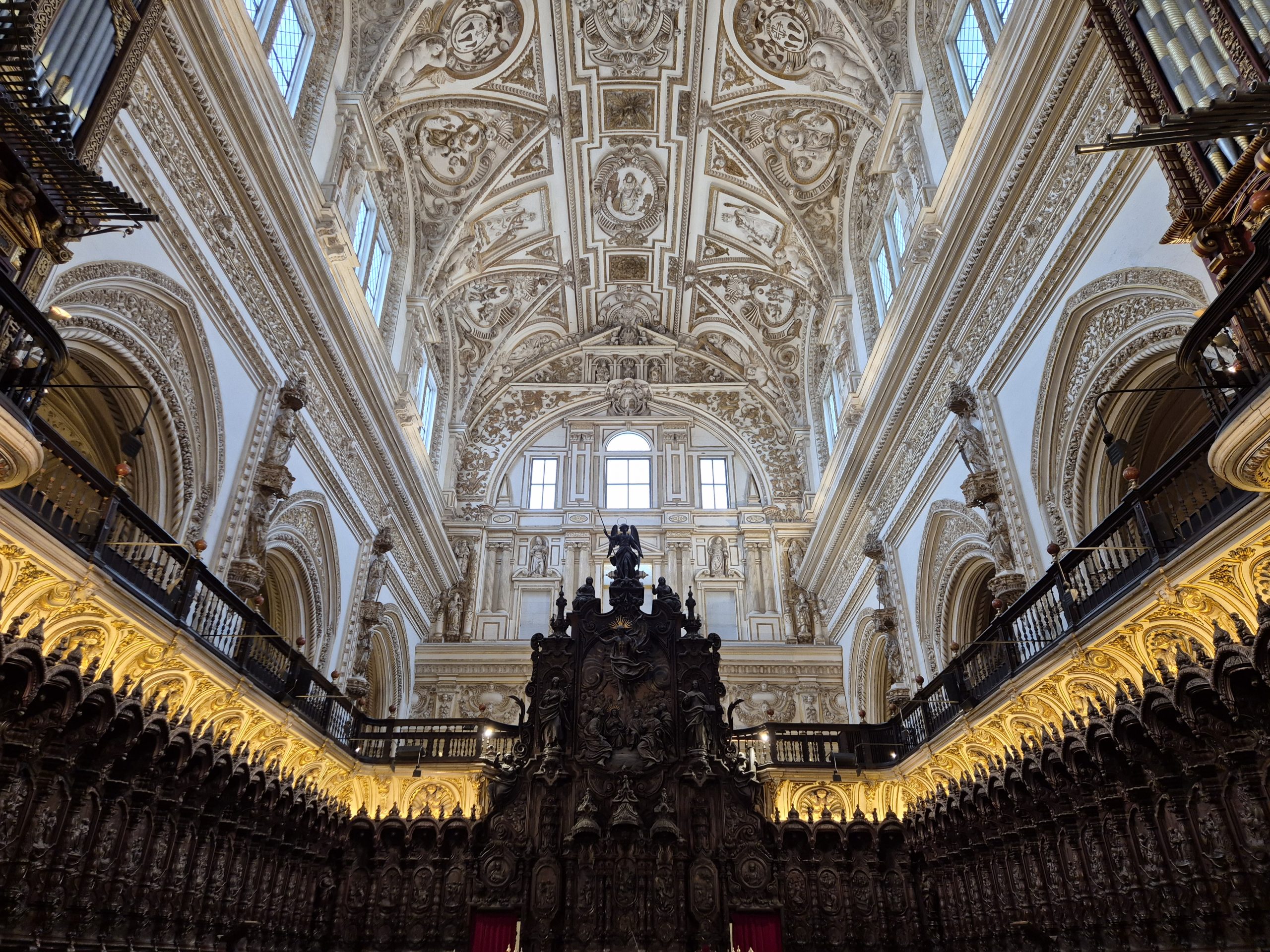
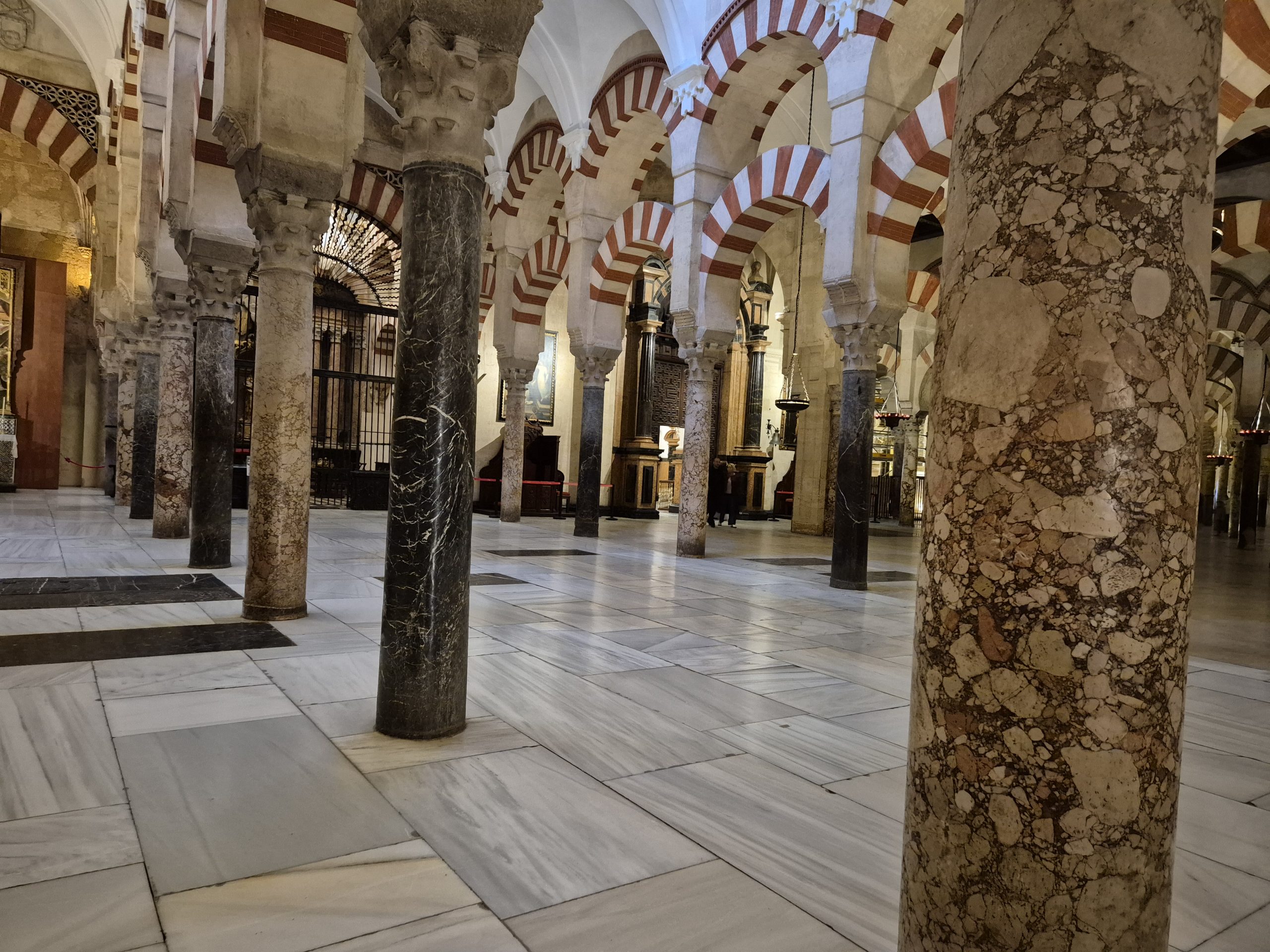
Inside is the famous forest: hundreds of double horseshoe arches in alternating red and white stone, marching away in every direction, endless and hypnotic, unmistakably a mosque. Columns of light and dark marble in different sections – many of them mismatched, no two quite the same, reused from the Roman and Visigothic buildings that stood here before. And then, somewhere near the center, a full Catholic cathedral erupts straight up out of the middle of it – a gilded altar, a soaring vaulted choir, baroque chapels with painted domes inserted into the spaces between the arches. Even the choir’s marble pulpits rest on carved animals – the bull, lion, eagle and angel of the four evangelists.
It is usually called “unique,” which is accurate but insufficient. What strikes you is not that one faith replaced another, but that one was built directly inside the other and left there. The effect is magnificent and faintly uneasy at the same time. It is less a blend than a layering – a building that refuses to choose. I mused as I walked through, the weight of the centuries pressing in on me. Wondered about the need for one to conquer and dominate another. Building on top of already bygone civilizations is one thing. But to go to such lengths to erase and subsume the culture they had only just conquered, such as the Christians did to the Moors – there is a latent brutality in these buildings. Not evil, but without empathy. I read later that the erasure had in fact run both ways: the mosque itself had risen over an earlier Christian church, its reused columns stripped of the Christian carvings they once bore.
The Roman Bridge over the Guadalquivir
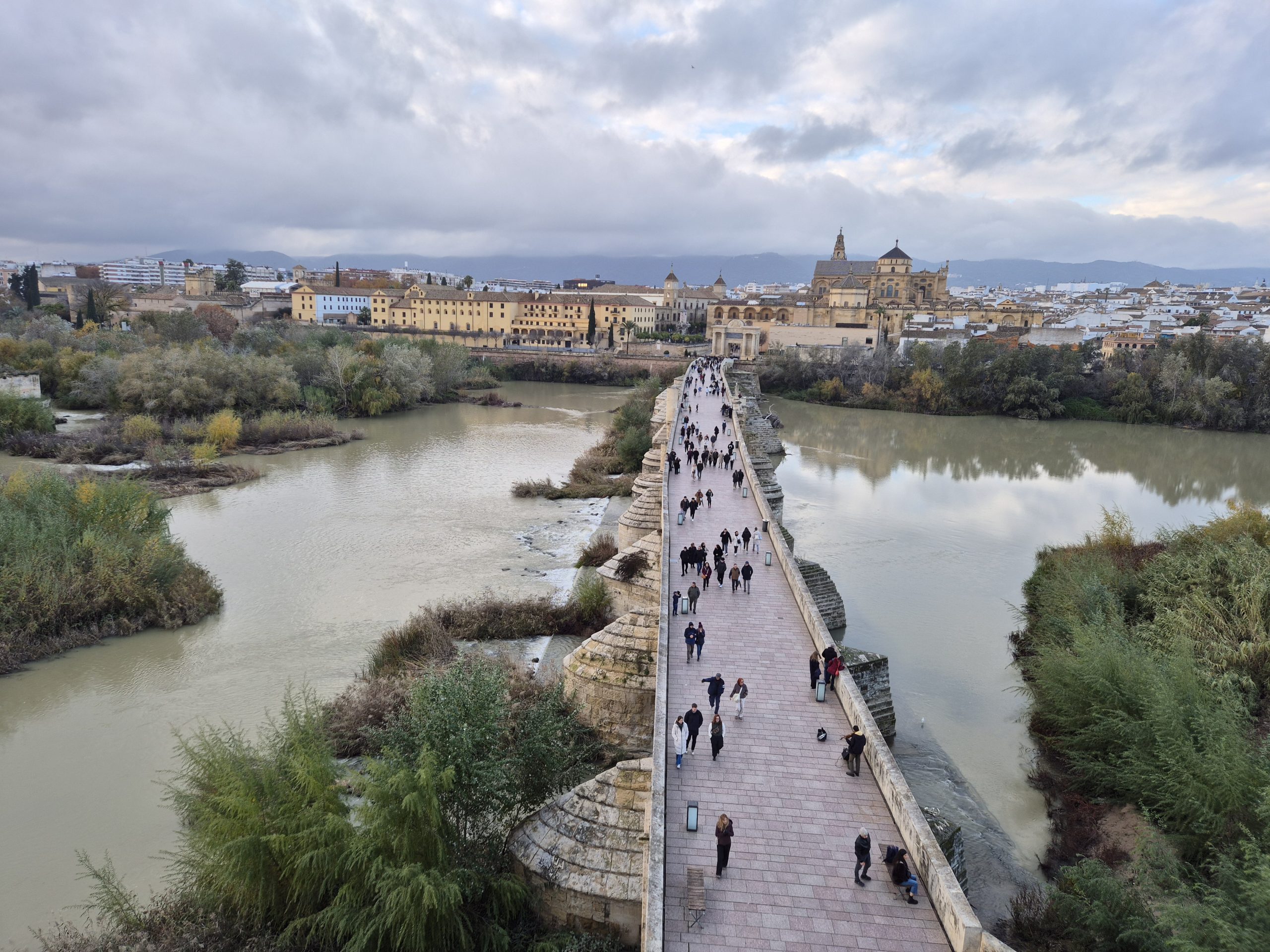
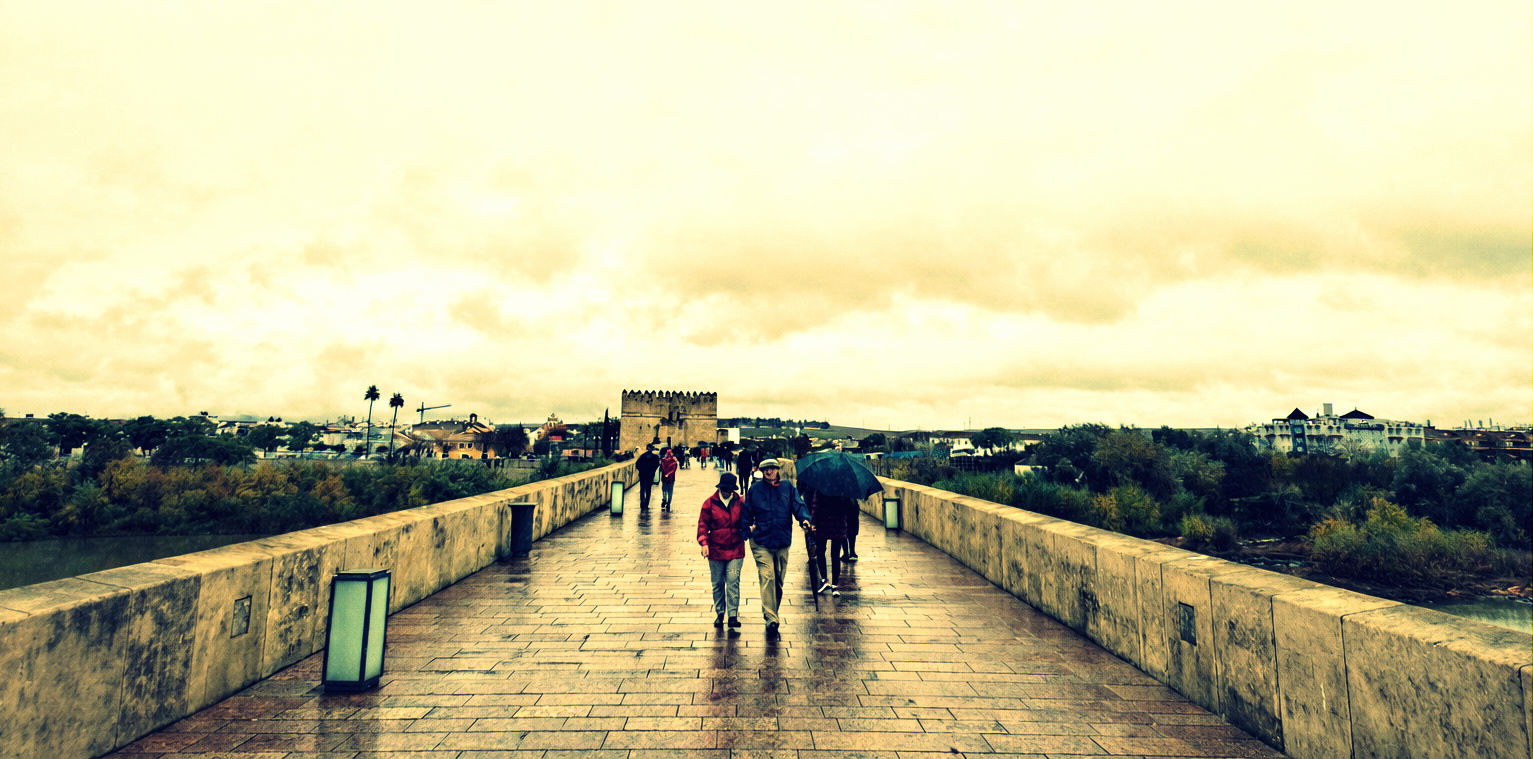
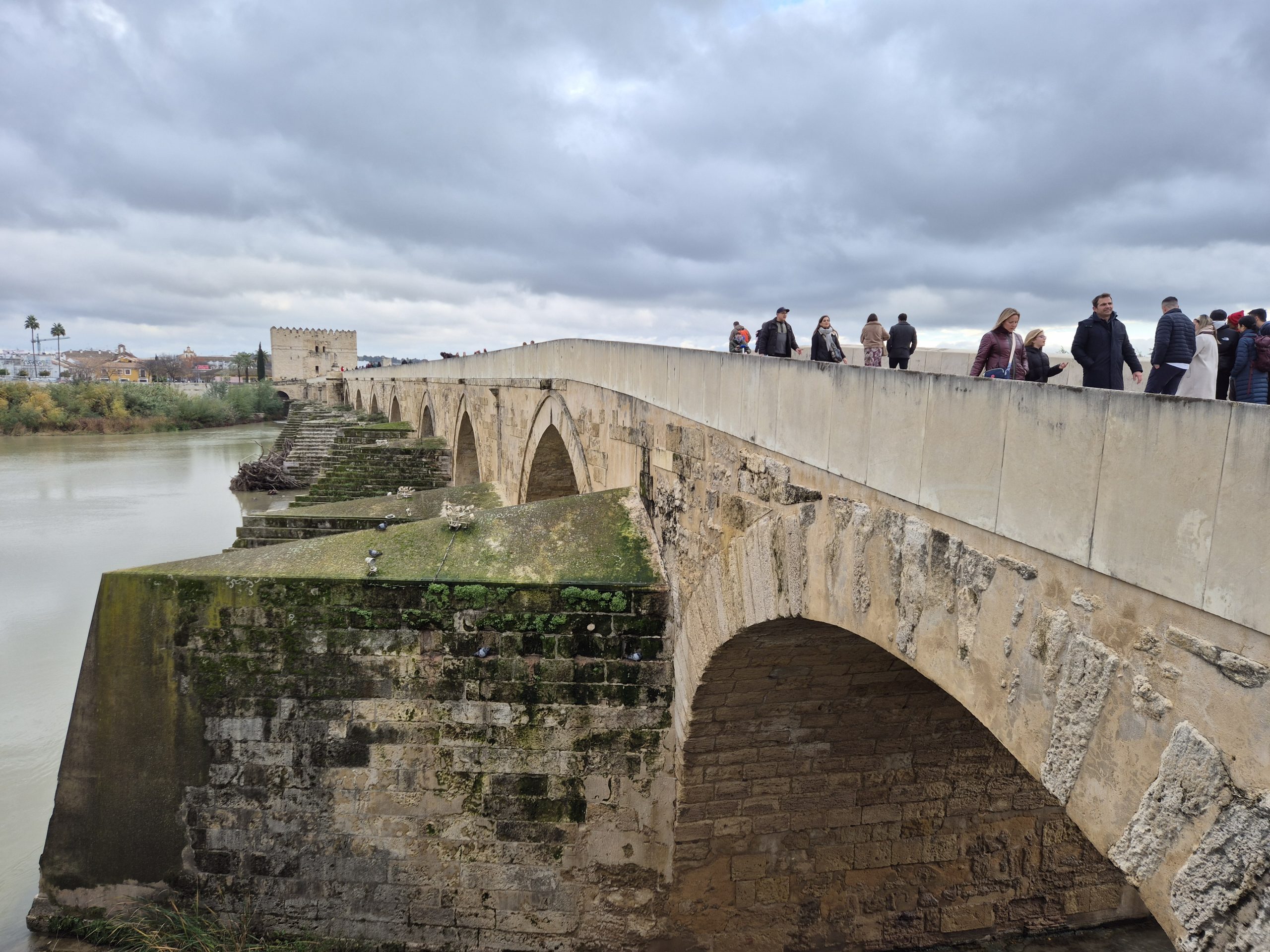
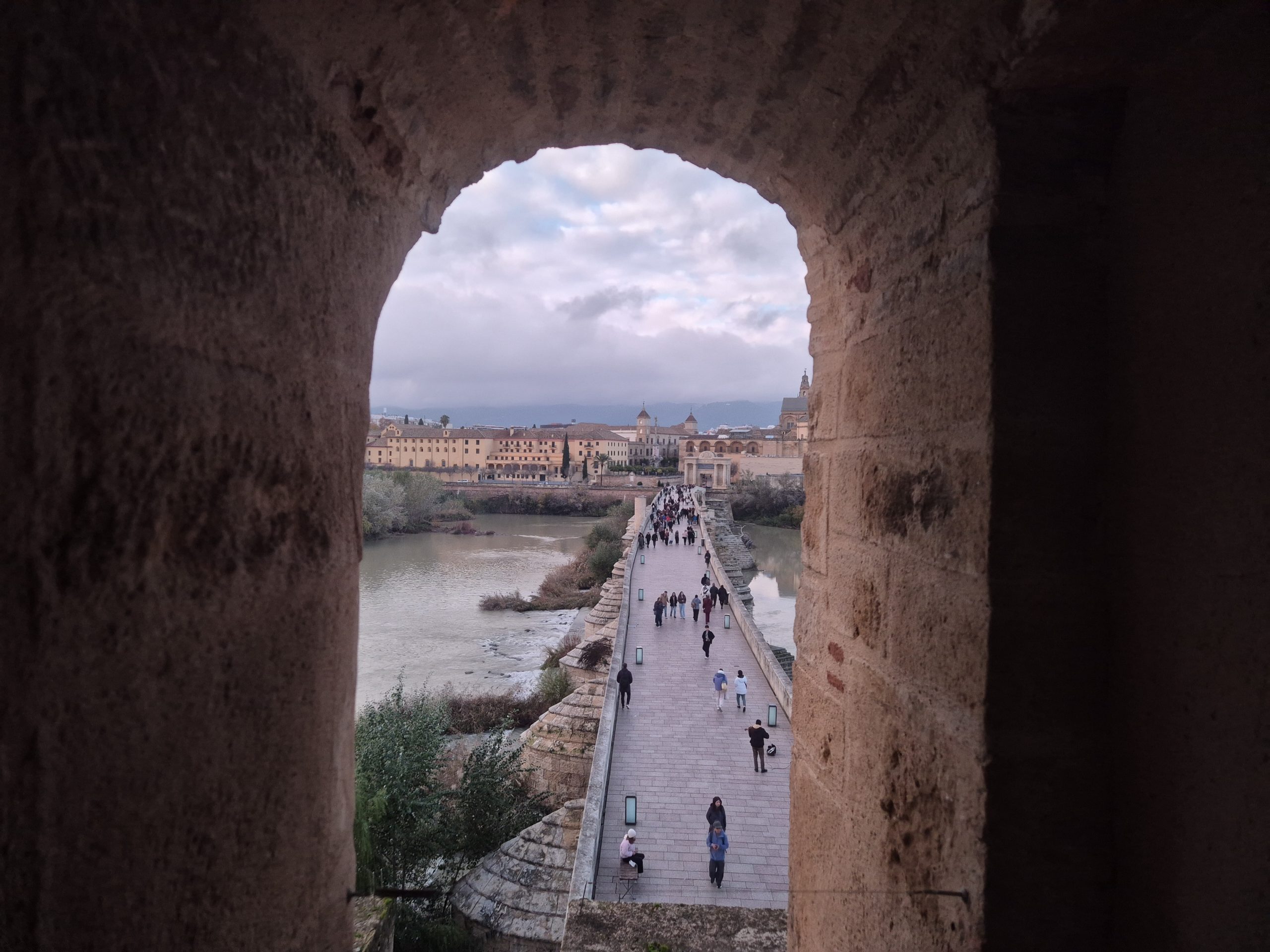
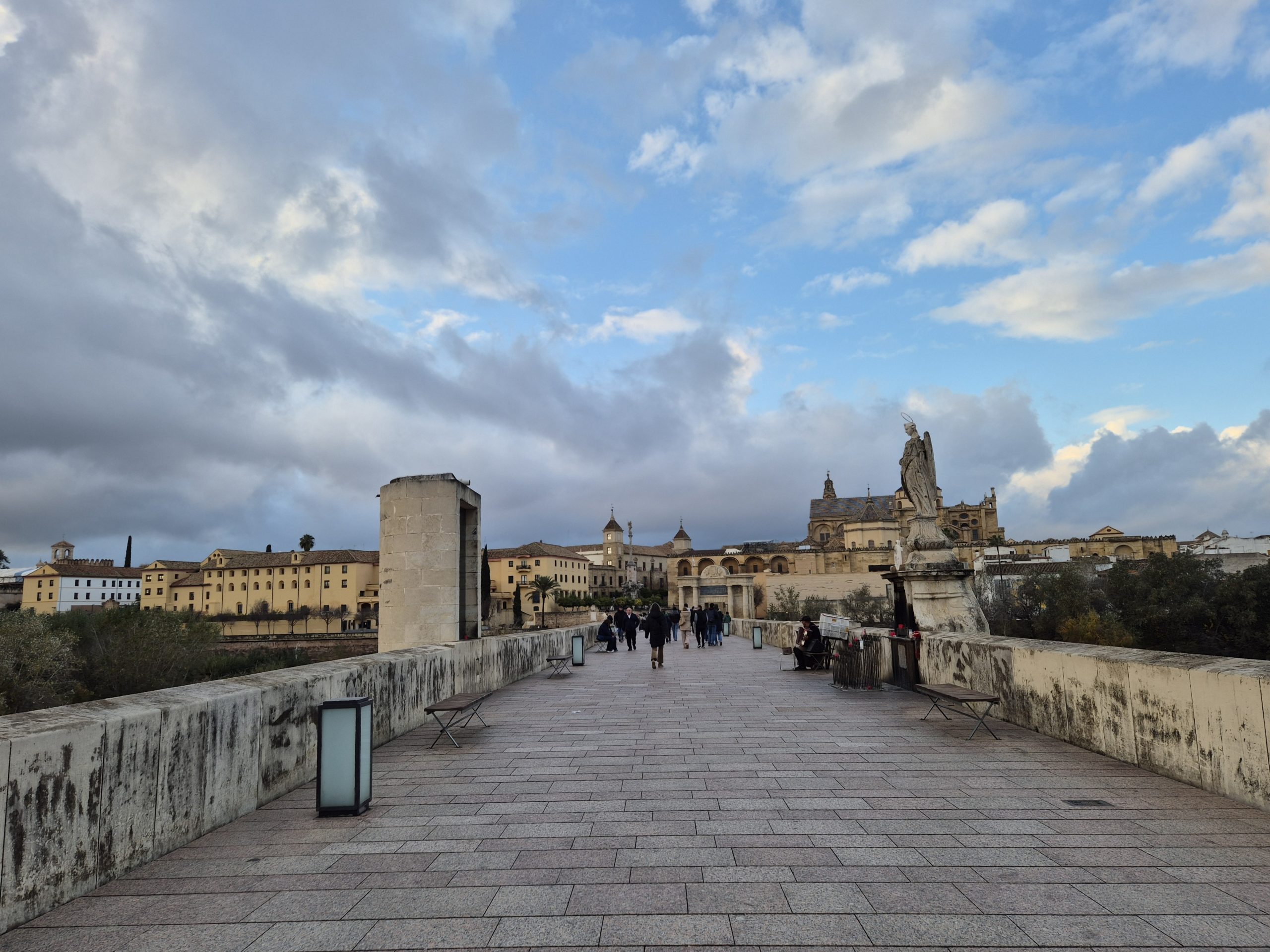
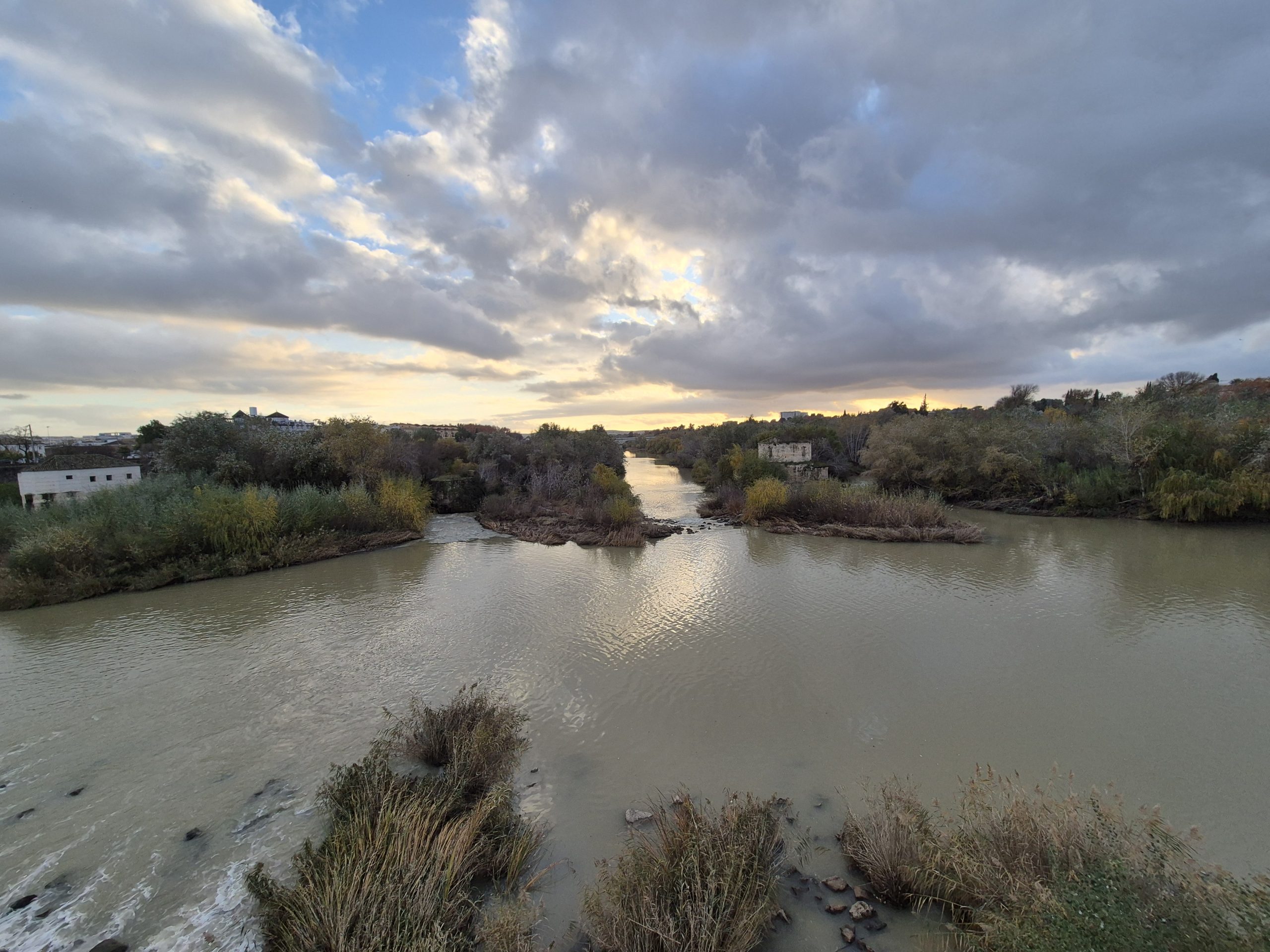
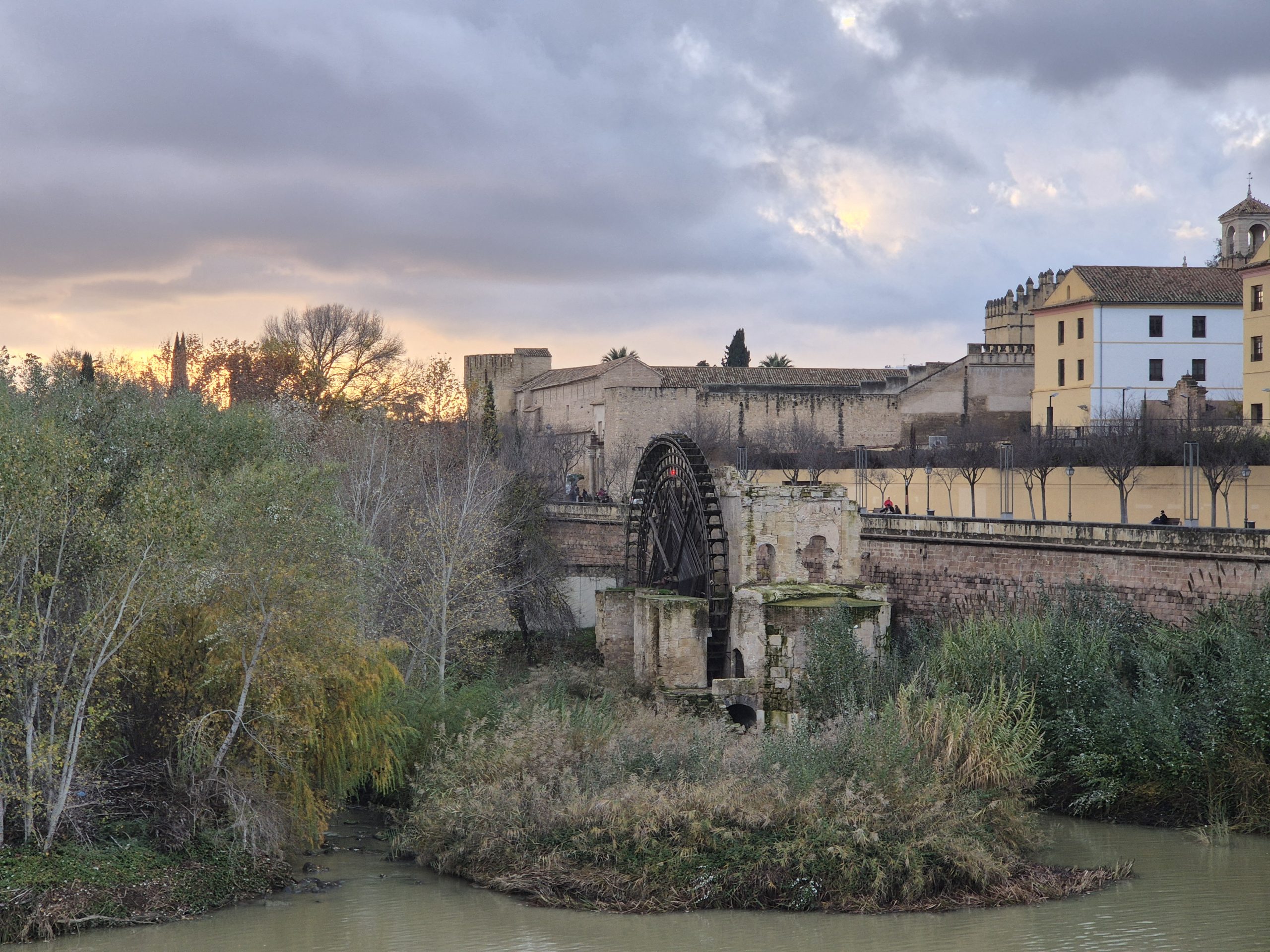
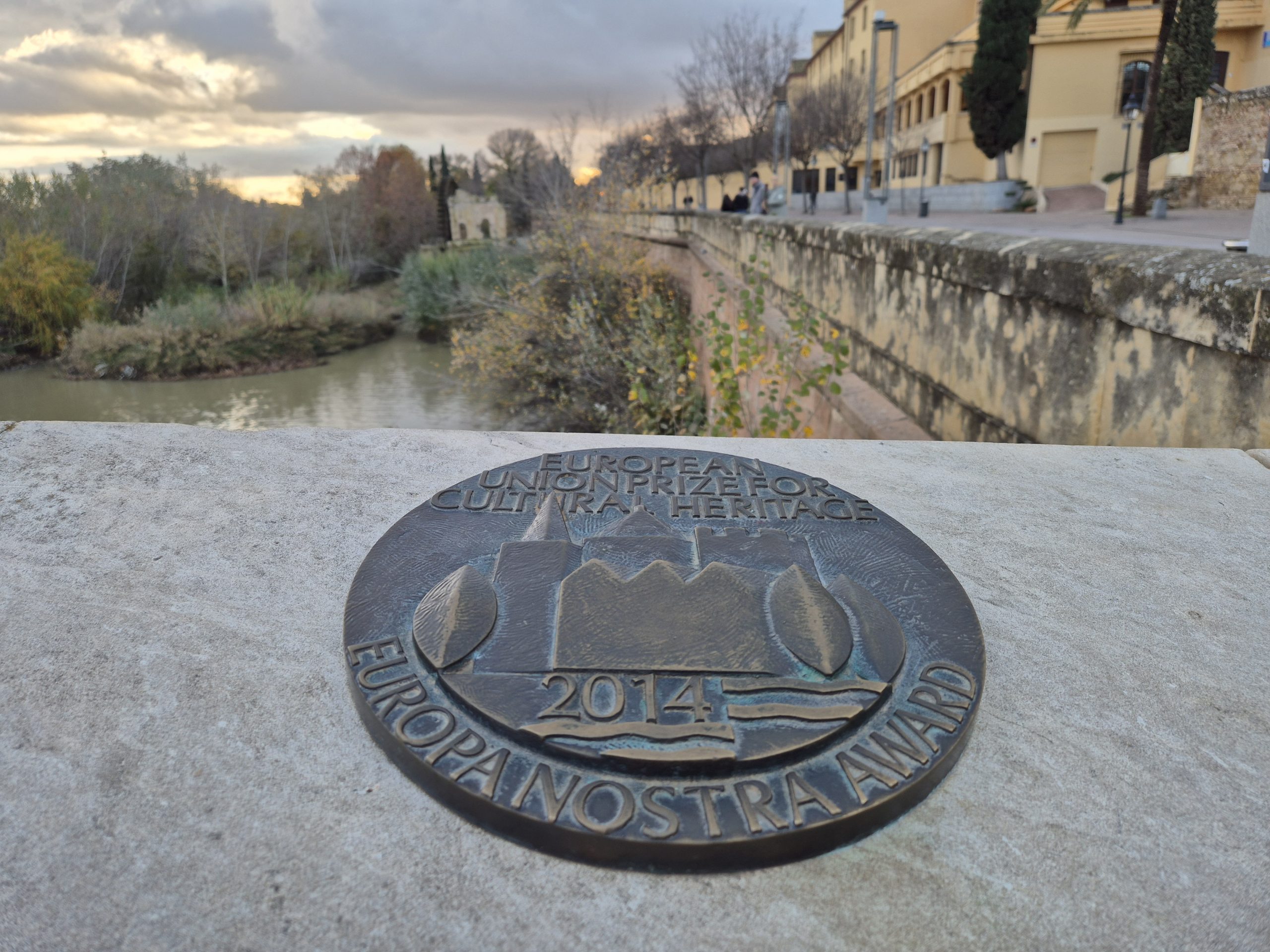
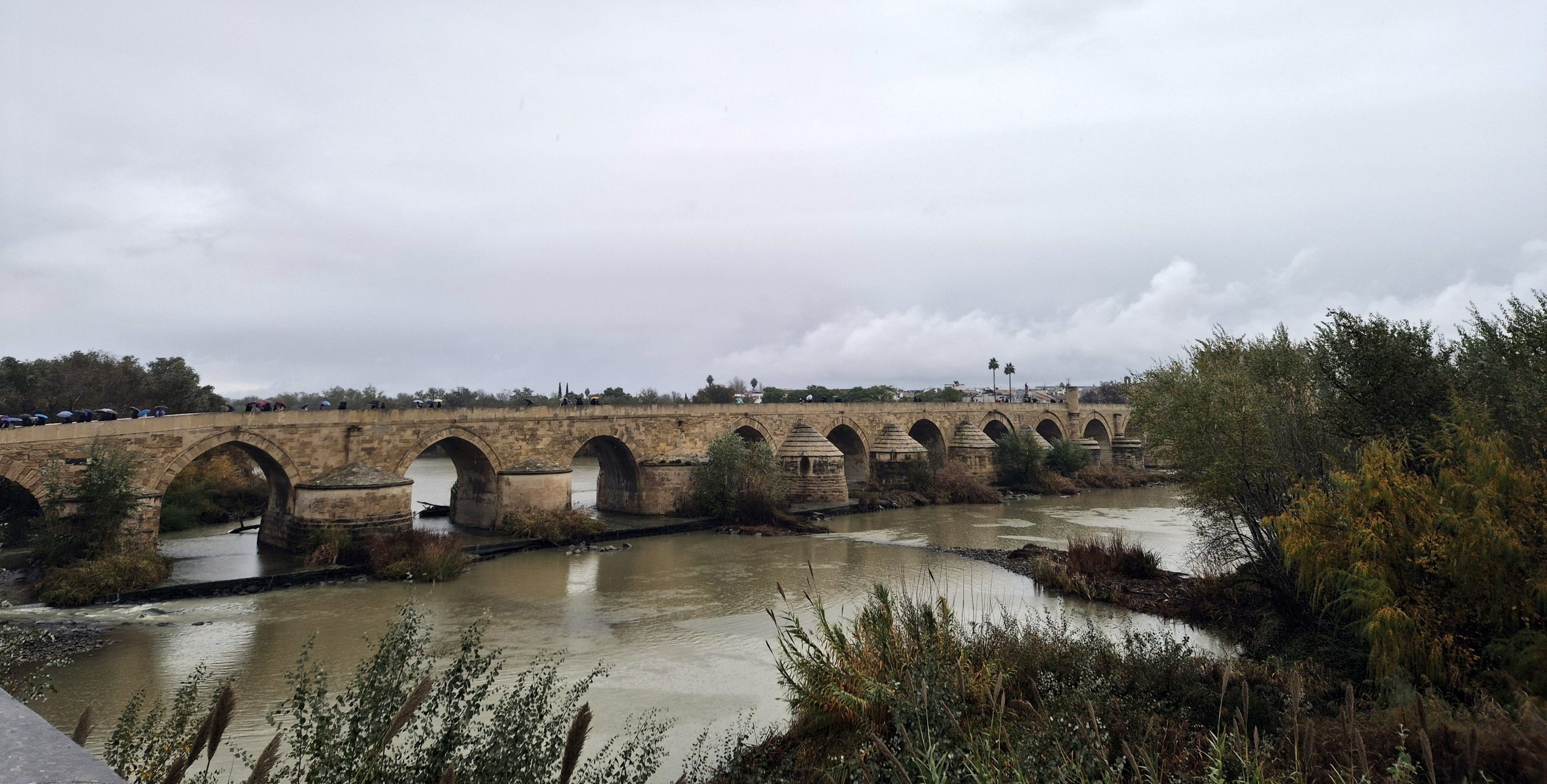
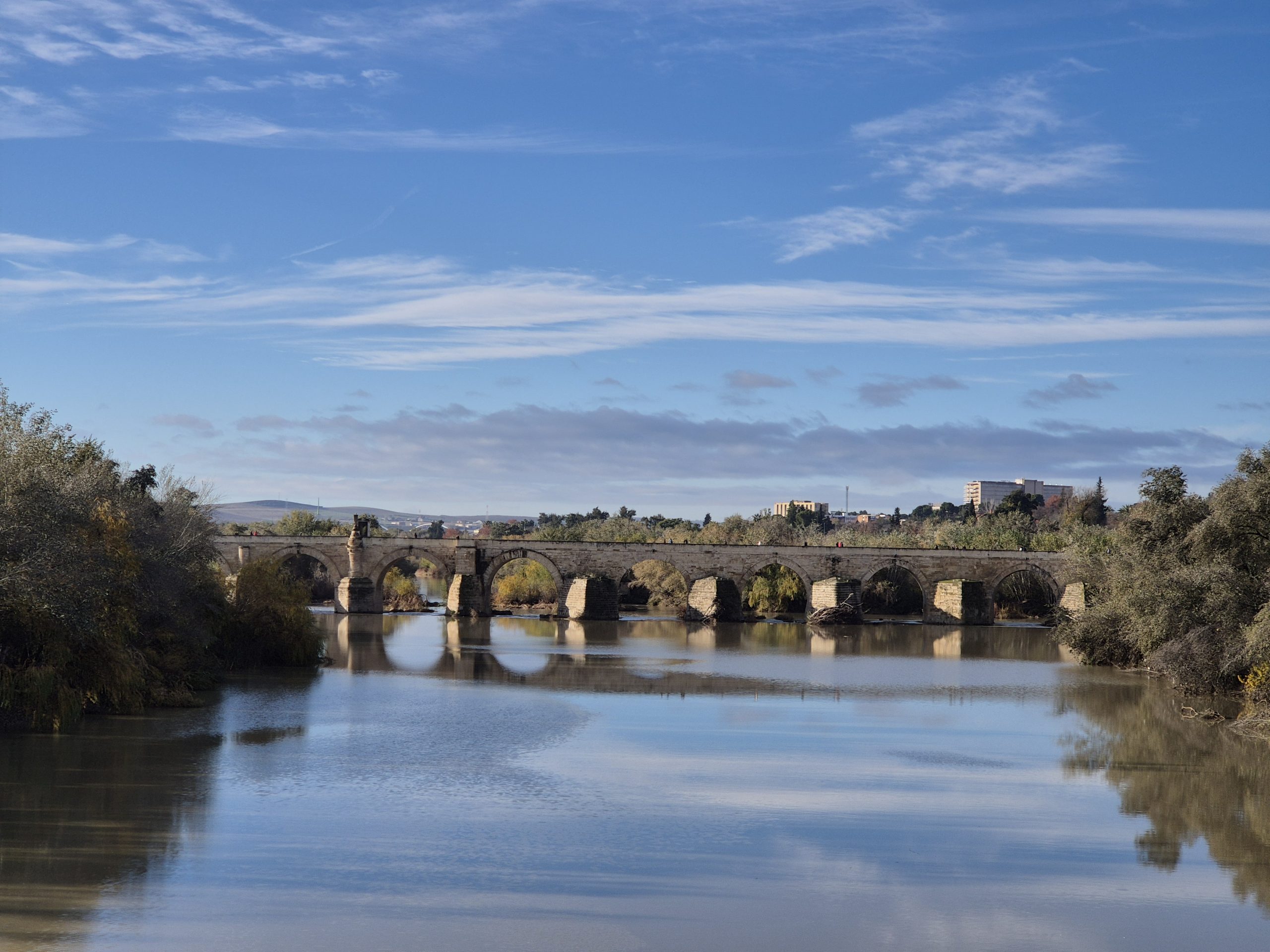
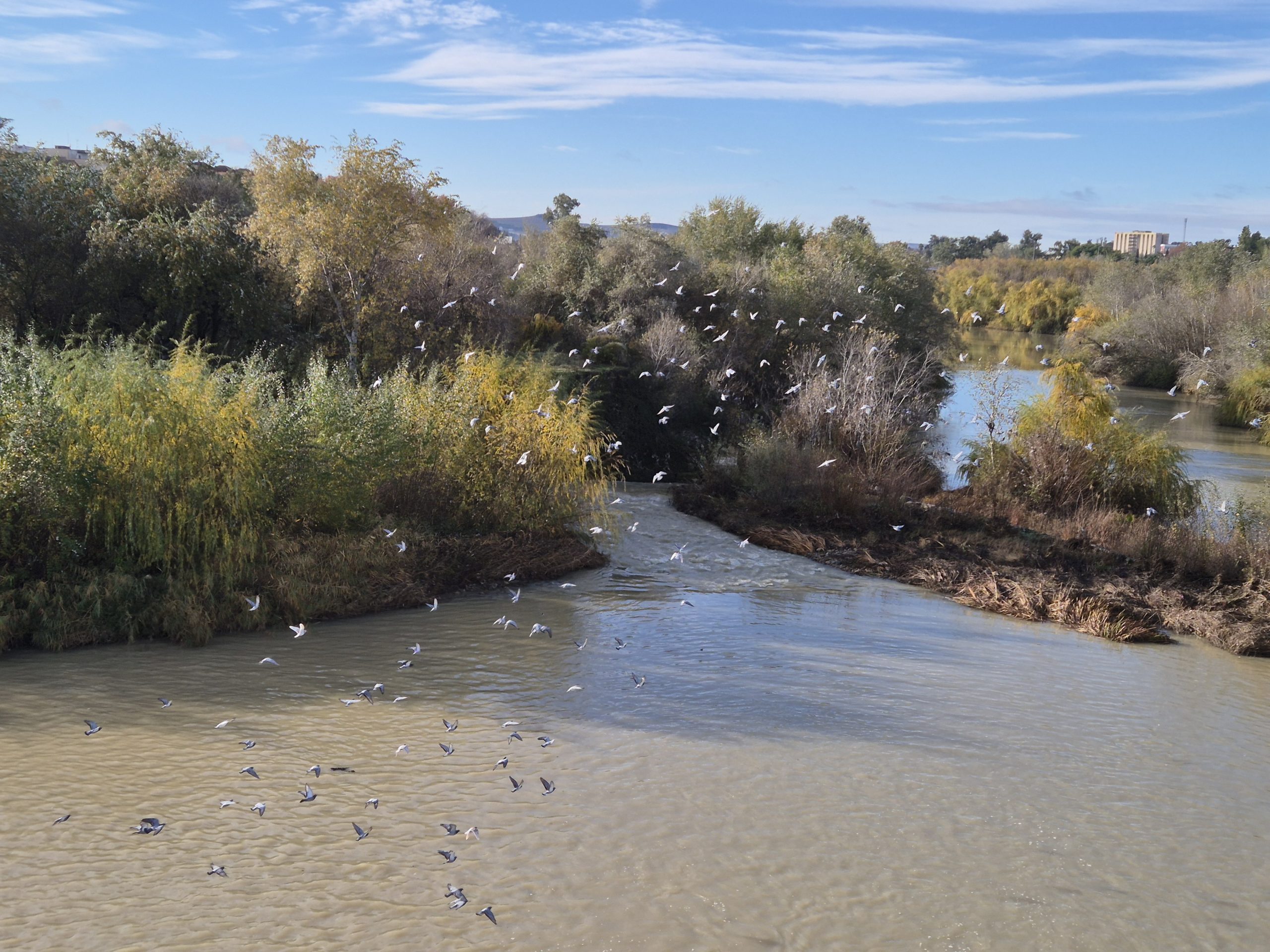
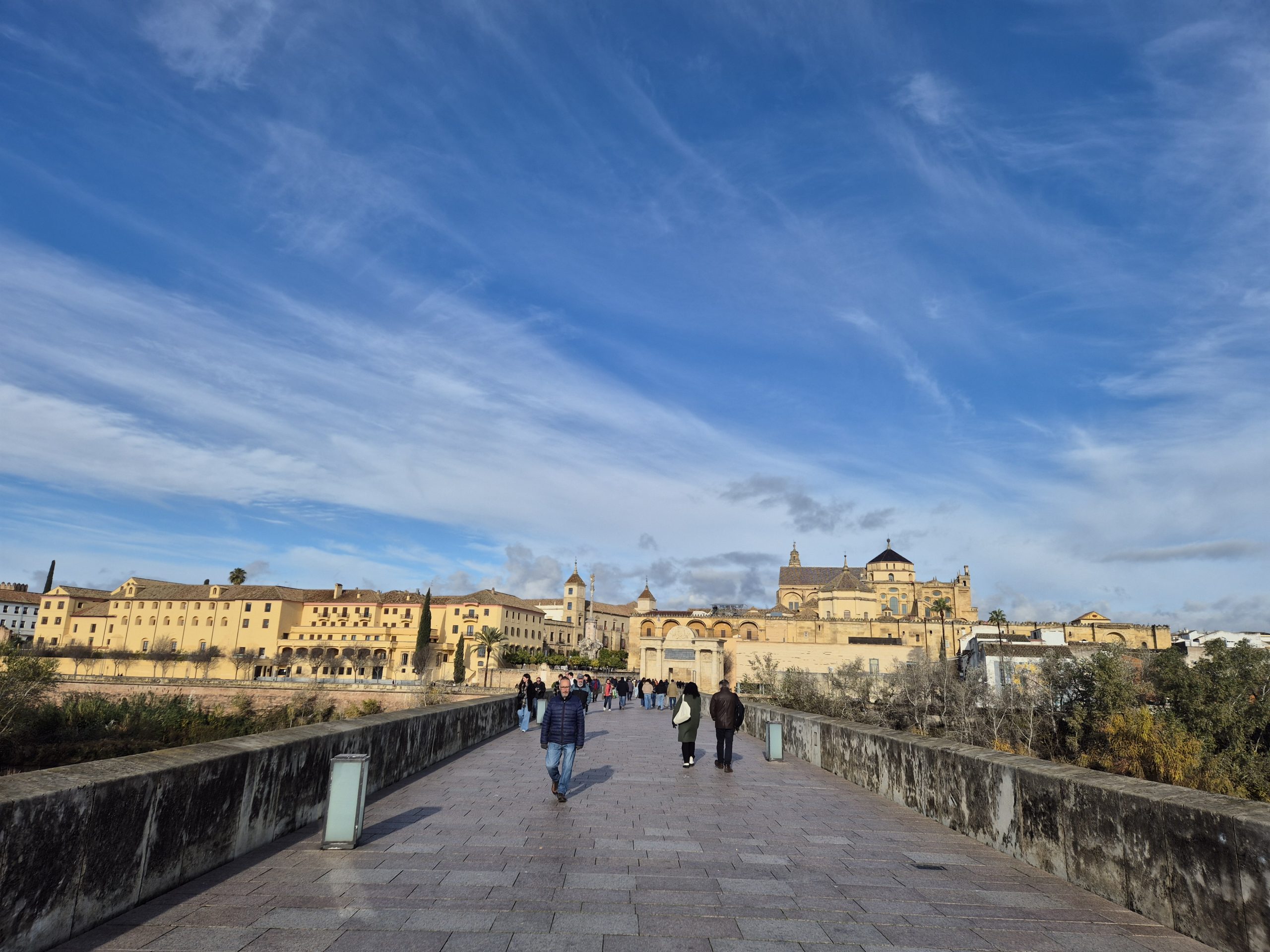
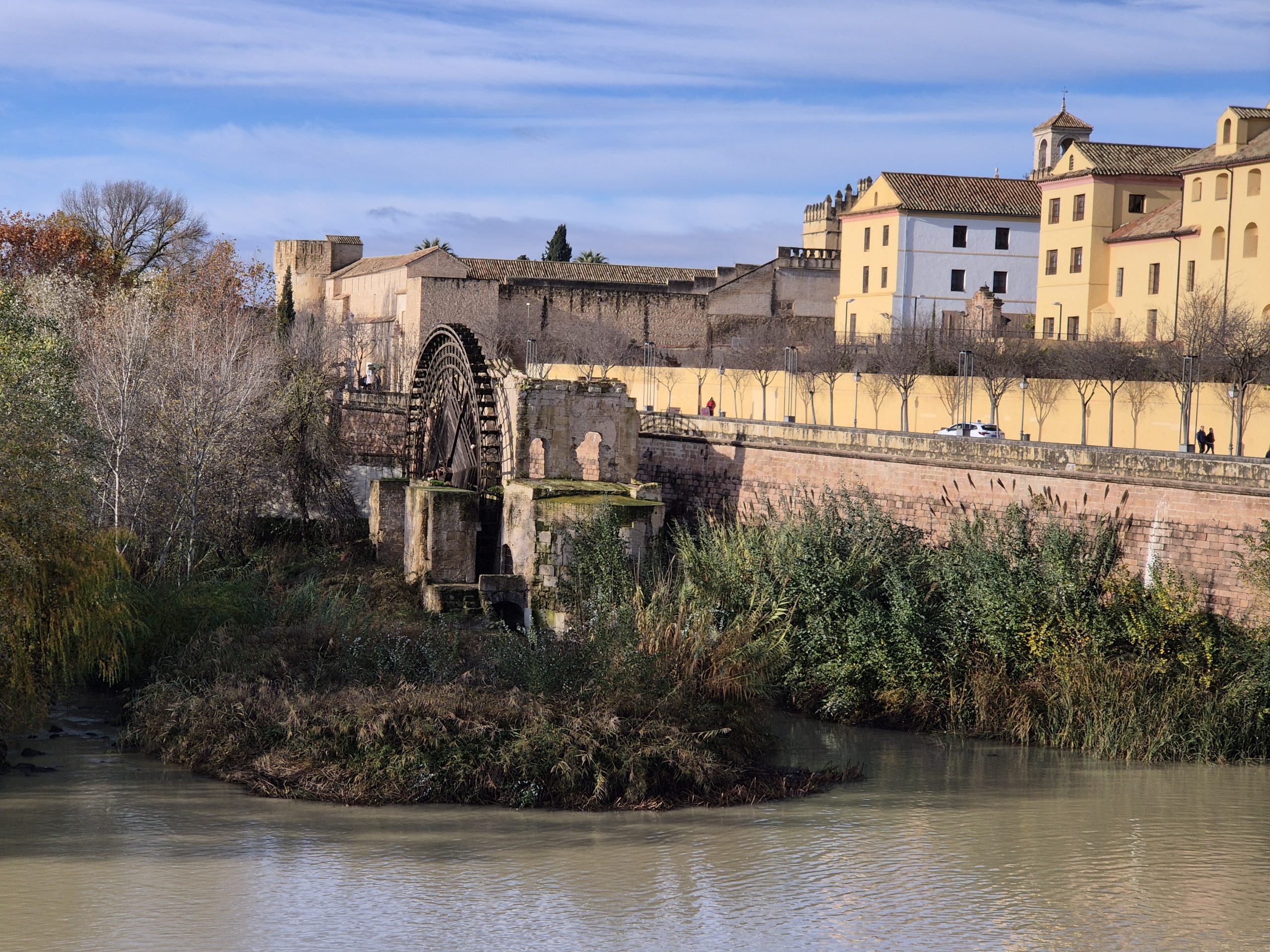
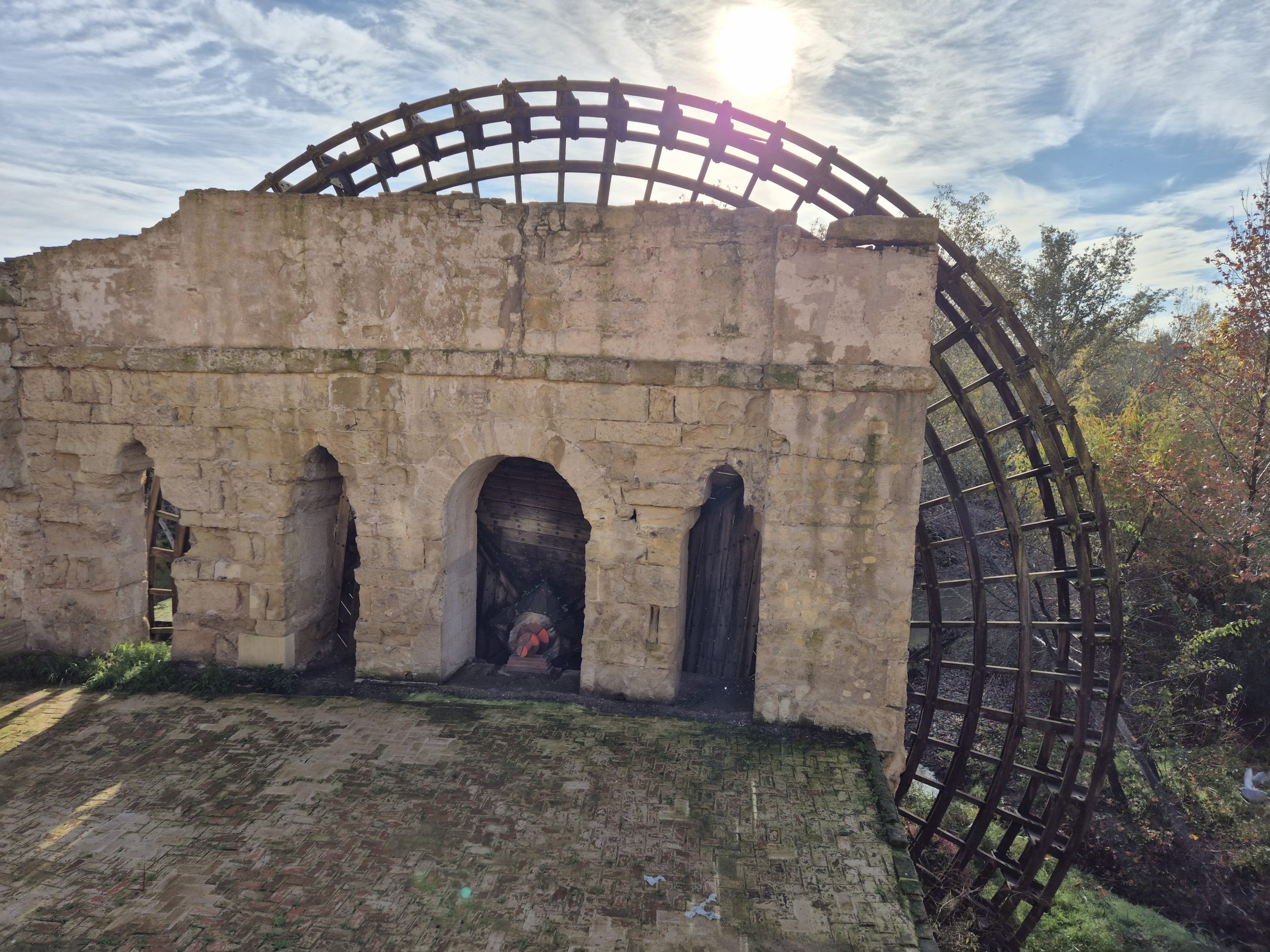
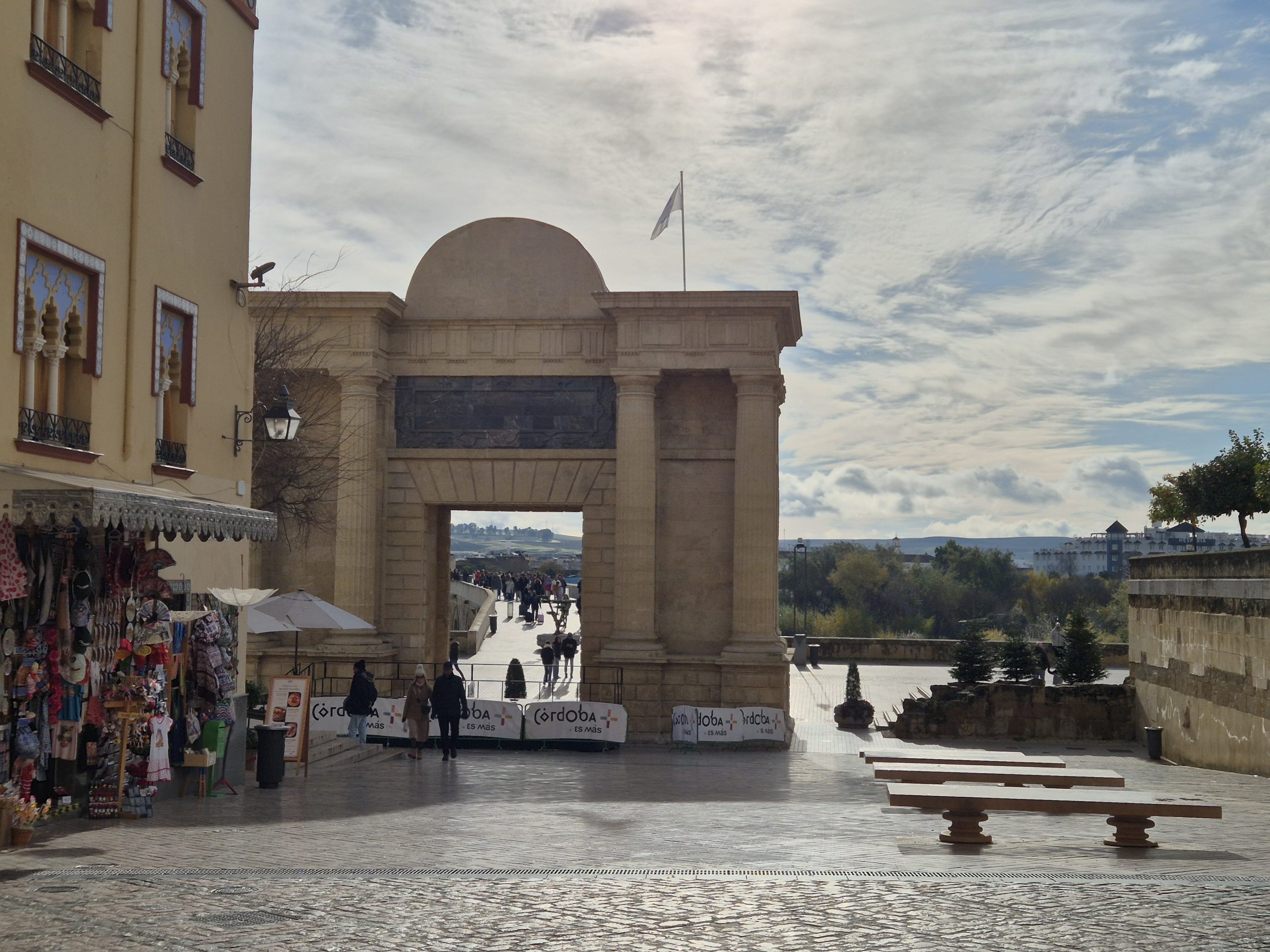
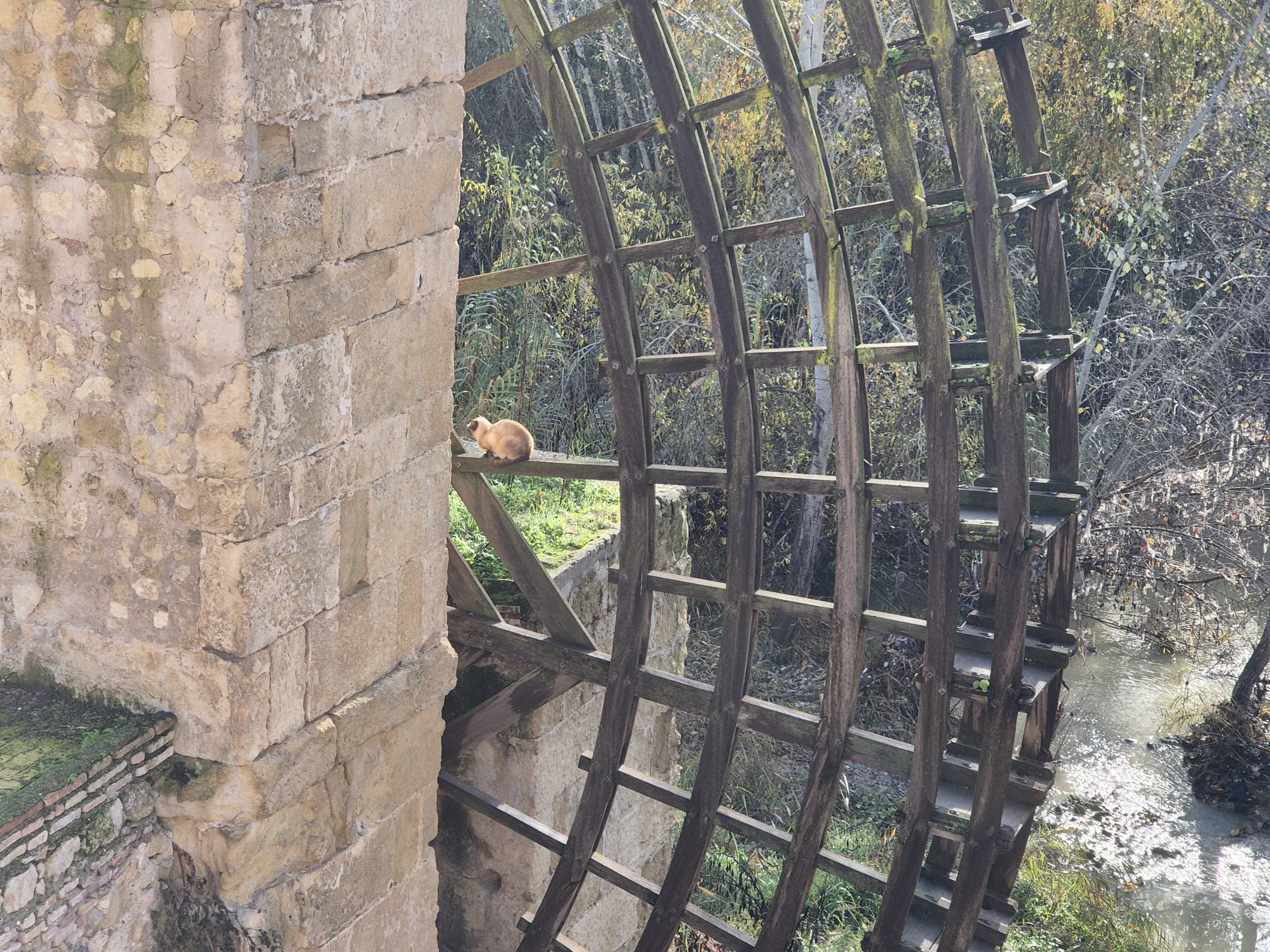
The Roman Bridge has spanned the Guadalquivir since the 1st century. It has been rebuilt many times over the centuries – so the “Roman” label is more lineage than fabric – but it still carries you across the broad, slow river in the same line it always has. We crossed it more than once, in different light: grey afternoon, and again on our last morning. The river was calm and full of birdlife; pigeons clustered on the parapets and a cat picked its way along the bank, supremely indifferent to the World Heritage status of its surroundings.
The Calahorra Tower museum
At the far end of the bridge stands the Calahorra Tower, which houses a small museum of the city’s Moorish, Jewish and Christian coexistence. The exhibits lean on audio and atmosphere rather than objects, but one stayed with me: an intricate diorama of 10th-century Córdoba in its golden age – a miniature city of waterwheels and minarets, with little boats sailing the Guadalquivir, captioned as 10th century sailing along the Guadalquivir river. A useful thing to see early; it sets the layers in order in your head before you go back to walking through them.
Calleja de las Flores
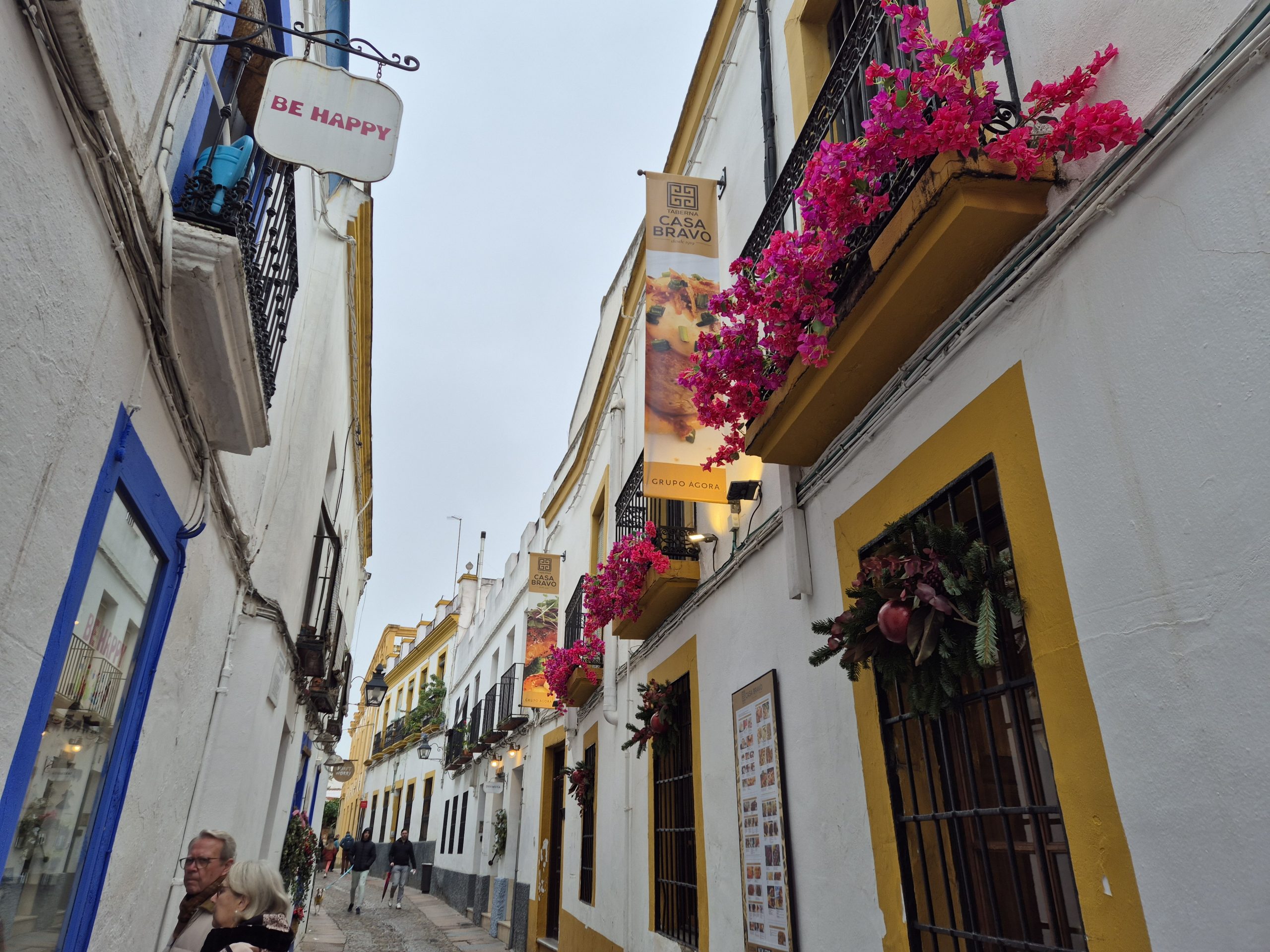
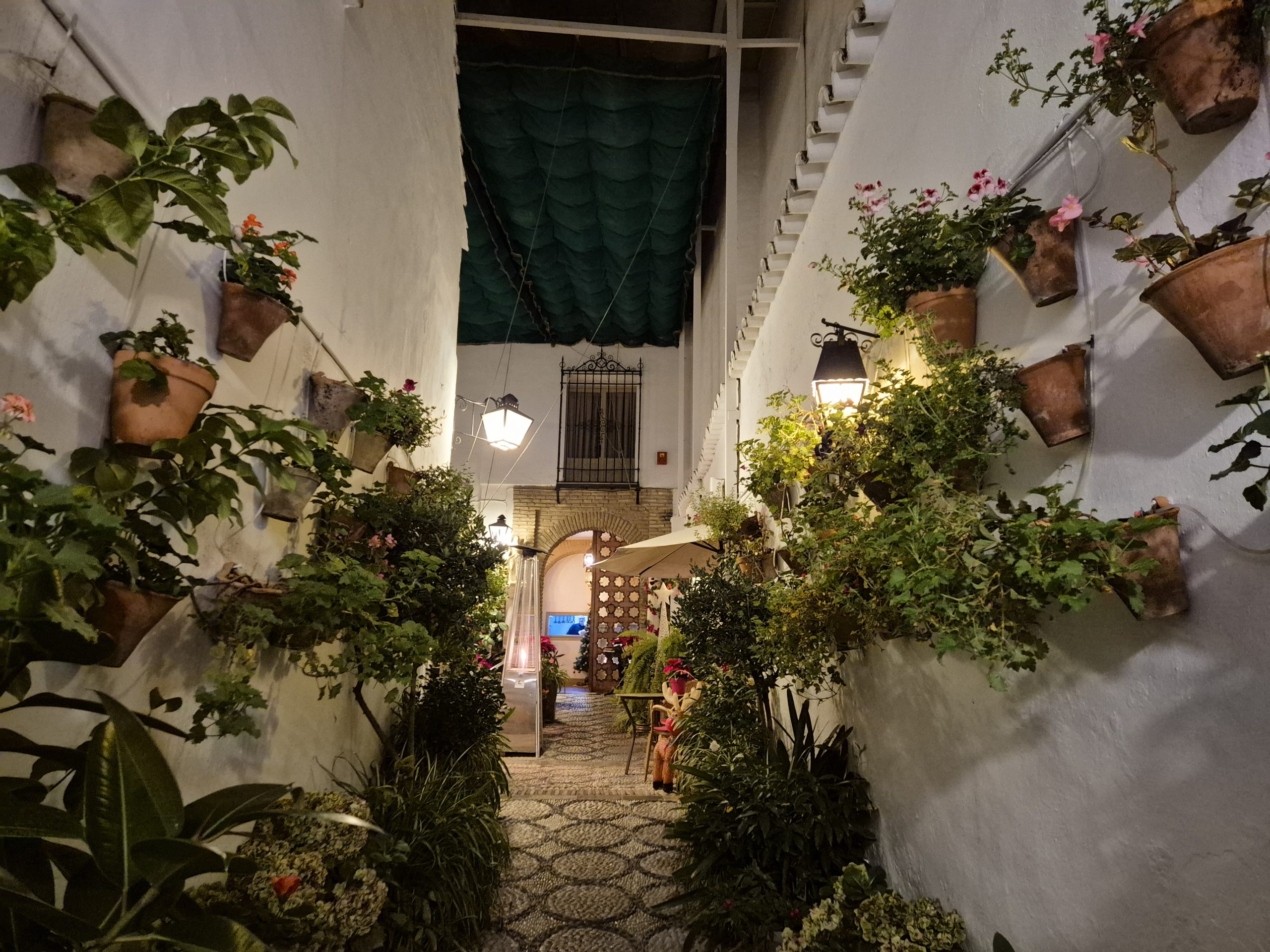
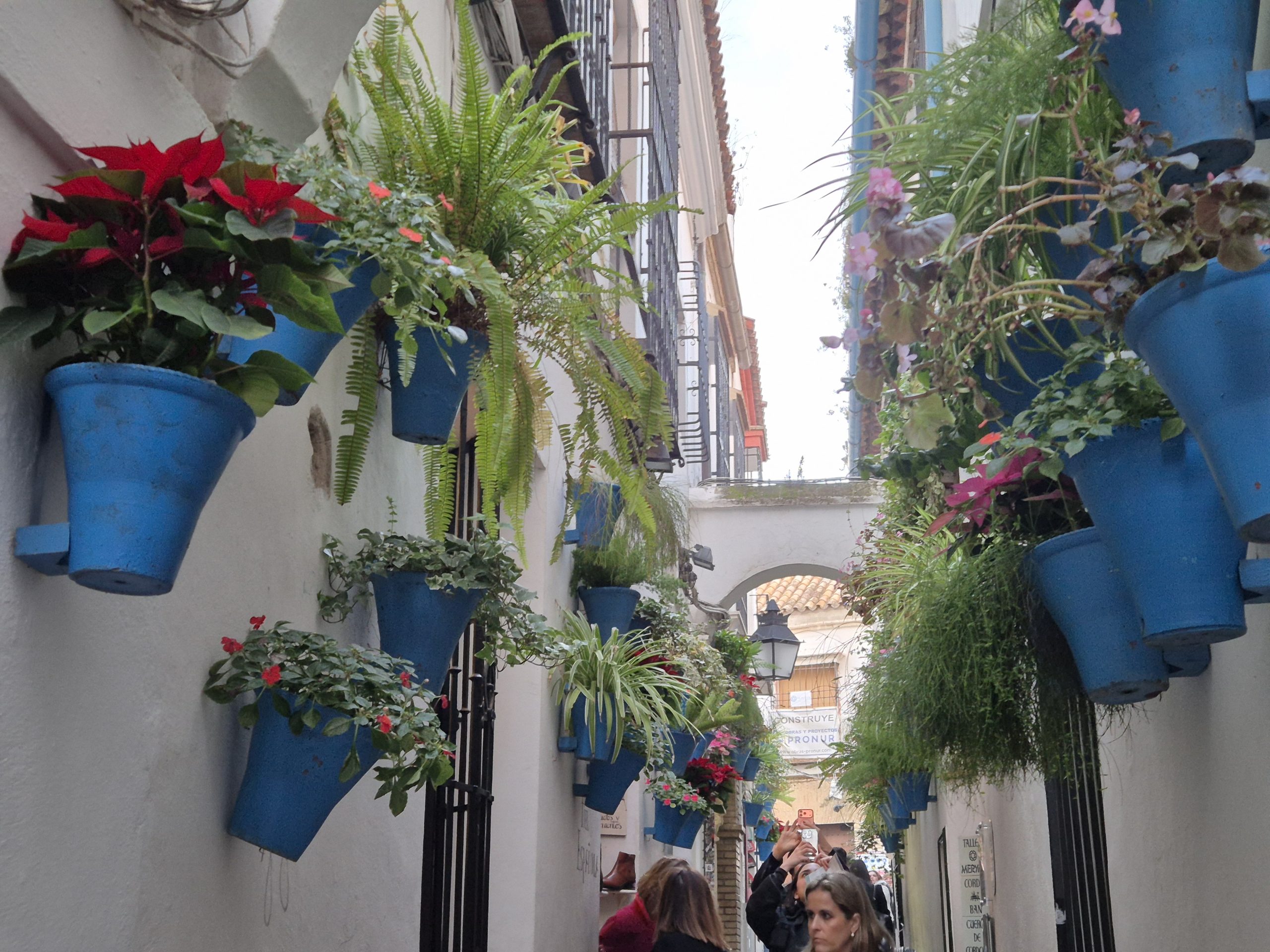
The Calleja de las Flores is a narrow whitewashed alley hung with blue flowerpots – pretty, photogenic, and (I strongly suspect) made famous by the same guidebooks that now funnel everyone into it. In December the pots held ferns and trailing greenery and, fittingly, bright red poinsettias, and the lane narrowed at its far end to frame the Mezquita’s bell tower like a postcard composing itself. I say this without much grievance: the hanging flowerpots turned out to be a small recurring pleasure across all of Andalusia, an unofficial street art of geraniums and painted ceramic. Córdoba just happens to have packaged one lane of it for the cameras.
For dinner we went to a decently rated patio restaurant. Everything was good except the main course – the ambience, the service, the sangría, the berenjenas fritas con miel were all fine. Good even. The berenjenas especially – crisp fried aubergine under a drizzle of dark cane honey, a Córdoban signature in which the city’s Moorish past arrives sweet on the same plate as the savoury. But the main, when it came, turned out to be at once the most imaginative and the most unimaginative meal of the entire trip – a Spanish omelette plated like a big smiley mouth, with two chunky tomato slices for eyes and lettuce making up the top of the face. Arty, but bland past forgiveness.
The Alcázar and its gardens
21st Dec 2025
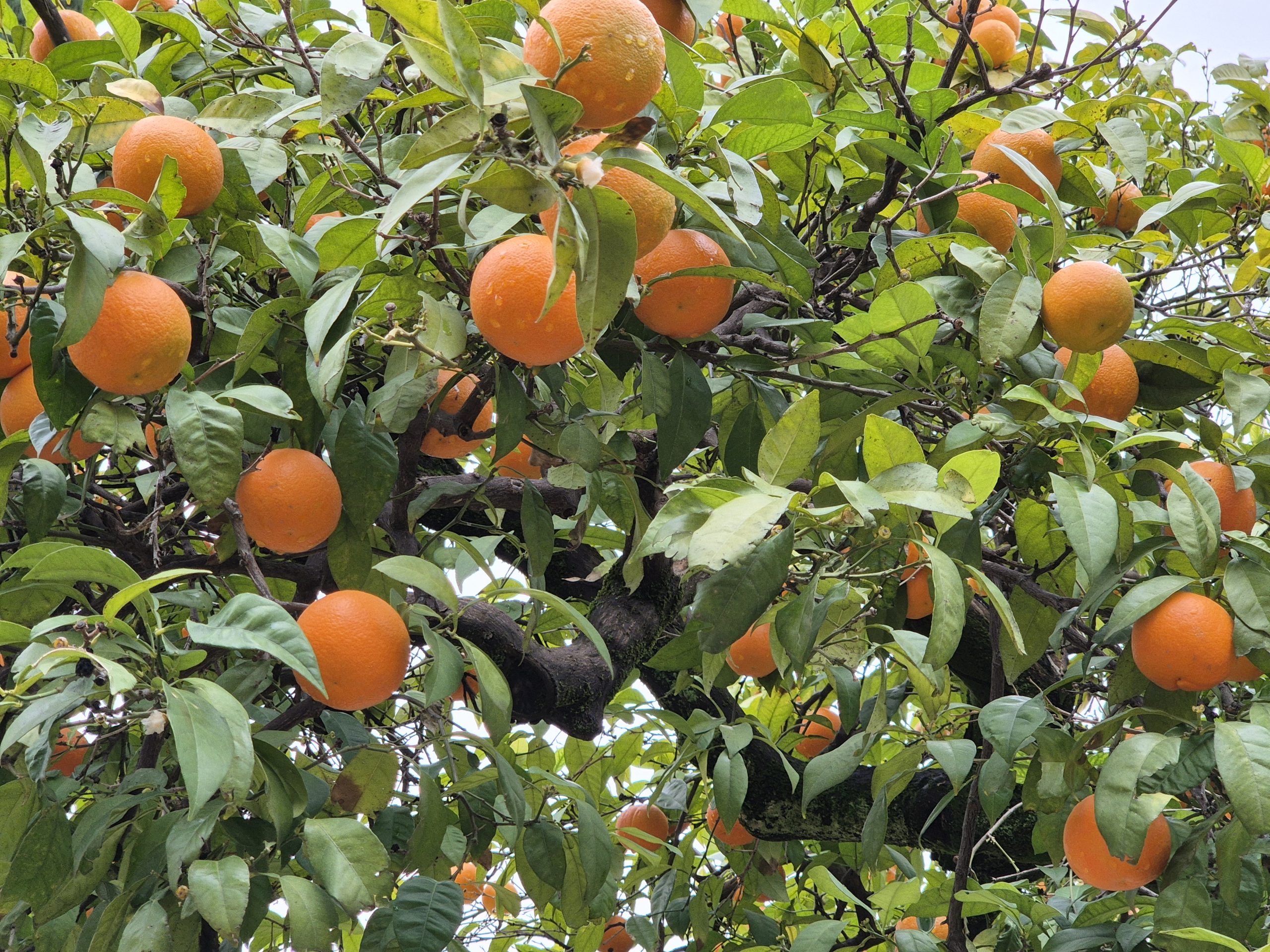
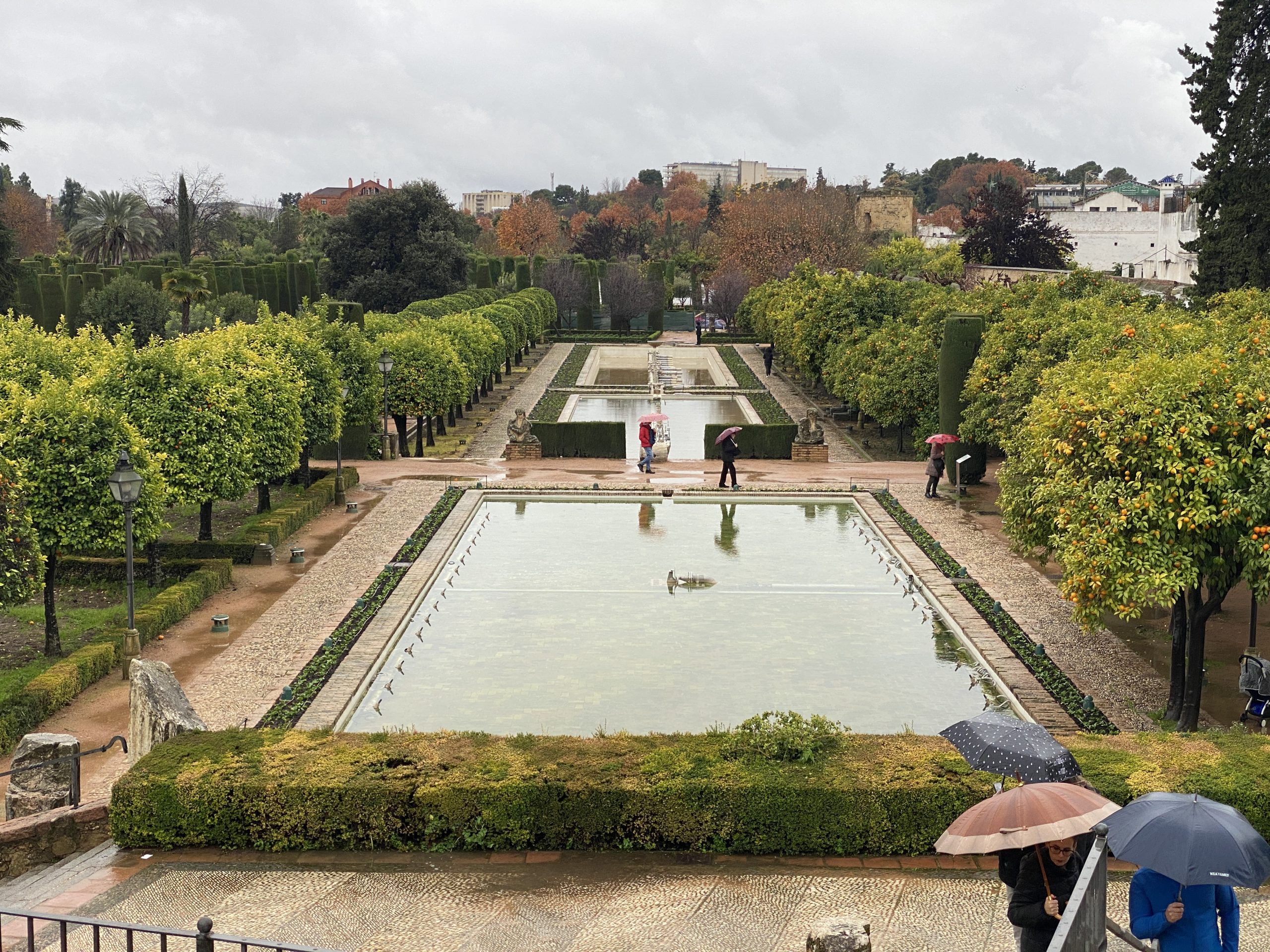
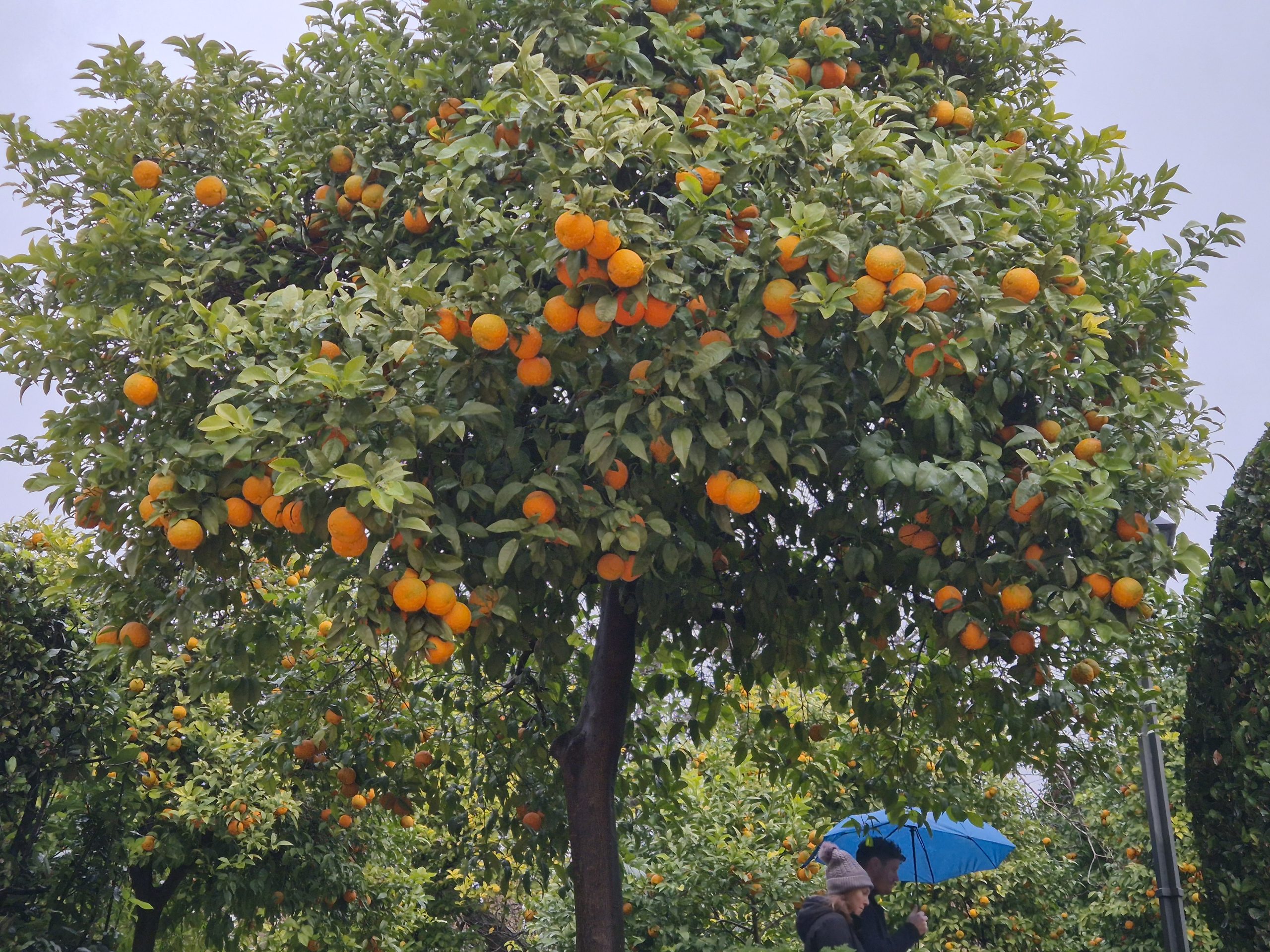
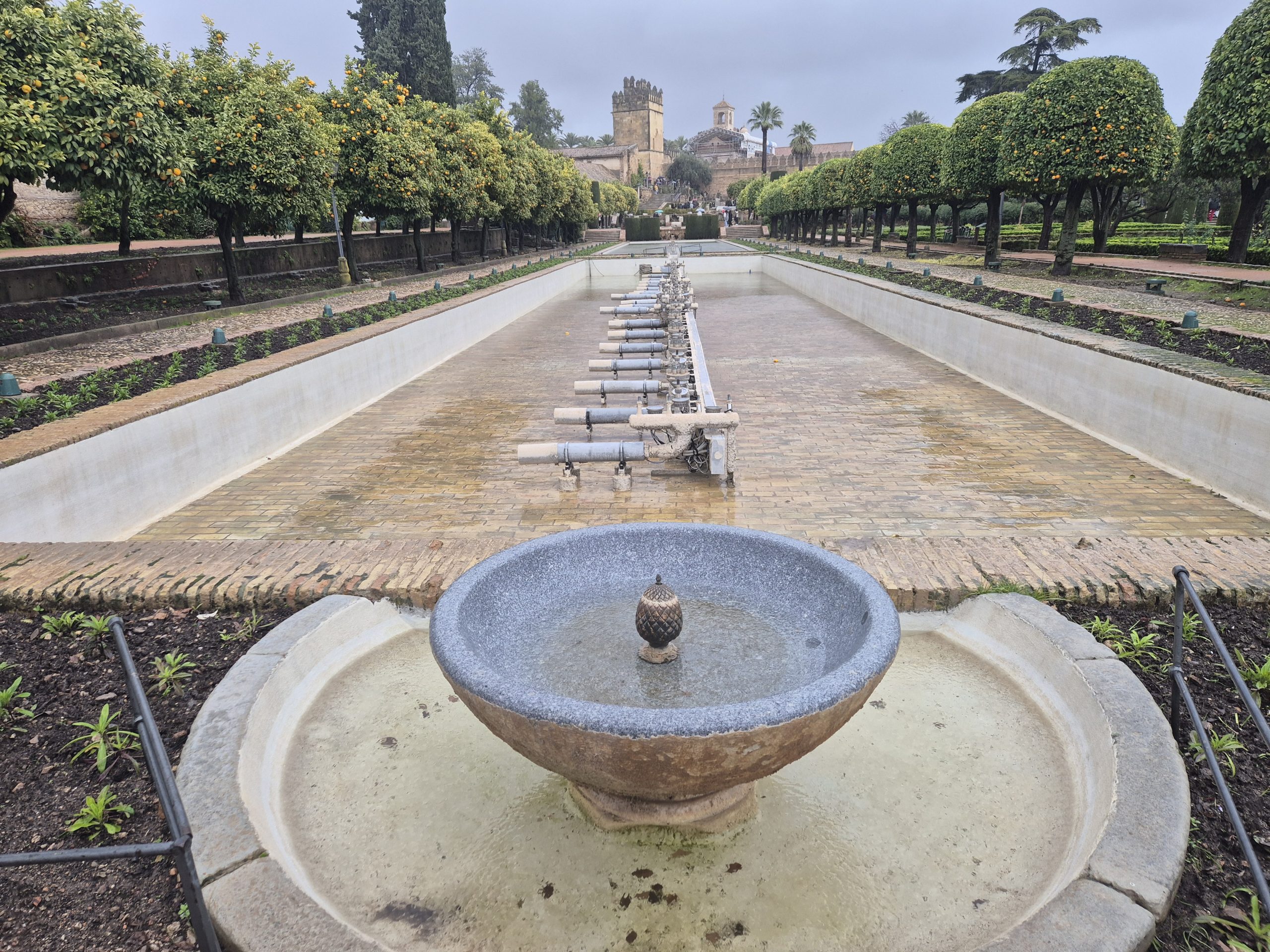
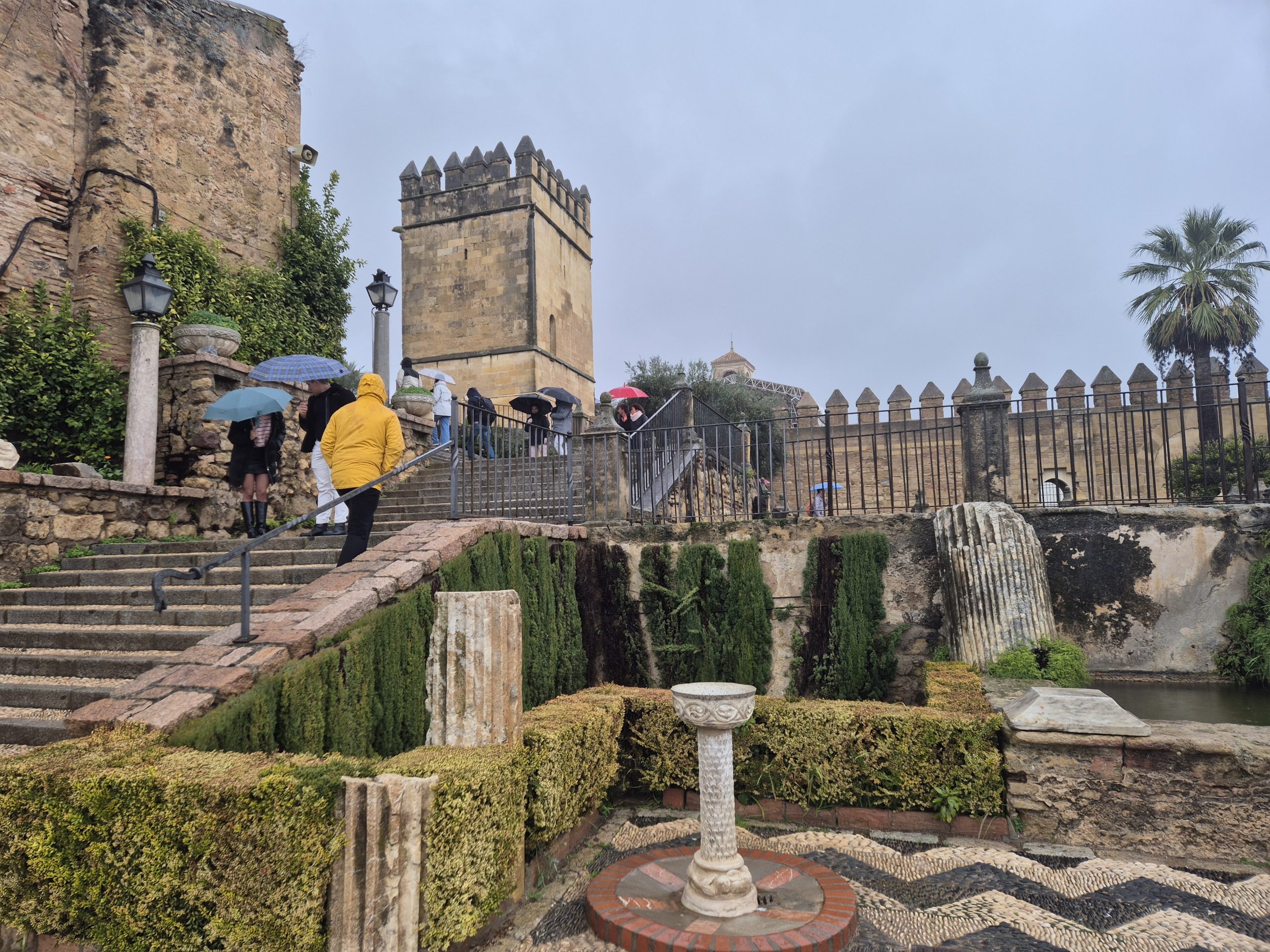
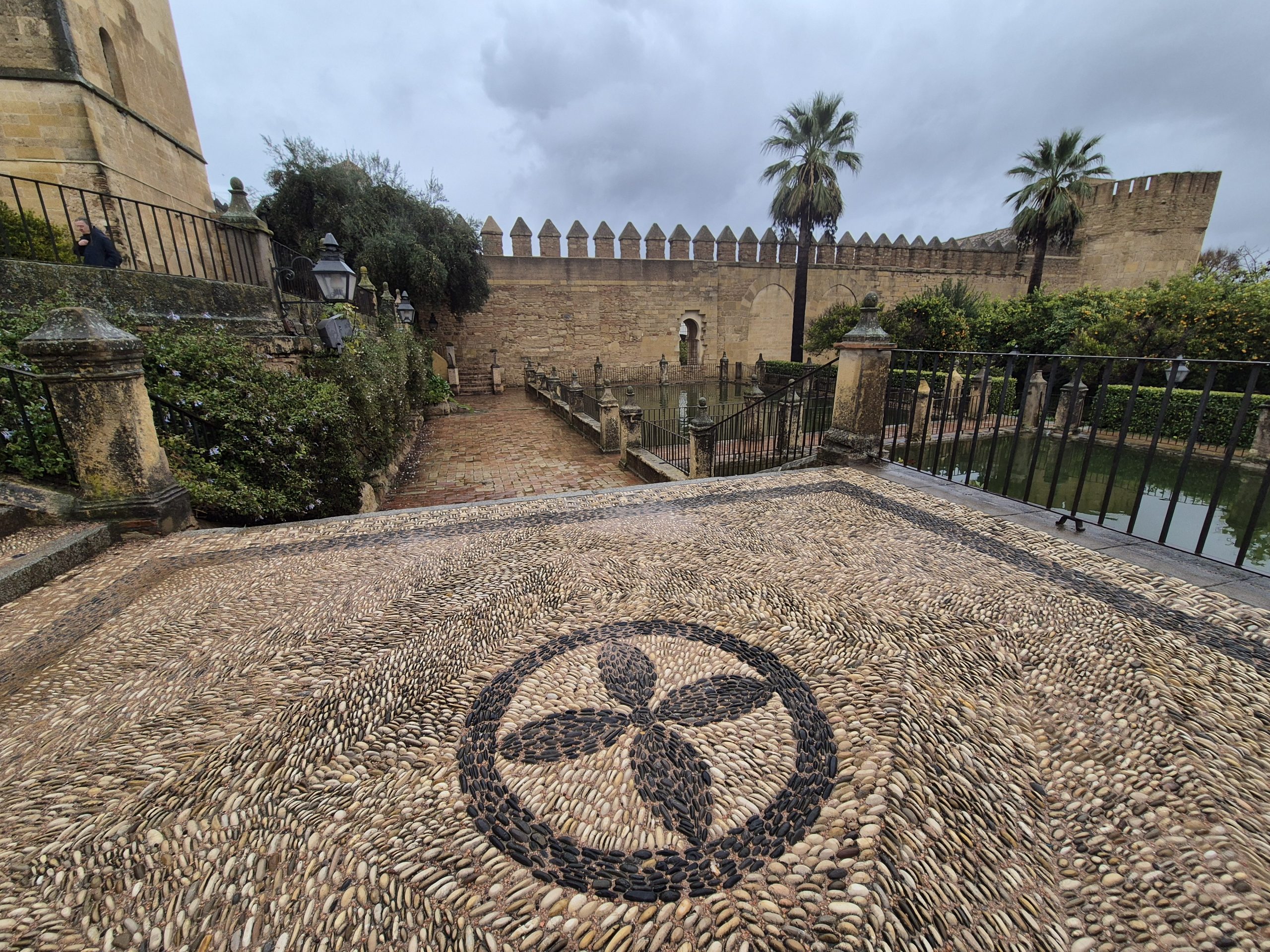
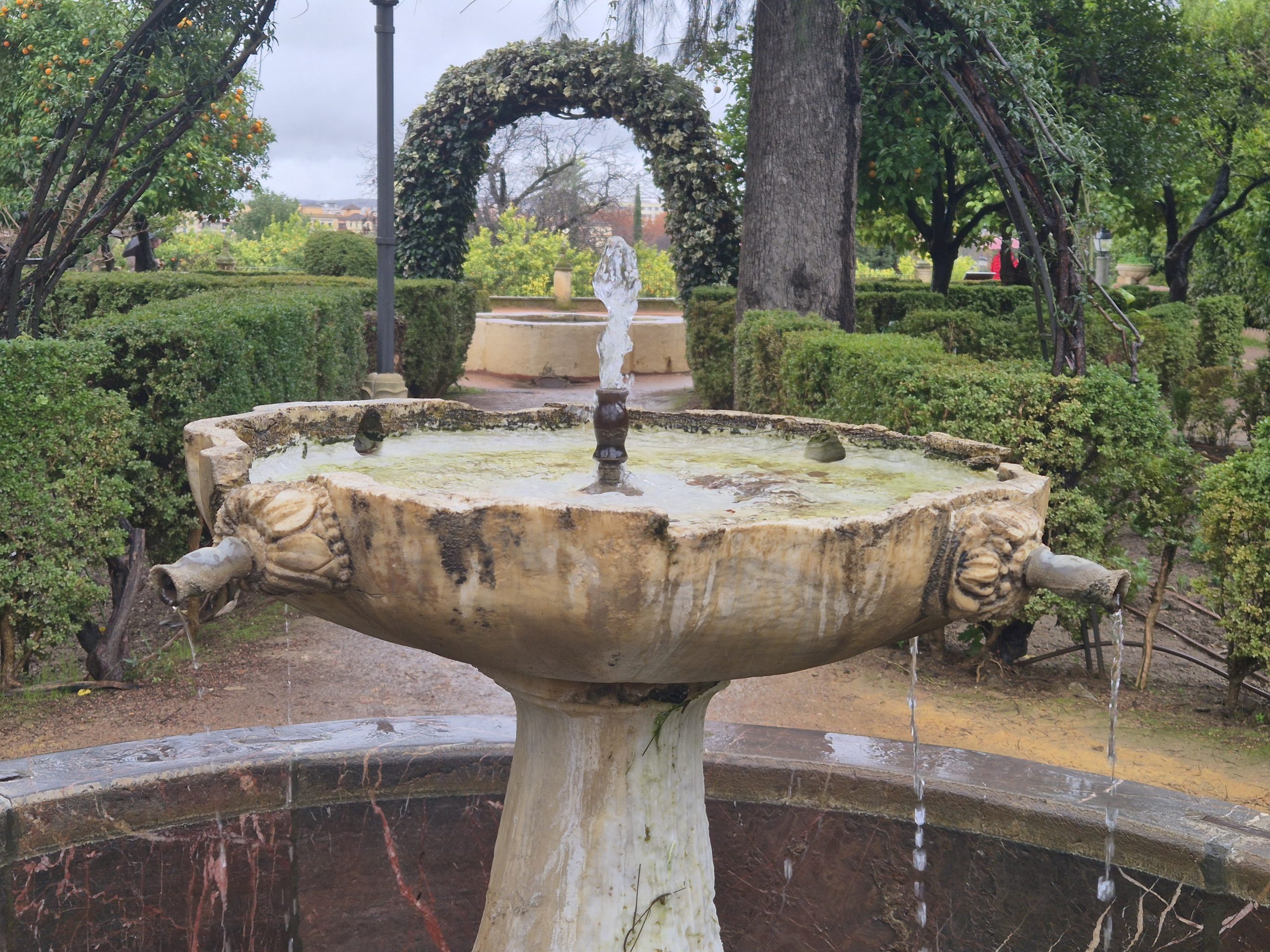
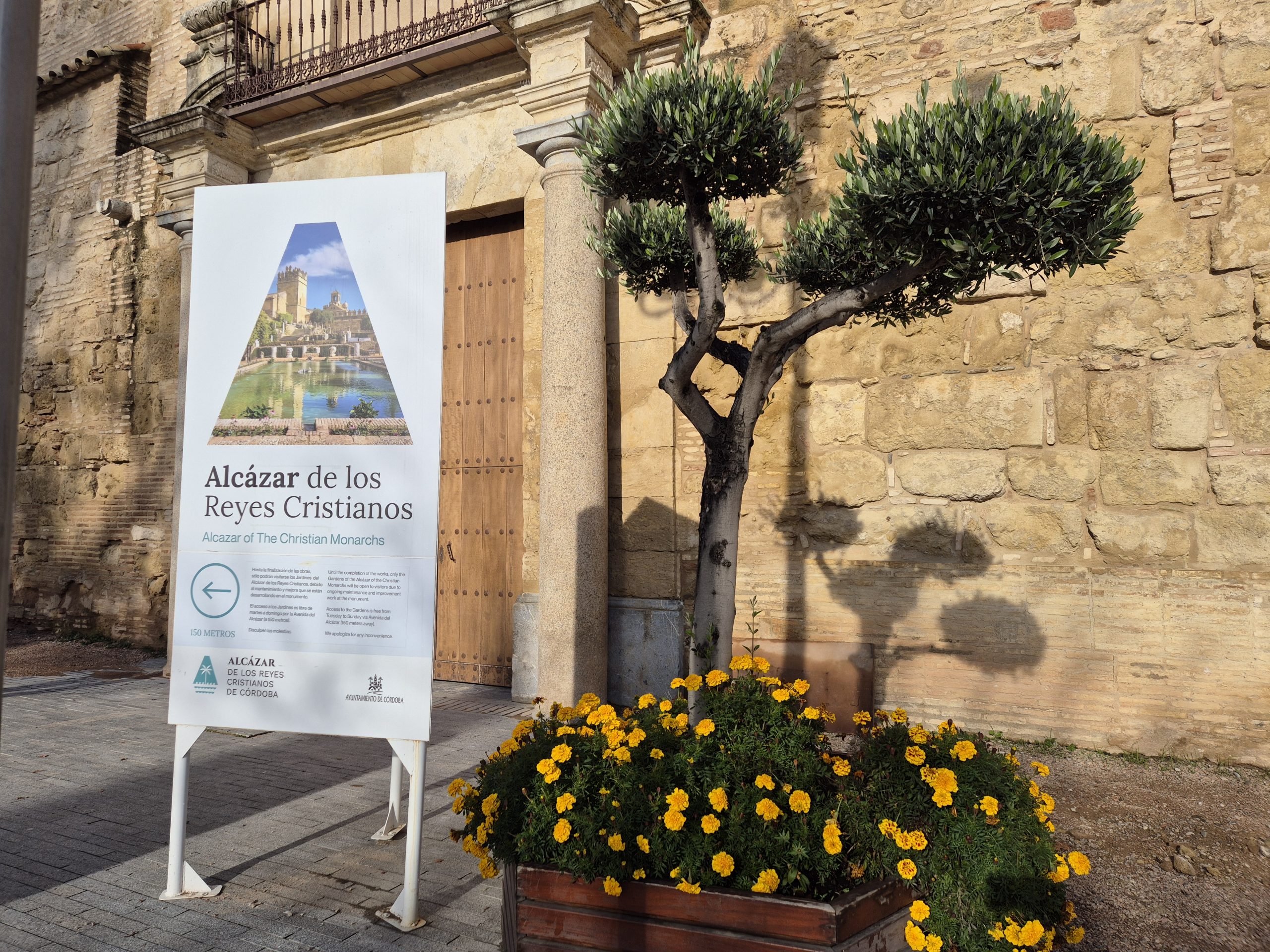
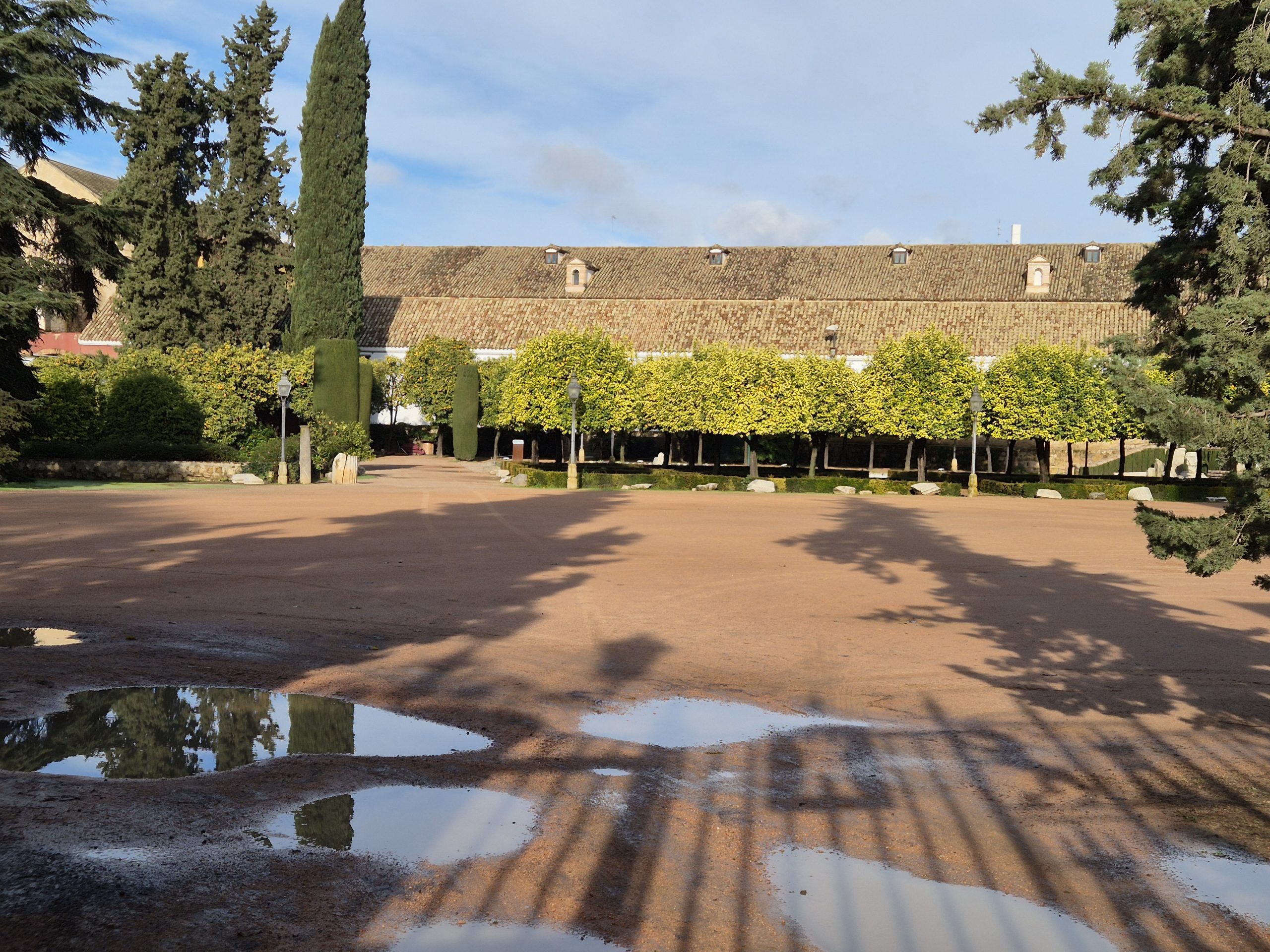
Our visit to the Alcázar de los Reyes Cristianos fell on a rainy day, but the gardens were worth the damp. Formal pools, clipped hedges, and – this being Andalusia in December – orange trees absolutely loaded with fruit, glowing all the brighter against the grey sky and wet stone.
It was here that I committed my small crime of the trip. Surrounded by all that ripe-looking citrus, I plucked an orange (almost certainly illegally), peeled it, and bit in with great confidence. It was so violently sour that my face rearranged itself into a shape I didn’t know it could make. A lesson at the expense of my taste buds in the difference between bitter Andalusian oranges grown for marmalade and decoration and fruit a person should actually eat. The trees all over the south, it turns out, are mostly the marmalade variety.
When the rain got too insistent, we left and took refuge at a café with views over the Roman Bridge within the Cathedral visitors center. It was a place with a very relaxed vibe; we found a corner table with a lovely view. We spent a couple of hours there just watching the rain and plotting our answer to it.
Córdoba was still early enough in the trip that food felt like discovery rather than logistics (that turn came later – see the separate piece on eating vegetarian in Spain). At the café this afternoon, I had café bombón and a red wine. B had a hamburger and hot chocolate. Even the menu card had ambitions: it opened with a short history of the city’s food – given light by the Phoenicians, it announced, then developed by Iberians, Romans, Visigoths, Arabs and Christians into “a marvellous melting pot.” A grand preamble for a place where I’d just ordered a coffee and B a hamburger – and yet it was the same layered story the whole city keeps telling, turning up here on a café placemat.
A rainy afternoon: Museo de Bellas Artes
Our deliberations at the café turned up a nice little find, which we walked to next: the Museo de Bellas Artes – a quiet, almost empty fine arts museum in a building that was itself once a charity hospital. As you go up the wide stairs, the building’s past leaves a strange, moving trace: high on three large walls above the staircase are faint drawings scratched into the original 16th- and 17th-century mortar, thought to be the work of the hospital’s patients. Anonymous hands, idling away long convalescences, accidentally outlasting everyone.
The collection turns out to be a quiet portrait of the city through its own painters – above all Rafael Romero Barros (1832–1895), whose canvases line several rooms: the Banks of the Guadalquivir, Sunday in Córdoba, Children Playing Cards, and a series of luminous still lifes of oranges – open, halved, in blossom – which felt like a sly rebuke after my sour misadventure in the Alcázar. One painting, A Memory of Africa – Sephardic Bride, set a richly dressed woman in a courtyard against Moorish walls, folding the region’s Jewish and Moorish pasts into a single frame. The same family runs on next door, in the adjoining Museo Julio Romero de Torres, dedicated to Barros’s more famous son. But since we had dallied too long at the café earlier, this part was already closed. Still, an unplanned but rewarding museum visit.
Roman ruins around the old town
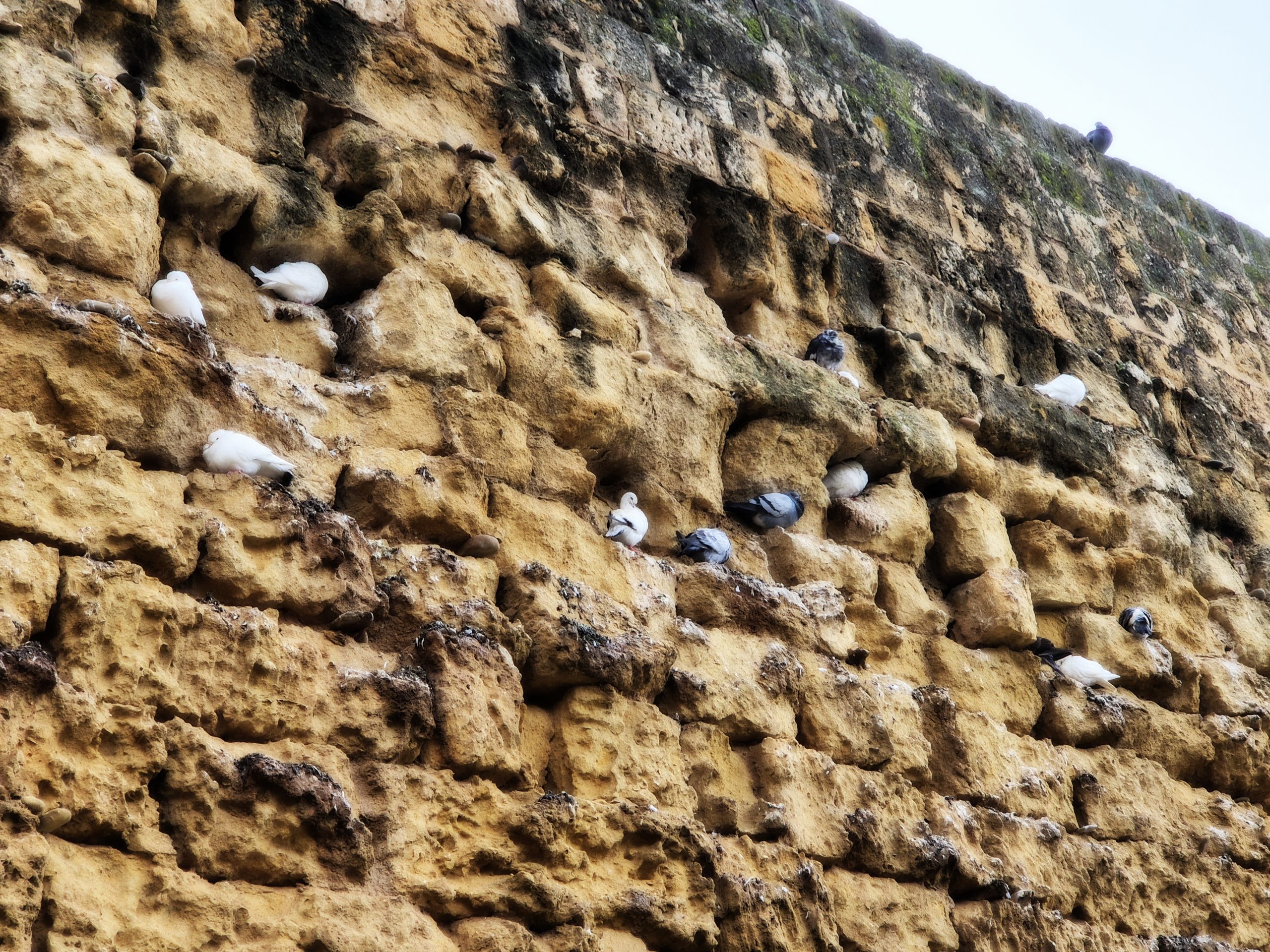
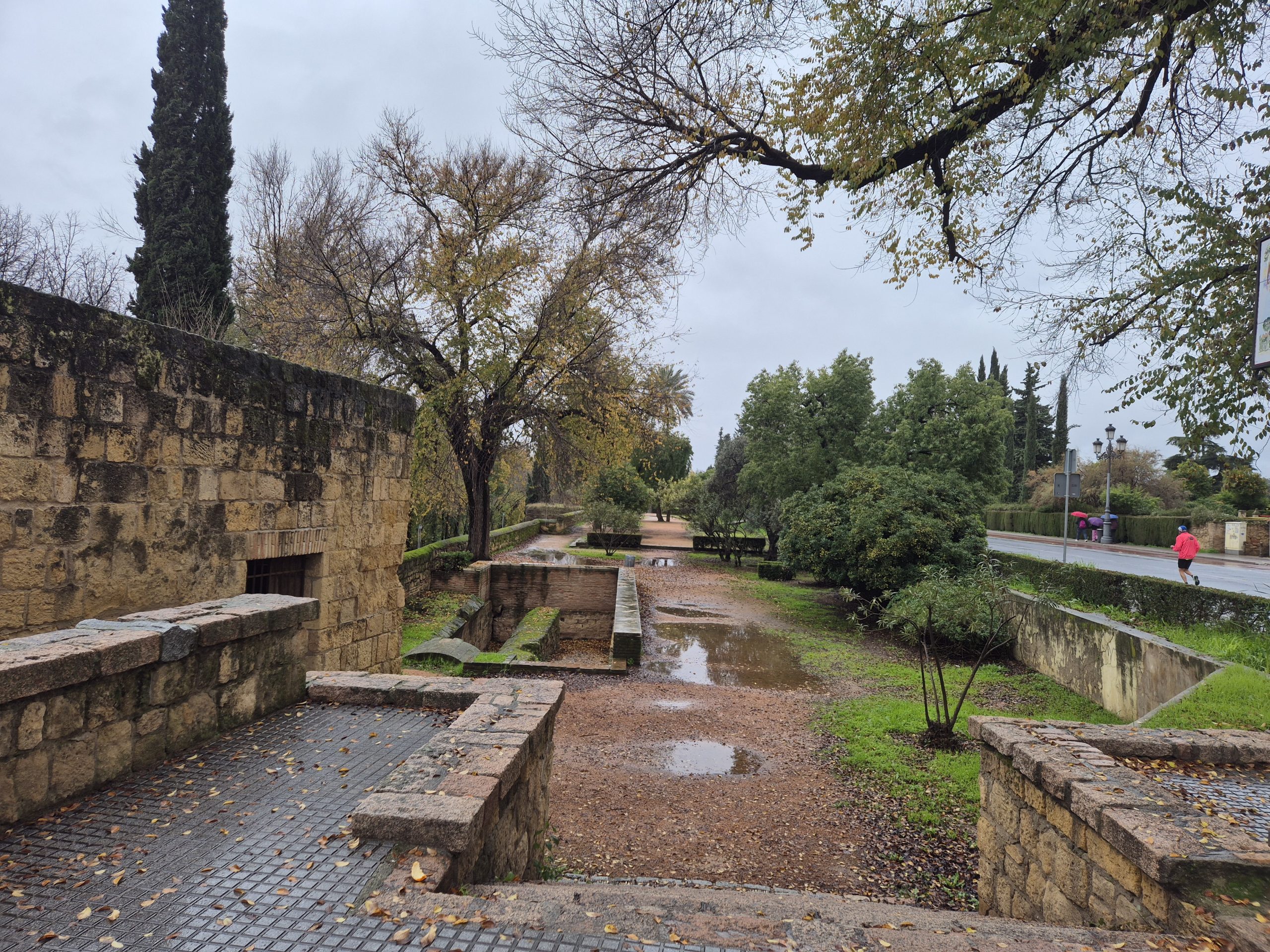
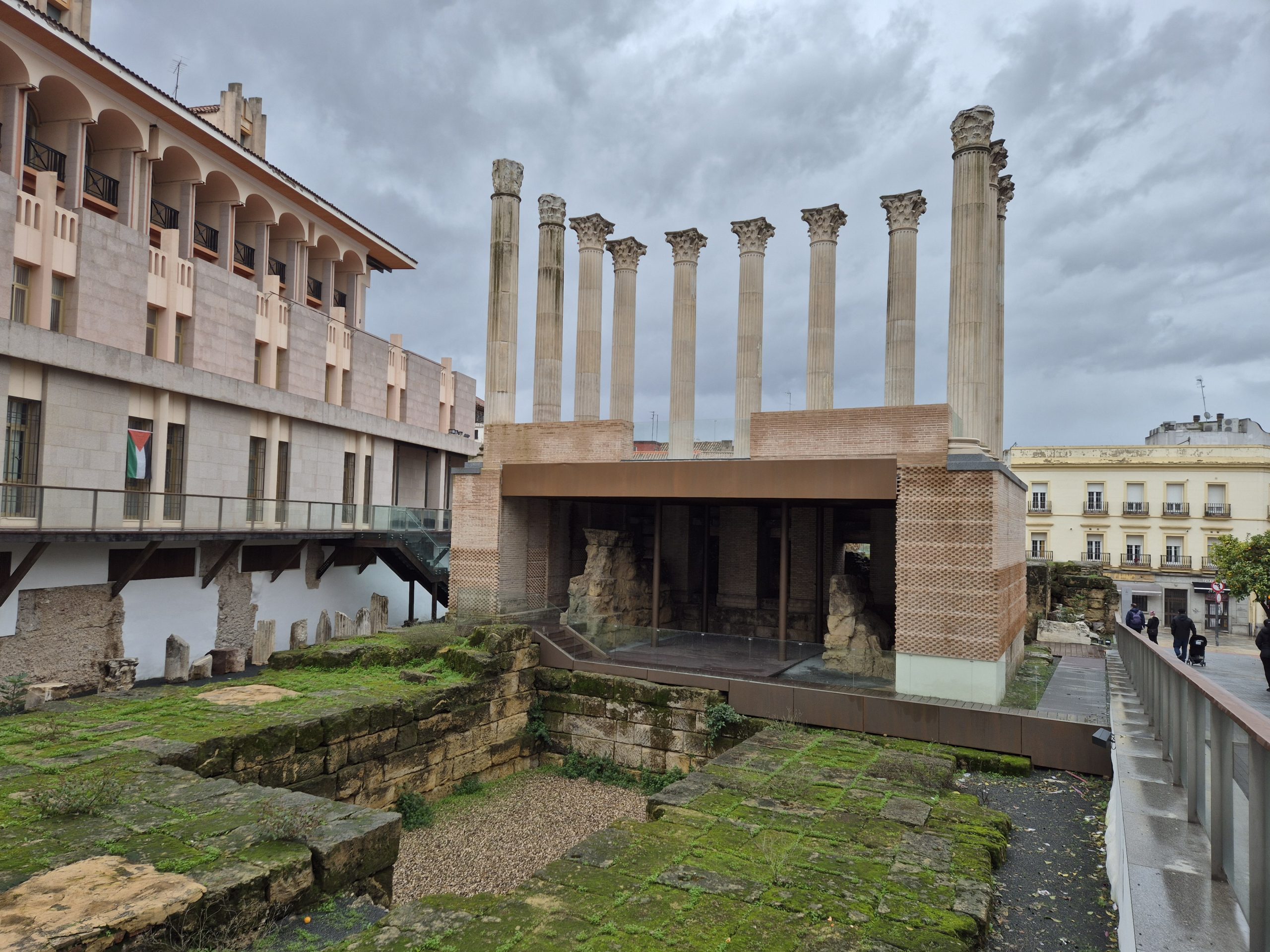
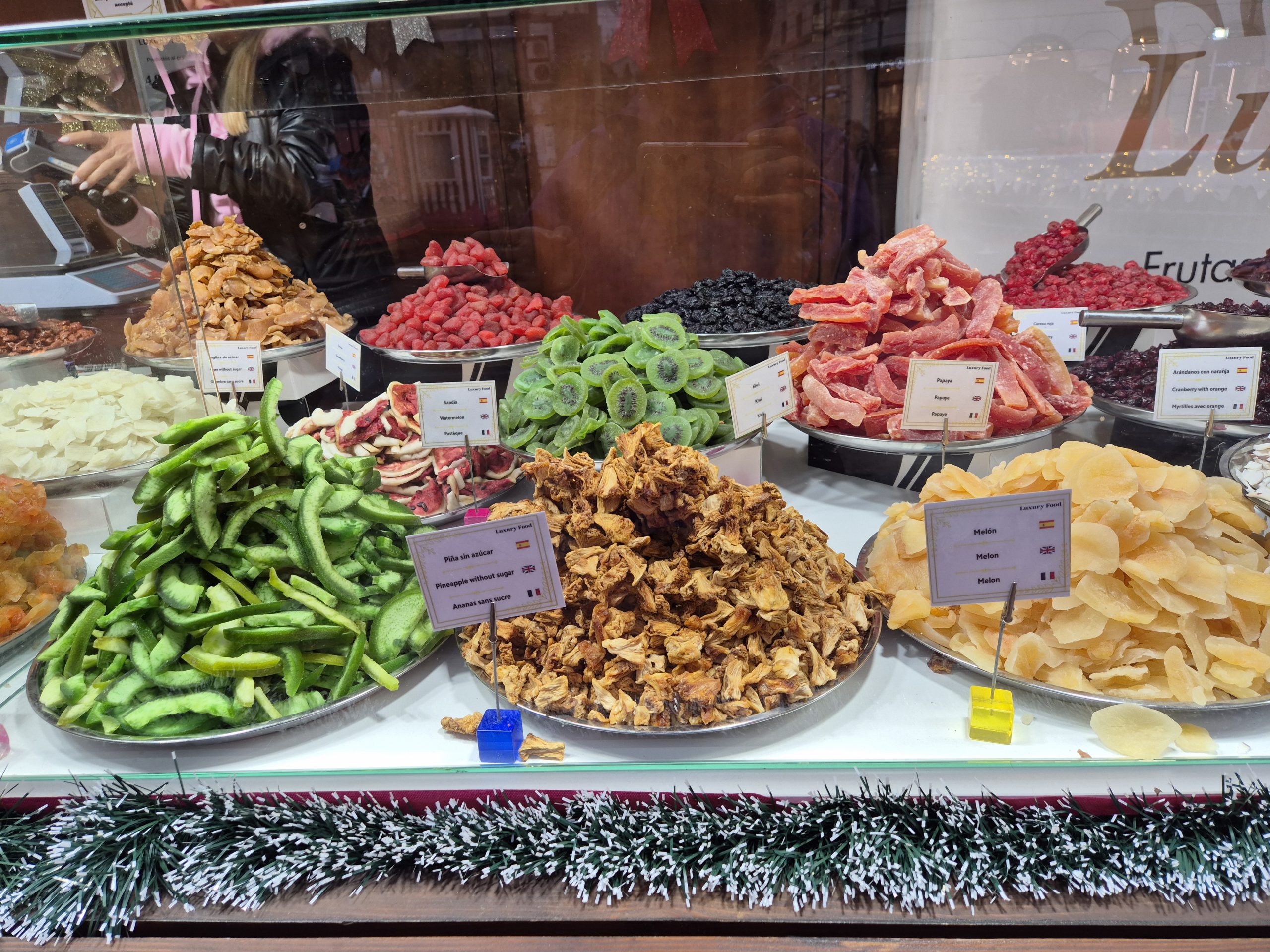
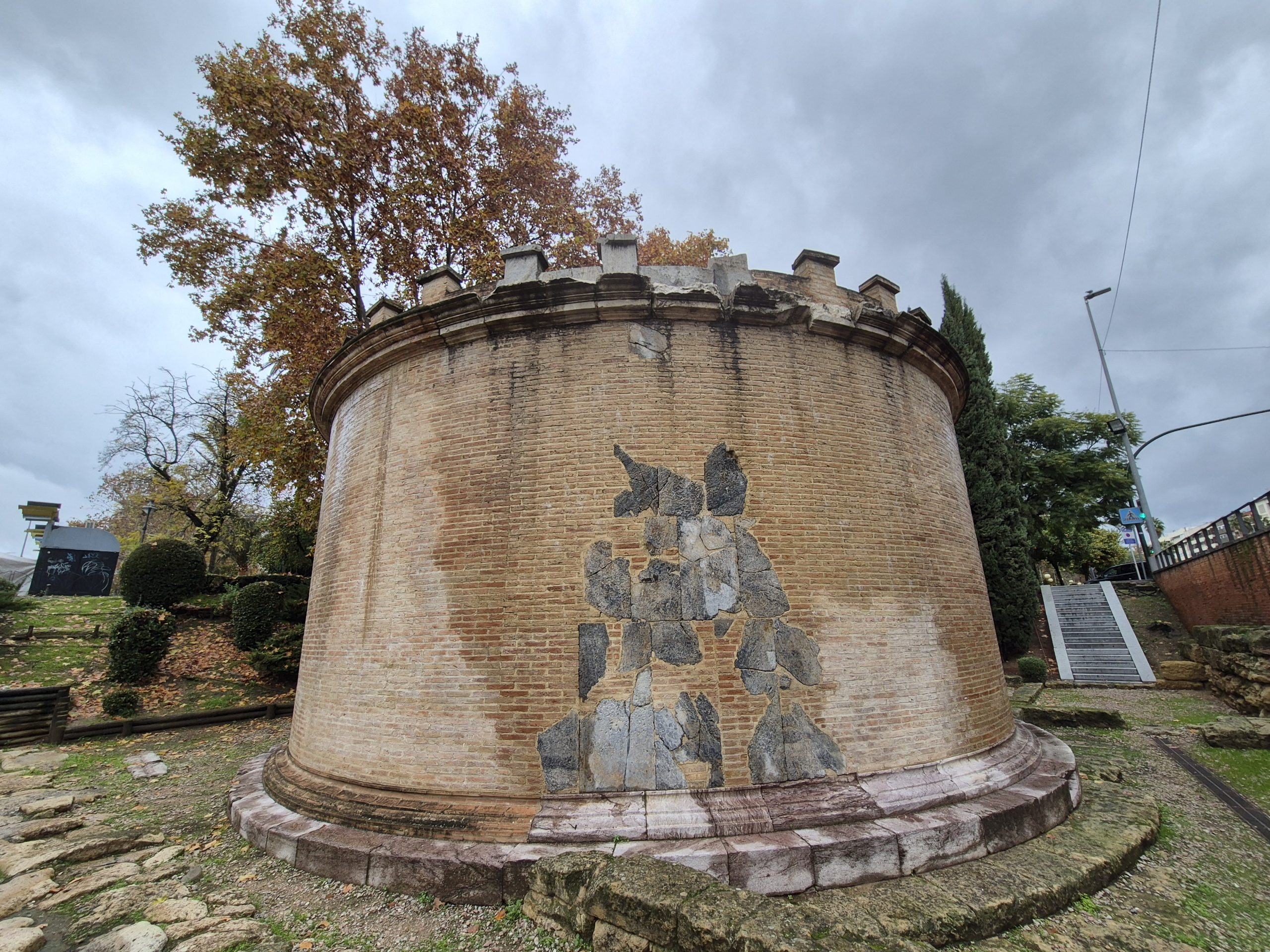
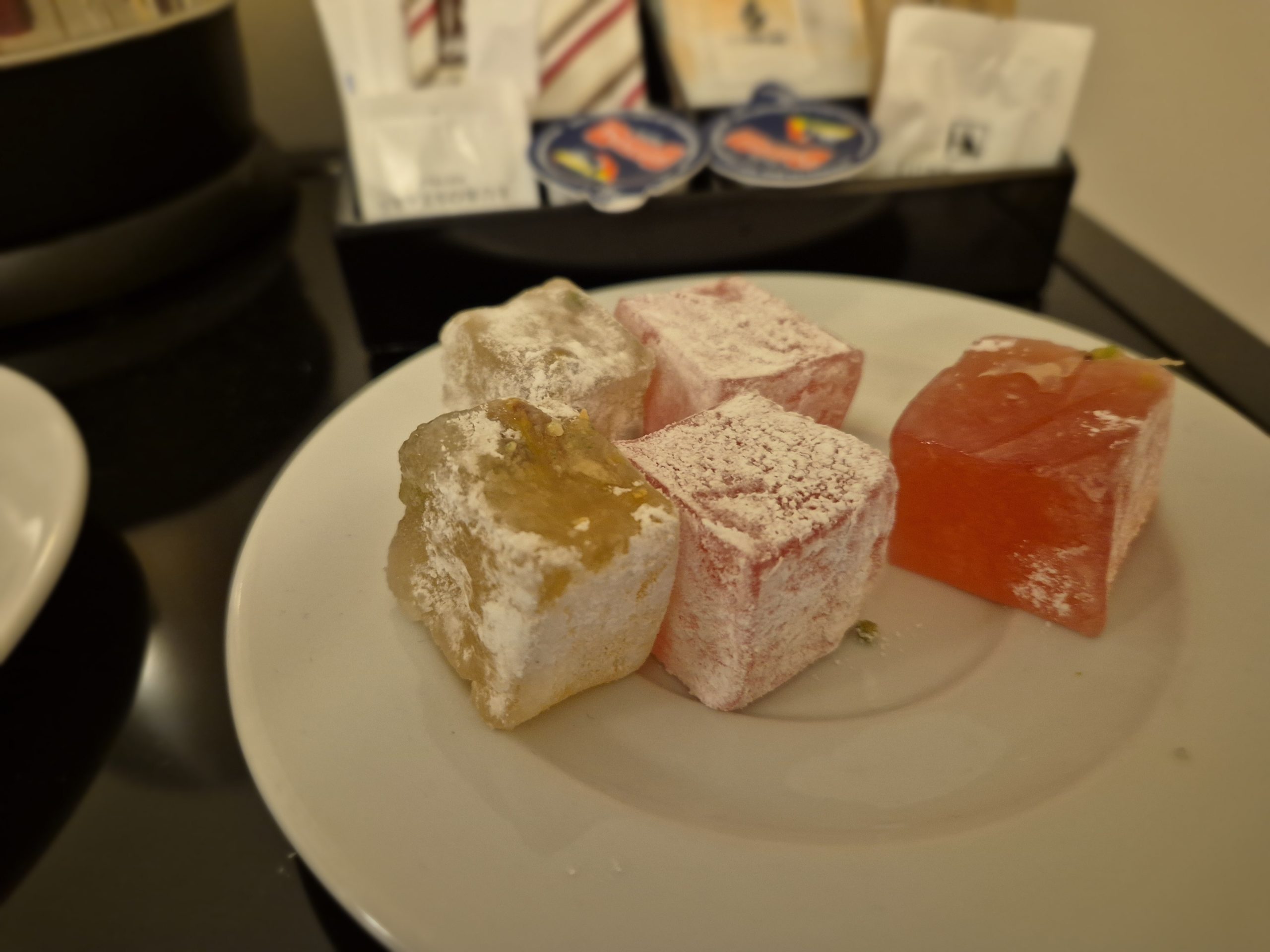
By evening the rain had eased, and B dragged me through other unvisited streets away from the Mezquita center and cobblestones. I complained all the way: “when are we done? are we there yet?” In his gentle, quiet way he overruled, and we saw more of the city. Córdoba wears its Roman past casually: the columns of a Roman Temple stand floodlit between modern streets, and the scattered Roman Mausoleums sit almost apologetically beside a public garden. Roosting pigeons lent a bit of drama to the old city wall as the light went. As a small food reward after the extra walking, going past a street-Christmas stall, I was allowed to buy sinful baklava and some toxic colored fruit-flavored sweet cubes. Unmistakably halwa by another name. I wonder: did India give halwa to the Islamic world, or did the Mughals bring it to us?
This night, we wanted to play it safe and found a place that served pizzas: El Romano, which billed itself, gloriously, as “Córdoban with an accent of Italian”. A promising starter of fresh green olives, which I was tasting for the first time and enjoyed. And sangría, which both of us liked. Then came the mains: pizza drowning in a lake of mozzarella, spaghetti carbonara. Speaking for myself, the pizza was inedible beyond a slice or two. Sad but not broken, I went home to my halwa cubes.
A note on sangría
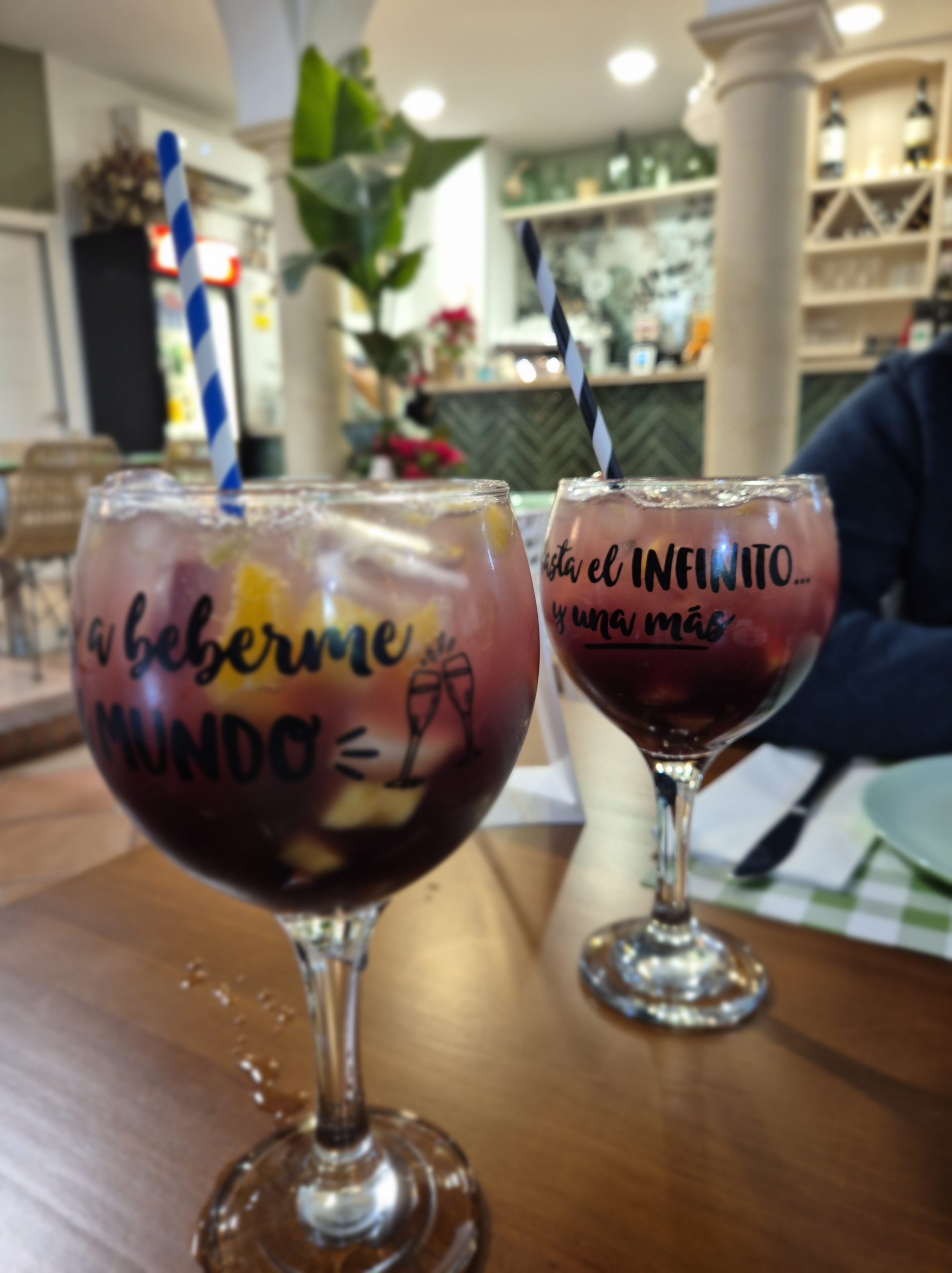
A personal highlight that ran through the whole trip, but which I’ll record here because Córdoba is where it took hold: sangría. Even B, who genuinely dislikes wine, happily had a glass here and there. There’s something about it – fruit, ice, the pretence that it isn’t really wine – that disarms the wine-averse. Reading Tiggy’s story in the Seven Sisters series, I came to understand the social standing of this drink: it’s considered a ‘payo’ drink, sneered at for its hypocrisy by true red-blooded gitanos. Happily for me, being an outsider, I enjoyed the drink without the social layering.
Small city, big impression
Córdoba is small, and on paper its list of sights is shorter than Seville’s or Granada’s. But it is the city where the trip’s organizing idea became visual for me. It’s one thing to read about “layers of history built on top of one another” in a guide book; in the Mezquita you are physically standing inside it, under one religion’s arches, looking up at another religion’s ceiling. Córdoba gave us the whole essence of Andalusia in miniature.
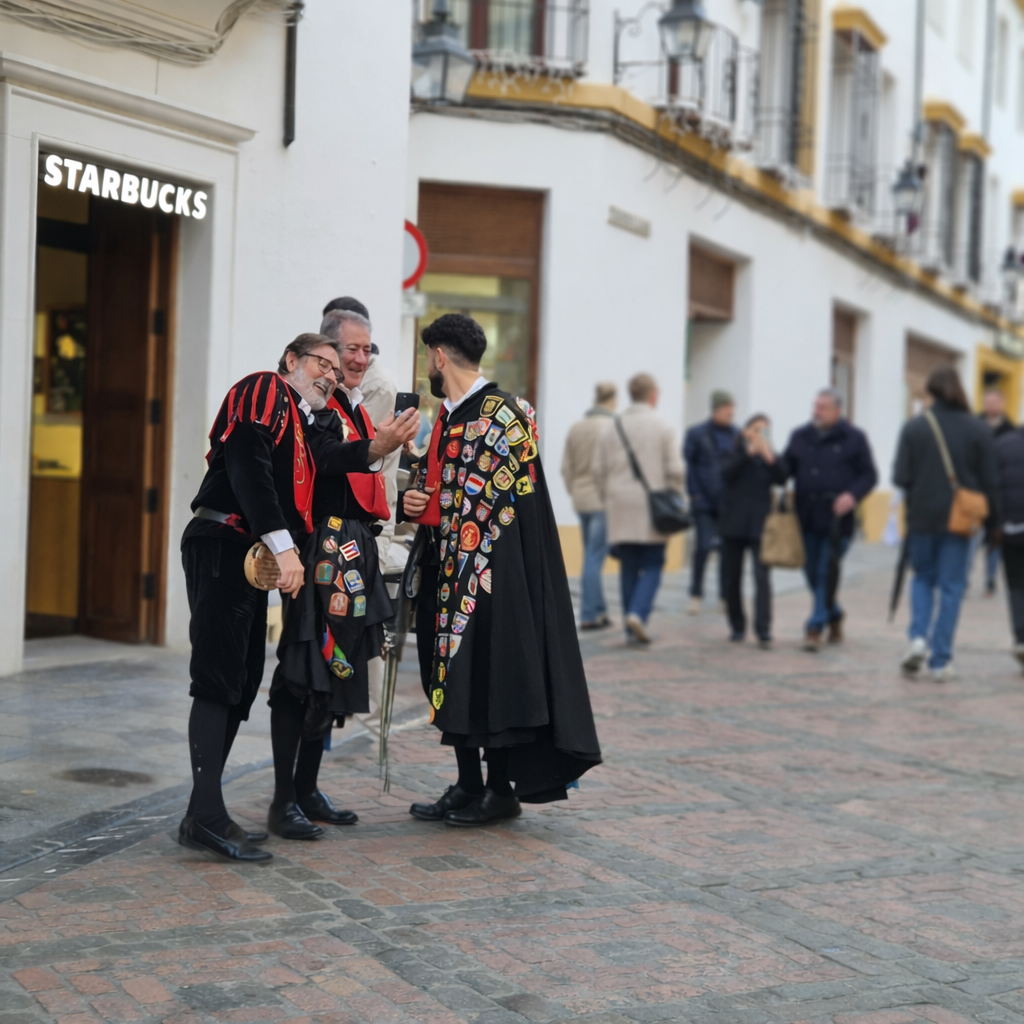
It was also here that my recurring ambivalence towards tourism woke up again. Tourists like us, clattering around the city with our roller suitcases on the cobble stones, taking selfies like there’s no tomorrow. Do we truly understand a city without living in it for at least a few months?
I loved this city and could imagine returning here one day, maybe to spend some open-ended time. One can always dream.