Seville – exuberance, and a quiet refusal
Four festive-season days in Seville – the Alcázar, a family’s flamenco in the Plaza de España, the Giralda climb, Las Setas – and a quiet, personal refusal of the bullring.
(4.5 days, 22nd – 26th Dec)
We came in by train from Córdoba and checked into the modest Hotel Cervantes – a step down from the Conquistador, but Seville is not a city where you spend much time in your room. There is too much happening outside the door.
Quick links to main sights
Royal Alcázar of Seville | Seville Cathedral & Giralda | Plaza de España | Setas de Sevilla / Metropol Parasol | Church of El Salvador
Impressions
Seville announces itself more loudly than the other cities on this trip. Where Córdoba is compact and self-contained, Seville is grand, theatrical, crowded, sure of its own beauty. And perhaps because of that, my strongest memories of it are not of the headline spectacles at all, but of the quieter registers I kept drifting towards underneath the noise.
The Royal Alcázar
22nd Dec 2025
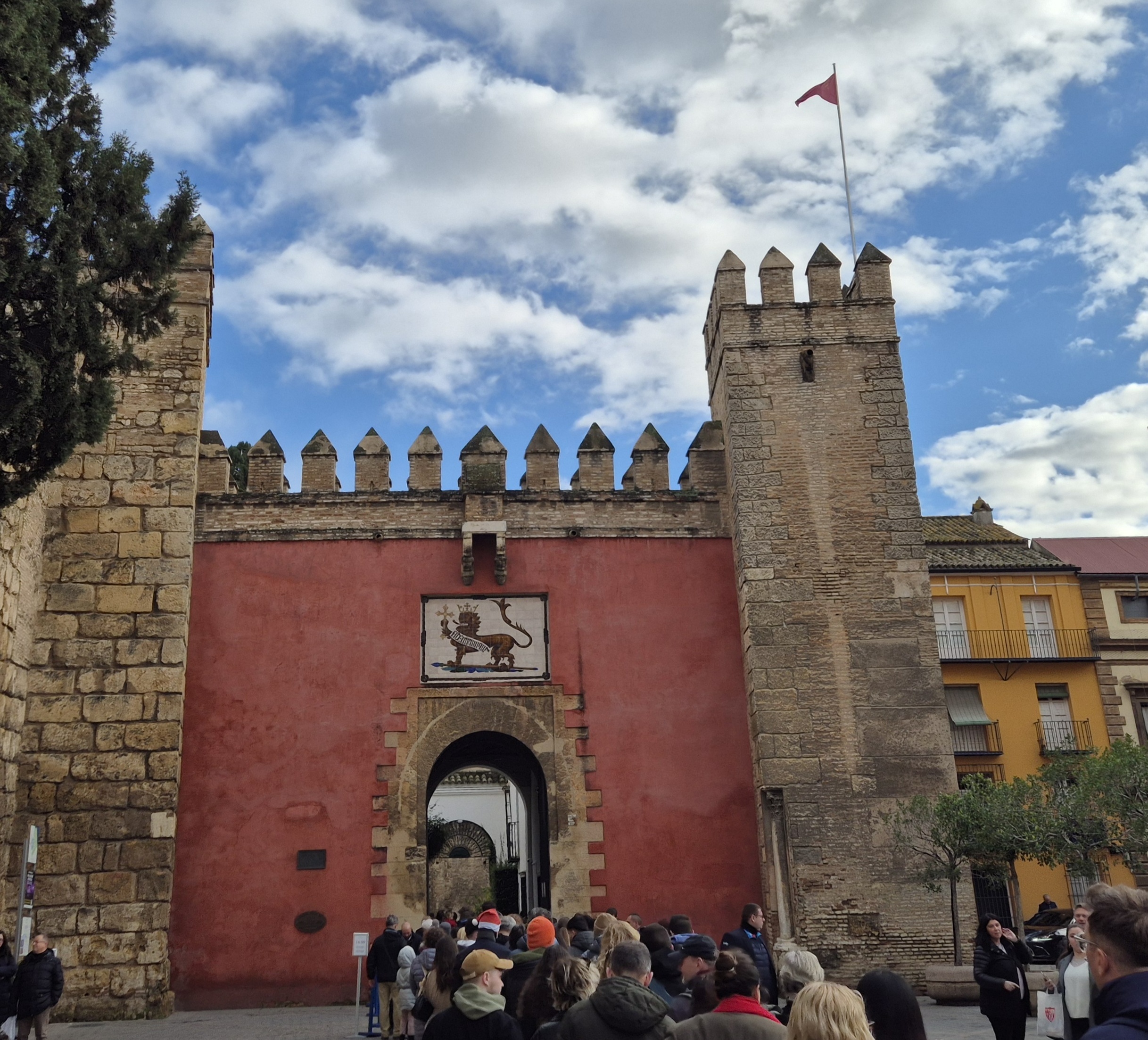
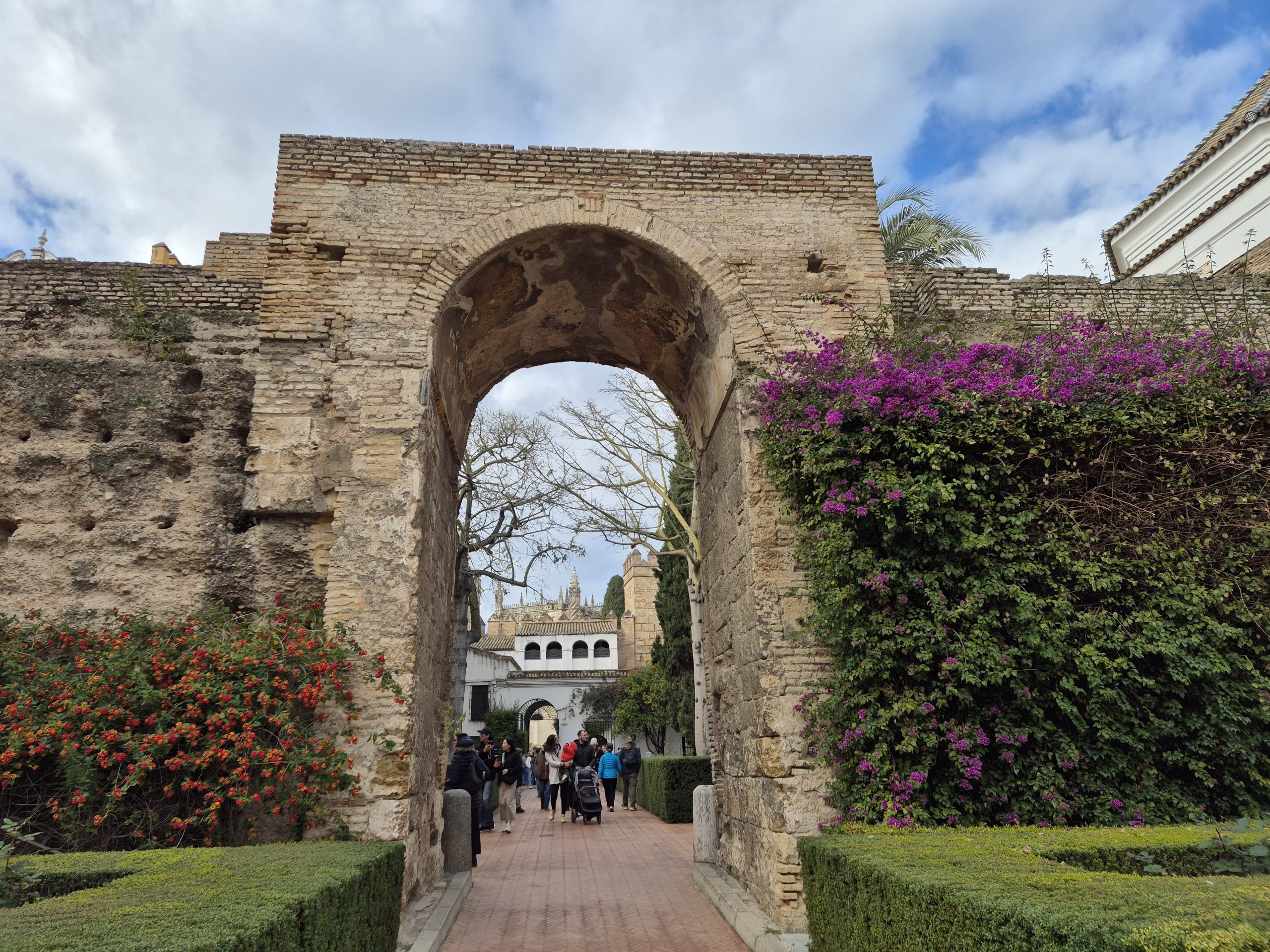
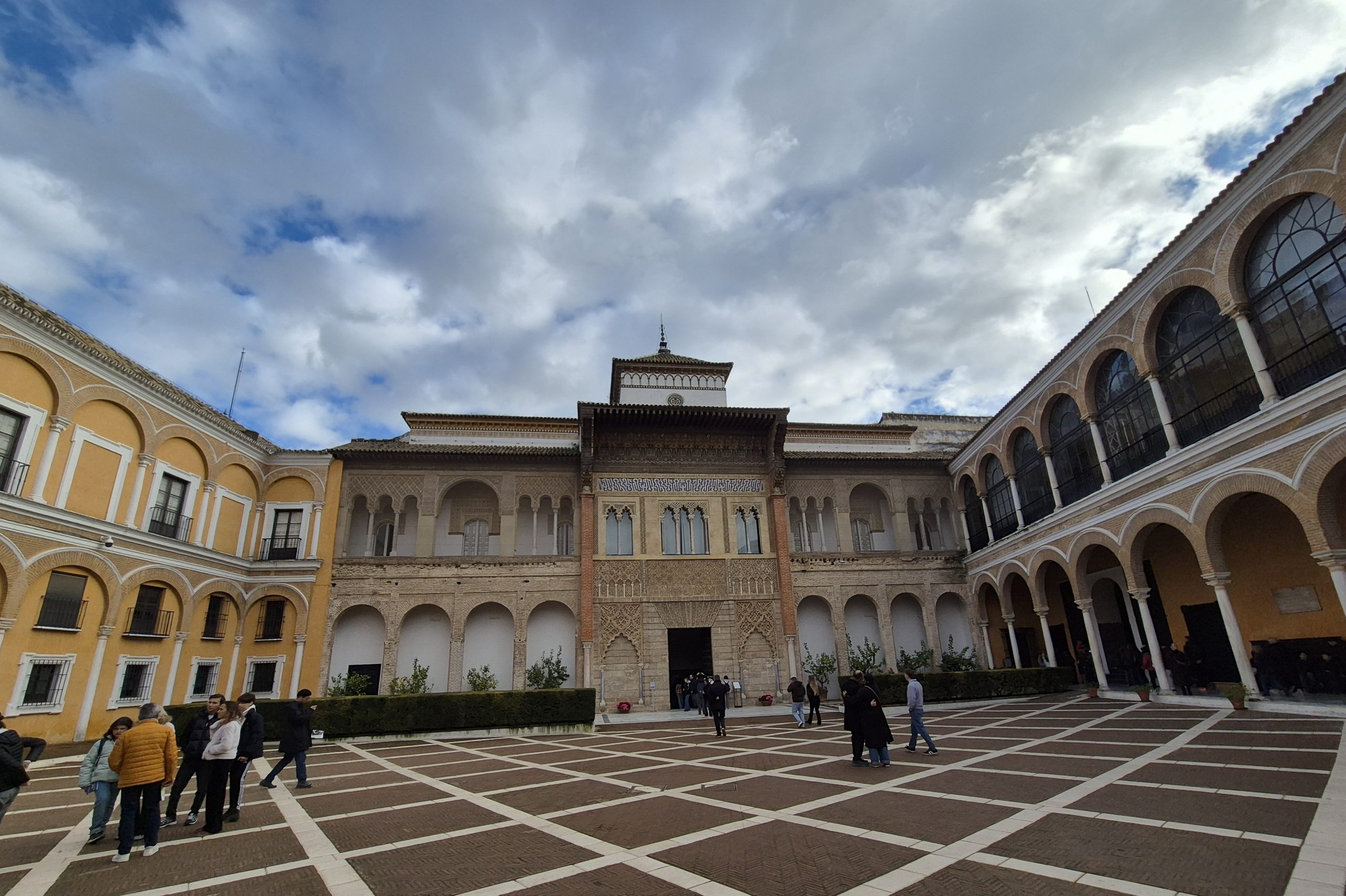
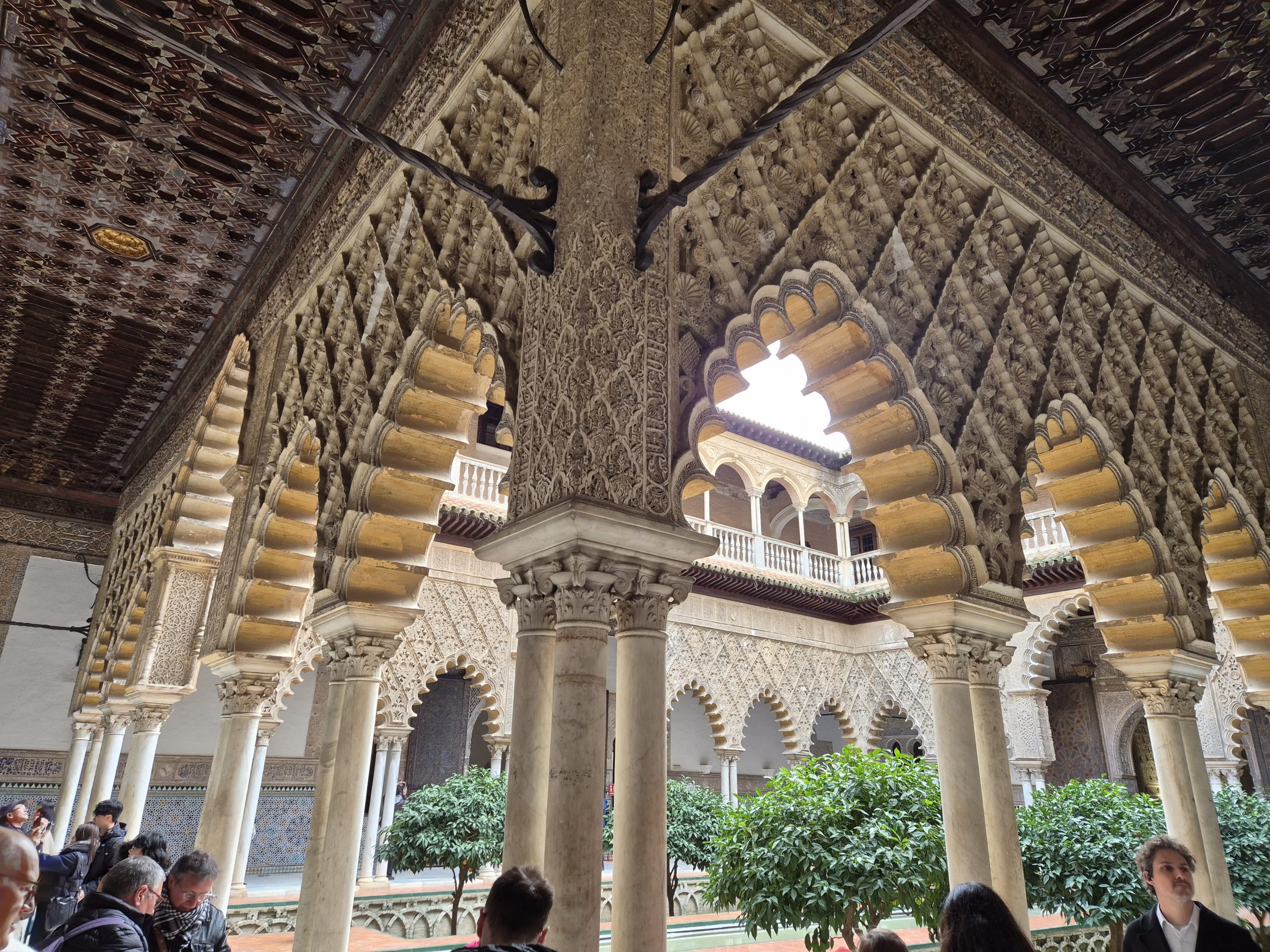
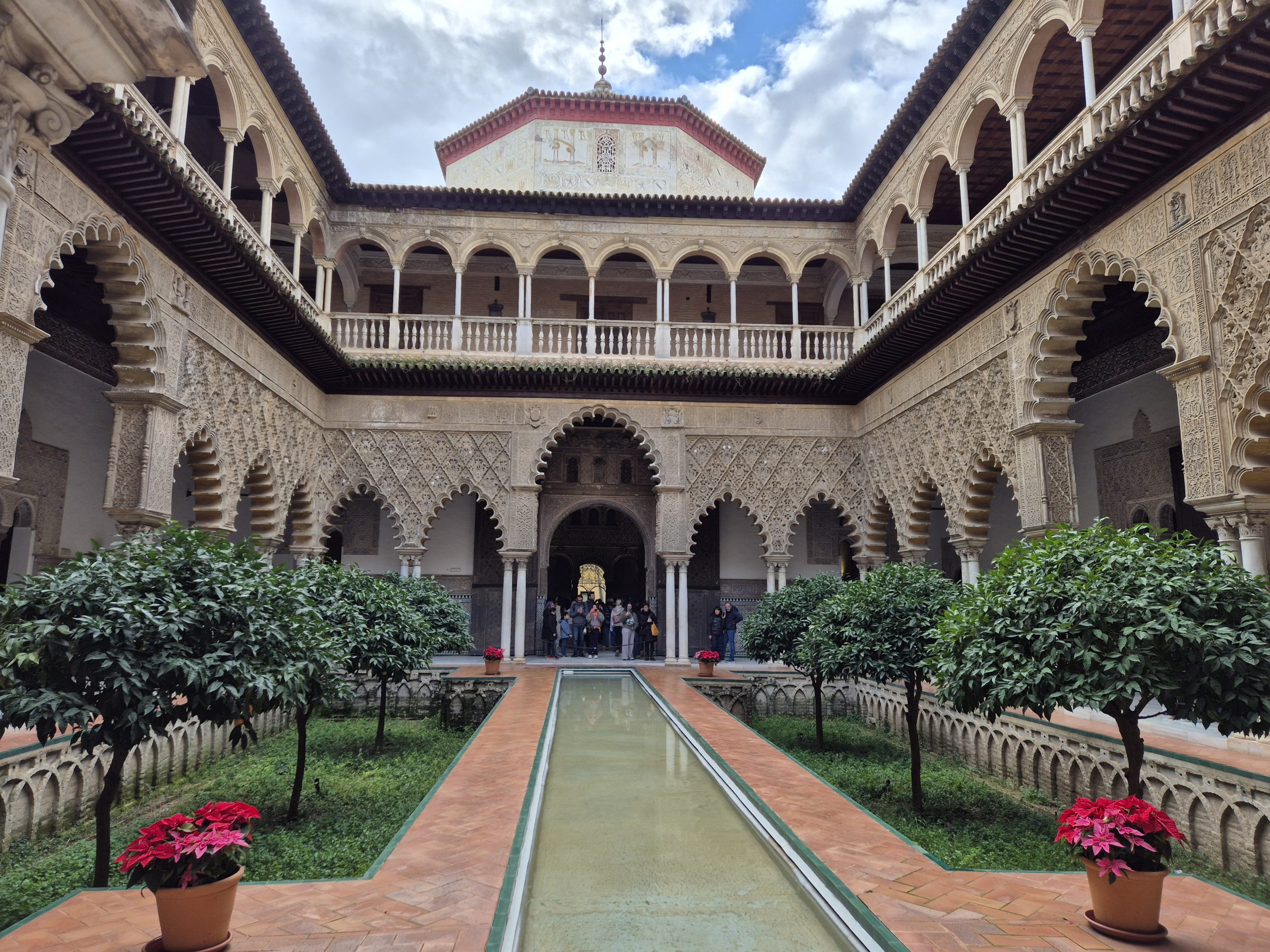
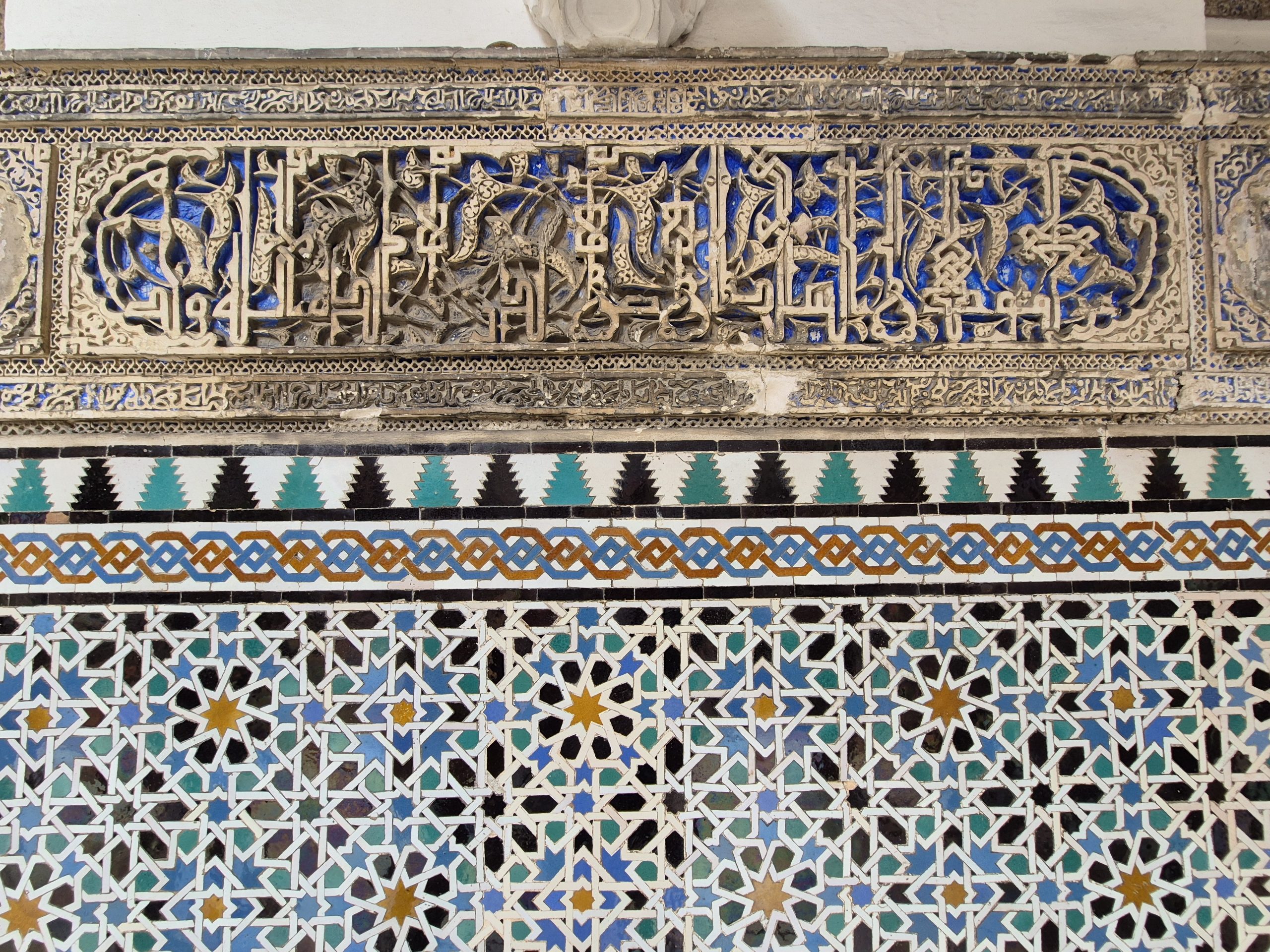
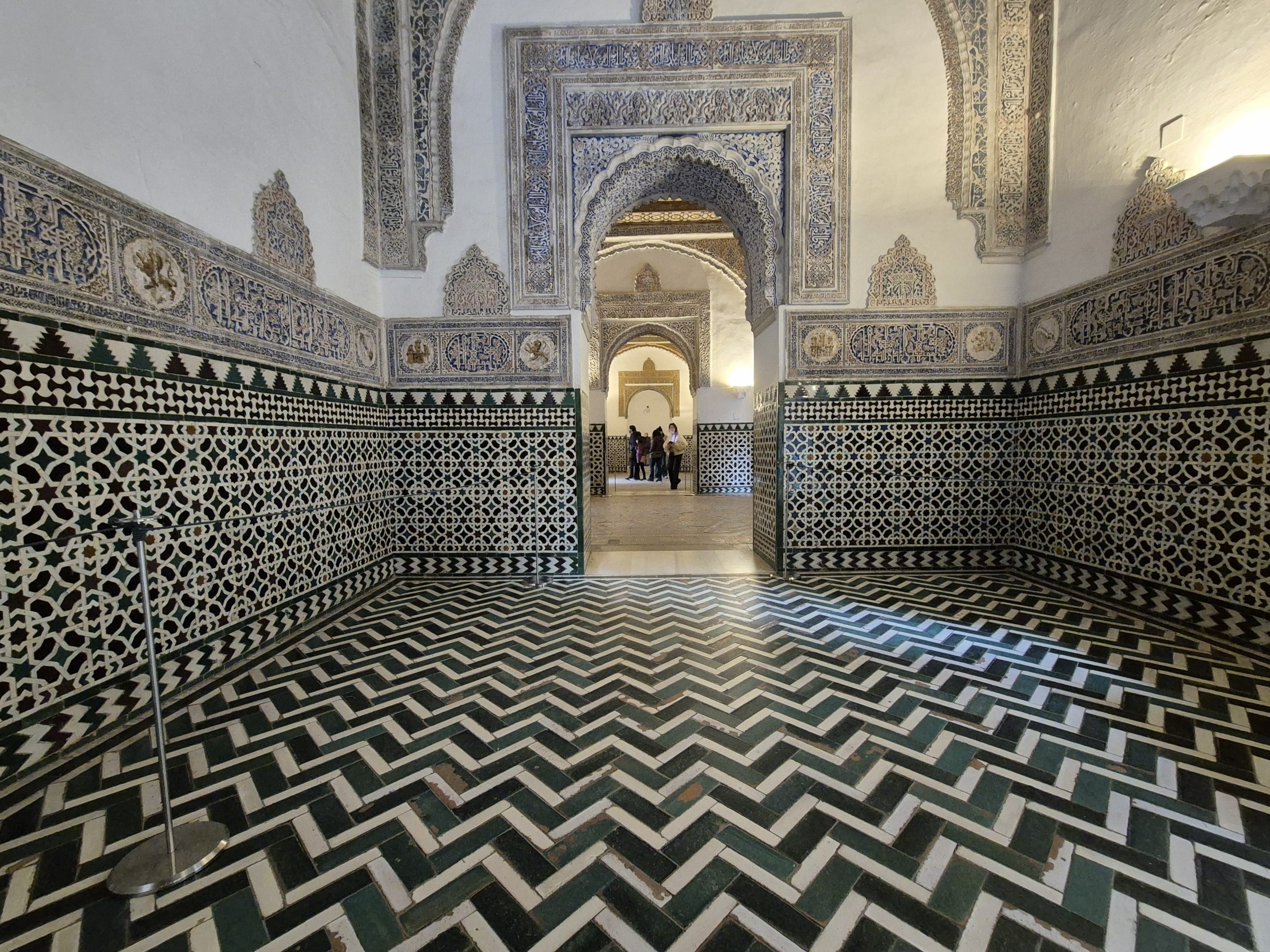
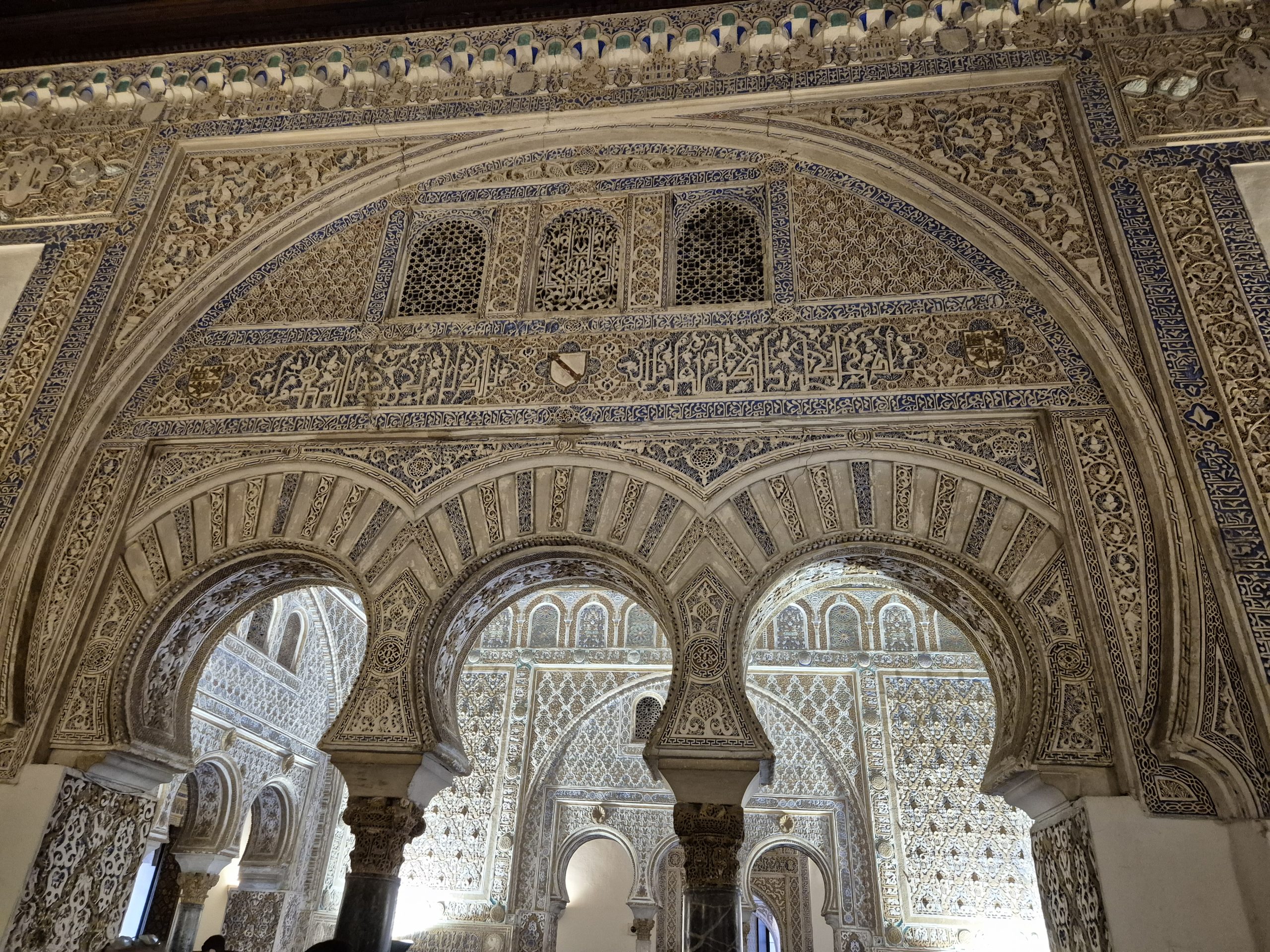
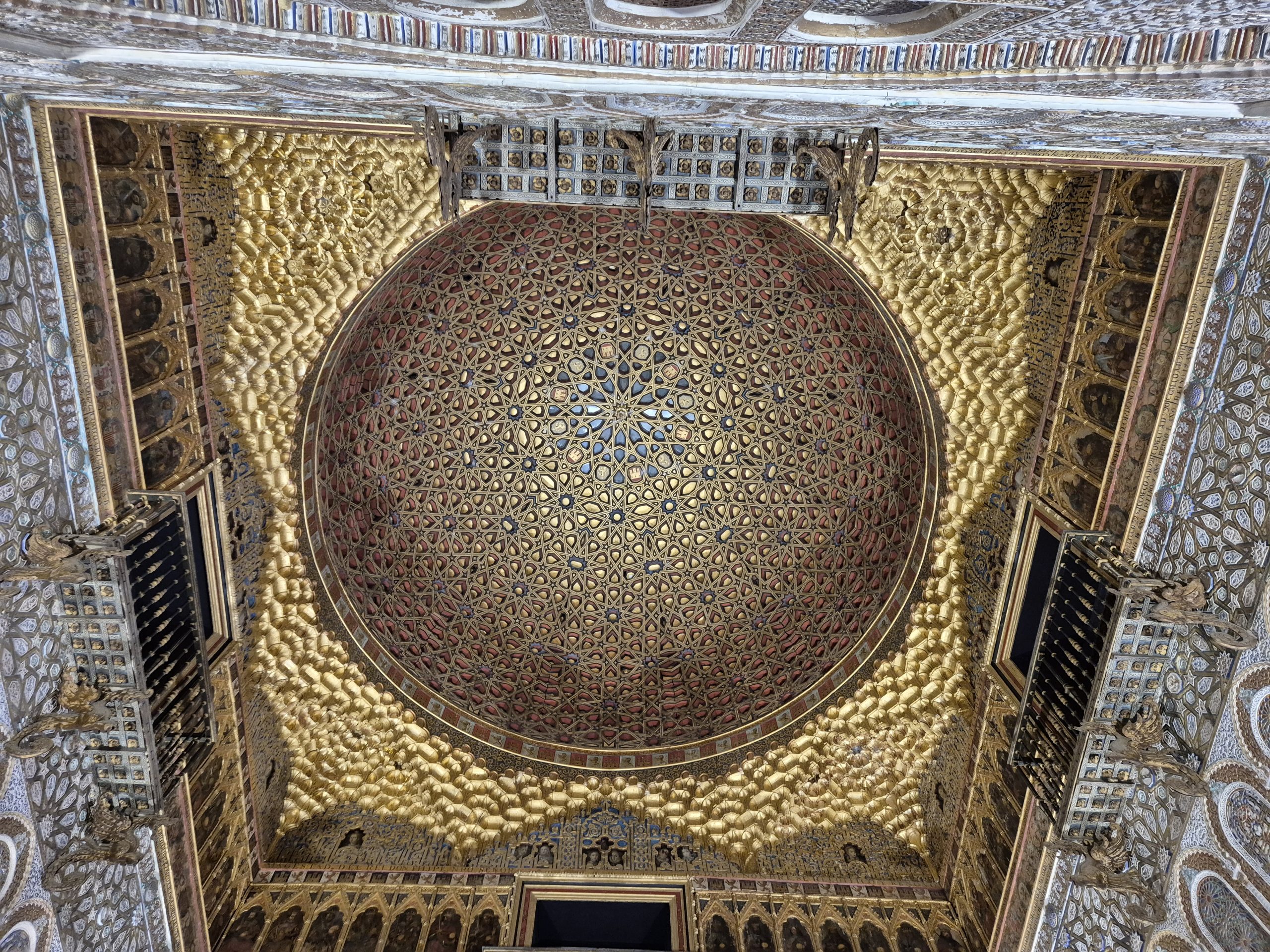
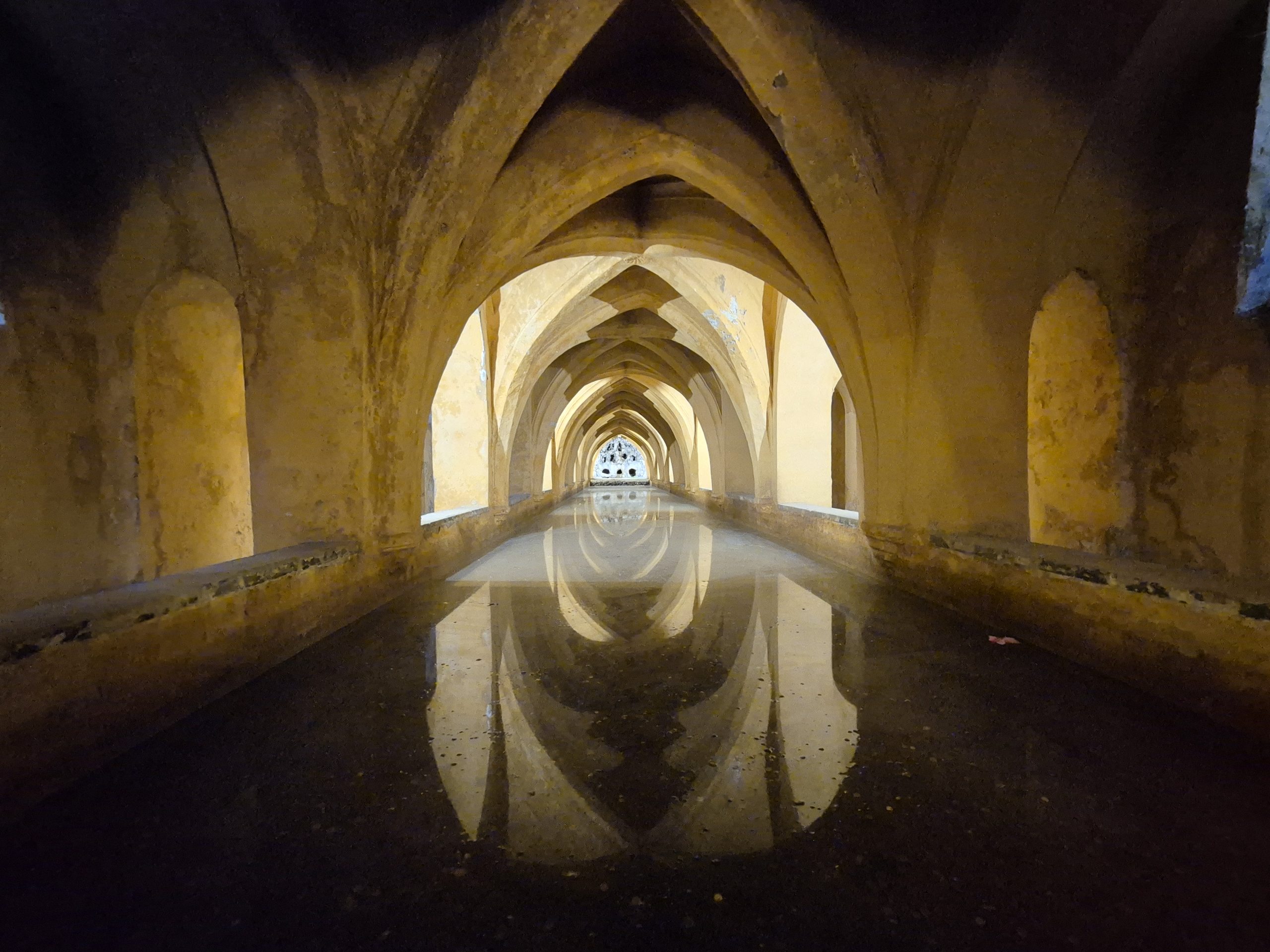
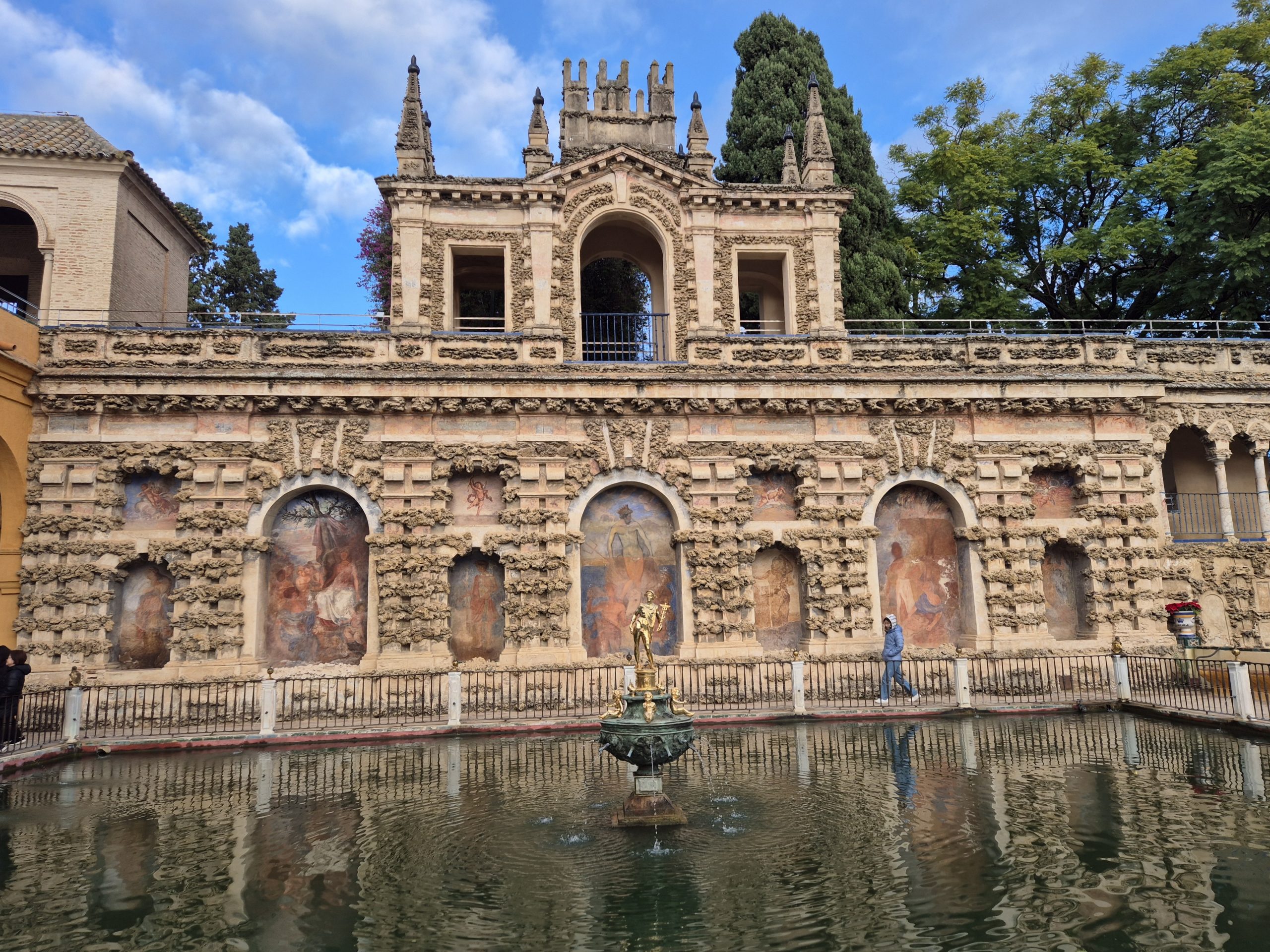
We spent our first afternoon wandering the cathedral square until our pre-booked slot for the Royal Alcázar – and pre-booked it had to be – we’d reserved our slot some three months ahead – because this is the busiest, most famous of all the Andalusian palaces. The architecture is genuinely dazzling: Mughal-like ornamentation, intricate filigree, tilework that rewards close looking. At its heart is the Patio de las Doncellas, a long reflecting pool set between two storeys of carved-stucco arcades, with red poinsettias potted around the sunken garden – the most photographed space in the palace, and rightly so. I was reminded of our Fatehpur Sikri visit – my second, and B’s first view of breathtaking Mughal architecture. Back to Seville’s Alcázar: it was so crowded that I found myself a little put off, admiring the craft while being shuffled past it. The ornamentation was dazzling but the crowds overwhelming: as we walked through room after room, I found myself looking for quiet spaces.
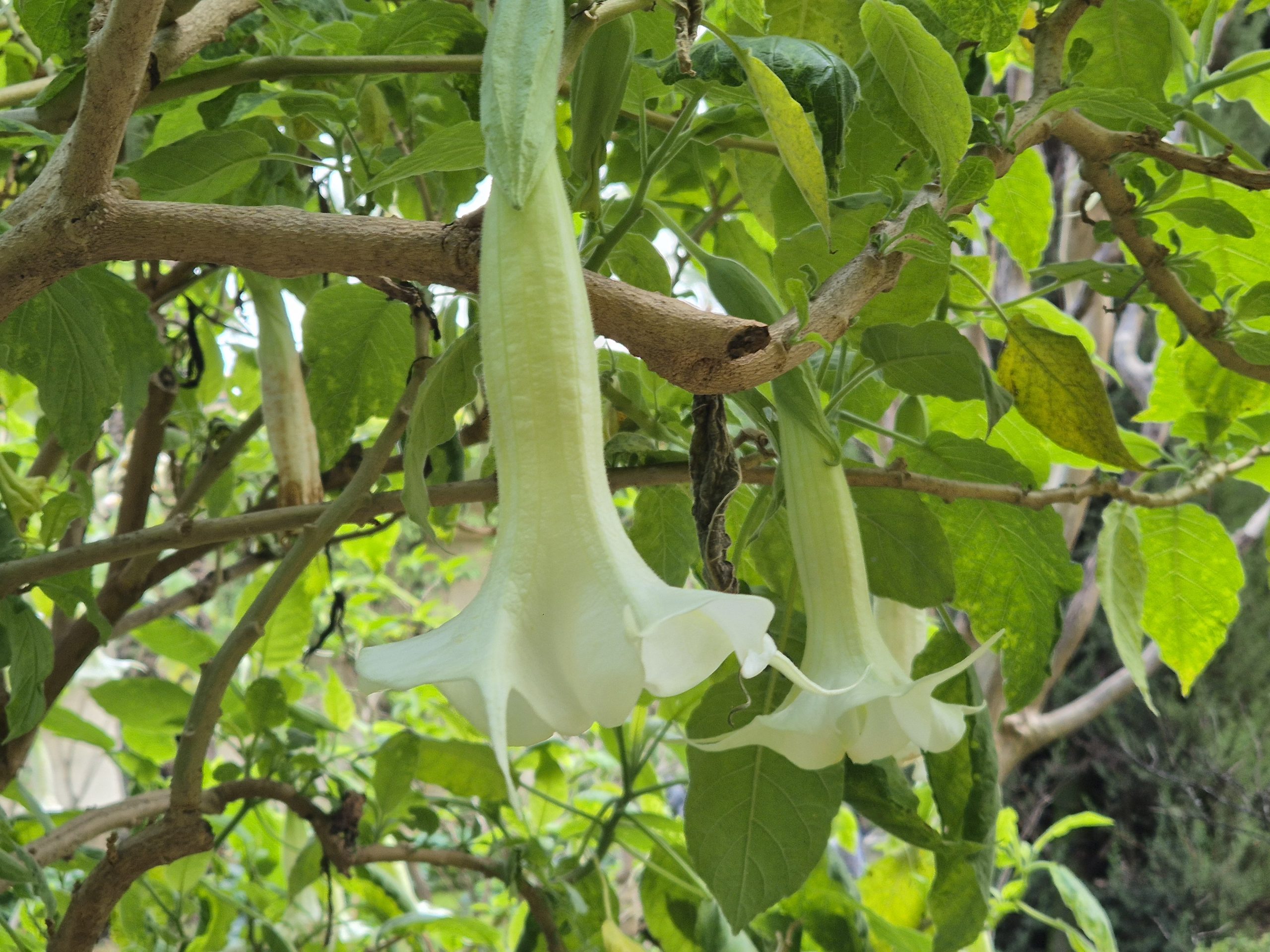
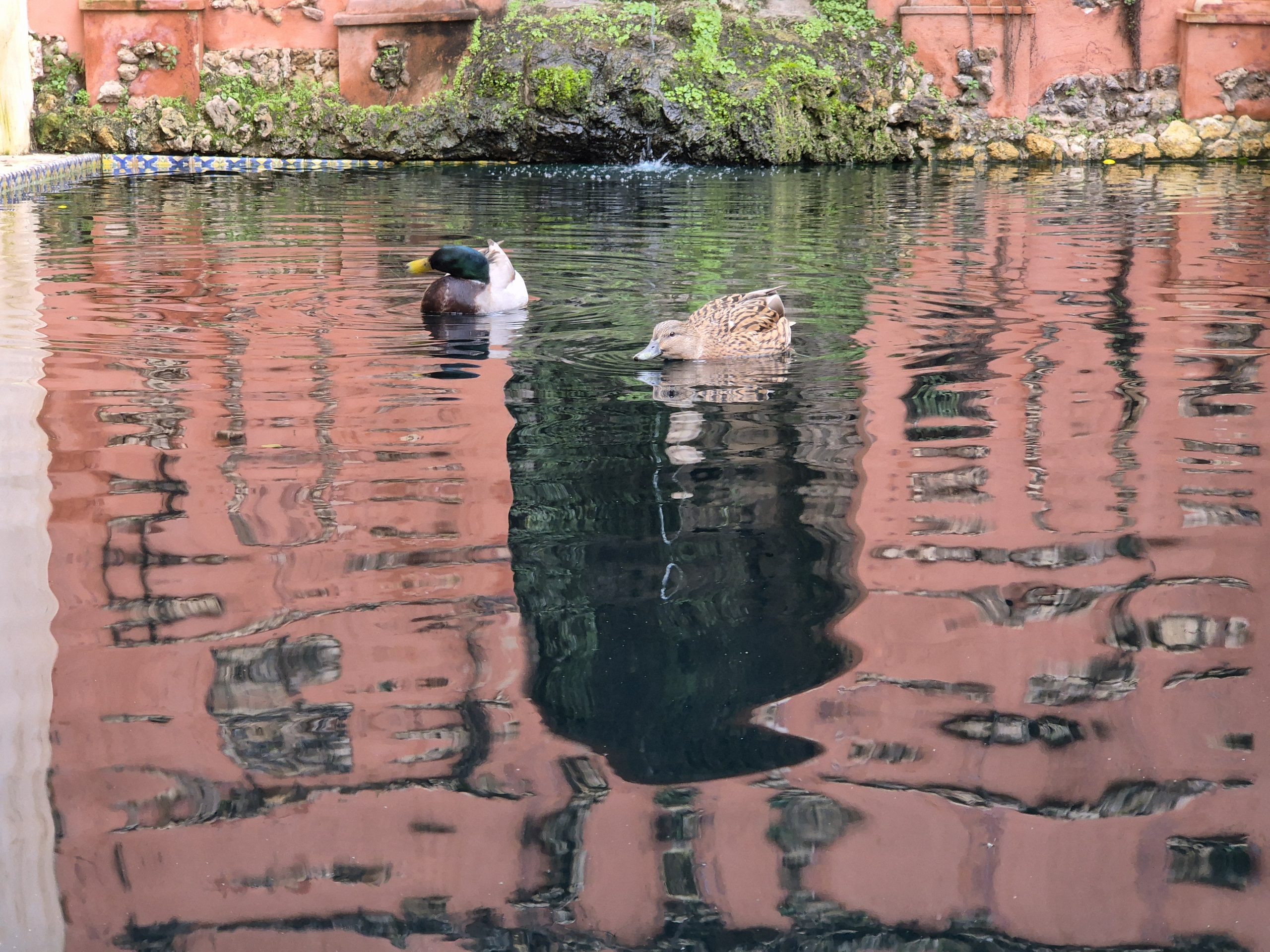
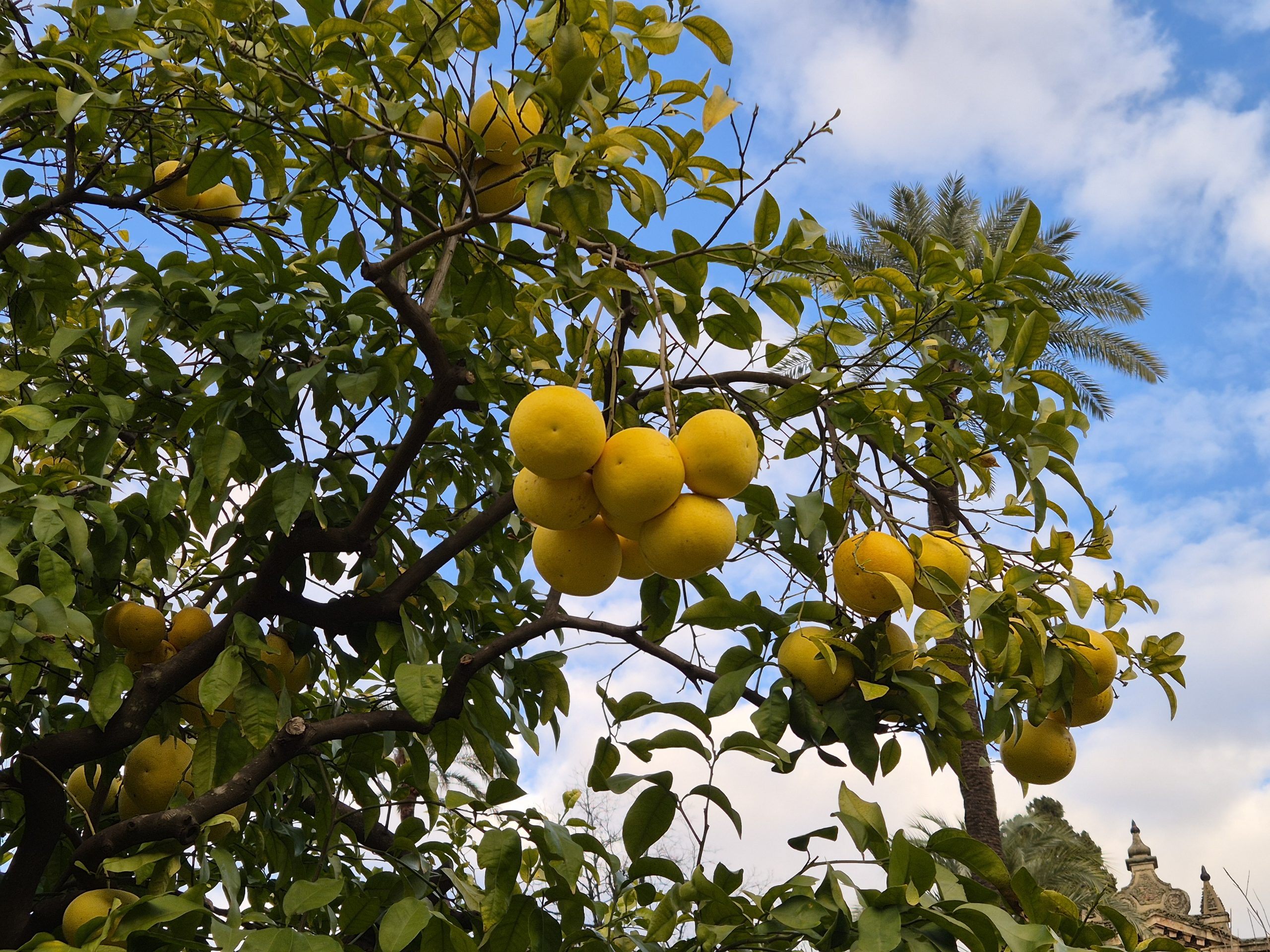
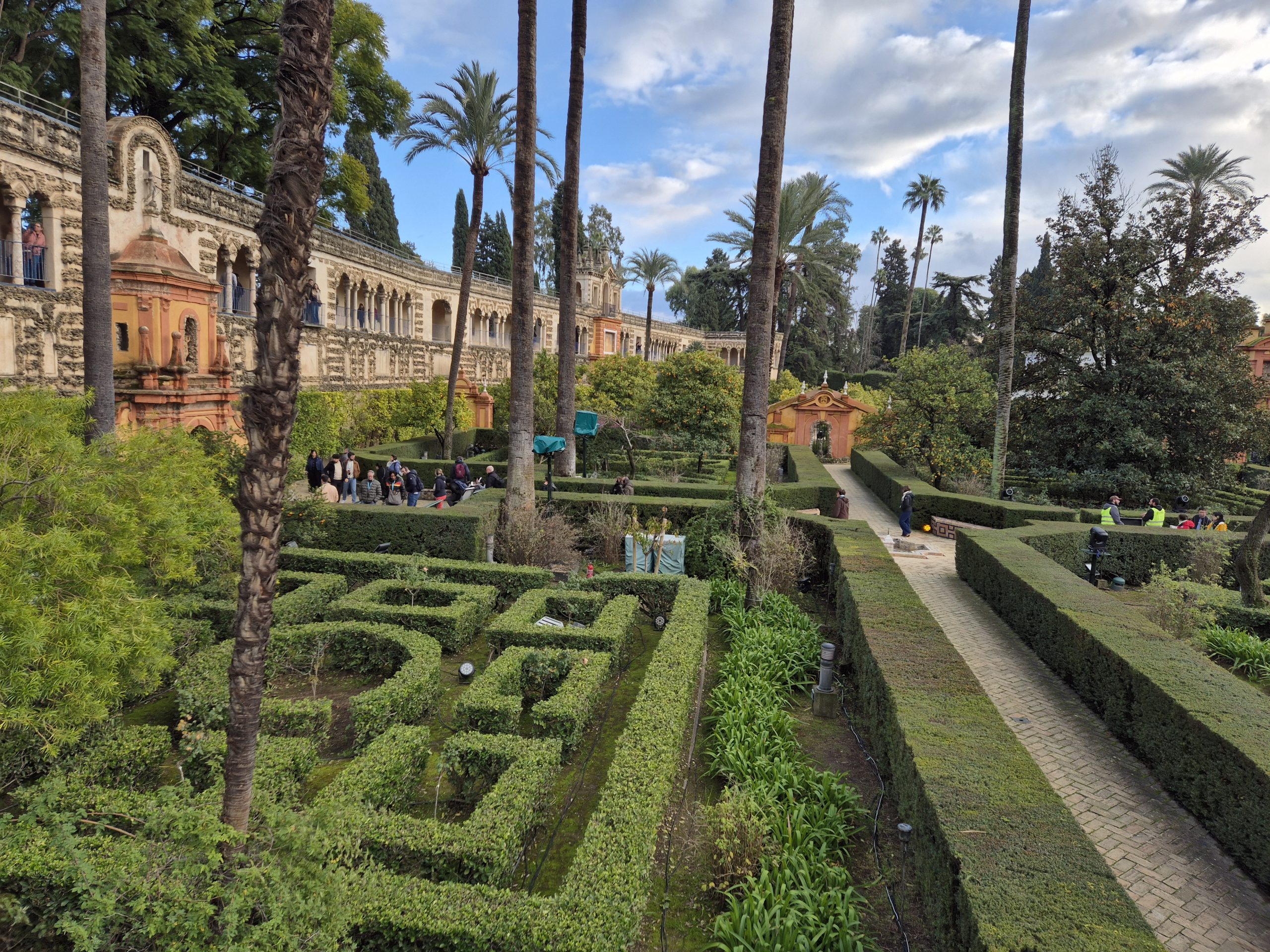
I was more at ease later, in the vast gardens, where space reasserts itself – beds of lantana, angel’s trumpet dangling its pale bells, bitter-orange trees heavy with uneaten fruit. A couple of mallards were at ease walking amidst the tourists, pecking around and sometimes swimming a little in the fountain pools. B and I sat enjoying the mallards at one of the outdoor squares: unflappable in spite of kids chasing them; small, yet managing not to get trodden by all the human feet. We walked past a maze and scattered pavilions, and the crowds thinned enough to let the place breathe. The palace gallery walkways on the first floor, visible from the gardens, was abuzz with people. Zero motivation to go up to explore that level.
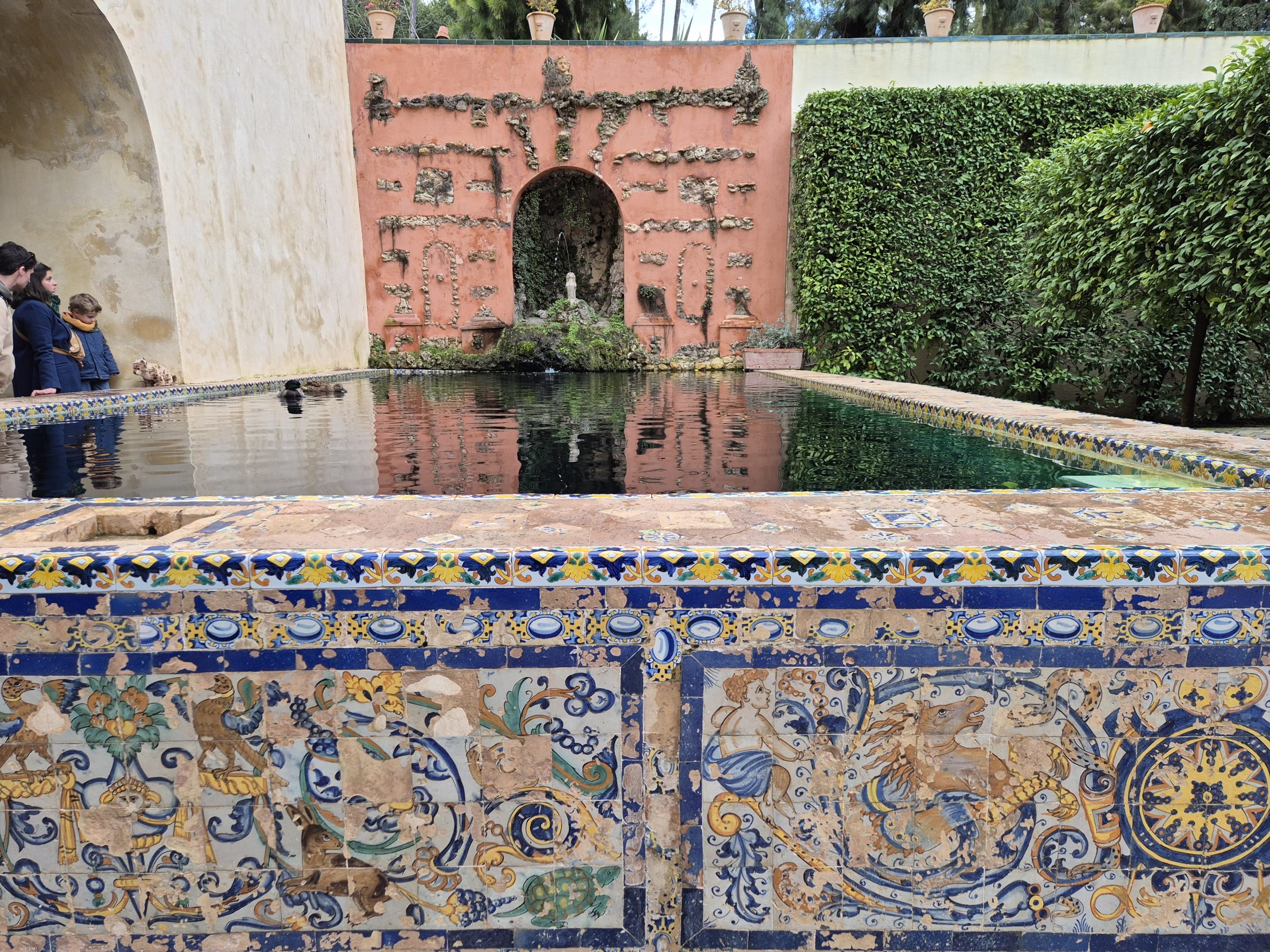
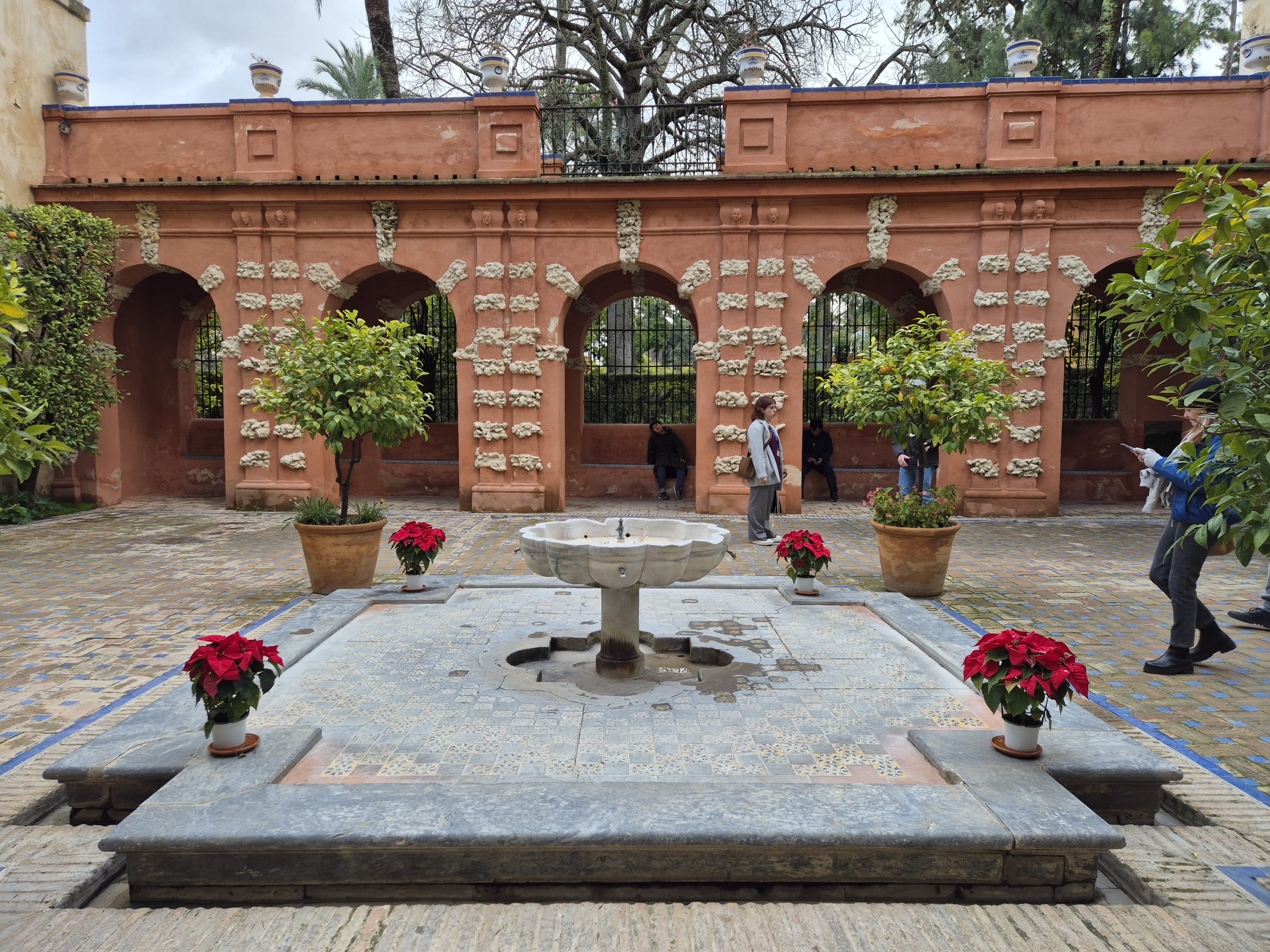
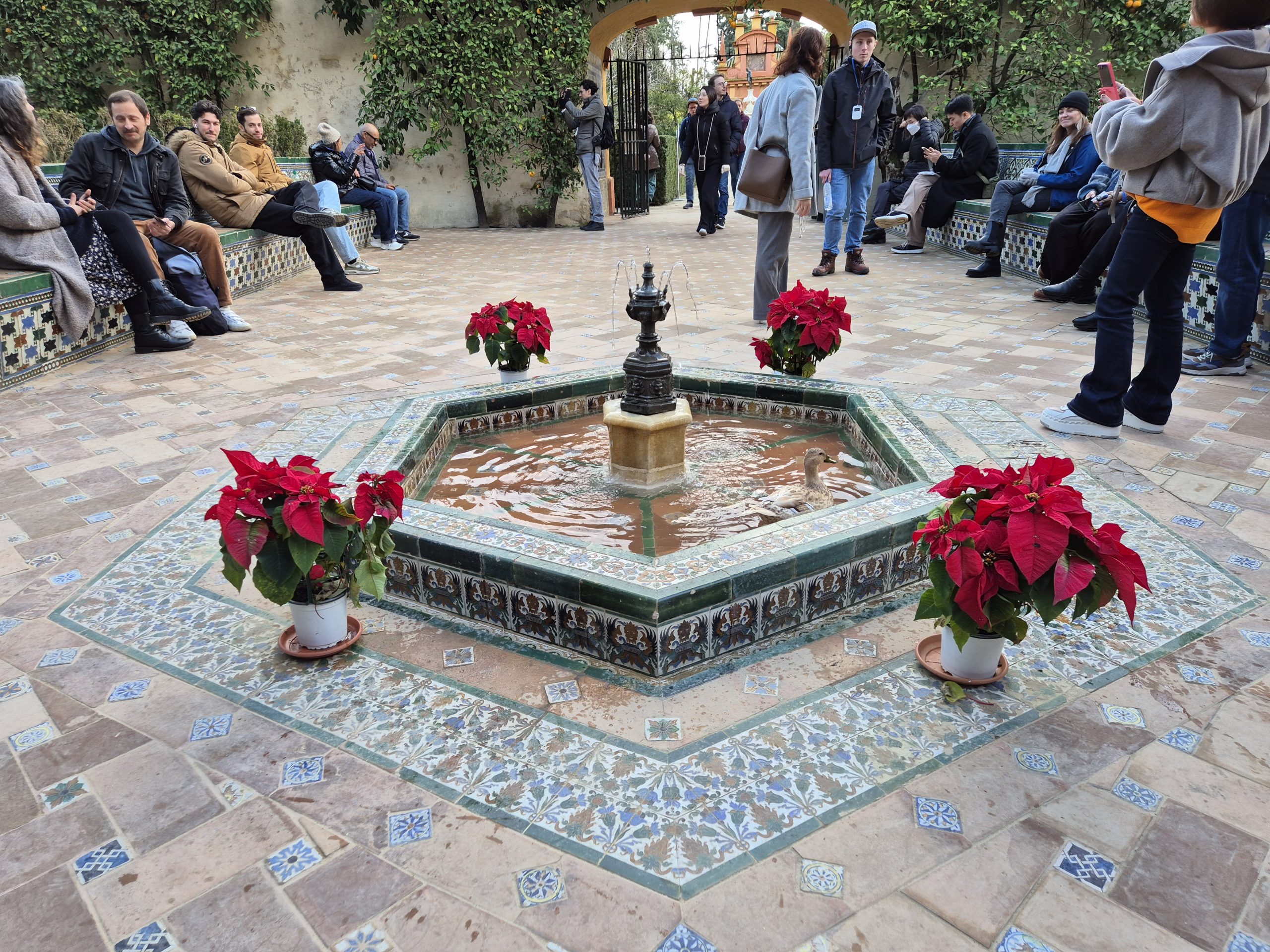
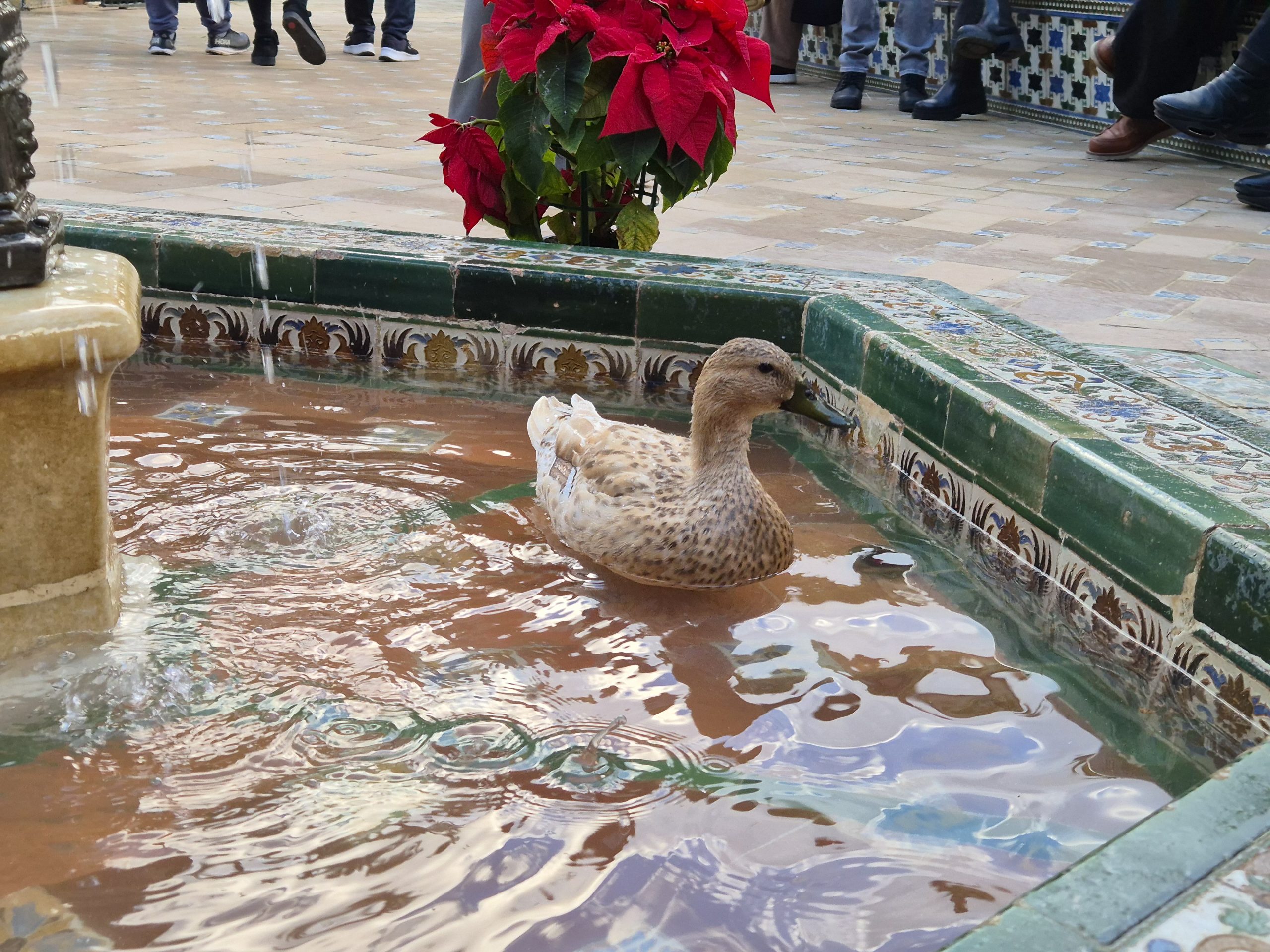
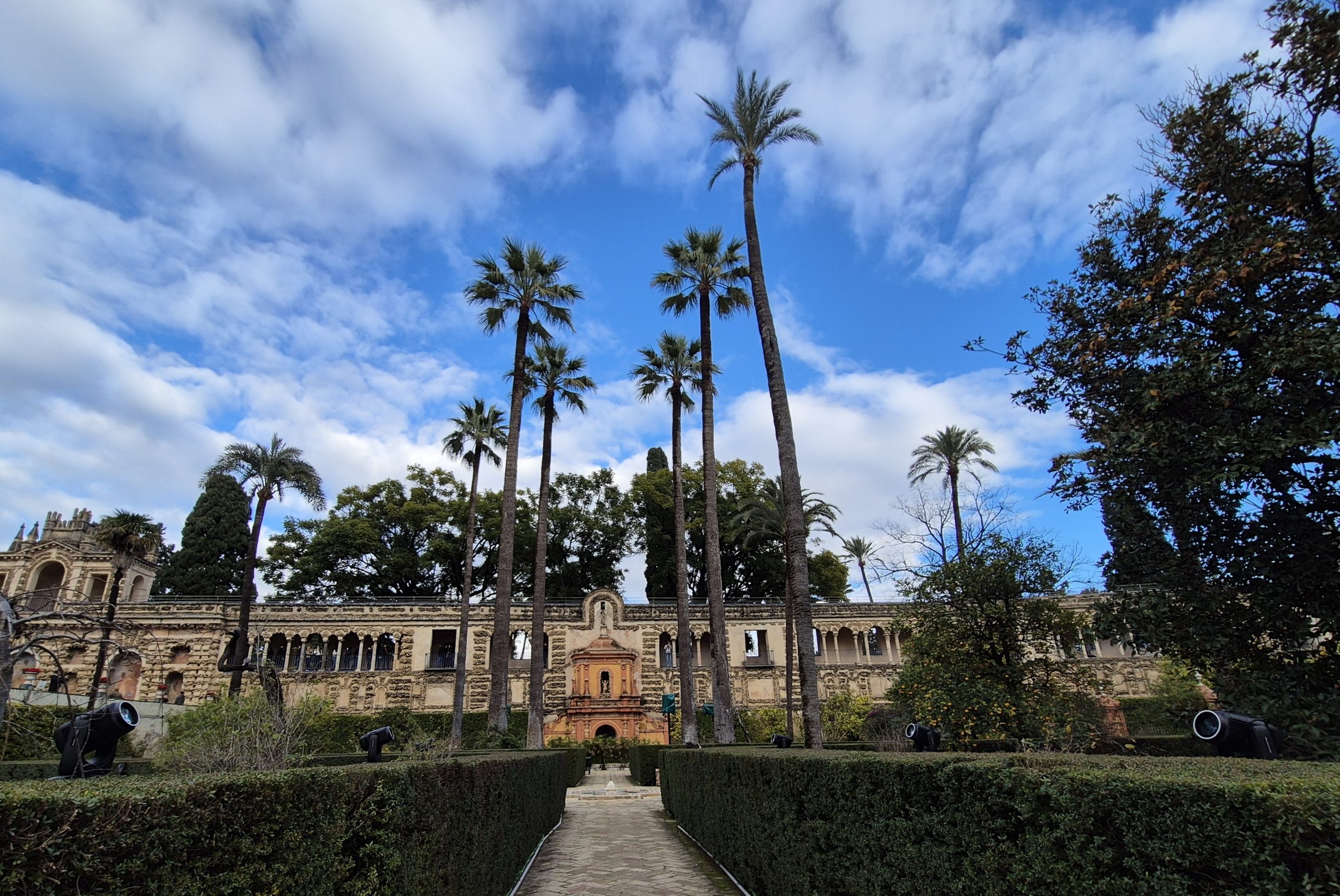
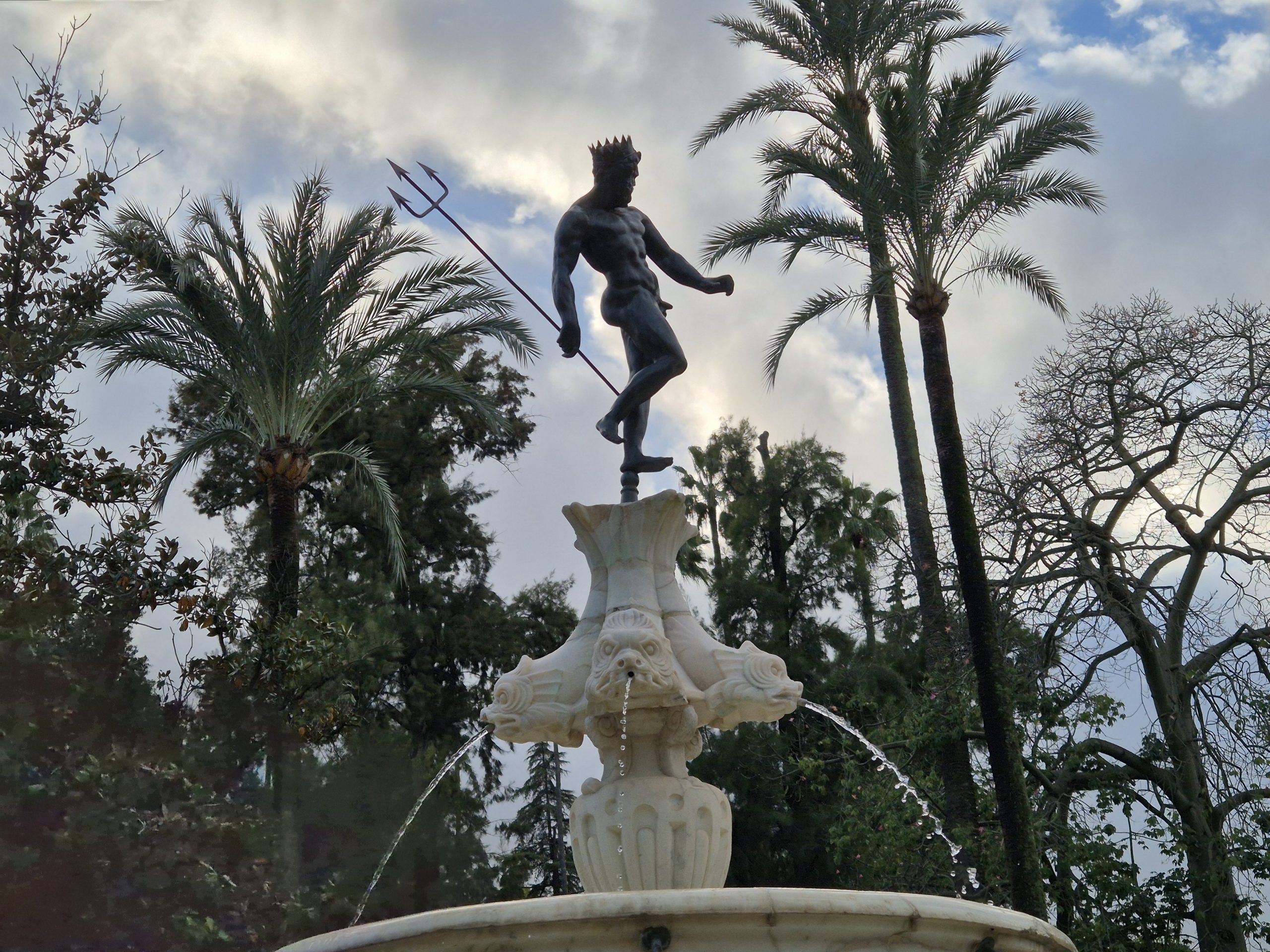
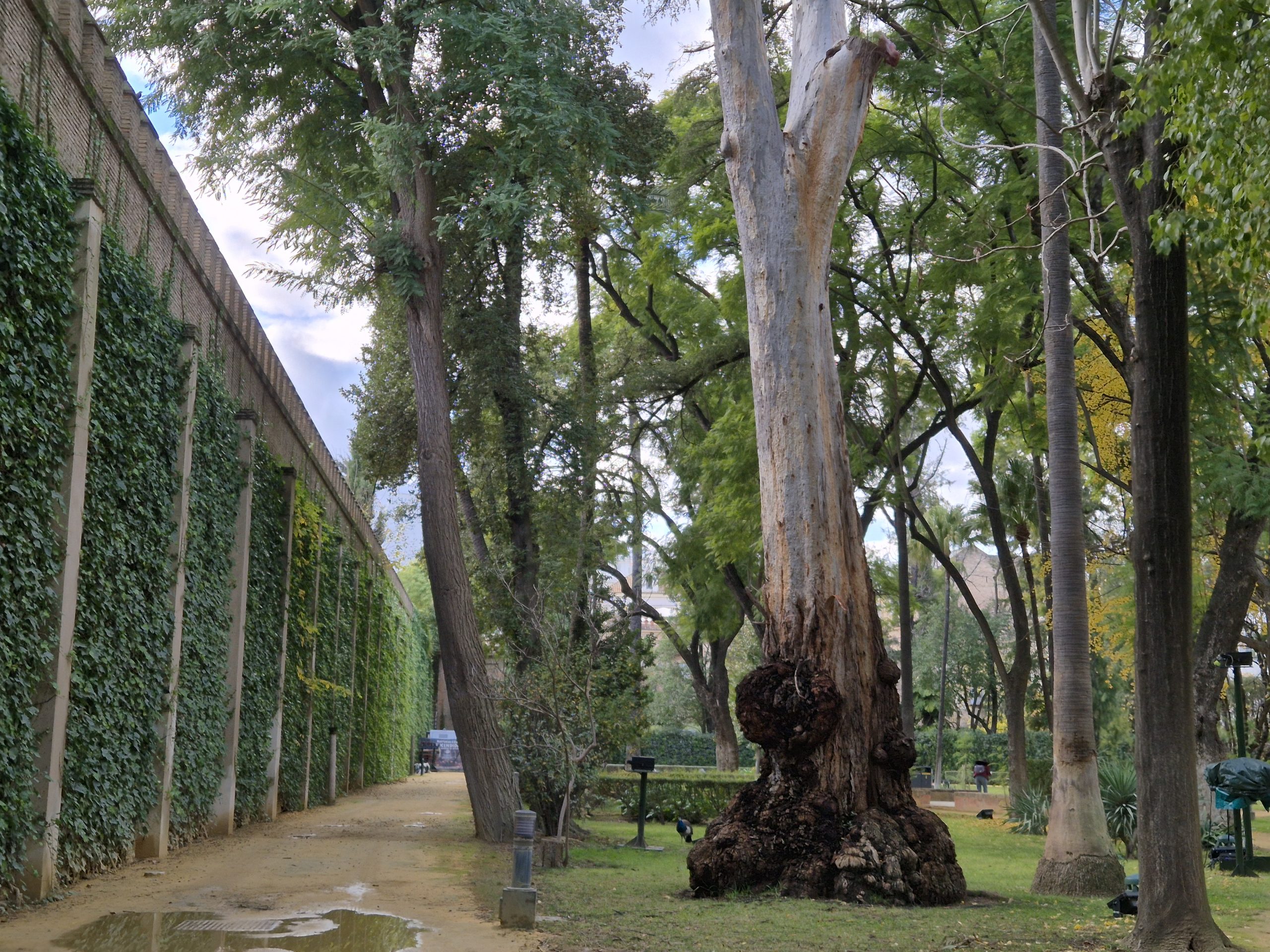
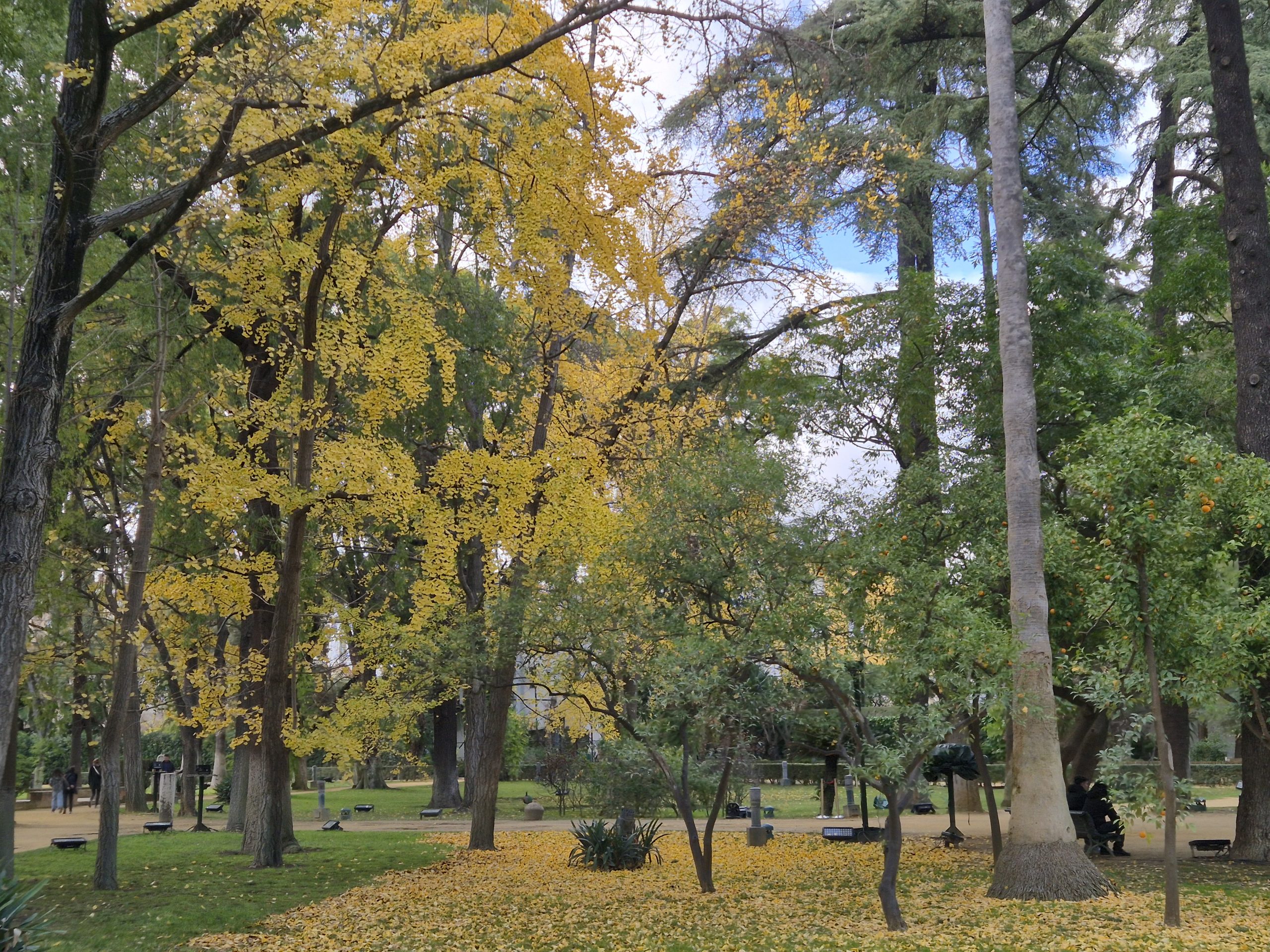
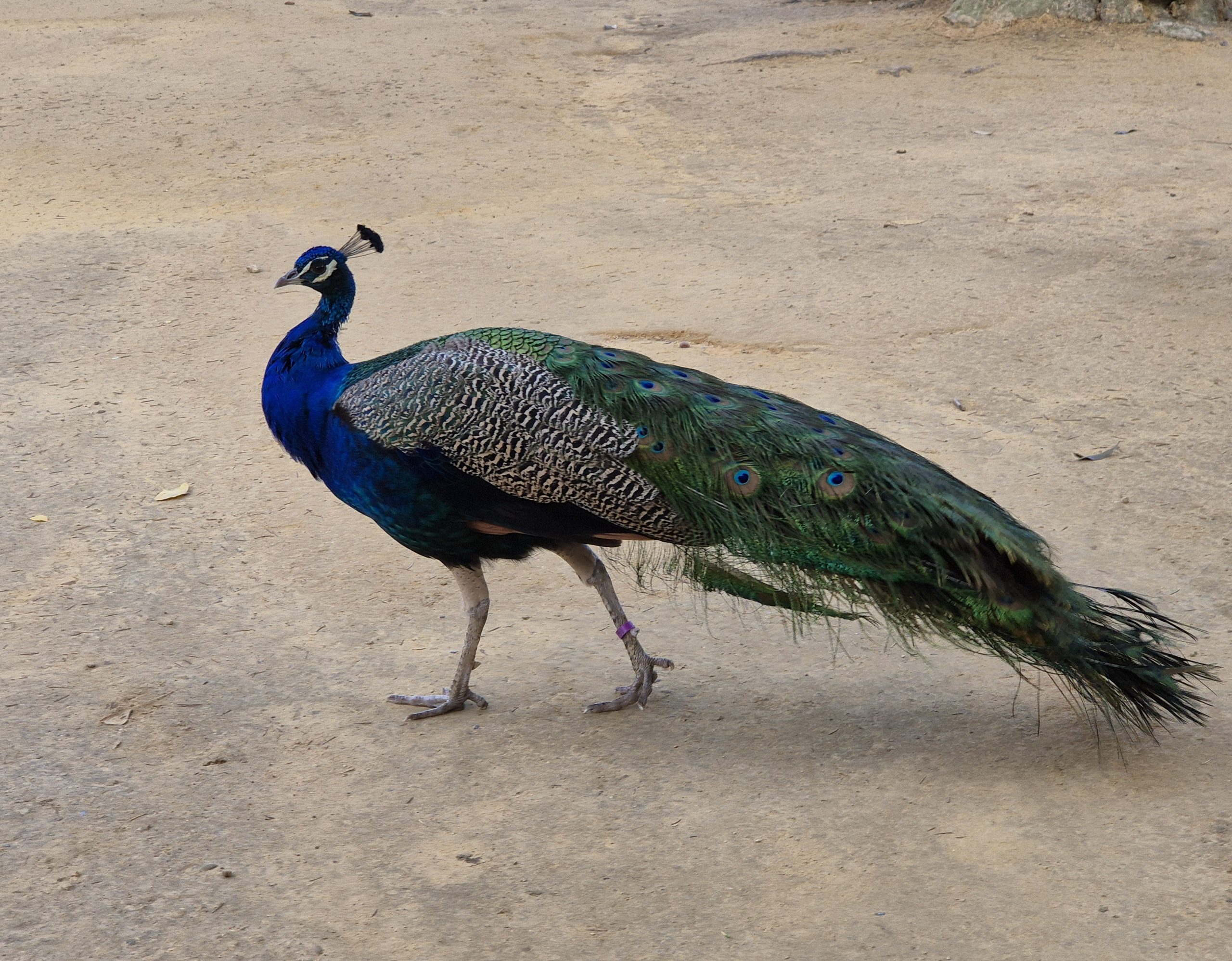
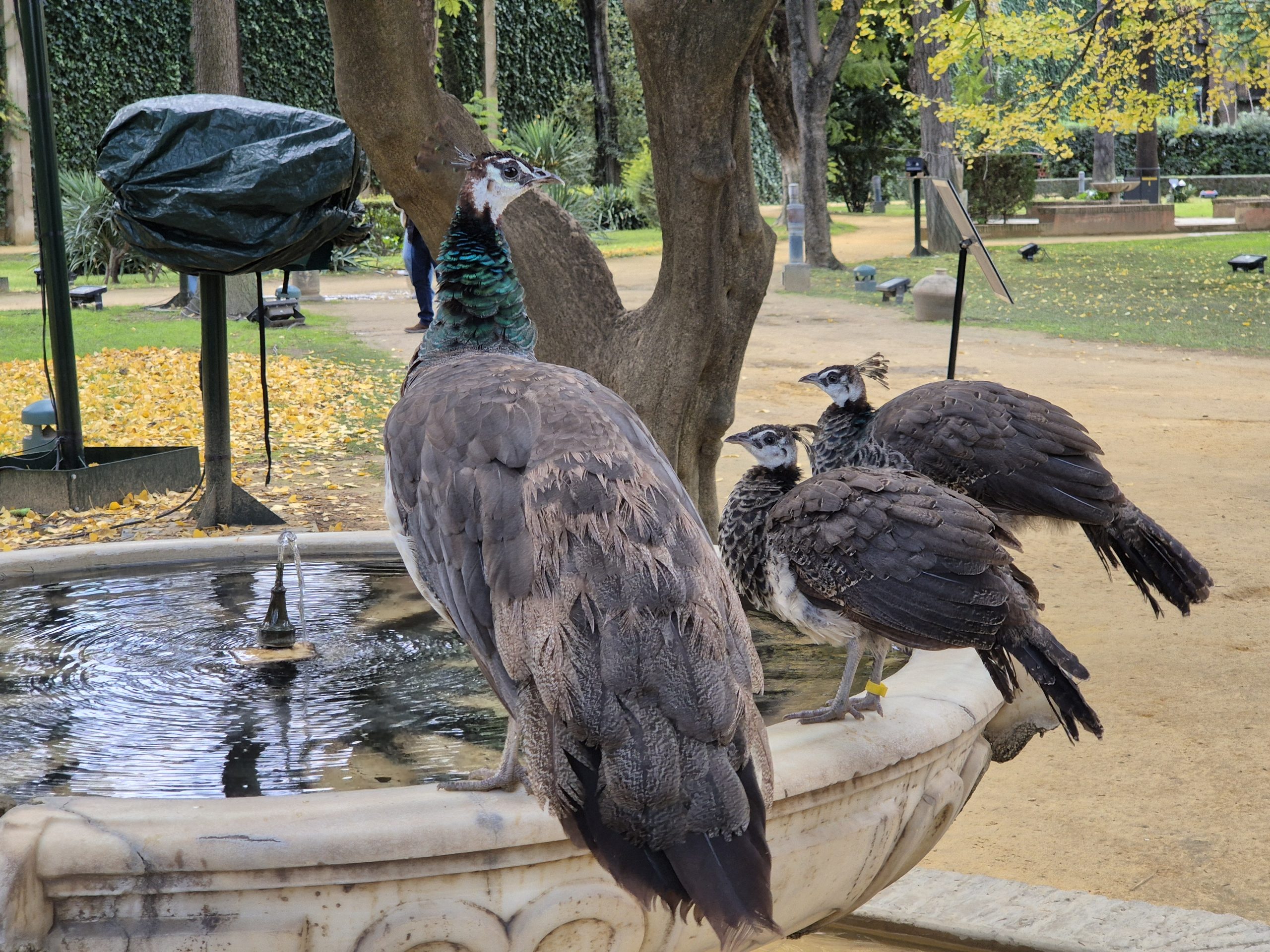
Came to a sort of “back garden” – of palatial proportions. My impression has vastness, tall grey-trunked trees, a very high perimeter wall, and peacocks. A few peaceful tourists sitting here and there on the benches. Peacocks wandered the paths under the trees unperturbed by the historical significance of the place. A peahen was trailed by her three chicks, all of them comically flapping up onto a fountain behind their mother.
A night on the Guadalquivir
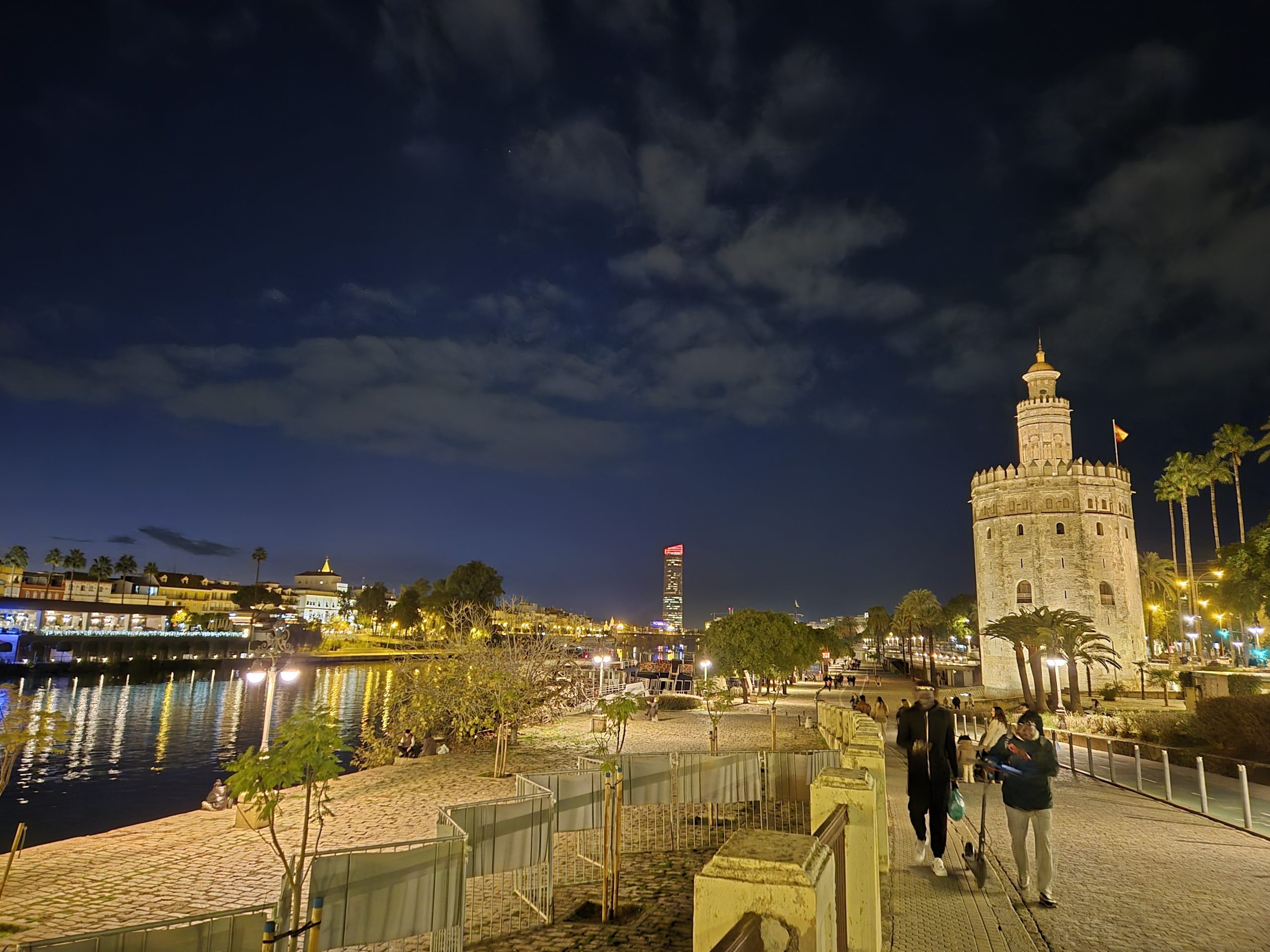
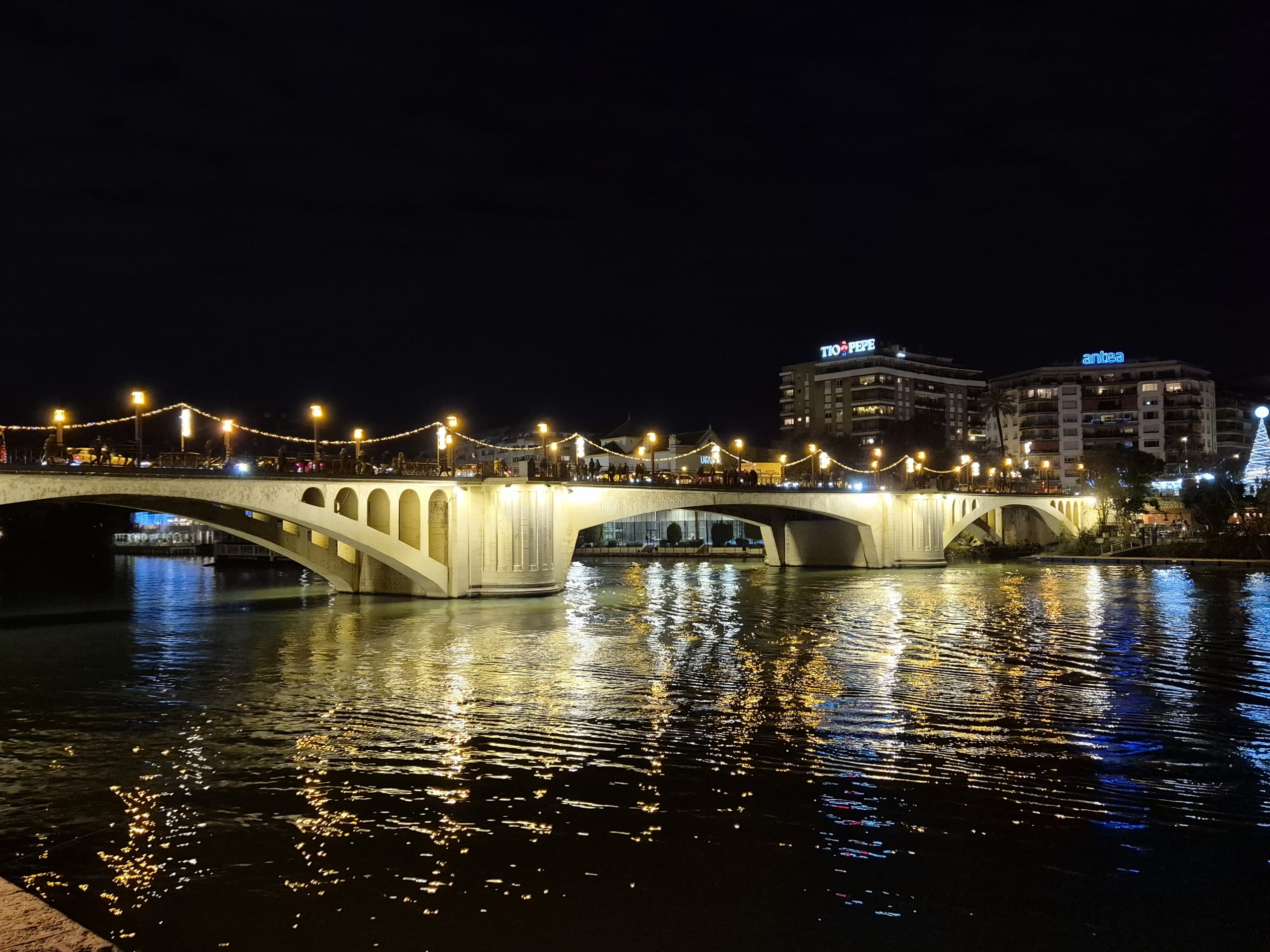
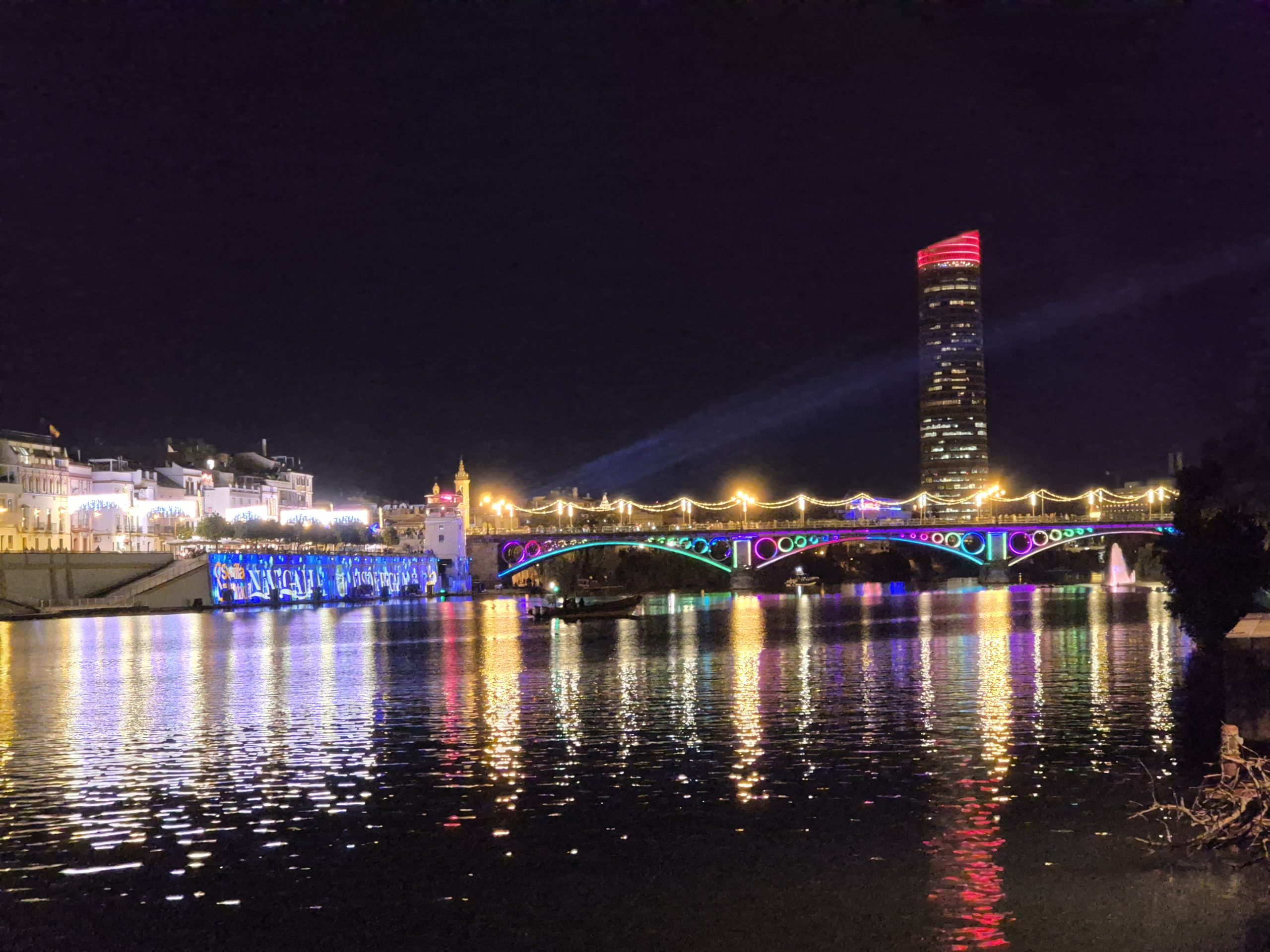
That first evening we took a stroll along the Guadalquivir – the same river we’d crossed in Córdoba, here in the lower end of its course, wider and fuller. We enjoyed the non-touristy feel along the river bank. It was quiet except for a few locals on their night run. The reflection of the city lights in the water was a pretty site. Then out of nowhere, a large crowd – seemed local – streamed towards us from the other direction. Apparently an open-air light-and-sound show beside the bridge had just ended. We were turned around, because beyond there was the setup for the show and ticketed entry. We jostled along with the crowd up some stairs, and made our way to the hotel, a 30 mins walk.
Festive lights
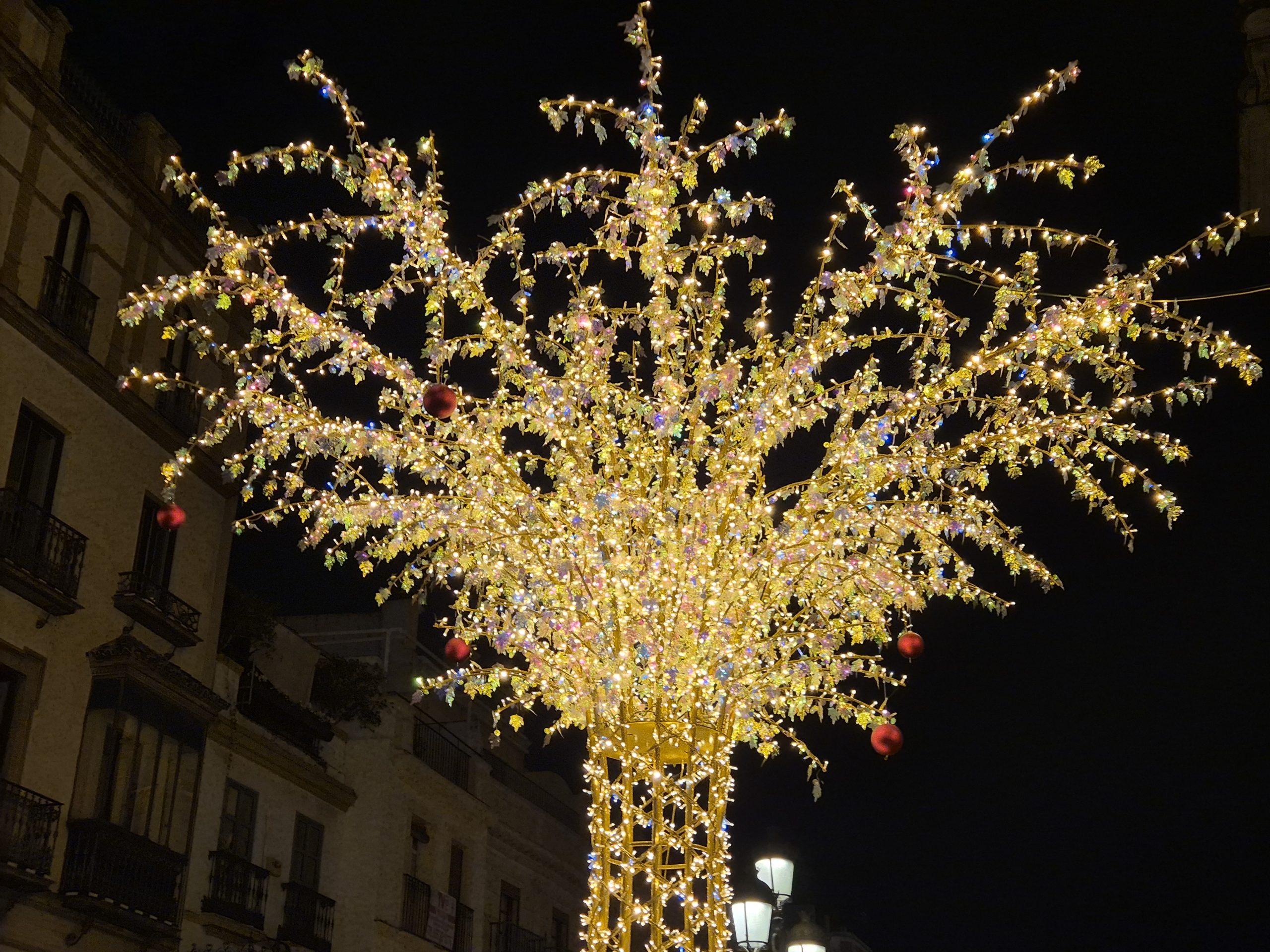
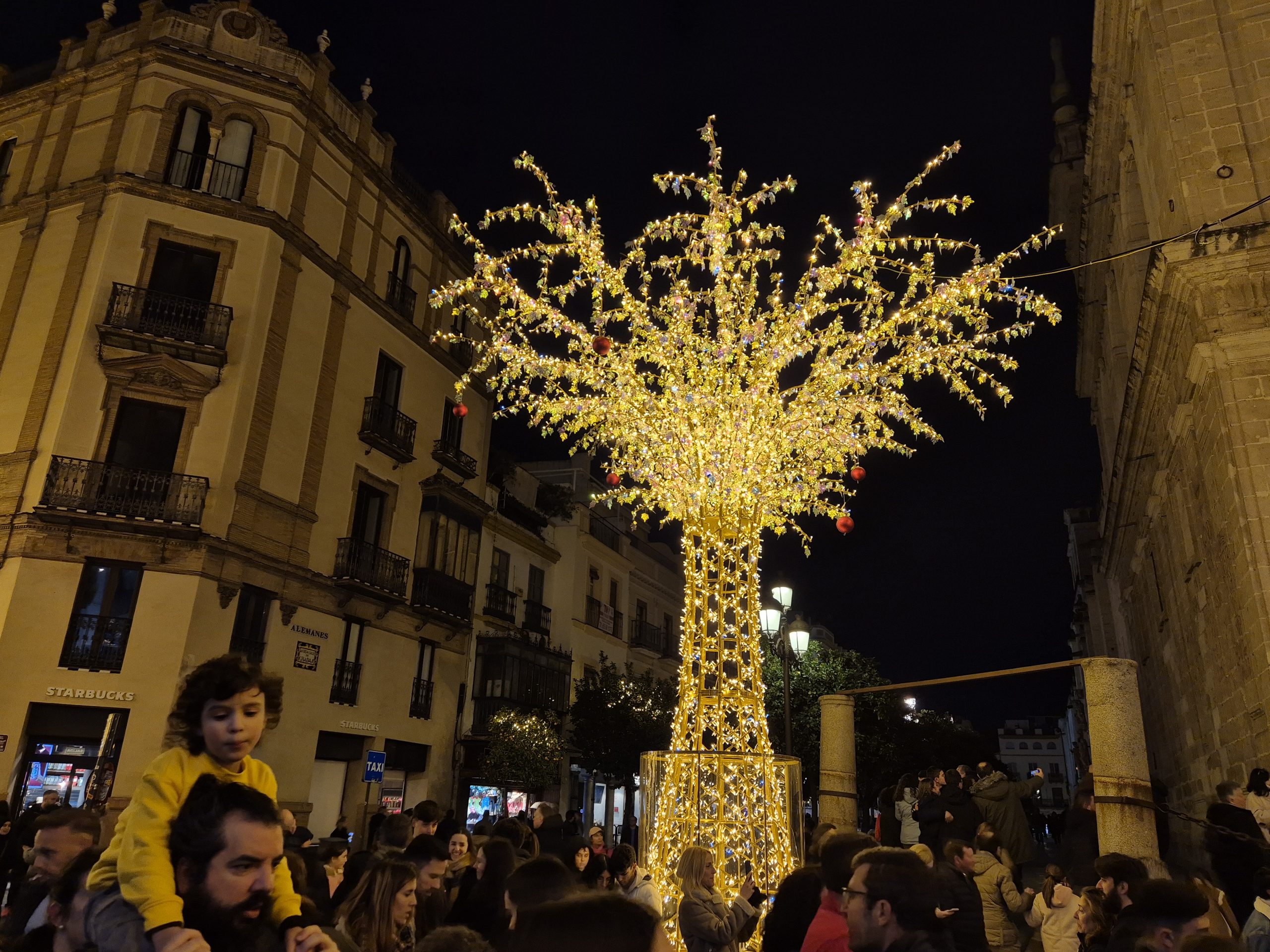
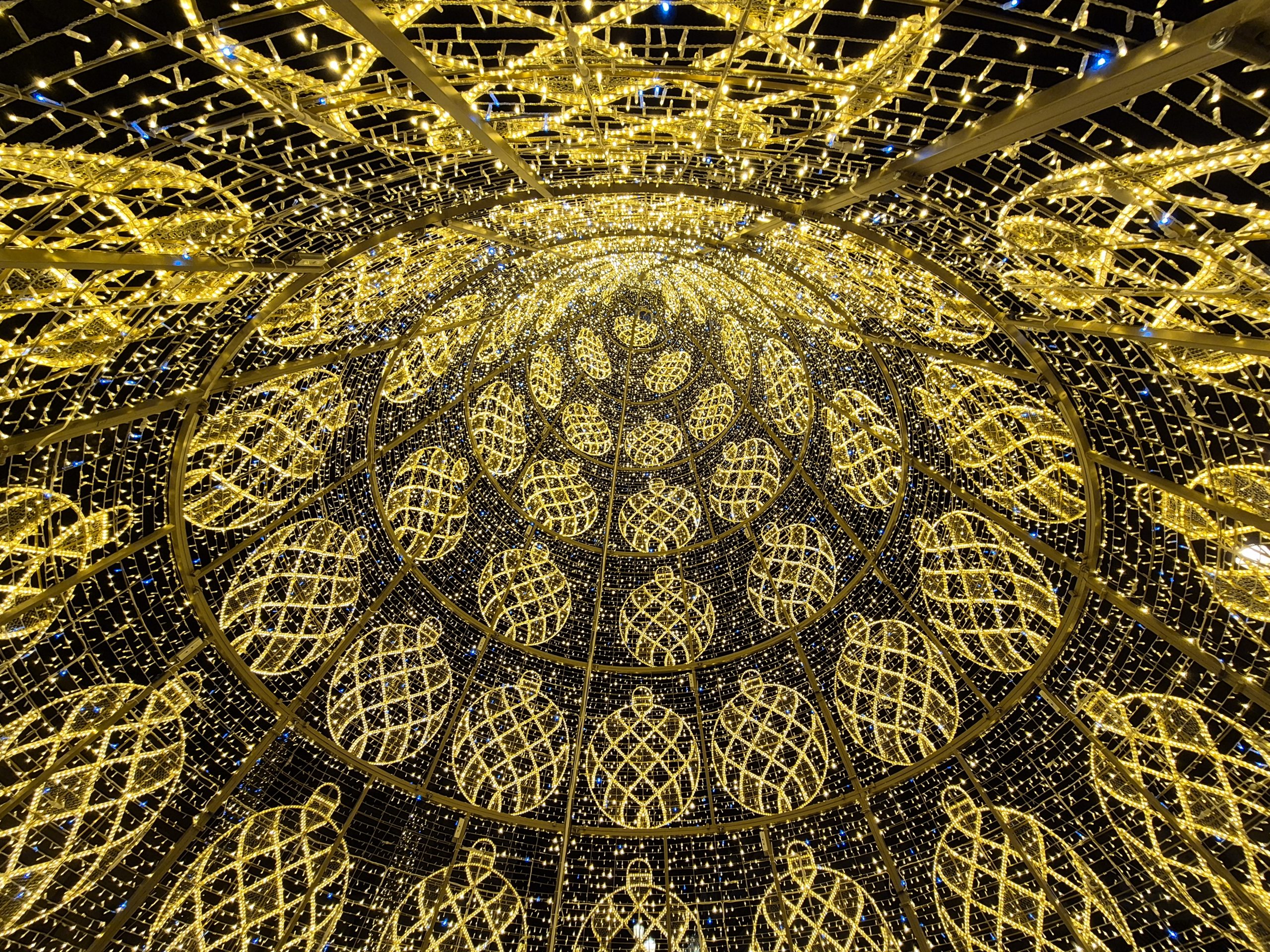
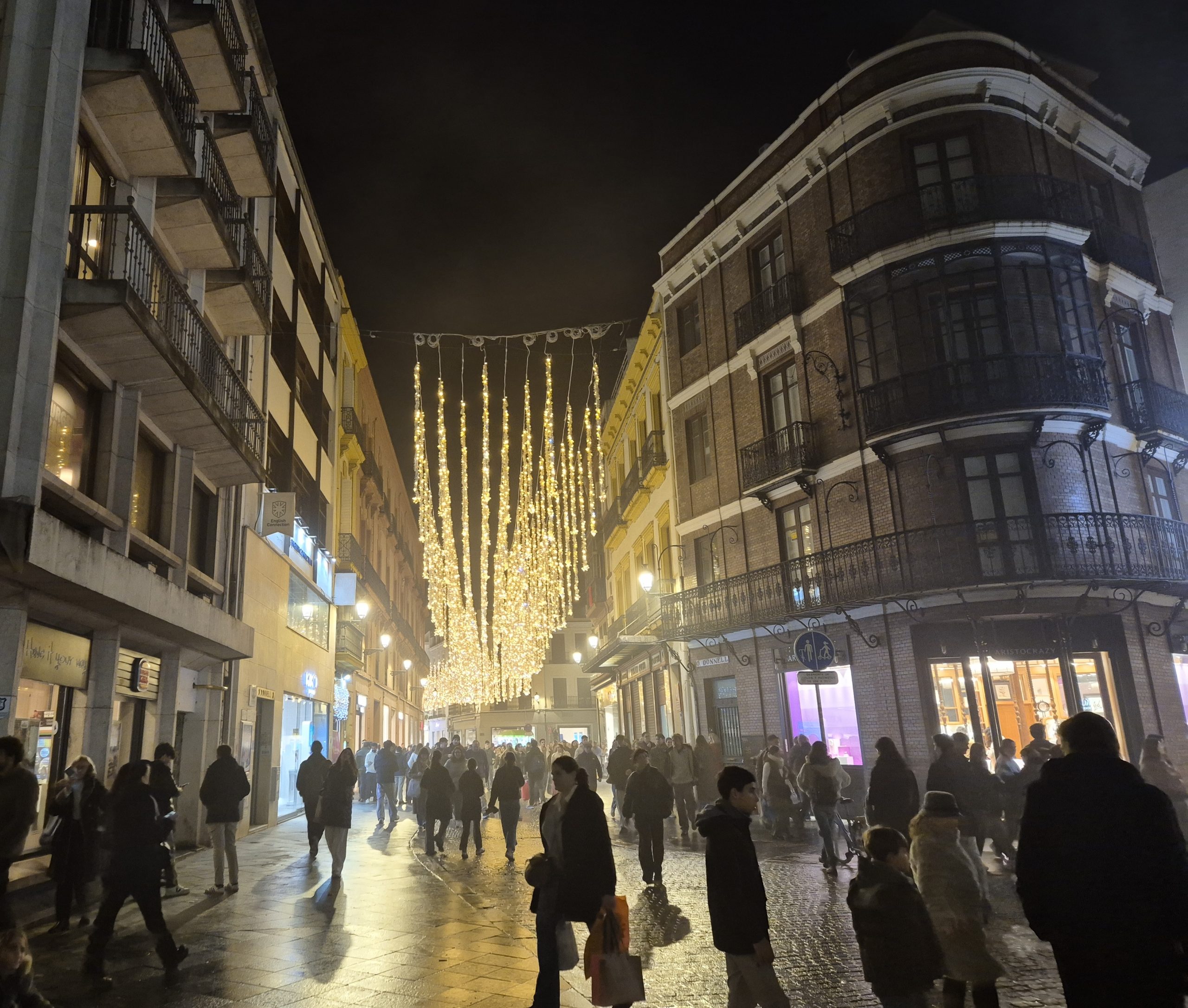
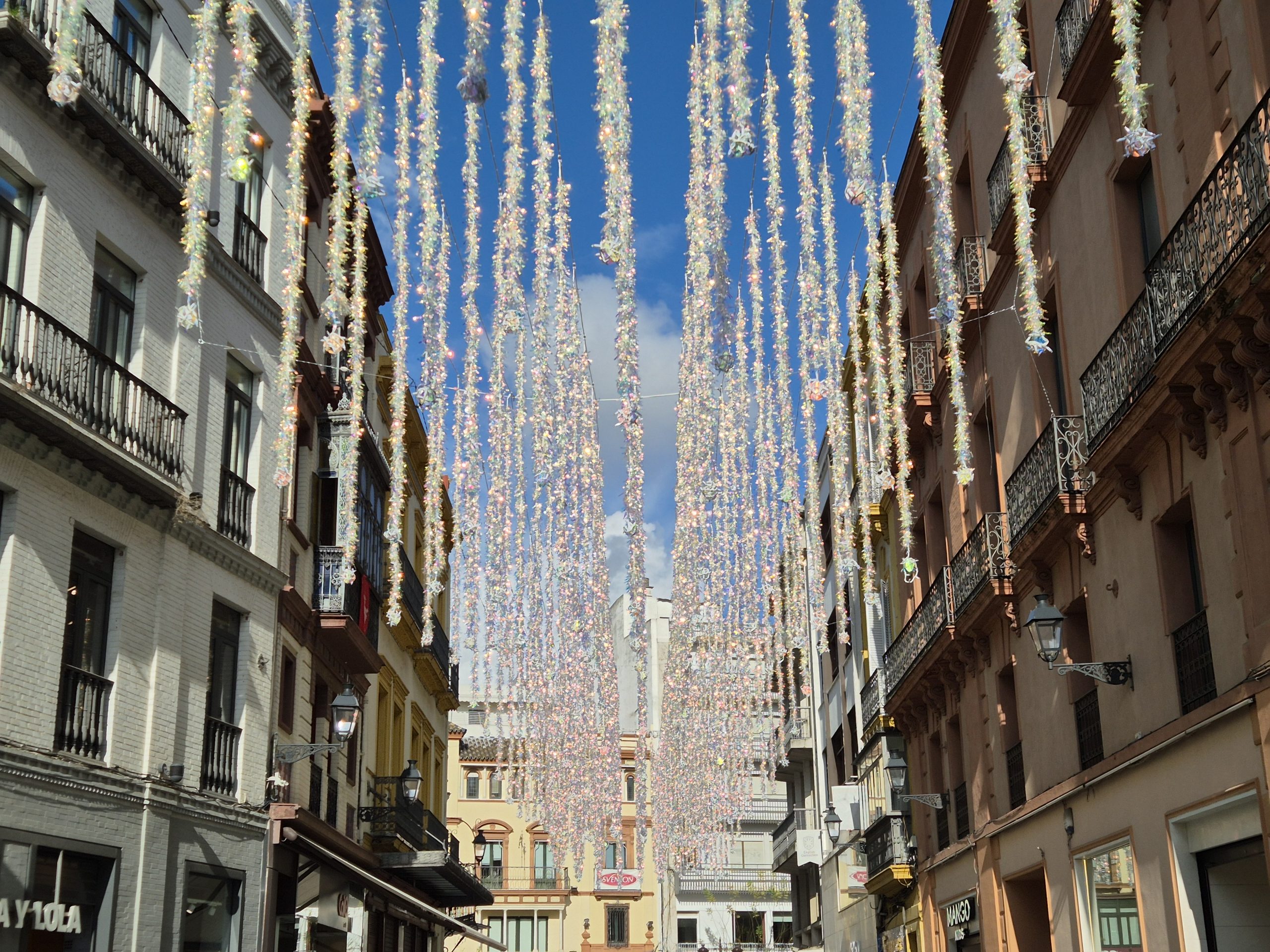
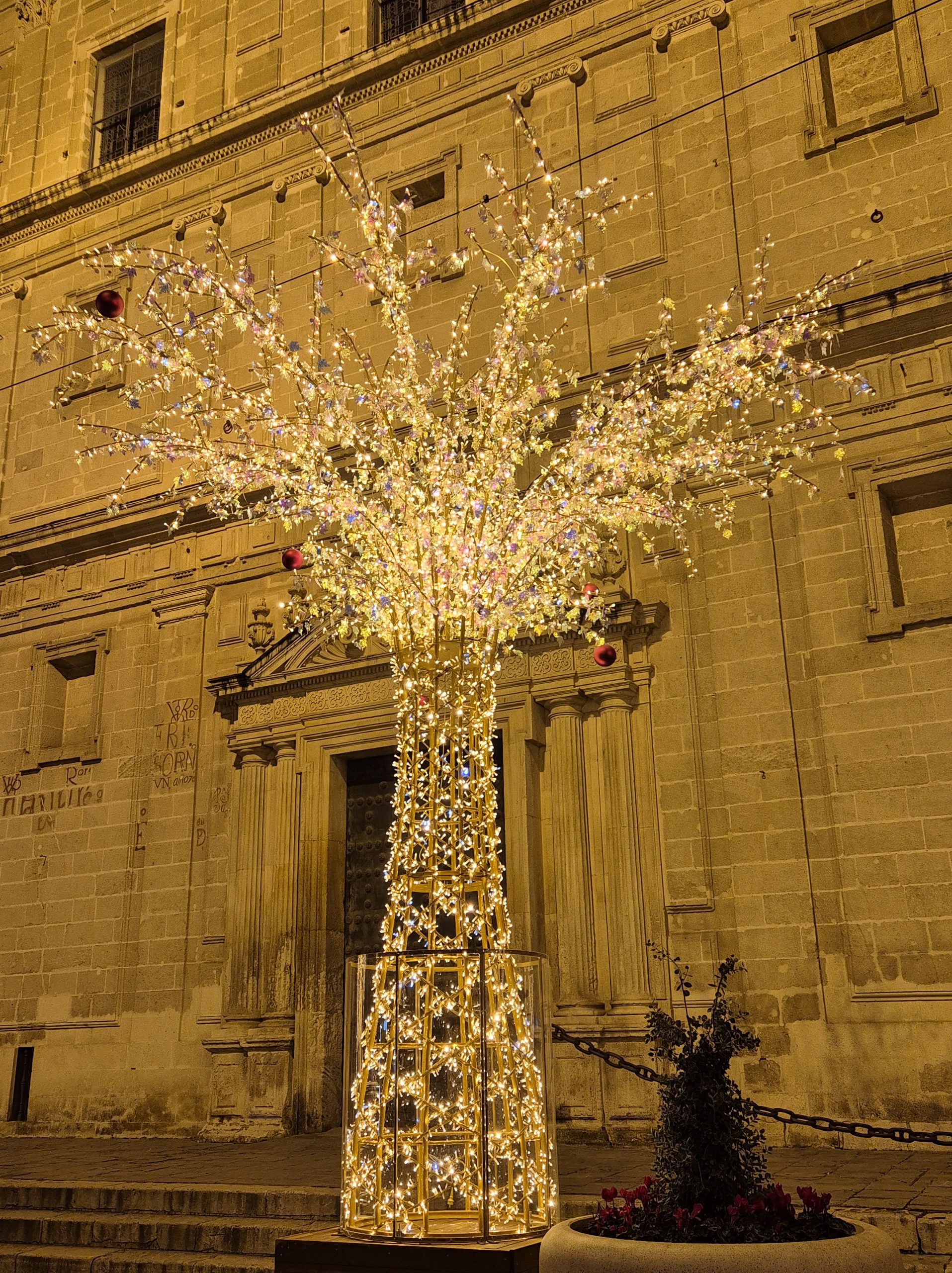
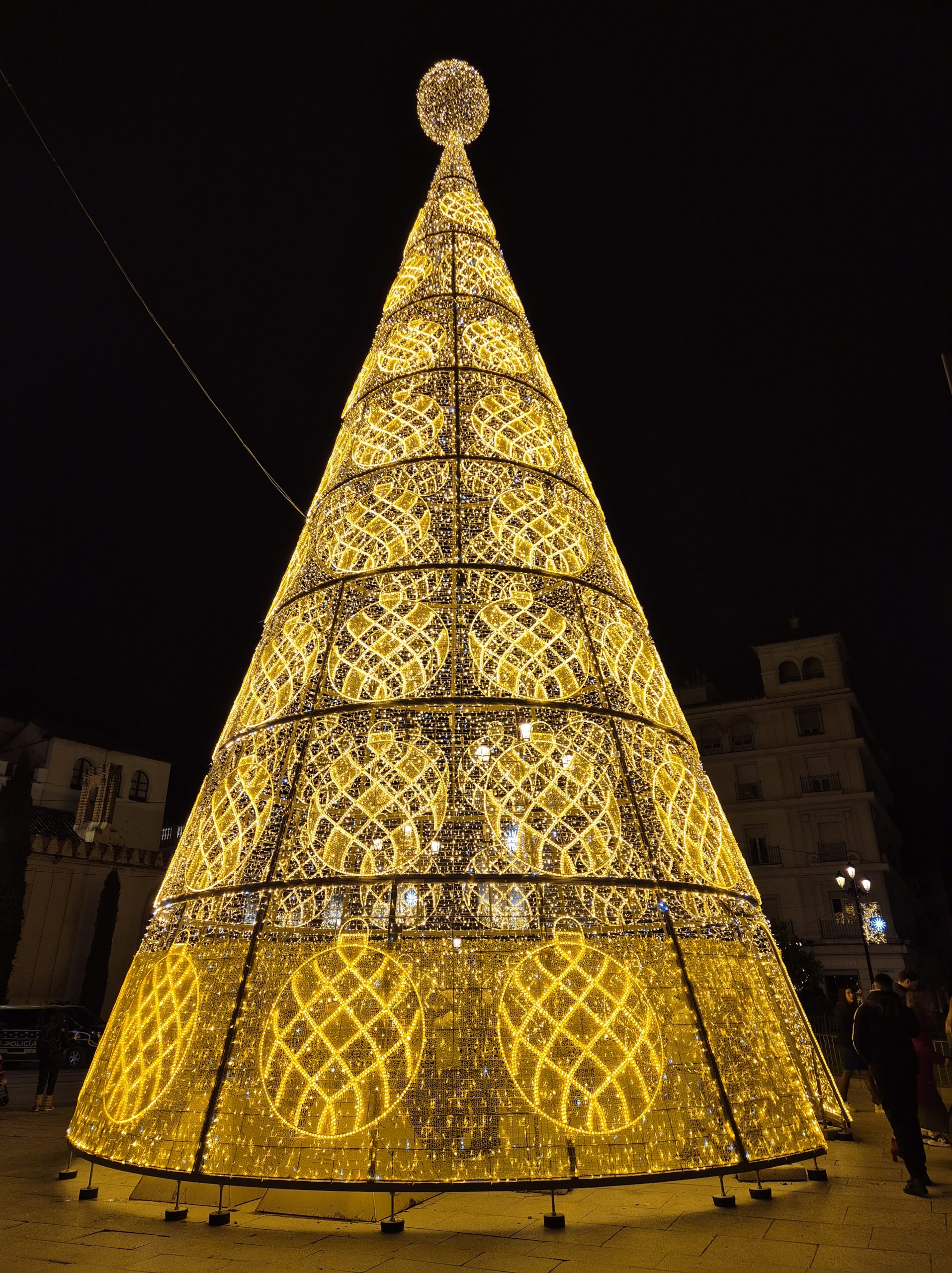
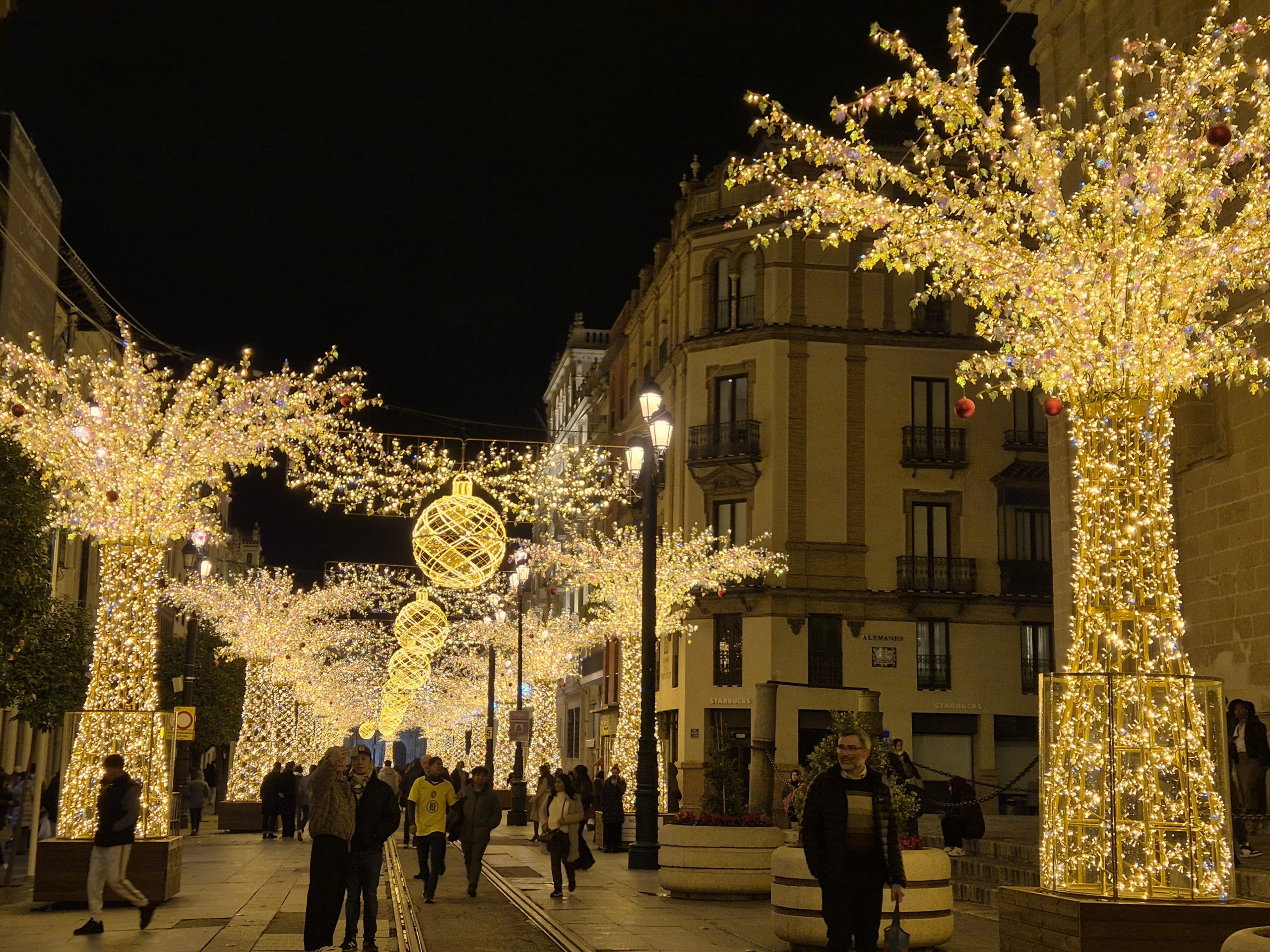
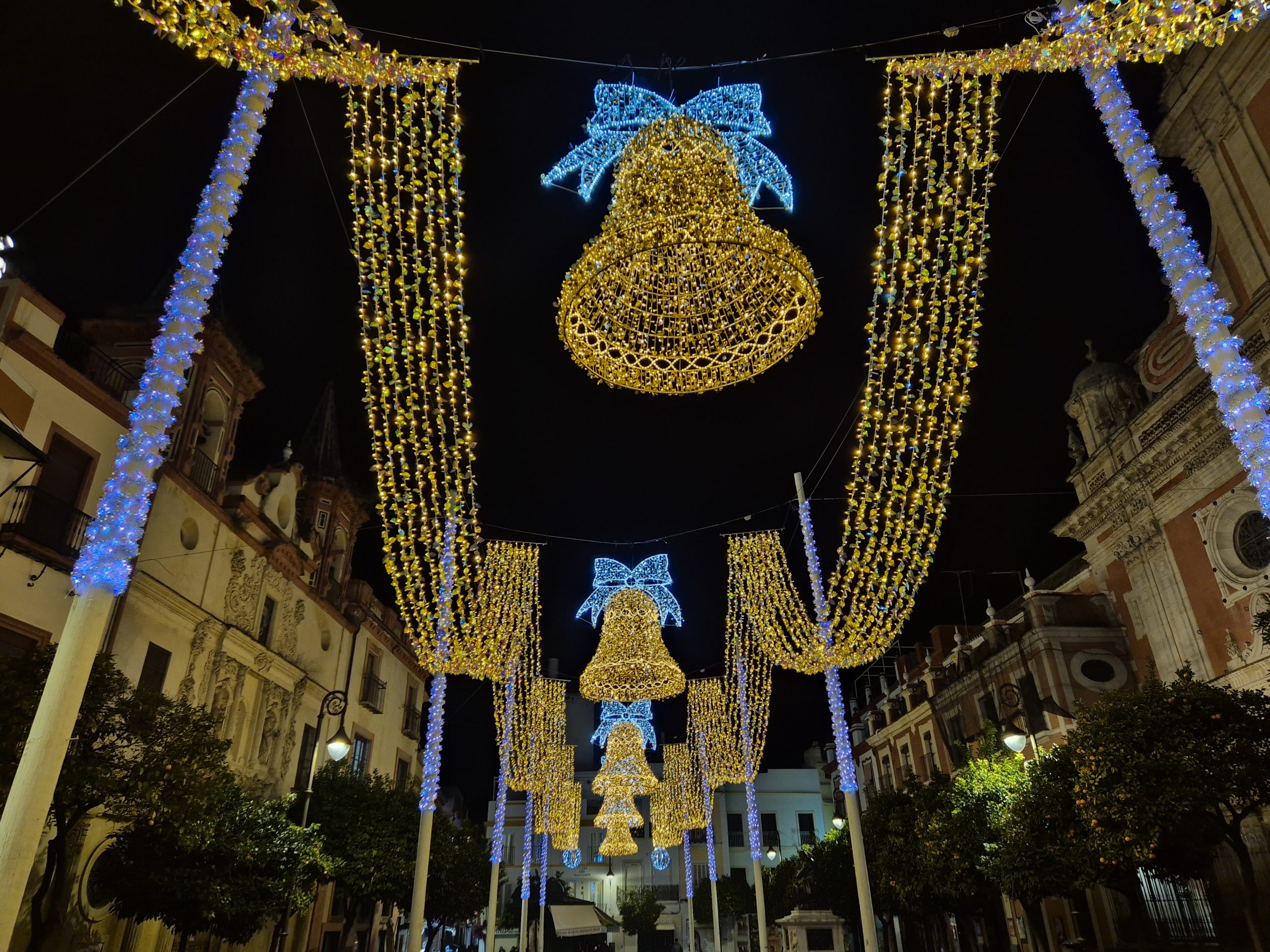
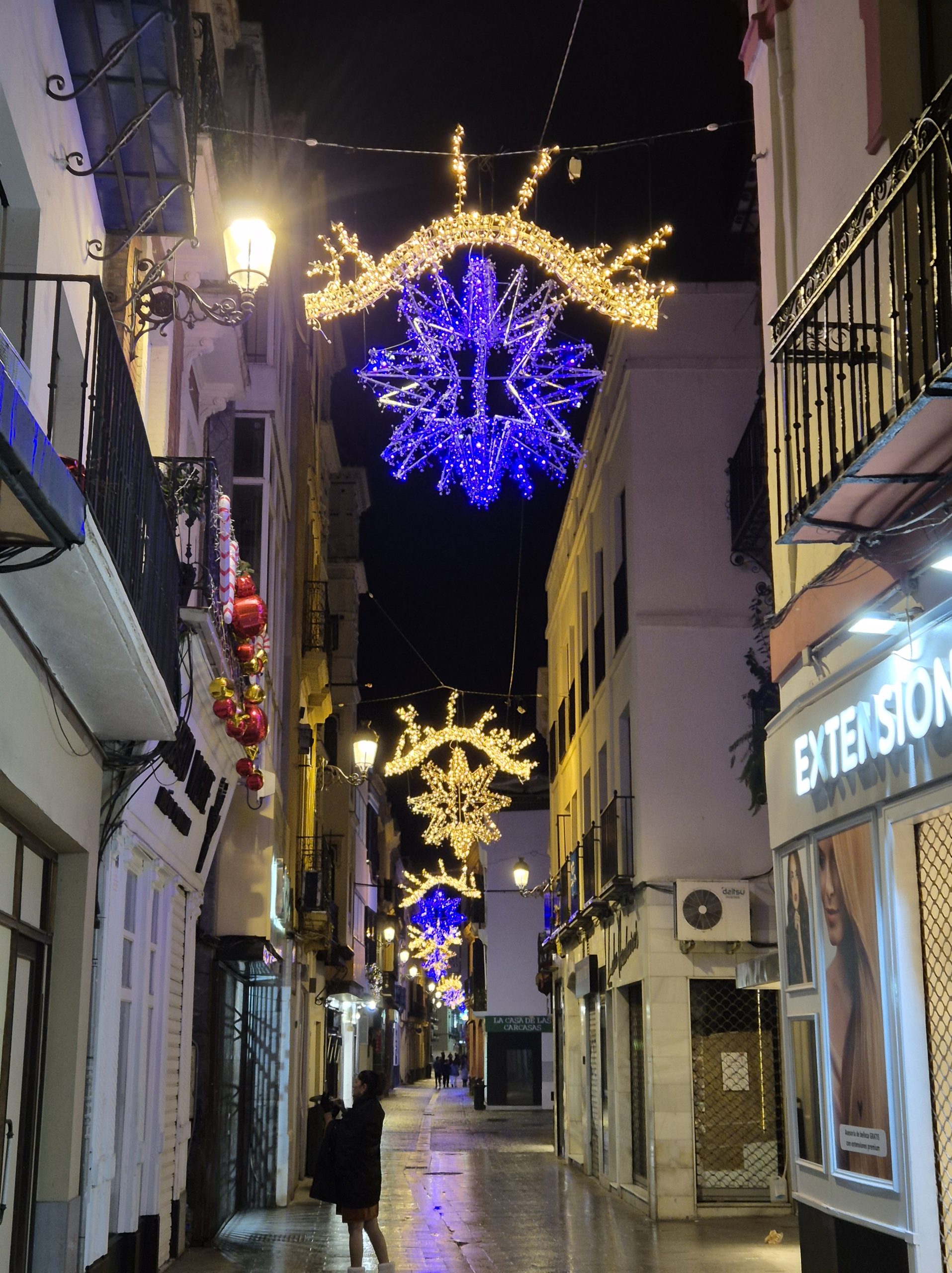
Seville in late December was strung with light, and I was completely taken by it. The displays ran the length of the main thoroughfares – not the tired municipal kind, but dazzling, inventive things that turned whole streets into canopies of color and light. They didn’t merely decorate the winter city; they enhanced it, gave the dark evenings a reason to be out walking. I was drawn to them enough to keep a separate album of nothing but lights. One night I looked up from a bright street to find a thin crescent moon hanging above the lit buildings, as if it too had been hung for the season.
Plaza de España – the highlight
23rd Dec 2025
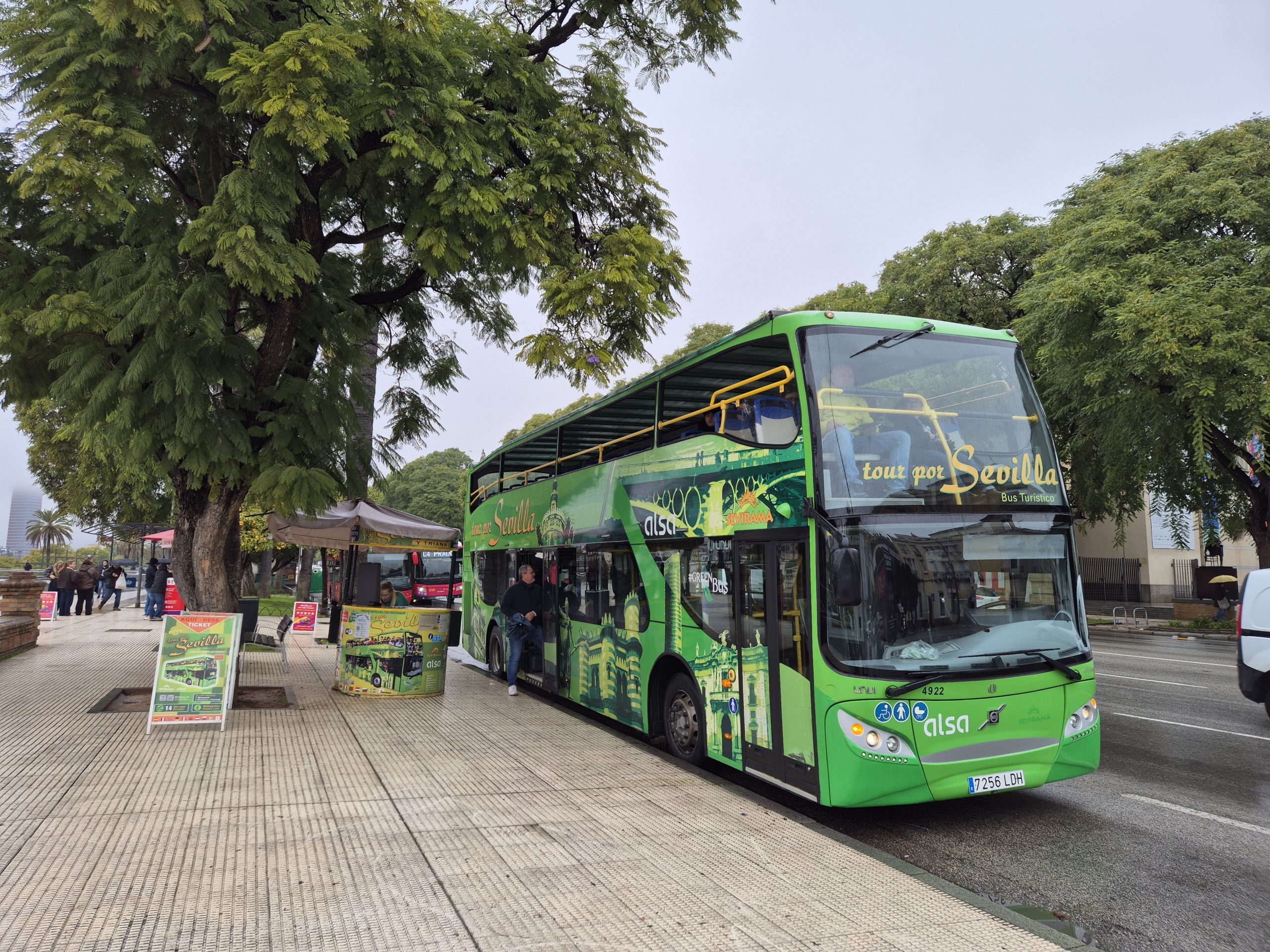
The next day began grey and rainy, so we defaulted to a hop-on-hop-off bus tour – a way of seeing a city while staying dry. For me a nostalgic echo of the Guide Friday buses from my UK life, years ago. (I looked them up, Guide Friday is no longer operational) By mid-afternoon it cleared, and we got out at Plaza de España.
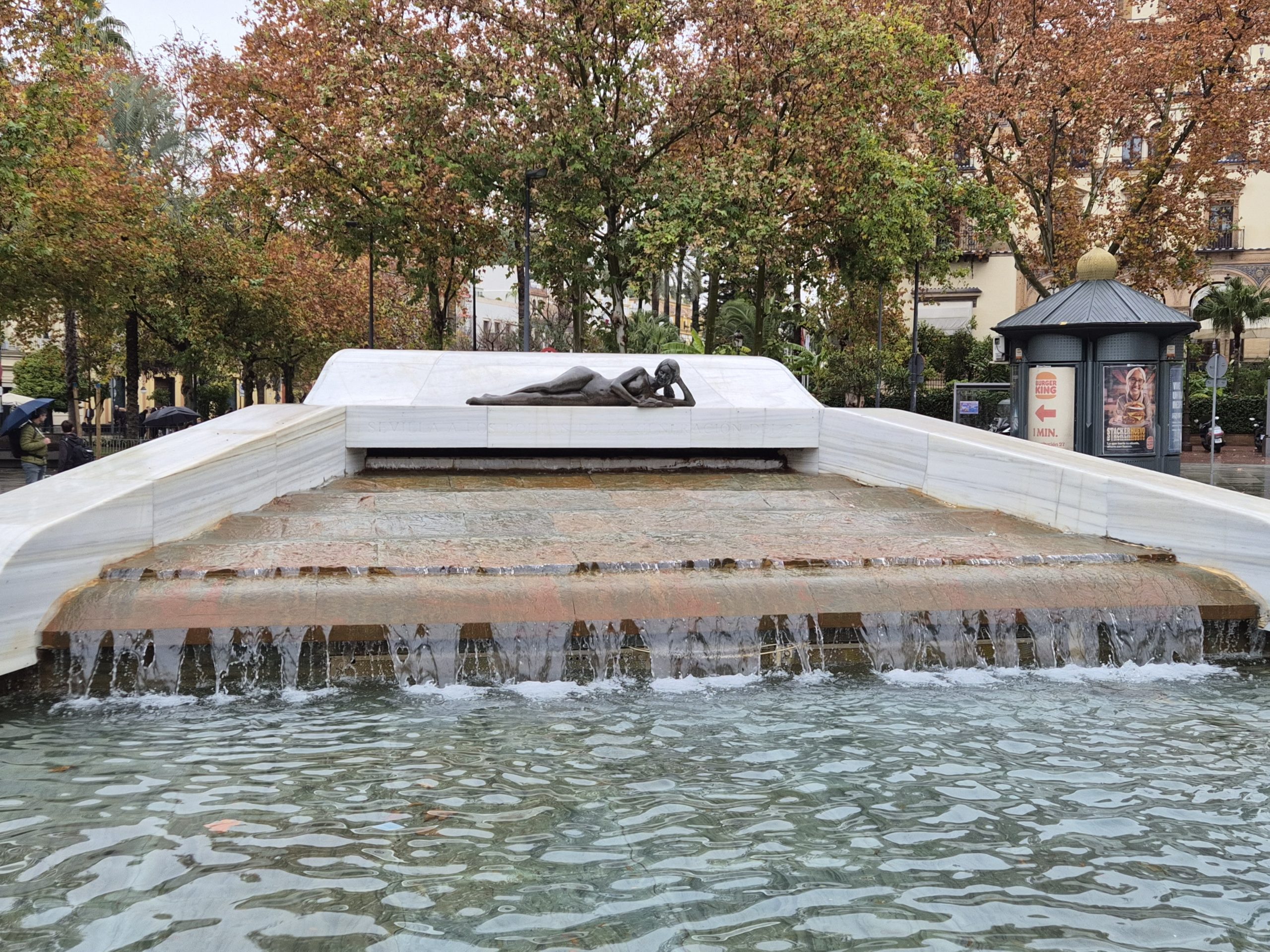
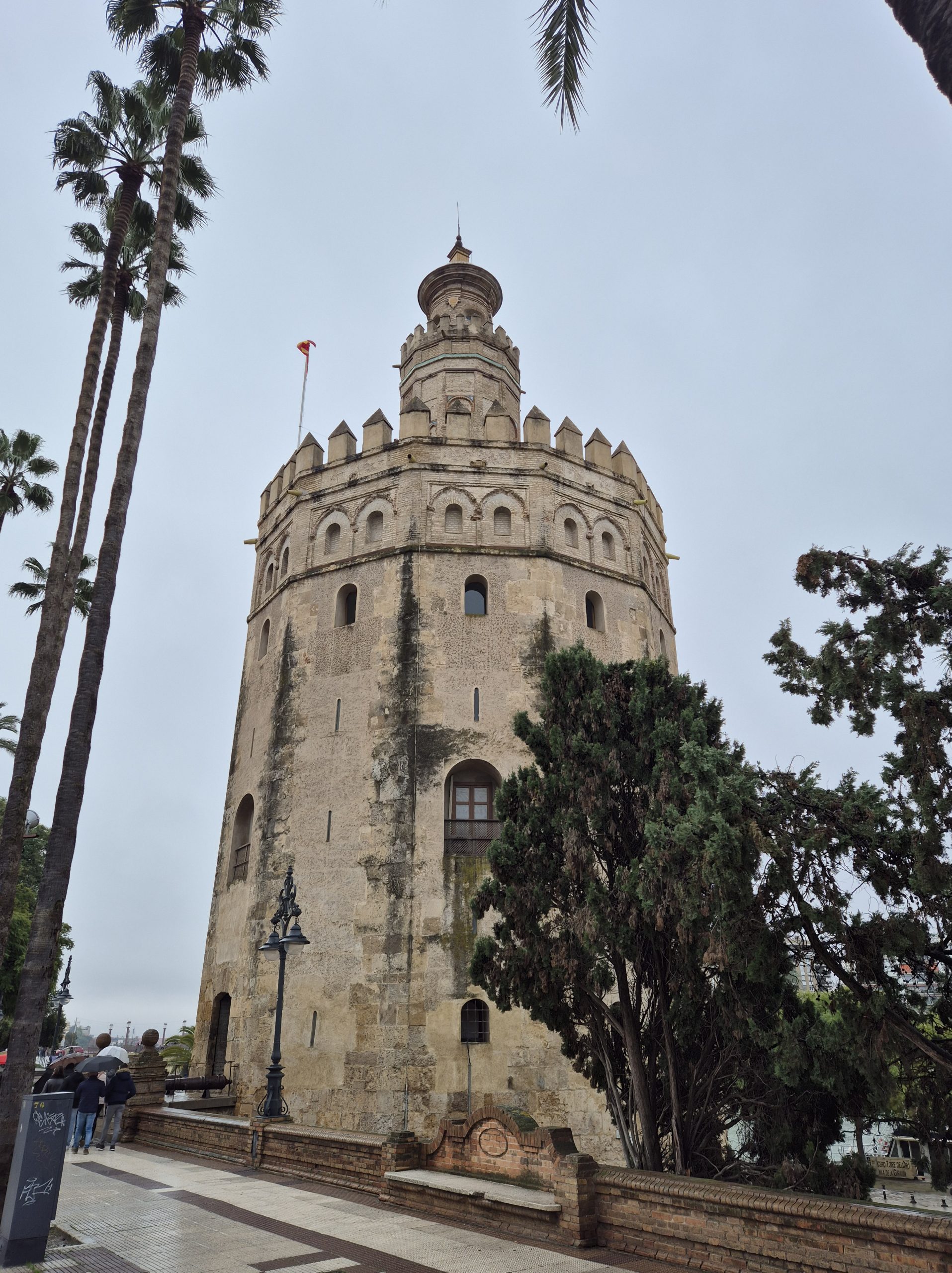
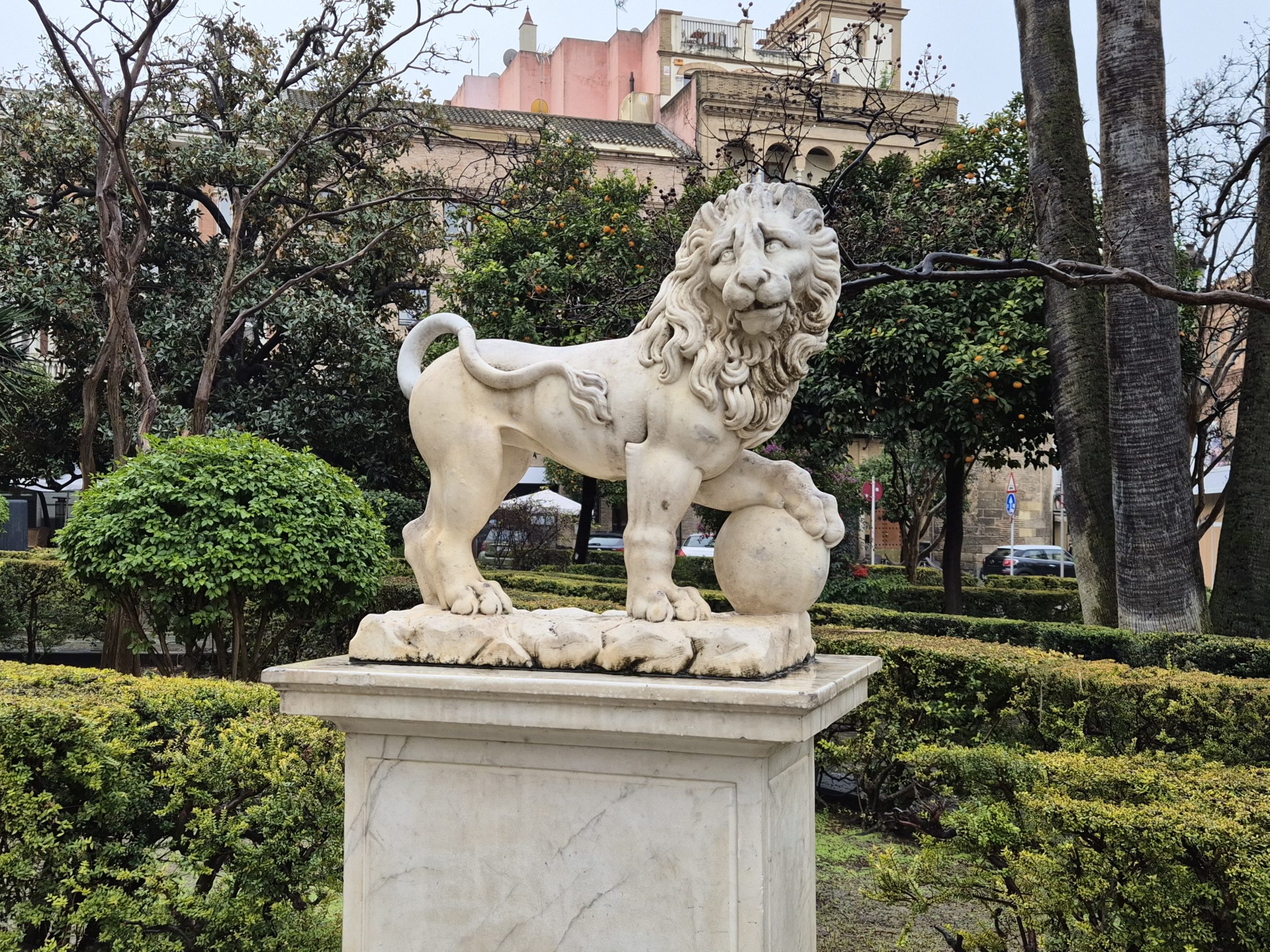
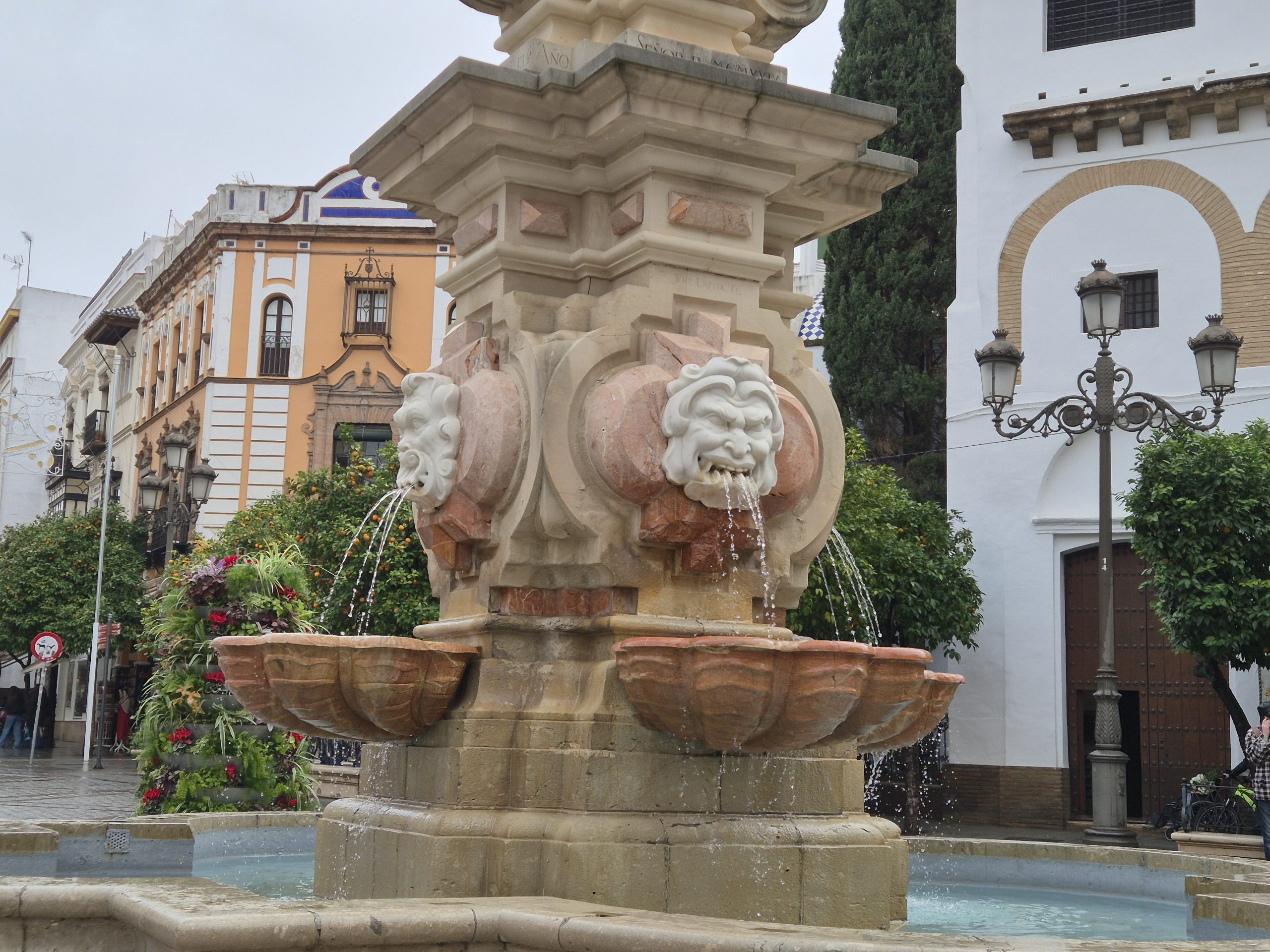
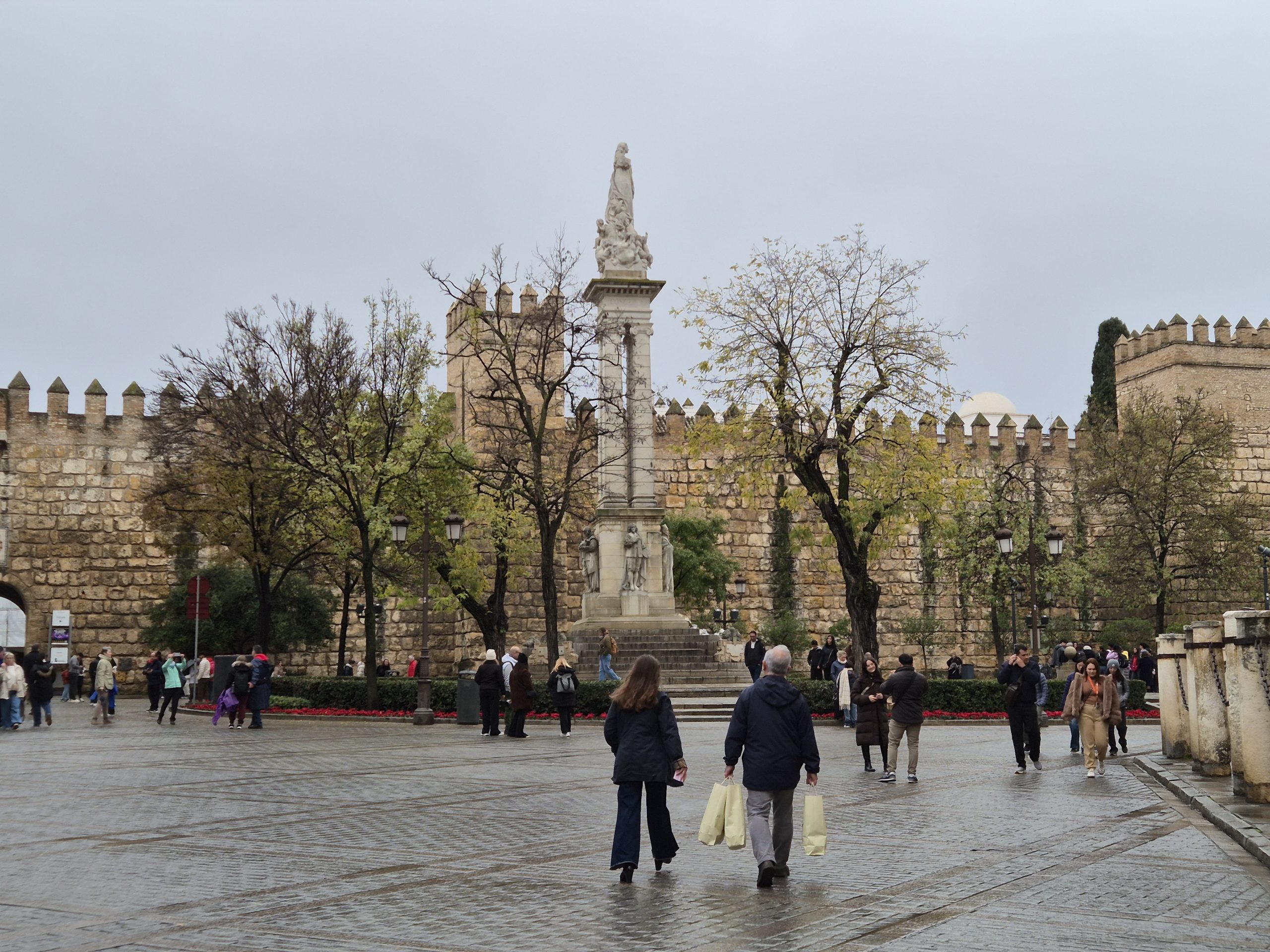
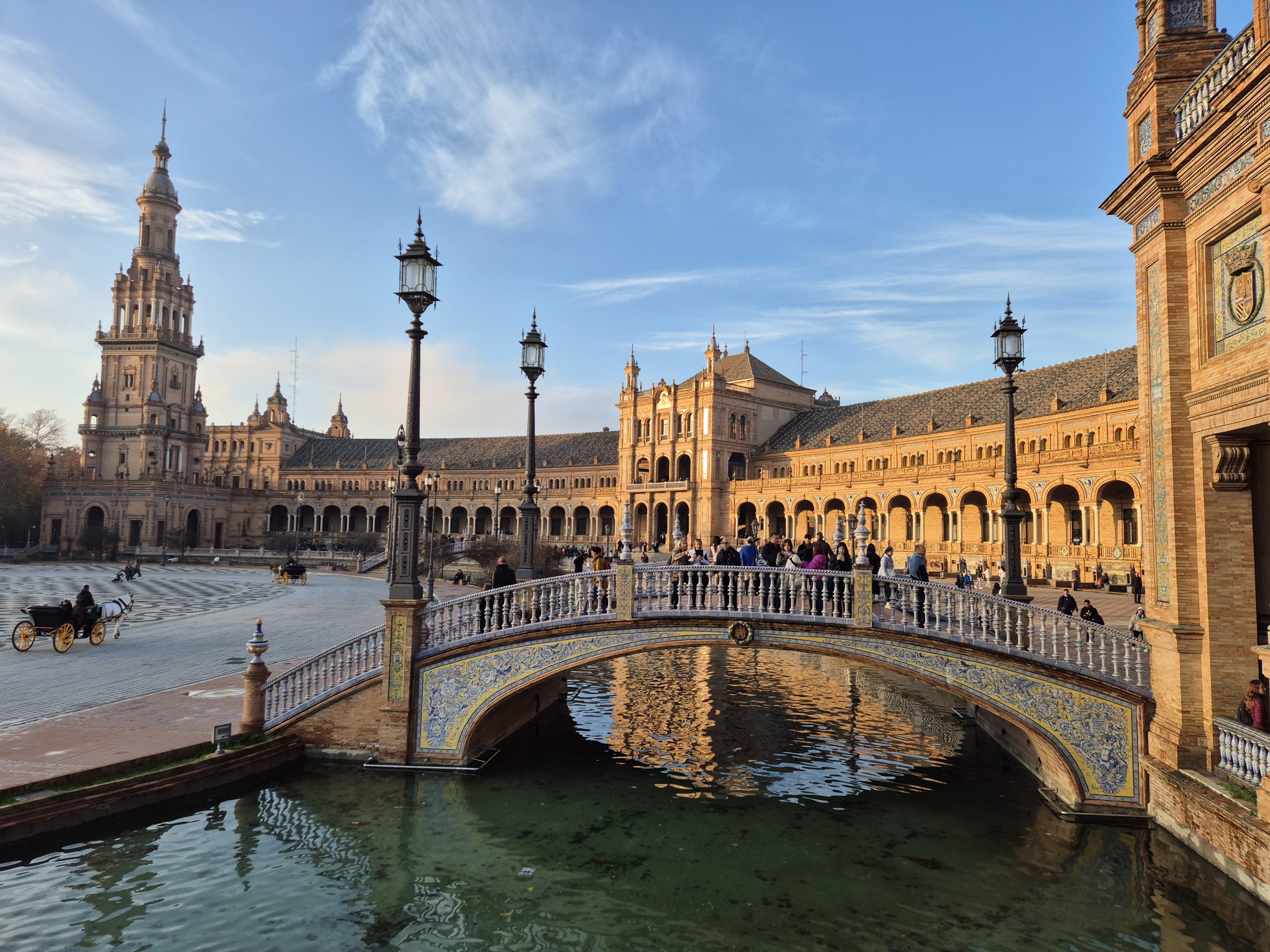
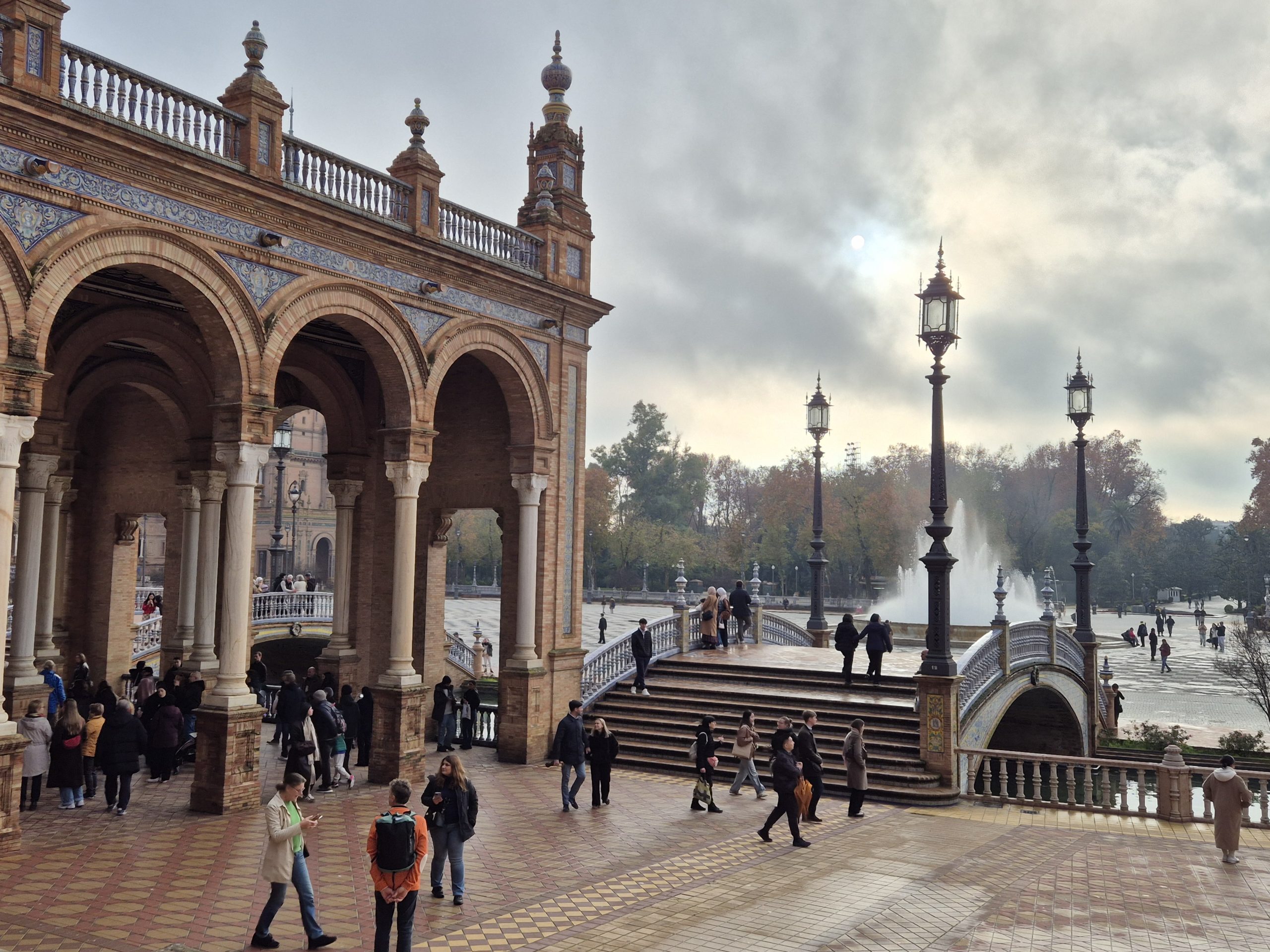
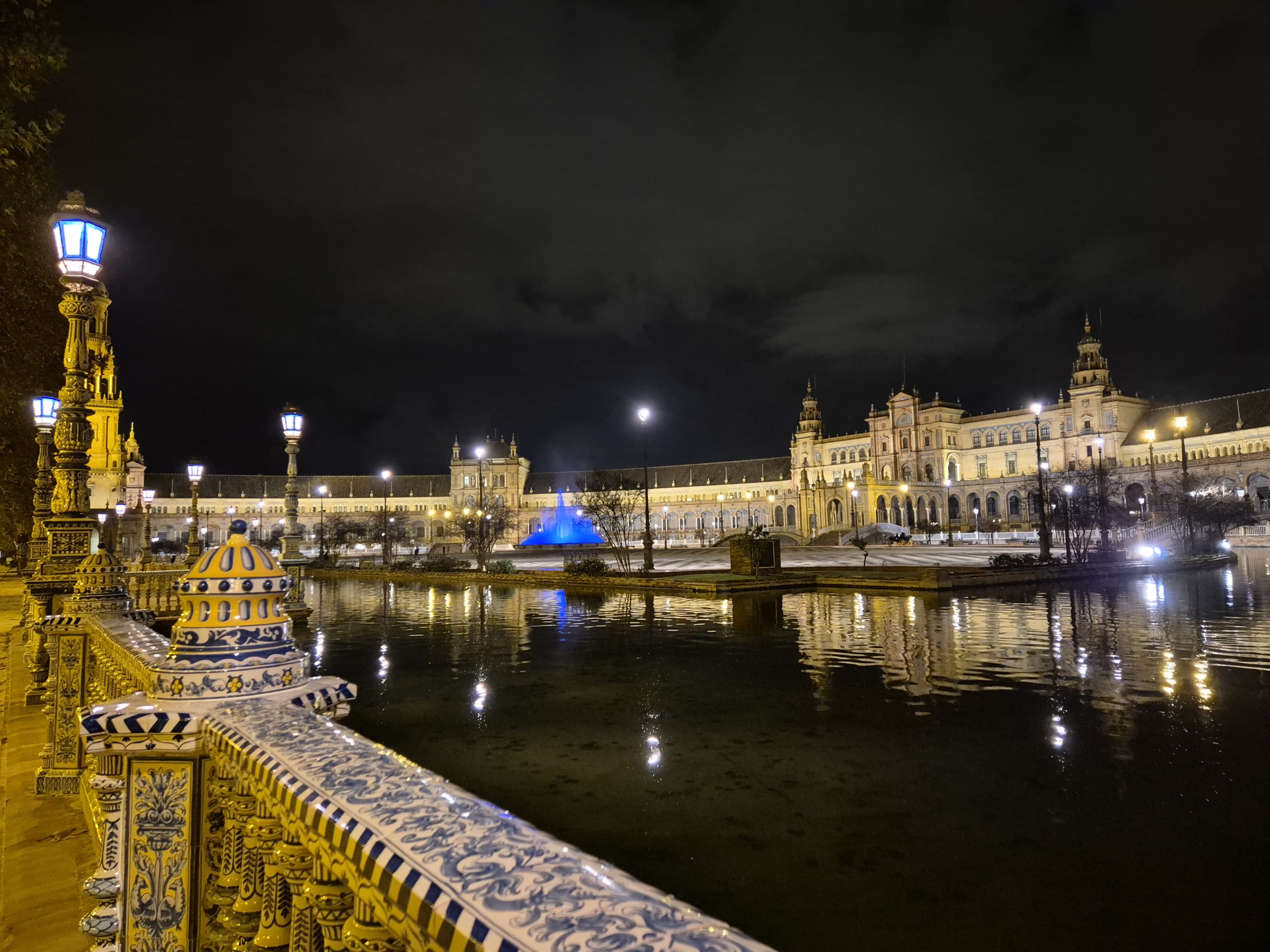
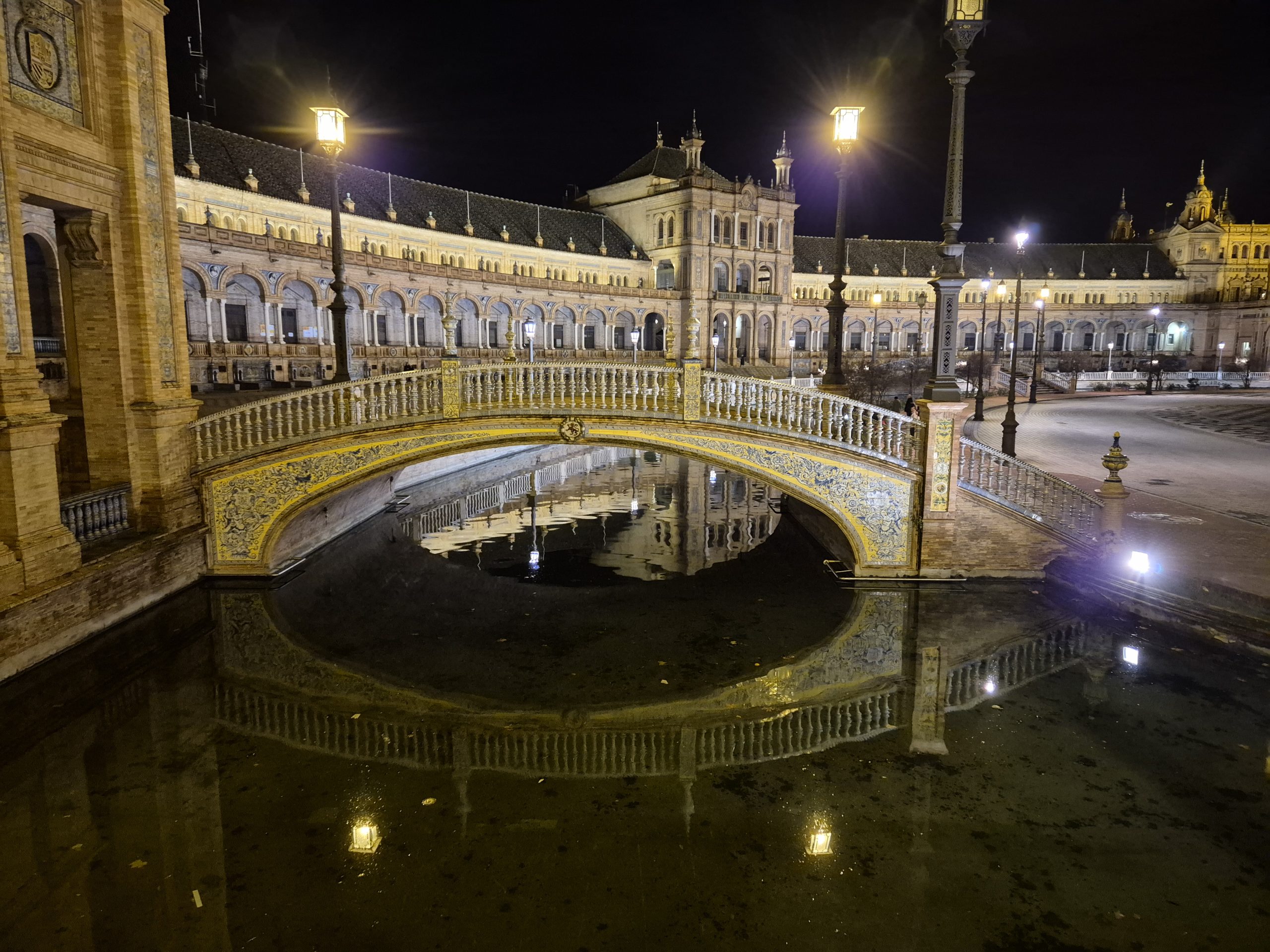
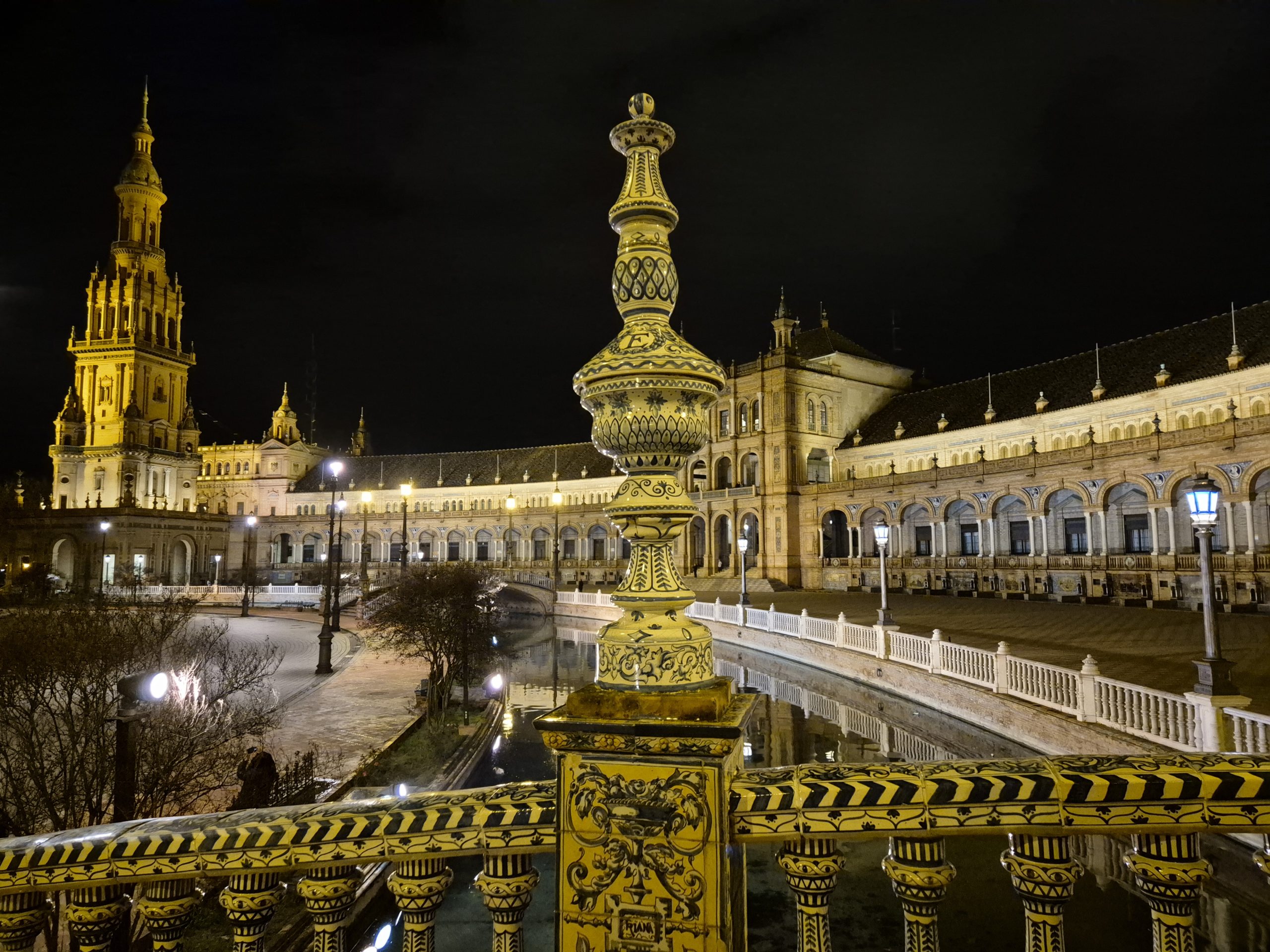
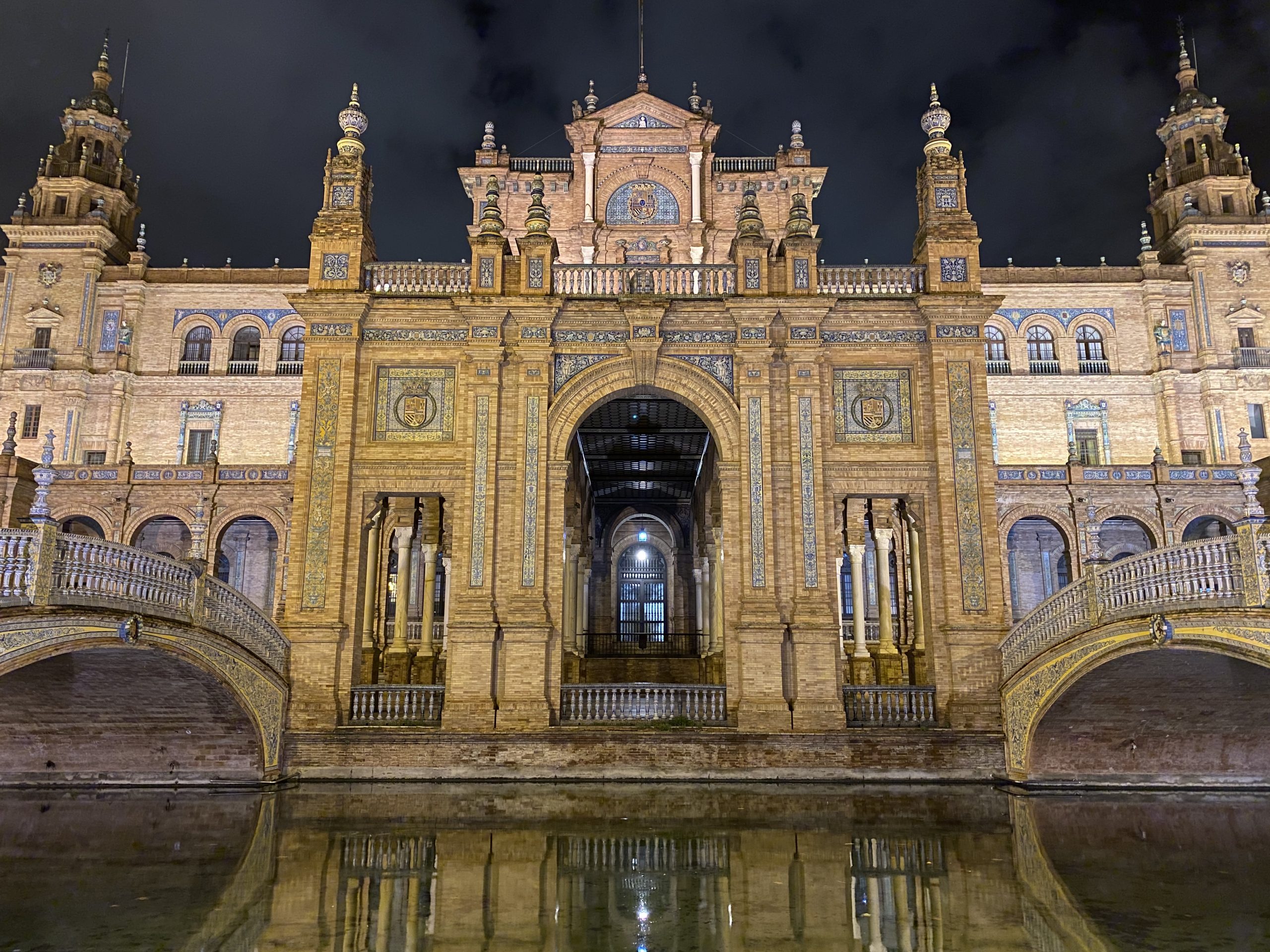
This was my personal highlight of Seville. Monumental and alive, but somehow not overly touristy – grand enough to absorb the crowds without feeling overrun. We spent a very relaxed few hours simply strolling it. The complex is basically a huge semi circular building of warm red brick, two levels high, around a tiled plaza. A grand forked staircase leads to the upper level of the building. It was built to house exhibitions, but at the moment, the place itself was the attraction, no on-going exhibitions. At the center of the open semi circle stands a large fountain. Pavilions, a semi-circular moat with quaint foot bridges at symmetrical distances, even a boat in the moat, were all part of the charm. Another visual highlight of the Plaza de España was the alcoves built into the walls of the semi circular structure facing the open plaza: each alcove dedicated to a province of Spain – from Andalusian neighbors like Granada and Córdoba to far-off Barcelona and the Canaries – each with a grand ceramic mural of some famous scene from that province – proud old battles won, a coronation, a court – grandeur. On the floor below the mural was a tiled colorful map of the province. Horse carriages taking tourists for a ride around the plaza, clip clopping on the stone floor, adding to the ambience.
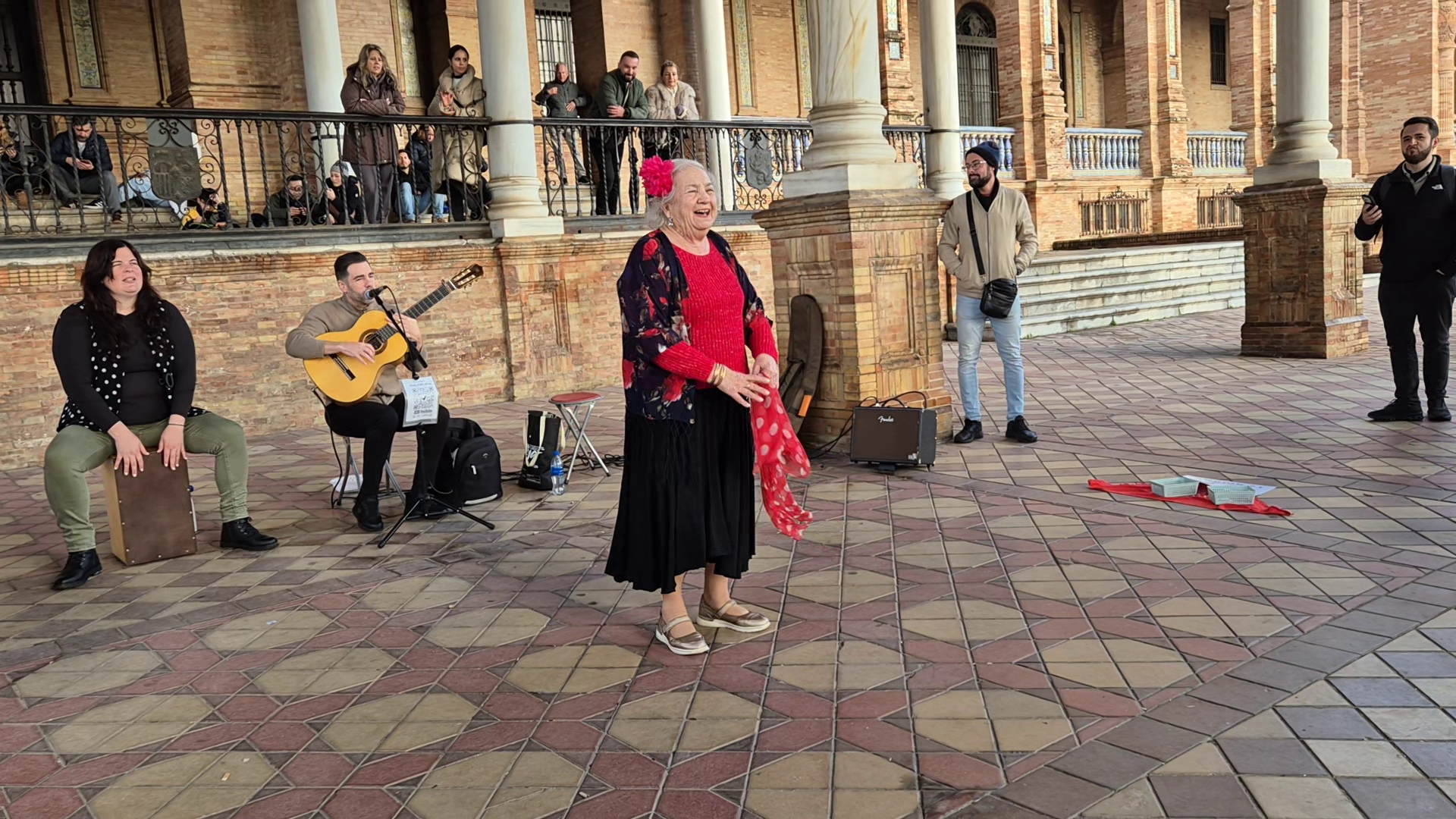
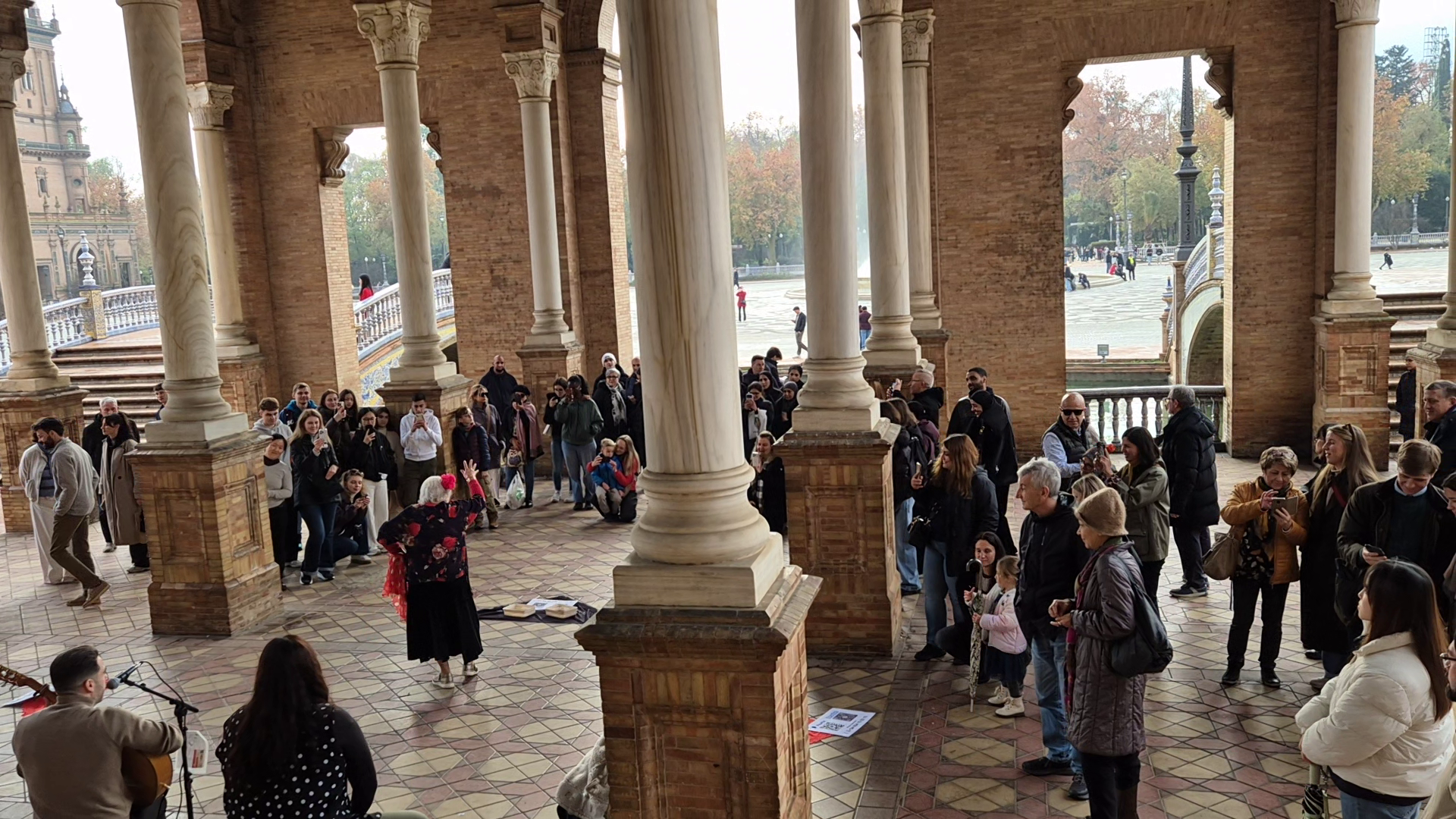
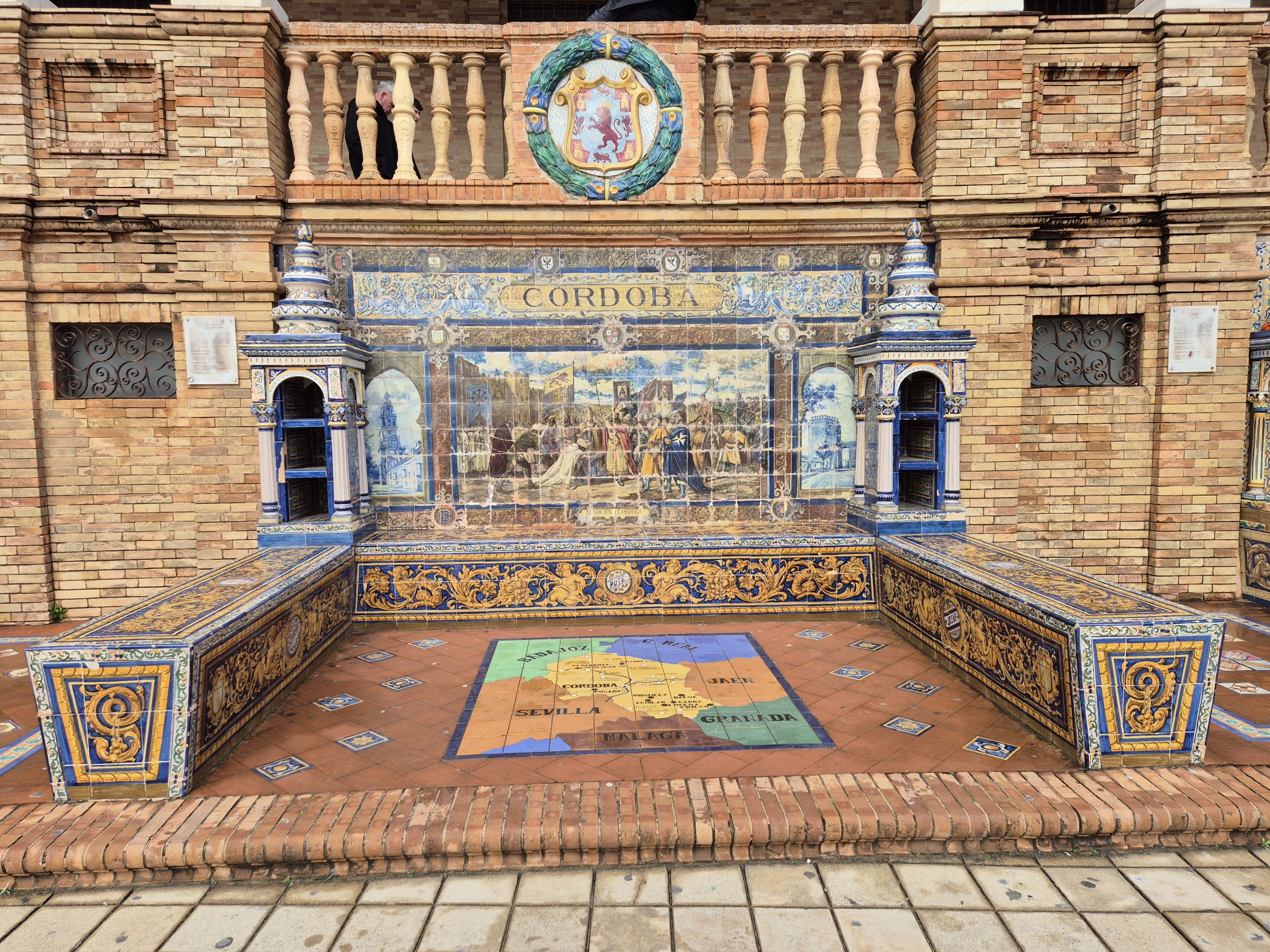
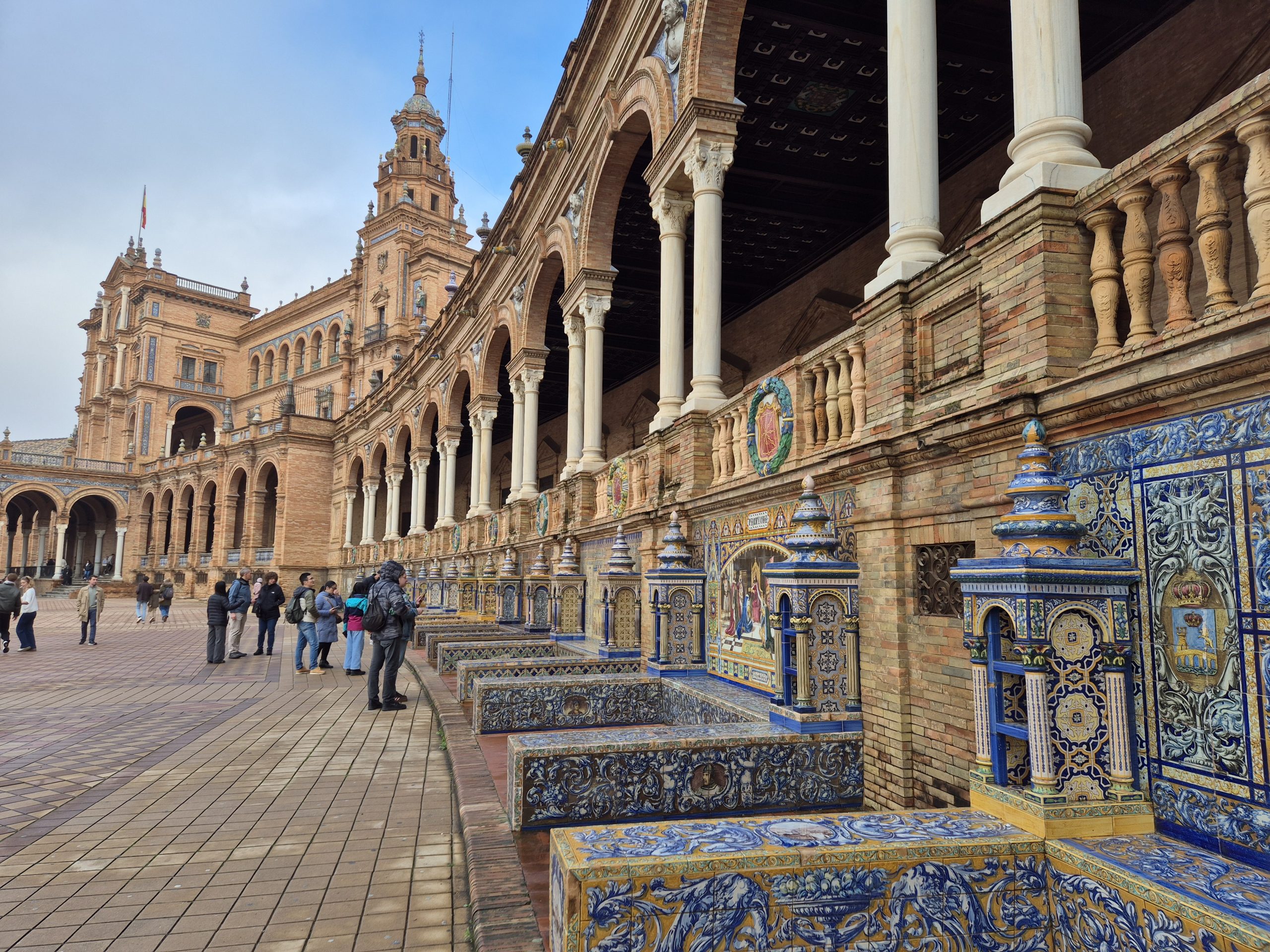
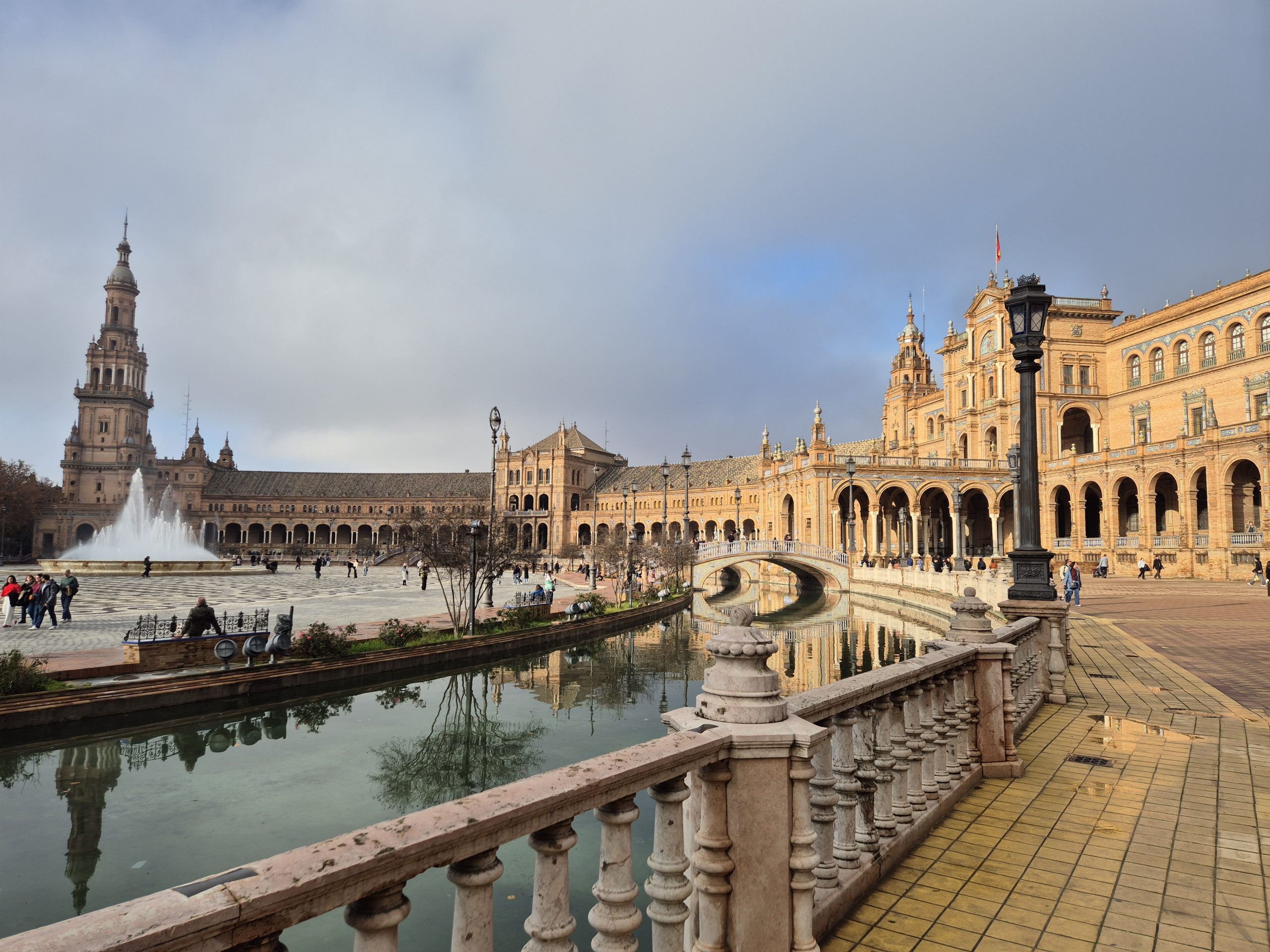
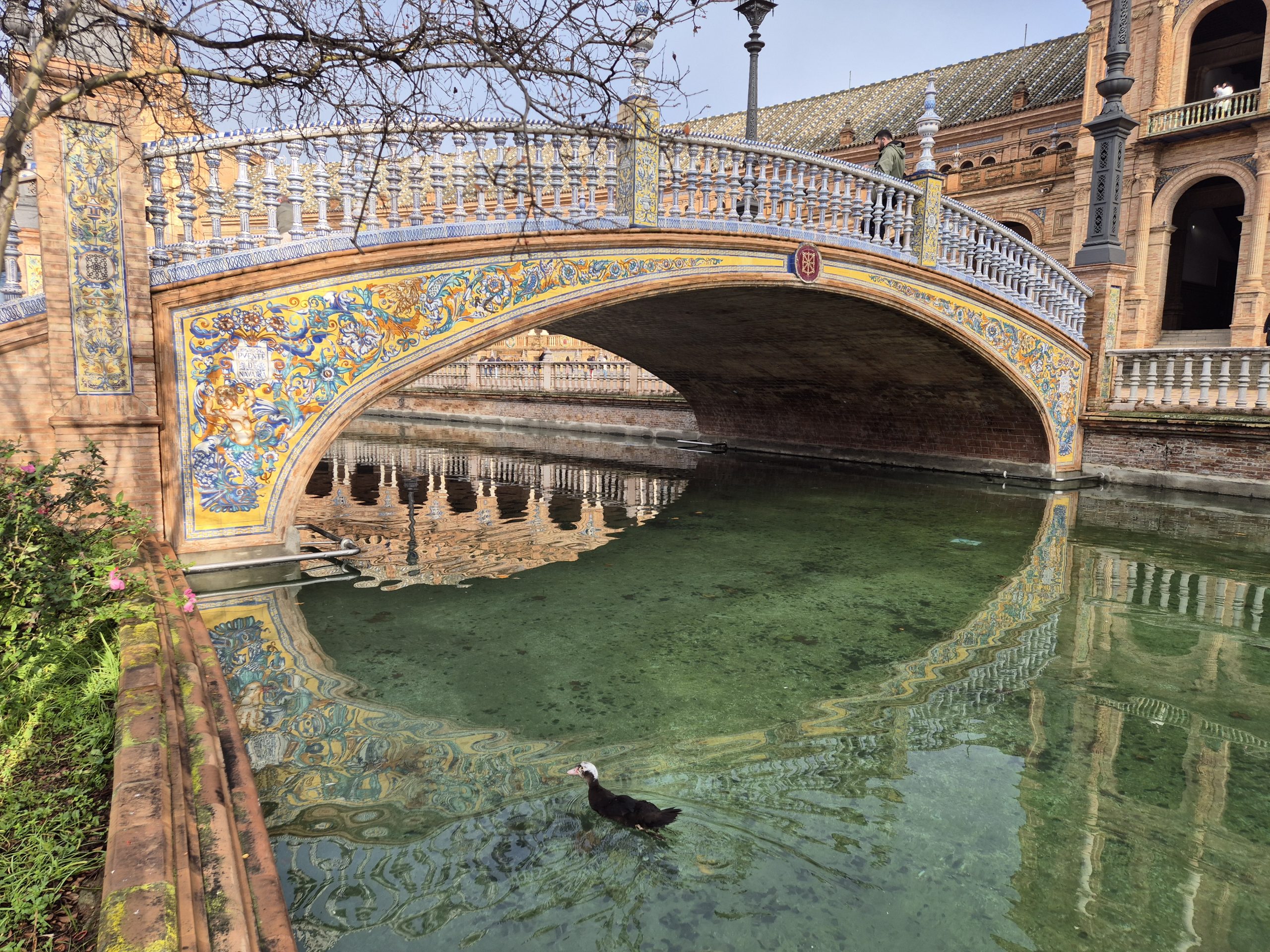
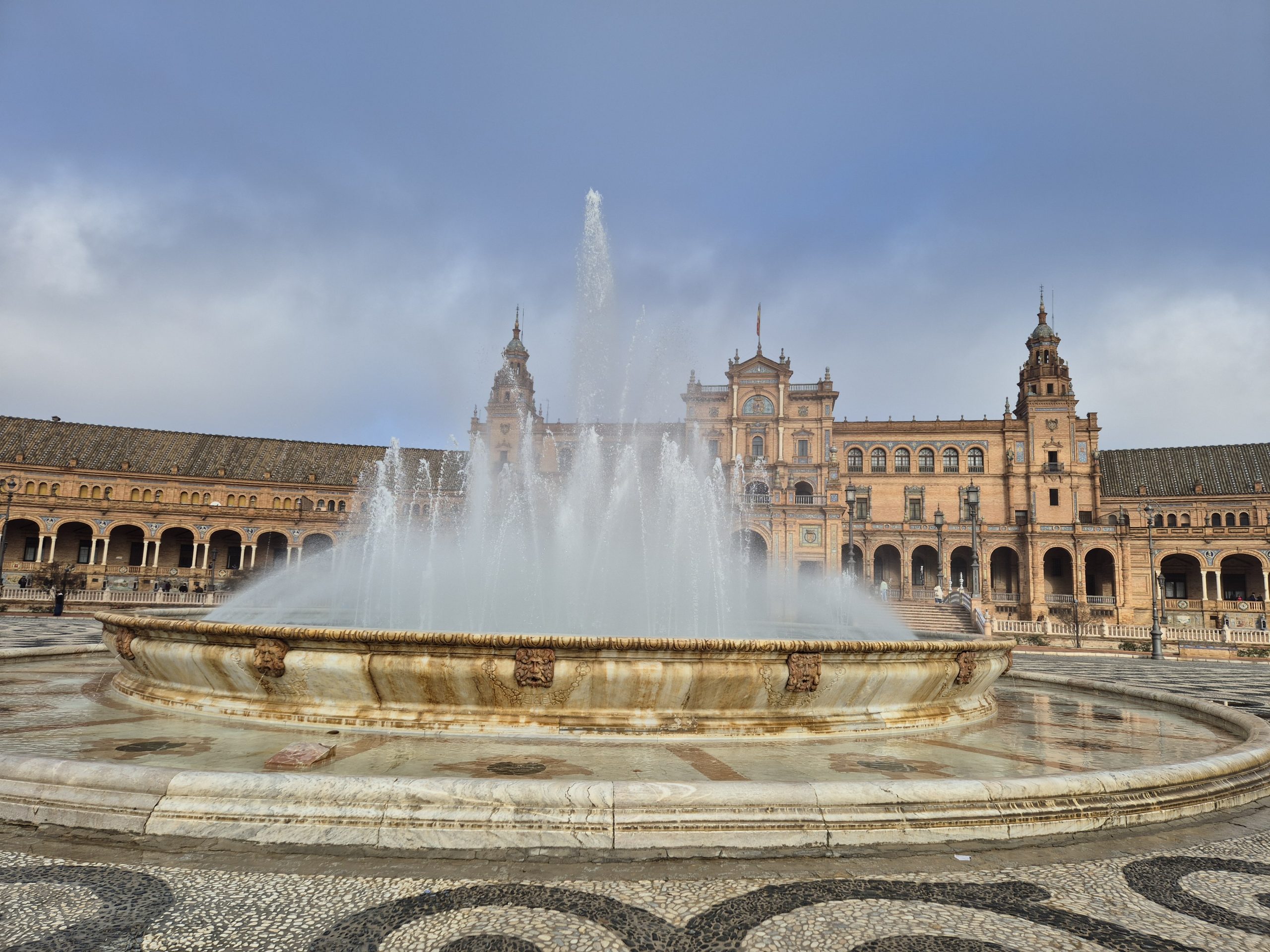
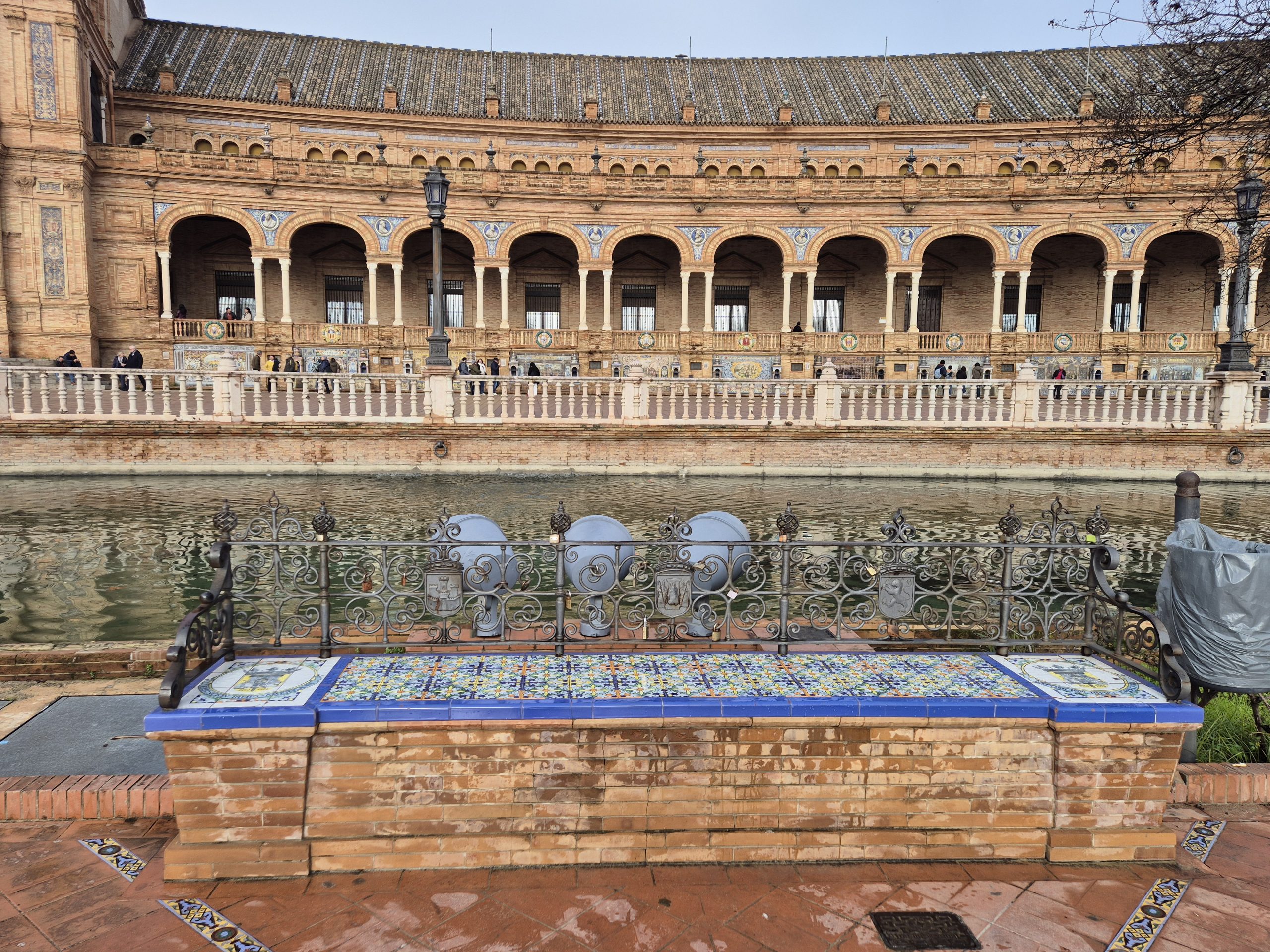
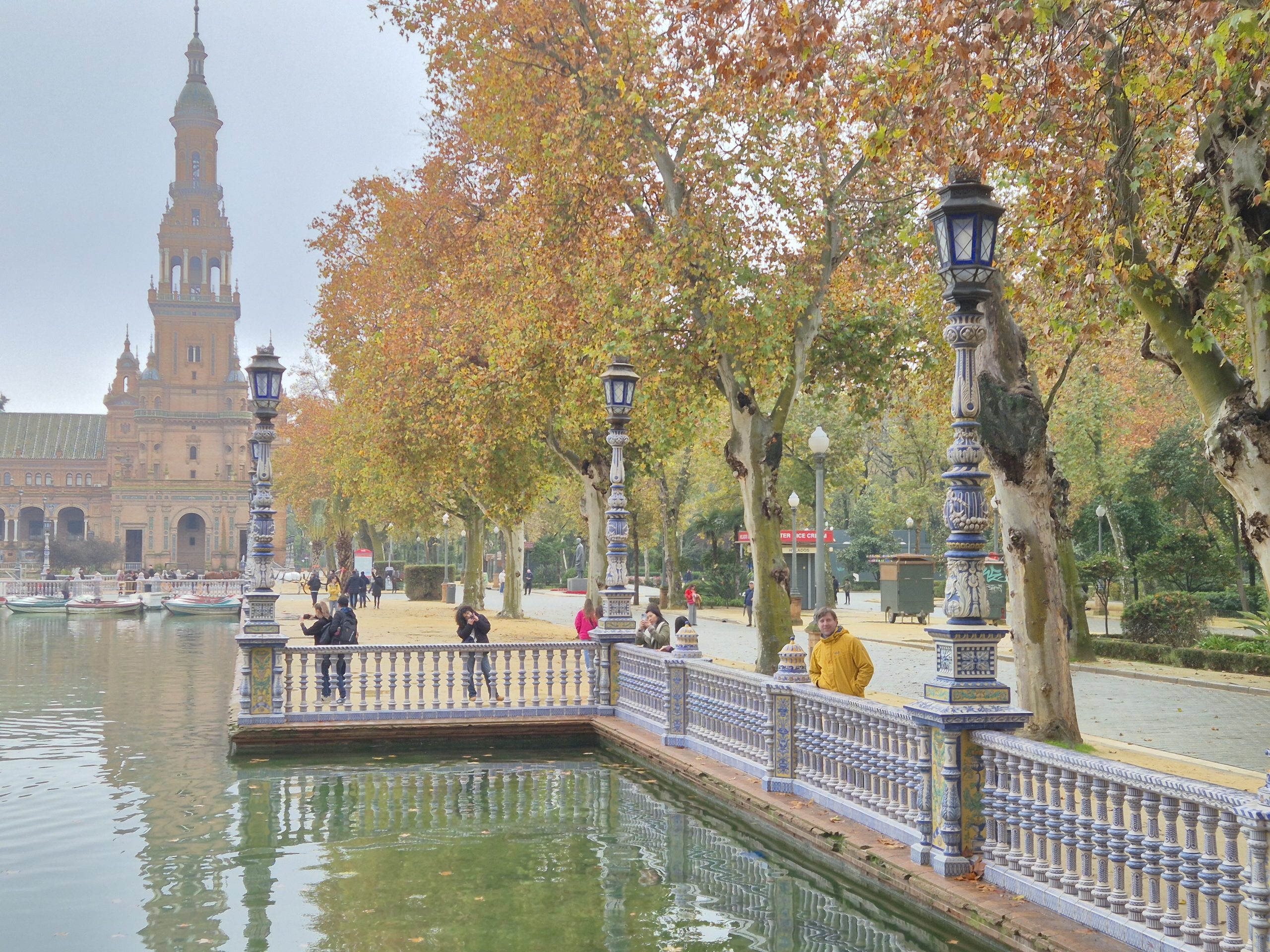
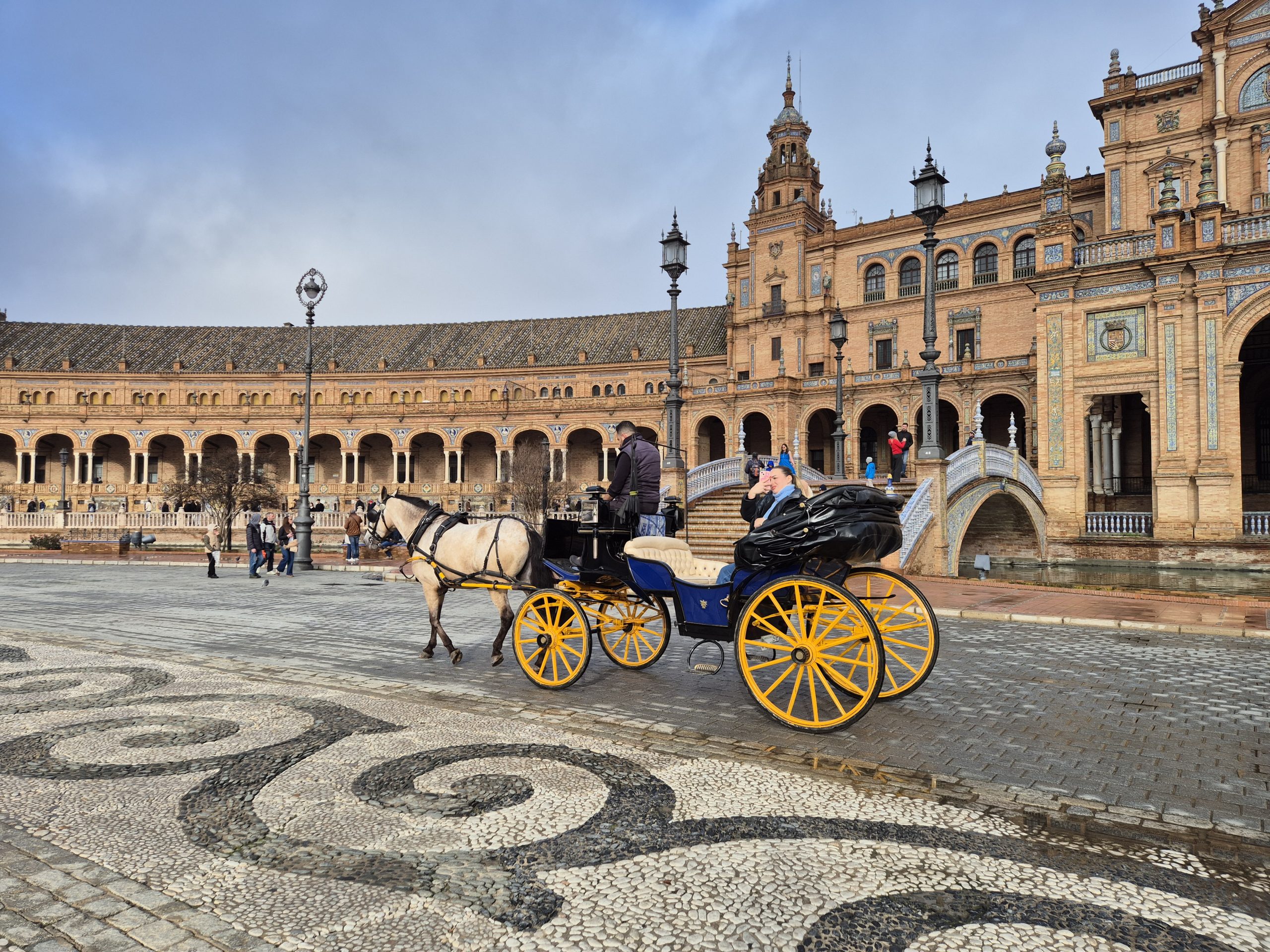
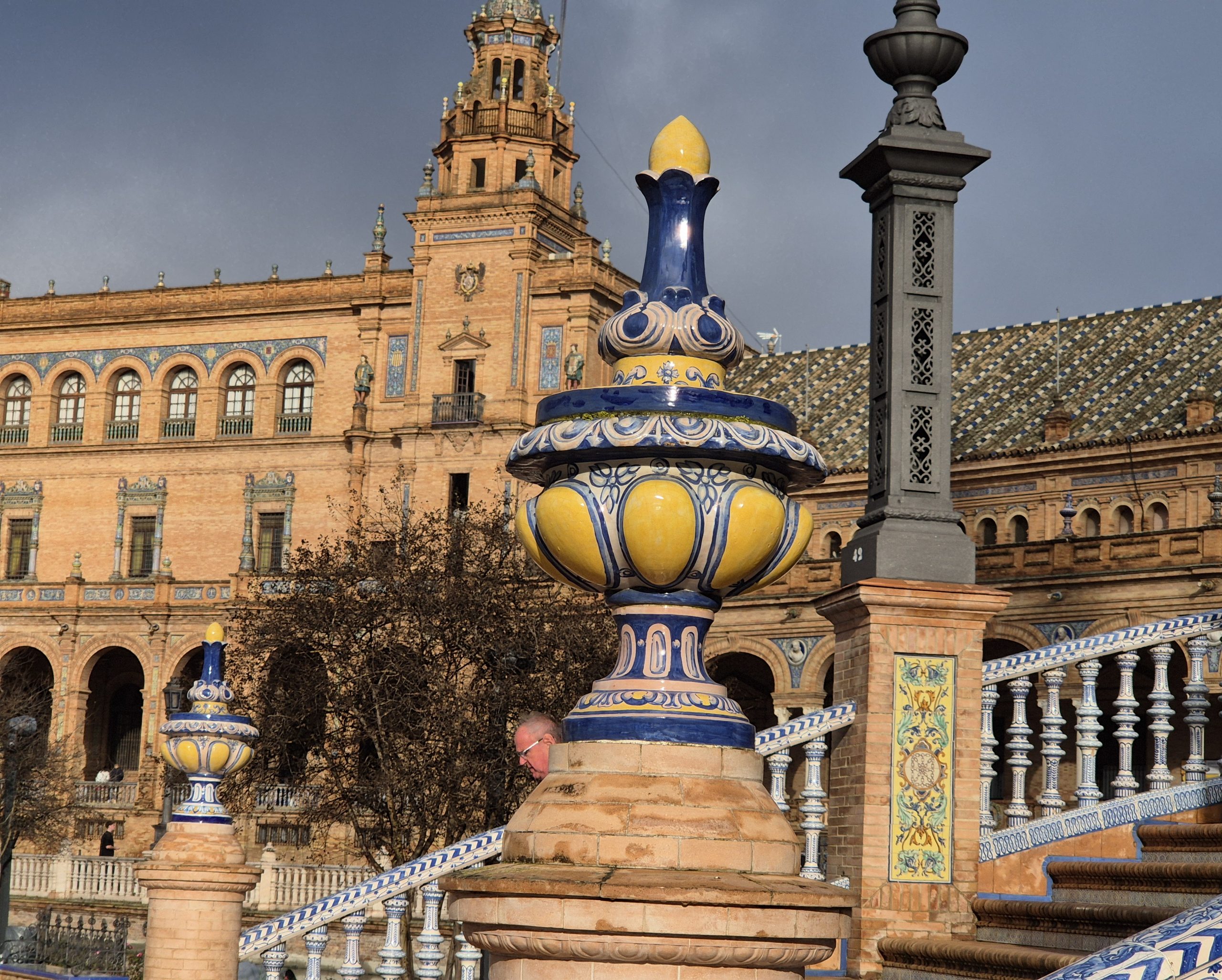
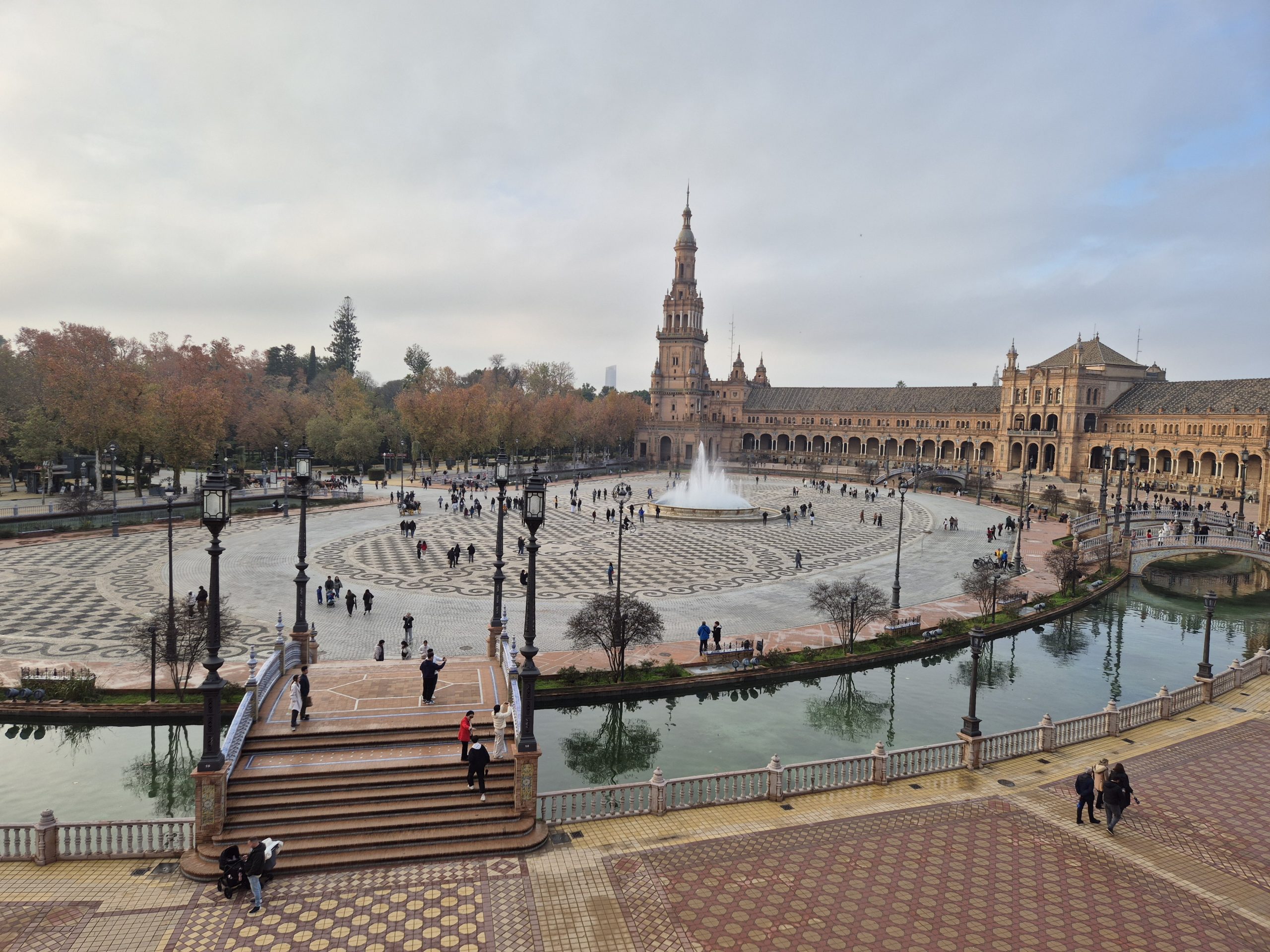
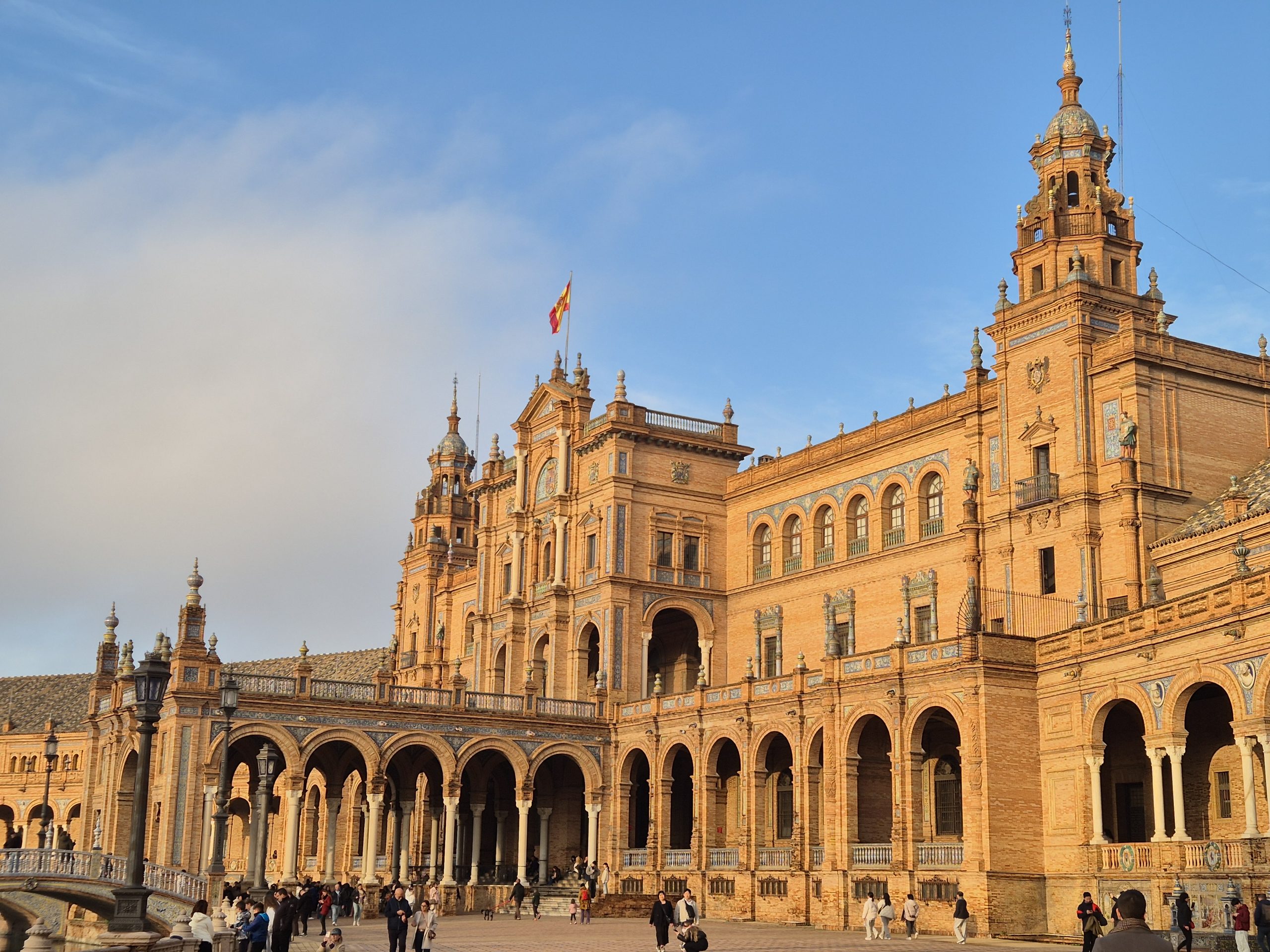
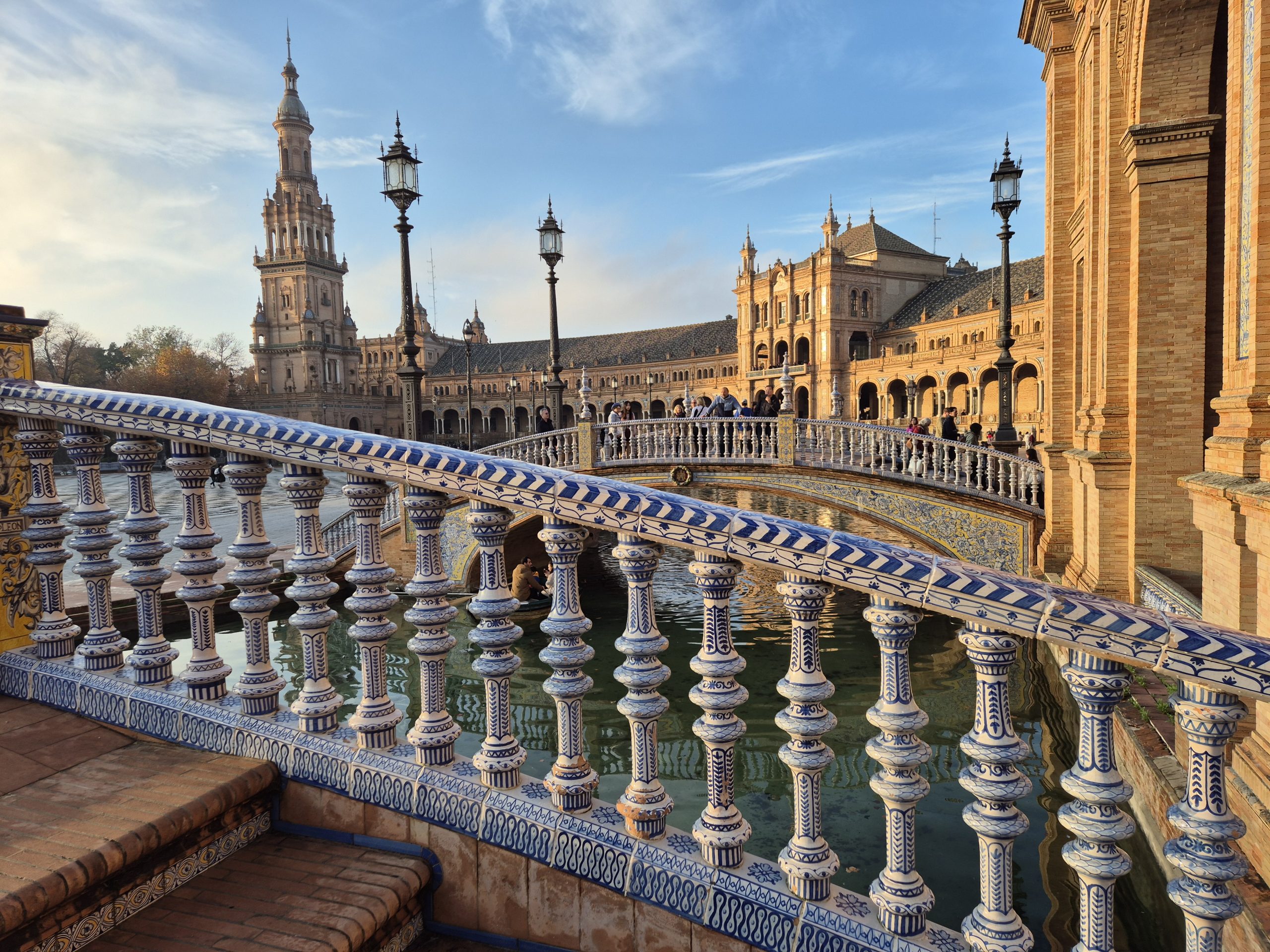
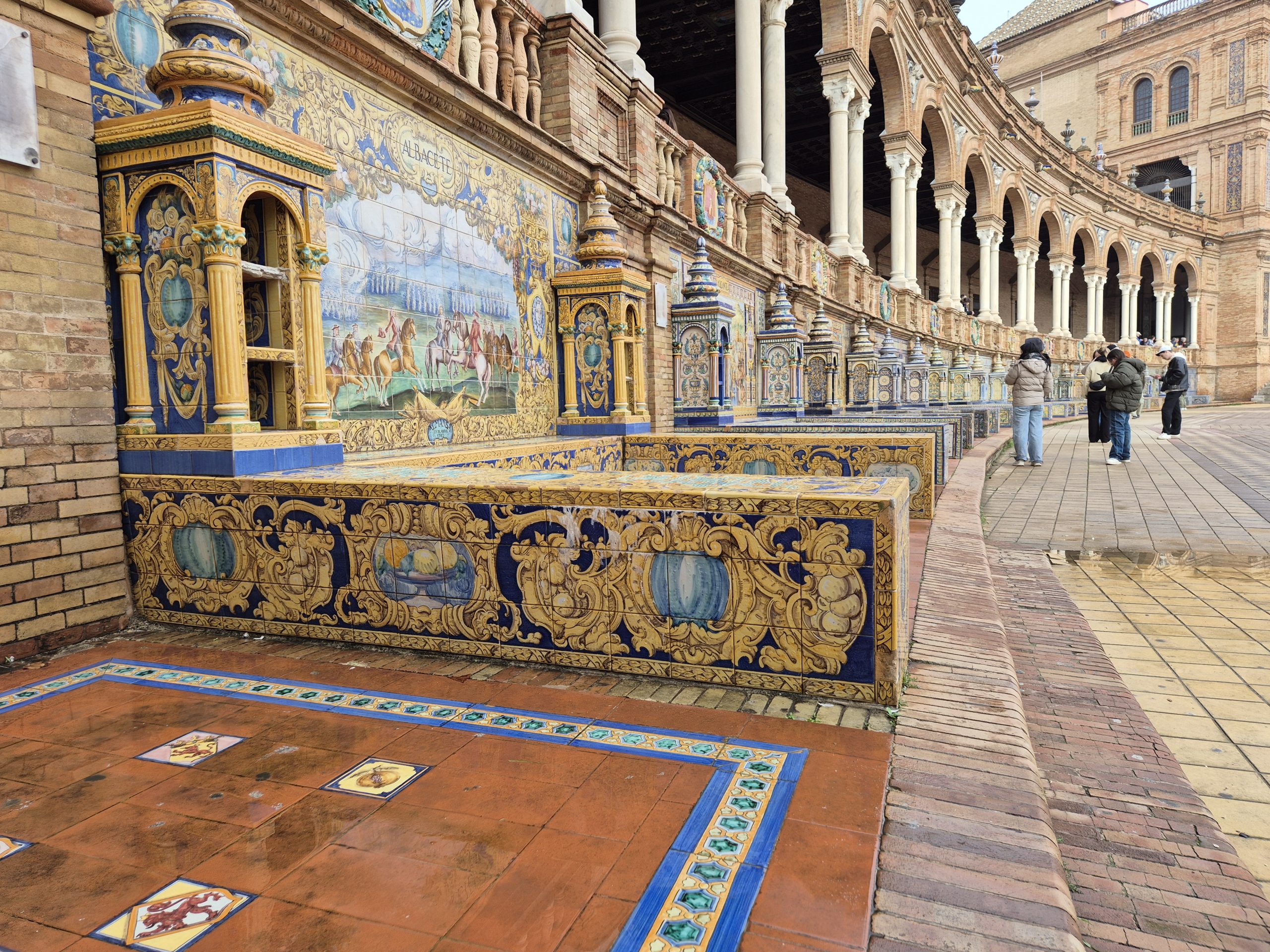
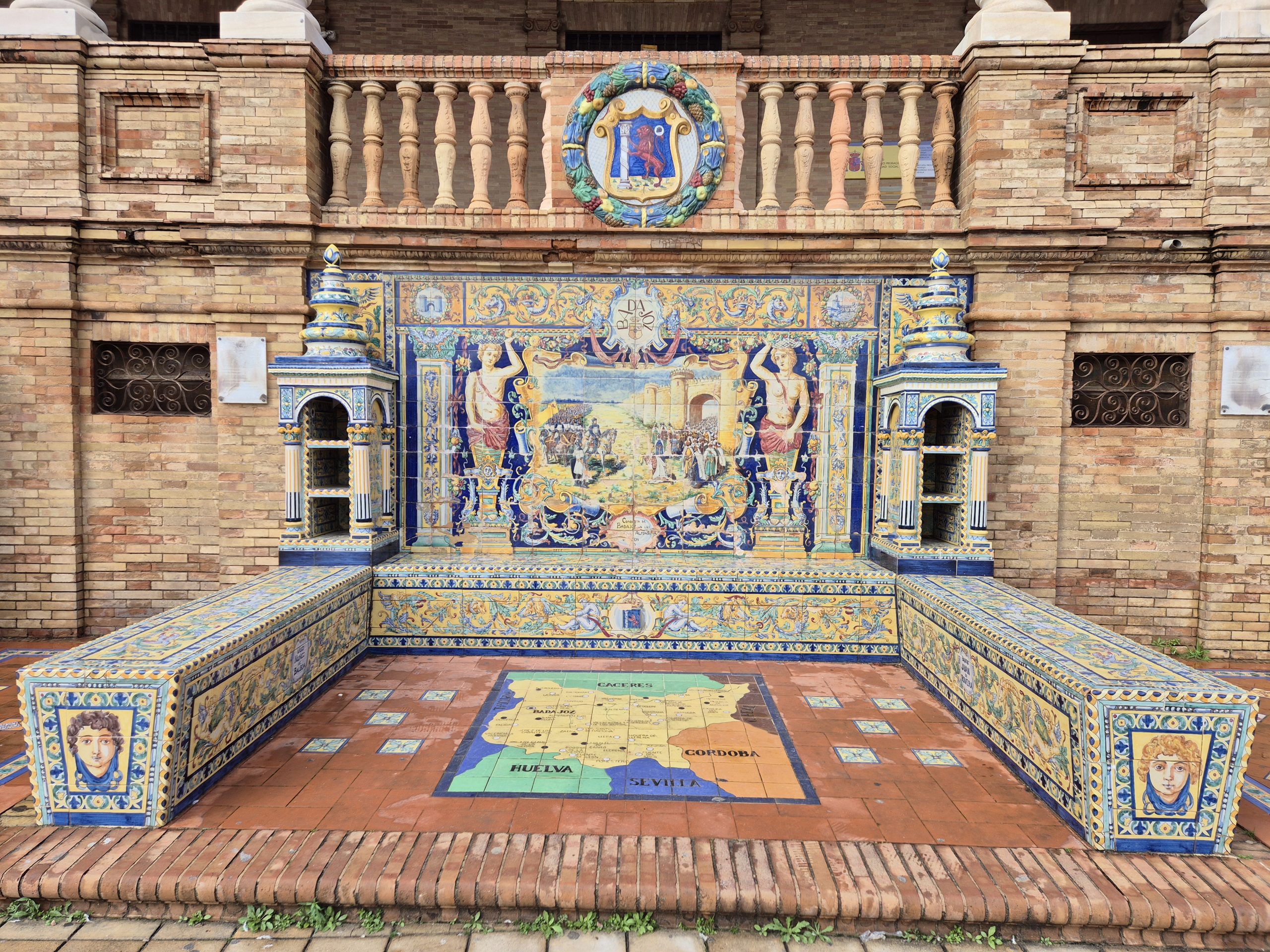
As we aimlessly wandered around, we noticed a crowd gathered at a spot, with music and cheering. Despite myself, I went to see what was going on: and stumbled upon a street music and flamenco-ish performance which deeply impressed me.
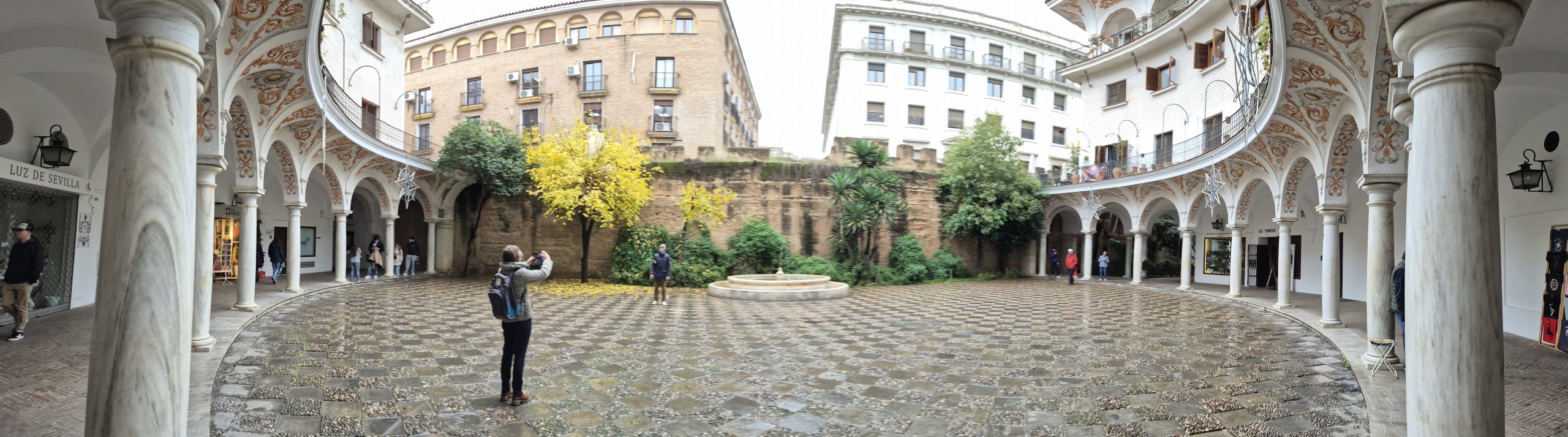
The best of it was unplanned: a family giving an impromptu flamenco performance, the older woman among them – a mother, perhaps a grandmother – so assured in her movements that she had clearly danced on a stage in another life. It felt more revealing than any ticketed show could have been. I liked the Plaza so much that, the following evening, when a long trek for dinner happened to lead us back past it, we lingered there again on the way home. At night it had a different kind of magic about it. A few other kindred spirits wandered in the plaza at this time of the night. The central fountain was now lit with colored lamps, so the water turned purple, blue, red, and green in turn. The crescent moon above, reflected in the moat, the yellow lamps all lit gave the place an unhurried old-world atmosphere.
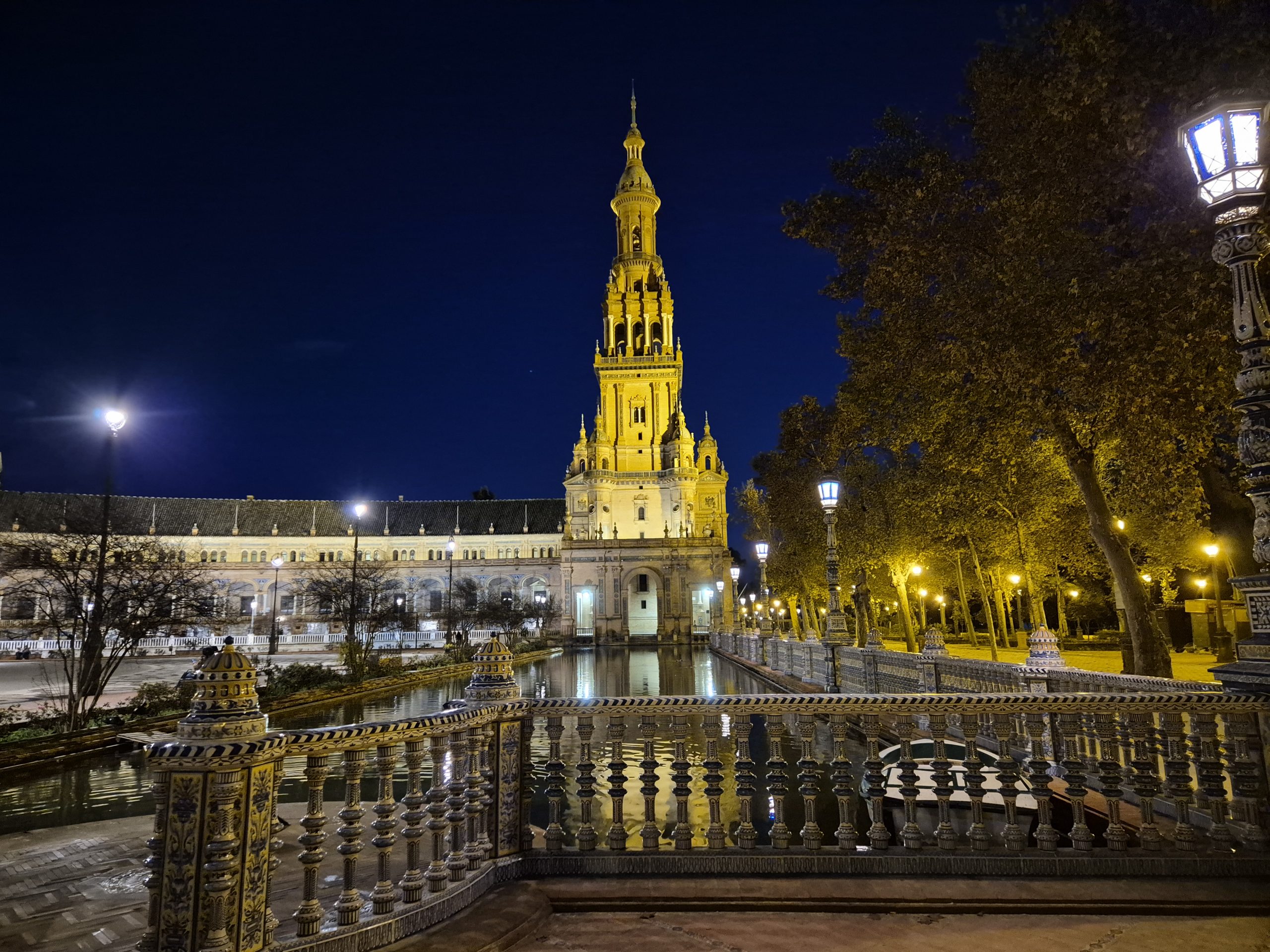
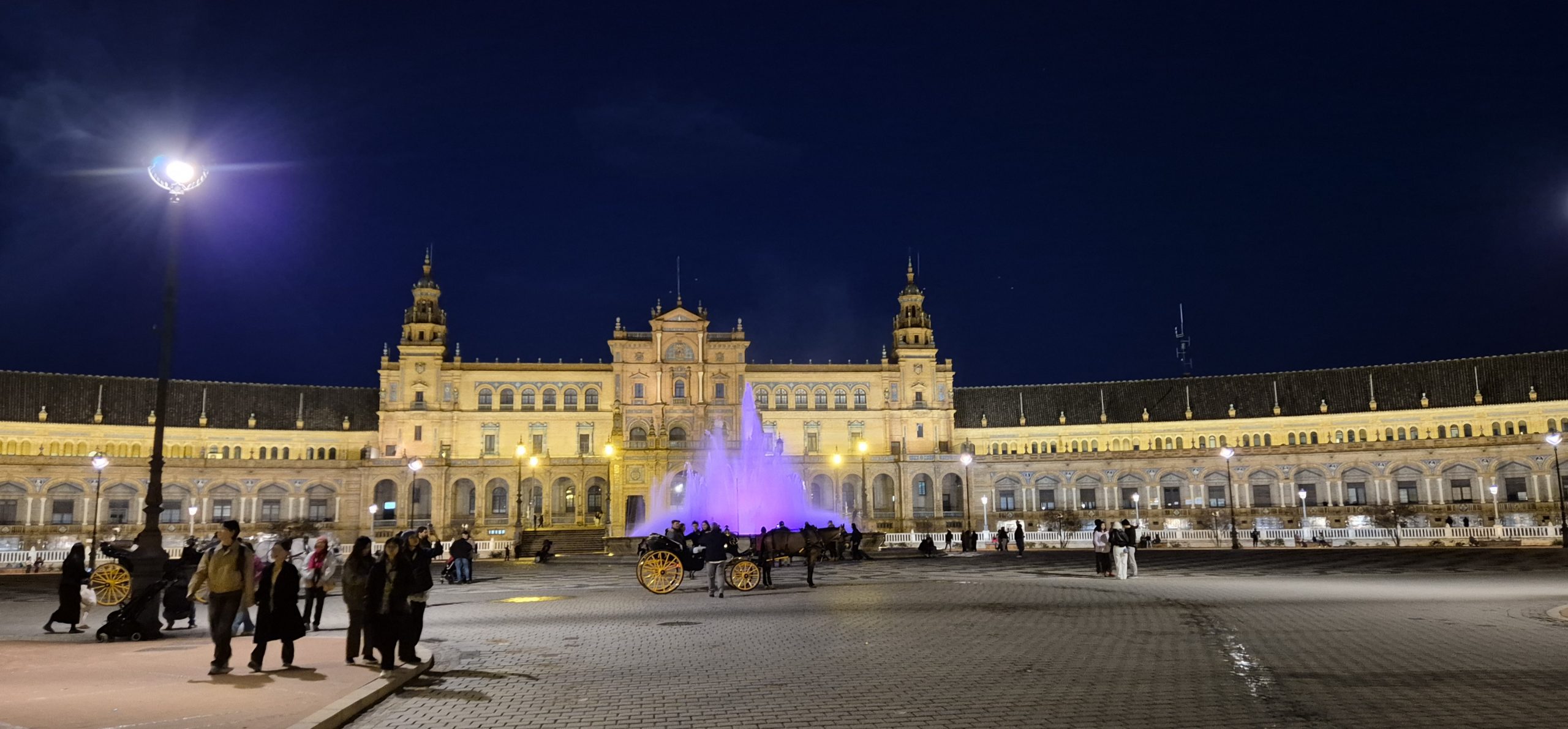
The Cathedral and the climb
24th Dec 2025
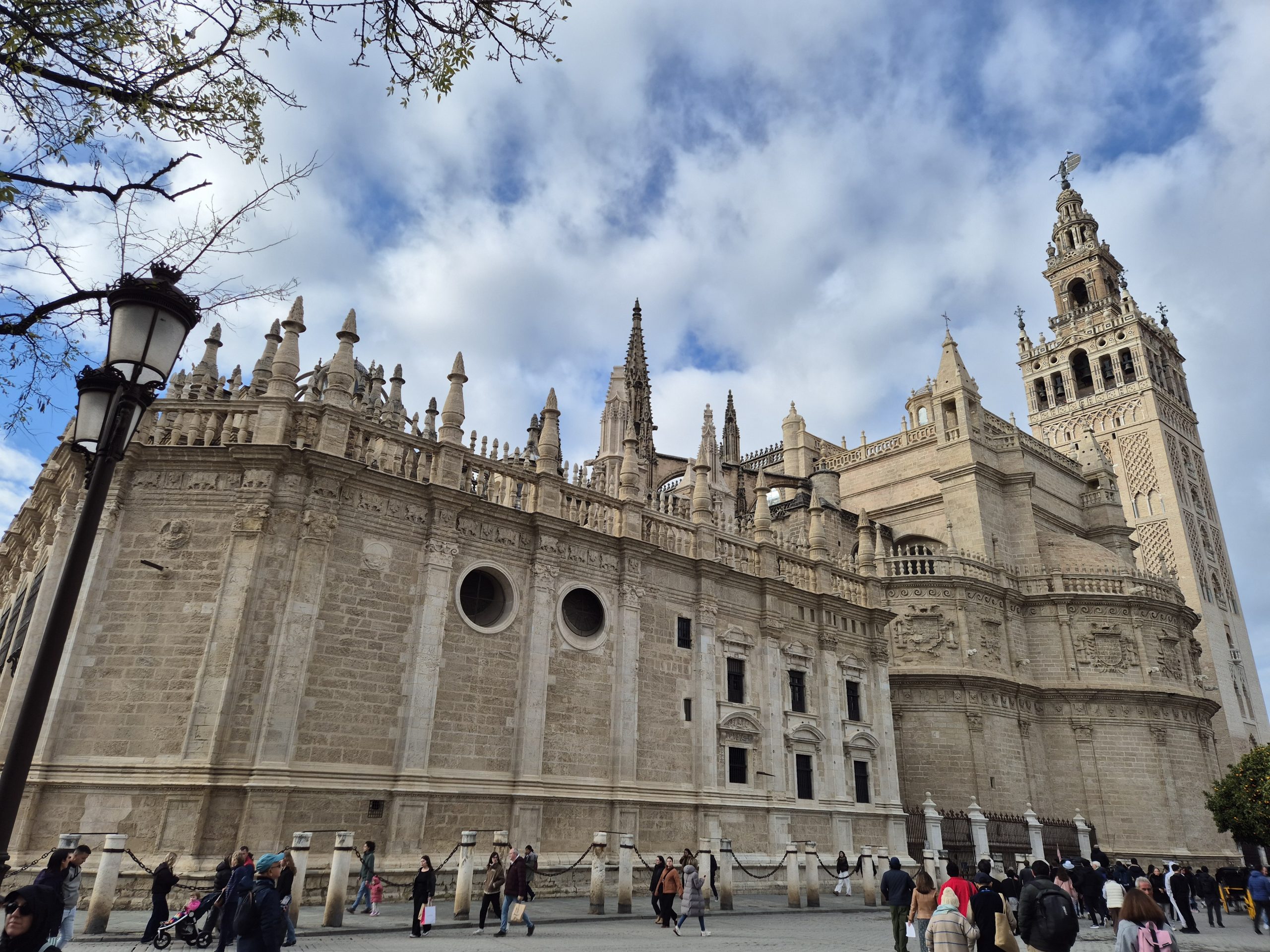
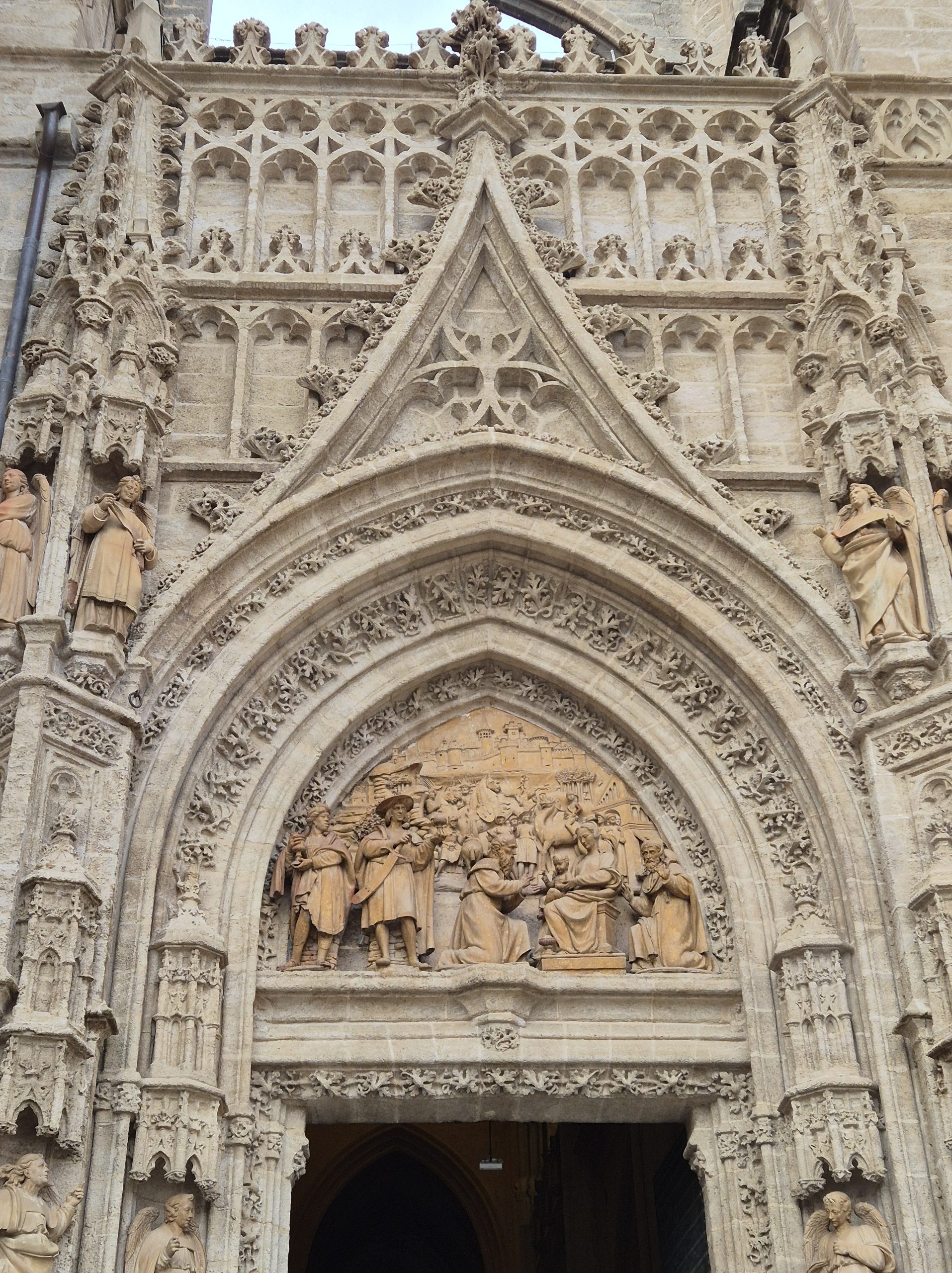
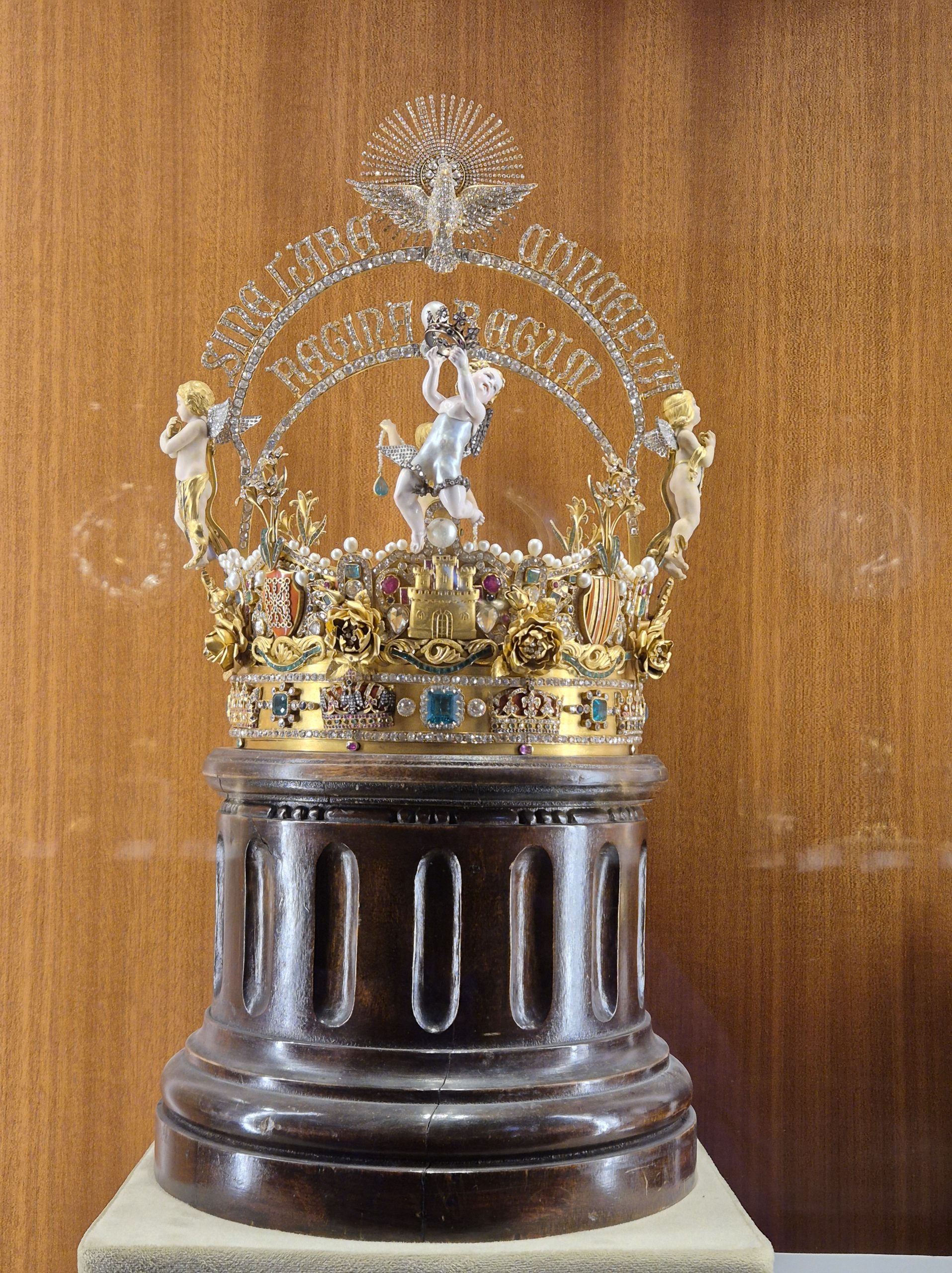
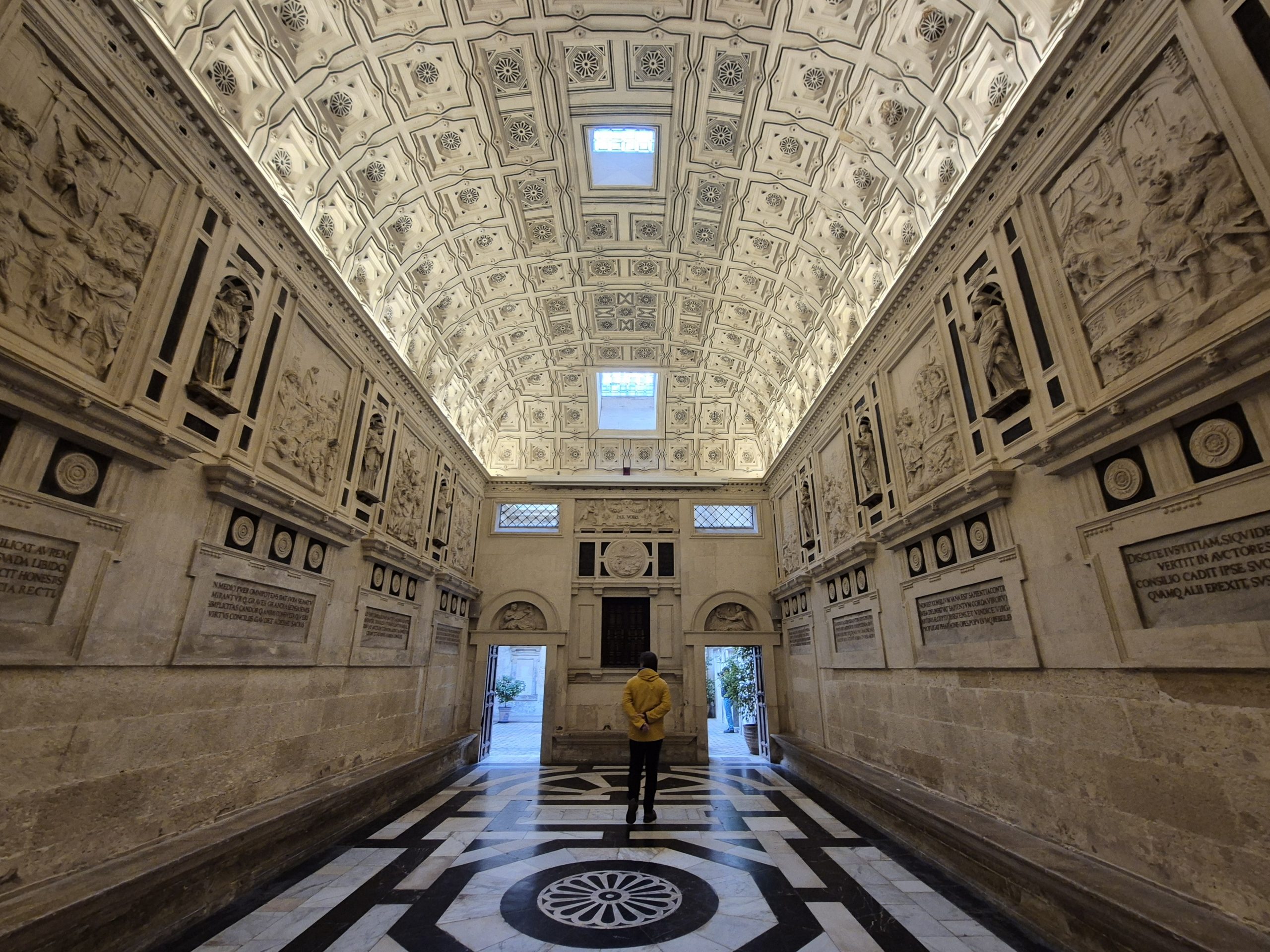
We had pre-booked the Cathedral too – again, months in advance. Having seen the previous day’s queue wrap right around the building – and that with tickets in hand – we decided to go early. We were the first there that morning, and perched on a low wall by the entrance until a staff member shooed us off it to set up the queue. A little more waiting, and we were in.
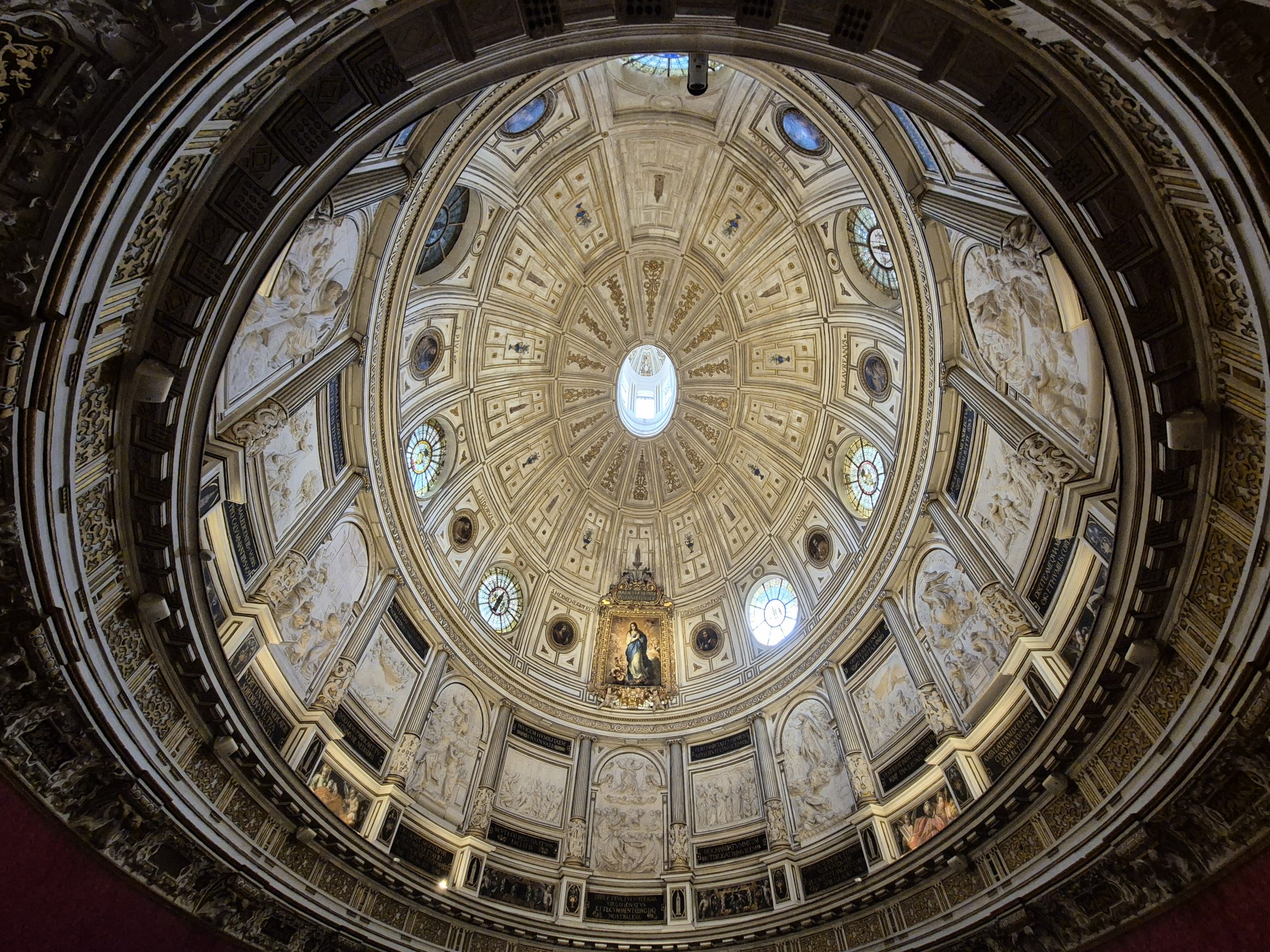
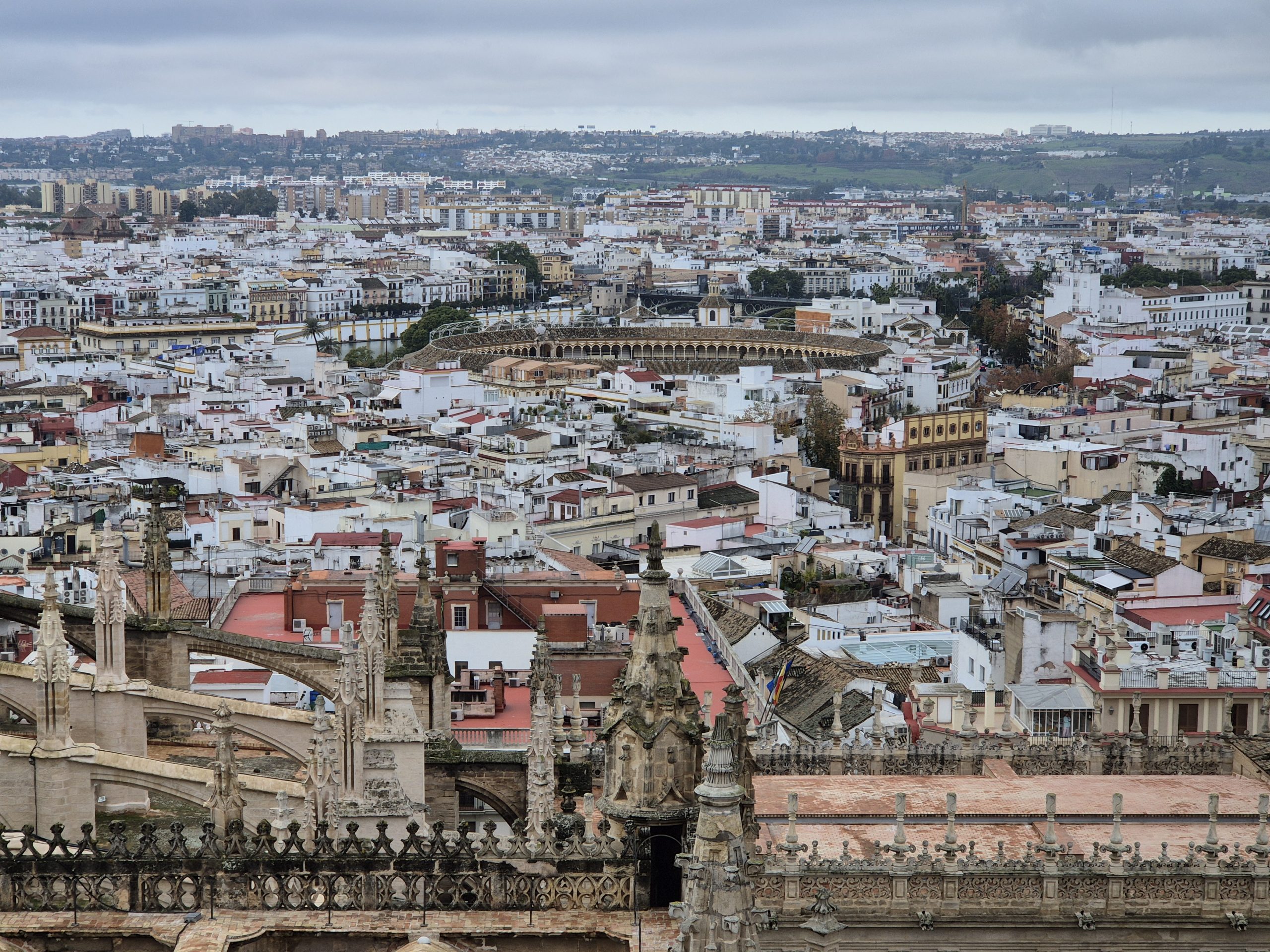
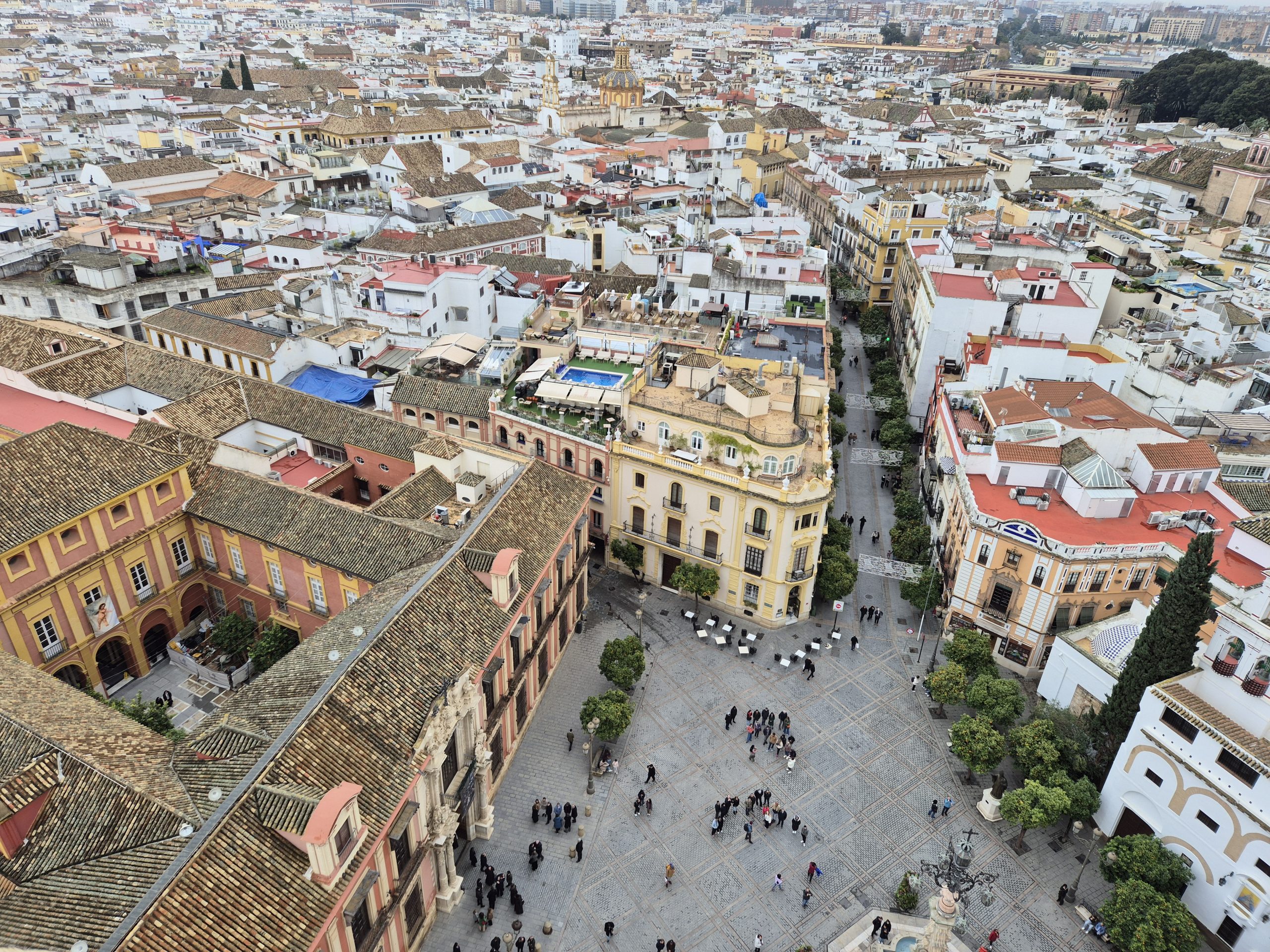
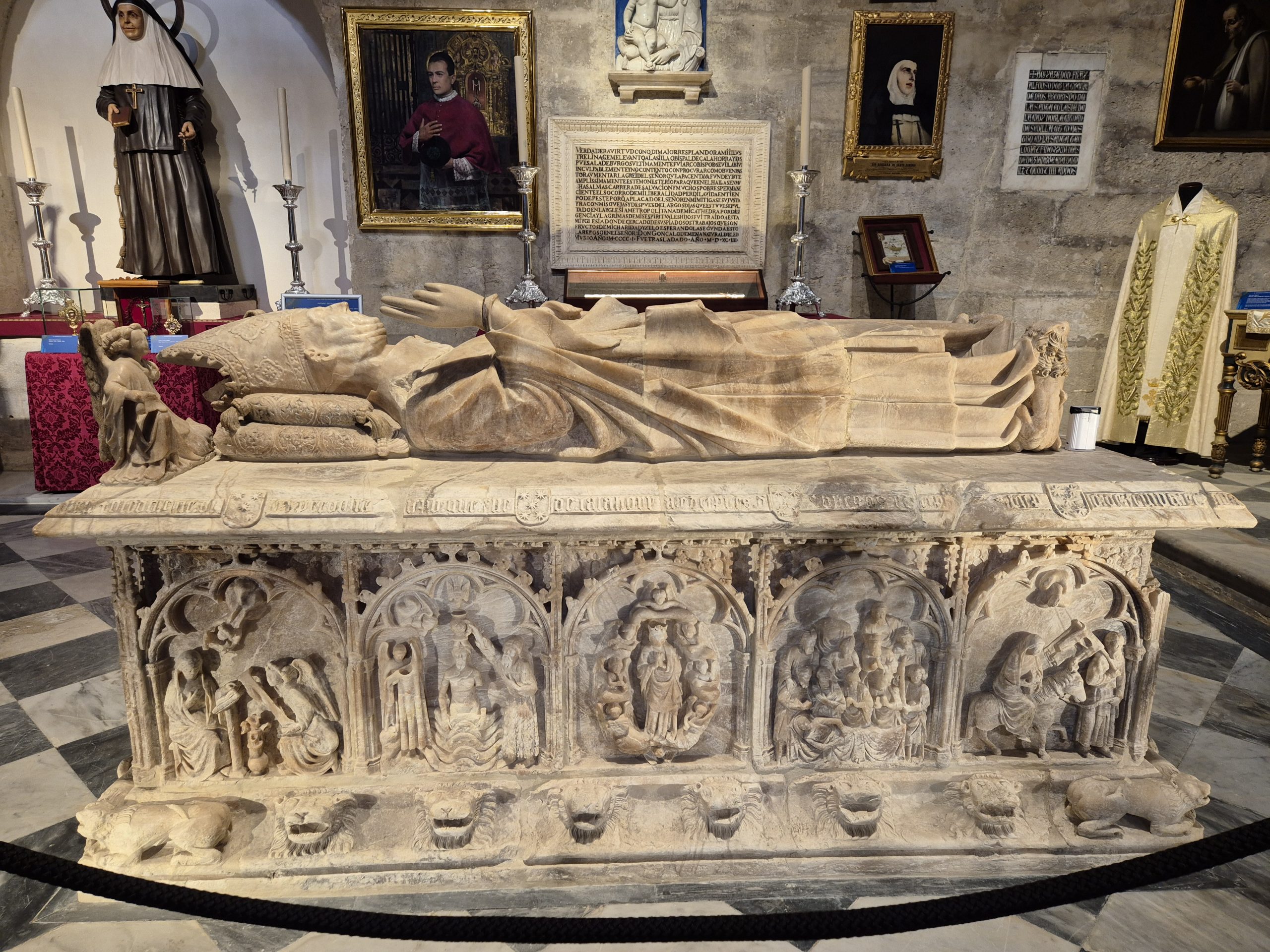
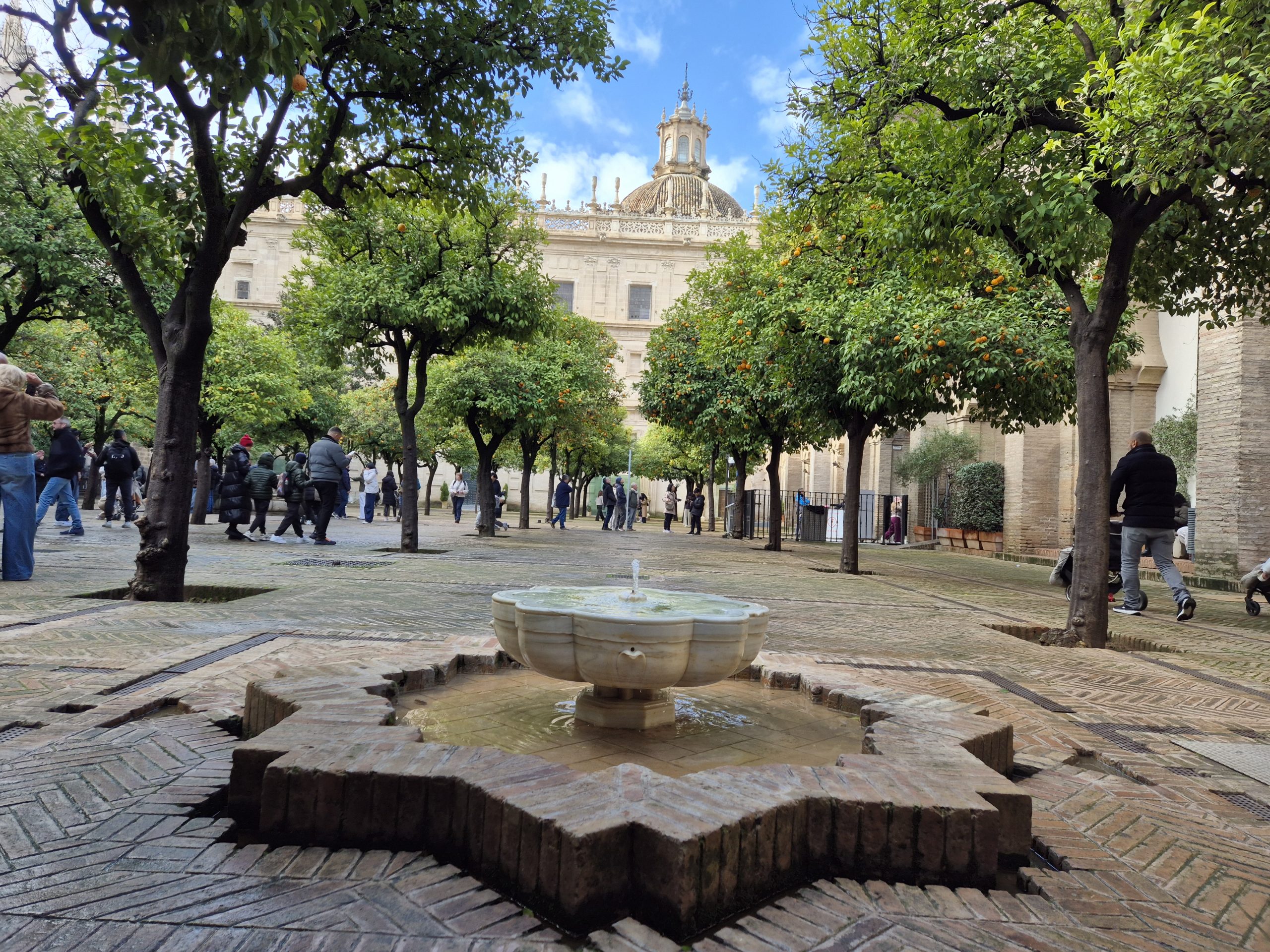
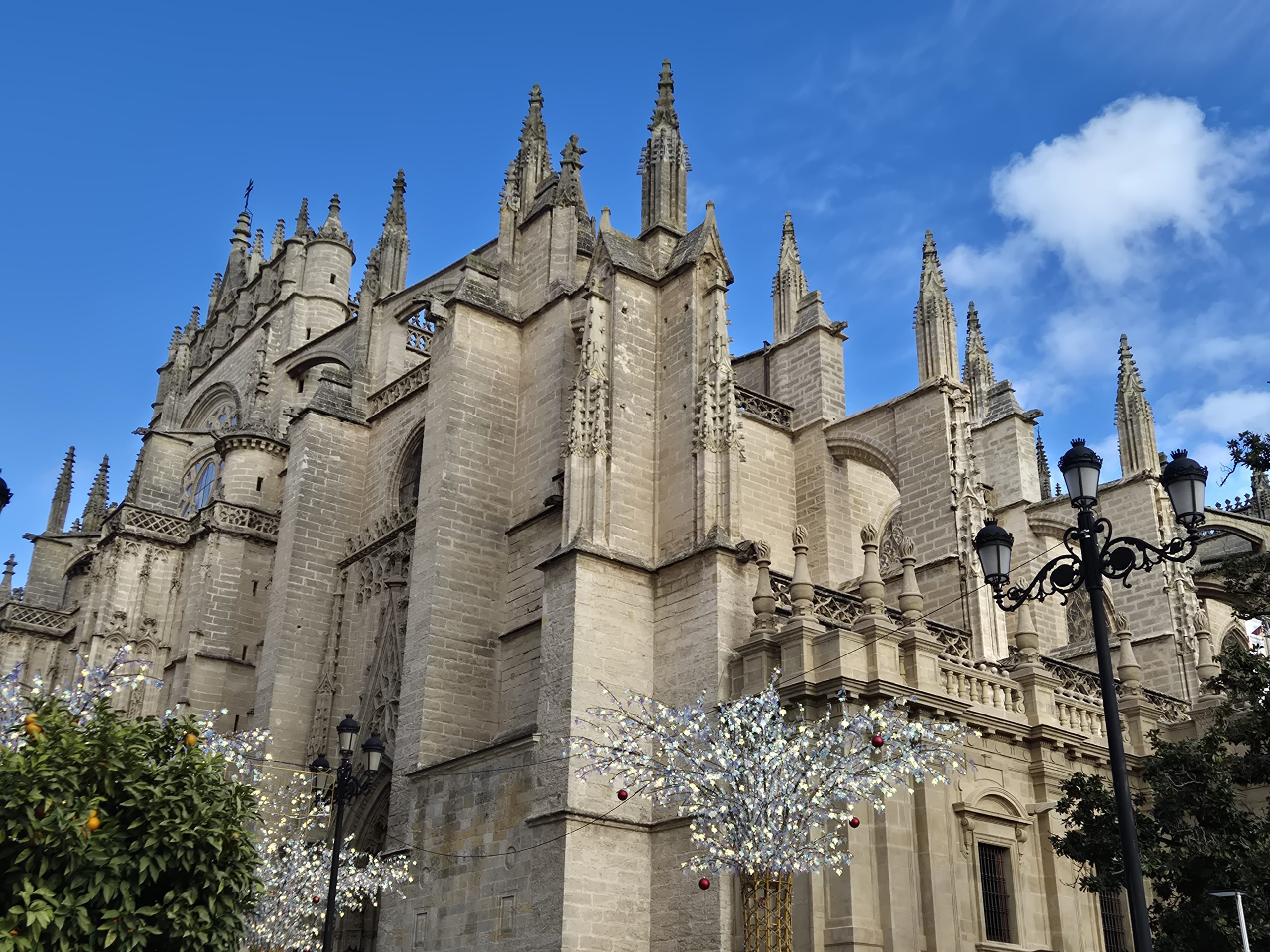
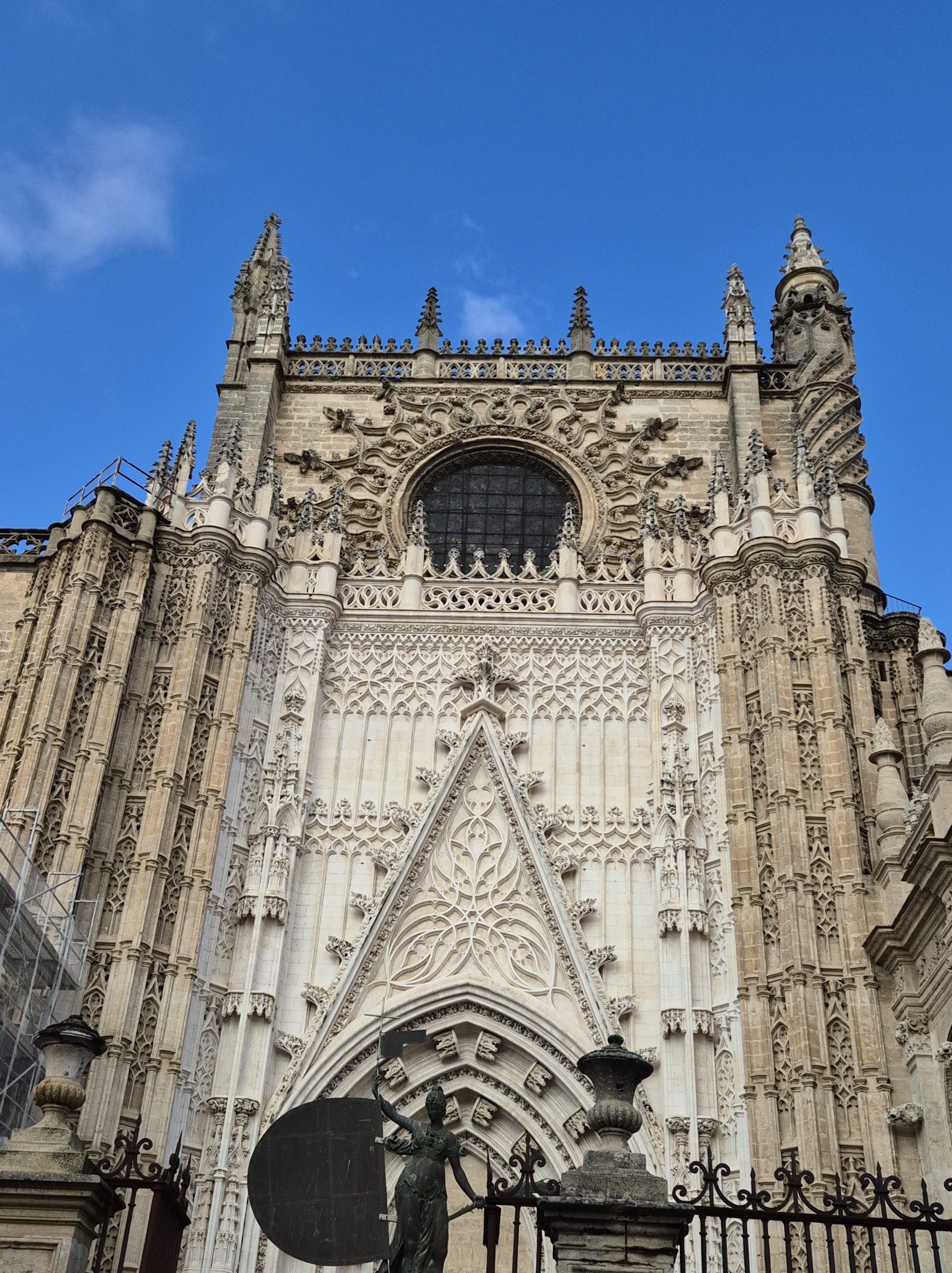
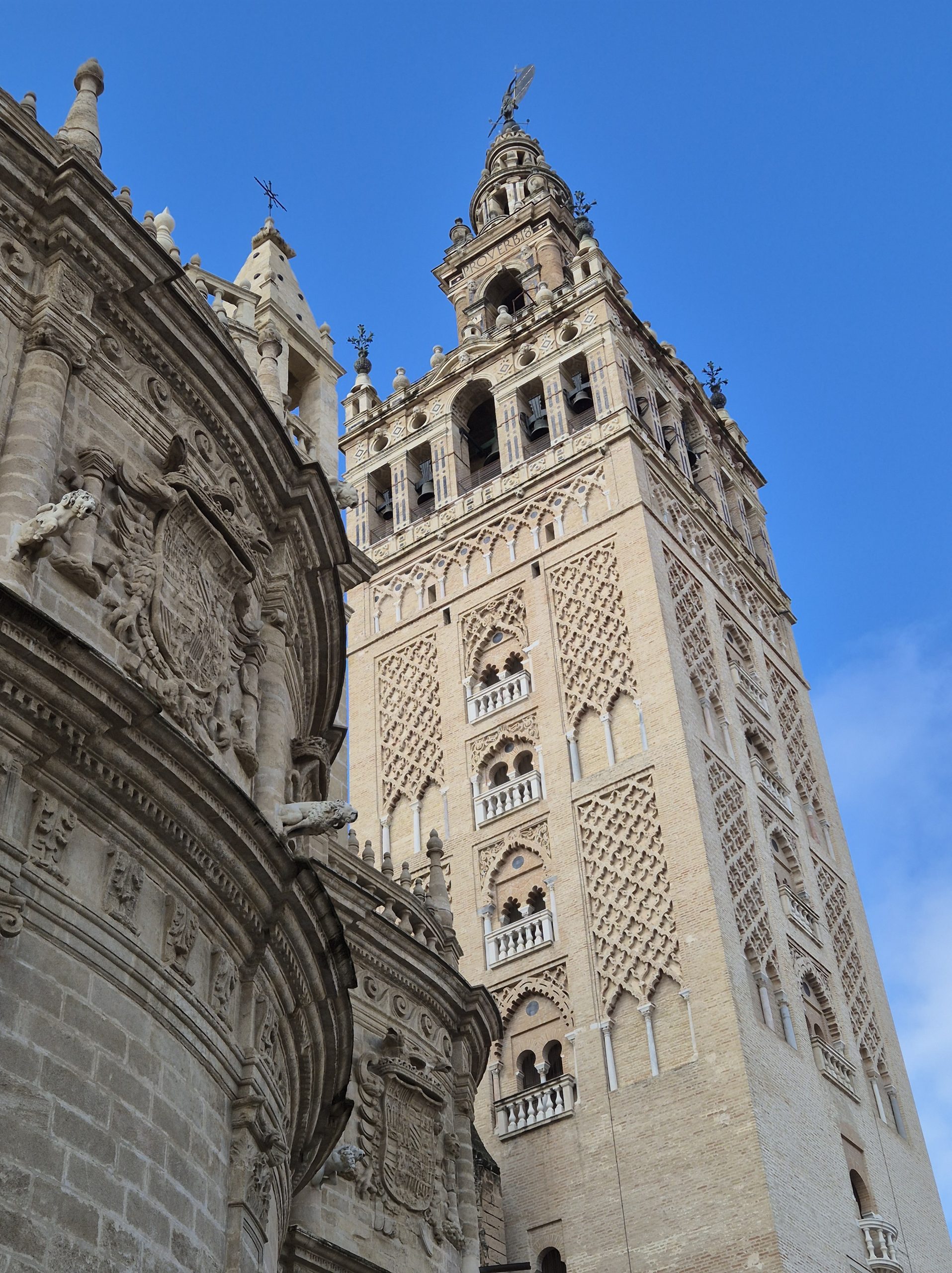
The Cathedral earns its reputation, massively impressive from both outside and in; out front, a tall silver-twig Christmas tree glittered among the orange trees. We climbed the tower, the Giralda. The way up was some 27 gentle ramps arranged in a spiral, and some 15 steep steps right at the top to the viewing gallery – this is still not the very top of the tower, but this is up to where visitors are allowed. You are rewarded with a spectacular view over the rooftops of Seville, though ruined for photos by the metal mesh in place for obvious safety reasons. I looked up at the massive bells. It is not a place to linger, though – the crowds ebb and flow, mostly flow.
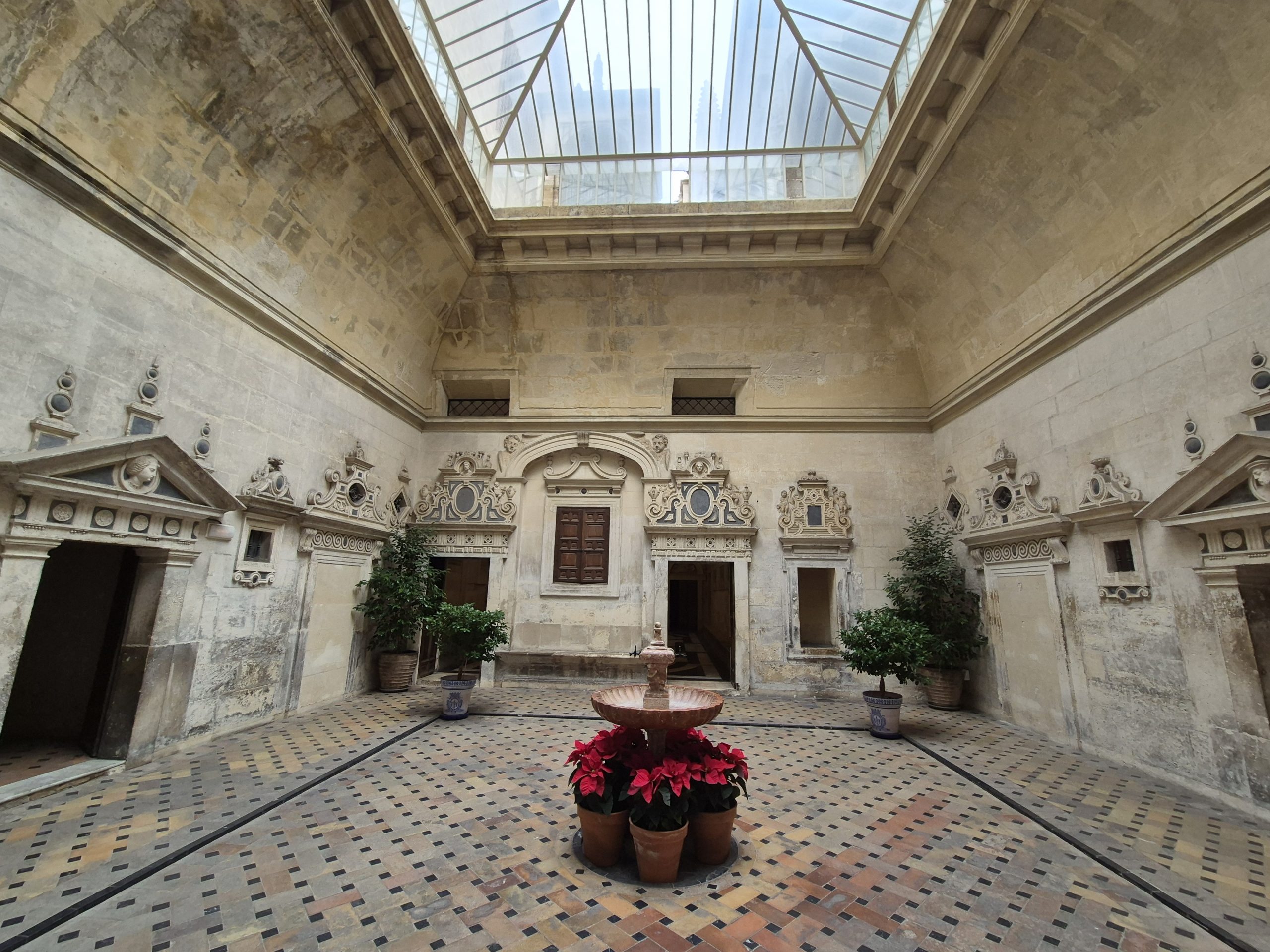
The cathedral’s courtyard still carries elements of its Moorish origins, the layering quietly present even here, beneath one of the largest churches in the world.
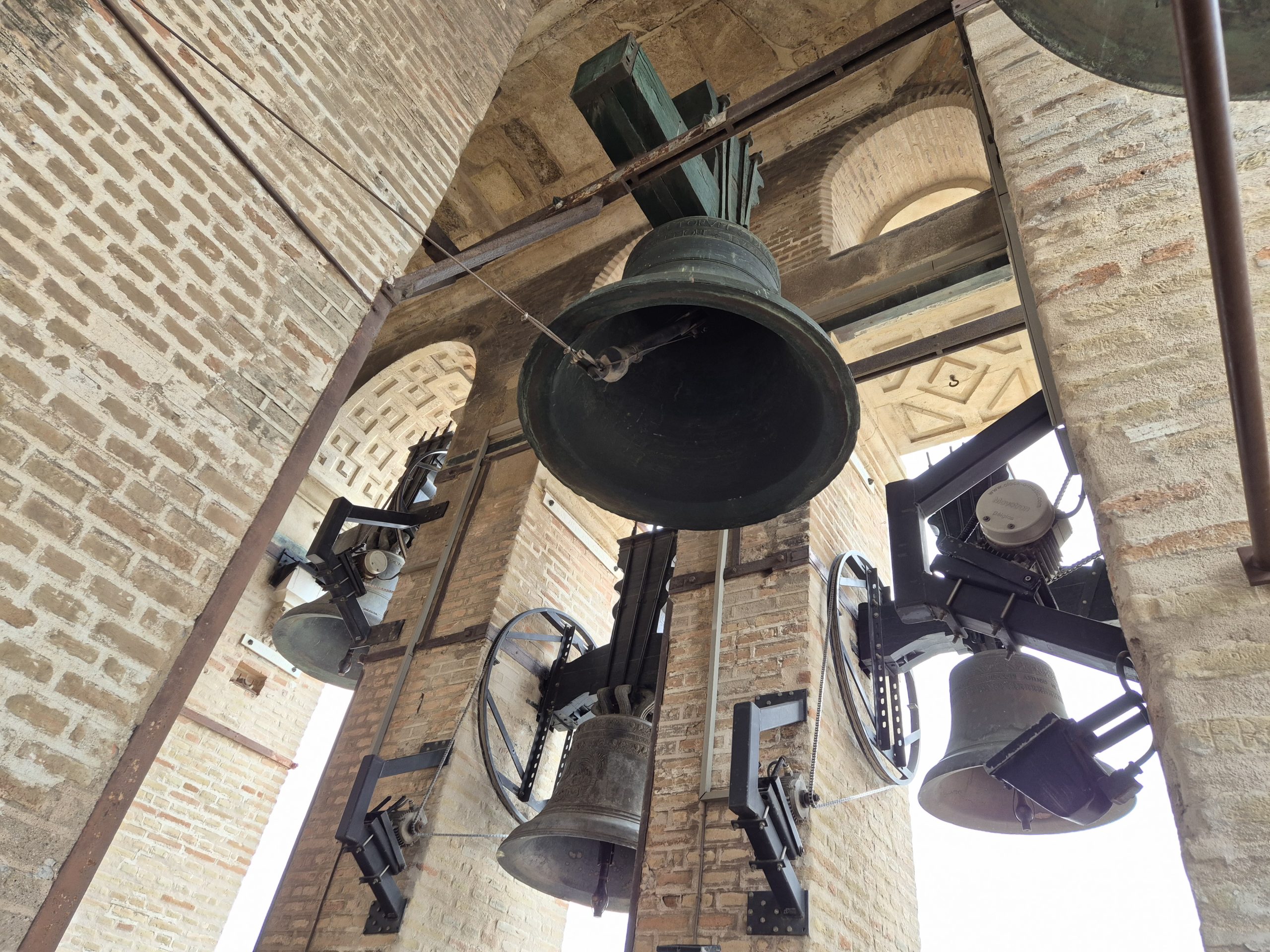
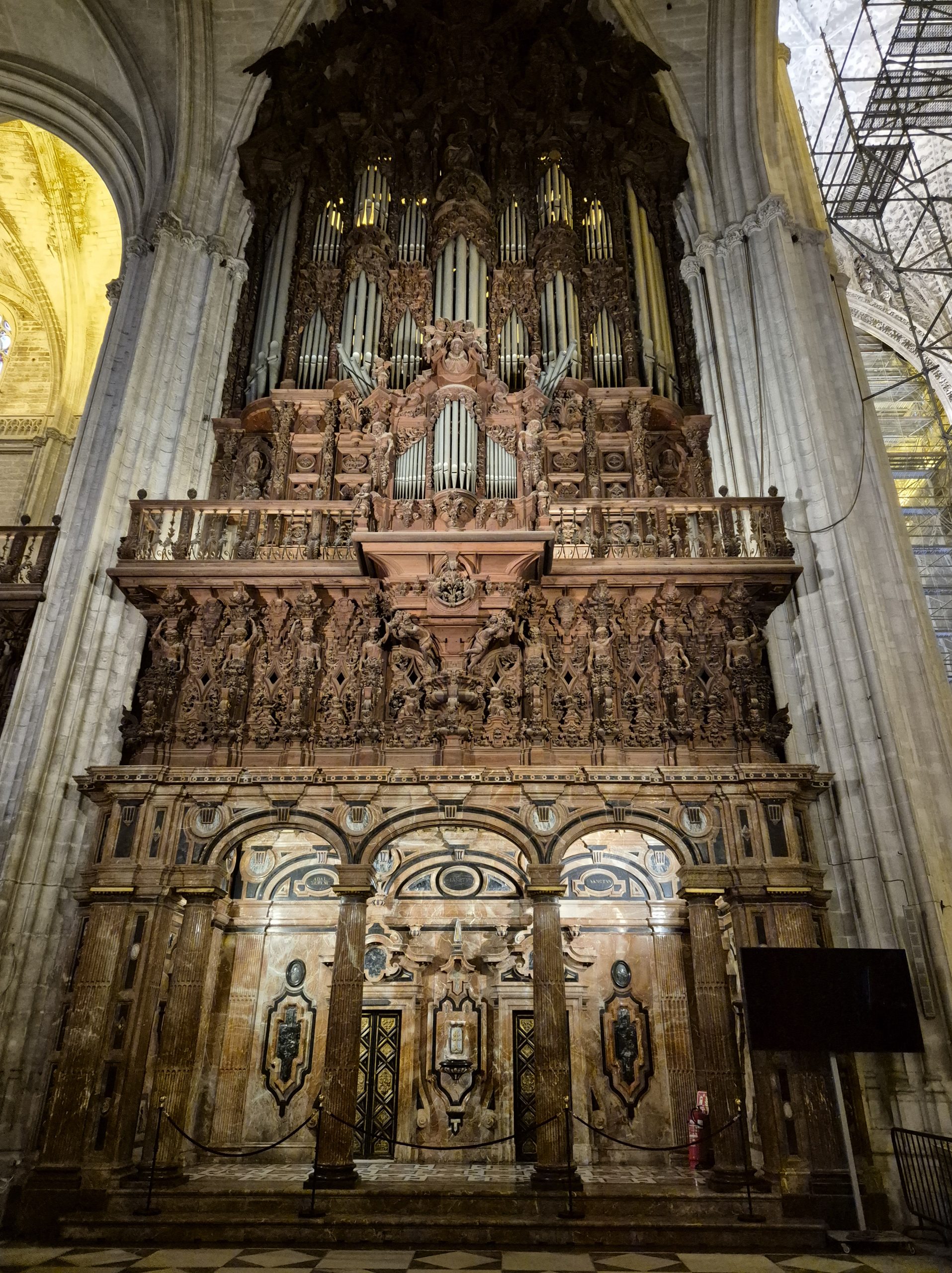
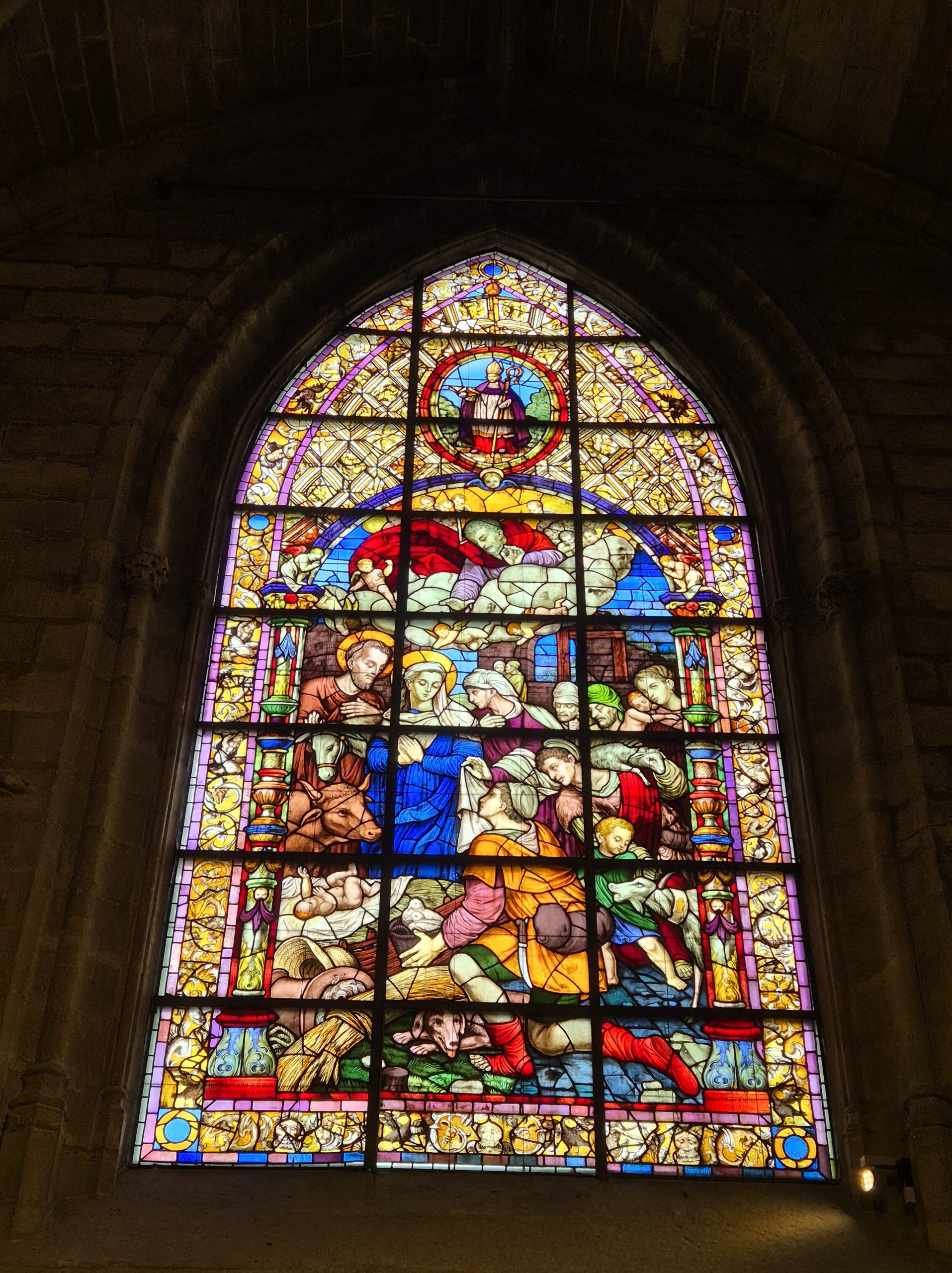
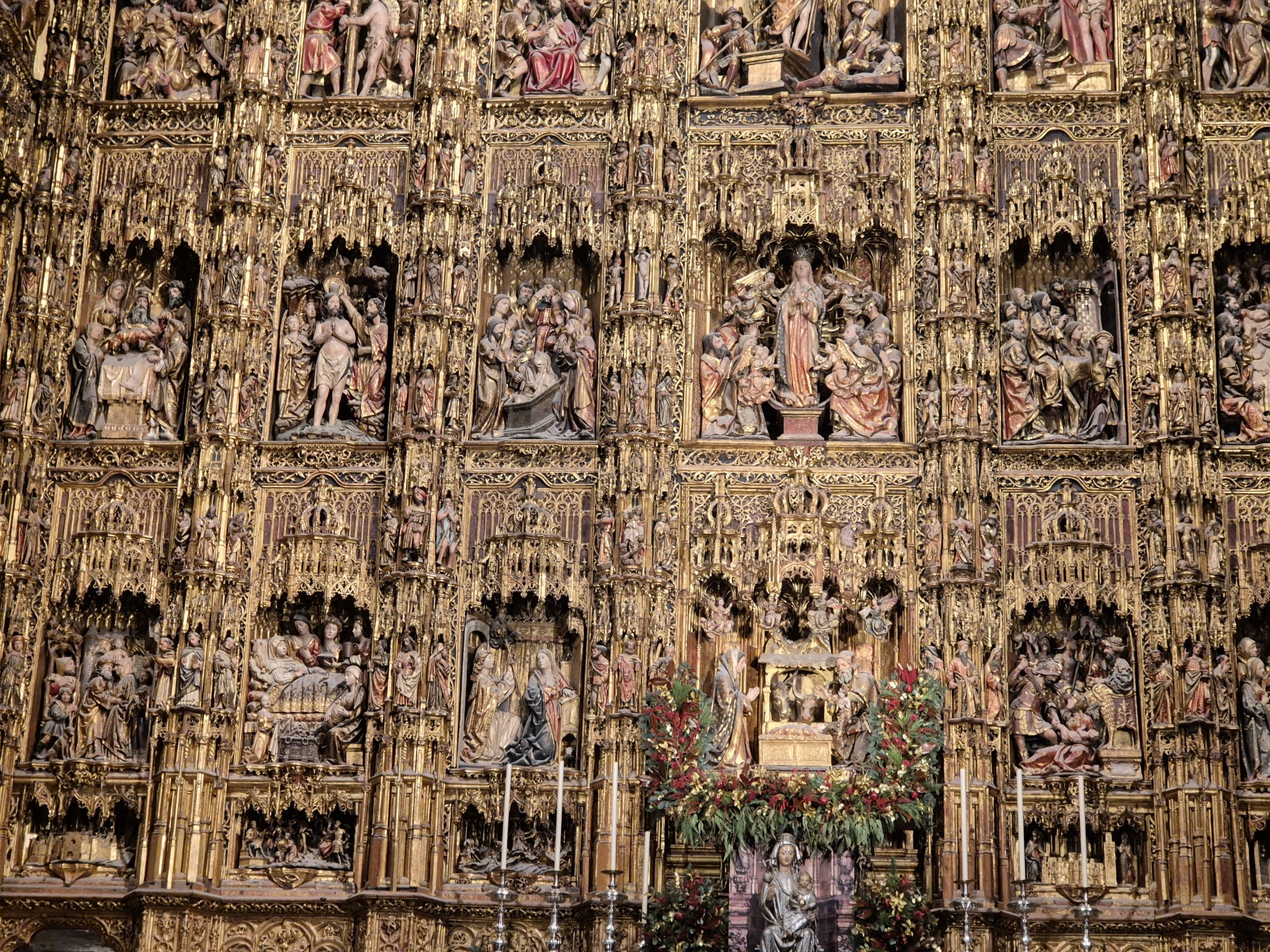
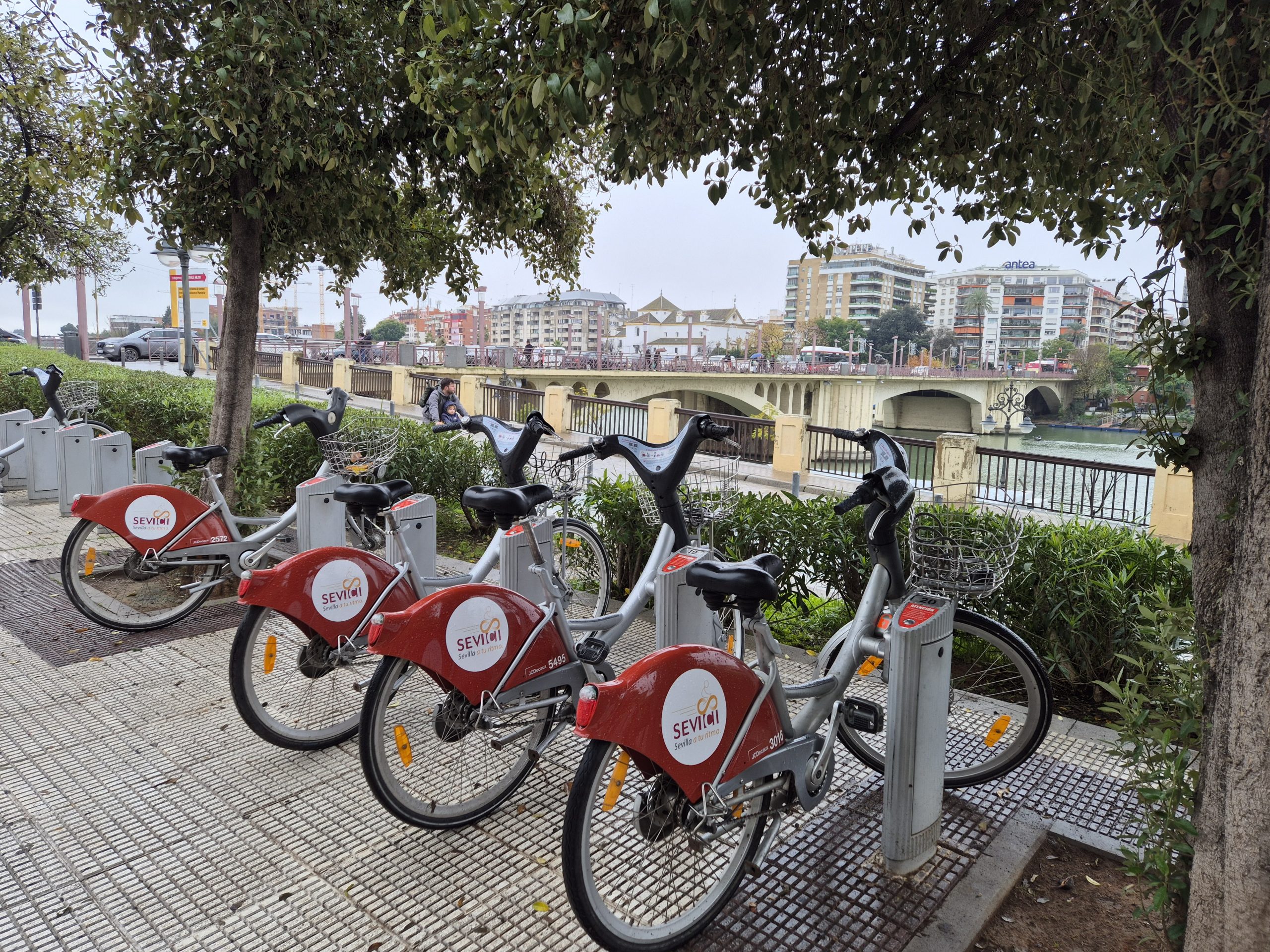
By this point in the trip, finding vegetarian food that was actually good had become its own quest – and this was Christmas Eve, the trickiest night of the year to land a table in Seville. So we walked: fifty minutes across town, with no convenient public transport to speak of, as ever – not even the Seville transit card I’d happily bought could help on this particular trek – to an Indian restaurant called, gloriously, Bollywood. Good food under cheerfully unflattering tube-light, and a pista kulfi to finish that tasted like home. The one consolation of the trek was that the route ran past Plaza de España, which is how we came to linger there a second time. (The full saga of eating vegetarian in Spain is its own piece.)
Setas de Sevilla – the mushrooms
25th Dec 2025
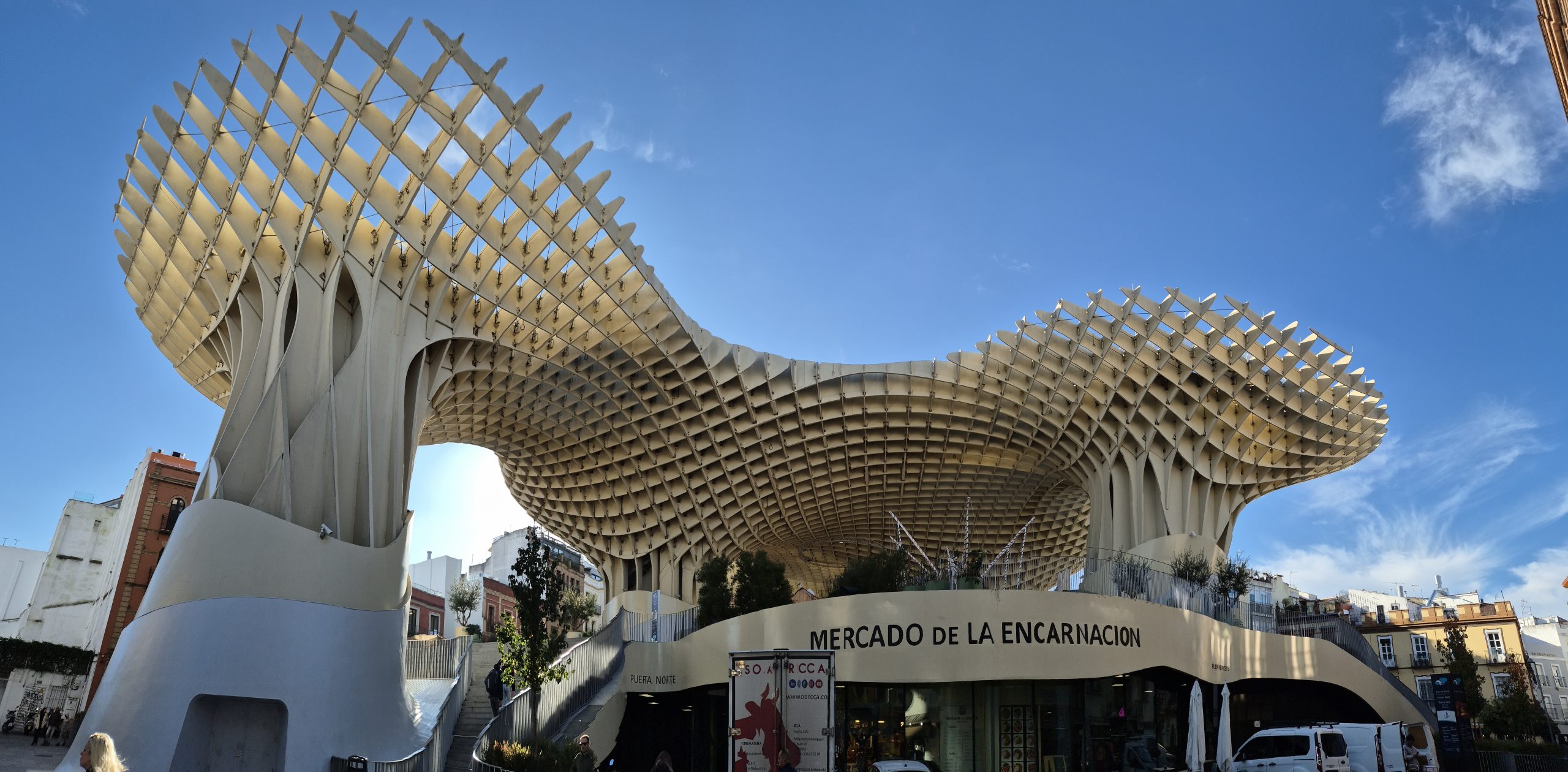
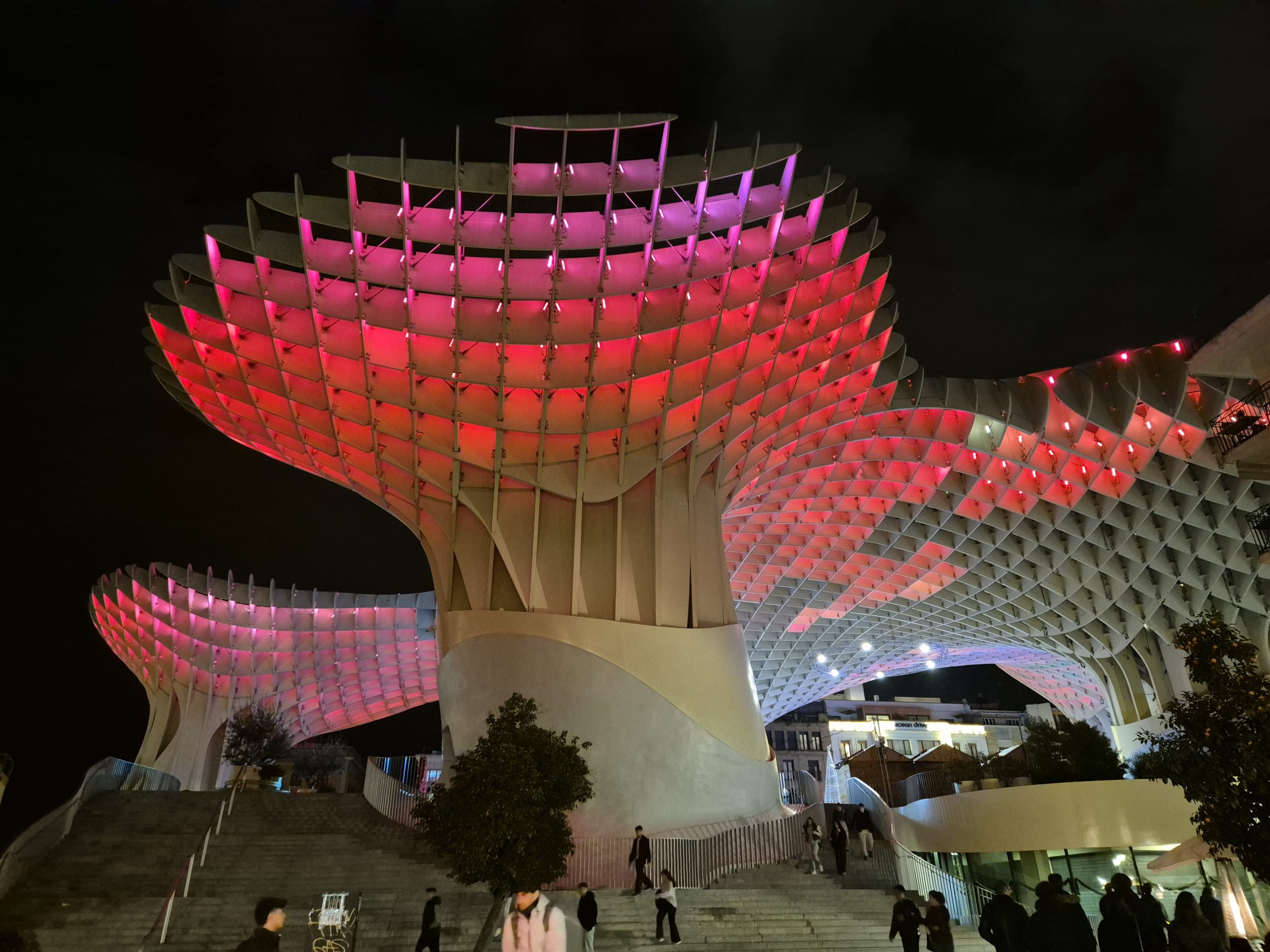
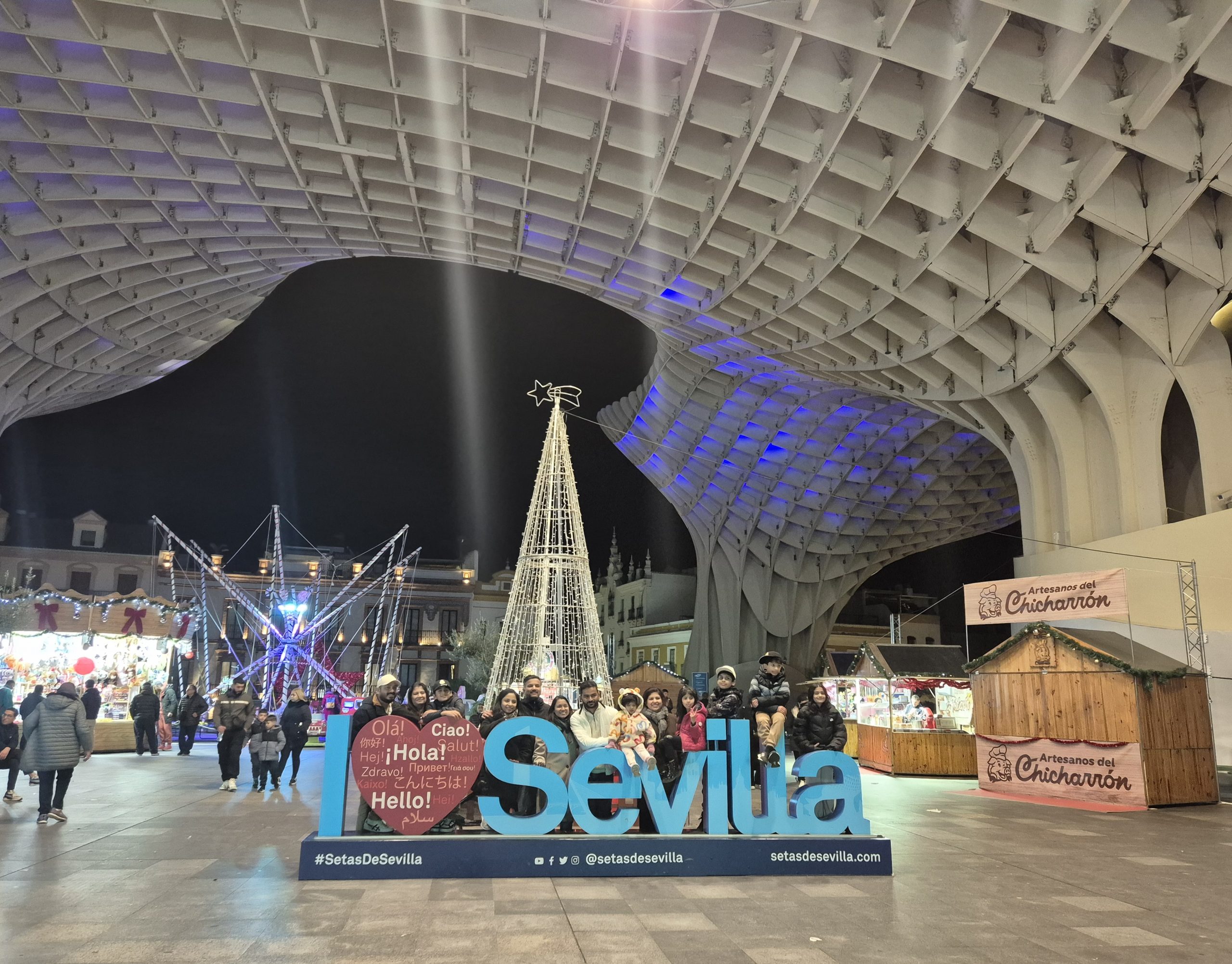
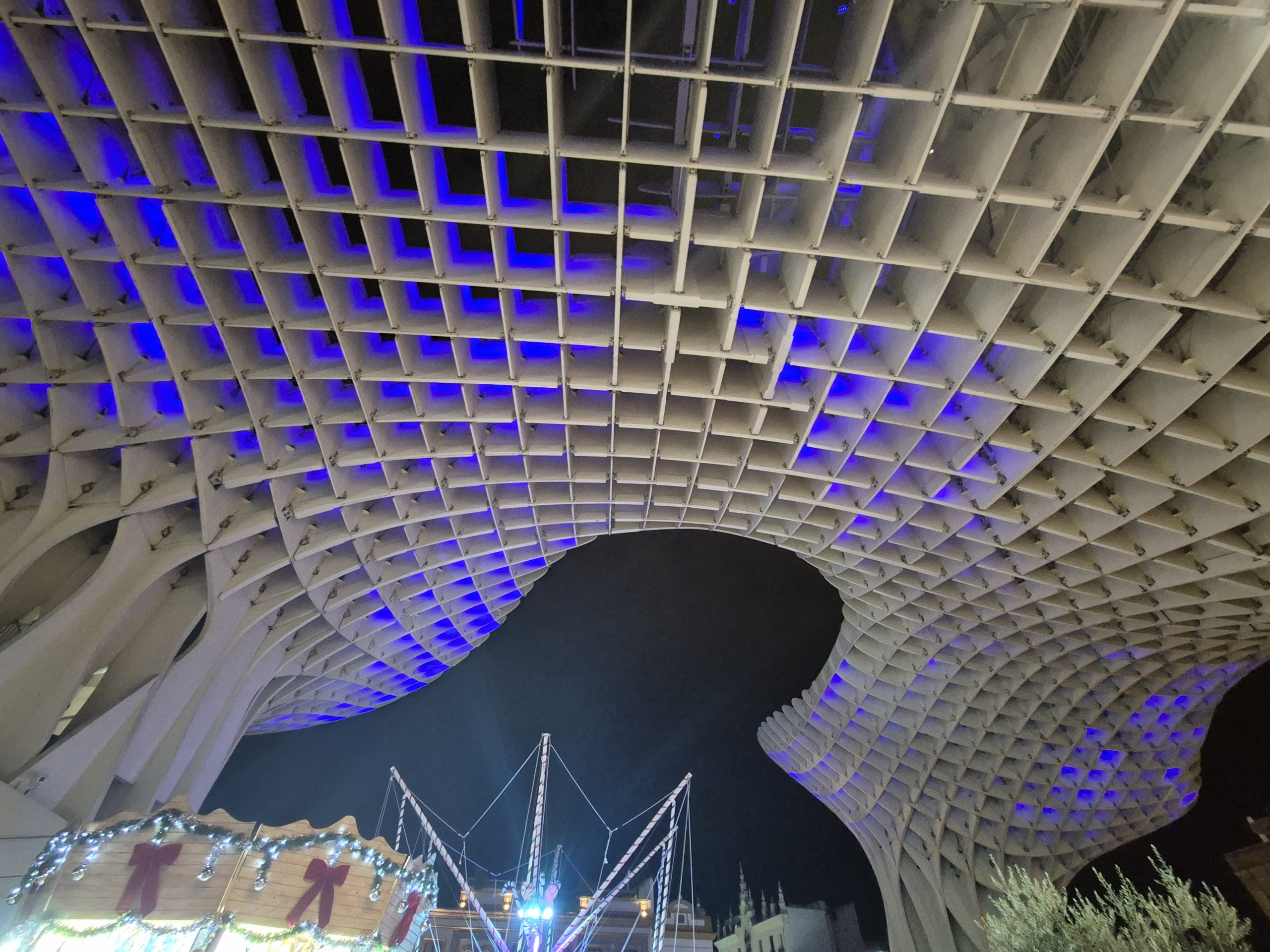
On Christmas evening, back from a long day out of the city, we had a low-key Christmas-night pizza at Farina 23 and then walked over to the Setas de Sevilla – officially the Metropol Parasol, though everyone calls them the “mushrooms of Seville” – a sprawling, largely wooden lattice at La Encarnación square in the old quarter. It is aggressively modern in a city of cathedrals and palaces, and the better for the contrast; at night a Christmas market traded in its shade, stalls glowing under the honeycomb canopy. We came back the next morning to see it again in daylight; it reads as a completely different object lit by the sun than it does at night.
The quiet churches
26th Dec 2025
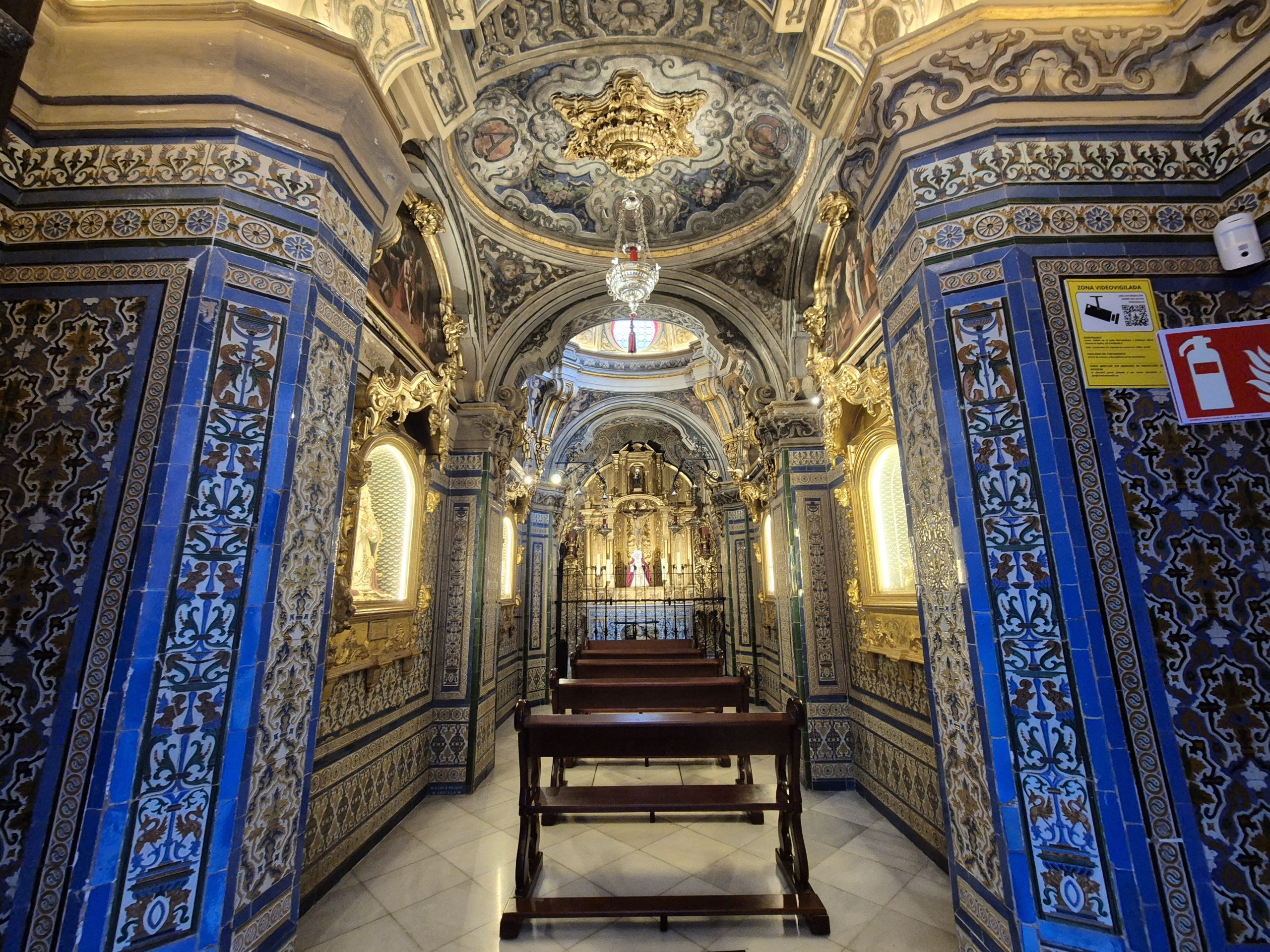
On our last half day, I went looking for the smaller, quieter churches – and found, as I often do, that they moved me more than the grand set-pieces.
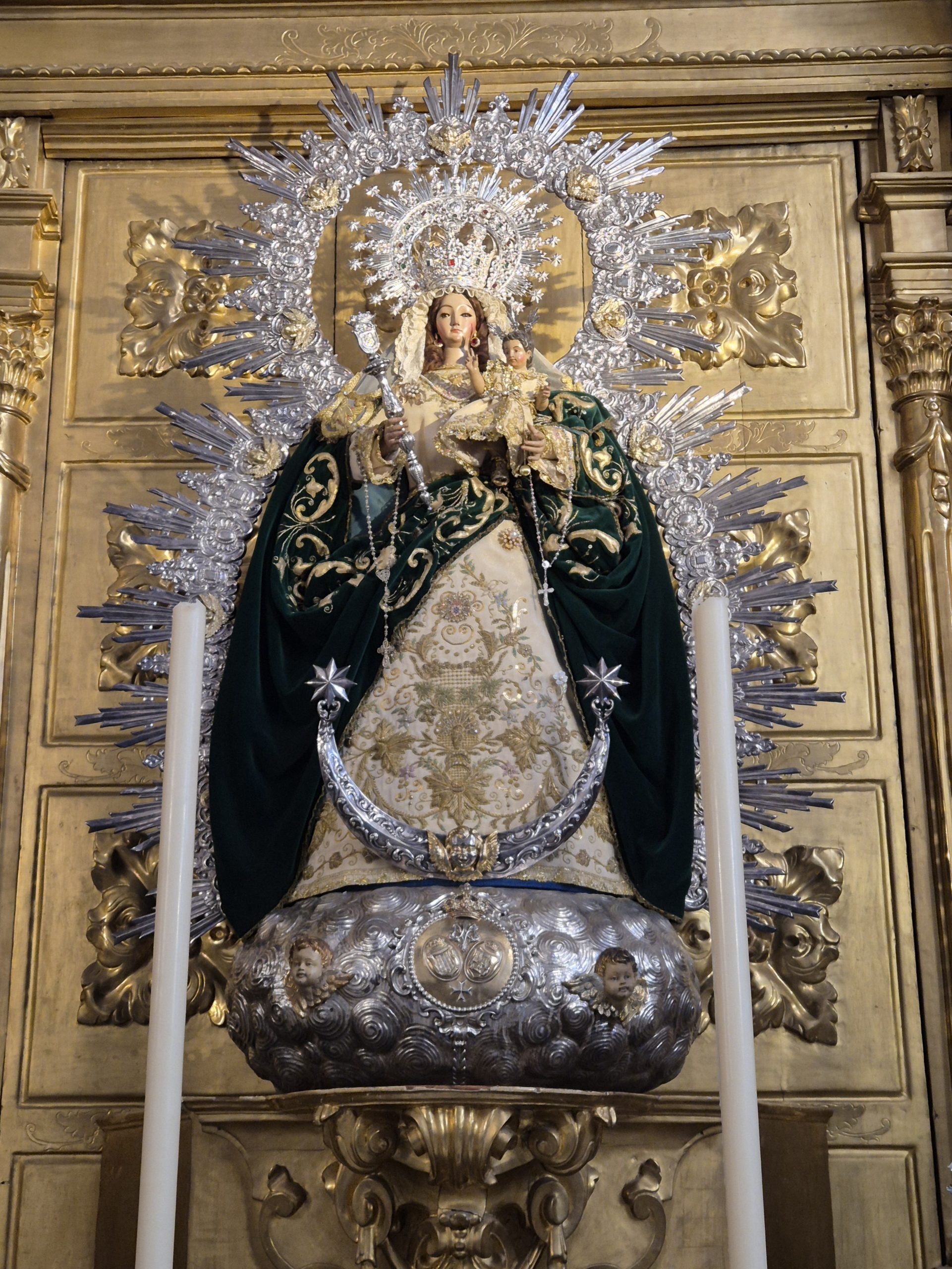
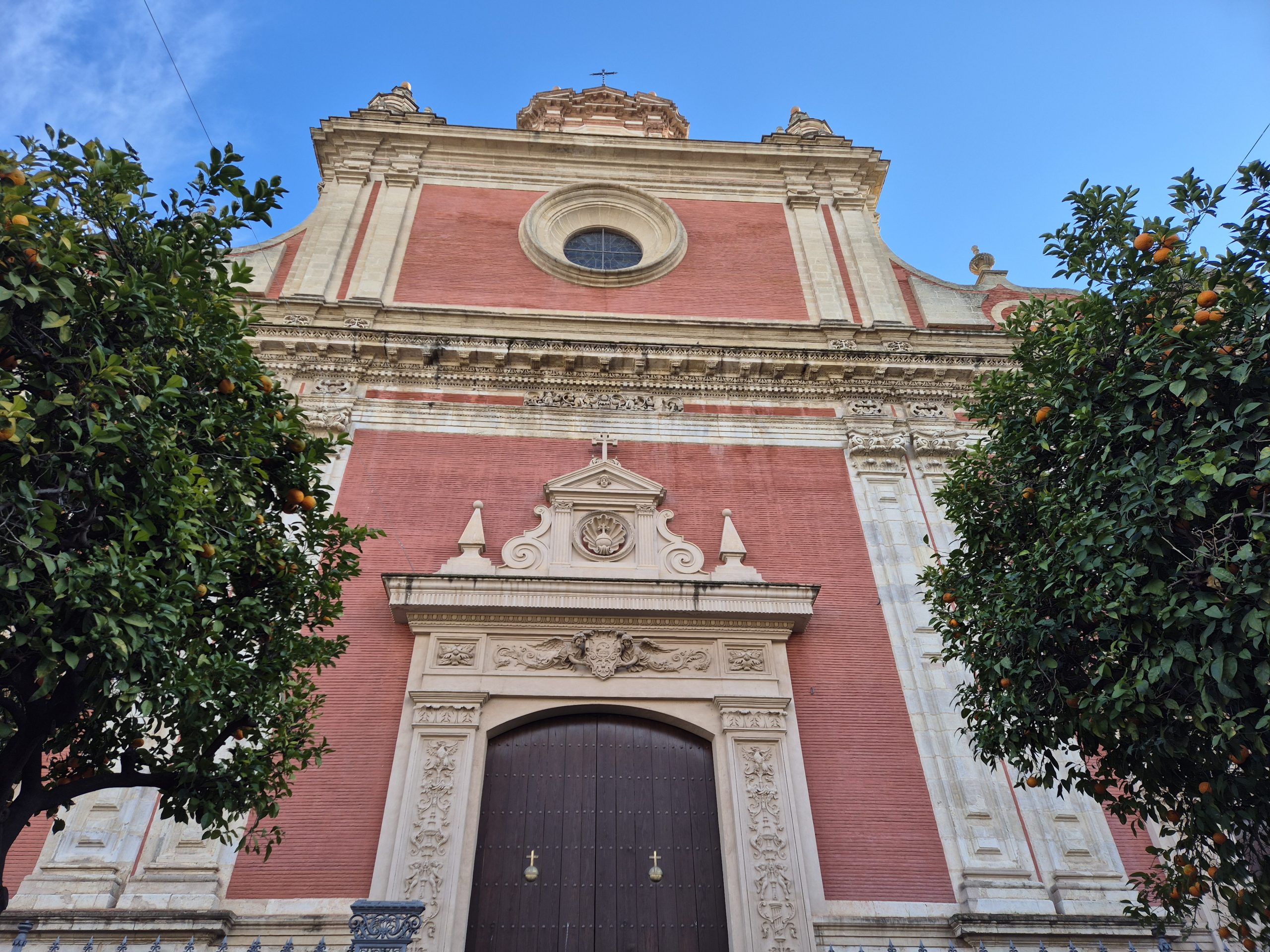
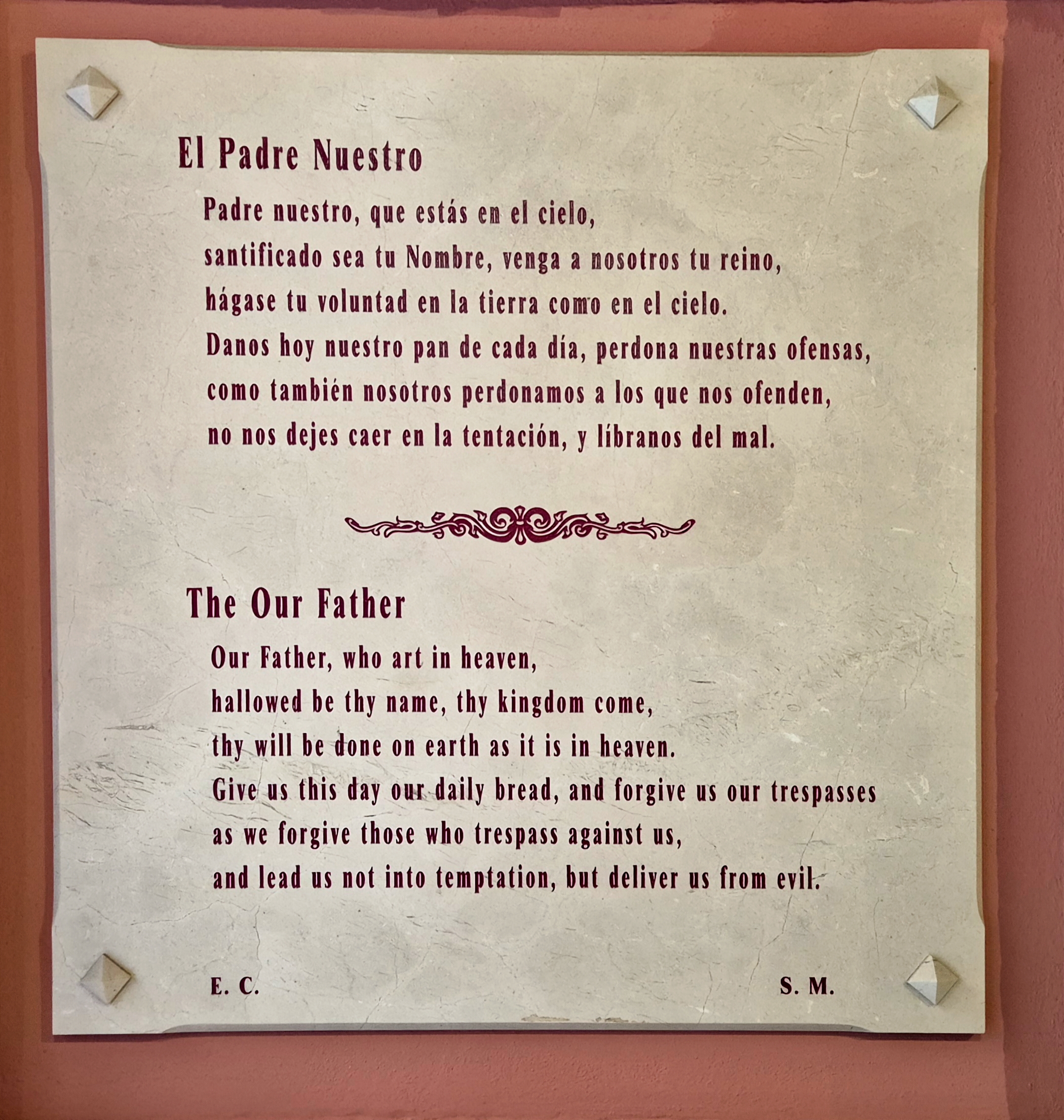
The Church of El Salvador is the second-largest in Seville after the Cathedral, and a near-perfect emblem of this region: it stands on ground that held a Roman basilica, then the main 9th-century Moorish mosque of Ibn Adabbas, and finally a church – the same patch of earth changing hands and faiths across a thousand years. You see the layering before you even step inside: the pink-and-white Baroque facade rises out of a small courtyard of orange trees, the surviving patio of the old mosque. Inside, an unexpected jolt of nostalgia: the prayers I learned as a child – “Our Father in Heaven…”, “Hail Mary…” – written out on a plaque here, in faraway Seville. Words from a Madras childhood surfacing on a wall in Andalusia. Among the church’s altarpieces is the Virgen del Rocío (José Maestre, 1718–31), beneath a motto I liked: “Saying Rocío… is saying prayer.”
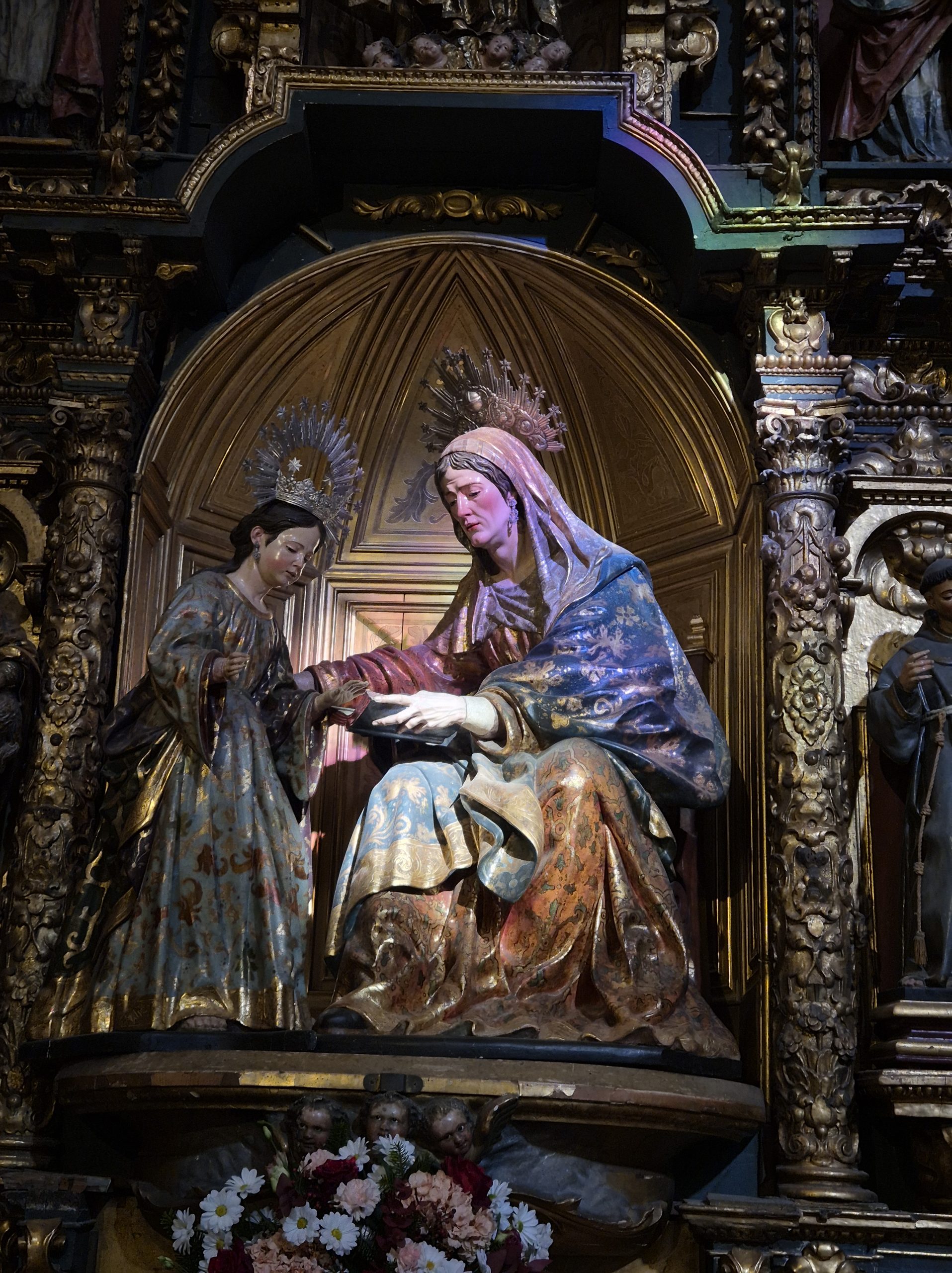
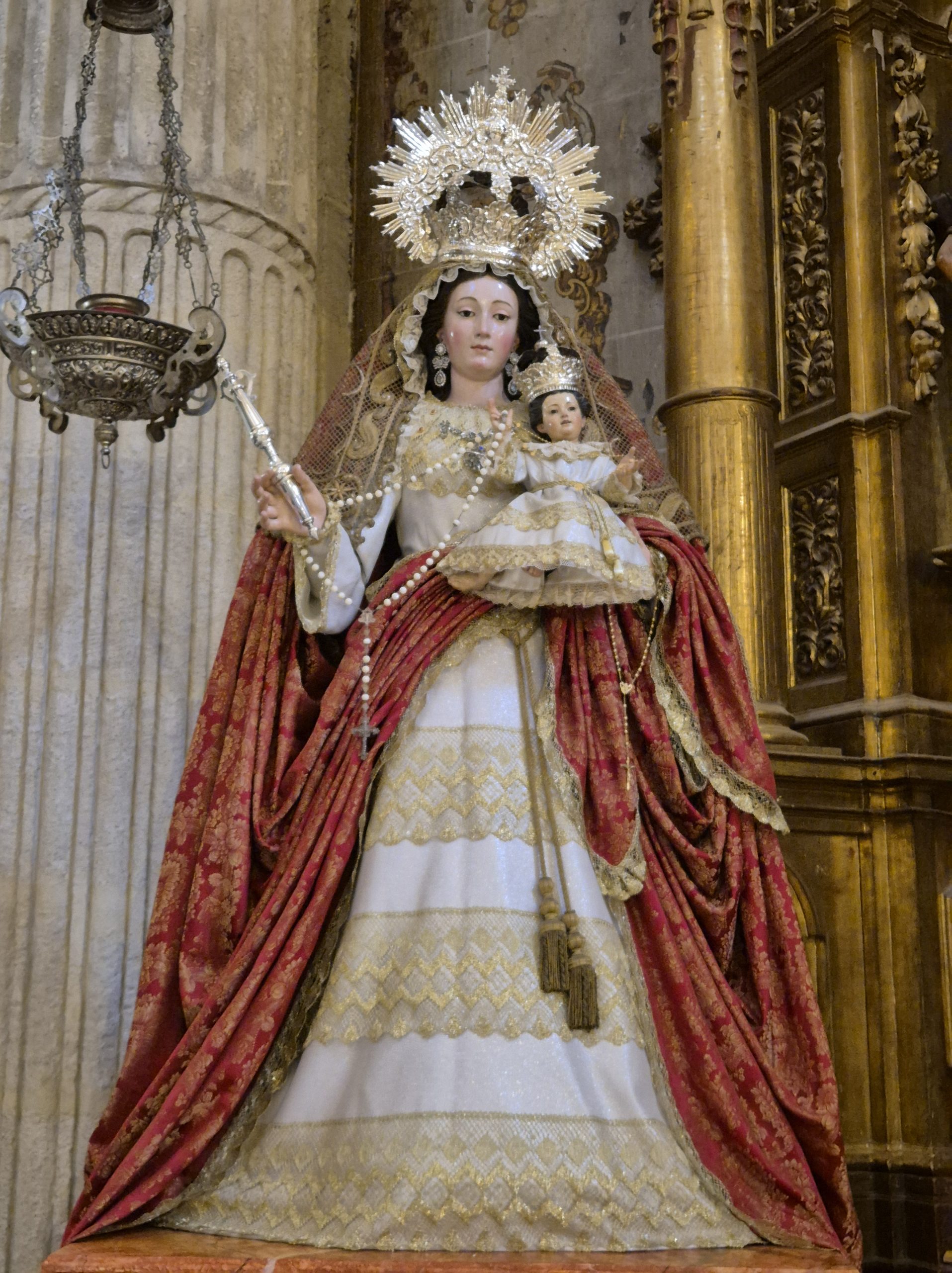
In these churches I found several beautiful Madonna and Child sculptures – including the prettiest Madonna and Child I think I have ever seen – and one I had never seen depicted before: a young Mary being taught to read by her own mother – the grandmother of Jesus. I learned later this is a known motif, the Education of the Virgin, with Saint Anne; the finest, in El Salvador, is a larger-than-life polychrome-wood group by José Montes de Oca. A plaque beside it offered a line that stayed with me: the book in the child’s hands, it said, symbolizes the transmission of faith – “a task that today more than ever falls inevitably on grandparents.” I’d never encountered the scene before, and its small domesticity stayed with me.
A refusal: on bullfighting
I came to Seville assuming bullfighting was central to its identity, without having formed a clear opinion of it beforehand. One of my favorite books is Fiesta by Hemingway; bullfighting is one of its central themes, though that was not what drew me to the novel. Hemingway writes of bullfighting as a beautiful, creative art form. The ground reality, however, is, as so often, steeped in human greed and commercialism: the unspeakable torture of bulls in the name of sport, with each fight culminating in the animal’s death. As a personal mark of protest against this so-called “arty sport,” I chose not to visit anything related to bullfighting or buy any associated souvenirs. To be fair, it was heartening to see that Seville did not flaunt bullfights the way it enthusiastically showcased flamenco.
Note: the Christmas Day escape to Ronda and Setenil launched and returned from Seville – written up separately in the Ronda + Setenil piece.
Seville wrap-up
Seville is the loudest, most photographed city on this route, the one with nothing left to prove. The easy piece would simply echo the postcards. But what I actually carried away from it was the opposite of its reputation: not the heaving Alcázar but its quiet gardens; not a staged flamenco but a family dancing in a public square; not the bullring – which I refused on principle – but small churches where a childhood prayer ambushed me on a wall. This is a piece about looking for the quiet register inside a city built to shout, and finding that the city, to its credit, holds both.