The Sound of a Wheeled Suitcase on Cobbles
On traveling through an Andalusia that is increasingly insistently asking people like me to stop coming.
Andalusia’s residents are protesting the tourism that’s hollowing out their old towns – and depends on it for a living. A visitor’s unresolved reckoning with being part of the problem.
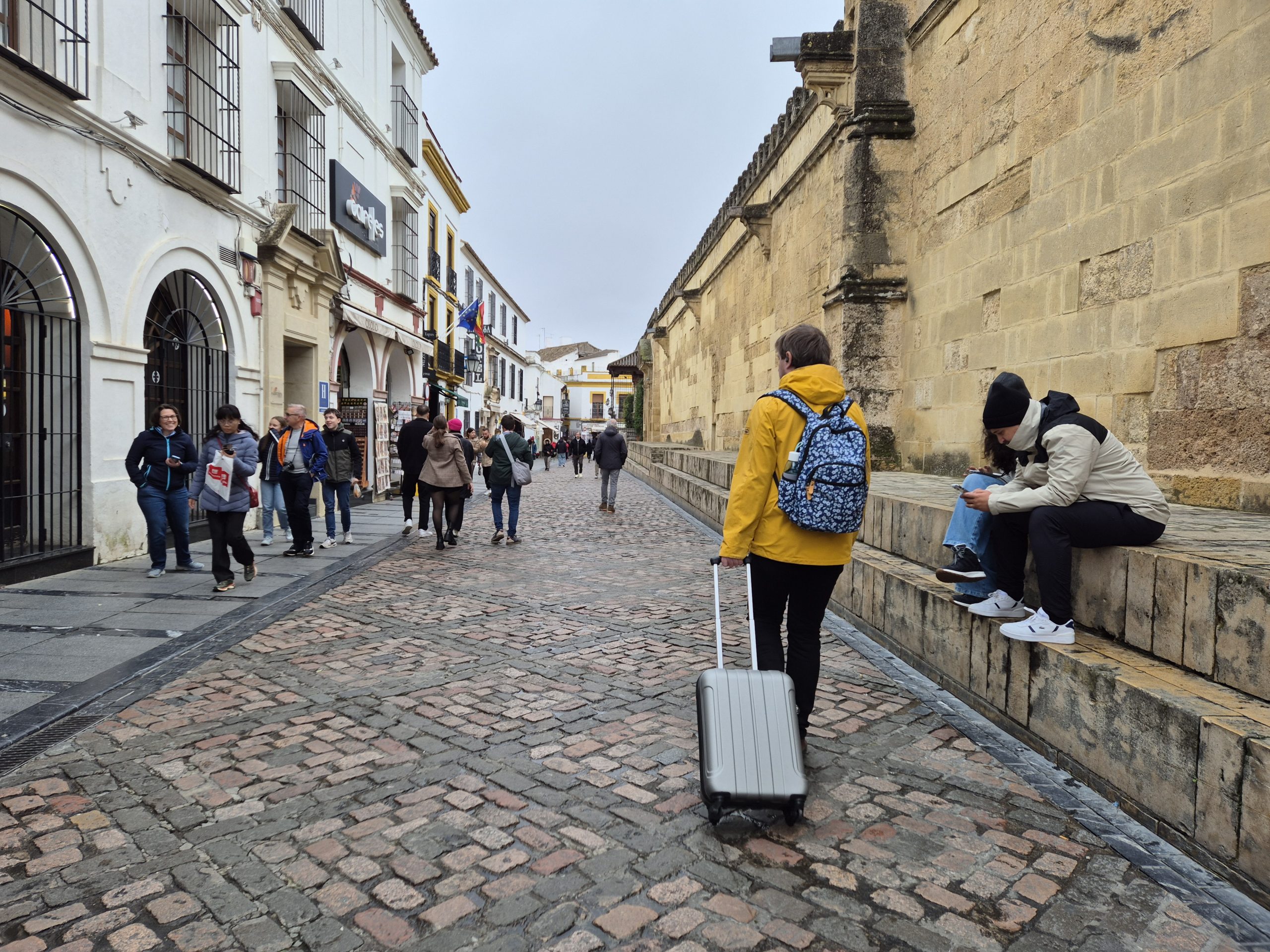
Somewhere in Córdoba, dragging B’s suitcase over the old town’s cobbles – embarrassingly loud to my guilty ear – I felt the first prick of something that stayed with me for the rest of the trip. Not quite shame. Something closer to a question I couldn’t put down: do you ever really understand a city by passing through it for a day and a half, camera up, suitcase rattling, on your way to the next one?
I didn’t have an answer. What I didn’t know at the time was that, in the same city, in the same season, the people who actually live there had chosen that exact sound – the wheeled suitcase on stone – as the symbol of everything they were losing.
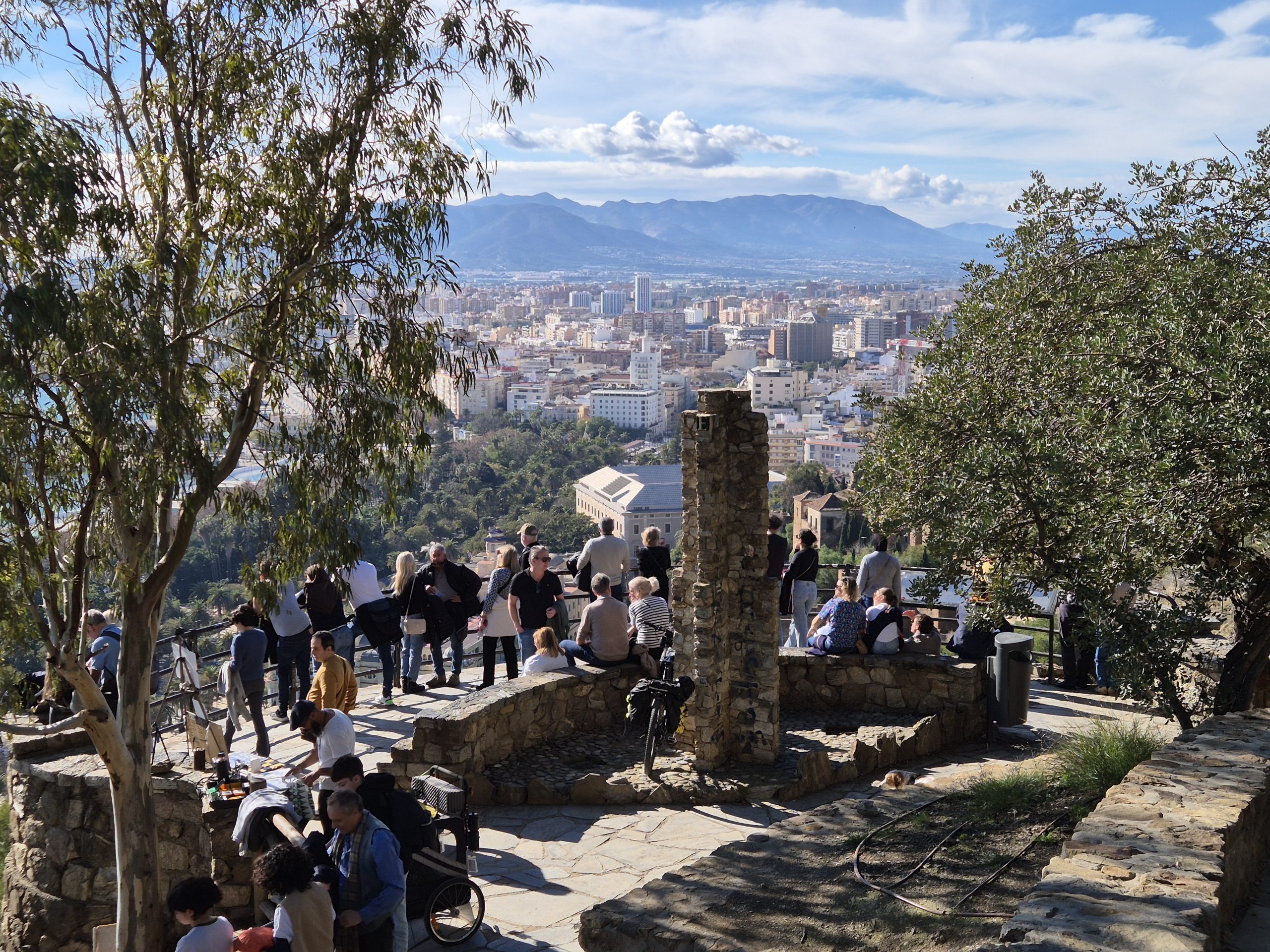
“We come from the future”
Not long before we arrived, residents of Córdoba’s historic center staged a protest dressed as tourists, wheeling suitcases through the Judería behind a banner: “Barrios en peligro de extinción” – neighborhoods in danger of extinction. Their street-theater conceit: we come from the future, from the year 2035, to tell you the whole historic center has become a theme park where no one lives anymore.
It is hard to overstate how precisely that landed against my own small guilt. The suitcase I was faintly embarrassed by was, to them, the sound of their city being flooded by aliens.
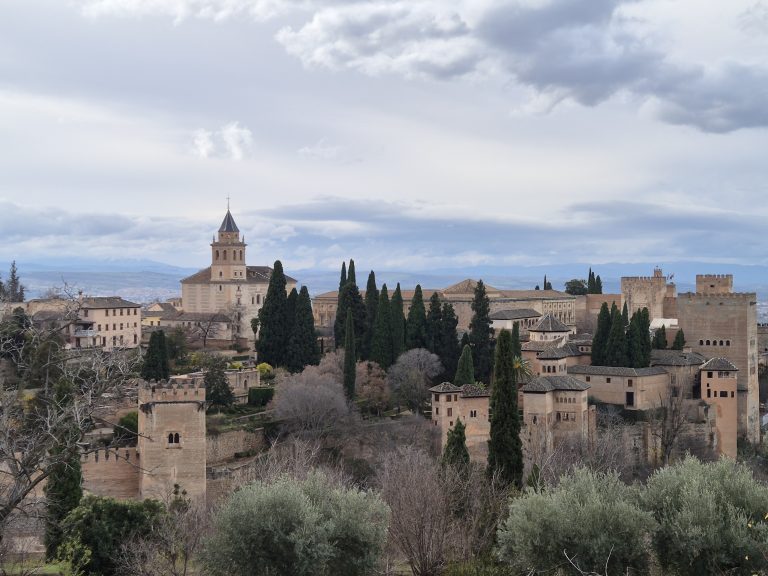
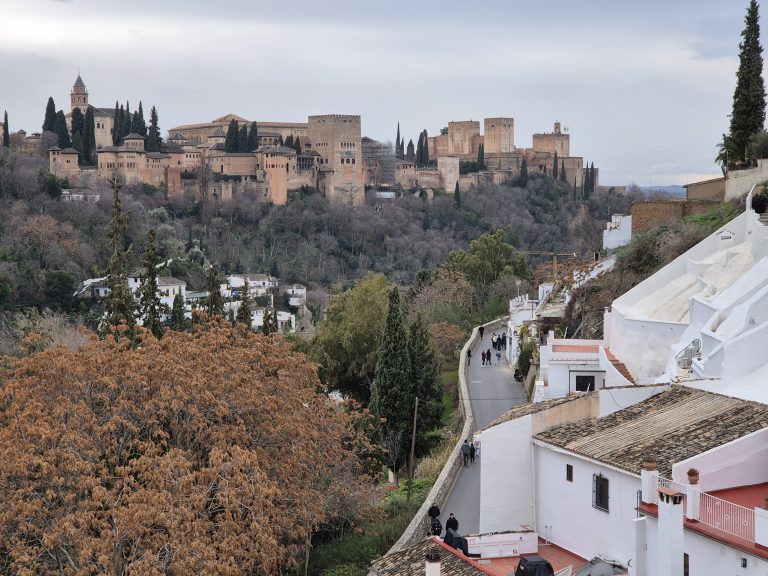
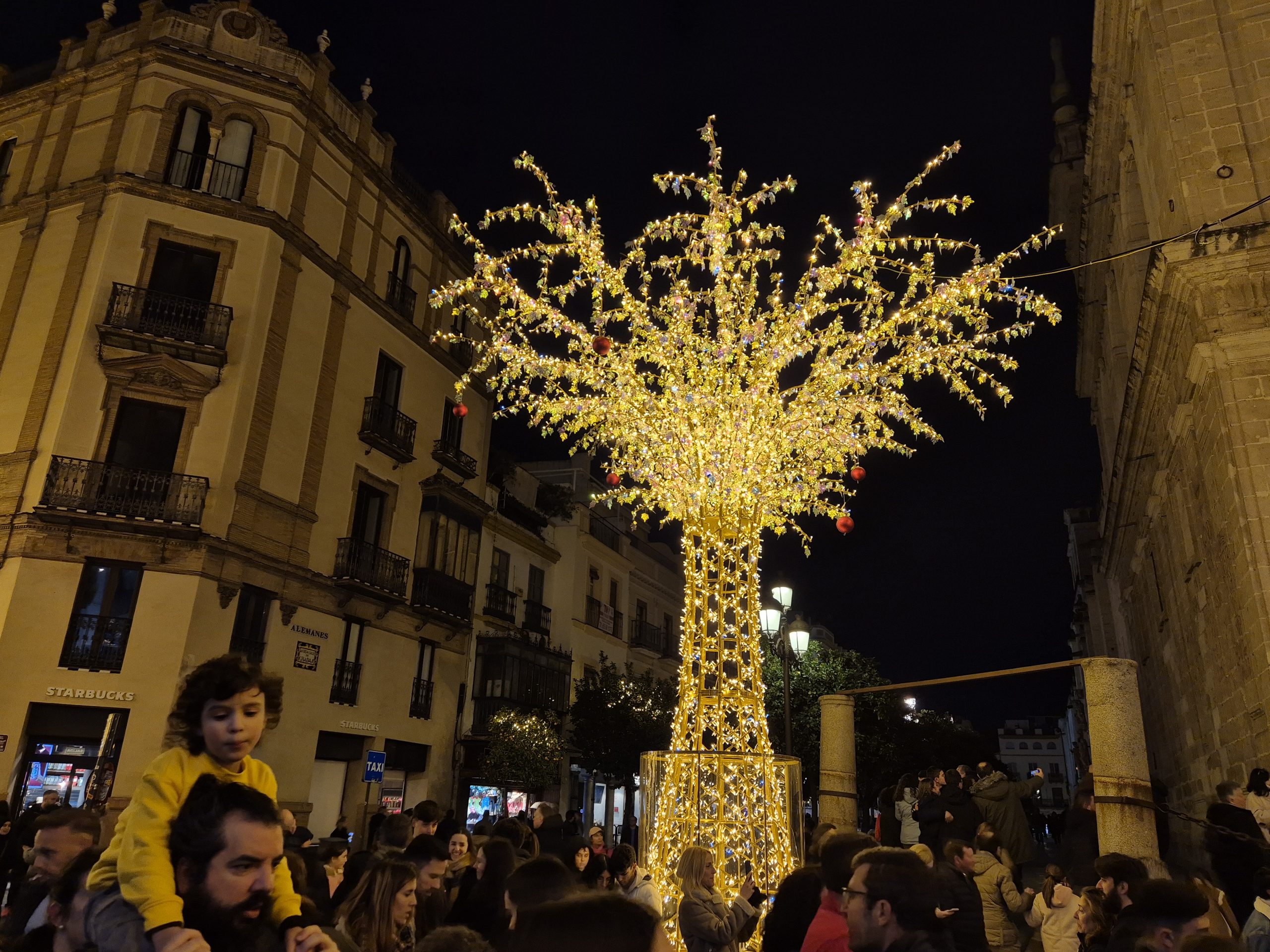
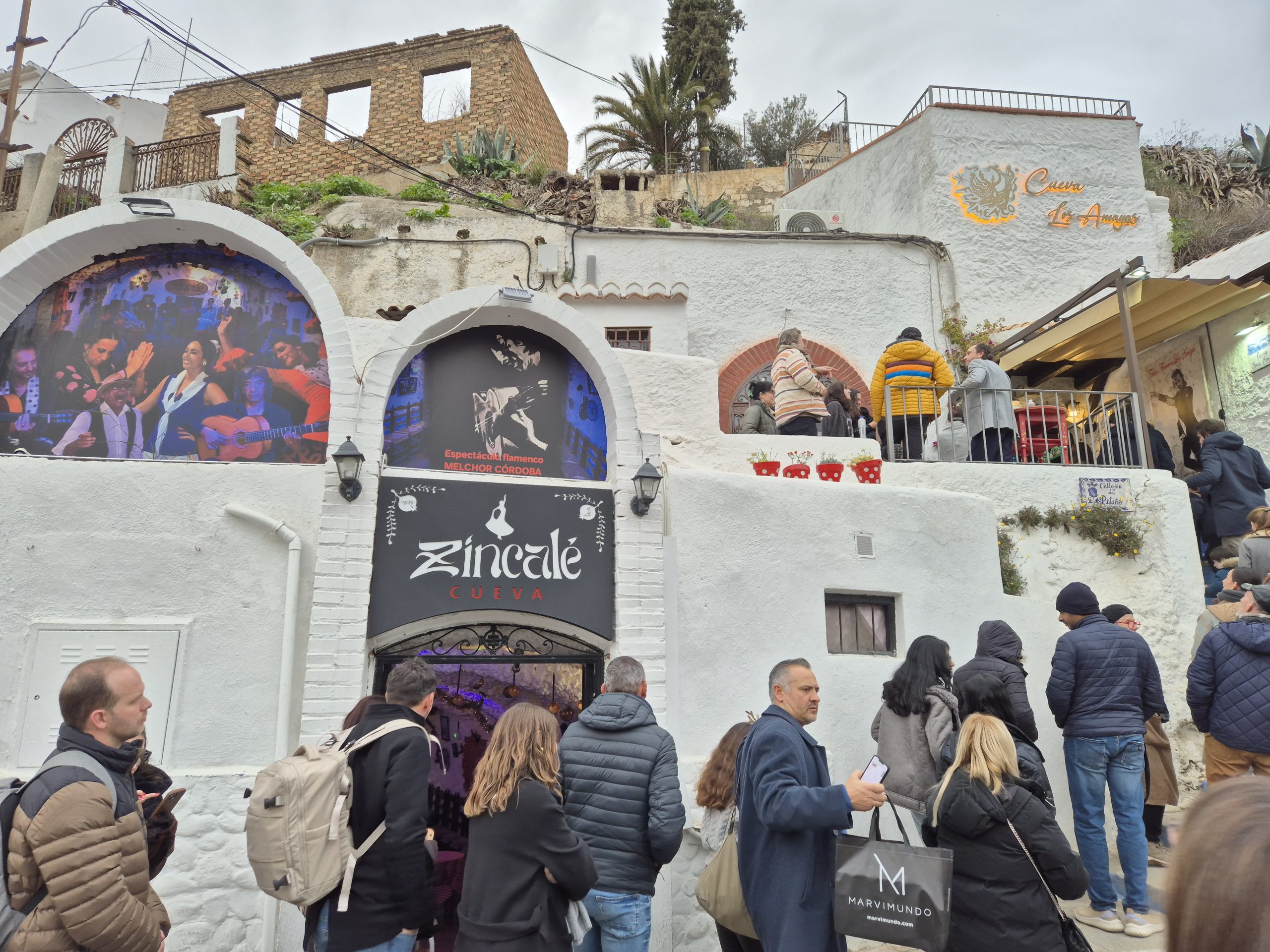
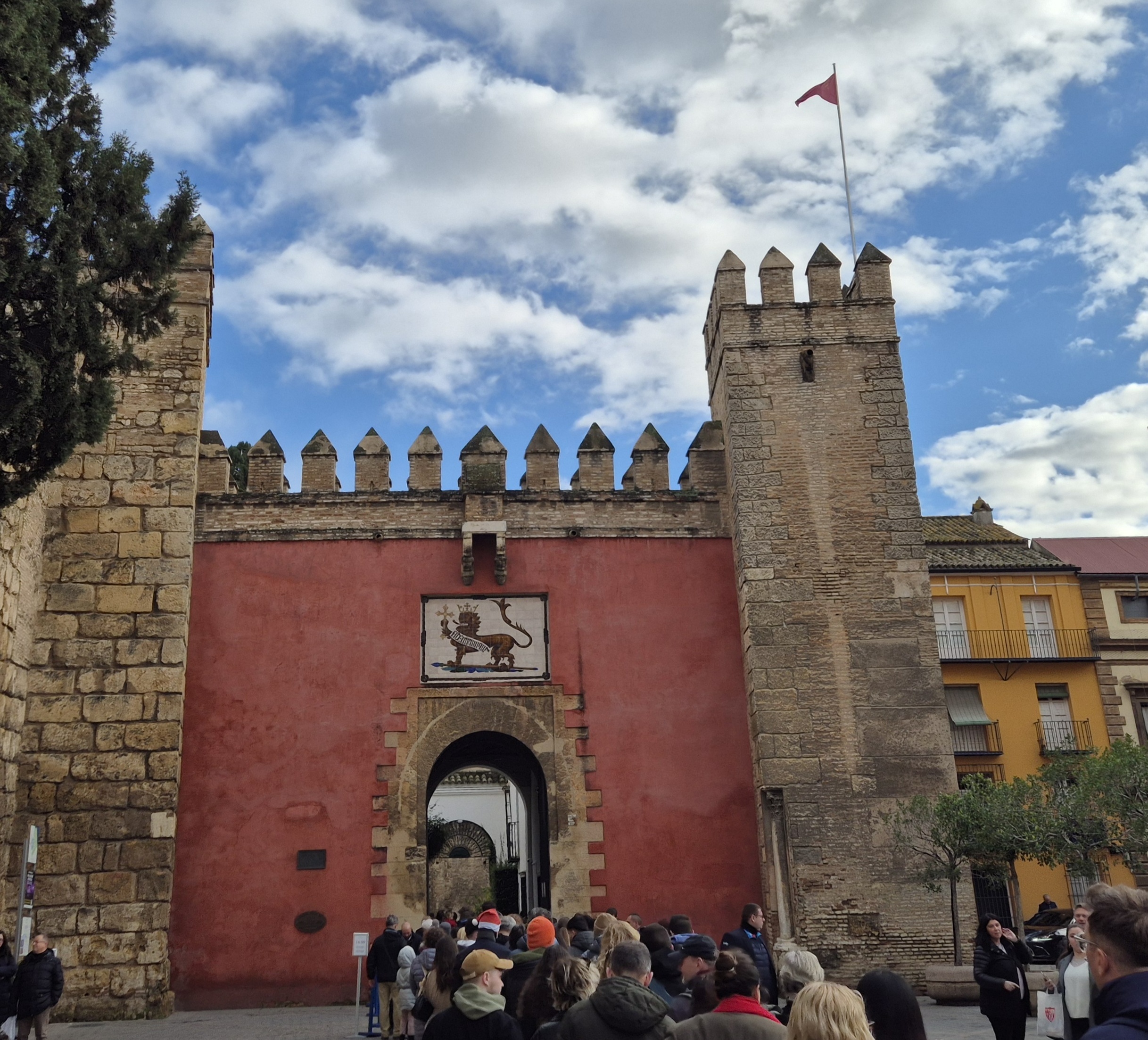
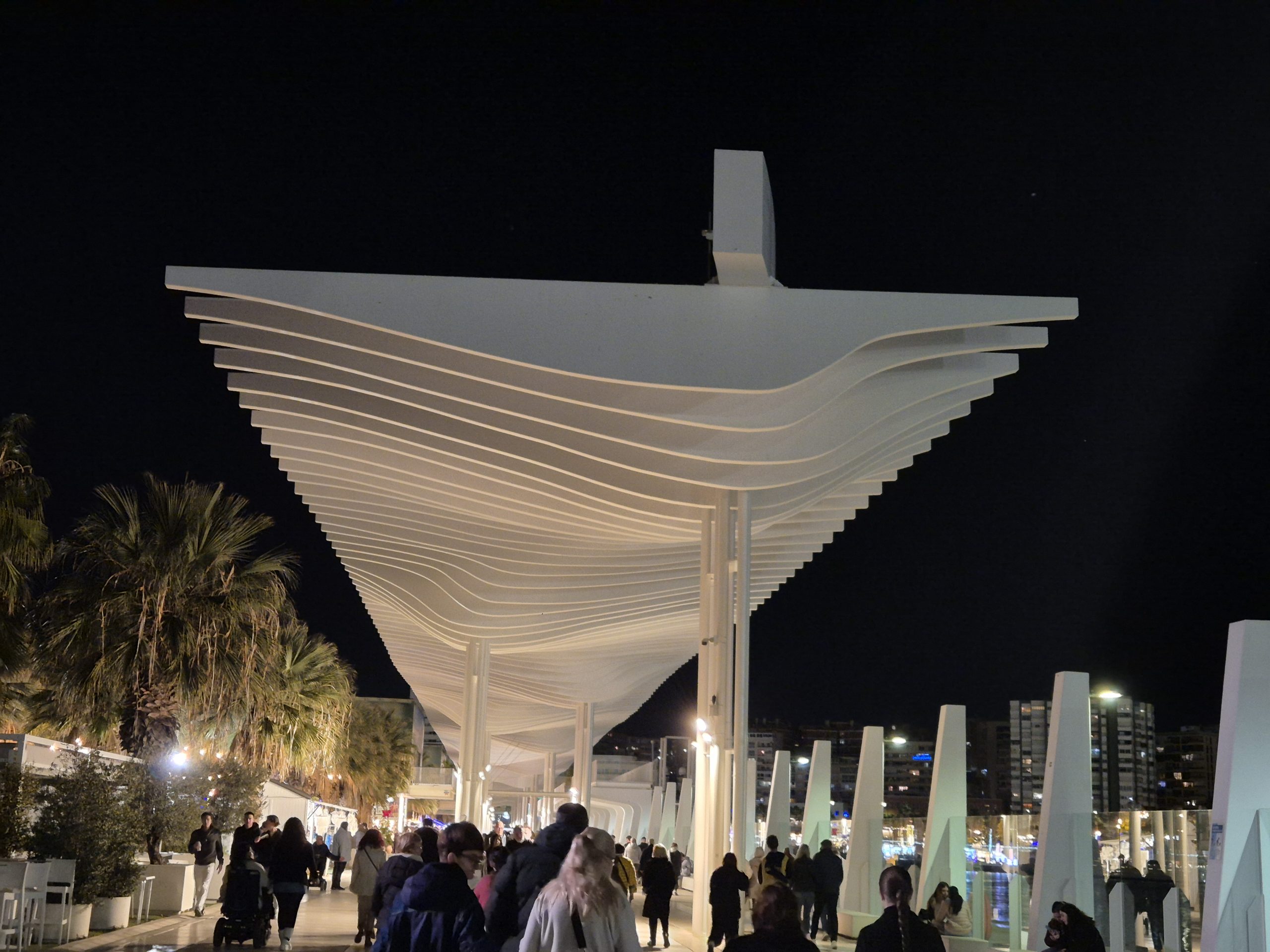
The same complaint, almost word for word, runs through every city we visited. In Seville, residents describe the medieval center as “un parque temático… sin identidad, sin vida” – a theme park without identity or life – and march under the line “no queremos ser figurantes en nuestra ciudad,” we don’t want to be extras in our own city. In Granada’s Albaicín, where so many homes have become holiday rentals, the banners read “más residentes, menos clientes” – more residents, fewer customers. In Málaga, thousands walked the streets in 2024 chanting “Málaga no se vende” – Málaga is not for sale.
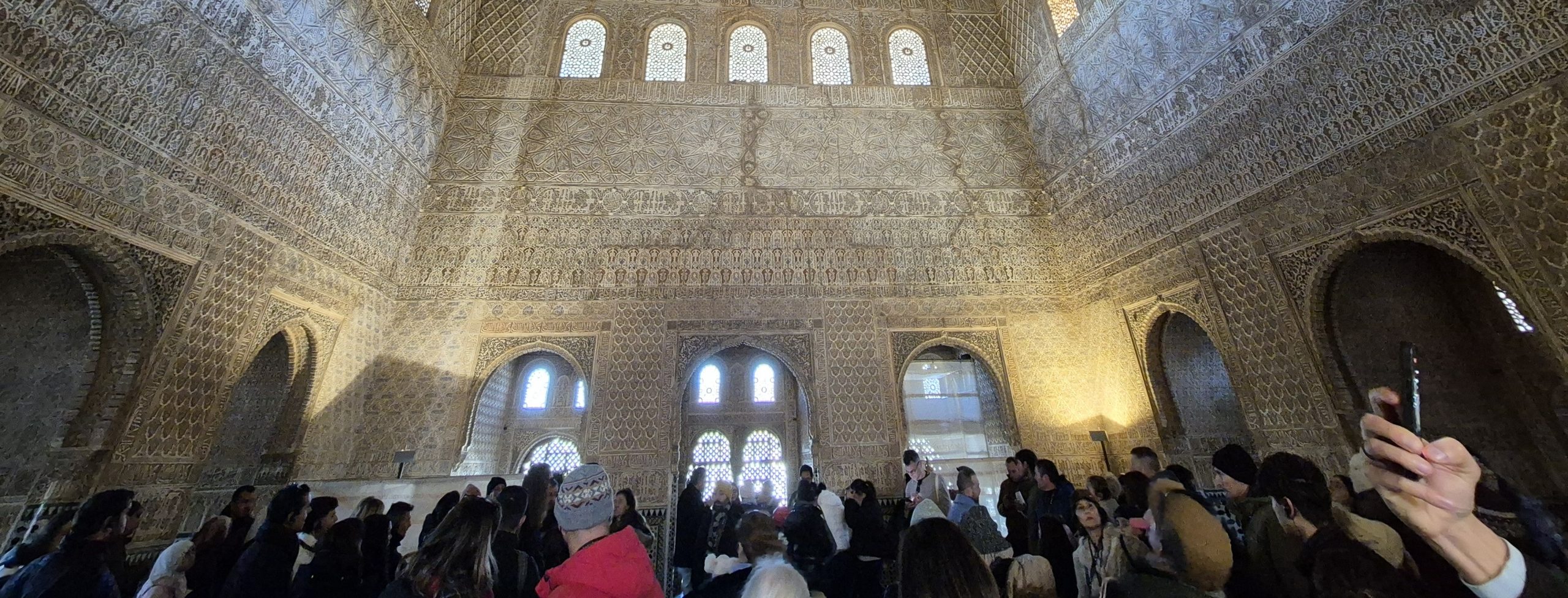
There’s even a word for what they’re describing: festification – the slow conversion of a place where people live into a place people visit. The grocer becomes a souvenir shop. The family flat becomes an apartment that sleeps six and is dark all winter. In some central districts a striking share of the homes are now short-term lets, and the cities have begun, belatedly, to fight back – Seville restricting new tourist-flat licences in its most saturated quarters, Andalusia passing a Sustainable Tourism Law, Málaga threatening fines for the worst behavior. And the crowds keep breaking records: the Alhambra alone drew some 2.7 million visitors in 2024, the Mezquita not far behind.
A tourist doesn’t even need to do any hard research to visit a place, there’s a whole ecosystem making this easier than ever. The villain in the residents’ story isn’t quite the tourist; it’s the model – social media and the massive online popularity of certain tourism destinations feeds a vicious cycle of demand and supply escalation. And beneath that demand sits the harder machinery: the speculator who turns a family’s building into holiday flats, the funds buying up whole blocks.
The crowds everywhere, in December, supposedly off-season, alarmed me. Apart from being unpleasant to jostle with people at famous sights, it nagged at me enough that I started researching online then and there – once in Seville, reading about neighborhoods losing their residents; and again on Christmas Day, sitting at a tourist café (no, the irony is not lost on me!) to read about who all this tourism actually feeds. The discomfort wasn’t retrospective. It traveled with me, suitcase and all.
The other side of the suitcase
And yet. For every resident priced out of the Albaicín, there is someone in the same city whose rent gets paid because tourists pour in.
Tourism is now one of Andalusia’s largest employers – the hotels, the restaurants, the guides, the drivers, the people who clean the rooms I sleep in and clear the tables I sit at. And it sits in a region that needs the work badly. Andalusian youth unemployment still runs at around 32% – far above the European average, and higher than Spain’s own; and that is the improved figure, lower than in the bleak years after the 2008 crash. A young Andalusian today is far likelier to be handed a temporary, seasonal contract than a secure one, and a great many of those contracts exist precisely because people like me keep arriving with cameras and suitcases.
So the same flow that hollows out the old town also feeds it. The flamenco family in the Plaza de España; the café owner who first poured me a café bombón; the staff at all the touristy cafés – they were at least getting something out of the crowded, out of control tourism scene. The waiter and the protester might even be the same person, on different days.
The anger isn’t only Andalusia’s
What I felt in Andalusia was purely based on my observation of how crowded everything felt. I had no knowledge of anti-tourism sentiments, which I only found on subsequent digging online. From the point of view of residents, the same anger is boiling across the continent, and Spain is only its loudest edge.
Barcelona has become the movement’s flashpoint. In a recent summer, residents met tourists with water pistols and smoke grenades under the slogan Menys Turisme, Més Vida – less tourism, more life. It is not hard to see why the city tipped over: in July and August alone, some 22.3 million foreign visitors poured in, and tourism now accounts for more than a tenth of Barcelona’s economy. The city has pledged to phase out every short-term tourist rental by 2028 – the same fight Seville and Granada are waging on a smaller scale.
Beyond Spain, the responses are more timid, and mostly failing. Venice began charging day-trippers a €5–€10 fee just to set foot in the city – widely judged a flop, since the crowds simply paid and kept coming. Lisbon has frozen new short-term rental licences in parts of the city. Everywhere the grievance is the one I heard in Córdoba: homes turned into holiday flats, residents priced out, a place to live quietly becoming a place to visit loudly.
The through-line is less villainy than unpreparedness. As Randy Durband of the Global Sustainable Tourism Council puts it:
The surge of demand came too quickly for most public authorities to develop mechanisms for managing tourism, because those mechanisms rarely existed historically.
And the pressure is organizing: activist networks across southern Europe are coordinating fresh demonstrations through 2026, and one Spanish group has already warned British visitors to expect a “hostile atmosphere.”
Which recasts my small cobblestone guilt as something continental. The wheeled suitcase I was embarrassed by in Córdoba makes the same sound in Barcelona, in Venice, in Lisbon – and in each, a growing number of people would rather not hear it.
My own ledger
So how complicit was I, really? Let me review the things that lighten my account, and the things that weigh it down.
In my favor: we went in winter, the low season, precisely the time the over-loved cities can breathe – calmer streets, no festival crush, the Mezquita’s forest of columns very nearly to ourselves on a grey December morning. We moved by train, not a fleet of coaches. And on Christmas Day we drove out to Setenil de las Bodegas – a small cave-town that, I found thanks to my research on over-tourism, is the kind of “quieter alternative” the region now begs visitors to choose instead of piling into the big four. This was less about being virtuous and more an abhorrence of crowds, and a preference for slowness. I carried a backpack, so did not personally add to the suitcase wheel rattle.
Against me: we slept in the dead center of each city – one hotel literally against the Mezquita’s wall, right in the thick of the crush. We booked the headline monuments months ahead and filed obediently into the very crush the locals are protesting. And yes, the suitcase, and yes, the selfies.
I was not an exception to the problem. I was a well-mannered, train-taking, off-season instance of it. But the deepest mark against me isn’t the hotel, or the tickets, or the suitcase. It’s simply that I went at all – to places already straining under exactly the likes of me – without once stopping to ask whether I truly needed to.
Traveling gently, if such a thing exists
If there’s a way through – and I’m not certain there is – it starts earlier than any packing list, with a question I never used to ask. We all weigh the cost of a trip: the flight, the hotels, the tickets, what it will take out of our own pockets. Among external factors, we already weigh war and natural disaster – we avoid war-torn places, or destinations in the grip of some calamity. What we almost never weigh is the other, usually more subtle cost – the cost of our presence, what our showing up takes out of the place itself. Let me call it the tourism sentiment factor.
My resolution, from here on, is to take the tourism sentiment factor into account. We live in an age of a thousand brilliant films about every corner of the earth; for some destinations, in some years, watching one may be the kinder choice than adding one more body to a place already bulging at the seams. So my rule going forward is, like in so many other areas of life: be mindful. Take into account the mood and feelings of the place I want to visit. Is it enough that I want to go there? Shouldn’t the destination want me too? At the very least, I will pick destinations that are not up in arms against people like me.
And if you do go, the rest is roughly what the cities themselves are now pleading for:
- Go in the shoulder seasons, or winter. March–April (outside the Semana Santa crush), October–November, or the deep December we chose – when the streets loosen and the great monuments can be seen without a scrum.
- Do your homework. Learn something real about the places you visit; don’t treat them as just a pretty backdrop for selfies.
- Choose the emptier door. Medina Azahara instead of only the Mezquita; the back lanes with equally pretty hanging flower pots instead of the one alley the guidebooks made famous.
- Be willing to skip things. Hard, once you’ve decided to go – but given the crush out there, let some of the guidebook headliners pass.
- Spread the money. The artisan, the neighborhood market, the flamenco peña that isn’t on the top-ten list.
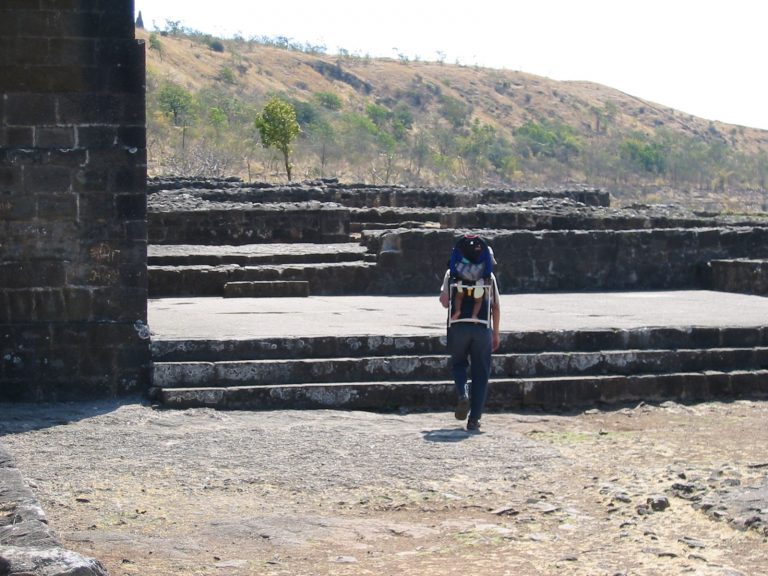
- Lose the wheeled suitcase. A backpack makes no racket on the cobbles, forces you to pack lighter, as you need to mule your stuff around.
These are good rules, and I’ll probably follow some of them and break others the next time something with an evocative name appears in a brochure. But the first weighing – the cost of my presence, set beside the cost of the flight – is the one I mean to carry from now on. That, more than any packing tip, is what I’d ask you to sit with too.
No tidy ending
Here is the part I can’t resolve. This very post – like every glowing travelogue – is an advertisement. I am, in the act of writing about my experiences, also telling you how beautiful the Mezquita’s arches are, which is the first link in the chain that ends with a banner and a wheeled suitcase outside someone’s door.
I don’t have an exit from that. I went; it was extraordinary; I’m uneasy about having gone; I would go again. All I can honestly offer is the discomfort itself – and the small, real choices that make my visit weigh a little less on a city that, increasingly and understandably, would rather I came in the quiet season, stayed a while, and listened for the sound my own (in this case B’s) suitcase makes.
Postscript
A few months after, in Mar 2026, I got a chance to go to Madrid on work, and chatted with some Spanish colleagues about Andalusia, and got the impression that the region’s people are considered “lazy” by the rest of Spain. High unemployment – laziness. Which is the cause and which the effect? I don’t have the knowledge or right to take sides, but it feels unfair to label a whole region as “lazy”. Good to assume that there are multiple sides to the issue, I think. It’s complicated for sure.
Sources / further reading
- Córdoba’s “free tour” suitcase protest – Cordópolis
- Seville’s 10% tourist-flat cap / 11 barrios – Time Out
- Málaga’s June 2024 march (“Málaga no se vende”) – Olive Press · Euronews
- Alhambra 2.72M visitors, 2024 – Ahora Granada
- Mezquita-Catedral ~2.2M visitors, 2024 – Diócesis de Córdoba
- Albaicín “Albaicín Habitable” protest & rentals – Granada Hoy
- Andalusia’s youth unemployment – Trading Economics (Spain)
- 2024-2025 over-tourism protests in Spain – wiki on anti-tourism
- Europe-wide anti-tourism protests – Eureports news